1320 resultados
1840Roma, Tipografia Gismondi, 1840-41, voll. 2, in-8 grande, cartonatura moderna con le copertina della br. edit. parzialmente rimontate, pp. 543, (5) - 216, (2). Con 42 tavv. incise in rame (numerate 1-47: 5 hanno doppia numerazione) al primo volume e 26 tavv. (su 27) al secondo (numerate 1-29, 3 hanno doppia numerazione). Manca la tavola n. 30 alla seconda parte. Esemplare a pieni margini. La descrizione di Pompei è completa; il “Real Museo Borbonico” è invece formato da 11 volumi.
18172 parti in un vol. in-16, pp. 288, 35; 276, leg. t. tela coeva. Con 4 carte geogr. di cui una rip. e 5 incis. n.t. Seconda ediz. (sulla prima del 1811) di questa imp. opera sull’antica Pompei, con la tav. della vecchia e nuova città. L'abate Romanelli (Fossacesia 1756 - Napoli 1819) fu storico e archeologo, autore di numerose opere di storia locale ma senza dubbio è questa la più importante. Lozzi 3086 cita solo 3 carte geogr. Borroni 3330. 0139
1831Due tomi in un vol. di mm. 170x105, leg. in mz. pelle nera con carta verde scuro ai piatti, tit. e fregi oro al ds., pp. VII-(1)-324 e 224, una grande carta più volte ripiegata con Ischia, Procida, Capri, i Golfi di Napoli e Salerno, il Vesuvio e la pianta di Pompei e 4 stampe tutte f.t. al 1° tomo (l'ultima è a pag 116 anziché a pag. 114), 1 sola stampa al 2° tomo per un tot. di 1 carta e 5 stampe. Terza edizione Arricchita di tutte le nuove scoperte fatte a tutto l'anno 1830, tratte dal libro intitolato Pompei descritta da Carlo Bonucci, architetto direttore de' reali scavi di Pompei ed Ercolano. Adorna di rami, di una accuratissima carta geografica del Golfo di Napoli e della pianta topografica di Pompei. Lavori ridotti di tarlo alle costole e un numero timbrato al frontesp. del primo tomo, interno ottimo.
ref. 106314Paris, Librairie Firmin-Didot et Cie, 1870-1878, (1840 pour le Musée Secret), 8 volumes in-4 de 275x175 mm environ, de 100 à 270 pages par volume, cartonnage marbré avec titres dorés sur le dos, sur pièce de titre cognac, demi maroquin à long grain vert émeraude pour le Musée Secret, anciennes étiquettes de bibliothèque collées sur le premier plats et sur le dos de chaque volume. Avec 798 planches, dont 6 bis ( 2 planches manquantes dans le Musée Secret). Rare ensemble complet des 8 tomes, le dernier concernant l'Erotica (Musée Secret) est très difficile à trouver. Des rousseurs et pages brunies, coiffes ébréchées et cartonnages frottés, dans le Musée Secret : tranches et quelques pages et gravures tachées, des gravures restaurées au verso, 7 feuillets déchirés dans la marge interne sans manque, mors internes fendus par endroits avec planches détachées (tomes V et VII), la planche 15 ne figure dans l'avis au relieur mais elle est bien présente ainsi que son explication (tome VI), quelques gravures avec impression moins nette, la reliure du tome 8 (Le Musée Secret) est différente des 7 autres tomes, sinon bon état. Poids sans emballage de l'ensemble : 11.5kg.
1863ref. 108512Paris, Librairie de Firmin-Didot frères, fils et Cie 1863 7 volumes. In-4 27,5 x 17 cm. Reliures de l’époque bradel écaille de tortue, dos lisses, pièces de titre orange, XXIII-134-263-104-49-232-111-45-211-69-230 pp., notes en bas de page - 108-90-59-30-75-60-32-110-22-100 planches. Accrocs en tête et en pied de dos, coins émoussés et frottés, intérieur frais avec rousseurs en pages de garde, pièce de titre à moitié arrachée.
ref. DADAX193704078XNew unknown
ref. 47Grenoble, Arthaud, 1928; in-4, Broché, couverture illustrée en couleurs.
1827ref. 21955Paris Firmin Didot 1827 -in-folio demi-basane 2 volumes (1 volume de texte + un volume de planches), reliure demi-basane (half binding sheepskin) verte petit in-folio (35 x 26,5 cm), dos long (spine without raised band) décoré or (gilt decoration) et motifs à froid (blind-stamping decoration), titre frappé or (gilt title), pièce de titre et de tomaison sur fond noir avec un filet "or" de part et d'autre, doubles filets large "or" en place des nerfs et en tête et en pied, entre nerfs à fleuron mat avec roulette à froid de part et d'autre, petit accident à la coiffe de tête du tome de planches, dos légèrement épidermé, papier marbré bleu et rouge aux plats (épidermures), illustré de 121 planches hors texte lithographiées, dont quatre doubles et six en couleurs, et 17 vignettes en noir sur Chine monté, le tout dessiné par Hubert Roux, l'aîné, 143 pages (volume de texte) + 121 planches (volume de planches), 1827- 28 Paris: Firmin Didot Editeur,
1817ref. 19365London, Rodwell and Martin, 1817-1819. Gr.-8vo (24 x 15 cm). Mit gest. Frontispiz, gest. Karte, gest. doppels. Faltplan u. 78 Stahlstichtaf. (wenige gef., 4 halbseitig) sowie zahlr. Vign. im Text.
1862ref. E0171Paris, Didot, 1861-1862. , 90, 123, 32, 110, 100 Tafeln. , 263, 232, 111+45, 213, 230 S. 6 Bde. (von 8). Marmorierte Halblederbände der Zeit mit goldgeprägtem Rücken u. Rückenschildchen. Guter Zustand, Decke leichr berieben, Leder leicht fleckig, Ecken etwas bestoßen.
1821ref. 58446London: Roswell and Martin 1821. Second edition. Profusely illustrated with engravings maps and two folding plans. xxxi 275 pp. 1 vols. Thick 4to 25 x 16 cm. Three-quarter red morocco marbled boards ornate gilt spine t.e.g. Extremities rubbed portion of spine label chipped off some very faint foxing. Plates clean. Very Good. Second edition. Profusely illustrated with engravings maps and two folding plans. xxxi 275 pp. 1 vols. Thick 4to 25 x 16 cm. Roswell and Martin unknown
1821ref. 58446London: Roswell and Martin 1821. Second edition. Profusely illustrated with engravings maps and two folding plans. xxxi 275 pp. 1 vols. Thick 4to 25 x 16 cm. Three-quarter red morocco marbled boards ornate gilt spine t.e.g. Extremities rubbed portion of spine label chipped off some very faint foxing. Plates clean. Very Good. Second edition. Profusely illustrated with engravings maps and two folding plans. xxxi 275 pp. 1 vols. Thick 4to 25 x 16 cm. Roswell and Martin unknown books
1830testo in francese e italiano in folio, legatura in piena pelle con sottile cornice oro ai piatti, titolo e fregi oro al dorso, frontespizio in francese con vignetta incisa, secondo frontespizio in italiano con differente vignetta incisa, pp. 54 di testo su due colonne (italiano e francese), a seguire le tavole - spellature soprattutto ai bordi dei piatti (più gravi al piatto post.) e alle cuffie, fioriture (principalmente ai margini delle pagine), minime rotture ai bordi di alcuni fogli, alcune con restauro coevo
1861In-8 gr. (mm. 271x170), 8 voll., cartonato muto coevo (dorsi sciupati), titolo oro su tassello al dorso. Straordinaria raccolta di 800 belle tavv. f.t., inc. in rame al tratto, riprodotte da "Le antichità di Ercolano, il Museo Borbonico et tous les ouvrages analogues, augmenté de sujets inédits, gravés au trait sur cuivre par H. Roux Ainé". L'opera e' cosi' suddivisa: "Peintures: Décorations architecturales. Compositions de plusieurs figures. Tableaux, paysages. Figures isolées. Frises, mosaiques - Bronzes: Statues. Bustes, lampes. L'ultimo vol., "Le Musée secret", raccoglie, in 60 tavv., la collezione di opere erotiche del Museo Reale di Napoli. Tutte le tavv. sono ampiamente descritte. "Magnifique ouvrage" come cita il Graesse,I,297; Brunet,I,666; che riportano la prima edizione del 1837-40. Alcune fioriture intercalate nel testo, ma certamente bell’esemplare marginoso.
Ricerche e digressioni varie: geologiche, topografiche, orografiche, idrauliche, storiche, archeologiche. Libri sei, nell'ultimo libro si riscontra una Guida sommaria. Napoli Tip. Morano e Veraldi 1894. In-8 gr.; pp. XI + (1) + 147 + (1), con 9 tavv. ripieg. ft. (la tav. VI risulta riparata al verso); leg. mezza perg. con punte a cinque scomparti con tasselo dorato e fregi in oro e piatti marmorizzati e copp. originali conservate (lievi fioriture e bruniture). L'A. con il presente lavoro vuole dimostrare l'inesattezza che le acque della foce del Sarno incanalate avessero potuto alimentare tutte le fontane di Pompei e molto meno i castelli acquari.
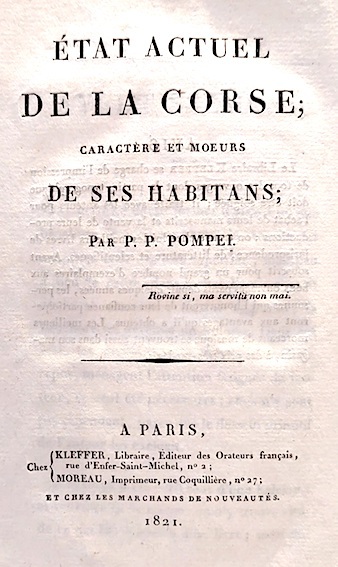
1821ref. 14828Kleffer, Moreau Paris 1821 1 vol. In-8 broché de VI 316 pp., couverture muette, pièce de titre en papier.
1933Mm 230x295 Due volumi nella loro brossura originale con titolo al dorso e al piatto: vol. I, "Testo" di xi-507 pagine con 189 figure in nero nel testo; vol. II, "Tavole" con 65 tavole in nero e a colori. Leggere, tenui fioriture concentrate nel primo tomo, peraltro l'opera è in buone condizioni nelle sue legature ben salde.Spedizione i n 24 ore dalla conferma dell'ordine.
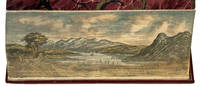
1868ref. FF2551London:: Bell and Daldy 1868. 1868. Thick 8vo. xvi 579 1 pp. 277 woodcuts 8 illus. including frontispiece reattached and large folding plate at rear showing excavations at Pompeii; lacks facing tissue to frontispiece; occasional light foxing. With a handsome full crushed crimson morocco gilt rules surround corner fillets raised bands all edges gilt. Armorial bookplate of Lank. Very good. With a fine fore-edge painting in watercolors found hidden under the gold showing Lake 'Massawhippy' sic The Lake Massawippi Eastern Townships Quebec Canada is painted after an engraving by S. Bradshaw and published by George Virtue 1841 after a drawing by William Henry Bartlett. The image appeared in Bartlett's Canadian Scenery 1842. / This fore-edge painting has been in a private collection for an unknown period of time; the date painted is unknown but likely in the range of the 1960s or 1970s. Thomas Henry Dyer 1804-1888 was an English historical and antiquarian writer. Bell and Daldy, 1868. hardcover
1868ref. FF2551London:: Bell and Daldy 1868. 1868. Thick 8vo. xvi 579 1 pp. 277 woodcuts 8 illus. including frontispiece reattached and large folding plate at rear showing excavations at Pompeii; lacks facing tissue to frontispiece; occasional light foxing. With a handsome full crushed crimson morocco gilt rules surround corner fillets raised bands all edges gilt. Armorial bookplate of Lank. Very good. With a fine fore-edge painting in watercolors found hidden under the gold showing Lake 'Massawhippy' sic The Lake Massawippi Eastern Townships Quebec Canada is painted after an engraving by S. Bradshaw and published by George Virtue 1841 after a drawing by William Henry Bartlett. The image appeared in Bartlett's Canadian Scenery 1842. / This fore-edge painting has been in a private collection for an unknown period of time; the date painted is unknown but likely in the range of the 1960s or 1970s. Thomas Henry Dyer 1804-1888 was an English historical and antiquarian writer. Bell and Daldy, 1868. hardcover books
Portfolio con sei finissime cromolitografie su disegni di Vincenzo Loria che mostrano alcuni scorci di Pompei. Senza data ma del 1890 circa. Vincenzo Loria (Salerno 1849-La Spezia 1939) pittore italiano specializzato nella pittura di genere e di paesaggio. Nella città natale iniziò a dedicarsi alla pittura sotto la guida del maestro francese Leon Richter, per poi studiare a Napoli presso l'Accademia di Belle Arti, dove, allievo di Domenico Morelli, si distinse per la padronanza acquisita nella tecnica dell'acquerello. Successivamente dipinse su commissione per amatori stranieri e ricchi galleristi, tra cui si ricorda Luigi Pisani, che acquistò numerose opere per la sua galleria fiorentina di Borgo Ognissanti. Nel 1890 Loria aprì a Napoli un'importante galleria d'arte che diventò presto uno dei punti di riferimento della scuola napoletana del secondo Ottocento. Lo studio di Loria era frequentato da illustri personalità italiane e straniere, non solo europee: nobili, industriali, politici. Antica nota manoscritta con titolo dell'incisione al verso (Casa Cornelio Rufo, Strada di Sepolcri, Casa Meleagro, Anfiteatro, Tempio di Venere, Foro civile). Le incisioni montate su cartoncino sono contenute all'interno di un album privo di indicazioni editoriali tranne la scritta in oro Pompei al piatto anteriore In buone condizion Copertina in tela con titolo in oro al piatto anteriore in buone condizioni generali con lievi usure ai margini e dorso. Legatura assente. Dim. Incisioni 21,5x27 cm. Cartoncino 32,5x40,5 cm. Album 35x41 cm. Peso Kg. 1,400. Portfolio with six very fine cromolytographs after drawings of Vincenzo Loria featuring some views of Pompei. No date but of 1890 circa. Vincenzo Loria (1850 – 1939) was an italian painter, active mainly as a watercolor artist in Naples. Born in Salerno, he went to Naples and studied under professor Domenico Morelli, painting genre subjects sometimes in oil, but more commonly in watercolor. He exhibited at Turin, Milan, Venice, and yearly at the Naples Promotrice. Antique handwritten note with title of engraving in the verso (Casa Cornelio Rufo, Strada di Sepolcri, Casa Meleagro, Anfiteatro, Tempio di Venere, Foro civile). The engravings are mounted on cartonboard in a portfolio inside an album without editorial indications apart for the golden writing Pompei in the front plate. In good conditions. Cloth cover with golden title in the front plate in good general conditions lightly worn in the extremities. Binding lacks. Dim. Incisioni 21,5x27 cm. Cartoncino 32,5x40,5 cm. Album 35x41 cm. Weight Kg. 1,400.
1870ref. 21956Paris Firmin-Didot et Cie 1870 in-8 bradel 8 volumes, reliure bradel (bradel binding) grand in-octavo (27,5 x 18,5 cm), dos long (spine without raised band), titre frappé or (gilt title), pièce de titre sur fond orangé (label of title) avec filet or (label of title with gilt line), haut du dos du tome 1 épidermé et coiffe supérieure du tome 8 manquante, recouvert de papier peigné (cover with painting paper) marron-clair et marron-foncé, toutes tranches non-rognées, RECUEIL GÉNÉRAL DES PEINTURES, BRONZES, MOSAIQUES, ETC..., découverts, jusqu'a ce jour, et reproduits d'après Le antichità di Ercolano, il Museo Borbonico et tous les ouvrages analogues augmenté de sujets inédits gravés au trait sur cuivre par H. Roux ainé et accompagné d'un texte explicatif par M. L. Barré (soit 794 planches hors-texte en noir), Comprend : T. I. "Peintures, 1ère sér. : décorations architecturales", 1870, (XXIII-134 p.-[108] f. de pl.) ; T. II. "Peintures, 2e sér. : compositions de plusieurs figures", 1870 (263 p.-[90] f. de pl.) ; T. III. "Peintures, 2e et 5e sér. : tableaux, paysages", 1870 (104, 49 p., pl.) ; T. IV. "Peintures, 3e sér. : figures isolées", 1870 (232 p.-[123] f. de pl.) ; T. V. "Peintures, 4e et 6e sér. : frises, mosaïques", 1870 (111, 45 p., pl.) ; T. VI. "Bronzes, 1ère sér : statues", 1870 (213 p.-[110] f. de pl.) ; T. VII. "Bronzes, 2e et 3e sér. : bustes, lampes", 1870 (230 p.-[100] f. de pl.) ; T. VIII. "Musées secrets", 1872 (230 p.-[60] f. de pl.), 1870-72 Paris : Firmin-Didot et Cie Editeurs,
1832ref. 8313Neapel, Stamperia Reale, 1832. 1 Bl., 91, XXIV S. 11 (1 kolorierte) teils gefalt. Kupfertafeln. Kl.-4°. HLdr. der Zeit mit Rückentitel (fleckig, beschabt und etw. bestoßen).
1892ref. 002820Paris, Calmann Lévy, 1892
ref. 106393Paris, Librairie Firmin-Didot et Cie, 1875-1878, 8 volumes in-4 de 275x175 mm environ, de 100 à 250 pages par volume, cartonnage marbré avec titres dorés sur le dos, sur pièce de titre cognac. Complet des 794 planches (+ 6 bis), soit 800 planches. Rare ensemble complet des 8 tomes, le dernier concernant l'Erotica (Musée Secret) est très difficile à trouver. Des rousseurs, gardes brunies, un dos et une coupe accidentés, coiffes et mors frottés, l'impression est un peu plus claire sur certaines planches, sinon bon état.