NIGHTINGALE, FLORENCEBiblio.com
12.424 risultati
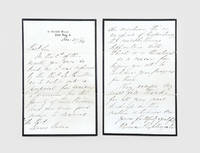
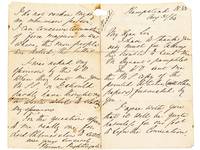
1864rif. 3103Hampstead: np 1864. First edition. nb. Good. FLORENCE NIGHTINGALE REJECTS THE FIRST GENEVA CONVENTION NINE DAYS AFTER ITS SIGNING: "IT IS LIKE AN OPERA CHORUS". A foundation-era manuscript of international humanitarian law: Florence Nightingale's private rejection of the First Geneva Convention written to Britain's Geneva delegate nine days after its signing-the primary source the ICRC's own historians have long identified as the more accurate record of her views and which the Collected Works anticipated without having. -------- This letter sits at the precise intersection of everything Florence Nightingale most fundamentally believed and everything for which she is remembered. Her life's work rested on a single conviction: that the mass death of soldiers from disease neglect and institutional failure was preventable and that the remedy was systemic reform not charitable supplementation.The Geneva Convention of 1864 proposed a different answer to the same problem. She thought it was wrong and this letter says so privately and without diplomatic qualification to Thomas Longmore the man who had just helped negotiate it. On August 22 1864 twelve European states signed the Geneva Convention for the Amelioration of the Condition of the Wounded in Armies in the Field. The Convention established the neutrality and protection of wounded soldiers medical personnel and hospitals and adopted the red cross on a white ground as their identifying emblem. It represented a revolutionary proposition: that even in war international law could impose limits upon belligerent states. Nine days later Nightingale rejected the premise that such an agreement could meaningfully alter the conduct of war. The War Office had sent her the manuscript copy of the Convention's articles - materials furnished to them by the letter's recipient Longmore from the Geneva Conference - and asked for her opinion before Britain's accession was finalized. She was the obvious person to ask: no one alive had more direct experience of the conditions the Convention was designed to address. Her response in this letter is devastating: "It amounts to nothing more than a declaration that humanity to the wounded is a good thing. It is like an Opera chorus. And if the principal European characters sing 'We never will be cruel more' I am sure if England likes to sing too 'We never will be cruel more' I see no objection." For Nightingale the fundamental problem was enforcement. A promise of humane conduct had little value because governments willing to observe it required no treaty while governments unwilling to observe it would simply disregard one: "But it is like vows. People who keep a vow would do the thing without the vow. And if people will not do it without the vow they will not do it with." She applies that reasoning directly to the signatories: "England & France will not be more humane to the enemy wounded for having signed the Convention. And the Convention will not keep semi-barbarous nations like Russia from being inhuman." And Nightingale refuses to disguise the realities of warfare beneath humanitarian rhetoric: "I do not reckon myself an inhuman person I can conceive circumstances of 'force majeure' in war where the more people are killed the better." Her conclusion is political and administrative. The question ultimately belongs not to humanitarian volunteers but to government: "For the question appears to me really one for Lord Palmerston to settle." NIGHTINGALE AGAINST HENRY DUNANT: The letter captures one of the fundamental disagreements at the birth of modern humanitarianism. Nightingale and Henry Dunant Swiss humanitarian co-founder of the Red Cross had confronted essentially the same problem-the catastrophic failure of military systems to care for wounded and sick soldiers-but arrived at profoundly different solutions. Nightingale believed the answer was to reform the state and its military medical administration; Dunant believed the inadequacy of those systems required an independent humanitarian structure capable of supplementing them. Nightingale had already objected to Dunant's proposal for voluntary relief societies arguing that such organizations would assume responsibilities properly belonging to governments. Contemporary accounts record her warning that this would relieve governments of duties "which they alone are in a position to assume." The present letter goes further. Written after the Geneva Convention had actually been signed it addresses not merely Dunant's voluntary relief societies but the international legal mechanism intended to protect the wounded. Her objection was fundamental: no treaty could conjure humane conduct in governments that lacked the will or the administrative capacity to provide it. Critically this was not a position confined to her private correspondence. Lynn McDonald's scholarly edition of the Collected Works records that Nightingale communicated the force majeure argument directly to Dunant himself warning him simultaneously of "the very great danger of taking the responsibility off governments of providing for wounded and sick." The present letter to Longmore is the only known primary document in which she makes this argument in full in her own hand to the man who had negotiated the instrument she was critiquing. It has not previously appeared in the scholarly record. THE SYSTEMS REFORMER BEHIND THE "LADY WITH THE LAMP": The letter also exposes the inadequacy of the sentimental popular image of Nightingale as merely the compassionate "Lady with the Lamp." Nightingale was a formidable researcher statistician administrator and systems reformer. She pioneered the use of statistical information and data visualization to demonstrate preventable military mortality and became the first woman elected a Fellow of the Royal Statistical Society in 1858. Her experience during and after the Crimean War convinced her that preventable military suffering resulted principally from failures of administration sanitation organization and accountability. Her solution was therefore not to create a parallel charitable apparatus but to force governments and military institutions to perform their existing responsibilities. That distinction remains central to scholarship on Nightingale and the Red Cross. The International Committee of the Red Cross ICRC itself acknowledges that although she and Dunant shared the objective of alleviating wartime suffering their "values and approaches differed significantly" and specifically recognizes her skepticism that an international convention protecting the wounded would actually be respected on the battlefield. The ICRC further cautions scholars against confusing "the public declarations of a woman well versed in the art of public relations with her private opinions." The present letter is precisely the private opinion the ICRC's own historians have flagged as the more accurate record of her views. NIGHTINGALE AND THE RED CROSS - PUBLIC MYTH AND PRIVATE OPINION: The historical irony is considerable. In 1872 Henri Dunant publicly credited Nightingale as an inspiration for his humanitarian work declaring that although he was known as founder of the Red Cross and originator of the Geneva Convention "it is to an Englishwoman that all the honour is due." Nightingale consequently became associated in popular memory with the humanitarian movement whose foundational assumptions she had challenged. The International Red Cross Conference of 1907 sent her a formal message saluting her as "the pioneer of the first Red Cross movement." She spent forty years privately maintaining that the movement was built on a false premise. That distinction gives the present manuscript particular force. Written "Private" to Britain's representative at Geneva while the Convention was scarcely a week old it records Nightingale without commemorative hindsight or diplomatic polish. She calls the new international agreement an "Opera chorus" compares its promises to ineffectual vows predicts that civilized powers will behave according to circumstances regardless of their signatures and argues that states inclined toward brutality will simply ignore it. The document thus places one of the nineteenth century's greatest humanitarian reformers at the precise historical moment when two competing models for alleviating suffering in war confronted one another: Dunant's international humanitarian law and voluntary relief movement versus Nightingale's insistence upon state responsibility and systemic military reform. History ultimately incorporated both. Modern military medical systems bear Nightingale's legacy while the Geneva Conventions and the Red Cross embody Dunant's. Their apparently contrary paths ultimately became complementary. This letter captures the disagreement at its source. PROVENANCE: From the personal papers of Sir Thomas Longmore 1816-1895 Professor of Military Surgery at Netley and British delegate to the Geneva Conference of August 1864; thence by family descent. Marked "Private" by Nightingale herself the letter remained among Longmore's papers. Autograph Letter Signed "Florence Nightingale" to Sir Thomas Longmore rejecting the First Geneva Convention nine days after its signing. Hampstead N.W.: August 31 1864. One sheet 7x9 in folded into four pages. Hole at top center. Originally folded to create six panels. Top two panels completely separated at both folds bottom panels separated along vertical fold; other panels just barely attached. There is no loss at the folds and when the panels are placed together everything appears complete and attached. Text throughout legible and unfaded. Signature crisp and fully legible. References: Boissier Pierre. "Florence Nightingale and Henry Dunant: Similarities and Differences." International Review of the Red Cross 1964. McDonald Lynn ed. Florence Nightingale and the European Wars: From the Crimean to the Franco-Prussian War. The Collected Works of Florence Nightingale University of Guelph. Mohr Charlotte. "Florence Nightingale: Portrait of a Pioneer of Modern Nursing in Writings." ICRC Library / Cross-Files August 2018. Angela Countess of Limerick. "Florence Nightingale." International Review of the Red Cross 1964. np unknown
1864rif. 3103Hampstead: np 1864. First edition. nb. Good. FLORENCE NIGHTINGALE REJECTS THE FIRST GENEVA CONVENTION NINE DAYS AFTER ITS SIGNING: "IT IS LIKE AN OPERA CHORUS". A foundation-era manuscript of international humanitarian law: Florence Nightingale's private rejection of the First Geneva Convention written to Britain's Geneva delegate nine days after its signing-the primary source the ICRC's own historians have long identified as the more accurate record of her views and which the Collected Works anticipated without having. -------- This letter sits at the precise intersection of everything Florence Nightingale most fundamentally believed and everything for which she is remembered. Her life's work rested on a single conviction: that the mass death of soldiers from disease neglect and institutional failure was preventable and that the remedy was systemic reform not charitable supplementation.The Geneva Convention of 1864 proposed a different answer to the same problem. She thought it was wrong and this letter says so privately and without diplomatic qualification to Thomas Longmore the man who had just helped negotiate it. On August 22 1864 twelve European states signed the Geneva Convention for the Amelioration of the Condition of the Wounded in Armies in the Field. The Convention established the neutrality and protection of wounded soldiers medical personnel and hospitals and adopted the red cross on a white ground as their identifying emblem. It represented a revolutionary proposition: that even in war international law could impose limits upon belligerent states. Nine days later Nightingale rejected the premise that such an agreement could meaningfully alter the conduct of war. The War Office had sent her the manuscript copy of the Convention's articles - materials furnished to them by the letter's recipient Longmore from the Geneva Conference - and asked for her opinion before Britain's accession was finalized. She was the obvious person to ask: no one alive had more direct experience of the conditions the Convention was designed to address. Her response in this letter is devastating: "It amounts to nothing more than a declaration that humanity to the wounded is a good thing. It is like an Opera chorus. And if the principal European characters sing 'We never will be cruel more' I am sure if England likes to sing too 'We never will be cruel more' I see no objection." For Nightingale the fundamental problem was enforcement. A promise of humane conduct had little value because governments willing to observe it required no treaty while governments unwilling to observe it would simply disregard one: "But it is like vows. People who keep a vow would do the thing without the vow. And if people will not do it without the vow they will not do it with." She applies that reasoning directly to the signatories: "England & France will not be more humane to the enemy wounded for having signed the Convention. And the Convention will not keep semi-barbarous nations like Russia from being inhuman." And Nightingale refuses to disguise the realities of warfare beneath humanitarian rhetoric: "I do not reckon myself an inhuman person I can conceive circumstances of 'force majeure' in war where the more people are killed the better." Her conclusion is political and administrative. The question ultimately belongs not to humanitarian volunteers but to government: "For the question appears to me really one for Lord Palmerston to settle." NIGHTINGALE AGAINST HENRY DUNANT: The letter captures one of the fundamental disagreements at the birth of modern humanitarianism. Nightingale and Henry Dunant Swiss humanitarian co-founder of the Red Cross had confronted essentially the same problem-the catastrophic failure of military systems to care for wounded and sick soldiers-but arrived at profoundly different solutions. Nightingale believed the answer was to reform the state and its military medical administration; Dunant believed the inadequacy of those systems required an independent humanitarian structure capable of supplementing them. Nightingale had already objected to Dunant's proposal for voluntary relief societies arguing that such organizations would assume responsibilities properly belonging to governments. Contemporary accounts record her warning that this would relieve governments of duties "which they alone are in a position to assume." The present letter goes further. Written after the Geneva Convention had actually been signed it addresses not merely Dunant's voluntary relief societies but the international legal mechanism intended to protect the wounded. Her objection was fundamental: no treaty could conjure humane conduct in governments that lacked the will or the administrative capacity to provide it. Critically this was not a position confined to her private correspondence. Lynn McDonald's scholarly edition of the Collected Works records that Nightingale communicated the force majeure argument directly to Dunant himself warning him simultaneously of "the very great danger of taking the responsibility off governments of providing for wounded and sick." The present letter to Longmore is the only known primary document in which she makes this argument in full in her own hand to the man who had negotiated the instrument she was critiquing. It has not previously appeared in the scholarly record. THE SYSTEMS REFORMER BEHIND THE "LADY WITH THE LAMP": The letter also exposes the inadequacy of the sentimental popular image of Nightingale as merely the compassionate "Lady with the Lamp." Nightingale was a formidable researcher statistician administrator and systems reformer. She pioneered the use of statistical information and data visualization to demonstrate preventable military mortality and became the first woman elected a Fellow of the Royal Statistical Society in 1858. Her experience during and after the Crimean War convinced her that preventable military suffering resulted principally from failures of administration sanitation organization and accountability. Her solution was therefore not to create a parallel charitable apparatus but to force governments and military institutions to perform their existing responsibilities. That distinction remains central to scholarship on Nightingale and the Red Cross. The International Committee of the Red Cross ICRC itself acknowledges that although she and Dunant shared the objective of alleviating wartime suffering their "values and approaches differed significantly" and specifically recognizes her skepticism that an international convention protecting the wounded would actually be respected on the battlefield. The ICRC further cautions scholars against confusing "the public declarations of a woman well versed in the art of public relations with her private opinions." The present letter is precisely the private opinion the ICRC's own historians have flagged as the more accurate record of her views. NIGHTINGALE AND THE RED CROSS - PUBLIC MYTH AND PRIVATE OPINION: The historical irony is considerable. In 1872 Henri Dunant publicly credited Nightingale as an inspiration for his humanitarian work declaring that although he was known as founder of the Red Cross and originator of the Geneva Convention "it is to an Englishwoman that all the honour is due." Nightingale consequently became associated in popular memory with the humanitarian movement whose foundational assumptions she had challenged. The International Red Cross Conference of 1907 sent her a formal message saluting her as "the pioneer of the first Red Cross movement." She spent forty years privately maintaining that the movement was built on a false premise. That distinction gives the present manuscript particular force. Written "Private" to Britain's representative at Geneva while the Convention was scarcely a week old it records Nightingale without commemorative hindsight or diplomatic polish. She calls the new international agreement an "Opera chorus" compares its promises to ineffectual vows predicts that civilized powers will behave according to circumstances regardless of their signatures and argues that states inclined toward brutality will simply ignore it. The document thus places one of the nineteenth century's greatest humanitarian reformers at the precise historical moment when two competing models for alleviating suffering in war confronted one another: Dunant's international humanitarian law and voluntary relief movement versus Nightingale's insistence upon state responsibility and systemic military reform. History ultimately incorporated both. Modern military medical systems bear Nightingale's legacy while the Geneva Conventions and the Red Cross embody Dunant's. Their apparently contrary paths ultimately became complementary. This letter captures the disagreement at its source. PROVENANCE: From the personal papers of Sir Thomas Longmore 1816-1895 Professor of Military Surgery at Netley and British delegate to the Geneva Conference of August 1864; thence by family descent. Marked "Private" by Nightingale herself the letter remained among Longmore's papers. Autograph Letter Signed "Florence Nightingale" to Sir Thomas Longmore rejecting the First Geneva Convention nine days after its signing. Hampstead N.W.: August 31 1864. One sheet 7x9 in folded into four pages. Hole at top center. Originally folded to create six panels. Top two panels completely separated at both folds bottom panels separated along vertical fold; other panels just barely attached. There is no loss at the folds and when the panels are placed together everything appears complete and attached. Text throughout legible and unfaded. Signature crisp and fully legible. References: Boissier Pierre. "Florence Nightingale and Henry Dunant: Similarities and Differences." International Review of the Red Cross 1964. McDonald Lynn ed. Florence Nightingale and the European Wars: From the Crimean to the Franco-Prussian War. The Collected Works of Florence Nightingale University of Guelph. Mohr Charlotte. "Florence Nightingale: Portrait of a Pioneer of Modern Nursing in Writings." ICRC Library / Cross-Files August 2018. Angela Countess of Limerick. "Florence Nightingale." International Review of the Red Cross 1964. np unknown books
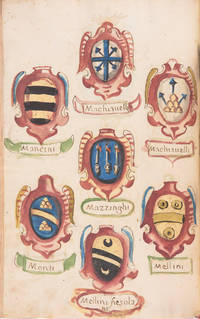
1530rif. 42820806Folio 348 x 224 mm. 58 leaves 116 unnumbered pages on paper with the watermark of the Sacred Monogram Briquet 9467 i.e. Vicenza 1527-38. 812 armorial shields in watercolor seven per page. Late 18th-century calf black letter spine label. Rubbed some soiling. Very good condition. This is a lovely Renaissance manuscript representing the great families of Florence at the height of the Renaissance. This beautiful manuscript contains 812 hand-colored armorial shields arranged alphabetically from Aldrobradi to Zucharini with a leaf of additions at the end. This Renaissance manuscript contains the arms of Florence's great families including its patrons of the arts financiers businessmen philosophers and political leaders. The influential names represented here include Medici Alberti Da Vinci Albizzi Pazzi Lippi Strozzi and hundreds of others. The manuscript contains the arms of the families of Galileo Galilei and of Niccolo Machiavelli whose history of Florence was written about the time of this creation of this manuscript. Provenance: Christie's March 15 1995 lot 338.
1876rif. 163298London: Smith Elder & Co. 1876. Educating one of her shipwrecked nurses Third edition of this landmark medical textbook presented by Nightingale to a promising Nightingale School trainee on the eve of her departure for Canada to provide emergency medical relief. Evidently well used by its recipient the volume reflects Nightingale's close engagement with her nurses and her sustained encouragement of their professional development. The warm inscription on the half-title reads: "Nurse Ellen Webb: on going out to Montreal: with Florence Nightingale's love & prayers. Go on & on! London: July 1876". Webb's name and occupation were first written in pencil and then traced in ink; the second line is also in ink with the remainder of the inscription left in pencil. Ellen Webb was one of four Nightingale nurses dispatched to the Montreal General Hospital in August 1876. The lady superintendent Maria Machin had herself entered the Nightingale School in 1873 and proved an exceptional teacher of probationers. At the hospital's request the Nightingale Fund Council agreed - reluctantly given her abilities - to her transfer in 1875. Machin arrived in October with four Nightingale nurses and rapidly improved nursing standards. When a typhoid epidemic struck in 1876 she sought further assistance. Webb Anna Marsh Jane Masters and Jane Cross - all just completing their first year of training in London - were selected for the second team. Nightingale wrote on 4 May 1876 that Webb was "most excellent and admirable; I believe she would go to Canada. Webb and Rodgers really the highest women on my list" McDonald p. 537. As Helmstadter notes Webb had a "right-minded gentle forbearing disposition. not clever but anxious to learn" and under difficult conditions in their second year Cross and Webb "did even better" when Machin was unable to provide regular supervision. Economic pressures in Montreal forced budget reductions and four Nightingale nurses including Cross and Webb departed in July 1878. Their ship was wrecked on an island in the St Lawrence River leaving them stranded for a week. Their safe arrival in Glasgow on 9 August was marked by prayers of thanksgiving and by a published account of their ordeal organized and edited by Nightingale from their letters home: From Nurse Wilson's Nurse Styring's Nurse Cross's and Nurse Webb's Accounts of the Shipwreck on Their Voyage Home from Canada on Duty. Nightingale later remarked privately: "The nurses are not much the worse. They seem to have behaved admirably. Help us to thank God for them and for ourselves" to Harry Verney 15 Aug. 1878; McDonald p. 545. Nightingale's gift to Webb was particularly apt for a nurse whose training had been interrupted by emergency service. Hill 1834-1892 a leading London surgeon and Professor of Clinical Surgery at UCL published the first edition in 1867. The guide offered practical comprehensive instruction in bandaging strapping and the treatment of fractures and dislocations. Popular from the outset it reached six editions by 1887. The second edition 1869 added material on preparations for sickrooms and operating theatres as well as a catalogue of surgical instruments. This third edition incorporates the latest improvements in treatment including the administration of chloroform and ether and adds new illustrations. The Essentials of Bandaging soon became foundational in nurse training. One of the earliest reading lists for nurses issued at St Thomas's Hospital in 1873 as part of Dr John Croft's lecture syllabus opened with Nightingale's own "Introductory Address". Students were expected to read Notes on Nursing "at least four times". The list also included Veitch's Handbook for Nurses Domville's Manual for Hospital Nurses and Berkeley Hill's Essentials of Bandaging Tesseyman p. 108. In March 1873 Nightingale herself noted books "recommended by Dr Croft" placing the second edition of The Essentials of Bandaging second on the list and recording the purchase of six copies. Octavo. With numerous woodcut illustrations and diagrams in text. Original purple cloth spine lettered and ruled in gilt covers with blind fillet border brown coated endpapers. Housed in a burgundy flat-back cloth box by the Chelsea Bindery. Bookseller's ticket J. Day of 16 Mount St on front free endpaper. Spine sunned ends and corners bumped and lightly worn cloth unmarked; expertly recased front free endpaper chipped along bottom edge contents generally clean with occasional spotting in upper margins. A well-read copy of a practical reference manual in very good condition. Carol Helmstadter "Maria Machin at the Montreal General Hospital: a study in revisionism" The UKAHN Bulletin vol. 8 no. 1 2020; Lynn McDonald ed. Florence Nightingale: Extending Nursing 2009; Sheri Tesseyman "Complex alliance: a study of relationships between nursing and medicine in Britain and the United States of America 1860-1914" thesis submitted to the University of Manchester 2013. For Nightingale's manuscript notes of March 1873 see the transcription file Add Mss 47760-67 49623 made available online by the University of Guelph. hardcover
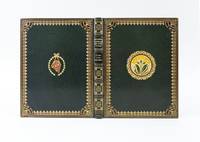
1910rif. ST17129-032London: Published for the Florence Press by Chatto & Windus 1910. ONE OF 250 COPIES ON PAPER 12 additional copies were printed on vellum. 250 x 185 mm. 9 7/8 x 7 1/4". 5 p.l. 120 pp. 1 leaf. ANIIMATED DARK GREEN INLAID CRUSHED MOROCCO ELABORATELY GILT BY SANGORSKI & SUTCLIFFE signed on front turn-in covers with inlaid border of russet ribbon laced at each corner through a blue heart from which is suspended a pair of bells in inlaid brown morocco an inner border of red inlaid hearts alternating with small gilt floral tools front cover with centerpiece medallion of five inlaid flowers in green white and yellow on a densely stippled ground within a red inlaid circle with a gilt collar of oak leaves and acorns rear board with centerpiece inlay in brown and pink of Pan pipes suspended on a ribbon the whole enclosed in a gilt garland; raised bands spine gilt in compartments featuring floral cornerpieces and knotwork centerpiece with red heart and dot inlays very ornate gilt inner dentelles silk pastedowns and endpapers all edges gilt. In a slightly marked quarter morocco fleece-lined clamshell box with gilt titling on spine. 12 fine color plates by Norman Wilkinson. With the binders' typed description of the binding on Sangorski & Sutcliffe letterhead laid in at front. ◆Tips of joints and corners almost imperceptibly rubbed one leaf with small faint stain a few minute marginal adhesions otherwise INTERNALLY AND EXTERNALLY IN VIRTUALLY PERFECT CONDITION. This is a finely bound and finely printed edition of a group of essays short stories and autobiographical and travel sketches originally published in various periodicals and first printed as a collection in 1881. Founded in 1908 by the London publishers Chatto & Windus and operated by Philip Lee Warner the Florence Press had as its expressed intention the production of "beautiful books in the choicest types . . . in larger editions and at lower cost than was usual with such monuments of typography as the issues of the Kelmscott and other presses." Florence books are readily distinguishable by their special type designed by Herbert P. Horne after 15th century Italian faces that are elegant simple and easily readable. Binders Francis Sangorski and George Sutcliffe met as boys attending Douglas Cockerell's bookbinding classes at the L. C. C. Central School. Cockerell was so impressed by their skill that he hired Sutcliffe as a finisher and Sangorski as a forwarder. In 1901 Francis and George went into business for themselves and before long they had become two of the most renowned English binders of the 20th century. We can date the time of our binding to the decade of the 1910s because there is a letter from the binders laid in with an explanation of the decoration on stationery with the printed date "191__." The letter indicates that "250 different pieces of various colored leathers are used as inlays" many to suggest the contents of the essays: "the wedding bells and heart border are suggestive of the first essay 'Virginibus Puerisque.' The front centerpiece composed of spring flowers surrounded by a wreath of oak suggests 'Crabbed Age and Youth' and the back centerpiece suggests 'Pan's Pipes.'" In terms of its design quality of execution and condition the binding is simply beautiful. Published for the Florence Press by Chatto & Windus unknown
1910rif. ST17129-032London: Published for the Florence Press by Chatto & Windus 1910. ONE OF 250 COPIES ON PAPER 12 additional copies were printed on vellum. 250 x 185 mm. 9 7/8 x 7 1/4". 5 p.l. 120 pp. 1 leaf. ANIIMATED DARK GREEN INLAID CRUSHED MOROCCO ELABORATELY GILT BY SANGORSKI & SUTCLIFFE signed on front turn-in covers with inlaid border of russet ribbon laced at each corner through a blue heart from which is suspended a pair of bells in inlaid brown morocco an inner border of red inlaid hearts alternating with small gilt floral tools front cover with centerpiece medallion of five inlaid flowers in green white and yellow on a densely stippled ground within a red inlaid circle with a gilt collar of oak leaves and acorns rear board with centerpiece inlay in brown and pink of Pan pipes suspended on a ribbon the whole enclosed in a gilt garland; raised bands spine gilt in compartments featuring floral cornerpieces and knotwork centerpiece with red heart and dot inlays very ornate gilt inner dentelles silk pastedowns and endpapers all edges gilt. In a slightly marked quarter morocco fleece-lined clamshell box with gilt titling on spine. 12 fine color plates by Norman Wilkinson. With the binders' typed description of the binding on Sangorski & Sutcliffe letterhead laid in at front. ◆Tips of joints and corners almost imperceptibly rubbed one leaf with small faint stain a few minute marginal adhesions otherwise INTERNALLY AND EXTERNALLY IN VIRTUALLY PERFECT CONDITION. This is a finely bound and finely printed edition of a group of essays short stories and autobiographical and travel sketches originally published in various periodicals and first printed as a collection in 1881. Founded in 1908 by the London publishers Chatto & Windus and operated by Philip Lee Warner the Florence Press had as its expressed intention the production of "beautiful books in the choicest types . . . in larger editions and at lower cost than was usual with such monuments of typography as the issues of the Kelmscott and other presses." Florence books are readily distinguishable by their special type designed by Herbert P. Horne after 15th century Italian faces that are elegant simple and easily readable. Binders Francis Sangorski and George Sutcliffe met as boys attending Douglas Cockerell's bookbinding classes at the L. C. C. Central School. Cockerell was so impressed by their skill that he hired Sutcliffe as a finisher and Sangorski as a forwarder. In 1901 Francis and George went into business for themselves and before long they had become two of the most renowned English binders of the 20th century. We can date the time of our binding to the decade of the 1910s because there is a letter from the binders laid in with an explanation of the decoration on stationery with the printed date "191__." The letter indicates that "250 different pieces of various colored leathers are used as inlays" many to suggest the contents of the essays: "the wedding bells and heart border are suggestive of the first essay 'Virginibus Puerisque.' The front centerpiece composed of spring flowers surrounded by a wreath of oak suggests 'Crabbed Age and Youth' and the back centerpiece suggests 'Pan's Pipes.'" In terms of its design quality of execution and condition the binding is simply beautiful. Published for the Florence Press by Chatto & Windus unknown books
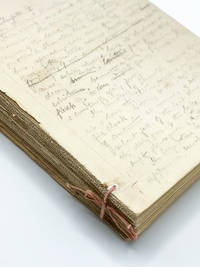
1910rif. 44643n.p.: n.p. 1910. Very good. Original draft entirely written out by hand of the sequel to the international sensation THE ROSARY. While Florence Barclay was working on this manuscript she was in the midst of a life-changing experience: her romance novel THE ROSARY had just become one of the biggest blockbuster novels of the Edwardian era. It was not only a runaway bestseller for years on end but also parodied by PUNCH made into at least five films and described by the Queen of England herself as her favorite book of the year. According to Rachel Anderson it was "said to have been read and wept over by every housemaid in the British Isles." THE MISTRESS OF SHENSTONE was something of its sequel featuring characters first introduced in THE ROSARY. THE MISTRESS OF SHENSTONE is an exquisite romance between a widow and the man who accidentally killed her husband: like THE ROSARY it combines a moving arc of emotional development with an alluring charisma between the main characters. When Barclay arrived in the United States for a book tour of SHENSTONE she was greeted as a celebrity much in the way that Charles Dickens had been on his first trip to the country. In addition to photographers and journalists she was met right off the boat by a crush of fans holding welcome banners. This experience was so unlike what was expected for English authors in the period that her daughter makes special remark upon it in her biography of the author: "To English readers it may seem a surprising outburst and very different to anything that can be imagined as taking place in England by way of reception accorded to a private individual" 220. In 1921 SHENSTONE also became the first of Barclay's books before THE ROSARY to be turned into a film. This manuscript offers a window into the writing process of a famous romance author at the height of her power. In addition to the entire base text in Barclay's hand essentially every page is revised in the same hand in some cases extensively. Common editorial markings include crossed out words and sentences some replaced with new text additions to punctuation and rearranged phrases. It is illuminating to compare the manuscript itself with the details of Barclay's writing as described in her daughter's book LIFE OF FLORENCE L. BARCLAY 1921. In seeking to champion her mother as an author for "ordinary readers" her daughter asserts that Barclay "had no eye to the literary connoisseur the seeker after mere artistic effect" 242. Yet many of the revisions made by Barclay in this draft suggest that she cared much more about the art of her work than the biography claims. Altered words often reflect the author's stylistic refinements seeking a more accurate or elevated word in place of the original e.g. "empty" changed to "desolate". Other changes show a focused eye for paring down. For instance "she poured out the doctor's tea" and "passed it across the folding tea table between them" has been changed simply to "handed it to him." These decisions reflect more than a desire to "supply them her readers with that they wanted" 242: they show an author spending hours refining her craft. A manuscript offering the opportunity to research further into the working process of a major popular romance writer - a topic that has thus far been rarely recorded or studied. 9'' x 6.75''. 386 individual lines sheets thread-bound by hand with pink ribbon filled out in pencil on rectos only. Text begins with Chapter I "On the terrace of Shenstone" and ends with the phrase sentence of the final chapter "Mrs. Jim Airth" in larger script an effect reproduced in the printed final. Editorial markings throughout. Housed in later waxed canvas wrapper with two printed labels "The Mistress of Shenstone" and one handwritten annotation "1st M S of Mistress of Shenstone." Provenance: by descent from author's family. n.p. unknown
1910rif. 44643n.p.: n.p. 1910. Very good. Original draft entirely written out by hand of the sequel to the international sensation THE ROSARY. While Florence Barclay was working on this manuscript she was in the midst of a life-changing experience: her romance novel THE ROSARY had just become one of the biggest blockbuster novels of the Edwardian era. It was not only a runaway bestseller for years on end but also parodied by PUNCH made into at least five films and described by the Queen of England herself as her favorite book of the year. According to Rachel Anderson it was "said to have been read and wept over by every housemaid in the British Isles." THE MISTRESS OF SHENSTONE was something of its sequel featuring characters first introduced in THE ROSARY. THE MISTRESS OF SHENSTONE is an exquisite romance between a widow and the man who accidentally killed her husband: like THE ROSARY it combines a moving arc of emotional development with an alluring charisma between the main characters. When Barclay arrived in the United States for a book tour of SHENSTONE she was greeted as a celebrity much in the way that Charles Dickens had been on his first trip to the country. In addition to photographers and journalists she was met right off the boat by a crush of fans holding welcome banners. This experience was so unlike what was expected for English authors in the period that her daughter makes special remark upon it in her biography of the author: "To English readers it may seem a surprising outburst and very different to anything that can be imagined as taking place in England by way of reception accorded to a private individual" 220. In 1921 SHENSTONE also became the first of Barclay's books before THE ROSARY to be turned into a film. This manuscript offers a window into the writing process of a famous romance author at the height of her power. In addition to the entire base text in Barclay's hand essentially every page is revised in the same hand in some cases extensively. Common editorial markings include crossed out words and sentences some replaced with new text additions to punctuation and rearranged phrases. It is illuminating to compare the manuscript itself with the details of Barclay's writing as described in her daughter's book LIFE OF FLORENCE L. BARCLAY 1921. In seeking to champion her mother as an author for "ordinary readers" her daughter asserts that Barclay "had no eye to the literary connoisseur the seeker after mere artistic effect" 242. Yet many of the revisions made by Barclay in this draft suggest that she cared much more about the art of her work than the biography claims. Altered words often reflect the author's stylistic refinements seeking a more accurate or elevated word in place of the original e.g. "empty" changed to "desolate". Other changes show a focused eye for paring down. For instance "she poured out the doctor's tea" and "passed it across the folding tea table between them" has been changed simply to "handed it to him." These decisions reflect more than a desire to "supply them her readers with that they wanted" 242: they show an author spending hours refining her craft. A manuscript offering the opportunity to research further into the working process of a major popular romance writer - a topic that has thus far been rarely recorded or studied. 9'' x 6.75''. 386 individual lines sheets thread-bound by hand with pink ribbon filled out in pencil on rectos only. Text begins with Chapter I "On the terrace of Shenstone" and ends with the phrase sentence of the final chapter "Mrs. Jim Airth" in larger script an effect reproduced in the printed final. Editorial markings throughout. Housed in later waxed canvas wrapper with two printed labels "The Mistress of Shenstone" and one handwritten annotation "1st M S of Mistress of Shenstone." Provenance: by descent from author's family. n.p. unknown books
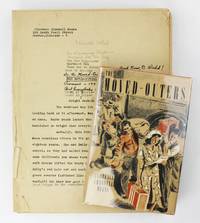
1945rif. 6500Boston: Riverside Press 1945. Overall very good. 233 i.e. 231pp. plus four small sheets. Typescript on letter-sized sheets printed on rectos only. Contemporary manuscript and typed annotations throughout. Tanned somewhat brittle. Some chipping and tape repair. with: 6154pp. plus five plates including frontispiece. Orange publisher's boards in illustrated dust jacket. Minor rubbing and wear to corners and spine ends. Light wear along edges of jacket. Tanned but otherwise clean internally. An original typescript with contemporary manuscript and typed corrections as well as alternative titles for The Moved-Outers the first full-length literary work to address the plight of Japanese Americans sent to internment camps by the U.S. government during World War II. Published by Houghton Mifflin in February 1945 this young adult novel was written by Florence Crannell Means who befriended a Japanese American family that resettled in her hometown Denver. The novel won a Newberry Medal honor award in 1946. The plot of The Moved-Outers centers on Sumiko Sue Ohara a high school senior from Cordova California who has two brothers one who is in the U.S. Army and later dies in combat and an older sister an honor student at a midwestern university. After Pearl Harbor Sue's father a florist is arrested and imprisoned. Sure her second brother Kim and their mother are detained at the Santa Anita holding center and then sent to the Granada War Relocation Center also known as Camp Amache in southeastern Colorado. Sue and her mother try to make the best of things while Kim goes sullen and gets involved with a "zoot-suit gang." The book ends in 1943 with Sue being released to go to college and her brother enlisting in the U.S. Army. The novel was released in early 1945 just as the internment camps were beginning to close and Japanese Americans were returning to the West Coast. The 231-page typescript here is evidently an earlier draft of the novel as there are significant differences between it and the final printed text a copy of which is also present. The typescript includes numerous manuscript and typed corrections to the text and several possible titles added to the first page in manuscript. The typescript and book are accompanied by three printer's proofs of illustrations for the book and an updated but pre-publication typed letter signed by Means to illustrator Helen Blair. In the letter Means mulls her options over a quick publication of The Moved-Outers which is in danger due to a paper shortage across the country because of the war. "Of course I'm thrilled that they want the book for I was always afraid they wouldn't risk that theme" she writes. "In all this I'm trying to think in terms of service to the evacuee and to our own democracy. Means credited the influence of her father a Baptist minister for her ambition to promote interracial understanding or as she often put it to teach that "folks are folks." She often spent months living among the people she wrote about. For this novel she interviewed many Japanese Americans imprisoned in Colorado and her papers at the University of Colorado include a series of questionnaires that Nisei in Denver filled out to give Means details of their removal and their daily life in the camps. Among her other works dealing with issues of race and minority life in America are her first published novel Rainbow Bridge 1934 called one of the first sympathetic portraits of Japanese Americans in mainstream fiction; Tangled Waters 1936 which tells the story of a teenage Navajo girl living with her family on the reservation in Arizona; and Shuttered Windows 1938 which features a Black female teenager as its protagonist. In all a fascinating and unique group of materials relating to this significant novel and its author. Riverside Press unknown
1945rif. 6500Boston: Riverside Press 1945. Overall very good. 233 i.e. 231pp. plus four small sheets. Typescript on letter-sized sheets printed on rectos only. Contemporary manuscript and typed annotations throughout. Tanned somewhat brittle. Some chipping and tape repair. with: 6154pp. plus five plates including frontispiece. Orange publisher's boards in illustrated dust jacket. Minor rubbing and wear to corners and spine ends. Light wear along edges of jacket. Tanned but otherwise clean internally. An original typescript with contemporary manuscript and typed corrections as well as alternative titles for The Moved-Outers the first full-length literary work to address the plight of Japanese Americans sent to internment camps by the U.S. government during World War II. Published by Houghton Mifflin in February 1945 this young adult novel was written by Florence Crannell Means who befriended a Japanese American family that resettled in her hometown Denver. The novel won a Newberry Medal honor award in 1946. The plot of The Moved-Outers centers on Sumiko Sue Ohara a high school senior from Cordova California who has two brothers one who is in the U.S. Army and later dies in combat and an older sister an honor student at a midwestern university. After Pearl Harbor Sue's father a florist is arrested and imprisoned. Sure her second brother Kim and their mother are detained at the Santa Anita holding center and then sent to the Granada War Relocation Center also known as Camp Amache in southeastern Colorado. Sue and her mother try to make the best of things while Kim goes sullen and gets involved with a "zoot-suit gang." The book ends in 1943 with Sue being released to go to college and her brother enlisting in the U.S. Army. The novel was released in early 1945 just as the internment camps were beginning to close and Japanese Americans were returning to the West Coast. The 231-page typescript here is evidently an earlier draft of the novel as there are significant differences between it and the final printed text a copy of which is also present. The typescript includes numerous manuscript and typed corrections to the text and several possible titles added to the first page in manuscript. The typescript and book are accompanied by three printer's proofs of illustrations for the book and an updated but pre-publication typed letter signed by Means to illustrator Helen Blair. In the letter Means mulls her options over a quick publication of The Moved-Outers which is in danger due to a paper shortage across the country because of the war. "Of course I'm thrilled that they want the book for I was always afraid they wouldn't risk that theme" she writes. "In all this I'm trying to think in terms of service to the evacuee and to our own democracy. Means credited the influence of her father a Baptist minister for her ambition to promote interracial understanding or as she often put it to teach that "folks are folks." She often spent months living among the people she wrote about. For this novel she interviewed many Japanese Americans imprisoned in Colorado and her papers at the University of Colorado include a series of questionnaires that Nisei in Denver filled out to give Means details of their removal and their daily life in the camps. Among her other works dealing with issues of race and minority life in America are her first published novel Rainbow Bridge 1934 called one of the first sympathetic portraits of Japanese Americans in mainstream fiction; Tangled Waters 1936 which tells the story of a teenage Navajo girl living with her family on the reservation in Arizona; and Shuttered Windows 1938 which features a Black female teenager as its protagonist. In all a fascinating and unique group of materials relating to this significant novel and its author. Riverside Press unknown books
2007rif. SBBIH-RSSLMQIQQPWXDodo Press 2007. paperback. Good. Our good condition books are generally good for reading but not for gifting or collecting. They could have imperfections such as creasing fanning inscriptions margin notes yellowing staining on edge or cover or pages bumps scuffs etc etc sometimes multiple of these. It's a wide category that encompasses anything that isn't almost-new down to anything that is slightly better than poor. We would NOT recommend gifting Good books - these should be considered reading copies. Our books are dispatched from a Yorkshire former cotton mill. We list via barcode/ISBN so please note that the images are stock images and may not be the exact copy you receive furthermore the details about edition and year might not be accurate as many publishers reuse the same ISBN for multiple editions and as we simply scan a barcode or enter an ISBN we do not check the validity of the edition data when listing. If you're looking for an exact edition please don't order at least not without checking with us first although we don't always have time to check. We aim to dispatch prompty the service used will depend on order value and book size. We can ship to most countries see our shipping policies. Payment is via Abe only. Dodo Press paperback
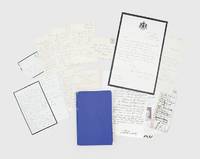
1892rif. 184236London: 1892-1938. I do not for a moment doubt that you will master or mistress the situation A group of encouraging letters to a younger nurse and mentee. De Laney trained at Nightingale's school for nurses and afterwards held senior positions in hospitals around the country. Nightingale's letters came at critical points of her career offering considered advice support and sympathy. They are accompanied by documents from de Laney's second occupation as housekeeper for the House of Lords. Amelia de Laney 1848-1940 attended the Nightingale Training School at St Thomas's Hospital between 1883 and 1886. Nightingale sent the first letter in 1891 when de Laney was considering leaving the Birmingham Workhouse Infirmary for a more senior role at the Royal Hospital for Consumption in Ventnor. Nightingale was cautiously supportive of the move. She wrote that de Laney "should have the promotion which you have well earned" but observed that the role came with a long list of duties: in addition to managing the care of patients and supervising her staff she would need to hire and train nurses look after the ten buildings and oversee the washing and cooking. Regardless Nightingale affirmed that "I do not for a moment doubt that you will master or mistress the situation if you are appointed". Nightingale provided Ventnor with an excellent reference for de Laney but the board rejected her for being insufficiently well-born. Instead de Laney moved in 1894 to a position as matron at the newly founded Epileptic Colony in Chalfont St Peter. Nightingale privately expressed her concerns to her friend Henry Bonham Carter commenting that the work was "entirely new. It is not hospital work at all. It seems to me an immense responsibility" McDonald pp. 230-31. Her concerns were proved valid. Nightingale's second letter dated April 1897 enquired after reports that de Laney had left her post. In her third letter dated May the same year Nightingale wrote to de Laney that "I grieve that you were obliged to resign & that you so much need rest" reassuring her that "you have done a good work & you will do much more good work for our cause". The fourth letter sent a month after extended Nightingale's ongoing sympathy for de Laney's "grief and distress". De Laney ultimately left nursing altogether. In 1902 she began working in the House of Lords holding the position until retirement in 1919. The correspondence here includes notices of appreciation sent on behalf of the Archduchess Maria Annunciata and Queen Alexandra. Other items include a letter from Nightingale seeking de Laney's address; an invitation card for an event at the Nightingale Training school; a document granting de Laney rooms in Westminster; a copy of Cecil Woodham-Smith's Florence Nightingale 1820-1910 1950; and a collection of clippings on Nightingale. Together 10 items: 5 autograph letters signed in black ink and pencil 1 across 2 single sheets with mourning borders 223 x 125 mm and four on bifolia 177 x 115 mm with 11 sides of writing; typed letter signed on single sheet notepaper; facsimile letter from the Home Office; invitation card; group of ephemera including newspaper cuttings and manuscript list; book octavo original blue cloth spine lettered in silver top edge blue. Modern bookplate of historian Arnold Daly Briscoe to front pastedown of volume extremities rubbed with occasional spots of wear; letters lightly creased from folding some lightly foxed one partially split along former folds. Overall a very well-preserved collection. Lynn McDonald ed. Florence Nightingale: Extending Nursing. Collected Works of Florence Nightingale vol. 13 2009. hardcover
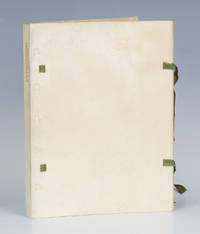
1910rif. 420London: Chatto & Windus for the Florence Press 1910. Limited Edition. Fine. Norman Wilkinson. 4to 10 x 7 1/2 in. 253 x 189 mm; 6 leaves including 1 blank 120 pp 2 leaves including 1 blank. 12 chromolithographed plates by Norman Wilkinson printed on plate paper and not included in the pagination legends on tissue guards printed in red. This is COPY no. 4 OF 12 COPIES PRINTED ON VELLUM as noted on the limitation page on verso of second leaf: «Of this edition of Virginibus Puerisque / have been printed on Aldwych hand- / made paper 250 copies of which 235 are / for sale; on vellum 12 copies of which 10 / are for sale. / Vellum Copy No. 4». Limp vellum binding with four green ties; gilt lettering on spine and upper cover t.e.g. Very faint spotting to front free endpaper slight offsetting of ties. Otherwise a pristine copy. Provenance: William Russell Flint from the family by descent. Beinecke Stevenson 79; Ransom 278:6; Tomkinson 85:6; Prideaux 13. A splendid edition of Stevenson's first collection of essays which promote a spirit of playfulness in defiance of both the hardships of human life and the restrictions imposed by bourgeois callowness. The volume brought together essays that had been previously published in the Cornhill Magazine and Macmillan's: "Virginibus Puerisque i" 1876; " ii" 1881; "iii: On Falling in Love" 1877; "iv: The Truth of Intercourse" 1879; "Crabbed Age and Youth" 1878; "An Apology for Idlers" 1877; "Ordered South" 1874; "Aes Triplex" 1878; "El Dorado" 1878; "The English Admirals" 1878; "Some Portraits by Raeburn" previously unpublished; "Child's Play" 1878; "Walking Tours" 1876; "Pan's Pipes" 1878; "A Plea for Gas Lamps" 1878 The essays inspired Norman WILKINSON 1878 - 1971 to create the 12 striking and lyrical images that accompany the texts. Wilkinson was a British artist renowned for his poster work and honored by the British Admiralty for coming up with the idea and design for "dazzle camouflage" to protect Royal Navy ships from attacks by German submarines. Founded in 1908 by the London publishers Chatto & Windus and operated by Philip Lee Warner THE FLORENCE PRESS had as its mission to produce "beautiful books in the choicest types" but in somewhat larger and less costly editions than Kelmscott and the other more celebrated English fine presses. Florence books are readily distinguishable by their special type designed by Herbert P. Horne after 15th century Italian faces that are elegant simple and easily readable. Tomkinson p. 84 This volume comes from the collection of Sir William Russell Flint 1880 - 1969 a Scottish artist illustrator and author who was linked to the Pre-Raphaelites and art nouveau designers. He enjoyed much commercial success during his career was on staff for years at 'The Illustrated London News' was commissioned to illustrate many books and the librettos of several Gilbert and Sullivan librettos. He served as president of both The Royal Society of Painters Etchers and Engravers and the Royal Watercolour Society and was knighted in 1946. Chatto & Windus for the Florence Press unknown
rif. 13765BRUNELLESCHI Les masques et les personnages de la Comédie Italienne. Expliqués par GERARD D’ HOUVILLE et interprêtés par BRUNELLESCHI en douze estampes coloriées. A Paris aux bureaux du journal DES DAMES ET DES MODES éditeur 1914. Edition numérotée :Un des Exemplaire sur vélin d'Arches, numéroté à la plume à la plume. Faux titre en rouge, au verso justification du tirage, titre 5 pages, dont 4 d’introduction par GERARD D’ HOUVILLE « celles dont le portait n’est pas là » et Suite de douze estampes superbement coloriées au pochoir d’après BRUNELLESCHI gravées par REIDEL. 1) Arlequin 2) le docteur Balanzone 3) Brighella 4) Coralline 5) Florindo 6) Giacometta 7) Mezzetin et colombine 8) Pantalon 9) Rosauro10) Scaramouche 11) Tartaglia 12) Trivellino. Chemise avec titre imprimé- portefeuille cartonné à rabats, l’ensemble dans un étui cartonné pièce de titre imprimée en long contrecollée. Fermoirs à rubans absents. 510x380mm fermé- 105x380 ouvert. Quelques traces d’usures à l’étui. Cet ouvrage a été chevé d’imprimer pour le Journal des Dames et des Modes le 10 mars 1914, par les soins de MM. BRAUN pour les estampes GRENIN Gaine Fils & Cie pour les coloris POZZOLI pour la typographies qui a été exécutée avec les caractères M OLDIER & Cie. Chef d’œuvre emblématique de BRUNELLESCHI.
1865rif. 187671London: Emily Faithfull Printer and publisher in ordinary to Her Majesty Victoria Press 1865. The work of destruction has at the same time begun First edition offprint issue of Nightingale's study of the treatment of indigenous Australians in British hospitals. Amid the European expansion and settler conflict of 19th-century Australia the Aboriginal population declined rapidly. British hospitals continued to provide treatment to indigenous Australians whose survival in the colony was viewed as a matter of national concern. By 1865 Nightingale was working to implement her reforms on an institutional scale and had contributed several commissions examining public health in British colonies. Much of her data for the current paper was gathered by missionaries: a key recommendation was an official infrastructure for collecting mortality statistics. Nightingale concludes that poor sanitation and alcohol were among the primary causes for higher death rates but she also notes that European contact itself was damaging the Aboriginal population: "as soon as native habits and customs begin to undergo change under European influences the work of destruction has at the same time begun" p. 3. Nightingale's paper was originally published in Transactions of the National Association for the Promotion of Social Science the same year: Bishop and Goldie list the journal issue first but no formal priority has been established. Octavo pp. 8. Original printed wrappers. Front wrapper re-attached otherwise a very good copy indeed. Belt 15; Bishop & Goldie 95 ii. Lynn McDonald Florence Nightingale: An Introduction to Her Life and Family 2010. unknown
1864rif. 177463London: 21 December 1864. Your great kindness on behalf of this good man's family Nightingale writes to Davis 1820-1883 a clergyman and headmaster to rally support for the family of the recently deceased Lutheran minister Theodor Fliedner 1800-1864 Nightingale's old friend and tutor whom she viewed as a father figure. Fliedner founded and ran 30 deaconess houses where women could train in theology and nursing and his family required financial aid to continue his work. Nightingale met Theodor Fliedner in 1841 and in 1850 became a temporary resident at his flagship deaconess community the Kaiserswerther Diakonie. The women who resided there had committed to a holy life and taken vows. However they were not enclosed as they were trained to go out into the community to care for the sick. Further they could leave at any point if they wished. It was an ideal place for Nightingale for whom nursing was a religious vocation and the time she spent there was "key in the development of her mission" Macdonald p. 7. In 1851 she wrote her first publication issued anonymously titled The Institute of Kaiserswerth on the Rhine in which she recommended Fliedner's deaconess houses to English women. She commented on "the delicacy the cheerfulness the grace of Christian kindness the moral atmosphere" in the hospitals and "the kindness of the sisters in imparting their own knowledge" Nightingale p. 19. The Fliedners and Nightingale remained close long after her stay. In 1853 she became godmother to their child and upon Fliedner's death Nightingale felt that she had lost a father. Determined to support his family in their "continuance of the work" Nightingale wrote and printed an appeal and engaged a network of clergymen to promote the cause. To this end she writes to Reverend Davis that "you were so kind. as to enter into a proposal for sending a provision for the family" and asks that he circulate her pamphlets "amongst the likeliest members" of his community. Bifolium and single sheet 177 x 113 mm. Autograph letter written across 3 pages letterhead of 27 Norfolk Street Park Lane mourning borders. Previously folded occasional small splits at ends of folds: in very good condition. McDonald Lynn ed. Florence Nightingale's Spirital Journey: Biblical Annotations Sermons and Journal Notes 2001; Nightingale Florence The institution of Kaiserswerth on the Rhine for the practical training of deaconesses under the direction of the Rev. Pastor Fliedner 1851. unknown
1860rif. 193206London: Harrison bookseller to the Queen 1860. The greatest figure in the history of nursing" Garrison & Morton First edition early state of this landmark text. Published six months before the opening of the Nightingale School at St Thomas's Hospital Notes on Nursing was intended as a book of hints for those working in public and private care. Nightingale "indicated a new and more responsible role for nurses one that required proper training and medical knowledge" Hook & Norman p. 260. Having examined more than 100 copies of Notes on Nursing the bibliographer Victor Skretkowicz recommends using the term "group" rather than "issue" when discussing differences as mixtures of sheets in different states were bound together almost immediately pp. 29-30. The binding and endpapers of this copy correspond with Skretkowicz's group 5 of the 32 that he distinguishes the combination of Binding 1 and Endpapers 2 with the required more condensed resetting of "Summary" on page 73 note 1. Octavo. Original black bead-grain cloth over limp boards covers panelled in blind front lettered in gilt yellow endpapers printed with advertisements in black edges sprinkled red. Ink ownership inscription dated January 1860 on title page. Spine ends and corners gently bumped cloth bright foot of front inner hinge just starting. A near-fine copy. Cushing N98; Garrison & Morton 1613; Grolier One Hundred Books Famous in Medicine 71; Heirs of Hippocrates 1007; Norman 1600; Osler 7737; Victor Skretkowicz "Florence Nightingale's Notes on Nursing: The First Version and Edition" The Library Sixth Series vol. 15 issue 1 Mar. 1993 pp. 24-46. hardcover
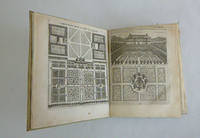
rif. 51-6506Amsterdam: Marc Doornick 1669-1670. 4to. 16.5 x 20.5cm. 4to Contemporary vellum. .5 parts in 1. Illustrated with 12 of 15 full-page copper-engraved plates plus 3 large engraved title vignettes and numerous large and full-page woodcuts. Text in French and German. Each with separate title page register continuous. Lacks leaves B4 and C1 with plates 7-8 and likely lacks a frontispiece or another plate. The first bilingual edition issued the same year as the first Dutch edition. Important early gardening book illustrating famous gardens including those of Honsholredyk Ryswyck and Huis ten Bosch in early states. Treats a wide range of topics including beekeeping husbandry sundials and description and care for foreign plants such as the aloe plant from America p.42 and datura/jimsonweed p.68. Index bound at front.OCLC Number / Unique Identifier:504764839:Notes:French and German. With an additional titlepage engraved in Dutch from the edition as part of "Het vermakelijck landt-leven". "Boutique à remedes enseignant de quelle maniere il faut preparer les medecines pour guerir les maladies des animaux. Vieh-Apoteeck etc. By Pieter Nyland.": pp. 87-104. "TraiteÌ des abeilles . Der fleissige Bienenhalter etc. By Pieter Nyland": pp. 105-127. "24 nouveaux & curieux modelles de parterres . 24 neue . Garten-Modellen etc.": page not numbered. The titlepages of the additional works are dated 1670OCLC Number / Unique Identifier:496284071Notes:Texte sur 2 colonnesOn trouve une 2e p. de titre plus complète après le privilège et le frontispice. La "Boutique à remèdes" occupe les pp. 87-104 et le "TraiteÌ des abeilles" les pp. 105-129. Ces deux textes traductions de Petrus Nylandt ont des p. de titre particulières dateÌes de 1670. A leur suite on trouve deux recueils de planches non pagineÌs mais chacun avec une page de titre particulière: "24 nouveaux et curieux modelles de parterre à la françoise pour embellir touts sorte de jardins et autres lieux de plaisance 24 neue kunstartige Garten-Modellen". avec la date de 1670 en 4 ff. et "Deux cens modelles pour ceux qui se plaisent au jardinage servant utilement a dresser & disposer toutes sortes de parterres à fleurs & à buissons". Zwey hundert Garten-Modellen. avec la date de 1669 en 28 ff. dont 1 frontispice.Provenance: Florence Yoch 1890–1972 and Lucile Council 1898–1964 were among the most prolific and influential landscape architects in Southern California during the early and mid-20th century. Partners both in business and in life they completed more than 250 landscape commissions over a period of roughly four decades—projects that included landmark public gardens and private gardens for Hollywood elites. The Huntington is home to the Florence Yoch Papers a trove of drawings photographs research files and office records that tell the story of the couple’s firm and provide a tremendous resource for researchers. Amsterdam,: Marc Doornick, 1669-1670 hardcover
1791rif. 1909070003Florence: Niccolo Pagni and Giuseppe Bardi 1791 & 1795 1791. First Edition. Hardcover. Good. A Monumental Work of 18th century Italian engraving 2 volumes. Large folios 51 x 35 cm 19 3/4 x 13 in. 1st edition. Bound in contemporary 1/2 vellum over marbled boards. Some cover wear. Rear joint of v.1 cracked. Hinges of v. 2 cracked. Text in Italian and French printed in parallel columns. Collation: v.1 Engraved title frontispiece 64 leaves 60 plates. v.2 Engraved title 62 leaves 60 plates. Many of the plates are printed in colored ink: siena shades of brown or green and blue. 120 artists' portraits. A gorgeous and large format work on Tuscan painting beginning with Guido da Siena and considering all the great painters of Florence such as Buffalmaco Cimabue Giotto Paolo Uccello Andrea Verrocchio Masaccio Fra fifilppo Lippi Andrea del Castagno Pollaiolo Botticelli Leonardo da Vinci Michelangelo Andrea del Sarto Antonio Tempesta Giuseppe Grisoni etc. Carlo Lasinio 1759-1838 was responsible for many of the engravings. Other engravers included: Giovanni Francisco Ravenet Marco Lastri Giuseppe Bardi Niccolo Pagni Matteo Carboni Ferdinando Gregori Gaetano Vascellini and Cosomo Colombini. Refs: "Pregevole opera" Cicognara 3387. Cohen-Ricci 366. Thieme-Becker XXII 404. Brunet II 1095. Graesse II 509. Moreni I 509: "Ciascuno di questi volumi racchiude 60 articoli di notizie di altrettanti pittori toscani scritti in italiano da M.L. promotore di questa eccellente impresa e tradotti in francese da Bartolomeo Renard. Ognuno di essi ha una stampa incisa in rame scelta dalle Opere le piu stimate di quel pittore." Armorial bookplates of Paul Beilby Thompson 1784-1852. Thompson was a Whig MP for Wenlock and East Riding; later made a Baron. This is an oversized or heavy book which requires additional postage for international delivery outside the US. Florence: Niccolo Pagni and Giuseppe Bardi, 1791 & 1795 hardcover
1617Serie di 14 stampe al bulino, con frontespizio e il ritratto di Andrea del Sarto, stemma mediceo al frontespizio e dedica a Cosimo II de’ Medici, legatura in vitello marmorizzato, alle armi dei Duchi di Beauvilliers su entrambi i piatti, nervi e titolo al dorso, buone condizioni. Le stampe illustrano la vita di san Giovanni Battista Series of 14 prints, with title-page and portrait of Andrea del Sarto, Medici coat of arms on the title-page and dedication to Cosimo II de 'Medici, contemporary calf binding, coat of arms of Dukes of Beauvilliers on both boards, bands and title on the spine , good conditions. The prints illustrate the life of Saint John the Baptist.
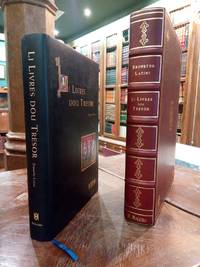
2000rif. 46223EDICIÓN FACSIMIL DEL CODICE ORIGINAL CONSERVADO EN LA BIBLIOTECA NACIONAL DE RUSIA SAN PETESBURGO. ms. Fr. F.v. III Nº 4. Este códice esta datado después de 1268.- Barcelona: M. Moleiro Editor S. A. 2000.- 2 VOLS. Facsímil del códice con 1 h. 149 Folios 1 h. y traducción al español y estudios con 496 p. 1 h.: El facsímil con Profusión de preciosas miniaturas a todo color y los dorados con pan de oro auténtico; El volumen de estudios es bilingüe en español e inglés; Facsímil en Gran Folio 342 x 25 cm el estudio complementario en Folio Mayor 318 x 225 cm; Facsímil en gran papel de gruesa factura imitando la vitela pergamino fino del códice magníficamente logrado y siendo cada hoja reproducida en su tamaño y contorno original el tomo de estudios impreso sobre papel offset de gran calidad; El códice va encuadernado en Plena Piel de color marrón rojizo con las tapas estampadas en seco artísticamente a igual que el lomo con un estuche cuyos planos están dorados con un grueso filete con águilas en las esquinas y hierro al centro con un águila enmarcada por un exágono todo ello dorado al igual que el lomo del estuche también dorado y con cinco nervios. El tomo de estudios va encuadernado en Plena Tela Ed. en raso de seda azul con el título estampado en negro y camisa ilustrada.- Acompañado del acta notarial del Notario D. Arturo Pérez Morente: "DOY FE: De que al presente ejemplar facsímil del Libro del Tesoro cuyo original se conserva en la Biblioteca Nacional de Rúsia en San Petesburgo bajo la referencia ms. Fr. F.v. III Nº 4 le corresponde el Nº 472 de la edición única e irrepetible numerada en arábigo y limitada a 987 ejemplares realizada bajo la dirección de Manuel Moleiro Rodríguez y editada por: M. Moleiro Editor S. A. Forman parte de esta misma edición 55 ejemplares con numeración romana destinados al Depósito Legal y al editor.Barcelona veintidós de diciembre de 1999". Siguen los sellos y la firma del notario. Obra en impecable estado de conservación. El libro constituye una preciosa edición facsímil casi igual al códice original realizado con una gran maestría. Va acompañado por un tomo con el estudio exhaustivo del códice por eminentes especialistas y conocedores del mismo. EDAD MEDIA EUROPEA Libro en latín M. Moleiro Editor, S. A. hardcover
1546In-4°; edizione originale; cc. 91, 1 cb, bel ritratto xilografico dell’autore al frontespizio. Mezza pelle rossa. Niccolò Martelli (1498- fiorentino di nascita studiò e visse a Roma dove fu introdotto da Pietro Aretino nella cerchia letteraria di papa Leone X. Gran parte della sua produzione è costituita dal ricco epistolario che intrattenne con i maggiori esponenti della cultura umanistica del tempo (Bembo, Aretino, Brucioli, Varchi, Doni, Alamanni, Firenzuola), e artisti primi fra tutti Michelangelo Buonarroti e Cellini. Questo Primo libro delle lettere ci restituisce una straordinaria ricchezza di notizie sulla società dell’epoca.
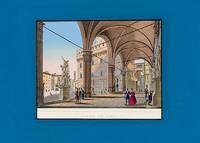
1820rif. 100050AG1820. Florence / Pisa c.1820. Original Aquatint hand-applied water-colouring over copper engraving. Plate Sizes vary: 31 cm x 22.1 cm. Sheet Sizes vary: 34.6 cm x 26.5 cm. Original Gouache-Aquatint hand-applied water-colouring over copper engraving. Florence/Pisa c.1820. Plate-Sizes vary: c. 31 cm x 22.1 cm. Sheet Sizes vary: c. 34.6 cm x 26.5 cm. Besides some smaller damages to the Ponte S. Trinita-artwork in very good actually stunning condition. Clean crisp and brightly coloured. All of these artworks are beautifully framed and the price includes worldwide free shipping per UPS - courier. The Longing for Italy the Italiensehnsucht of the german - speaking countries was forced by Johann Wolfgang von Goethe's Italian Travels and sent scores of young and old to Italy's shores countryside and cities. The Grand Tour was the 17th- and 18th-century custom of a traditional trip of Europe undertaken by upper-class young European men and women of sufficient means and rank typically accompanied by a chaperone such as a family member when they had come of age about 21 years old. The custom - which flourished from about 1660 until the advent of large-scale rail transport in the 1840s and was associated with a standard itinerary - served as an educational rite of passage. Though the Grand Tour was primarily associated with the British nobility and wealthy landed gentry similar trips were made by wealthy young men of other Protestant Northern European nations and from the second half of the 18th century by some South and North Americans. By the mid 18th century the Grand Tour had become a regular feature of aristocratic education in Central Europe as well although it was restricted to the higher nobility. The tradition declined as enthusiasm for neo-classical culture waned and with the advent of accessible rail and steamship travel. Wikipedia unknown
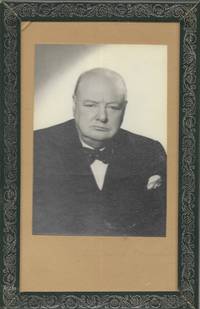
rif. 29414London: Vivienne 20th Century Studios Ltd. 1950. 1 tirage original monté sur carton fort encadré. . Tirage original. Le premier portrait de Churchill par Florence Vivienne. Rare tirage offert par Winston Churchill : il porte en marge inférieure la signature de Churchill à E. M. Pommier un résistant français. Une lettre du secrétaire privé de Churchill a été conservée au verso certifiant que cette photographie et la signature ont été envoyées à Pommier avec les compliments du Prime Minister. . Florence Vivienne Entwistle débuta dans la photographie en aidant en 1934 son mari Ernest Entwistle et son fils Antony. Elle créa son propre studio à la fin des années 1930 et se spécialisa dans les portraits de personnalités. Les relations avec les Churchill dépassèrent le strict cadre professionnel puisque en octobre 1949 la fille des Churchill Sarah épouse le fils de Vivienne Antony. Les Churchill « apprendra le mariage. par les journaux et en furent très contrariés. surtout Clémentine qui le prend très mal ». Néanmoins le 19 décembre 1949 le couple Churchill rencontre le couple Vivienne et « après un agréable déjeuner ensemble Florence Vivienne réalise le portraits de Winston Churchill dans son studio de Piccadilly » Gilbert Vol. VIII p. 496. Le portrait plut tant à Churchill qu'il l'utilisera dès l'année suivante pour la campagne des élections générales de février 1950 et qu'il deviendra l'un des plus célèbres du Prime Minister. Florence Vivienne était connue pour exiger de ses sujets qu'ils viennent dans son studio et la jaquette qui orne son autobiographie They Came to My Studio publiée en 1956 est illustrée par cette photographie. Vivienne rappelle p. 16 combien cette image est devenue iconique et qu'elle était alors la seule qu'elle ait prise de Churchill. La National Portrait Gallery conserve 214 portraits de Vivienne dont celui-ci 14 en tout pour la famille Churchill la plupart ayant été pris dans leur maison de campagne Chartwell. [London: Vivienne, 20th Century Studios Ltd., 1950]. 1 tirage original, monté sur carton fort, encadré. unknown
1950rif. 29414Portrait de Churchill par Florence Vivienne.Tirage signé. [London: Vivienne, 20th Century Studios Ltd., 1950]. 1 tirage original, monté sur carton fort, encadré. Tirage original. Le premier portrait de Churchill par Florence Vivienne. Rare tirage offert par Winston Churchill : il porte, en marge inférieure, la signature de Churchill à E. M. Pommier, un résistant français. Une lettre du secrétaire privé de Churchill a été conservée au verso, certifiant que cette photographie et la signature ont été envoyées à Pommier avec les compliments du Prime Minister.