15.694 Ergebnisse
1960Best.-Nr. 133256N.p.: N.p. 1960. Vintage borderless photograph from the 1962 film by photographer Andre Marinie. A candid on-the-set photograph of the film's reclusive director Robert Bresson behind the camera typically pensive and with cigarette in hand. Marinie's stamp and stamp from the film's production companies Agnes Delahaie Productions and Consortium Pathe on the verso. Linda Rasmussen at AllMovie notes: "Characteristically breaking with tradition director Robert Bresson presents a realistic unique view of the life and death of Joan of Arc. Using a script based on the actual transcript notes taken during her trial Bresson focuses on the psychological and physical torture that Joan had to endure showing how these techniques were used to break her resolve and cause her to eventually recant her faith. "With impeccable historical accuracy Bresson re-creates the story of the peasant girl who after leading an unsuccessful revolt against the government was brought to trial convicted of heresy and burned as a witch. However Bresson shows Joan Florence Carrez as a woman more sophisticated and calculating and less naive than she has normally been represented. His Joan while more real is no less heroic than the traditional Joan." In a custom museum-quality frame archivally mounted with UV glass. 9.5 x 7.25 inches. Near Fine. N.p. unknown
1960Best.-Nr. 133256N.p.: N.p. 1960. Vintage borderless photograph from the 1962 film by photographer Andre Marinie. A candid on-the-set photograph of the film's reclusive director Robert Bresson behind the camera typically pensive and with cigarette in hand. Marinie's stamp and stamp from the film's production companies Agnes Delahaie Productions and Consortium Pathe on the verso. Linda Rasmussen at AllMovie notes: "Characteristically breaking with tradition director Robert Bresson presents a realistic unique view of the life and death of Joan of Arc. Using a script based on the actual transcript notes taken during her trial Bresson focuses on the psychological and physical torture that Joan had to endure showing how these techniques were used to break her resolve and cause her to eventually recant her faith. "With impeccable historical accuracy Bresson re-creates the story of the peasant girl who after leading an unsuccessful revolt against the government was brought to trial convicted of heresy and burned as a witch. However Bresson shows Joan Florence Carrez as a woman more sophisticated and calculating and less naive than she has normally been represented. His Joan while more real is no less heroic than the traditional Joan." In a custom museum-quality frame archivally mounted with UV glass. 9.5 x 7.25 inches. Near Fine. N.p. unknown books
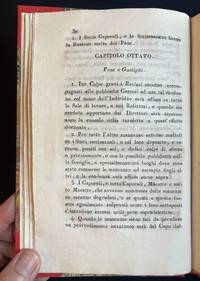
1818Best.-Nr. 4414Florence: presso Niccolò Carli 1818. 8vo 193 x 125 mm. 45 3 bl.; 37 1 bl. pp. Letterpress tables. The second part is an Appendix separately paginated with half-title and approbation at end dated 1818. A few small spots to title and last few pages. Modern half linen and marbled boards original rear wrapper bound in. Only Edition of the rules for the main Florentine workhouse for the destitute mainly children established by Napoleon in 1812 to honor the birth of his son the King of Rome on the site of two former monasteries in the Florentine suburb of Montedomini. The architect Giuseppe del Rosso combined the two monastic edifices creating one main building in a neoclassical style and a complex of six smaller buildings for workshops etc. The Pia Casa di Montedomini as it came to be known was not only a poorhouse but was a center for poor relief generally. The various categories of candidates for aid are set forth in the introduction: children or adults who were taken in by Montedomini or by other “pious establishments” in the city as permanent residents known as Reclusi; those who were given work during the day and who returned to their families at the end of the day; those who were given work to carry out at home; and those few who were granted financial help. The Reclusi were divided by age: children under 3 went to the Spedale degli Innocenti those aged 3 to 10 and 10 to 15 to two different orphanages and those who were disabled or too old to work to another hospice Spedale di Bonifazio. Thus families were broken up: this is acknowledged in the text. Blank sample forms are provided for the admission of each category. Most of the rules are devoted to the main Reclusi aged 15 and up. The first chapter outlines admissions procedures; chapters 2 and 3 describe their general living conditions and daily routines and the following chapters address details of work food clothing and bedding all paid for through the inhabitants’ labor. Not surprisingly given the Napoleonic inspiration the Reclusi were organized in quasi-military “brigades” divided by sex and type of work. The brigades were led by the most compliant and hard-working individuals male “Caporali” and female “Maestre” who wore differently colored uniforms from the others. Every moment of the day was strictly regimented and other than eating and sleeping there was no time for anything other than work except for two hours of recreation on the occasional special feast day when only selected individuals were allowed to leave the Casa in strictly controlled groups. The daily life of these children and young adults who were imprisoned “for their own good” is hard to fathom for a modern reader: they rose at 6 or 6:30 prayed worked until noon finally were allowed to eat and then went back to work until 11 or 11:30 pm. Most of the work seems to have involved sewing or needlework; some worked for tailors or other textile workers. Dinner was followed by prayers and bedtime silence was imposed at 1 am. Meals were spartan: the rations of each ingredient are prescribed down to the ounce. Lunch was 2 ounces of soup 10 ounces of bread and 6 ounces of meat or a comparable quantity of vegetables. Dinner was bread and vegetables. One suspects that many barely survived in these conditions. Other chapters and the Appendix are devoted to the administration of the Casa accounting and record-keeping work assignments and payment and relations with extra-institutional employers. I locate no copies in American libraries. R. Uccelli Contributo alla Bibliografia della ToscanaC 1922 2575. presso Niccolò Carli unknown
1818Best.-Nr. 4414Florence: presso Niccolò Carli 1818. 8vo 193 x 125 mm. 45 3 bl.; 37 1 bl. pp. Letterpress tables. The second part is an Appendix separately paginated with half-title and approbation at end dated 1818. A few small spots to title and last few pages. Modern half linen and marbled boards original rear wrapper bound in. Only Edition of the rules for the main Florentine workhouse for the destitute mainly children established by Napoleon in 1812 to honor the birth of his son the King of Rome on the site of two former monasteries in the Florentine suburb of Montedomini. The architect Giuseppe del Rosso combined the two monastic edifices creating one main building in a neoclassical style and a complex of six smaller buildings for workshops etc. The Pia Casa di Montedomini as it came to be known was not only a poorhouse but was a center for poor relief generally. The various categories of candidates for aid are set forth in the introduction: children or adults who were taken in by Montedomini or by other “pious establishments” in the city as permanent residents known as Reclusi; those who were given work during the day and who returned to their families at the end of the day; those who were given work to carry out at home; and those few who were granted financial help. The Reclusi were divided by age: children under 3 went to the Spedale degli Innocenti those aged 3 to 10 and 10 to 15 to two different orphanages and those who were disabled or too old to work to another hospice Spedale di Bonifazio. Thus families were broken up: this is acknowledged in the text. Blank sample forms are provided for the admission of each category. Most of the rules are devoted to the main Reclusi aged 15 and up. The first chapter outlines admissions procedures; chapters 2 and 3 describe their general living conditions and daily routines and the following chapters address details of work food clothing and bedding all paid for through the inhabitants’ labor. Not surprisingly given the Napoleonic inspiration the Reclusi were organized in quasi-military “brigades” divided by sex and type of work. The brigades were led by the most compliant and hard-working individuals male “Caporali” and female “Maestre” who wore differently colored uniforms from the others. Every moment of the day was strictly regimented and other than eating and sleeping there was no time for anything other than work except for two hours of recreation on the occasional special feast day when only selected individuals were allowed to leave the Casa in strictly controlled groups. The daily life of these children and young adults who were imprisoned “for their own good” is hard to fathom for a modern reader: they rose at 6 or 6:30 prayed worked until noon finally were allowed to eat and then went back to work until 11 or 11:30 pm. Most of the work seems to have involved sewing or needlework; some worked for tailors or other textile workers. Dinner was followed by prayers and bedtime silence was imposed at 1 am. Meals were spartan: the rations of each ingredient are prescribed down to the ounce. Lunch was 2 ounces of soup 10 ounces of bread and 6 ounces of meat or a comparable quantity of vegetables. Dinner was bread and vegetables. One suspects that many barely survived in these conditions. Other chapters and the Appendix are devoted to the administration of the Casa accounting and record-keeping work assignments and payment and relations with extra-institutional employers. I locate no copies in American libraries. R. Uccelli Contributo alla Bibliografia della ToscanaC 1922 2575. presso Niccolò Carli unknown books
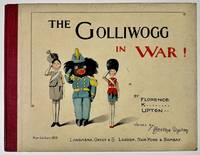
1903Best.-Nr. 6774London New York & Bombay: Longmans Green & Co 1903. New Edition. New Edition. Oblong quarto 11 x 8 1/2 inches. Original cloth-backed color pictorial glossy paper covered boards illustrated endpapers. Illustrated with full color illustrations every other page facing text pages with line drawings. A fine copy of a scarce Golliwogg title where the Golliwogg attends basic training campfires and action all under the protectorship of the little dolls. This edition equally as scarce as the 1899 and virtually unchanged. Seldom seen in this condition. Longmans, Green & Co unknown
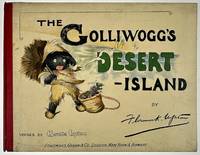
1906Best.-Nr. 6776London New York & Bombay: Longmans Green & Co 1906. First Edition. First Edition. Oblong quarto 11 x 8 1/2 inches. Original cloth-backed color pictorial glossy paper covered boards illustrated endpapers. Illustrated with full color illustrations every other page facing text pages with line drawings. Fine condition with minor and tiny holes to margin of spine barely noticeable. The Golliwogg sets out a boat with friends and is marooned on a desert island with sundry perils and pitfalls and making do in survival mode. Scarce thus. Longmans, Green & Co unknown
1903Best.-Nr. 6774London New York & Bombay: Longmans Green & Co 1903. New Edition. New Edition. Oblong quarto 11 x 8 1/2 inches. Original cloth-backed color pictorial glossy paper covered boards illustrated endpapers. Illustrated with full color illustrations every other page facing text pages with line drawings. A fine copy of a scarce Golliwogg title where the Golliwogg attends basic training campfires and action all under the protectorship of the little dolls. This edition equally as scarce as the 1899 and virtually unchanged. Seldom seen in this condition. Longmans, Green & Co unknown books
1906Best.-Nr. 6776London New York & Bombay: Longmans Green & Co 1906. First Edition. First Edition. Oblong quarto 11 x 8 1/2 inches. Original cloth-backed color pictorial glossy paper covered boards illustrated endpapers. Illustrated with full color illustrations every other page facing text pages with line drawings. Fine condition with minor and tiny holes to margin of spine barely noticeable. The Golliwogg sets out a boat with friends and is marooned on a desert island with sundry perils and pitfalls and making do in survival mode. Scarce thus. Longmans, Green & Co unknown books
1975Best.-Nr. 040271Stein and Day 1975. 1st Edition . Hardcover. Good/Poor. Gift inscription signed by author Florence King on front fly. No other writing inside. Tilted binding is solid. Cover has rubbed extremities. Poor dust jacket has chipped edges and closed tears. King's first book published using her name. 1975 first edition first printing. Stein and Day hardcover
2012Best.-Nr. 1-1452657602Tantor Media Inc 2012. Audio CD. New. mp3 una edition. 7.50x5.30x0.50 inches. Tantor Media Inc unknown
2006Best.-Nr. 935Seguier Archimbaud 2006. "Brochure in new condition"" Seguier Archimbaud paperback
1907Best.-Nr. 17839London & New York: Blackie & Caldwell 1907. Near fine. First edition American issue printed on dark green paper that contrasts vividly with the tipped-in color plates in Harrison's distinctive style. Given the clear Pre-Raphaelite characteristics in her work it is unsurprising to note that she was the first woman to be a commercial illustrator for the work of Christina Rossetti - indeed it was in part due to the success of RHYME OF A RUN that the Glaswegian publisher Blackie asked her to take on a major project. One of Harrison's particular touches is the heavy black outlines around characters giving her Art Nouveau-influenced illustrations an effect not unlike stained glass. It is thanks to the work of book collector Mary Rosalind Jacobs that Florence Harrison was identified only in the 21st century as the Australian-born Florence Susan Harrison not the English artist Emma Florence Harrison. A beautiful copy of Harrison's second book scarce in the American issue and in this condition. 9'' x 11.25''. Original green pictorial cloth gilt. Green patterned endpapers. Printed on heavy dark green paper. Illustrated by Harrison with elaborately ornamented title page lettered in red 21 tipped-in color plates 10 full-page black-and-white designs and many black-and-white vignettes. A bit of the creasing to some plates as in virtually all copies due to a finishing fault with the publisher. Faint spotting to rear board and very minor rubbing to extremities. Blackie & Caldwell unknown
1907Best.-Nr. 17839London & New York: Blackie & Caldwell 1907. Near fine. First edition American issue printed on dark green paper that contrasts vividly with the tipped-in color plates in Harrison's distinctive style. Given the clear Pre-Raphaelite characteristics in her work it is unsurprising to note that she was the first woman to be a commercial illustrator for the work of Christina Rossetti - indeed it was in part due to the success of RHYME OF A RUN that the Glaswegian publisher Blackie asked her to take on a major project. One of Harrison's particular touches is the heavy black outlines around characters giving her Art Nouveau-influenced illustrations an effect not unlike stained glass. It is thanks to the work of book collector Mary Rosalind Jacobs that Florence Harrison was identified only in the 21st century as the Australian-born Florence Susan Harrison not the English artist Emma Florence Harrison. A beautiful copy of Harrison's second book scarce in the American issue and in this condition. 9'' x 11.25''. Original green pictorial cloth gilt. Green patterned endpapers. Printed on heavy dark green paper. Illustrated by Harrison with elaborately ornamented title page lettered in red 21 tipped-in color plates 10 full-page black-and-white designs and many black-and-white vignettes. A bit of the creasing to some plates as in virtually all copies due to a finishing fault with the publisher. Faint spotting to rear board and very minor rubbing to extremities. Blackie & Caldwell unknown books
1905Best.-Nr. 463919New York and London: Funk & Wagnalls Company 1905. Hardcover. Very Good. First edition stated "Autograph Edition". Octavo. 394pp. Blue cloth gilt. Collotype frontispiece portrait of the author. Old archival stamp on front fly one corner bumped light dampstains on the boards a bright about very good copy. Signed by the author in ink beneath her portrait. Florence Elizabeth Chandler the Alabama-born American wife of the socially prominent English cotton merchant James Maybrick was accused of poisoning him in 1889 after a tumultuous marriage and convicted at the end of a sensational trial on dubious evidence and despite highly irregular judicial proceedings. Mrs. Maybrick's admitted adultery was allowed to create enormous prejudice against her. She was sentenced to death but was eventually reprieved after much public outcry. She served 15 years in prison and upon her release spent the rest of her years penniless in America. Her case inspired many books and several novels including Strong Poison by Dorothy B. Sayers. The first copy of the autograph edition that we've seen. Funk & Wagnalls Company hardcover
1905Best.-Nr. 463919New York and London: Funk & Wagnalls Company 1905. Hardcover. Very Good. First edition stated "Autograph Edition". Octavo. 394pp. Blue cloth gilt. Collotype frontispiece portrait of the author. Old archival stamp on front fly one corner bumped light dampstains on the boards a bright about very good copy. Signed by the author in ink beneath her portrait. Florence Elizabeth Chandler the Alabama-born American wife of the socially prominent English cotton merchant James Maybrick was accused of poisoning him in 1889 after a tumultuous marriage and convicted at the end of a sensational trial on dubious evidence and despite highly irregular judicial proceedings. Mrs. Maybrick's admitted adultery was allowed to create enormous prejudice against her. She was sentenced to death but was eventually reprieved after much public outcry. She served 15 years in prison and upon her release spent the rest of her years penniless in America. Her case inspired many books and several novels including Strong Poison by Dorothy B. Sayers. The first copy of the autograph edition that we've seen. Funk & Wagnalls Company hardcover books
1942Best.-Nr. 173093New York City: E. Weyhe 1942. Number 201 of 250. Hardcover. VG-/VG- light foxing to text blocks moderate edge wear to glassine jacket. Red boards with gilt stamped lettering in a glassine jacket. 164 pages 76 pages of plates. Illustrations. Numbered 201 of 250. Includes bibliographical references pages 139-146 and index. E. Weyhe hardcover
1942Best.-Nr. 173093New York City: E. Weyhe 1942. Number 201 of 250. Hardcover. VG-/VG- light foxing to text blocks moderate edge wear to glassine jacket. Red boards with gilt stamped lettering in a glassine jacket. 164 pages 76 pages of plates. Illustrations. Numbered 201 of 250. Includes bibliographical references pages 139-146 and index. E. Weyhe hardcover books
1590Best.-Nr. R98678Coloniae Agrippinae [Köln], apud Ioannem Gymnicum, sub Monocerote 1590 Continuation of title: "Acesserunt in hac editione Tractatus Finium Regundorum seu de quinque pedum praescriptione Andreae Alciati. Item Allegationes Jacobi de Puteo et Lichini de Curte in materia confinium", [44] + 464pp., with engraved vignette and two old handwritten ex-libris on title page, the appendix "Allegationes" has its own title page, 17cm., text in Latin, contemporary vellum binding with some traces of use, ["Nunc denuo editus, & ab auctore recognitus & auctus ; Acceserunt alia quae sequens indicat pagina. Cum summarijs & Indice locupletissimo"], text clean and bright, some pages slightly browned, good condition, [BOUND TOGETHER WITH: SEBASTIANO MEDICI, Tractatus mors omnia solvit, Sebastiani Medicis Florentini, ic. Equitis S. Stephani, & Protonotarij Apostolici : multo nunc, plurimis quibus prima scatebat editio, mendis sublatis, emendatius recusus. Accedit Index rerum et verborum accurantissimus. Francoforti [Frankfurt am Main], Ex officina typographica Nicolai Bassaei [Nikolaus Basse], 1585, 309 + [26] pp., with engraved printer's device at title page and at the last page], R98678
1590Continuation of title: "Acesserunt in hac editione Tractatus Finium Regundorum seu de quinque pedum praescriptione Andreae Alciati. Item Allegationes Jacobi de Puteo et Lichini de Curte in materia confinium", [44] + 464pp., with engraved vignette and two old handwritten ex-libris on title page, the appendix "Allegationes" has its own title page, 17cm., text in Latin, contemporary vellum binding with some traces of use, ["Nunc denuo editus, & ab auctore recognitus & auctus ; Acceserunt alia quae sequens indicat pagina. Cum summarijs & Indice locupletissimo"], text clean and bright, some pages slightly browned, good condition, [BOUND TOGETHER WITH: SEBASTIANO MEDICI, Tractatus mors omnia solvit, Sebastiani Medicis Florentini, ic. Equitis S. Stephani, & Protonotarij Apostolici : multo nunc, plurimis quibus prima scatebat editio, mendis sublatis, emendatius recusus. Accedit Index rerum et verborum accurantissimus. Francoforti [Frankfurt am Main], Ex officina typographica Nicolai Bassaei [Nikolaus Basse], 1585, 309 + [26] pp., with engraved printer's device at title page and at the last page], R98678
1998Best.-Nr. 932222York Beach Maine: Samuel Weiser Inc. 1998. NEW in Dust Jacket see scan. Limited to "999 Handnumbered cloth-bound copies". New / Unread Samuel Weiser Inc. old stock Rare in condition thus. First Edition / Hand Numbered. Hard Cover Cloth Sewn. New/New. 8vo - 8½" tall. Samuel Weiser, Inc. hardcover
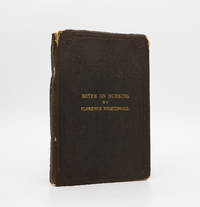
Best.-Nr. 30556London: Harrison. 1860. First revised edition. First revised edition. Association copy inscribed by Henry Bonham Carter Florence Nightingale's first cousin and secretary for the Nightingale Fund. Original textured brown cloth with gilt titles to the spine and blindstamped decorative borders to the upper and lower boards. A good entirely unsophisticated copy the binding fragile as usual with wear to the corners and splitting with exposed webbing to the spine the spine holding. The contents with Bonham Carter's presentation gift inscription to the half title toning to the closed text-block edge and some isolated foxing spots to the early pages are otherwise clean throughout. A nice copy with a fantastic association. Inscribed in black ink on the half title "Henrietta Cooling / from / Henry Bonham Carter / July 1915". Henry Bonham Carter 1827-1921 was a barrister who was the first cousin lifelong friend and adviser of Florence Nightingale 1820-1910. He acted as the secretary to the Florence Nightingale Fund and Training School for Nurses between 1861 and 1914 and was involved with the running of various hospitals and nursing-based initiatives such as St. Thomas's Hospital where Nightingale established her Training School the Metropolitan Nursing Association and the Queen Victoria Jubilee Institute of Nursing. Nightingale and Bonham Carter maintained a long-standing correspondence in which they advised and supported each other in their endeavours in nursing development. Nightingale bequeathed her papers and letters to him upon her death which he organised and provided to Sir Edward Cook to aid in the writing of 'The Life of Florence Nightingale' the first Nightingale biography. The Florence Nightingale Fund was safeguarded by the Bonham Carter family for over a hundred years with Henry Bonham Carter's great granddaughter the actress Helena Bonham Carter frequently serving as an appeal ambassador before merging with the Florence Nightingale Foundation in 2023. An appealing association copy of Nightingale's groundbreaking text on nursing completed soon after her return from Crimea. The book was intended not as handbook on how to become a nurse but rather to impart practical knowledge to anybody who may have to care for a person in ill-health. Nevertheless the book's clear advice on hygiene ventilation diet and sickroom management was remarkably timely and effective in a period when germ theory was still a contested concept and its tenets formed the backbone of early modern nursing education. Much of the guidance is timeless and universal and it remains a classic text to this day. Further details and images for any of the items listed are available on request. All items are catalogued by humans. Lucius Books welcomes direct contact with our customers. London: Harrison. 1860 hardcover
1884Best.-Nr. 625083 uniform volumes 300 315 & 316 pages Published by Richard Bentley & Son hardcover
1862Best.-Nr. 51111Paris: A La Librairie Académique Didier et Ce Libraires - Éditeurs 35 Quai des Augustins 1862. 1st French translation Goldie 7iii. Period publisher's black half leather binding with black pebbled cloth boards gilt spine lettering. Red edgestain. General wear with stress lines showing at top portion of front joint. Modern bookplate of one Damian Conals . Light age-toning to paper. A VG copy. lxxx 301 1 blank pp. Publisher ornament to t.p. 12mo. 7-1/4" x 4-1/2" Scarce 1st French edition of Nightingale's classic work the first time we've been able to offer it. A La Librairie Académique Didier et Ce, Libraires - Éditeurs 35, Quai des Augustins hardcover books
1906Best.-Nr. 006377London: Longman's Green and Co 1906 Illustrated boards with red cloth spine light shelf wear small chip from top corner internally bright clean and unmarked. A Golliwogg Robinson Crusoe! Wonderful full page color plates on nearly every other page. The nicest copy I've seen in a long time. First Edition. Near Fine/No Jacket. Oblong 4to. Longman's Green and Co hardcover
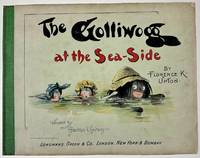
1898Best.-Nr. 6775London New York & Bombay: Longmans Green & Co 1898. First Edition. First Edition. Oblong quarto 11 x 8 1/2 inches. Original cloth-backed color pictorial glossy paper covered boards illustrated endpapers. Illustrated with full color illustrations every other page facing text pages with line drawings. Fishing boating boat-wrecks all in a summer's fun for the Golliwogg. Fine condition with only a few minor blemishes to cover internally very fine. Scarce thus. Longmans, Green & Co unknown