15.694 Ergebnisse
1916Best.-Nr. 403257Massachusetts 1916. Hardcover. Near Fine. Oblong octavo. Measuring 7" x 5.5". Textured leather over paper boards with "Photographs" stamped in gilt on the front board. Contains a total of 151 images 90 sepia toned or black and white gelatin silver photographs and 61 cyanotype prints measuring between 1" x 1" and 3.5" x 4.5". Rubbing on the boards else very good with near fine photographs. A photo album kept by Florence. M. Osborne from Wellesley Massachusetts between 1907 and 1916. The album documents home life as well as travel throughout the area and including Canada. A sizable number of the early photos are cyanotypes that depict the natural beauties of New England such as ponds beaches and gardens as well as landmarks and town buildings. There are 24 photos from a trip to Quebec showing horse drawn carriages cobblestone roads artistic street views and photos of Montmorency Falls. A trip to Quincy Massachusetts shows photos of the monument to Abigail Adams Cairn as well as Penn's Hill and a water tower. A section of the album entitled "autumn" shows portraits of the family posing around the house in fancy dress including a photo of Osborne dressed in a large fashionable hat. There are also photos of various rooms in the Wellesley Free Library which was of interest to the Osborne family notable Florence's father Weston W. Osborne who was a contributor to the library's acquisition funds. The album switches to sepia tone and black and white photos around 1909 starting with a hike up Point Allerton Hill. The album continues with visits to more New England points of interest including Nahant where they photographed Senator Lodge's house. Two photos of a group of young women are captioned "Junior members of Lynn Public library staff" and are accompanied by two slips of paper listing each woman's name. The album goes on to show the library's reading room and the stairway to the main floor. The final 30 photos are laid in likely to be mounted and captioned at a later time and show women around the house decorated Christmas tables and with family pets. An interesting accumulation of images depicting Wellesley Massachusetts and the surround area with a generous selection of cyanotypes. hardcover books
1940Best.-Nr. 401426Boston: Bruce Humphries Inc 1940. Hardcover. Near Fine. First edition. Green cloth with gilt titles. Near fine with edgewear and bumped rear board corners. Inscribed by the author. Poetry. Bruce Humphries, Inc hardcover books
1949Best.-Nr. 112530New York: E.P. Dutton & Co 1949. Hardcover. Very Good. First edition. Octavo. 252pp. Small stain on page edges spine ends and corners lightly bumped very good lacking the dust jacket. E.P. Dutton & Co hardcover books
1913Best.-Nr. 401854Philadelphia: The John C. Winston Company 1913. Hardcover. Very Good. First edition. Decorative red cloth with gilt. Illustrated with black and white plates and color frontispiece by Edwin John Prittie. Very good with a slightly cocked and faded spine foxing on endpapers lacking a dustwrapper. The John C. Winston Company hardcover books
1979Best.-Nr. 398479Ontario Canada: The Ontario Review 1979. Softcover. Fine. First edition. 114pp. Pictorial green wrappers. Fine. Including Me at Mama's by Holly Wright and The Golf Course Owner by John Updike and poetry "Two Sorrowful Mysteries One Joyous: Reparation Resurrection and Ascension" by Reynolds Price. The Ontario Review unknown books
1913Best.-Nr. 396046Chicago: David C. Cook Publishing Company 1913. Hardcover. Fair. Later printing. Decorative mustard cloth stamped in white. Some loss of spine head all edges chipped and worn a fair only copy. David C. Cook Publishing Company hardcover books
1902Best.-Nr. 392216Philadelphia: Henry Altemus Company 1902. Hardcover. Very Good. First edition. Pictorial blue-gray cloth stamped in light blue and white. Illustrated by Reginald B. Birch. Owner's decorative bookplate on front fly front hinge starting spine ends and corners a bit worn else very good. Henry Altemus Company hardcover books
1988Best.-Nr. 342329New York: The International Society of Copier Artists 1988. Softcover. Near Fine. Magazine. Oblong octavo. 94pp. Comb bound with some publisher's material laid in. Fine. A quarterly issues from The International Society of Copier Artists founded by Louise Neaderland as a non-profit group to help establish electrostatic art or xerography as a legitimate art form. The quarterly magazine was started in April of 1982 as a way to distributor the work of artists with the first issue distributed as loose sheets. Starting with this issue spiral bound volumes were released along with an annual box of books each summer. The magazine and organization finally ceased publication in 2003. Each page of this issue of the magazine represents a different artist with many contributions signed and numbered along with a collation stamp on the verso of each. Contributors include David Bolyard Curtis La Follette Phyllis Cairns Sally Blakemore Panchal Mansaram Stephanie Regen Florence Weisz Zella Funck Ralph Neaderland Steve Harp Fitzgerald-Stasa Elisabeth Relin Pat Roberts Carol Neiman Al Nigrin Shirl Green David Jarvis Randy Koppang Carolyn Berry Jenifer Cairns Amie Oliver Kake Art Gail Smuda Sarah Jackson Millie Becker Dave Winchester Carolyn Bell-Tait Clare Forster Janet Higgins Kathy Thompson Sara Roberts Barbara Bishop Homer Springer Maggie Walker Heino Partanen Minoy Fruit Basket Upset Walter Zimmerman Kedayhoff Mae Lee Thomson Foster Marcello Diotallevi T.E. Good Ioan Bunus Ed Powis Jones and Jan Lincoln. The International Society of Copier Artists unknown books
1987Best.-Nr. 389475Albuquerque: University of New Mexico Press 1987. Softcover. Fine. First edition. Wrappers. 120pp. Black and white illustrations. Very slight curling else about fine. University of New Mexico Press unknown books
1934Best.-Nr. 384626Philadelphia: Patterson & White 1934. Hardcover. Near Fine. First edition. Octavo. Bookplate a little rubbing on the boards near fine. Patterson & White hardcover books
2009Best.-Nr. 385858New York: Alfred A. Knopf 2009. Hardcover. Fine/Fine. First edition. 211pp. Illustrated with black and white photographs. Fine in fine dust jacket. Alfred A. Knopf hardcover books
1938Best.-Nr. 382743New York: Samuel French 1938. Softcover. Near Fine. First separate edition. Printed green wrappers. Small nick at the bottom corner of front wrap and first leaf else near fine. Campbell and Ryerson were married to each other and both screenwriters Ryerson best known for co-scripting The Wizard of Oz. Samuel French unknown books
1969Best.-Nr. 376034Toronto: The Macmillan Company 1969. Softcover. Very Good. Reprint. Wrappers. 163pp. Creasing curled wrappers and toned pages else very good. The Macmillan Company unknown books
1913Best.-Nr. 359131Oklahoma City: Published by the authors 1913. Hardcover. Very Good. First edition. Octavo. 185pp. Gilt green cloth board with ink owner names written serveral times no title page and front pastedown. Good or better with wear to the extremities the front hinge starting and one page torn and repaired. Includes short biographies and portrait photos of the members of the legislature. OCLC locates five copies. Published by the authors hardcover books
1984Best.-Nr. 97166New York: Holiday House 1984. Hardcover. Fine. First edition. Oblong 12mo. Fine in fine dustwrapper. Holiday House hardcover books
1968Best.-Nr. 102670New York: Grune & Stratton 1968. Hardcover. Fine/Near Fine. Fifth printing. Light bumping to the spinal extremities and the previous owner's stamp on the front fly else fine in near fine dustwrapper. Grune & Stratton hardcover books
1931Best.-Nr. 85444Philadelphia: J.B. Lippincott 1931. Hardcover. Very Good/Very Good. First American edition. Owner name and light overall wear a sound very good copy in very good dustwrapper with tiny nicks and tears and some overall age-toning. Young bride in Kenya despairs when her husband goes astray. Scarce. J.B. Lippincott hardcover books
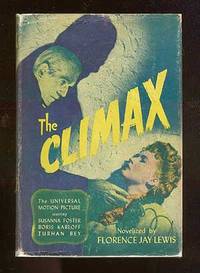
1944Best.-Nr. 48853New York: Books Inc 1944. Hardcover. Near Fine/Very Good. First edition a photoplay edition. Lacking the front fly else near fine in a very good dustwrapper with chipping to the spinal extremities and an internal tape repair. Jacket illustrated with a still from the film showing a menacing Boris Karloff. A novelization of the Universal thriller directed by George Waggner and with a screenplay by Curt Siodmak and Lynn Starling. Books, Inc hardcover books
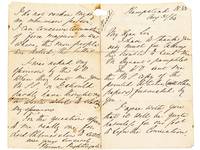
1864Best.-Nr. 3103Hampstead: np 1864. First edition. nb. Good. FLORENCE NIGHTINGALE REJECTS THE FIRST GENEVA CONVENTION NINE DAYS AFTER ITS SIGNING: "IT IS LIKE AN OPERA CHORUS". A foundation-era manuscript of international humanitarian law: Florence Nightingale's private rejection of the First Geneva Convention written to Britain's Geneva delegate nine days after its signing-the primary source the ICRC's own historians have long identified as the more accurate record of her views and which the Collected Works anticipated without having. -------- This letter sits at the precise intersection of everything Florence Nightingale most fundamentally believed and everything for which she is remembered. Her life's work rested on a single conviction: that the mass death of soldiers from disease neglect and institutional failure was preventable and that the remedy was systemic reform not charitable supplementation.The Geneva Convention of 1864 proposed a different answer to the same problem. She thought it was wrong and this letter says so privately and without diplomatic qualification to Thomas Longmore the man who had just helped negotiate it. On August 22 1864 twelve European states signed the Geneva Convention for the Amelioration of the Condition of the Wounded in Armies in the Field. The Convention established the neutrality and protection of wounded soldiers medical personnel and hospitals and adopted the red cross on a white ground as their identifying emblem. It represented a revolutionary proposition: that even in war international law could impose limits upon belligerent states. Nine days later Nightingale rejected the premise that such an agreement could meaningfully alter the conduct of war. The War Office had sent her the manuscript copy of the Convention's articles - materials furnished to them by the letter's recipient Longmore from the Geneva Conference - and asked for her opinion before Britain's accession was finalized. She was the obvious person to ask: no one alive had more direct experience of the conditions the Convention was designed to address. Her response in this letter is devastating: "It amounts to nothing more than a declaration that humanity to the wounded is a good thing. It is like an Opera chorus. And if the principal European characters sing 'We never will be cruel more' I am sure if England likes to sing too 'We never will be cruel more' I see no objection." For Nightingale the fundamental problem was enforcement. A promise of humane conduct had little value because governments willing to observe it required no treaty while governments unwilling to observe it would simply disregard one: "But it is like vows. People who keep a vow would do the thing without the vow. And if people will not do it without the vow they will not do it with." She applies that reasoning directly to the signatories: "England & France will not be more humane to the enemy wounded for having signed the Convention. And the Convention will not keep semi-barbarous nations like Russia from being inhuman." And Nightingale refuses to disguise the realities of warfare beneath humanitarian rhetoric: "I do not reckon myself an inhuman person I can conceive circumstances of 'force majeure' in war where the more people are killed the better." Her conclusion is political and administrative. The question ultimately belongs not to humanitarian volunteers but to government: "For the question appears to me really one for Lord Palmerston to settle." NIGHTINGALE AGAINST HENRY DUNANT: The letter captures one of the fundamental disagreements at the birth of modern humanitarianism. Nightingale and Henry Dunant Swiss humanitarian co-founder of the Red Cross had confronted essentially the same problem-the catastrophic failure of military systems to care for wounded and sick soldiers-but arrived at profoundly different solutions. Nightingale believed the answer was to reform the state and its military medical administration; Dunant believed the inadequacy of those systems required an independent humanitarian structure capable of supplementing them. Nightingale had already objected to Dunant's proposal for voluntary relief societies arguing that such organizations would assume responsibilities properly belonging to governments. Contemporary accounts record her warning that this would relieve governments of duties "which they alone are in a position to assume." The present letter goes further. Written after the Geneva Convention had actually been signed it addresses not merely Dunant's voluntary relief societies but the international legal mechanism intended to protect the wounded. Her objection was fundamental: no treaty could conjure humane conduct in governments that lacked the will or the administrative capacity to provide it. Critically this was not a position confined to her private correspondence. Lynn McDonald's scholarly edition of the Collected Works records that Nightingale communicated the force majeure argument directly to Dunant himself warning him simultaneously of "the very great danger of taking the responsibility off governments of providing for wounded and sick." The present letter to Longmore is the only known primary document in which she makes this argument in full in her own hand to the man who had negotiated the instrument she was critiquing. It has not previously appeared in the scholarly record. THE SYSTEMS REFORMER BEHIND THE "LADY WITH THE LAMP": The letter also exposes the inadequacy of the sentimental popular image of Nightingale as merely the compassionate "Lady with the Lamp." Nightingale was a formidable researcher statistician administrator and systems reformer. She pioneered the use of statistical information and data visualization to demonstrate preventable military mortality and became the first woman elected a Fellow of the Royal Statistical Society in 1858. Her experience during and after the Crimean War convinced her that preventable military suffering resulted principally from failures of administration sanitation organization and accountability. Her solution was therefore not to create a parallel charitable apparatus but to force governments and military institutions to perform their existing responsibilities. That distinction remains central to scholarship on Nightingale and the Red Cross. The International Committee of the Red Cross ICRC itself acknowledges that although she and Dunant shared the objective of alleviating wartime suffering their "values and approaches differed significantly" and specifically recognizes her skepticism that an international convention protecting the wounded would actually be respected on the battlefield. The ICRC further cautions scholars against confusing "the public declarations of a woman well versed in the art of public relations with her private opinions." The present letter is precisely the private opinion the ICRC's own historians have flagged as the more accurate record of her views. NIGHTINGALE AND THE RED CROSS - PUBLIC MYTH AND PRIVATE OPINION: The historical irony is considerable. In 1872 Henri Dunant publicly credited Nightingale as an inspiration for his humanitarian work declaring that although he was known as founder of the Red Cross and originator of the Geneva Convention "it is to an Englishwoman that all the honour is due." Nightingale consequently became associated in popular memory with the humanitarian movement whose foundational assumptions she had challenged. The International Red Cross Conference of 1907 sent her a formal message saluting her as "the pioneer of the first Red Cross movement." She spent forty years privately maintaining that the movement was built on a false premise. That distinction gives the present manuscript particular force. Written "Private" to Britain's representative at Geneva while the Convention was scarcely a week old it records Nightingale without commemorative hindsight or diplomatic polish. She calls the new international agreement an "Opera chorus" compares its promises to ineffectual vows predicts that civilized powers will behave according to circumstances regardless of their signatures and argues that states inclined toward brutality will simply ignore it. The document thus places one of the nineteenth century's greatest humanitarian reformers at the precise historical moment when two competing models for alleviating suffering in war confronted one another: Dunant's international humanitarian law and voluntary relief movement versus Nightingale's insistence upon state responsibility and systemic military reform. History ultimately incorporated both. Modern military medical systems bear Nightingale's legacy while the Geneva Conventions and the Red Cross embody Dunant's. Their apparently contrary paths ultimately became complementary. This letter captures the disagreement at its source. PROVENANCE: From the personal papers of Sir Thomas Longmore 1816-1895 Professor of Military Surgery at Netley and British delegate to the Geneva Conference of August 1864; thence by family descent. Marked "Private" by Nightingale herself the letter remained among Longmore's papers. Autograph Letter Signed "Florence Nightingale" to Sir Thomas Longmore rejecting the First Geneva Convention nine days after its signing. Hampstead N.W.: August 31 1864. One sheet 7x9 in folded into four pages. Hole at top center. Originally folded to create six panels. Top two panels completely separated at both folds bottom panels separated along vertical fold; other panels just barely attached. There is no loss at the folds and when the panels are placed together everything appears complete and attached. Text throughout legible and unfaded. Signature crisp and fully legible. References: Boissier Pierre. "Florence Nightingale and Henry Dunant: Similarities and Differences." International Review of the Red Cross 1964. McDonald Lynn ed. Florence Nightingale and the European Wars: From the Crimean to the Franco-Prussian War. The Collected Works of Florence Nightingale University of Guelph. Mohr Charlotte. "Florence Nightingale: Portrait of a Pioneer of Modern Nursing in Writings." ICRC Library / Cross-Files August 2018. Angela Countess of Limerick. "Florence Nightingale." International Review of the Red Cross 1964. np unknown books
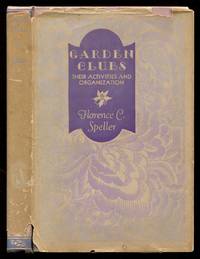
1931Best.-Nr. 618900New York: The Mohawk Press 1931. Hardcover. Near Fine/Very Good. First edition. Illustrated with black and white plates. 159pp. 1934 gift inscription some offsetting to the endpapers near fine in very good dust jacket with three large chips on the rear panel and one on the spine tail sunned spine. Speller was the founder of the White Plains New York Garden Club. The Mohawk Press hardcover books
1984Best.-Nr. 222552University of New Mexico Press 1984-06-01. paperback. Good. 7x0x9. Minor overall wear. Clean has a good binding no marks or notations. 284 pages. University of New Mexico Press paperback books
1930Best.-Nr. 568687New York: The Macmillan Company 1930. Hardcover. Very Good. First American editions. Two volumes. Octavos. Illustrated. Bookseller ticket on the rear pastedown of each volume. Both volumes with the spines and shoulders soiled a few tiny tears at the crown and the endleaves tanned; The Later Years with bumping along the topedge of the rear board causing two tiny tears in the cloth and the top corner worn through a very good set. The text and illustrations are fine. The Macmillan Company hardcover books
1986Best.-Nr. 574704New York: Warner 1986. Softcover. Very Good. Uncorrected proof of Warner edition. Introduction by William Styron. 16mo. 176pp. Printed pink wrappers. Small sticker shadow on front cover light soiling toning on the spine and rear wrap very good. Contains an epilogue by co-author Tedd Thomey commenting on Florence Aadland's life death and her imprisonment. Addland details the sexual relationship her daughter Beverly had with actor Errol Flynn 33 years her senior that began when Beverly was 15. Basis for the one-woman Broadway show starring Tracey Ullman as Florence. First published by Lancer in 1961. Warner unknown books
1939Best.-Nr. 562133New York: Samuel French 1939. Hardcover. Near Fine/Very Good. First edition. Some foxing on the boards else a nice near fine copy in spine-toned very good or better dust jacket with light wear. Inscribed by the co-author to Barrett H. Clark: "Dear Barrett - this is more or less our idea of a high school play. Hope we're right! Colin. Clark was an exceptionally important figure in modern American drama aside from authoring many books he served as the longtime literary editor for the drama publisher Samuel French. Both of the authors who were married were successful screenwriters as well although Ryerson achieved the most success and is perhaps best known for her co-scripting of The Wizard of Oz. An uncommon play basis for the film Her First Beau. Samuel French hardcover books
1969Best.-Nr. 521336New York: Alfred A. Knopf 1969. Hardcover. Very Good/Very Good. First edition. Drawings by the author. Faint foxing on the foredge small tear on the rear corner very good in a very good dust jacket with moderate foxing on the spine and verso. Alfred A. Knopf hardcover books