Ireland, Patricia; Novak, Mary AnnBiblio.com
6 595 résultats
2004réf. Q-1401841082Delmar Cengage Learning 2004-06-24. Paperback. New. In shrink wrap. Looks like an interesting title! Delmar Cengage Learning paperback
2004réf. BOILER3066Delmar Cengage Learning 2004-06-24. Paperback. Like New. Prompt shipment with tracking. we ship in CLEAN SECURE NEW boxes fine Delmar Cengage Learning paperback
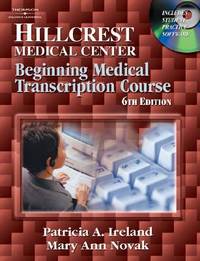
2005réf. 1560799156Delmar Publishers Inc Albany NY 2005. 6th Edition. Softcover. Very Good Condition. The text appears to be clean white and crisp. Light shelf and corner wear to the books cover and corners. Binding is still in good condition. Book comes with a CD!!!!! 225 pp. Multiple copies available this title. Quantity Available: 2. Shipped Weight: Under 500 grams. Category: Medicine & Health; ISBN: 1401841082. ISBN/EAN: 9781401841089. Pictures of this item not already displayed here available upon request. Inventory No: 1560799156. . 9781401841089 Delmar Publishers, Inc paperback
réf. 0538712139-7-1-13Cengage Learning. 4. Acceptable. The item might be beaten up but readable. May contain markings or highlighting as well as stains bent corners or any other major defect but the text is not obscured in any way. Cengage Learning unknown
1994réf. SKU1007301Cengage Learning 1994-10-07. CD-ROM. Like New. Like New Inside & Out. Clean & Crisp! No markings. You will be pleased. Excellent book! z1s75C There is some minimal shelf wear on cover. Two sealed template-diskettes included!! Fast Shipping! Cengage Learning unknown
1999No marks or inscriptions. No creasing to covers or to spine. A very clean very tight copy with bright unmarked boards, very minor rubbing to lower front edge and no bumping to corners. 80pp. With 34 one-day walking routes on Ireland's westen seaboard with Ordnance Survey maps..
réf. 1023168871.Ghardcover. Good. Access codes and supplements are not guaranteed with used items. May be an ex-library book. hardcover
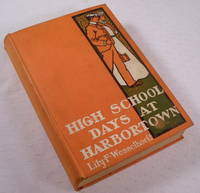
1901réf. 029120Boston: Little Brown and Company 1901. First edition 1901. Illustrated with six black and white plates. Orange pictorial cloth printed in white green and black gilt spine lettering 387 pages plus publisher's ads. Covers lightly rubbed mainly at the extremities with some fairly light shelf soil good hinges sound text block light foxing to outer margins of plates and to title page/frontis tissue pages otherwise clean with a couple of minor instances of finger soil to the margins. First Edition. Hard Cover. Good/No. 12mo - over 6¾" - 7¾" tall. Little, Brown, and Company Hardcover
2001réf. 1333519PN. New. 2001. Soft Cover. Date is original print. This is a reprint edition . PN paperback
1912réf. biblio2682New York: Sturgis & Walton Company; 1st Edition 1912. NearFine Hardcover Gray cloth Black lettering and stamping no dj. Light soiling to the cover. No Wear. Clean free of marks inscriptions etc. Strong tight binding. 6.6"x4.75". be10249 Sturgis & Walton C ompany hardcover
1658Piccola carta geografica dell'Irlanda disegnata dal Bucelino. Questa fa parte di una serie di trenta piccole carte che il King, nel suo volume "Miniature Antique Maps", definisce "...scarce maps." e con ogni probabilità incise da Melchior Kusell. In particolare la carta dell'Irlanda sarà ritoccata per un'edizione successiva datata 1664. Antico restauro nell'angolo in basso a sinistra. Testo al verso
1616Carta geografica tratta dal Tabularum Geographicarum contractarum libri septem di Petrus Bertius, edizione latina del 1616. L'opera contiene 219 carte che illustrano questa nuova versione della geografia del Bertius, per la prima volta pubblicata nel 1612 con le carte di Barent Langenes. Le carte derivano dal grande atlante di Mercator/Hondius, delle quali molte rappresentano una semplice riduzione. "After the death of Cornelis Claesz in 1609, Jodocus Hondius II became the new publisher of the work, composed by 7 parts in 1, with engraved title-page and 220 full-page engraved maps in text. All the maps were newly engraved and slightly larger in size, because Hondius was not able to acquire the original plates. With the new plates the work was definitely improved and enjoyed a growing demand of the public, which at that time had the choice between the Atlas Minor by Mercator and Bertius' Tabularum Geographicarum. The 219 plates, with the oval world map appearing twice, were produced to illustrate a new version of the geography of Bertius, published in 1616. According to King, their correct attribution is by Hondius, after Mercator and Hondius, taken from Bertius, who was only responsible for revising his text again" [cfr. G. King, Miniature Antique Maps]. Incisione in rame, perfette condizioni. A superior rival to the pocket Ortelius atlas appeared about 1598, under the imprint of Barent Langenes and Cornelis Claesz. Claesz also published the Tabularum Geographicarum contractarum libri septem, edition with texy by Petrus Bertius, in 1600. After the death of Cornelis Claesz in 1609, Jodocus Hondius II became the new publisher of the work, composed by 7 parts in 1, with engraved title-page and 220 full-page engraved maps in text. All the maps were newly engraved and slightly larger in size, because Hondius was not able to acquire the original plates. With the new plates the work was definitely improved and enjoyed a growing demand of the public, which at that time had the choice between the Atlas Minor by Mercator and Bertius' Tabularum Geographicarum. The 219 plates, with the oval world map appearing twice, were produced to illustrate a new version of the geography of Bertius, published in 1616. According to King, their correct attribution is by Hondius, after Mercator and Hondius, taken from Bertius, who was only responsible for revising his text again. "After the death of Cornelis Claesz in 1609, Jodocus Hondius II became the new publisher of the work, composed by 7 parts in 1, with engraved title-page and 220 full-page engraved maps in text. All the maps were newly engraved and slightly larger in size, because Hondius was not able to acquire the original plates. With the new plates the work was definitely improved and enjoyed a growing demand of the public, which at that time had the choice between the Atlas Minor by Mercator and Bertius' Tabularum Geographicarum. The 219 plates, with the oval world map appearing twice, were produced to illustrate a new version of the geography of Bertius, published in 1616. According to King, their correct attribution is by Hondius, after Mercator and Hondius, taken from Bertius, who was only responsible for revising his text again" [cf. G. King, Miniature Antique Maps]. Copperplate, in very good conditions. Koeman p. 42; King p. 96/99.
194718x12. 181p. Col. Austral, N. 630. Trad. J. Broutá. Sobrecubierta.
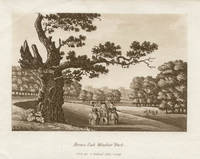
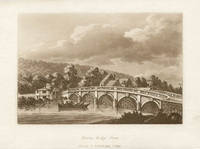
1799réf. 22671799. Sepia aquatint. 150mm by 225mm sheet. Aquatint published by Samuel Ireland. From his 'Picturesque Views on the River Thames'. Ireland was an author and engraver who published several series of aquatint views in the late 18th century.Faint crease across top left corner. unknown
réf. A9781345407891Hardback. New. hardcover
réf. A9781346175164Hardback. New. hardcover
réf. A9781345572117Hardback. New. hardcover
2016réf. x-1358146772Palala Press 2016. Hardcover. New. 366 pages. 6.14x0.81x9.21 inches. Palala Press hardcover
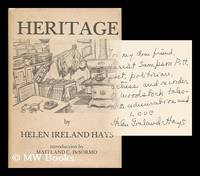
1979réf. 25264Boston : Marshall Jones 1979. First Edition. Hardback. Fine cloth copy in an equally fine dw. Particularly well-preserved; bright clean and especially sharp-cornered. ; 218 pages; Description: 218 p. 7 leaves of plates : ill. ; 21 cm. Subjects: Literature United States --Twentieth Century --Original correspondence --Manuscript. Loosely inserted are 5 manuscript letters and a postcard from the author to Mrs. Pitt. Warmly inscribed to Harriet Sampson Pitt. Boston : Marshall Jones hardcover
1914pp. 345, (4)[Publisher's catalogue]. Endpapers foxed. Bookseller's label. 8vo. Original full purple cloth binding, gold lettered and decorated. Spine very faded. Hardbound. First American Edition. James Stephens (1882-1950) was left fatherless in the Dublin slums at the age of two. His mother remarried or took up with another man when James was about six years of age. She abandoned her young son and he was forced to go to the Meath Protestant Industrial School for Boys. The Meath School was cruel and harsh and he ran away to live in the streets or live with families that took to the likely boy. In 1905 'The Greatest Miracle' was published by Arthur Griffith in The United Irishman. Griffith became good friends with Stephens and published his works in his magazine know as the Sinn Fein. From 1905-1910, Stephens attended Gaelic League classes and become involved with political meetings. During this time he published several pieces which focused on Irish national pride, the importance of learning one's Irish language and customs, and remembering the ancient saga heroes. Stephens met many of his great contemporaries during this period including George Russell (AE), George Moore, W.B. Yeats, Lady Gregory, etc. In the year 1912, Stephens published The Charwoman's Daughter and later in the same year his noted work The Crock of Gold. The Crock of Gold was a great success and Stephens moved to Paris so he could concentrate on writing full time. Cynthia Kavanagh who had been his lover since 1907 accompanied him. He later married her in 1919. The Demi-Gods was published in 1914 and in 1915 he moved back to Dublin to become the Registrar of the National Gallery of Ireland (and stayed in that position till 1924). Stephens witnessed the shooting of a man as a result of the Easter Uprising in Dublin in 1916. This became a turning point for him as the event intensified his patriotic feelings and renewed his interest in old Irish literature. Stephens moved to London in the year 1925. He began a series of lecture tours which extended to the United States. In 1935 Stephens began a literary and personal friendship with James Joyce. His colleagues considered Stephens to be a genius who easily embraced fantasy, philosophy, and comedy - those who read him today will still be struck by his genius. **PRICE JUST REDUCED! STEPHENS/W77
1925345p. 8vo. Original full purple cloth binding, embossed in blind and gold lettered. Spine faded. Covers spotted. Hardbound. James Stephens (1882-1950) was left fatherless in the Dublin slums at the age of two. His mother remarried or took up with another man when James was about six years of age. She abandoned her young son and he was forced to go to the Meath Protestant Industrial School for Boys. The Meath School was cruel and harsh and he ran away to live in the streets or live with families that took to the likely boy. In 1905 'The Greatest Miracle' was published by Arthur Griffith in The United Irishman. Griffith became good friends with Stephens and published his works in his magazine know as the Sinn Fein. From 1905-1910, Stephens attended Gaelic League classes and become involved with political meetings. During this time he published several pieces which focused on Irish national pride, the importance of learning one's Irish language and customs, and remembering the ancient saga heroes. Stephens met many of his great contemporaries during this period including George Russell (AE), George Moore, W.B. Yeats, Lady Gregory, etc. In the year 1912, Stephens published The Charwoman's Daughter and later in the same year his noted work The Crock of Gold. The Crock of Gold was a great success and Stephens moved to Paris so he could concentrate on writing full time. Cynthia Kavanagh who had been his lover since 1907 accompanied him. He later married her in 1919. The Demi-Gods was published in 1914 and in 1915 he moved back to Dublin to become the Registrar of the National Gallery of Ireland (and stayed in that position till 1924). Stephens witnessed the shooting of a man as a result of the Easter Uprising in Dublin in 1916. This became a turning point for him as the event intensified his patriotic feelings and renewed his interest in old Irish literature. Stephens moved to London in the year 1925. He began a series of lecture tours which extended to the United States. In 1935 Stephens began a literary and personal friendship with James Joyce. His colleagues considered Stephens to be a genius who easily embraced fantasy, philosophy, and comedy - those who read him today will still be struck by his genius. **PRICE JUST REDUCED! STEPHENS/W77
2004réf. Q-0373217455Harlequin 2004-02-23. Mass Market Paperback. New. New. In shrink wrap. Looks like an interesting title! Harlequin paperback
2001réf. Q-0373650914Harlequin Books 2001-01-01. Paperback. New. New. In shrink wrap. Looks like an interesting title! Harlequin Books paperback
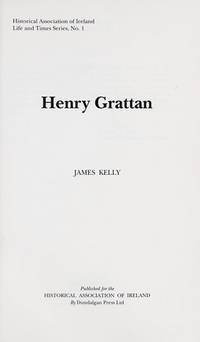
1993réf. SBBI-mon0000127107Dundalgan Press W.Tempest Ltd 1993. paperback. Good. Our good condition books are generally good for reading but not for gifting or collecting. They could have imperfections such as creasing fanning inscriptions margin notes yellowing staining on edge or cover or pages bumps scuffs etc etc sometimes multiple of these. It's a wide category that encompasses anything that isn't almost-new down to anything that is slightly better than poor. We would NOT recommend gifting Good books - these should be considered reading copies. Our books are dispatched from a Yorkshire former cotton mill. We list via barcode/ISBN so please note that the images are stock images and may not be the exact copy you receive furthermore the details about edition and year might not be accurate as many publishers reuse the same ISBN for multiple editions and as we simply scan a barcode or enter an ISBN we do not check the validity of the edition data when listing. If you're looking for an exact edition please don't order at least not without checking with us first although we don't always have time to check. We aim to dispatch prompty the service used will depend on order value and book size. We can ship to most countries see our shipping policies. Payment is via Abe only. Dundalgan Press (W.Tempest) Ltd paperback
1799réf. 22611799. Sepia aquatint. 150mm by 225mm sheet. Aquatint published by Samuel Ireland. From his 'Picturesque Views on the River Thames'. Ireland was an author and engraver who published several series of aquatint views in the late 18th century. unknown