9.984 resultados
1559In-4°; cc (4), 55, 1 cb, cc (4), 39, al primo front. nota di possesso manoscritta; legatura coeva in piena pergamena, tagli in azzurro. Ampi margini. Traduzione in lingua italiana delle istituzioni dell’impero contenute nella Bolla d’oro del 1356. Nei capitoli si tratta di: gli elettori, l’elezione del re, la Dieta di Treviri Mugunzia e Colonia, l’autorità del conte palatino e del duca di Sassonia, la successione dei principi; ma anche delle miniere d’oro e d’argento, della moneta; delle congiure. Segue il capitolo “Come e quando furono ordinati gli elettori dell’Imperio”, in cui si parla di Carlo Magno e dei Carolingi, e dei re fino a Carlo V . Con una dedica degli Accademici veneziani a Carlo d’Austria
In-4 (209 x 136 mm), plein vélin à rabats, dos à 4 nerfs plats, pièce de titre de maroquin brique encadré de filets dorés (reliure moderne), (12), 252 feuillets, (20) feuillets de table (pour "L'agriculture et maison rustique") et 22 feuillets titre compris (pour "La Chasse du Loup"), planches gravées sur bois. Nouvelle édition, celle-ci autorisée avec le privilège royal. Elle est illustrée de 6 gravures sur bois dans le texte et de nombreuses initiales pour la maison rustique; ainsi que de 14 grandes planches pour "La chasse au loup". L’ouvrage de Charles Estienne (1504-1564), est considérablement enrichi par Jean Liébault et augmenté du traité de Jean de Clamorgan "La chasse au loup", placé en fin sous page de titre et pagination particulières. "Après la mort de Charles Estienne, c’est son gendre Jean Liébault (vers 1534-1596), également médecin, qui assure les mises à jour et les révisions de l’ouvrage" (cf. exposition "Le succès de la Maison rustique", BM de Lyon, en ligne). Véritable encyclopédie de la vie rurale, l'ouvrage obtint un immense succès et fut édité sans interruption jusqu'au XVIIIe siècle. Il constitue une source fondamentale sur le sujet. Soins aux personnes et aux animaux, habitat, agriculture, élevage, basse-cour, chevaux et chiens, jardinage, chasse et pêche, préparation des aliments, beurre et fromages, viticulture et vin, boissons et alcools, miel et confitures, boulangerie et pâtisserie, etc., etc. (Goldsmiths'-Kress,, n°154.2-1. Thiébaud, col. 344. Mortimer, n°142). Court de marge supérieure avec petite perte en tête des titre et titres courants. Remarquable provenance: l'humaniste, érudit et bibliothécaire néerlandais Hugo Blotius ou Hugo de Bloote (1533, Delft - 29 janvier 1608, Vienne). D'abord intéressé à la bibliothéconomie, il étudia le droit puis fut nommé, en 1575, premier bibliothécaire en chef de la Bibliothèque impériale à Vienne par l'Empereur d'Autriche Maximilien II. Avec ex-libris manuscrit daté en pied du titre: "Ex haeraditate H. Guttÿ [Helfricus Guttius] exit H. Blotius Viennae 1585". La bibliothèque Nationale d'Autriche possède une épitaphe manuscrite composée par Hugo Blotius en l'honneur d'Helfricus Guttius en cette même année 1585: "Epitaph und Symbolum für Guttius" (Artikel ref. AC14250895). Très bon exemplaire, très frais, imprimé sur beau papier, bien conservé.
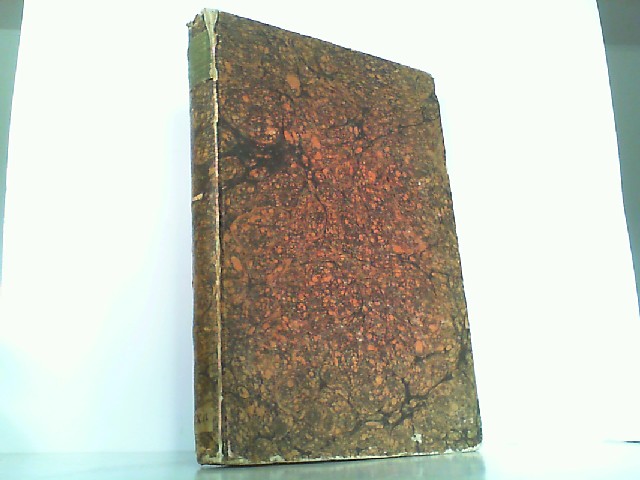
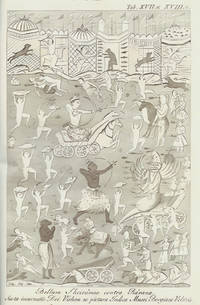
1791ref. 774° mm 250x190; pp. XII 326. Al frontespizio vignetta incisa raffigurante Ganesha e 32 tavole fuori testo di cui una a doppia pagina. Nel testo caratteri in sanscrito. Legatura coeva in piena pelle marezzata. Bell'esemplare. First edition. As the title well explains the Systema Brahmanicum by the Indologist Paulinus of St. Bartholomew - valuable compendium of Brahmanism - is closely based on the collection of Indica reperta from the famous Borgia Museum in Velletri profusely illustrated by the engravings. The volume therefore can be browsed as a kind of 'exegetical catalog' of the Hindu collection. The ancient Borgia Museum in Velletri formed between the 17th and 18th centuries by the Roman branch of the Borgia family was greatly enriched and enlarged in the second half of the 18th century by Cardinal Stefano Borgia 1731 – 1804 a man of vast culture who was a scholar of history and ethnology. The Museum famous throughout Europe for the variety and the rarity of the reperta as well as the singularity of the collections included artifacts from all parts of the world and was divided into nine sections one of which dedicated to Hindu manuscripts and relics. Paulinus of St. Bartholomew Leithaberge in Lower Austria 1748 - Rome 1806 was an Austrian Carmelite missionary and Orientalist of Croatian origin. He is credited with being the author of the first Sanskrit grammar to be published in Europe and for being one of the first Orientalists to remark upon the close relationship between Indian and European languages followed by others such as William Jones and Gaston-Laurent Coeurdoux. Having entered into the seminary of the missions of his order at Rome he did Oriental studies at the College of St Pancratius. He was sent in 1774 as missionary to Malabar India. After spending fourteen years in India he was appointed vicar-general of his order and apostolic visitor. He was very well versed in languages: he spoke German Latin Greek Hebrew Hungarian Italian Portuguese English Malayalam Sanskrit and some other languages of India. He became known in Kerala as Paulinus Paathiri. He was one of the first to detect the similarity between Sanskrit and Indo-European languages though the very first was likely Fr Thomas Stephens SJ. Recalled in 1789 to Rome to give an account of the state of the mission in Indostan he was charged with editing books – to correct the Catechisms and elementary books printed at Rome – for the use of missionaries. In Rome he came into contact with Cardinal Stefano Borgia 1731 – 1804 Secretary of Propaganda Fide antiquarian scholar and patron who had set up in Velletri his native city the very well-endowed Museo Borgiano. Cardinal Borgia appointed him his private secretary and financed the publication of many volumes of indology including the first European grammar of the Sanskrit language Sidharubam seu Grammatica Samscrdamica published in Rome in 1790. Apud Antonium Fulgonium
1978Warmly signed and inscribed atop half-title page by Margit von Mises, author of the Foreword, to her friend, Ruth Matthews. Ms. Matthews was the wife of Dr. J.B. Matthews, "foremost Communist fellow traveler of the early 1930s, who by the end of that decade was the chief investigator for the Dies Committee... Matthews had been converted from socialism partly by reading Mises's 'Socialism'" - Murray Rothbard. Publisher's promotional slip and Ms. von Mises' unsigned 'Compliments of' card laid in, plus a 1978 Wall St. Journal clipping bearing a review of this book. 181 pages. Index. Minimal light pencil markings to contents. Light overall wear. Dust jacket now preserved in archival-grade Brodart. A solid addition to the collection of any adherent of the Austrian School. Book
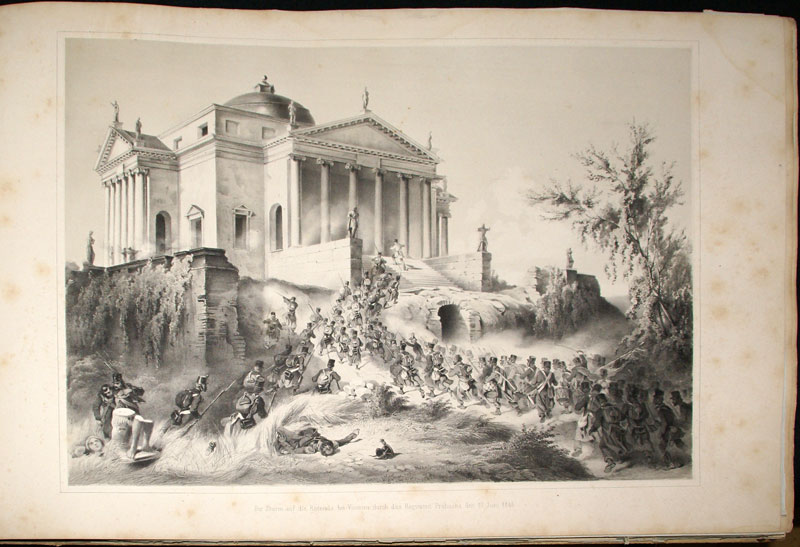
1851ref. STLD0090München, Cotta (1851). Quer-Folio, 1 lithogr. Titel, 24 lithogr. Taf. m. Textblättern, OHLn., stärker berieb., Ecken u. Kanten berieben, vord. Deckel fleckig. Blätter leicht stockfleckig, Textbll. tlw. zerknittert, randrissig u. staubrandig. Die Abbildungen zeigen Szenen aus dem italienischen Aufstand gegen die Habsburger: Reitergefechte, Straßenkämpfe, Belagerungen in norditalienischen Städten. Lipperheide Qc 20.
1970ref. 62503ABStuttgart. London. Reykjavik., Edition Hansjörg Mayer., 1970. 23 x 17 cm. [256] S. OKarton mit verleimter Papp-Manschette mit Montagen., 62503AB Auflage 1000 Exemplare. Buch am Rücken berieben, am oberen Kapital 1 cm Abrieb des Bezugspapier. Sonst sehr gutes Exemmplar. Gesammelte Werke Band 11.
1769ref. 57355Wien: Johann Thomas Edlen von Trattnern 1769. First Edition. Folio pp. xvi 282 lvi Illustrated with 27 engravings in the text & 3 folding engraved plates included in the pagination. Some foxed and toned lacks the front flyleaf. Bound in very rubbed contemporary calf still a very good tight copy. Woodcut and typographic ornaments and initials. Text in German black letter with glosses in Latin. Bound in contemporary calf spine gilt little rubbed and recently rebacked red edges. Woodblock printed end papers. Some toning to the text The binding is a little rubbed but still a very good crisp and clean copy. Maria Theresa was the eldest daughter of emperor Charles I and of Elizabeth Christina of Brunswick. At the death of her father in 1740 she became the sole heiress of his dominions of the house of Austria. Upon her accesion to the throne the neighboring countries tried to capture parts of the empire which led to the Wars of Austrian Succession which finally concuded with the treaty of Aix-la-Chapelle in 1748. This is the famous criminal code of Maria Theresa which used torture as a means of "eliciting truth." Her insticts were absolutist and she would allow nothing that limited state power even as she reformed the education system and worked to better the lives of her citizens. And she did not forbid torture. Torture was only to be used only is capital and very serious criminal cases. Included in this volume are very graphic illustrattions of instruments of torture thumb-screws stocks racks burning candles leg vices winches the Viennese shoe! with detailed and precise instruction of their use. According to the Britannica this edition was suppressed by Prince Kaunitz chancellor of the state and an advisor to the Empress. Torture was formally abolished in the empire in 1776. Maria Theresa Walburga Amalia Christina was the only female ruler of the Habsburg dominions and the last of the House of Habsburg. Maria Theresa and her husband Francis I Holy Roman Emperor had sixteen children including Queen Marie Antoinette of France. Maria Theresa was the absolute sovereign . She promulgated financial and educational reforms promoted commerce and the development of agriculture and reorganised Austria's ramshackle military all of which strengthened Austria's international standing. Johann Thomas Edlen von Trattnern unknown
1769ref. 57355Wien: Johann Thomas Edlen von Trattnern 1769. First Edition. Folio pp. xvi 282 lvi Illustrated with 27 engravings in the text & 3 folding engraved plates included in the pagination. Some foxed and toned lacks the front flyleaf. Bound in very rubbed contemporary calf still a very good tight copy. Woodcut and typographic ornaments and initials. Text in German black letter with glosses in Latin. Bound in contemporary calf spine gilt little rubbed and recently rebacked red edges. Woodblock printed end papers. Some toning to the text The binding is a little rubbed but still a very good crisp and clean copy. Maria Theresa was the eldest daughter of emperor Charles I and of Elizabeth Christina of Brunswick. At the death of her father in 1740 she became the sole heiress of his dominions of the house of Austria. Upon her accesion to the throne the neighboring countries tried to capture parts of the empire which led to the Wars of Austrian Succession which finally concuded with the treaty of Aix-la-Chapelle in 1748. This is the famous criminal code of Maria Theresa which used torture as a means of "eliciting truth." Her insticts were absolutist and she would allow nothing that limited state power even as she reformed the education system and worked to better the lives of her citizens. And she did not forbid torture. Torture was only to be used only is capital and very serious criminal cases. Included in this volume are very graphic illustrattions of instruments of torture thumb-screws stocks racks burning candles leg vices winches the Viennese shoe! with detailed and precise instruction of their use. According to the Britannica this edition was suppressed by Prince Kaunitz chancellor of the state and an advisor to the Empress. Torture was formally abolished in the empire in 1776. Maria Theresa Walburga Amalia Christina was the only female ruler of the Habsburg dominions and the last of the House of Habsburg. Maria Theresa and her husband Francis I Holy Roman Emperor had sixteen children including Queen Marie Antoinette of France. Maria Theresa was the absolute sovereign . She promulgated financial and educational reforms promoted commerce and the development of agriculture and reorganised Austria's ramshackle military all of which strengthened Austria's international standing. Johann Thomas Edlen von Trattnern unknown books
ref. 109592aafLondon, Printed by S. Hamilton, for G.G. and J. Robinson, 1800, in-folio, 4 leaves (1 blank - printed title-page - advertisements - contents) + 1 engraved title-page with view + 218 p. + 1 blank leaf + 1 folded handcoloured engraved map ‘Chart of places... including the principal peaks of that chain of the alps from the Buchetta to Mont St. Gotthard’ + 1 townmap of Lyon in black + 25 plates printed in brown (soot brown or bistre), with most of the original protective tissue gards (mostly browned in the margins), some waterstains to the lower margins of the engraved title-page and some others, hw. ownership on first free fly ‘J. Matilda Scott’, Original leather spine, boards with rests of orig.-paper. Used.
ref. 140919aafDresden, Begersche Buchhandlung, 1817, in-8vo, VIII + 300 S. + Faltkarte vom Fassa.Tal + Falttafel (Gebirgs-Durchschnitten in Farbe). Original-Pappband, Einband weist Spuren der Zeit auf, jedoch noch in gutem Allgemeinzustand.
ref. 141798aafAmsterdam, Marc Michel Rey, 1770, in-4to, 2 leaves, title in red and black with vignette (by B. Picart )+ LVI + 232 p. + 1 double folding table (comparison of 4 texts of class. authors on Hannibal) + 2 p. + 4 folding plates (2 maps and 2 plans), library stamp in lower margin of title ‘Det Kongelige Artilleriecorps, Bibliothek’, small stamp on front endpaper, full mottled calf binding, title piece on spine, gold tooled spine (gilding somewhat gone off at spine ends and title-label), minimal superficial worming, red edges.
ref. 155-Wo.J. Bleistift, auf gelblichem strukturiertem Papier, rechts unten signiert ?T. Blau?. 27,3:26,5 cm. Insgesamt etwas stockfleckig. Virtuos-atmosphärischer Ausschnitt einer Parklandschaft, der, wie von der Künstlerin bekannt, von einem mächtigen Laubbaum hinterfangen wird.
ref. STLB0079Wien, Vlg. d. Ersten Wiener Volksbuchhdlg. gr.-4°, mit zahlr., tls. farb. Abb., HLn. d. Zt., berieben, Kanten berieben, Ecken leicht bestoß., Buchblock des 1. Bandes lose, sonst insges. guter Zustand. Dietzel-Hügel 1191. Unter diesem Titel als Nachfolge bzw. Vorläuferzeitschrift der "Glühlichter" zwischen 1896 u. 1910 erschienen. Das illustrierte sozialdemokratische Satireblatt richtete seine Polemiken vor allem gegen Lueger und die Christlichsozialen, aber auch gegen Adel u. Klerus. - So komplett höchst selten.
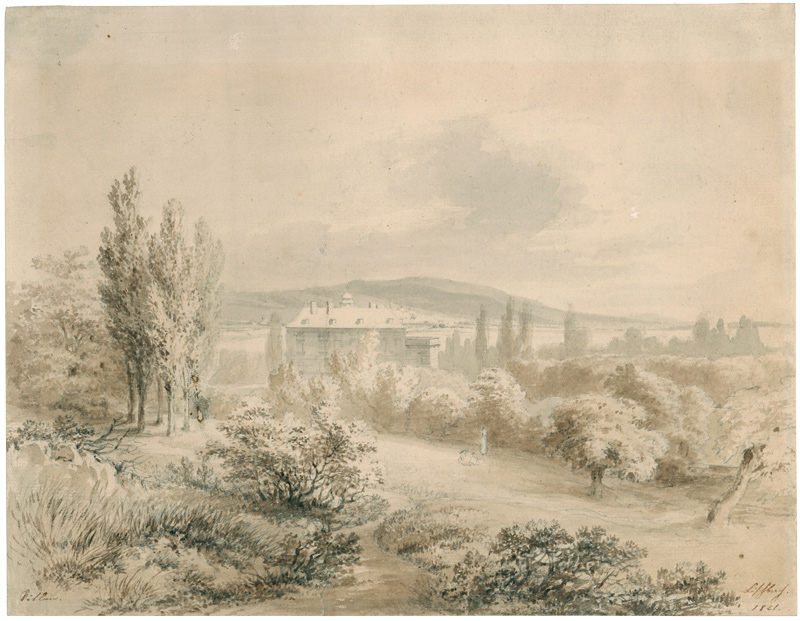
ref. 351-Eo.J. Pinsel in Braun und Grau, über Bleistift, auf Bütten mit Wasserzeichen: C & I Honig, links unten bezeichnet ?Vöslau?, rechts unten signiert und datiert ?Fischbach. 1821.?. 23:30 cm. Einriß im unteren Bildteil und winziges Löchlein hinterlegt. Provenienz: Sammlung Ferdinand Rudolf Hintze, Stettin, nicht bei Lugt. Bildmäßig durchgeführte Zeichnung aus der frühesten Schaffensphase des Künstlers.
1808ref. 15548Wien, Aus der Kaiserl. Königl. Hof-Und Staatsdruckerey (Vienne, Imprimerie de la Cour et de l'État), 1808 ; in-folio ; bradel de papier marbré, pièce de titre vert foncé (reliure de l'époque) ; (4), 169 pp., 25 cartes et plans gravés par Johann Renard, Kilian Parheimer, Ant. Benedict et Heironymus Benedicti, entièrement aquarellés, 1 accompagnée de 2 détails et 5 avec des détails mobiles qui permettent de suivre les mouvements dans le temps.
1602In-4°; cc. (10), pp. 140, cc. (2), nota di possesso ms al front.; pelle contemporanea, ai piatti stemma dorato del convento parigino dei Minimi, 'Charitas. Conventus. Parisiensis. Minimorum'. Dorso reaturato. Alla seconda pag. ritratto ad acquaforte del Cav. Ciro Spontone incisa da Sadeler. 1 tav. ripiegata incisa su legno con l'albero genaelogico dei reggenti d'Ungheria da Attila 'Flagello di Dio'; nel testo 4 incisioni su legno a piena pagina, che raffigurano lo sviluppo della stirpe francese di Carlo Magno e degli Unni, l'albero dei re francesi e polacchi che regnarono in Ungheria a partire da Carlo Martello, le armi di Mattia Corvino, la stirpe dopo Ferdinando e Anna fino a Rodolfo(dove si legge "Bunt. fec."), le corone e i medaglioni con i nomi dei re, testate e finalini. Infine la vita e le gesta di Rodolfo II, il grande ed eccentrico collezionista di meraviglie al cui gusto sembrano ispirarsi le numerose xilografie di questo rarissimo figurato bolognese. Ciro Spontone fu un prolifico scrittore politico ma si occupò anche di scienze esoteriche, è una figura non secondaria del nostro seicento a cui Benedetto Croce ha dedicato numerose pagine. Questa edizione, che è la prima, appare essere di notevole rarità e non compare nei repertori bibliografici. Ottimo elemplare. Un esemplare in B.M. II, pag. 864.
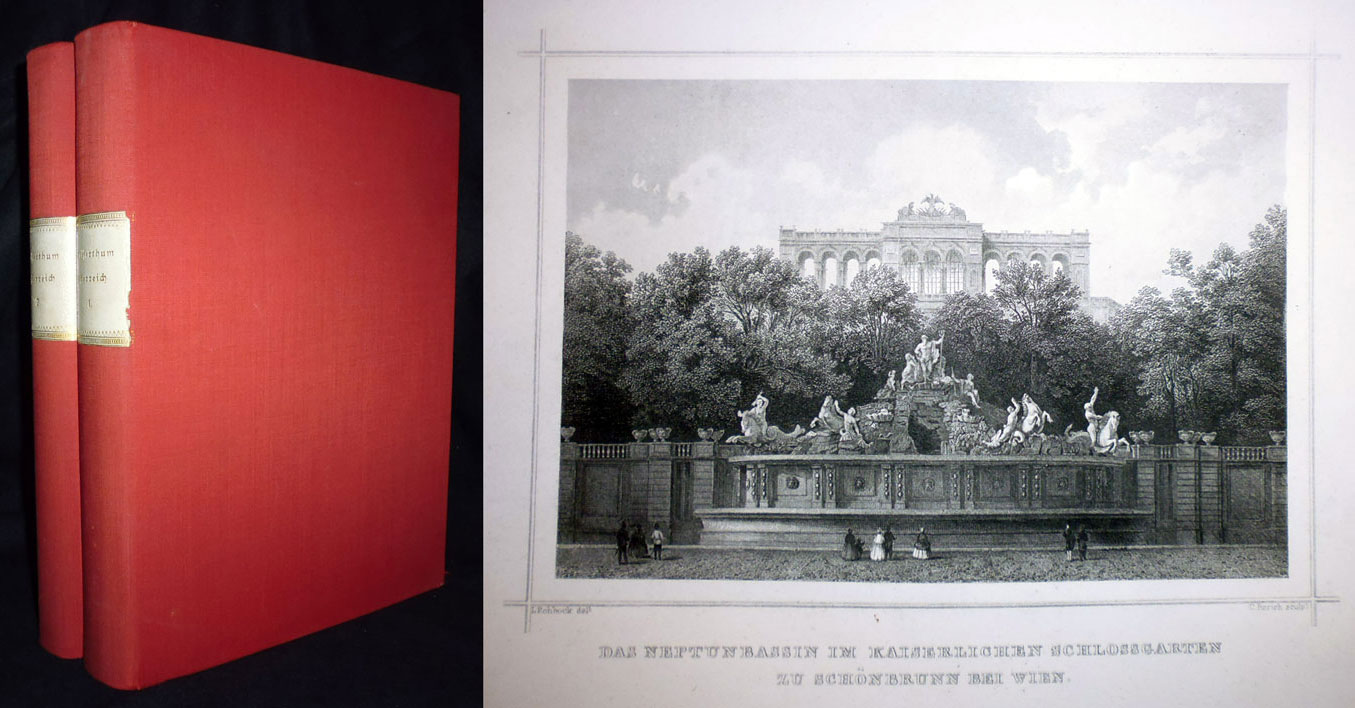
1889ref. AUST0256Frankfurt a. M., Honsack 1889. 4°, jeweils 1 Titelbl., 1 Stahlstichverz.; 179 (statt 200) Stahlstiche, spätere hochrote Leinenkassetten m. RüSch., sehr guter Zustand.
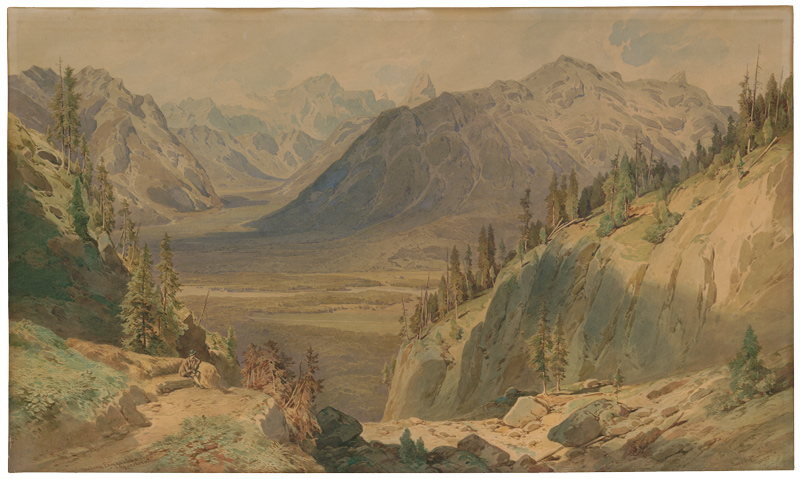
ref. 289-Eo.J. Aquarell, auf festem bräunlichem Zeichenpapier, links unten bezeichnet ?Untere Erzgraben... Ettal?, rechts unten signiert und datiert ?Leop Rottmann 1852?. 29,9:50,3 cm. - Zwei Einrisse im linken Teil der Darstellung sind sauber restauriert und von vorne nicht sichtbar, kleine Restaurierung in der linken unteren Ecke. Farbfrisches Aquarell und typische Arbeit Leopold Rottmanns. Der in der Bezeichnung erwähnte ?Erzgraben? ist ein Nebenfluß des Alpbachs.
1769ref. elala199Vienna: Johann Thomas Edlen von Trattnern 1769. 1769. folio. pp. 8 p.l. 282 lvi. 27 engravings in the text & 3 folding engraved plates incl. in pagination. woodcut ornaments & initials. full contemporary dark brown morocco lettered in gilt on upper cover: Constitutio Criminalis Theresiana Spectans Ad Antiquam Civitatem Voitsbergensem 1773 Antonius Josephus Schilcher P.T. Judex Civitatis Voitsberga bit rubbed some browning & foxing marginal dampstain to last section containing engravings folding plates dampstained & repaired -1 with some loss of text. Inscribed on front blank: "Mathias SchuemackerSuperioris Austriae Jo. J. Syndrins Voitsberga 1773". First Edition of the famous criminal code of Maria Theresa which redefined torture as "a subsidiary means of eliciting truth". Torture could be applied to obtain confessions only in cases where condemnation would have involved capital or severe corporal punishment. A remarkable publication including graphic illustrations of instruments and methods of torture thumb-screws stocks racks burning candles leg vices winches the Viennese shoe with detailed and precise instructions on their use. According to the Encyclopaedia Britannica 11th Edn. this illustrated edition was suppressed by Prince Kaunitz chancellor of state and advisor to the Empress a few days after its appearance. Torture was formally abolished in the empire in 1776. Signed by Authors. 1st Edition. Vienna: Johann Thomas Edlen von Trattnern, 1769. hardcover
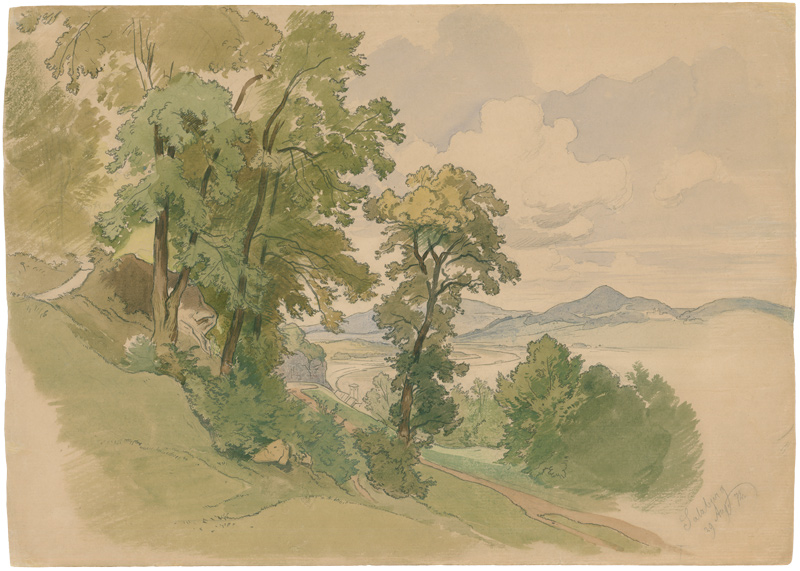
ref. 301-Eo.J. Aquarell über Feder in Grau und Bleistift, auf bräunlichem festem Bütten. . 26,2:37 cm. Ein stilistisch und farblich sehr verwandtes Blatt zeigt eine topographisch nicht näher bestimmbare ?Hügellandschaft mit Bäumen, Wiese und Hang?, ebenfalls in unserem Besitz (vgl. Kat. 105, Nr. 36 und ist mit ?29 Aug. 72.? datiert.
ref. 95636aaf31x25 cm, 1) kl. ovales Reliquienmedaillon aus Silber mit Glasfenster und Beschriftung „Ex Oss: S. Franc: Bor:“, mit Zeugnis auf Papier, vorgedrucktes Formular mit gestochenem Bischofswappen, handschriftlich ausgefüllt u. unterschrieben, Medaillon und Zeugnis unter Glas mit ornamentaler Textilrahmung mit Stütze zum Aufstellen auf Rückseite, dazu zwei Klosterarbeiten in ähnlicher Textilrahmung: 2) Gouache-Miniatur von Johannes d. Täufer mit Stickerei, Goldborten sowie polychromen Glasperlen, Stoffblumen, Draht und Pailletten. 3) ovales Stoffmedaillon mit Glasperlen u. goldfarbenem Draht u. Pailletten auf Purpurgrund mit Goldbrokatverzierungen, guter Zustand, an den Ecken Textilrahmen teilw. etwas ausgefranst, es liegt auch ein Dossier mit einer kurzen Dokumentation zum Heiligen u. den Jesuiten bei (Ausdrucke u. Fotokopien),
1808ref. 226305Wien, Aus Der Kaiserl. König. Hof- Und Staatsdruckerey, 1808.
1808ref. MUSun[AU71Vienna: Aus Der Kaiserl. König. Hof- Und Staatsdruckerey 1808. 1808. folio. pp. 2 p.l. 169. 25 folding engraved maps with partial hand-colour by Joh. Renard 5 with onlays. contemporary marbled bds. spine label chipped. in paper slipcase worn. First Illustrated Edition of this work devoted to the principals of the art of war and their practical application for the generals of the Austrian army. The series of twenty-five detailed battle plans some with onlays depict proper troop formations in various situations. F. Vienna: Aus Der Kaiserl. König. Hof- Und Staatsdruckerey, 1808. unknown
1769ref. 52694Wien: Johann Thomas Edlen von Trattnern 1769. First Edition. Folio pp. xvi 282 lvi Illustrated with 27 engravings in the text & 3 folding engraved plates included in the pagination. One of the plates was misfolded and is consequently slightly frayed at the lower edge with an old paper repair at the foredge not affecting the print area. Woodcut and typographic ornaments and initials. Text in German black letter with glosses in Latin. Bound in contemporary calf spine gilt little rubbed and recently rebacked red edges. Woodblock printed end papers. Some toning to the text The binding is a little rubbed but still a very good crisp and clean copy. Laid in: MARIA THERESA; EMPRESS. Autograph Note Signed "Maria Theresia" on black rimmed mouring paper to paymaster Mayer in German concerning her son's pension requesting 500 ducats or sovereigns and in a postscript written at lower edge and vertically at upper edge adding that the letters would follow in the evening. 1 page 12mo mourning stationery; some staining affecting signature but still legible folds. Vienna circa 1776. Maria Theresa was the eldest daughter of emperor Charles I and of Elizabeth Christina of Brunswick. At the death of her father in 1740 she became the sole heiress of his dominions of the house of Austria. Upon her accesion to the throne the neighboring countries tried to capture parts of the empire which led to the Wars of Austrian Succession which finally concuded with the treaty of Aix-la-Chapelle in 1748. This is the famous criminal code of Maria Theresa which used torture as a means of "eliciting truth." Her insticts were absolutist and she would allow nothing that limited state power even as she reformed the education system and worked to better the lives of her citizens. And she did not forbid torture. Torture was only to be used in capital and very serious criminal cases. Included in this volume are very graphic illustrattions of instruments of torture thumb-screws stocks racks burning candles leg vices winches the Viennese shoe! with detailed and precise instruction of their use. According to the Britannica this edition was suppressed by Prince Kaunitz chancellor of the state and an advisor to the Empress. Torture was formally abolished in the empire in 1776. Maria Theresa Walburga Amalia Christina was the only female ruler of the Habsburg dominions and the last of the House of Habsburg. Maria Theresa and her husband Francis I Holy Roman Emperor had sixteen children including Queen Marie Antoinette of France. Maria Theresa was the absolute sovereign . She promulgated financial and educational reforms promoted commerce and the development of agriculture and reorganised Austria's ramshackle military all of which strengthened Austria's international standing. Johann Thomas Edlen von Trattnern unknown
1769ref. 52694Wien: Johann Thomas Edlen von Trattnern 1769. First Edition. Folio pp. xvi 282 lvi Illustrated with 27 engravings in the text & 3 folding engraved plates included in the pagination. One of the plates was misfolded and is consequently slightly frayed at the lower edge with an old paper repair at the foredge not affecting the print area. Woodcut and typographic ornaments and initials. Text in German black letter with glosses in Latin. Bound in contemporary calf spine gilt little rubbed and recently rebacked red edges. Woodblock printed end papers. Some toning to the text The binding is a little rubbed but still a very good crisp and clean copy. Laid in: MARIA THERESA; EMPRESS. Autograph Note Signed "Maria Theresia" on black rimmed mouring paper to paymaster Mayer in German concerning her son's pension requesting 500 ducats or sovereigns and in a postscript written at lower edge and vertically at upper edge adding that the letters would follow in the evening. 1 page 12mo mourning stationery; some staining affecting signature but still legible folds. Vienna circa 1776. Maria Theresa was the eldest daughter of emperor Charles I and of Elizabeth Christina of Brunswick. At the death of her father in 1740 she became the sole heiress of his dominions of the house of Austria. Upon her accesion to the throne the neighboring countries tried to capture parts of the empire which led to the Wars of Austrian Succession which finally concuded with the treaty of Aix-la-Chapelle in 1748. This is the famous criminal code of Maria Theresa which used torture as a means of "eliciting truth." Her insticts were absolutist and she would allow nothing that limited state power even as she reformed the education system and worked to better the lives of her citizens. And she did not forbid torture. Torture was only to be used in capital and very serious criminal cases. Included in this volume are very graphic illustrattions of instruments of torture thumb-screws stocks racks burning candles leg vices winches the Viennese shoe! with detailed and precise instruction of their use. According to the Britannica this edition was suppressed by Prince Kaunitz chancellor of the state and an advisor to the Empress. Torture was formally abolished in the empire in 1776. Maria Theresa Walburga Amalia Christina was the only female ruler of the Habsburg dominions and the last of the House of Habsburg. Maria Theresa and her husband Francis I Holy Roman Emperor had sixteen children including Queen Marie Antoinette of France. Maria Theresa was the absolute sovereign . She promulgated financial and educational reforms promoted commerce and the development of agriculture and reorganised Austria's ramshackle military all of which strengthened Austria's international standing. Johann Thomas Edlen von Trattnern unknown books