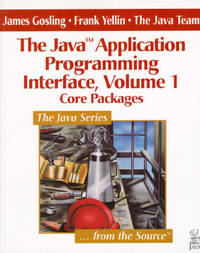
The Java Application Programming Interface
1996ref. DBS-9780201634532Addison-wesley 1996. 1st. Paperback. New. Addison-wesley paperback
BookVistas · India78,24 US$≈ 69,90 €
263 resultados
ref. DADAX0136798950New unknown
ref. DADAX0520086570New unknown
ref. DADAX0132413930New unknown
ref. DADAX0333992814New unknown
ref. SONG1484242777Used: Good unknown
ref. SONG3030077853Used: Good unknown
ref. DADAX0538744928New unknown
ref. DADAX0226780104New unknown
ref. DADAX0226780112New unknown
ref. DADAX1849690448New unknown
ref. DADAX1847191002New unknown
1996ref. DBS-9780201634532Addison-wesley 1996. 1st. Paperback. New. Addison-wesley paperback
1996ref. DBS-9780201634532Addison-wesley 1996. 1st. Paperback. New. Addison-wesley paperback
1996ref. AME_9780201634532Addison-wesley 1996. 1st. Paperback. New/New. _ Addison-wesley paperback
ref. DADAX1852337214New unknown
ref. DADAX1447124421New unknown
2025ref. x-3032004918Springer-Nature New York Inc 2025. Paperback. New. 400 pages. 9.25x6.10x9.21 inches. Springer-Nature New York Inc paperback
2025ref. x-3032004942Springer-Nature New York Inc 2025. Paperback. New. 400 pages. 9.25x6.10x9.21 inches. Springer-Nature New York Inc paperback
ref. DADAX1562764780New unknown
ref. SONG097521280XUsed: Good unknown
ref. PE70Oblong Folio ca. 33 x 24 cm or 13 x 9 ¼ in. 26 card stock leaves 12 blank. With 35 mounted original gelatin silver photographs from ca. 175x125 cm 7 x 5 in to 5x8 cm 2x3 in. At least fourteen images with period pencil/ink captions in Dutch on verso; at least ten images with ink stamps “Ontvangen Received - Beantwoord Answered” and dates from 1907 to 1909 on verso. Period brown half sheep album with green cloth boards; spine and boards with gilt-tooled borders; all edges coloured; decorative endpapers. Binding slightly rubbed on extremities; two photos detached and loosely inserted a few photos mildly faded but overall a very good album of interesting photos. Historically significant collection of original photographs documenting the construction and early operations of a factory in the Dutch East Indies – most likely the sugar factory complex in Djatiroto Jatiroto Lumajang Regency in East Java. Built and owned by the Dutch “Handelsvereeniging Amsterdam” company HVA in ca. 1905-1910 the complex covered the “area of approximately 215 hectares” with “the actual factory surrounded by the factory office the repair workshop and the large warehouse <…> the marshalling yard with the locomotive shed and the field for the trains of the company that transports sugar cane from the fields which includes coal and water reservoirs weighbridges and central switch control” in translation See: Een suikerfabriek op Java// Neerlandia: Organ van het Algemeen Nederlandsch Verbond. Vol. 13 No. 8 Aug. 1909 p. 183. The factory buildings housed the mill and boiler installations laboratory and sugar storage juice processing equipment centrifuges and sugar dryer. The complex also included residences for European officials dwellings for the Javanese workers a hospital a club and a hotel. Sugar cane was brought from the enterprise fields by small trains; the final product left the facility via the specially constructed train station See: Een suikerfabriek op Java… pp. 183-186. The complex was considered one of the most modern sugar factories in the Dutch East Indies see also: Geuns M. van. De suikeronderneming Djatiroto en de regeling van het werkcontract op Java. Soerabaya 1908. The album opens with a portrait of European administrators posing on a train platform driven by a small locomotive through a sugar cane field. Similar locomotives were used on the Djatiroto complex. Six images show the interior of the factory buildings machinery and workers. There are also images of an unfinished rail track earthworks a dam construction with a pencil caption “Dam rechteroever Djatiroto” and an ink-stamped date “18 Nov. 1907” European administrators posing in a partly-cleared forest area a side of a settlement for Javanese workers note a waving Dutch flag on a decorated pole and a railway station which looks very similar to the Djatiroto station see a photo from a 1917 keepsake album available online. The album also includes several portraits or scenes with Javanese people and the compiler and his family. Three photos at the rear are captioned “Portsmouth Dominica” and “Bridgetown Barbados” – they were possibly taken on the compiler’s educational trip to the Caribbean undertaken to study the local sugar cane industry and technologies. Overall an interesting collection of original photos of a Dutch sugar-processing facility in East Java in the early 20th century. hardcover