677 resultados
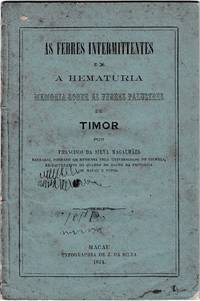
1874ref. 24029Macau: Typ. de J Da Silva 1874. First only Edition. Original printed publisher's wrappers. Very good; some modest spotting and scribbling on the front wrapper; one small wear spot on the front wrapper. 8vo 4 5 - 42 2 - blank pp. Hematuria is a symptom of a diseased condition; it is blood in the urine. General acute fevers in tropical climates that were accompanied by this symptom usually the result of an untreated infection by the plasmodium malaria parasite engorging the kidneys and producing a hemorrhage were relegated to the general category of "intermittant fevers" or "swamp fevers" here palustres. Prior to 1880 the date when Laveran first announced the discovery of the malaria parasite in Paris publishing the result in 1881 no cause for the condition was known. Exiled to the wilderness of East Timor Magalhães undertook a series of case studies at the military hospital in Dili the capital of East Timor from 1869-1873 in an attempt to elucidate the causes of what he identified as an "ailment" and to suggest remedies it was in a way a similar action to that of Anton Chekov who two decades later in Siberia on the island of Sakhalin would carry out his studies of tuberculosis. Ameliorative at best his work was careful and indicative of the general ignorance and limits of such a specialized field within tropical medicine of the day - there are citations to Rayer's notable atlas and work on the kidney and to Piorry. Malaria was no secret or rare ailment. Quinine was the generally available palliative - but no cure. One of the rare attempts at serious research in tropical medicine in situ prior to WWI. There is but one copy of the pamphlet located Amsterdam. Typ. de J Da Silva unknown books
1790In-4°; 2 parti in 2 volumi rilegati in mezza pelle coeva con tassello e titolo in oro al dorso (del primo vol. lievemente difettosa); tagli spruzzati. Pp. 321, (1), 3 tavole f.t. a piena pagina incise su rame (una raffigura il vulcano Pambamarca nella zona di Quito in Ecuador), 2 grandi tavole ripiegate con tabelle; Pp. 400, 4 tavole a piena pagina incise su rame di cui una raffigura il, vulcano di Pichincha vicino Quito, e l’altra il vulcano Chimborazo sempre in Ecuador; 2 grandi tavole ripiegate con tabelle. Al verso dei frontespizi piccoli timbri di possesso. Interessante e poco nota opera di fisica sperimentale e sienze naturali del gesuita spagnolo Francesco Perez (1720-1807 Bologna), matematico e missionario in Ecuador, Quito, fino alla espulsione dei gesuiti dai domini spagnoli (1767); in Italia si dedicò alla scrittura di opere scientifiche che vennero pubblicate dopo la soppressione della Compagnia nel 1773. Il suo nome è legato anche all’invenzione di strumenti scientifici, tra cui uno per misurare gli angoli. Oggetto del trattato il Barometro, “istrumento in grado eminente per condurre l’intelletto alla cognizione dell’elemento dell’aria”, e il Termometro, strumenti dei quali si ricordano gli inventori, i metodi costruttivi, le evoluzioni tecniche; si esaminano le differenze tra aria e atmosfera, “l’elasticità” della materia eterea, l’atmosfera equinoziale dell’America, specialmente delle montagne e vulcani dell’Ecuador (Caraburo, Oyambaro, Pichincha Pambamarca ecc.) dove l’atmosfera fu misurata con l’aerometro, come ampiamente si descrive nella seconda parte. Un capitolo, in fine, è dedicato all’atmosfera europea.