688 résultats
Lugo, Imprenta de Pujol, 1827. 4to.; 7 hojas, 260 pp. Ejemplar de salida, sin desbarbar. Cubiertas mudas, modernas, en cartulina.
Madrid, en la Imprenta de Benito Cano, 1786. 4to.; 2 hs., XVI-791 pp. Impresión a doble columna. Texto limpio y amplios márgenes blancos. Encuadernación de época en piel, con tejuelos, ligeramente fatigada.
Madrid, en la Imprenta de Blas Román, 1788. 4to.; 2hs., 496 pp. Impresión a doble columna. Texto limpio y amplios márgenes blancos. Encuadernación de época en piel, con tejuelos, ligeramente fatigada.
Madrid, en la Imprenta de Manuel González, 1787. 4to.; 2 hs., 636 pp. Impresión a doble columna. Texto limpio y amplios márgenes blancos. Encuadernación de época en piel, con tejuelos, ligeramente fatigada.
1966réf. ZB146910Quito: 1966/67-69 passim. volumes 40 & 43 library buckram still good . - If you are reading this this item is actually physically in our stock and ready for shipment once ordered. We are not bookjackers. Buyer is responsible for any additional duties taxes or fees required by recipient's country. Photos available upon request. Quito: hardcover
1995réf. 3885Paris 1995 in-plano en feuilles Paris, [chez l'artiste], 1995. 15 gravures sur cuivre en noir et 2 feuillets (texte de présentation intitulé "Les Ongulés, entre blanc obscur et noirs clairs" / "Los Ongulados, de entre blanco oscuro y negro claros" et justification) réunis sous 3 chemises placées dans un portefeuille de pleine toile. Portefeuille : 86 x 33,5 cm. Feuilles : 78,5 x 26 cm. Sujets : de 35 x 12,5 cm à 47,5 x 14,5 cm.
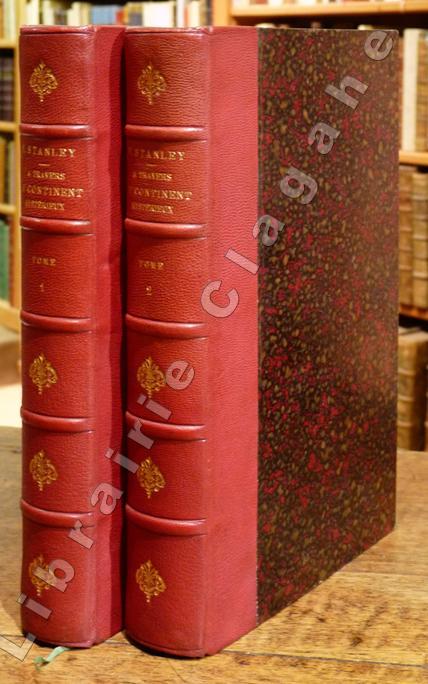
1879réf. 12907Paris, Hachette, 1879 ; 2 tomes in-8 ; demi-chagrin rouge-cerise, fleurons décoratifs et titre dorés (reliure de l'époque) ; (12), IV, 496 ; (4), 544 pp., 2 frontispices, 9 cartes en couleurs dont 2 très grandes dépliantes en fin de chaque volume et 2 dépliantes, dont celle du fleuve Lingstone (Congo) et de ses chutes.
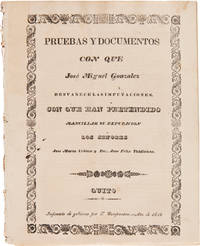
1838réf. WRCAM41131Quito: Imprenta de gobierno por T. Campanzano 1838. 232pp. Folio. Dbd. Minor soiling to first two leaves; very light even toning. Very good. A refutation made by Gonzalez of the accusations made against him by Jose Maria Urbina and Dr. Jose Felix Valdivieso. Gonzalez was the minister of the interior in Ecuador under Vicente Rocafuerte Ecuador's second president 1834-39. Both Urbina and Valdivieso were exiled for their political views; both returned to Ecuador in 1839 after the end of Rocafuerte's presidency. No copies are located on OCLC. Imprenta de gobierno por T. Campanzano unknown books
1838réf. 41131Quito: Imprenta de gobierno por T. Campanzano 1838. A refutation made by Gonzalez of the accusations made against him by Jose Maria Urbina and Dr. Jose Felix Valdivieso. Gonzalez was the minister of the interior in Ecuador under Vicente Rocafuerte Ecuador's second president 1834-39. Both Urbina and Valdivieso were exiled for their political views; both returned to Ecuador in 1839 after the end of Rocafuerte's presidency. No copies are located on OCLC. Folio. Dbd. Minor soiling to first two leaves; very light even toning. Very good. unknown
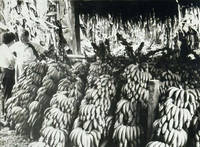
réf. PD57Oblong Folio album ca. 255x325 cm or 10 x 13 in. 27 card stock leaves. With 394 mounted mostly pasted on but also mounted in corners original gelatin silver photos from ca. 85x115 cm 3 ¼ x 4 ½ in to ca. 55x85 cm 2 ¼ x 3 ¼ in. One mount with a general pencil caption “Rio Napo” two photos with period ink captions in German on verso. Period brown calf boards fastened with a string; elaborate blind-stamped ornaments on both boards; front board with a colour-stamped vignette. Three images previously removed from the album otherwise a very good album with bright interesting photos. Interesting extensive collection of original gelatin silver amateur photos of Ecuador taken by Germans in the 1950s and illustrating the early years of the re-establishment of economic relations between Ecuador and the Federal Republic of Germany after WW2 possibly in the agriculture and beer brewing industry. The album opens with photos of the arrival of a middle-aged travelling couple to Ecuador an airfield with a plane of “Aerovias Ecuatorianas C.A.” a boat trip along a river disembarking from a dugout canoe entering a riverside community &c. A series of images show the travellers at a banana plantation and local men loading banana bunches onto trucks. There are also images of the couple travelling on board a plane with the sign “Aerovias Nacionales del Agro Vuele en Anda Don Juan 09” and several views taken from the plane. Four photos show the installation of water or irrigation pipes in the Ecuadorian countryside. Over forty images document the transportation and installation of a tank possibly for a brewery: scenes of the arrival of a river barge with wooden containers with the signs “Quito Ecuador Guayaquil” unpacking and loading equipment on trucks driving over a bridge mountainous countryside roads arrival to an industrial facility installation within a brick structure and several portraits of workers. Three photos at the end of the album show the unloading of a piece of equipment; the sign next to the truck reads “Export Süd-Amerika.” The other photos show Ecuadorian cattle ranches papaya plantations coastal and riverside communities one leaf has a manuscript caption “Rio Napo” a pottery workshop market stalls “Hotel de Palace” entrance to “Pension Federico” snow-capped mountains one is most likely Cotopaxi scenes with Ecuadorian mule drivers loaders with wooden casks a show polisher children at a Christmas street celebration native species of mammals birds and turtles &c. Over a dozen images show a bullfight most likely in Quito. There are also several scenes from a public ceremony with government officials. Numerous photos portray Germans in Ecuador – while sightseeing dining attending parties and a wedding and spending time with families and children; there are also views of the interior of their homes or rustic cottages. One photo portrays a female traveller posing in front of the entrance to “Handicraft/ Art-Workshop Arturo Kiewe.” Apparently it belonged to a Jewish merchant Arthur Kiewe who owned an art store in Berlin and fled Germany in 1939. Another close-up photo portrays the owner and his wife – likely Kiewe himself. The two photos with captions on verso show a family in Ambato and two Germans apparently posing on the grounds of the “Campana” “Malzerei” malthouse. Overall an interesting extensive collection of original gelatin silver photos of Ecuador in the 1950s. hardcover
réf. 228458CENDRARS Blaise - MICHAUX Editions Du Carrefour Paris 90
1966réf. ZB146911Quito: 1966-69. Nos. 972-1178 an uninterrupted run of complete issues bound in four parts ex library very-good. - If you are reading this this item is actually physically in our stock and ready for shipment once ordered. We are not bookjackers. Buyer is responsible for any additional duties taxes or fees required by recipient's country. Photos available upon request. Quito: unknown
1790In-4°; 2 parti in 2 volumi rilegati in mezza pelle coeva con tassello e titolo in oro al dorso (del primo vol. lievemente difettosa); tagli spruzzati. Pp. 321, (1), 3 tavole f.t. a piena pagina incise su rame (una raffigura il vulcano Pambamarca nella zona di Quito in Ecuador), 2 grandi tavole ripiegate con tabelle; Pp. 400, 4 tavole a piena pagina incise su rame di cui una raffigura il, vulcano di Pichincha vicino Quito, e l’altra il vulcano Chimborazo sempre in Ecuador; 2 grandi tavole ripiegate con tabelle. Al verso dei frontespizi piccoli timbri di possesso. Interessante e poco nota opera di fisica sperimentale e sienze naturali del gesuita spagnolo Francesco Perez (1720-1807 Bologna), matematico e missionario in Ecuador, Quito, fino alla espulsione dei gesuiti dai domini spagnoli (1767); in Italia si dedicò alla scrittura di opere scientifiche che vennero pubblicate dopo la soppressione della Compagnia nel 1773. Il suo nome è legato anche all’invenzione di strumenti scientifici, tra cui uno per misurare gli angoli. Oggetto del trattato il Barometro, “istrumento in grado eminente per condurre l’intelletto alla cognizione dell’elemento dell’aria”, e il Termometro, strumenti dei quali si ricordano gli inventori, i metodi costruttivi, le evoluzioni tecniche; si esaminano le differenze tra aria e atmosfera, “l’elasticità” della materia eterea, l’atmosfera equinoziale dell’America, specialmente delle montagne e vulcani dell’Ecuador (Caraburo, Oyambaro, Pichincha Pambamarca ecc.) dove l’atmosfera fu misurata con l’aerometro, come ampiamente si descrive nella seconda parte. Un capitolo, in fine, è dedicato all’atmosfera europea.