[Brazil]ABAA

47 résultats
1890réf. 36355London E.: James Imray & Son Chart and Nautical Book Publishers 1890. Original printed blue wrappers stitched. vii 1 132 pp. Scattered and generally light spotting and mild wear. Very Good. With detailed table of contents "a complete List of Lights" on the East and North Coasts of Brazil and thorough sailing directions from point to point. The rear wrapper advertises Imray's books and charts for navigating the Atlantic Ocean. Imray printed several earlier and at least one later edition of this work. James Imray & Son, Chart and Nautical Book Publishers unknown books
1810réf. 43917Rio de Janeiro: Na Impressão Regia 1810. Later marbled paper wrappers manuscript title. Very good dampstained along spine with one small wormhole neither affecting text. 2 pp. 4to. Amends laws of January 5 1785 and July 15 1809 concerning the accurate reporting of revenue to the trade boards arguing that underreporting of revenue is equivalent to stealing from the crown. Dated and signed at end: Dado no Rio de Janeiro aos quatro de setembro de mil oitocentos e dez. Principe. OCLC locates a single copy at JCB: OCLC: 81915899. Camargo & Moraes. Bib. da Impressão Régia do Rio de Janeiro; II 158. Na Impressão Regia unknown books
1972réf. 49419Middletown CT: Wesleyan University Press 1972. Very Good /Very Good. Middletown CT: Wesleyan University Press 1972. First Edition clothbound issue. Octavo; blue cloth boards stamped in gilt; printed dust jacket; 181pp. Mild rubbing to boards; binding sound. Dust jacket sunned at spine and slightly rubbed with a few minor nicks; overall a Very Good and sound copy. Wesleyan University Press unknown books
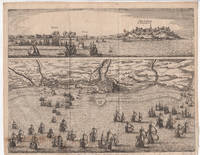
1652réf. 44394Amsterdam: Jodocus Janssonius 1652. Very good edges reinforced on verso light soiling mostly to margins minor foxing dampstained along bottom edge image clean. 1 sheet. Copper engraved map. 11.75 x 13.5 inches. Double-page copper engraved plate from "Fredrick Hendrick Van Nassauw Prince Van Orangien Zyn Leven En Bedryf." page 128. Labeled "Fig. 10 Fol. 100" in top left corner. The two views depict the 1630 attack on the Portuguese city of Olinda in Brazil by the Dutch. When Spanish Crown and the Kingdom of Portugal formed a dynastic union 1580-1640 uniting the entire Iberian peninsula as well as their colonies the Dutch saw their opportunity to take advangage of Portuguese weakness by attacking their colonies occupying large sections of Brazil including the whole Brazilian northeast and in 1630 capturing Recife and Olinda in the captaincy of Pernambuco the largest and richest sugar-producing area in the world. [Jodocus Janssonius] unknown books
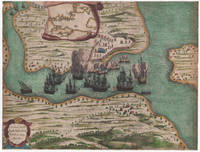
1652réf. 44393Amsterdam: Jodocus Janssonius 1652. About very good margins cut to neat line edges lightly browned and soiled few small chips along edges two small tears repaired on th verso some staining on reverse image sharp. 1 sheet. Hand-colored copper-engraved map. 11 x 14.5 inches. Double-page copper engraved plate from "Fredrick Hendrick Van Nassauw Prince Van Orangien Zyn Leven En Bedryf." page 31. Labeled "Fol. 23" along bottom edge. Image Depicts the Dutch fleet under Piet Heyn capturing the fort at the entrance to the Baia de Todos os Santos. When Spanish Crown and the Kingdom of Portugal formed a dynastic union 1580-1640 uniting the entire Iberian peninsula as well as their colonies the Dutch saw their opportunity to take advangage of Portuguese weakness by attacking their colonies occupying large sections of Brazil including the whole Brazilian northeast and in 1630 capturing Recife and Olinda in the captaincy of Pernambuco the largest and richest sugar-producing area in the world. [Jodocus Janssonius] unknown books
1775réf. 15987Lisbon. 1775. A royal proclamation indended to prevent fraud in the export of tobacco and to encourage agriculture and commerce in general. 18pp. Large quarto. Stitched very good. unknown books
1892réf. 599081892. A Collection of Brazilian Amendments Brazil. Procuracoes Particulares Decreto N. 79 de 26 de Agosto de 1892 Que Dispoe Sobre Procuracoes por Instrumento Particular de Proprio Punho Seguido de Formularios por um Advogado. Pelotas: Echenique & Irmao 1892. 27 3 pp. Bound with Lei No. 11 de 4 de Janeiro de 1896: Organisacao Political Estado do Rio Grande do Sul. Porto Alegre: Officinas Typographicas de Echenique Irmaos & Cia. 1904. 15 pp. And Facturas ou Contas Assignadas: Reguladas Pelo Dec. N. 11527 de 17 de Marco de 1915 e Legislacao Referente. Com Annotacoes e Formulario. Pelotas: Echenique & C. 1915. 18 1 pp. folding table. And Nova Regimento de Custas Judiciarias Contendo a Lei N. 11 de 28 de Novembro de 1896. Pelotas: Echenique & Irmao 1896. 48 1 pp. And Lei No 10 de 16 de Dezembro de 1895: Organisacao Judiciaria Estado do Rio Grande do Sul. Porto Alegre: Officinas Typographicas de Echenique Irmaos & Comp. 1903. 108 20 pp. And Teixeira Luiz Candido Annotator. Decretos Nos. 63 e 64 do Governo do Estado do Rio Grande do Sul Dando Regulamento as Custas e Taxa Judiciaria Approvado Pelo Congresso do Estado Pelos Decretos Nos. 11 e 12. Explicado por um Promptuario em Forma de Abcdario. Porto Alegre: Typographia de Cesar Reinhardt 1897. 167 pp. Octavo 9" x 6". Later three-quarter calf over marbled boards gilt title Procuracoes Particulares 1892 to spine. Light rubbing to boards and extremities. Some browning to text minor tears and chips to edges of some leaves. Later owner stamps in a few places interior otherwise clean. $300. This is a collection of amendments. The first three address the Brazilian Civil Code the final three address that of the State of Rio Grande do Sul. All are well-annotated and the final two are in essence brief treatises. No copies of any title located on OCLC. unknown books
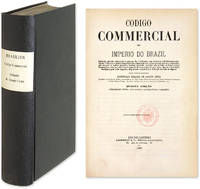
1886réf. 644081886. Rio de Janeiro 1886. Fourth edition. Rio de Janeiro 1886. Fourth edition. Annotated Brazilian Commercial Code Brazil. Araujo Costa Salustiano Orlando de Editor. Codigo Commercial do Imperio de Brazil Annotado com Toda a Legislacao do Paiz que lhe e Referente; Com Osarestos e Decisoes Mais Notaveis dos Tribunaes e Juizes; Concordado com a Legislacao do Paizes Estrangeiros Mais Adiantados; Con um Vasto e Copioso Appendice Tambem Annotado Contendo Nao so Todos os Regulamentos Commerciaes Como os Mais Recentes Actos do Governo Imperial Quer Sobre Bancos o Sociedades Anonymas Quer Sobre Impostos; Dispensando Consultar-Se a Colleccao das Leis do Imperio. Rio de Janeiro: Laemmert & C. 1886. 1104 pp. Octavo 9" x 6". Recent cloth printed paper title label to spine. Moderate toning to text internally clean. Ex-library. Small inkstamp to title page. $300. Fourth edition. Brazil enjoyed a remarkable period of rapid material progress and international importance under Emperors Pedro I and especially Pedro II who reigned from 1831 to 1891. The government enacted a law in 1823 calling for the gradual replacement of the Portuguese Ordenacoes with codes informed by the Enlightenment ideas of the eighteenth century and the work of Jeremy Bentham. A Projecto for commercial law was published in 1836 another in 1838. The code was enacted in 1850 and its first two editions were published in 1858 and 1869. The later editions 1878 1886 1896 are the best because they contain extensive commentary. All of these early editions are rare. OCLC locates 6 copies of the 1886 edition in North America Columbia George Washington University Harvard University of Arizona University of Pennsylvania Yale. Another copy located at the Library of Congress. British Museum Catalogue Compact Edition 4:32. unknown books
1944réf. 538518Oakland California: Pathfinder Enterprises 1944. Hardcover. Near Fine/Very Good. First edition. Octavo. xiv 277pp. Illustrated with a portrait of the author by J.W.B. Includes a preface with military overtones and an autobiographical introduction. Binding a bit cocked else just about fine in spine-sunned about very good dust jacket with several tiny chips. Signed and dated by Brazil at his portrait. "Here is a story of people struggling for happiness with a background of international intrigue and inevitable conflict in which these United States of America shed some of their blood to liberate an enslaved nation." According to the dust jacket this is the author's first novel and also the first book published by Pathfinder Enterprises. Brazil is described as an Oakland taxi-cab driver: "most of it was actually written in a taxi-cab." The jacket flaps gives an intriguing list of characters see image and describes the novel as such: "This is the story of two girls. One of them was good and the other was bad—yet they were very much alike. It is a story that pleads for tolerance. ." We do note a happy romantic ending for one of the girls. OCLC locates four copies LOC Ohio Murray State Sul Ross State and we note no other titles by this author. Pathfinder Enterprises hardcover books
1923réf. 3047731923. 62 black and white photos mostly 4.25" x 2.5"mounted to the leaves of the album 33 photos include handwritten captions. 1 vols. Oblong 8vo. Black marbled paper covers leaves disbound some chipping to leaves some photos faded but otherwise a very good collection. 62 black and white photos mostly 4.25" x 2.5"mounted to the leaves of the album 33 photos include handwritten captions. 1 vols. Oblong 8vo. A collection of photos of mostly local scenes as well as construction projects and employees of Stone & Webster Co. and subsidiary and Brightman & Co. Inc. Photos include William T. McCaskey and Mayor of Codo on mule; handcars transporting passengers and baggage to Coroata; Sao Luiz harbor Britto Passos engineer for the state of Maranhaos; Caxios cotton workers leaving mill; Hotel Cunha in Caxios; planting of babassu tree; Grajahu River; bridge at Anil; and more. Charles Stone 1867- and Edwin Webster 1867-1950 started their careers together as engineering consultants in Massachusetts and soon became major players in the nation's booming electric and transportation utilities. By the early 1900s their company Stone & Webster was designing and constructing power plants in six states and operating lighting and streetcar systems. By 1910 fourteen percent of the nation's electrical generating capacity had been designed engineered and built by Stone & Webster. The company went public in 1929 and continued to grow and diversify throughout the 20th century. In 2000 the company was acquired by the Shaw Group and then by Technip in 2012. unknown books
1930réf. 43564Rio de Janeiro 1930. String-tied plain paper wrappers. Wrappers stained worn and torn; photographs near fine one scuffed. 8 leaves. 12 x 14 inches. Ten photographs mounted to gray paper 11 1/4 x 9 1/2 inches 1; 6 x 9 1/2 4; 8 x 6 1; 6 x 4 1/2 4 two of a factory building on the river with cargo boats in front and eight of the interior with industrial equipment newly installed. Three photographs stamped in blind: Photo Halifax Rua Buenos Aryes 120-1 Rio de Janeiro. While there is no information about Photo Halifax their address was in the same building as L.J. Martins' photography shop. unknown books
1878réf. 1321London: J Murray 1878. First Edition. Original publisher's cloth. Very good; some modest wear to the binding. 8vo I - xiii 378; II - xi 1 328 pp. folding map and 20 plates. Borba Moraes states that this book is ". of great interest and full of excellent observations about the colonial region and the 'sertao' of Parana. It is certainly one of the best travel books about that part of Brazil." The book is the result of Bigg-Wither's travels in the Ivai valley in surveying a route for the trans-Brazilian railway to join the Atlantic and Pacific ocean. Bosch #557; Borba de Moraes p. 106. J Murray hardcover books
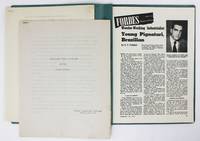
1950réf. 6160Washington D.C.: Gordon Industrial Services Inc 1950. Very good. 3411pp. Typescript rectos only. Plus 26pp. of reproduced magazine articles. Minor soiling and wear. Slightly musty. A typescript report promoting harmony and cooperation between the governments of Brazil and the United States based on their similarities and the economic opportunities therein. "The greatest single factor in promoting lasting and ever-increasing relationships may be obtained only through an unusually comprehensive and alert public relations program aimed at every facet of news dissemination including newspapers magazines radio advertising exploitation books motion pictures newsreels visual exhibits and speaking engagements." The document goes on to outline such a plan which includes encouraging and promoting travel to Brazil by Americans teaching Portuguese in schools to encourage relations as well as using sports figures agriculture aviation and movies to promote a cross-pollination of the two nations. The second piece is a collection of reproduced articles on Francisco Pignatari a young Brazilian playboy and industrialist. Presumably Pignatari would be a critical piece of the puzzle in promoting Brazil's industry to the United States. An interesting concept pushing for post-war alliances and a boost to Brazil's economy. Gordon Industrial Services, Inc unknown books
1912réf. 311788Barbacena Brazil: Tip. del "O Sericicultor 1912. 26pp. 4to. Green printed wrappers. Stamped on upper cover "Hon. Theodore Roosevelt 15 July 1914. 26pp. 4to. TR's trip to the Brazilian Amazon in 1914 resulted in him getting the tropical disease that killed him 5 years later. Tip. del "O Sericicultor unknown books
1930réf. 5531Tokyo: Nippon Renmi -- Nippon Kogyu Bu 1930. Very good. 29pp. Original printed wrappers. Minor wear and dust-soiling. An unrecorded pamphlet printing the text of a speech delivered to the Japanese Industrial Club by the Japanese Ambassador to Brazil. The title of the speech is translated as Back from Brazil or Returning from Brazil and concentrates on Ariyoshi's experiences after spending three years in South America with particular attention paid to Japanese immigration and potential investment. During the course of his speech Ariyoshi touches on the industrial resources of Brazil German and Italian influence in the country recent struggles by the coffee industry foreign investment in Brazil specifically mentioning the Rothschild family and more. He concludes by calling for continued Japanese immigration and additional capital investment by Japanese business interests in Brazil. No copies in OCLC though a 1939 work by Setsuzo Sawada is listed under the same title. Nippon Renmi -- Nippon Kogyu Bu unknown books
1958réf. 4799Tokyo: Kyouiku Kenkyuu Kai Education and Research Group 1958. Very good. 551066pp. Original pictorial wrappers marbled paper spine. Spine mostly perished moderate soiling staining and minor scuffing to wrappers. Occasional light foxing to text. First edition of this interesting history of Brazil printed mostly in Japanese but with section headings and other elements printed in Portuguese. The text is an abridged version of Rocha Pombo's multi-volume Historia do Brazil probably as a textbook for first-generation Japanese students in Brazil who are also learning native Portuguese. The work is printed in the Japanese style and mimeographed or printed in a similar stencil-based method. The text is supplemented with numerous maps illustrations and portrait drawings related to Brazilian history. Three of the more striking illustrations occur in the first chapter depicting a pair of indigenous Brazilians and an indigenous housing structure. The text begins with a chapter focused on the "Principais grupo de indigenas" and "A sociedade dos indigenas" and also includes sections on the western discovery of Brazil the establishment of early colonies the general government agricultural history slavery "o trafico de negros" various historical wars and revolts the dynasty period Brazilian independence the early days of the republic Brazil in the 20th century and much more. Biographical passages of notable Brazilian figures are peppered throughout the text. This intriguing edition of Pombo's history of Brazil most likely designed for Japanese students does not appear in OCLC. Kyouiku Kenkyuu Kai [Education and Research Group] unknown books
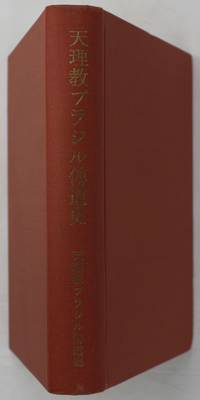
1958réf. 5047Sao Paulo: Tenrikyo Brazil Mission 1958. Very good. 52162511pp. including 32pp. of photographically-illustrated plates. Original orange cloth gilt spine titles housed in original cardboard slipcase with black spine lettering. Very minor wear internally clean. Some chipping and toning to slipcase. An unrecorded history of the Japanese immigrant Tenrikyo Mission in Brazil providing valuable information on many Tenrikyo churches across the country. Tenrikyo was a new Japanese religion founded in the 19th century in Japan by Nakayama Miki and spread to Hawaii Brazil and other regions where Japanese immigrants moved over the course of the first few decades of the 20th century. The photographic plates contain portraits of some mission members views of churches scenes from church life and more. The text is almost wholly in Japanese save for occasional listings of Spanish names and other information. Not reported in OCLC. Tenrikyo Brazil Mission unknown books
1957réf. 4803Tokyo: Raten Amerika Ch kai 1957. Very good. 11141pp. plus color photographic frontispiece. Original pictorial wrappers printed in brown tan and green. Minor wear and dust-soiling. First edition of this rare biographical account of life in Brazil by Kiyoshi Yamamoto a doctor of agriculture who served as Chairman of the Japan-Brazil Culture Promotion Committee. The work covers "fifty years of progress" among Japanese immigrant farmers and their lives in Brazil published in Japan to celebrate the fiftieth anniversary of "the hard work of our overseas compatriots" in South America. Chapters cover Japanese immigration to Brazil from the beginning the population of Japanese colonies the acceptance and status of Japanese emigrants Japanese farmers and their situation the state of Japanese commerce and industry in Brazil the history of racial prejudice in the country including part of a chapter on the importing of Black slaves from Africa Japan's restrictions on emigration as well as a celebratory chapter on Japanese immigration. The Appendix includes information on various Japanese immigration-related associations. According to the printed caption beneath the color photographic frontispiece it shows a downtown view of part of "The thriving city of Sao Paulo." Only one holding in the United States at Cornell with just three copies in Japan at the National Diet Library Waseda University and the International Research Center for Japanese Studies. Raten Amerika Ch kai unknown books
1929réf. 5538Tokyo: Kaigai Kogyo 1929. Very good. 248104164pp. plus twenty-five double-sided photographic plates one folding. Original illustrated wrappers printed in blue green white and yellow. Moderate toning minor edge wear. Light foxing to beginning and end of text block otherwise internally clean. A rare and informative guide to Brazil intended for Japanese immigrants to the country in the early 20th century. The work contains chapters on the history of Brazil including its relationship with Japan and information on the contributions of indigenous peoples and "Black Africans" the geography of the country the suitability of the country for Japanese immigrants including the quantity of available land a good climate and a laundry list of favorable crops origins trends and the present state of Japanese immigration including detailed information on companies helpful to immigrants the relationship and opportunities for Japanese immigrants in the coffee industry and more. Towards the end of the work are detailed tables and lists of information on numerous historical economic and agricultural aspects related to Japanese immigration. The photographic plates picture notable monuments and scenery in Brazil Japanese immigrants already in the country various agricultural and business locations scenes in Japanese colonies shots featuring the harvesting of agricultural products and more. The only folding plate is comprised of two pages showing small panoramic photographs of Japanese colonies one along a river. Only one copy of this work in the world at the National Diet Library in Japan. Kaigai Kogyo unknown books
1718réf. 3782Three separately published parts. 4to. 20 x 16.5 20.5 x 16 and 21 x 17 cm. I: 1 f. 16 pp. with engraved plates of Lobelia westiniana 31 cm x 20.5 cm and Rhexia imbricata & Berberis laurifolia 30 cm x 20.5 cm. II: 1 f. 11 pp. III: 2 ff. 13 pp. engraved plate of Billbergia speciosa 35.5cm x 22cm. Title pages slightly dusty. Part II unbound. Generally excellent. A rare series of three consecutively printed dissertations 2 of them illustrated on the flora of Brazil diligently recorded in standard Linnaean form by Carl Thunberg Linnaeus' foremost disciple and the greatest botanical explorer and collector of his day. The specimens were collected by Georg Wilhelm Freyreiss in his travels to Minas Gerais Brazil in 1814-15. Only eight species out of the thirty described by Thunberg in these booklets had been studied until recently Moraes Smedt and Hjertson. Most of the specimens can still be found today at Uppsala University. Although the dissertations are separately signed by Billberg Ahlberg and Holm Reyment notes that the work in each case was Thunberg's since it was customary for the professor to write the thesis which his students would then defend in public. Each dissertation is in the form of a scientific description of 10 different species of which several appear to be named and described for the first time: for example Billberg's thesis notes two Lobelia one Begonia and one Euphorbia; Ahlberg'sseveral orchids Epidendrum Cymbidium sp. nightshades Solanum sp. and a type of wild basil Ocymum; and Holm's a species of bromeliad Billbergia speciosa. Two of the theses are illustrated with detailed depictions of the specimens involved on large folding engravings. Carl Peter Thunberg 1743-1828 rector of the University of Uppsala earned the epithets "father of South African botany" and "the Japanese Linnaeus." Of the disciples whom Linnaeus sent off on far-flung collecting journeys Thunberg traveled the furthest reaching South Africa Indonesia Japan where in order to be admitted he had to pass himself off as a Dutch Protestant merchant and Sri Lanka. Thunberg is cited in naming some 254 species of plants and animals though significantly more plants than animals and authoring more than 160 monographs and scientific papers. OCLC: 3 parts together at NYPL U. Minnesota JCB Harvard. Pritzel 9314; BMNH 5 p. 2110; Stafleu & Cowan 14397; G. Eriksson in DSB XIII 391-3; not in Borba; R. Reyment "Carl Peter Thunberg 1743-1828 The Founder of Japanese Botanical Research"; Moraes Smedt and Hjertson "Notes on the Brazilian Plants Collected by Georg Wilhelm Freyreiss and Published by Carl Peter Thunberg in Plantarum brasiliensium" Harvard Papers in Botany 19/1 2014: 123-132. Zeipel & Palmblad books
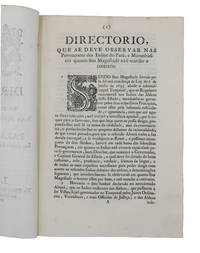
1758réf. 69200Lisboa: Miguel Rodrigues 1758. Integrating the Indigenous People of Brazil into Portuguese Society A scarce and monumentally important law in the history of the Indigenous peoples of Brazil. Far more than a simple reorganization of government and a step towards Jesuit expulsion this remarkable document prescribes the entire worldview of the Portuguese crown regarding the newly free Indigenous population in its colonies enumerating ninety-five articles which direct how they should live and work down to the most minute details of daily life. This decree following the June 6 decree which abolished the slavery of Native Brazilians was approved by King José I on August 7 1755. One piece in Marquis de Pombal's sweeping reforms Pombal's policy towards the American Indian was one of full integration with White society. The goal of this policy in Brazil was threefold—to curb the influence of the Jesuit order to encourage the "civilization" of Indigenous settlements and therefore their commercial and agricultural productivity and finally to draw a clear line between Natives now free and theoretically equal to Portuguese citizens and imported African slaves who would be the key to exploiting the New World's immense natural resources. This decree initially confined to Pará e Maranhão but soon extended to all of Brazil presents a complex and contradictory view of its newly free people subjects. The first article insists that a Portuguese Director is needed for each settlement as Indigenous leaders "due to the lamentable rusticity and ignorance with which they have been educated until now do not have the necessary aptitude required for government." The document is insistent beginning with the second article that the Directors are only there to advise and "may not in any case exercise coercive jurisdiction over the Indians" who are alternately referred to as equal to Whites and as idle immoral and childlike. Many of the articles herein are intended to transmute Indigenous Brazilians into good Portuguese citizens—Directors are to insist on the exclusive use of the Portuguese language in schools and business Articles 6-7 and each person is to be given a surname "with great care being taken by the Directors to introduce the same surnames as those of the families of Portugal" 11 our translation. Other articles enforce the restyling of homes to look more Portuguese the reorganization of households into the nuclear family unit and the adoption of Portuguese dress. Many others encourage agriculture and trading though the Director who receives one sixth of the produce of his settlement is required to supervise all transactions nominally to ensure that unscrupulous Portuguese merchants are not fleecing their poor naïve charges. Shockingly for the time Article 80 abolishes the enforced separation of the White and Indigenous populations and encourages the former to settle among the later. To prevent land runs care is taken that Native inhabitants should receive preference for land grants and "honorable positions" in local government. Perhaps most remarkable are Articles 88 and 89 which actively encourage miscegenation: "I recommend to the Directors that they apply unceasing care in facilitating and promoting on their part marriages between Whites and Indians….To facilitate said marriages the Directors will employ all the effectiveness of their zeal in persuading all White Persons who reside in their Settlements that the Indians are not of inferior quality to them that His Majesty deigning to qualify them for all those honors appropriate to the ranks of their posts consequently the same privileges will be enjoyed by persons who marry said Indians; thus banishing the most prejudicial imaginings of the Inhabitants of this State who have always considered such marriages to be infamous." The above is in stark contrast to Article 10 which reveals much about the true impetus of these reforms. That article reads in large part: "Among the lamentable principles and pernicious abuses that have resulted in the Indians' considerable decline one of them is undoubtedly the unjust and scandalous introduction of calling them Blacks; perhaps wanting with the infamy and vileness of this name to persuade them that nature had destined them to be the slaves of the Whites as is regularly imagined with respect to the Blacks of the African coast. And because besides being extremely detrimental to the civility of the Indians themselves this abominable abuse would be indecent to the Royal Laws of His Majesty to call Blacks men whom the said King was pleased to raise up and declare exempt from all infamy." This was all part of Pombal's plan and set the stage for vastly increased slave labor in Brazil. Indeed in 1761 Pombal banned the importation of slaves to Portugal and her eastern possessions instead routing the entirety of her share in the international slave trade to Brazil. By painting Whites and Native Brazilians as equals in direct opposition to Blacks the Portuguese administration created a clear and legally grounded distinction about which races were to be free and which to be enslaved. The strategy proved effective long outliving Portuguese dominion of Brazil—slavery was not abolished there until 1888 the last holdout in the Western Hemisphere. Despite the many articles encouraging Directors to be fair and theoretically putting limits on their ability to interfere with Indigenous autonomy the Directory system was unsurprisingly rife with abuse. Eventually corruption on behalf of the Directors was so frequent and so flagrant that the Directory was abolished in 1798. A crucial document of Portuguese colonial policy outlining a dramatically new and sometimes shockingly progressive attitude towards the Indigenous people of Brazil and with far-reaching consequences for Brazilian society and the role of slavery in its future. Folio. Disbound. Minimal staining along upper edge. Near fine. BORBA DE MORAES p.265. RODRIGUES 883 "Interesting and rare". unknown books
1760réf. 5489Genoa: 29 July 1760. Hardcover. Fine. Manuscript in Italian written in a neat cursive in brown/black ink on laid paper. With some minor foxing some folding lines the creases slightly flattened the bottom edge of the leaves is slightly frayed. Otherwise in very good condition. A harrowing eye-witness account by a Jesuit Father of the Province of Brazil describing the forced expulsion of the Jesuits from Brazil in 1760 the hardships they endured during their capture and the perilous journey from Brazil to Genoa via Lisbon. The author begins his narrative with the persecution suffered by the Jesuits in Brazil following the official suppression of the Order. The Jesuit colleges were thoroughly plundered property seized precious silver taken and church furnishings stripped away. They were ordered not to open the church doors or ring the bells although on three occasions the Blessed Sacrament was brought to the sick an act which deeply moved the local people. The Jesuits endured many sufferings during their captivity. They were confined under harsh conditions; guarded constantly by soldiers. Their living quarters were cramped and filthy so small that they could neither sit nor lie down comfortably. Many suffered from hunger thirst and illness and several lost their lives during this ordeal. On 16 March the journey by sea began. The voyage was nothing short of a cruel martyrdom: extreme hunger and sickness afflicted the Jesuit Fathers. One elderly and saintly Father Francesco Paolo died shortly after the journey began not from disease but from severe distress caused by lack of food and medicine. Another Father Giovanni de Matha suffered a dangerous hemorrhage and narrowly survived while many others fell ill. They arrived at the mouth of the Tagus River in Portugal on 6 June after which they were transferred under guard to a Genoese ship effectively imprisoned once again. They were forbidden from going ashore or even signaling their arrival. More Jesuit Fathers from Brazil joined them later in June many weakened and sick from the hardships endured. Tragically some who had been sent ahead to Portugal suffered such extreme famine and thirst that they resorted to drinking their own urine and several died without the comfort of the last rites which were denied by the ship's captain. The captains and executioners of the royal orders showed little compassion even as they witnessed the Jesuits' pale and dying condition. Throughout this entire ordeal a royal minister constantly monitored the Jesuits offering false hopes that they might remain in the kingdom if they renounced their order and left the Jesuit habit behind. Some succumbed to these pressures but most remained steadfast. The Jesuits also faced opposition from the Bishop of Rio de Janeiro who initially used them for missions but later prohibited their confessions and sermons accusing them falsely of heretical teachings. He even excommunicated those who encouraged perseverance in the Jesuit order. Despite all these hardships the siege imprisonment brutal sea voyage hunger disease and ecclesiastical persecution the Jesuits maintained their faith and dignity praying for peace and the restoration of their Society. In a long postscript the writer gives further news that he has received from Brazil. He describes the devotion despite the Suppression of the Brazilian indigenous novices and the bravery of the students many of whom accompanied other Jesuit fathers in a cramped ship for the long voyage to Europe. A number of students held back -reluctantly- realizing that their presence on the ship would only lead to further overcrowding and privation for the Jesuit fathers in particular those who were old and frail. With sorrow they wept on the shore as the ship weighed anchor and departed for the miserable voyage. The account closes on 29 July 1760 expressing a solemn hope that after so many disasters peace will return to the Jesuit order. 29 July hardcover books