4021 risultati
1991rif. 81318Salvador Bahia: Ãries Editora / Ada Galeria del Arte 1991. First Edition. Slim quarto 28.5cm; original printed card wrappers; 44pp; illus.; with parallel text in Portuguese and English. Inscribed on the title page to Sol Libsohn 1914-2001 a documentary photographer and member of the New York Workers Film and Photo League: "To Sol! / From Mario Cravo Neto / Houston 92." Light wear to extremities mild surface wear to rear cover with faint foxing to text edges; Very Good. Catalog of works by the Brazilian photographer and sculptor for a show at Ada Galeria del Arte in Bahia Brazil. Ãries Editora / Ada Galeria del Arte unknown books
1993rif. 61565Austin: University of Texas Press 1993. First University of Texas Edition. Octavo 23.5cm; pictorial card wrappers; 78-2986pp. Light wear to extremities two tiny corner creases with an original price sticker to rear wrapper; Near Fine. Reissue of the Brazilian author's 1881 novel "a scathing exposé of his native city São Luis do Maranhão. Polemic as well as love story it brought him much notoriety and is generally considered the first Brazilian naturalist novel" from rear wrapper. University of Texas Press unknown books
2000rif. 49872Brasília: Ministero de Justiça 2000. First Edition. 12mo. Printed card wrappers; 143pp. Fine and unmarked; an apparently unread and unopened copy. One of 1500 English-language copies printed. Ministero de Justiça unknown books
1993rif. 47225Sao Paolo 1993. Staple-bound pamphlet. Octavo 22cm; pictorial paper wrappers; 44pp. Proceedings of a 1992 Conference "Semi-Ãrido Nordestino: Realidade e Perspectivas" held in Recife 26-28 June 1992. Text entirely in Portuguese. unknown books
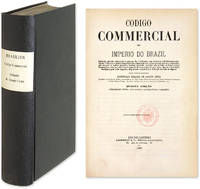
1886rif. 644081886. Rio de Janeiro 1886. Fourth edition. Rio de Janeiro 1886. Fourth edition. Annotated Brazilian Commercial Code Brazil. Araujo Costa Salustiano Orlando de Editor. Codigo Commercial do Imperio de Brazil Annotado com Toda a Legislacao do Paiz que lhe e Referente; Com Osarestos e Decisoes Mais Notaveis dos Tribunaes e Juizes; Concordado com a Legislacao do Paizes Estrangeiros Mais Adiantados; Con um Vasto e Copioso Appendice Tambem Annotado Contendo Nao so Todos os Regulamentos Commerciaes Como os Mais Recentes Actos do Governo Imperial Quer Sobre Bancos o Sociedades Anonymas Quer Sobre Impostos; Dispensando Consultar-Se a Colleccao das Leis do Imperio. Rio de Janeiro: Laemmert & C. 1886. 1104 pp. Octavo 9" x 6". Recent cloth printed paper title label to spine. Moderate toning to text internally clean. Ex-library. Small inkstamp to title page. $300. Fourth edition. Brazil enjoyed a remarkable period of rapid material progress and international importance under Emperors Pedro I and especially Pedro II who reigned from 1831 to 1891. The government enacted a law in 1823 calling for the gradual replacement of the Portuguese Ordenacoes with codes informed by the Enlightenment ideas of the eighteenth century and the work of Jeremy Bentham. A Projecto for commercial law was published in 1836 another in 1838. The code was enacted in 1850 and its first two editions were published in 1858 and 1869. The later editions 1878 1886 1896 are the best because they contain extensive commentary. All of these early editions are rare. OCLC locates 6 copies of the 1886 edition in North America Columbia George Washington University Harvard University of Arizona University of Pennsylvania Yale. Another copy located at the Library of Congress. British Museum Catalogue Compact Edition 4:32. unknown books
1892rif. 599081892. A Collection of Brazilian Amendments Brazil. Procuracoes Particulares Decreto N. 79 de 26 de Agosto de 1892 Que Dispoe Sobre Procuracoes por Instrumento Particular de Proprio Punho Seguido de Formularios por um Advogado. Pelotas: Echenique & Irmao 1892. 27 3 pp. Bound with Lei No. 11 de 4 de Janeiro de 1896: Organisacao Political Estado do Rio Grande do Sul. Porto Alegre: Officinas Typographicas de Echenique Irmaos & Cia. 1904. 15 pp. And Facturas ou Contas Assignadas: Reguladas Pelo Dec. N. 11527 de 17 de Marco de 1915 e Legislacao Referente. Com Annotacoes e Formulario. Pelotas: Echenique & C. 1915. 18 1 pp. folding table. And Nova Regimento de Custas Judiciarias Contendo a Lei N. 11 de 28 de Novembro de 1896. Pelotas: Echenique & Irmao 1896. 48 1 pp. And Lei No 10 de 16 de Dezembro de 1895: Organisacao Judiciaria Estado do Rio Grande do Sul. Porto Alegre: Officinas Typographicas de Echenique Irmaos & Comp. 1903. 108 20 pp. And Teixeira Luiz Candido Annotator. Decretos Nos. 63 e 64 do Governo do Estado do Rio Grande do Sul Dando Regulamento as Custas e Taxa Judiciaria Approvado Pelo Congresso do Estado Pelos Decretos Nos. 11 e 12. Explicado por um Promptuario em Forma de Abcdario. Porto Alegre: Typographia de Cesar Reinhardt 1897. 167 pp. Octavo 9" x 6". Later three-quarter calf over marbled boards gilt title Procuracoes Particulares 1892 to spine. Light rubbing to boards and extremities. Some browning to text minor tears and chips to edges of some leaves. Later owner stamps in a few places interior otherwise clean. $300. This is a collection of amendments. The first three address the Brazilian Civil Code the final three address that of the State of Rio Grande do Sul. All are well-annotated and the final two are in essence brief treatises. No copies of any title located on OCLC. unknown books
1987rif. 104919New York: Universe Books / Coe Kerr Gallery 1987. First edition. Softcover exhibition catalog with 22 color plates. Essay by Warren Adelson. A fine copy in French style illustrated wrappers. Universe Books / Coe Kerr Gallery unknown books
1912rif. 311788Barbacena Brazil: Tip. del "O Sericicultor 1912. 26pp. 4to. Green printed wrappers. Stamped on upper cover "Hon. Theodore Roosevelt 15 July 1914. 26pp. 4to. TR's trip to the Brazilian Amazon in 1914 resulted in him getting the tropical disease that killed him 5 years later. Tip. del "O Sericicultor unknown books
1923rif. 3047731923. 62 black and white photos mostly 4.25" x 2.5"mounted to the leaves of the album 33 photos include handwritten captions. 1 vols. Oblong 8vo. Black marbled paper covers leaves disbound some chipping to leaves some photos faded but otherwise a very good collection. 62 black and white photos mostly 4.25" x 2.5"mounted to the leaves of the album 33 photos include handwritten captions. 1 vols. Oblong 8vo. A collection of photos of mostly local scenes as well as construction projects and employees of Stone & Webster Co. and subsidiary and Brightman & Co. Inc. Photos include William T. McCaskey and Mayor of Codo on mule; handcars transporting passengers and baggage to Coroata; Sao Luiz harbor Britto Passos engineer for the state of Maranhaos; Caxios cotton workers leaving mill; Hotel Cunha in Caxios; planting of babassu tree; Grajahu River; bridge at Anil; and more. Charles Stone 1867- and Edwin Webster 1867-1950 started their careers together as engineering consultants in Massachusetts and soon became major players in the nation's booming electric and transportation utilities. By the early 1900s their company Stone & Webster was designing and constructing power plants in six states and operating lighting and streetcar systems. By 1910 fourteen percent of the nation's electrical generating capacity had been designed engineered and built by Stone & Webster. The company went public in 1929 and continued to grow and diversify throughout the 20th century. In 2000 the company was acquired by the Shaw Group and then by Technip in 2012. unknown books
1944rif. 538518Oakland California: Pathfinder Enterprises 1944. Hardcover. Near Fine/Very Good. First edition. Octavo. xiv 277pp. Illustrated with a portrait of the author by J.W.B. Includes a preface with military overtones and an autobiographical introduction. Binding a bit cocked else just about fine in spine-sunned about very good dust jacket with several tiny chips. Signed and dated by Brazil at his portrait. "Here is a story of people struggling for happiness with a background of international intrigue and inevitable conflict in which these United States of America shed some of their blood to liberate an enslaved nation." According to the dust jacket this is the author's first novel and also the first book published by Pathfinder Enterprises. Brazil is described as an Oakland taxi-cab driver: "most of it was actually written in a taxi-cab." The jacket flaps gives an intriguing list of characters see image and describes the novel as such: "This is the story of two girls. One of them was good and the other was bad—yet they were very much alike. It is a story that pleads for tolerance. ." We do note a happy romantic ending for one of the girls. OCLC locates four copies LOC Ohio Murray State Sul Ross State and we note no other titles by this author. Pathfinder Enterprises hardcover books
1983rif. 85527Middletown: Wesleyan University Press 1983. First edition. 187 pp. Very near fine in like dust jacket with one short tear to the top edge. Work by Jorge Mautner Ferreira Gullar Haroldo De Campos Mário Faustino Augusto De Campos Décio Pigntari and Lindolf Bell largely concrete in form. Middletown: Wesleyan University Press unknown books
2016rif. 84713San Francisco: City Lights 2016. First edition. 104 pp. Fine in glossy illustrated wrappers. Dated 5/25/2017 and INSCRIBED by Brazil “For Diane - / ‘the fruit of law’ / Love David.” San Francisco: City Lights unknown books
2012rif. 84756np: Trafficker Press 2012. First edition. 35 pp. Small droplet mark to front cover else very near fine in printed wrappers. Dated 4/14/2012 and INSCRIBED by Brazil “For Diane - / for light is sweet - / Love / David.” (np): Trafficker Press unknown books
1760rif. 5489Genoa: 29 July 1760. Hardcover. Fine. Manuscript in Italian written in a neat cursive in brown/black ink on laid paper. With some minor foxing some folding lines the creases slightly flattened the bottom edge of the leaves is slightly frayed. Otherwise in very good condition. A harrowing eye-witness account by a Jesuit Father of the Province of Brazil describing the forced expulsion of the Jesuits from Brazil in 1760 the hardships they endured during their capture and the perilous journey from Brazil to Genoa via Lisbon. The author begins his narrative with the persecution suffered by the Jesuits in Brazil following the official suppression of the Order. The Jesuit colleges were thoroughly plundered property seized precious silver taken and church furnishings stripped away. They were ordered not to open the church doors or ring the bells although on three occasions the Blessed Sacrament was brought to the sick an act which deeply moved the local people. The Jesuits endured many sufferings during their captivity. They were confined under harsh conditions; guarded constantly by soldiers. Their living quarters were cramped and filthy so small that they could neither sit nor lie down comfortably. Many suffered from hunger thirst and illness and several lost their lives during this ordeal. On 16 March the journey by sea began. The voyage was nothing short of a cruel martyrdom: extreme hunger and sickness afflicted the Jesuit Fathers. One elderly and saintly Father Francesco Paolo died shortly after the journey began not from disease but from severe distress caused by lack of food and medicine. Another Father Giovanni de Matha suffered a dangerous hemorrhage and narrowly survived while many others fell ill. They arrived at the mouth of the Tagus River in Portugal on 6 June after which they were transferred under guard to a Genoese ship effectively imprisoned once again. They were forbidden from going ashore or even signaling their arrival. More Jesuit Fathers from Brazil joined them later in June many weakened and sick from the hardships endured. Tragically some who had been sent ahead to Portugal suffered such extreme famine and thirst that they resorted to drinking their own urine and several died without the comfort of the last rites which were denied by the ship's captain. The captains and executioners of the royal orders showed little compassion even as they witnessed the Jesuits' pale and dying condition. Throughout this entire ordeal a royal minister constantly monitored the Jesuits offering false hopes that they might remain in the kingdom if they renounced their order and left the Jesuit habit behind. Some succumbed to these pressures but most remained steadfast. The Jesuits also faced opposition from the Bishop of Rio de Janeiro who initially used them for missions but later prohibited their confessions and sermons accusing them falsely of heretical teachings. He even excommunicated those who encouraged perseverance in the Jesuit order. Despite all these hardships the siege imprisonment brutal sea voyage hunger disease and ecclesiastical persecution the Jesuits maintained their faith and dignity praying for peace and the restoration of their Society. In a long postscript the writer gives further news that he has received from Brazil. He describes the devotion despite the Suppression of the Brazilian indigenous novices and the bravery of the students many of whom accompanied other Jesuit fathers in a cramped ship for the long voyage to Europe. A number of students held back -reluctantly- realizing that their presence on the ship would only lead to further overcrowding and privation for the Jesuit fathers in particular those who were old and frail. With sorrow they wept on the shore as the ship weighed anchor and departed for the miserable voyage. The account closes on 29 July 1760 expressing a solemn hope that after so many disasters peace will return to the Jesuit order. 29 July hardcover books
1890rif. 36355London E.: James Imray & Son Chart and Nautical Book Publishers 1890. Original printed blue wrappers stitched. vii 1 132 pp. Scattered and generally light spotting and mild wear. Very Good. With detailed table of contents "a complete List of Lights" on the East and North Coasts of Brazil and thorough sailing directions from point to point. The rear wrapper advertises Imray's books and charts for navigating the Atlantic Ocean. Imray printed several earlier and at least one later edition of this work. James Imray & Son, Chart and Nautical Book Publishers unknown books
1878rif. 29389New York 1878. One sheet folded to 5 1/2" x 8 1/2". 4pp. Printed on pages 1 and 3 only. One small archival repair to outer margin of first leaf. Very Good. Freight rates to several destinations are listed "payable in gold." The Circular is dates from New York May 29 1878. unknown books
1878rif. 1321London: J Murray 1878. First Edition. Original publisher's cloth. Very good; some modest wear to the binding. 8vo I - xiii 378; II - xi 1 328 pp. folding map and 20 plates. Borba Moraes states that this book is ". of great interest and full of excellent observations about the colonial region and the 'sertao' of Parana. It is certainly one of the best travel books about that part of Brazil." The book is the result of Bigg-Wither's travels in the Ivai valley in surveying a route for the trans-Brazilian railway to join the Atlantic and Pacific ocean. Bosch #557; Borba de Moraes p. 106. J Murray hardcover books
1972rif. 49419Middletown CT: Wesleyan University Press 1972. Very Good /Very Good. Middletown CT: Wesleyan University Press 1972. First Edition clothbound issue. Octavo; blue cloth boards stamped in gilt; printed dust jacket; 181pp. Mild rubbing to boards; binding sound. Dust jacket sunned at spine and slightly rubbed with a few minor nicks; overall a Very Good and sound copy. Wesleyan University Press unknown books
1964rif. 217921Peking: Foreign Languages Press 1964. 23p. staplebound pamphlet very good. Published in the context of the Sino-Soviet split. Foreign Languages Press unknown books
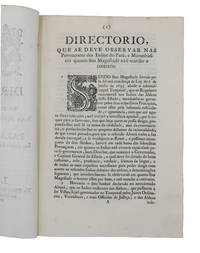
1758rif. 69200Lisboa: Miguel Rodrigues 1758. Integrating the Indigenous People of Brazil into Portuguese Society A scarce and monumentally important law in the history of the Indigenous peoples of Brazil. Far more than a simple reorganization of government and a step towards Jesuit expulsion this remarkable document prescribes the entire worldview of the Portuguese crown regarding the newly free Indigenous population in its colonies enumerating ninety-five articles which direct how they should live and work down to the most minute details of daily life. This decree following the June 6 decree which abolished the slavery of Native Brazilians was approved by King José I on August 7 1755. One piece in Marquis de Pombal's sweeping reforms Pombal's policy towards the American Indian was one of full integration with White society. The goal of this policy in Brazil was threefold—to curb the influence of the Jesuit order to encourage the "civilization" of Indigenous settlements and therefore their commercial and agricultural productivity and finally to draw a clear line between Natives now free and theoretically equal to Portuguese citizens and imported African slaves who would be the key to exploiting the New World's immense natural resources. This decree initially confined to Pará e Maranhão but soon extended to all of Brazil presents a complex and contradictory view of its newly free people subjects. The first article insists that a Portuguese Director is needed for each settlement as Indigenous leaders "due to the lamentable rusticity and ignorance with which they have been educated until now do not have the necessary aptitude required for government." The document is insistent beginning with the second article that the Directors are only there to advise and "may not in any case exercise coercive jurisdiction over the Indians" who are alternately referred to as equal to Whites and as idle immoral and childlike. Many of the articles herein are intended to transmute Indigenous Brazilians into good Portuguese citizens—Directors are to insist on the exclusive use of the Portuguese language in schools and business Articles 6-7 and each person is to be given a surname "with great care being taken by the Directors to introduce the same surnames as those of the families of Portugal" 11 our translation. Other articles enforce the restyling of homes to look more Portuguese the reorganization of households into the nuclear family unit and the adoption of Portuguese dress. Many others encourage agriculture and trading though the Director who receives one sixth of the produce of his settlement is required to supervise all transactions nominally to ensure that unscrupulous Portuguese merchants are not fleecing their poor naïve charges. Shockingly for the time Article 80 abolishes the enforced separation of the White and Indigenous populations and encourages the former to settle among the later. To prevent land runs care is taken that Native inhabitants should receive preference for land grants and "honorable positions" in local government. Perhaps most remarkable are Articles 88 and 89 which actively encourage miscegenation: "I recommend to the Directors that they apply unceasing care in facilitating and promoting on their part marriages between Whites and Indians….To facilitate said marriages the Directors will employ all the effectiveness of their zeal in persuading all White Persons who reside in their Settlements that the Indians are not of inferior quality to them that His Majesty deigning to qualify them for all those honors appropriate to the ranks of their posts consequently the same privileges will be enjoyed by persons who marry said Indians; thus banishing the most prejudicial imaginings of the Inhabitants of this State who have always considered such marriages to be infamous." The above is in stark contrast to Article 10 which reveals much about the true impetus of these reforms. That article reads in large part: "Among the lamentable principles and pernicious abuses that have resulted in the Indians' considerable decline one of them is undoubtedly the unjust and scandalous introduction of calling them Blacks; perhaps wanting with the infamy and vileness of this name to persuade them that nature had destined them to be the slaves of the Whites as is regularly imagined with respect to the Blacks of the African coast. And because besides being extremely detrimental to the civility of the Indians themselves this abominable abuse would be indecent to the Royal Laws of His Majesty to call Blacks men whom the said King was pleased to raise up and declare exempt from all infamy." This was all part of Pombal's plan and set the stage for vastly increased slave labor in Brazil. Indeed in 1761 Pombal banned the importation of slaves to Portugal and her eastern possessions instead routing the entirety of her share in the international slave trade to Brazil. By painting Whites and Native Brazilians as equals in direct opposition to Blacks the Portuguese administration created a clear and legally grounded distinction about which races were to be free and which to be enslaved. The strategy proved effective long outliving Portuguese dominion of Brazil—slavery was not abolished there until 1888 the last holdout in the Western Hemisphere. Despite the many articles encouraging Directors to be fair and theoretically putting limits on their ability to interfere with Indigenous autonomy the Directory system was unsurprisingly rife with abuse. Eventually corruption on behalf of the Directors was so frequent and so flagrant that the Directory was abolished in 1798. A crucial document of Portuguese colonial policy outlining a dramatically new and sometimes shockingly progressive attitude towards the Indigenous people of Brazil and with far-reaching consequences for Brazilian society and the role of slavery in its future. Folio. Disbound. Minimal staining along upper edge. Near fine. BORBA DE MORAES p.265. RODRIGUES 883 "Interesting and rare". unknown books
1775rif. 15987Lisbon. 1775. A royal proclamation indended to prevent fraud in the export of tobacco and to encourage agriculture and commerce in general. 18pp. Large quarto. Stitched very good. unknown books
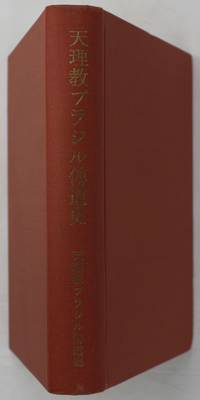
1958rif. 5047Sao Paulo: Tenrikyo Brazil Mission 1958. Very good. 52162511pp. including 32pp. of photographically-illustrated plates. Original orange cloth gilt spine titles housed in original cardboard slipcase with black spine lettering. Very minor wear internally clean. Some chipping and toning to slipcase. An unrecorded history of the Japanese immigrant Tenrikyo Mission in Brazil providing valuable information on many Tenrikyo churches across the country. Tenrikyo was a new Japanese religion founded in the 19th century in Japan by Nakayama Miki and spread to Hawaii Brazil and other regions where Japanese immigrants moved over the course of the first few decades of the 20th century. The photographic plates contain portraits of some mission members views of churches scenes from church life and more. The text is almost wholly in Japanese save for occasional listings of Spanish names and other information. Not reported in OCLC. Tenrikyo Brazil Mission unknown books
1890rif. 45134New York: Harper & Brothers 1890. A very good copy some tears at the far upper margins well away from the image. 1 sheet. 27 x 40 cm. 23.3 x 34.3 cm. From Harper's Weekly December 6 1890; p. 953. Julian O. Davidson 1853-1894 was mainly known as a marine artist though as a student of of Mauritz F.H. de Haas he cam to know and was associated with Hudson River school painters such as Frederic Church William Bradford Albert Bierstadt and Sanford R. Gifford at the famous tenth street studio. Harper & Brothers unknown books
1864rif. 45135London: Illustrated London News 1864. A very good copy crisp. 1 sheet 27 x 38 cm. Two views and a short article on page 449. 1. "The Port and City of Rio De Janeiro" 14 x 23.5 cm. and 2. "Mount Corcovado and Botafogo Bay Rio De Janeiro" 16 x 23.7 cm. signed "M. Jackson." Mason Jackson 1819-1903 was a distinguished engraver "in 1860 Jackson joined the staff of the 'Illustrated London News' as art editor a position which he filled with great ability till his retirement some thirty years later" Dictionary of National Biography 12. Illustrated London News unknown books
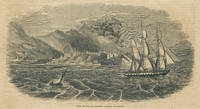
1850rif. 451361850. Overall very good. Eight views all removed from larger volumes. 1. "View of Rio De Janeiro Capital of Brazil" ca. 1850. Wood engraving. 14 x 24 cm. From The Flag of Our Union Boston MA one of the most popular newspaper in America. 2. "A Representation of a Street in Rio De Janeiro- Grand Entrance to the City of the Emperor of Brazil ca 1852. Wood engraving. 16 x 24 cm . From The Flag of Our Union Boston MA. 3. "Commencement of the works of the First Railroad in Brazil" ca. 1852. Wood engraving. 16 x 24 cm. Perhaps from The Flag of Our Union. 4. "Untitled." View of Rio with peasants in foreground and Mount Corcovado in background. 1877. Wood engraving. 16 x 24 cm. folded verso blank. 5. "The City of Belem or Para on the Estuary of the Amazon River" 1848. Wood engraving. 12 x 20 cm. From The New Pictorial and Illustrated Family Magazine Volume 5 NY 1848. p. 252. 6. "Mulattska Rio De Janeiro" 1854. Colored lithograph J.F. Meyer & Co. Stockholm. 21 x 12 cm. From Carl Skogman: Fregatten Eugenies resa omkring: jorden åren 1851-1853 1854 p. 28. 7. "Rio Janeiro" 1850. Etching aus Hildburghausen Bibliographisches Institut. 11 x 15 cm. From " Meyer`s Universum" Plate CCCXXV. 8." Rio de Janeiro" View of Bay with Mount Corcovado. 1862 penciled on verso. Colored etching. 12 x 21 cm. unknown books