4 219 résultats
réf. 202003484Paris, Robert Laffont, 2014 ; in-8, 555 pp., br.
2012réf. LITTBRESIL4646460624Paris, Des femmes, 2012, 17 x 24, 444-XVI pages sous couverture rempliée illustrée. Traduit de l'anglais par Camille Chaplain. Suivi d'un entretien entre l'auteur et Antoinette Fouque. Ouvrage enrichi d'un cahier de XVI pages d'illustrations noir et blanc. "Avec ce portrait passionnant et sensible, Benjamin Moser nous révèle, sans en altérer la part d’ombre, la troublante identité de celle qui pouvait dire « je suis si mystérieuse que je ne me comprends pas moi-même ». La petite fille née en Ukraine inventait des histoires magiques pour sauver sa mère, condamnée par les violences subies lors d’une terrible guerre civile. Écrivaine reconnue, Clarice Lispector n’abandonne pas sa croyance dans la force magique du langage. Elle place au cœur de son œuvre la question des noms et de la nomination, proche en cela de la démarche des mystiques juifs. Elle ne cessa jamais de s’approprier les mots et d’en faire ressortir toute l’étrangeté jusqu’à devenir la « princesse de la langue portugaise ». Les nombreuses citations d’une œuvre qui fut peut-être la « plus grande autobiographie spirituelle du XXe siècle » nous invitent à lire ou relire, inlassablement, la prose unique de Clarice Lispector."
1992réf. LFA0182fRevue mensuelle de 50 pages, format 160 x 240 mm, brochée.
1987réf. LFA-126712736Publication trimestrielle : 60 pages, format 170 x 250 mm, brochée, illustrée
1760réf. 5489Genoa: 29 July 1760. Hardcover. Fine. Manuscript in Italian written in a neat cursive in brown/black ink on laid paper. With some minor foxing some folding lines the creases slightly flattened the bottom edge of the leaves is slightly frayed. Otherwise in very good condition. A harrowing eye-witness account by a Jesuit Father of the Province of Brazil describing the forced expulsion of the Jesuits from Brazil in 1760 the hardships they endured during their capture and the perilous journey from Brazil to Genoa via Lisbon. The author begins his narrative with the persecution suffered by the Jesuits in Brazil following the official suppression of the Order. The Jesuit colleges were thoroughly plundered property seized precious silver taken and church furnishings stripped away. They were ordered not to open the church doors or ring the bells although on three occasions the Blessed Sacrament was brought to the sick an act which deeply moved the local people. The Jesuits endured many sufferings during their captivity. They were confined under harsh conditions; guarded constantly by soldiers. Their living quarters were cramped and filthy so small that they could neither sit nor lie down comfortably. Many suffered from hunger thirst and illness and several lost their lives during this ordeal. On 16 March the journey by sea began. The voyage was nothing short of a cruel martyrdom: extreme hunger and sickness afflicted the Jesuit Fathers. One elderly and saintly Father Francesco Paolo died shortly after the journey began not from disease but from severe distress caused by lack of food and medicine. Another Father Giovanni de Matha suffered a dangerous hemorrhage and narrowly survived while many others fell ill. They arrived at the mouth of the Tagus River in Portugal on 6 June after which they were transferred under guard to a Genoese ship effectively imprisoned once again. They were forbidden from going ashore or even signaling their arrival. More Jesuit Fathers from Brazil joined them later in June many weakened and sick from the hardships endured. Tragically some who had been sent ahead to Portugal suffered such extreme famine and thirst that they resorted to drinking their own urine and several died without the comfort of the last rites which were denied by the ship's captain. The captains and executioners of the royal orders showed little compassion even as they witnessed the Jesuits' pale and dying condition. Throughout this entire ordeal a royal minister constantly monitored the Jesuits offering false hopes that they might remain in the kingdom if they renounced their order and left the Jesuit habit behind. Some succumbed to these pressures but most remained steadfast. The Jesuits also faced opposition from the Bishop of Rio de Janeiro who initially used them for missions but later prohibited their confessions and sermons accusing them falsely of heretical teachings. He even excommunicated those who encouraged perseverance in the Jesuit order. Despite all these hardships the siege imprisonment brutal sea voyage hunger disease and ecclesiastical persecution the Jesuits maintained their faith and dignity praying for peace and the restoration of their Society. In a long postscript the writer gives further news that he has received from Brazil. He describes the devotion despite the Suppression of the Brazilian indigenous novices and the bravery of the students many of whom accompanied other Jesuit fathers in a cramped ship for the long voyage to Europe. A number of students held back -reluctantly- realizing that their presence on the ship would only lead to further overcrowding and privation for the Jesuit fathers in particular those who were old and frail. With sorrow they wept on the shore as the ship weighed anchor and departed for the miserable voyage. The account closes on 29 July 1760 expressing a solemn hope that after so many disasters peace will return to the Jesuit order. 29 July hardcover books
1760réf. 5489Genoa: 29 July 1760. Hardcover. Fine. Manuscript in Italian written in a neat cursive in brown/black ink on laid paper. With some minor foxing some folding lines the creases slightly flattened the bottom edge of the leaves is slightly frayed. Otherwise in very good condition. A harrowing eye-witness account by a Jesuit Father of the Province of Brazil describing the forced expulsion of the Jesuits from Brazil in 1760 the hardships they endured during their capture and the perilous journey from Brazil to Genoa via Lisbon. The author begins his narrative with the persecution suffered by the Jesuits in Brazil following the official suppression of the Order. The Jesuit colleges were thoroughly plundered property seized precious silver taken and church furnishings stripped away. They were ordered not to open the church doors or ring the bells although on three occasions the Blessed Sacrament was brought to the sick an act which deeply moved the local people. The Jesuits endured many sufferings during their captivity. They were confined under harsh conditions; guarded constantly by soldiers. Their living quarters were cramped and filthy so small that they could neither sit nor lie down comfortably. Many suffered from hunger thirst and illness and several lost their lives during this ordeal. On 16 March the journey by sea began. The voyage was nothing short of a cruel martyrdom: extreme hunger and sickness afflicted the Jesuit Fathers. One elderly and saintly Father Francesco Paolo died shortly after the journey began not from disease but from severe distress caused by lack of food and medicine. Another Father Giovanni de Matha suffered a dangerous hemorrhage and narrowly survived while many others fell ill. They arrived at the mouth of the Tagus River in Portugal on 6 June after which they were transferred under guard to a Genoese ship effectively imprisoned once again. They were forbidden from going ashore or even signaling their arrival. More Jesuit Fathers from Brazil joined them later in June many weakened and sick from the hardships endured. Tragically some who had been sent ahead to Portugal suffered such extreme famine and thirst that they resorted to drinking their own urine and several died without the comfort of the last rites which were denied by the ship's captain. The captains and executioners of the royal orders showed little compassion even as they witnessed the Jesuits' pale and dying condition. Throughout this entire ordeal a royal minister constantly monitored the Jesuits offering false hopes that they might remain in the kingdom if they renounced their order and left the Jesuit habit behind. Some succumbed to these pressures but most remained steadfast. The Jesuits also faced opposition from the Bishop of Rio de Janeiro who initially used them for missions but later prohibited their confessions and sermons accusing them falsely of heretical teachings. He even excommunicated those who encouraged perseverance in the Jesuit order. Despite all these hardships the siege imprisonment brutal sea voyage hunger disease and ecclesiastical persecution the Jesuits maintained their faith and dignity praying for peace and the restoration of their Society. In a long postscript the writer gives further news that he has received from Brazil. He describes the devotion despite the Suppression of the Brazilian indigenous novices and the bravery of the students many of whom accompanied other Jesuit fathers in a cramped ship for the long voyage to Europe. A number of students held back -reluctantly- realizing that their presence on the ship would only lead to further overcrowding and privation for the Jesuit fathers in particular those who were old and frail. With sorrow they wept on the shore as the ship weighed anchor and departed for the miserable voyage. The account closes on 29 July 1760 expressing a solemn hope that after so many disasters peace will return to the Jesuit order. 29 July hardcover
1957réf. 4803Tokyo: Raten Amerika Ch kai 1957. Very good. 11141pp. plus color photographic frontispiece. Original pictorial wrappers printed in brown tan and green. Minor wear and dust-soiling. First edition of this rare biographical account of life in Brazil by Kiyoshi Yamamoto a doctor of agriculture who served as Chairman of the Japan-Brazil Culture Promotion Committee. The work covers "fifty years of progress" among Japanese immigrant farmers and their lives in Brazil published in Japan to celebrate the fiftieth anniversary of "the hard work of our overseas compatriots" in South America. Chapters cover Japanese immigration to Brazil from the beginning the population of Japanese colonies the acceptance and status of Japanese emigrants Japanese farmers and their situation the state of Japanese commerce and industry in Brazil the history of racial prejudice in the country including part of a chapter on the importing of Black slaves from Africa Japan's restrictions on emigration as well as a celebratory chapter on Japanese immigration. The Appendix includes information on various Japanese immigration-related associations. According to the printed caption beneath the color photographic frontispiece it shows a downtown view of part of "The thriving city of Sao Paulo." Only one holding in the United States at Cornell with just three copies in Japan at the National Diet Library Waseda University and the International Research Center for Japanese Studies. Raten Amerika Ch kai unknown books
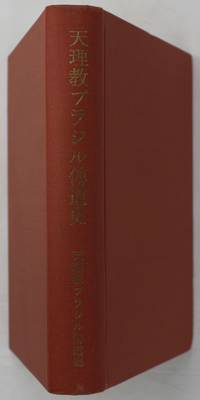
1958réf. 5047Sao Paulo: Tenrikyo Brazil Mission 1958. Very good. 52162511pp. including 32pp. of photographically-illustrated plates. Original orange cloth gilt spine titles housed in original cardboard slipcase with black spine lettering. Very minor wear internally clean. Some chipping and toning to slipcase. An unrecorded history of the Japanese immigrant Tenrikyo Mission in Brazil providing valuable information on many Tenrikyo churches across the country. Tenrikyo was a new Japanese religion founded in the 19th century in Japan by Nakayama Miki and spread to Hawaii Brazil and other regions where Japanese immigrants moved over the course of the first few decades of the 20th century. The photographic plates contain portraits of some mission members views of churches scenes from church life and more. The text is almost wholly in Japanese save for occasional listings of Spanish names and other information. Not reported in OCLC. Tenrikyo Brazil Mission unknown books
1958réf. 4799Tokyo: Kyouiku Kenkyuu Kai Education and Research Group 1958. Very good. 551066pp. Original pictorial wrappers marbled paper spine. Spine mostly perished moderate soiling staining and minor scuffing to wrappers. Occasional light foxing to text. First edition of this interesting history of Brazil printed mostly in Japanese but with section headings and other elements printed in Portuguese. The text is an abridged version of Rocha Pombo's multi-volume Historia do Brazil probably as a textbook for first-generation Japanese students in Brazil who are also learning native Portuguese. The work is printed in the Japanese style and mimeographed or printed in a similar stencil-based method. The text is supplemented with numerous maps illustrations and portrait drawings related to Brazilian history. Three of the more striking illustrations occur in the first chapter depicting a pair of indigenous Brazilians and an indigenous housing structure. The text begins with a chapter focused on the "Principais grupo de indigenas" and "A sociedade dos indigenas" and also includes sections on the western discovery of Brazil the establishment of early colonies the general government agricultural history slavery "o trafico de negros" various historical wars and revolts the dynasty period Brazilian independence the early days of the republic Brazil in the 20th century and much more. Biographical passages of notable Brazilian figures are peppered throughout the text. This intriguing edition of Pombo's history of Brazil most likely designed for Japanese students does not appear in OCLC. Kyouiku Kenkyuu Kai [Education and Research Group] unknown books
1929réf. 5538Tokyo: Kaigai Kogyo 1929. Very good. 248104164pp. plus twenty-five double-sided photographic plates one folding. Original illustrated wrappers printed in blue green white and yellow. Moderate toning minor edge wear. Light foxing to beginning and end of text block otherwise internally clean. A rare and informative guide to Brazil intended for Japanese immigrants to the country in the early 20th century. The work contains chapters on the history of Brazil including its relationship with Japan and information on the contributions of indigenous peoples and "Black Africans" the geography of the country the suitability of the country for Japanese immigrants including the quantity of available land a good climate and a laundry list of favorable crops origins trends and the present state of Japanese immigration including detailed information on companies helpful to immigrants the relationship and opportunities for Japanese immigrants in the coffee industry and more. Towards the end of the work are detailed tables and lists of information on numerous historical economic and agricultural aspects related to Japanese immigration. The photographic plates picture notable monuments and scenery in Brazil Japanese immigrants already in the country various agricultural and business locations scenes in Japanese colonies shots featuring the harvesting of agricultural products and more. The only folding plate is comprised of two pages showing small panoramic photographs of Japanese colonies one along a river. Only one copy of this work in the world at the National Diet Library in Japan. Kaigai Kogyo unknown books
1930réf. 5531Tokyo: Nippon Renmi -- Nippon Kogyu Bu 1930. Very good. 29pp. Original printed wrappers. Minor wear and dust-soiling. An unrecorded pamphlet printing the text of a speech delivered to the Japanese Industrial Club by the Japanese Ambassador to Brazil. The title of the speech is translated as Back from Brazil or Returning from Brazil and concentrates on Ariyoshi's experiences after spending three years in South America with particular attention paid to Japanese immigration and potential investment. During the course of his speech Ariyoshi touches on the industrial resources of Brazil German and Italian influence in the country recent struggles by the coffee industry foreign investment in Brazil specifically mentioning the Rothschild family and more. He concludes by calling for continued Japanese immigration and additional capital investment by Japanese business interests in Brazil. No copies in OCLC though a 1939 work by Setsuzo Sawada is listed under the same title. Nippon Renmi -- Nippon Kogyu Bu unknown books
1929réf. 5538Tokyo: Kaigai Kogyo 1929. Very good. 248104164pp. plus twenty-five double-sided photographic plates one folding. Original illustrated wrappers printed in blue green white and yellow. Moderate toning minor edge wear. Light foxing to beginning and end of text block otherwise internally clean. A rare and informative guide to Brazil intended for Japanese immigrants to the country in the early 20th century. The work contains chapters on the history of Brazil including its relationship with Japan and information on the contributions of indigenous peoples and "Black Africans" the geography of the country the suitability of the country for Japanese immigrants including the quantity of available land a good climate and a laundry list of favorable crops origins trends and the present state of Japanese immigration including detailed information on companies helpful to immigrants the relationship and opportunities for Japanese immigrants in the coffee industry and more. Towards the end of the work are detailed tables and lists of information on numerous historical economic and agricultural aspects related to Japanese immigration. The photographic plates picture notable monuments and scenery in Brazil Japanese immigrants already in the country various agricultural and business locations scenes in Japanese colonies shots featuring the harvesting of agricultural products and more. The only folding plate is comprised of two pages showing small panoramic photographs of Japanese colonies one along a river. Only one copy of this work in the world at the National Diet Library in Japan. Kaigai Kogyo unknown
1930réf. 5531Tokyo: Nippon Renmi -- Nippon Kogyu Bu 1930. Very good. 29pp. Original printed wrappers. Minor wear and dust-soiling. An unrecorded pamphlet printing the text of a speech delivered to the Japanese Industrial Club by the Japanese Ambassador to Brazil. The title of the speech is translated as Back from Brazil or Returning from Brazil and concentrates on Ariyoshi's experiences after spending three years in South America with particular attention paid to Japanese immigration and potential investment. During the course of his speech Ariyoshi touches on the industrial resources of Brazil German and Italian influence in the country recent struggles by the coffee industry foreign investment in Brazil specifically mentioning the Rothschild family and more. He concludes by calling for continued Japanese immigration and additional capital investment by Japanese business interests in Brazil. No copies in OCLC though a 1939 work by Setsuzo Sawada is listed under the same title. Nippon Renmi -- Nippon Kogyu Bu unknown
1958réf. 4799Tokyo: Kyouiku Kenkyuu Kai Education and Research Group 1958. Very good. 551066pp. Original pictorial wrappers marbled paper spine. Spine mostly perished moderate soiling staining and minor scuffing to wrappers. Occasional light foxing to text. First edition of this interesting history of Brazil printed mostly in Japanese but with section headings and other elements printed in Portuguese. The text is an abridged version of Rocha Pombo's multi-volume Historia do Brazil probably as a textbook for first-generation Japanese students in Brazil who are also learning native Portuguese. The work is printed in the Japanese style and mimeographed or printed in a similar stencil-based method. The text is supplemented with numerous maps illustrations and portrait drawings related to Brazilian history. Three of the more striking illustrations occur in the first chapter depicting a pair of indigenous Brazilians and an indigenous housing structure. The text begins with a chapter focused on the "Principais grupo de indigenas" and "A sociedade dos indigenas" and also includes sections on the western discovery of Brazil the establishment of early colonies the general government agricultural history slavery "o trafico de negros" various historical wars and revolts the dynasty period Brazilian independence the early days of the republic Brazil in the 20th century and much more. Biographical passages of notable Brazilian figures are peppered throughout the text. This intriguing edition of Pombo's history of Brazil most likely designed for Japanese students does not appear in OCLC. Kyouiku Kenkyuu Kai [Education and Research Group] unknown
1958réf. 5047Sao Paulo: Tenrikyo Brazil Mission 1958. Very good. 52162511pp. including 32pp. of photographically-illustrated plates. Original orange cloth gilt spine titles housed in original cardboard slipcase with black spine lettering. Very minor wear internally clean. Some chipping and toning to slipcase. An unrecorded history of the Japanese immigrant Tenrikyo Mission in Brazil providing valuable information on many Tenrikyo churches across the country. Tenrikyo was a new Japanese religion founded in the 19th century in Japan by Nakayama Miki and spread to Hawaii Brazil and other regions where Japanese immigrants moved over the course of the first few decades of the 20th century. The photographic plates contain portraits of some mission members views of churches scenes from church life and more. The text is almost wholly in Japanese save for occasional listings of Spanish names and other information. Not reported in OCLC. Tenrikyo Brazil Mission unknown
1957réf. 4803Tokyo: Raten Amerika Ch kai 1957. Very good. 11141pp. plus color photographic frontispiece. Original pictorial wrappers printed in brown tan and green. Minor wear and dust-soiling. First edition of this rare biographical account of life in Brazil by Kiyoshi Yamamoto a doctor of agriculture who served as Chairman of the Japan-Brazil Culture Promotion Committee. The work covers "fifty years of progress" among Japanese immigrant farmers and their lives in Brazil published in Japan to celebrate the fiftieth anniversary of "the hard work of our overseas compatriots" in South America. Chapters cover Japanese immigration to Brazil from the beginning the population of Japanese colonies the acceptance and status of Japanese emigrants Japanese farmers and their situation the state of Japanese commerce and industry in Brazil the history of racial prejudice in the country including part of a chapter on the importing of Black slaves from Africa Japan's restrictions on emigration as well as a celebratory chapter on Japanese immigration. The Appendix includes information on various Japanese immigration-related associations. According to the printed caption beneath the color photographic frontispiece it shows a downtown view of part of "The thriving city of Sao Paulo." Only one holding in the United States at Cornell with just three copies in Japan at the National Diet Library Waseda University and the International Research Center for Japanese Studies. Raten Amerika Ch kai unknown
1957Paris, Éditions Gallimard, 1957; in-8, 256 pp., broché. Collection « Géographie humaine », N° 29, dirigée par Pierre Deffontaines. Un très bon livre sur le Brésil non amazonien. Bon état.
1886Paris - Rio de Janeiro, Frinzine - Lachaud, 1886; in-12, 324 pp., broché (papier jauni). À faire relier.
1989réf. LFA016f3Revue trimestrielle de l'Institut international de géopolitique : environ 100 pages, format 210 x 280 mm, illustrée, brochée couverture couleurs
1833réf. 68142Paris, s. n., coll. « Bibliothèque populaire, 12 » 1833 3 titres en 1 volume. In-18, reliure demi-basane fauve, dos lisse orné de filets dorés, 108-108-144-107-100 pp., 3 cartes et 1 tableau repliés. Intérieur frais.
réf. 3400Editions de l'Amateur. 2005. Grand in-8° broché. Couverture illustrée. 32 pages + 38 planches.
réf. 232882Lisbonne, Antonio Rodrigues Galhardo [numéros 1-12] ; Imprimerie royale [numéros 13-16], s.d. (1826) 34 livraisons en 2 vol. in-8, 387 pp. en numérotation continue, avec des ff. vierges après les pp. 170 et 244 ; pp. 389-818, avec des ff. vierges après les pp. 674 et 704, basane fauve racinée, dos lisses ornés de filets, guirlandes et dents-de-rat dorés, pièces de titre et de tomaison, tranches mouchetées de bleu (reliure de l'époque). Charnières supérieures et coiffes frottées.
réf. 201318753Paris, Sequana, 1939 ; in-12, 292 pp., cartonnage de l'éditeur. En bon état avec 2 cartes - plein cuir coiffes frottés dos un peu passé - n°123 - couverture conservé.
réf. 233697Rio de Janeiro, Typ. do Jornal do Commercio, 1921 in-12, 31 pp., broché. Pliure à la couverture.
réf. 233778S.l., s.d. (1921) in-8, 18 pp., broché.