4 271 résultats
1964réf. 217921Peking: Foreign Languages Press 1964. 23p. staplebound pamphlet very good. Published in the context of the Sino-Soviet split. Foreign Languages Press unknown books
1994Octavo in grey blue pictorial glossy paper wraps; 464 p. 18 cm In Portuguese || Spirit writings. Emmanuel (Spirit) ; Channeling. Brazilian Spiritualism
L AMITIE.. 1969. In-8 Carré. Cartonnage d'éditeurs. Bon état. Couv. légèrement passée. Dos satisfaisant. Intérieur acceptable. 152 pages. Nombreuses illustrations en noir et blanc et en couleurs dans le texte et hors texte. Ancien ouvrage de bibliothèque: tampon et note au stylo sur la page de titre, étiquette de code sur le dos, pochette et étiquette sur la page de garde.
1969réf. R150183438L AMITIE.. 1969. In-8. Cartonnage d'éditeurs. Bon état, Couv. légèrement passée, Dos satisfaisant, Intérieur acceptable. 152 pages. Nombreuses illustrations en noir et blanc et en couleurs dans le texte et hors texte. Ancien ouvrage de bibliothèque: tampon et note au stylo sur la page de titre, étiquette de code sur le dos, pochette et étiquette sur la page de garde.. . . . Classification Dewey : 981-Brésil
2026réf. x-103235982XTaylor & Francis Ltd 2026. Paperback. New. 526 pages. 7.01x1.21x10.00 inches. Taylor & Francis Ltd paperback
1940réf. 214851940 Sao Paulo Graphicars Romiti & Lanzara,1940, A compte d'auteur,IN FOLIO broché, Obra sem a capa da brochura, dimensões 23, 5x33cm., 511 páginas, cortes também amarelados, miolo bom, firme, texto em 5 idiomas: português/espanhol/francês/inglês/alemão. Obra em bom conservação geral. Grand Fort in-4 couverture conservée imprimée. . XXXVI-508 pages. Rares piqures. Abondante iconographie en noir ht,mouillures
1946réf. 5598Sao Paulo, S. A. Industrias "Graphicars - F. Lanzara" 1946. 330 x 235 mm, 1 pl. d'ill. titre en frontispice, (2) ff., 425-(3) pp., nombreuses illustrations n/b et couleurs en pleine page : pp. 1 à 48 texte, pp. 49 à 425 : illustrations en pleine page. Reliure demi-basane à coins, dos à faux-nerfs orné de filets dorés, trace de frottement sans gravité dans 1 coin du premier plat et 1 mors frotté. Très bel exemplaire.
1946réf. 5600Sao Paulo, S. A. Industrias "Graphicars - F. Lanzara" 1946. 324 x 227 mm, 1 pl. d'ill. titre en frontispice, (2) ff., 425-(3) pp., nombreuses illustrations n/b et couleurs en pleine page : pp. 1 à 48 texte, pp. 49 à 425 : illustrations en pleine page. Reliure plein vélin, premier plat illustré couleurs, couvertures et dos conservés. Très bel exemplaire.
réf. 11995aafSão Paulo, Lanzara, 1946, gr. in-4°, 48 p. (texte sur 2 colonnes) + 375 planches photographiques (dont 18 en couleurs), montrant principalement des églises et leur décoration, envoi ms., brochure originale, dos fendu.
1960réf. 55991960. 324 x 227 mm, XXXVI-508 pp., (2) ff., préface et avant-propos (en portugais, français et anglais) suivis de 508 pp. d'illustrations n/b. Reliure plein vélin, premier plat illustré couleurs, couvertures et dos conservés. Très bel exemplaire.
réf. 0332352773.Gpaperback. Good. Access codes and supplements are not guaranteed with used items. May be an ex-library book. paperback
1760réf. 5489Genoa: 29 July 1760. Hardcover. Fine. Manuscript in Italian written in a neat cursive in brown/black ink on laid paper. With some minor foxing some folding lines the creases slightly flattened the bottom edge of the leaves is slightly frayed. Otherwise in very good condition. A harrowing eye-witness account by a Jesuit Father of the Province of Brazil describing the forced expulsion of the Jesuits from Brazil in 1760 the hardships they endured during their capture and the perilous journey from Brazil to Genoa via Lisbon. The author begins his narrative with the persecution suffered by the Jesuits in Brazil following the official suppression of the Order. The Jesuit colleges were thoroughly plundered property seized precious silver taken and church furnishings stripped away. They were ordered not to open the church doors or ring the bells although on three occasions the Blessed Sacrament was brought to the sick an act which deeply moved the local people. The Jesuits endured many sufferings during their captivity. They were confined under harsh conditions; guarded constantly by soldiers. Their living quarters were cramped and filthy so small that they could neither sit nor lie down comfortably. Many suffered from hunger thirst and illness and several lost their lives during this ordeal. On 16 March the journey by sea began. The voyage was nothing short of a cruel martyrdom: extreme hunger and sickness afflicted the Jesuit Fathers. One elderly and saintly Father Francesco Paolo died shortly after the journey began not from disease but from severe distress caused by lack of food and medicine. Another Father Giovanni de Matha suffered a dangerous hemorrhage and narrowly survived while many others fell ill. They arrived at the mouth of the Tagus River in Portugal on 6 June after which they were transferred under guard to a Genoese ship effectively imprisoned once again. They were forbidden from going ashore or even signaling their arrival. More Jesuit Fathers from Brazil joined them later in June many weakened and sick from the hardships endured. Tragically some who had been sent ahead to Portugal suffered such extreme famine and thirst that they resorted to drinking their own urine and several died without the comfort of the last rites which were denied by the ship's captain. The captains and executioners of the royal orders showed little compassion even as they witnessed the Jesuits' pale and dying condition. Throughout this entire ordeal a royal minister constantly monitored the Jesuits offering false hopes that they might remain in the kingdom if they renounced their order and left the Jesuit habit behind. Some succumbed to these pressures but most remained steadfast. The Jesuits also faced opposition from the Bishop of Rio de Janeiro who initially used them for missions but later prohibited their confessions and sermons accusing them falsely of heretical teachings. He even excommunicated those who encouraged perseverance in the Jesuit order. Despite all these hardships the siege imprisonment brutal sea voyage hunger disease and ecclesiastical persecution the Jesuits maintained their faith and dignity praying for peace and the restoration of their Society. In a long postscript the writer gives further news that he has received from Brazil. He describes the devotion despite the Suppression of the Brazilian indigenous novices and the bravery of the students many of whom accompanied other Jesuit fathers in a cramped ship for the long voyage to Europe. A number of students held back -reluctantly- realizing that their presence on the ship would only lead to further overcrowding and privation for the Jesuit fathers in particular those who were old and frail. With sorrow they wept on the shore as the ship weighed anchor and departed for the miserable voyage. The account closes on 29 July 1760 expressing a solemn hope that after so many disasters peace will return to the Jesuit order. 29 July hardcover books
1760réf. 5489Genoa: 29 July 1760. Hardcover. Fine. Manuscript in Italian written in a neat cursive in brown/black ink on laid paper. With some minor foxing some folding lines the creases slightly flattened the bottom edge of the leaves is slightly frayed. Otherwise in very good condition. A harrowing eye-witness account by a Jesuit Father of the Province of Brazil describing the forced expulsion of the Jesuits from Brazil in 1760 the hardships they endured during their capture and the perilous journey from Brazil to Genoa via Lisbon. The author begins his narrative with the persecution suffered by the Jesuits in Brazil following the official suppression of the Order. The Jesuit colleges were thoroughly plundered property seized precious silver taken and church furnishings stripped away. They were ordered not to open the church doors or ring the bells although on three occasions the Blessed Sacrament was brought to the sick an act which deeply moved the local people. The Jesuits endured many sufferings during their captivity. They were confined under harsh conditions; guarded constantly by soldiers. Their living quarters were cramped and filthy so small that they could neither sit nor lie down comfortably. Many suffered from hunger thirst and illness and several lost their lives during this ordeal. On 16 March the journey by sea began. The voyage was nothing short of a cruel martyrdom: extreme hunger and sickness afflicted the Jesuit Fathers. One elderly and saintly Father Francesco Paolo died shortly after the journey began not from disease but from severe distress caused by lack of food and medicine. Another Father Giovanni de Matha suffered a dangerous hemorrhage and narrowly survived while many others fell ill. They arrived at the mouth of the Tagus River in Portugal on 6 June after which they were transferred under guard to a Genoese ship effectively imprisoned once again. They were forbidden from going ashore or even signaling their arrival. More Jesuit Fathers from Brazil joined them later in June many weakened and sick from the hardships endured. Tragically some who had been sent ahead to Portugal suffered such extreme famine and thirst that they resorted to drinking their own urine and several died without the comfort of the last rites which were denied by the ship's captain. The captains and executioners of the royal orders showed little compassion even as they witnessed the Jesuits' pale and dying condition. Throughout this entire ordeal a royal minister constantly monitored the Jesuits offering false hopes that they might remain in the kingdom if they renounced their order and left the Jesuit habit behind. Some succumbed to these pressures but most remained steadfast. The Jesuits also faced opposition from the Bishop of Rio de Janeiro who initially used them for missions but later prohibited their confessions and sermons accusing them falsely of heretical teachings. He even excommunicated those who encouraged perseverance in the Jesuit order. Despite all these hardships the siege imprisonment brutal sea voyage hunger disease and ecclesiastical persecution the Jesuits maintained their faith and dignity praying for peace and the restoration of their Society. In a long postscript the writer gives further news that he has received from Brazil. He describes the devotion despite the Suppression of the Brazilian indigenous novices and the bravery of the students many of whom accompanied other Jesuit fathers in a cramped ship for the long voyage to Europe. A number of students held back -reluctantly- realizing that their presence on the ship would only lead to further overcrowding and privation for the Jesuit fathers in particular those who were old and frail. With sorrow they wept on the shore as the ship weighed anchor and departed for the miserable voyage. The account closes on 29 July 1760 expressing a solemn hope that after so many disasters peace will return to the Jesuit order. 29 July hardcover
1955réf. 30882Río de Janeiro: Irmaos di Giorgio & Cia. ca. 1955.- Cinco apartados reflejados en el índice con distinta paginación 66152176 36 pp.: Profusión de estados y gráficos; 4º mayor 27 x 186 cm; Cartulina Ed.- Cubiertas con pequeñas dobleces en las esquinas externas. RARO. BRASIL Livro no português Irmaos di Giorgio & Cia. paperback
2026réf. LRB34000218Paris: Editions Recreasoft 2026 Idioma: Português. Aproximadamente 779 páginas. Português : Reimpressão sob demanda. Edição original : 1853. Obra em português. Este relatório detalhado aborda a revisão das tarifas alfandegárias do Império do Brasil cobrindo o período de 1845 a 1849. Publicado em 1853 o documento oferece uma análise aprofundada do comércio imperial incluindo estatísticas e propostas de ajustes tarifários. Obra essencial para estudiosos da economia e história brasileira do século XIX. Imagens do livro não contratuais English: Print-on-demand reprint. Original edition : 1853. Text in Portuguese. This detailed report addresses the revision of customs tariffs in the Empire of Brazil covering the period from 1845 to 1849. Published in 1853 the document provides an in-depth analysis of imperial trade including statistics and proposals for tariff adjustments. A key work for scholars of 19th-century Brazilian economics and history. Book images are non-contractual. Editions Recreasoft. Softcover. New. Editions Recreasoft paperback
1953réf. UUI-5601In-8 broché, 1953, 72 pp. Jauni, mouillure sur les couvertures, intérieur correct. Peu courant. Poids 180 g. Frais d'envoi 3,05 euros sur la France, 4,50 euros UE et Suisse, 6,50 euros pour le reste du monde (tarifs de base hors envois suivis). Possibilité de remise en mains propres sur Paris, n'hésitez pas à me contacter avant de passer commande.
réf. 562750Rio de Janeiro, Imp. Nacional, 1896. In-8, demi-percaline verte de l’époque, 539 pp., 16 planches dépliantes (cartes, graphiques, tableaux, etc.).
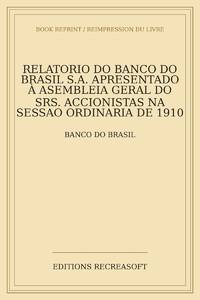
2026réf. LRB34000632Paris: Editions Recreasoft 2026 Idioma: Português. Aproximadamente 629 páginas. Português : Reimpressão sob demanda. Edição original : 1910. Obra em português. Relatório anual do Banco do Brasil apresentado aos acionistas em 1910. Este documento histórico oferece uma visão detalhada das operações financeiras investimentos e estratégias da instituição durante o período. Destinado a estudiosos de economia história financeira e administração bancária o relatório constitui uma fonte valiosa para pesquisas sobre o desenvolvimento do sistema bancário brasileiro no início do século XX. Imagens do livro não contratuais English: Print-on-demand reprint. Original edition : 1910. Text in Portuguese. Annual report of Banco do Brasil presented to shareholders in 1910. This historical document provides a detailed overview of the bank's financial operations investments and strategies during the period. Aimed at scholars of economics financial history and banking administration the report is a valuable source for research on the development of the Brazilian banking system in the early 20th century. Book images are non-contractual. Editions Recreasoft. Softcover. New. Editions Recreasoft paperback
réf. 0366053868.Ghardcover. Good. Access codes and supplements are not guaranteed with used items. May be an ex-library book. hardcover
réf. 0332670201.Ghardcover. Good. Access codes and supplements are not guaranteed with used items. May be an ex-library book. hardcover
réf. 0332359344.Gpaperback. Good. Access codes and supplements are not guaranteed with used items. May be an ex-library book. paperback
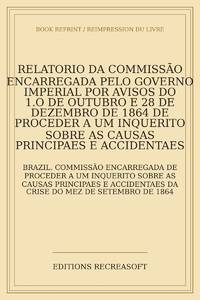
2026réf. LRB1013452Paris: Editions Recreasoft 2026 Idioma: Português. Aproximadamente 606 páginas. Português : Reimpressão sob demanda. Edição original : 1865. Este relatório oficial detalhado examina as causas principais e acidentais da crise de setembro de 1864 no Brasil Imperial. Inclui documentos anexos gráficos desdobráveis e referências bibliográficas. Obra essencial para historiadores e estudiosos da política e economia brasileira do século XIX. Images du livre non contractuelles English : Print-on-demand reprint. Original edition : 1865. This detailed official report examines the primary and accidental causes of the September 1864 crisis in the Brazilian Empire. Includes annex documents fold-out charts and bibliographical references. Essential work for historians and scholars of 19th-century Brazilian politics and economy. Book images are non-contractual. Editions Recreasoft. Softcover. New. Editions Recreasoft paperback
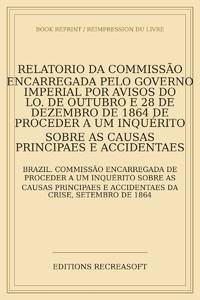
2026réf. LRB16000372Paris: Editions Recreasoft 2026 Idioma: Português. Aproximadamente 604 páginas. Português : Reimpressão sob demanda. Edição original : 1865. Reimpressão sob demanda. Edição original: Este relatório oficial detalhado examina as causas principais e acidentais da crise financeira de setembro de 1864 no Império do Brasil. A comissão imperial designada por decretos de outubro e dezembro de 1864 investigou as origens e consequências da crise fornecendo uma análise abrangente das condições econômicas e políticas da época. O documento inclui notas bibliográficas que enriquecem a compreensão histórica do período. Images du livre non contractuelles English : Print-on-demand reprint. Original edition : 1865. This detailed official report examines the primary and accidental causes of the financial crisis of September 1864 in the Empire of Brazil. The imperial commission appointed by decrees of October and December 1864 investigated the origins and consequences of the crisis providing a comprehensive analysis of the economic and political conditions of the time. The document includes bibliographical footnotes that enrich the historical understanding of the period. Book images are non-contractual. Editions Recreasoft. Softcover. New. Editions Recreasoft paperback
réf. 0332352765.Gpaperback. Good. Access codes and supplements are not guaranteed with used items. May be an ex-library book. paperback
réf. 0332223167.Gpaperback. Good. Access codes and supplements are not guaranteed with used items. May be an ex-library book. paperback