3.348 resultados
1926ref. 005579Paris Editions René Kieffer 1926 In-4 Broché, couverture rempliée Edition originale
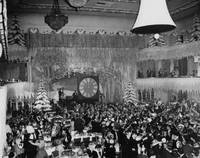
1904ref. D12720New York 1904-c.1950s. Hardcover. Very Good. Collection of 182 b/w or sepia photographs silver prints; ranging in size from about 7x9 to 11x14 inches; mounted in two albums or loose sometimes with heavy cardstock mount or paper backing from having been removed from an album see below; offers exteriors views of the hotel from construction to completion and interior views of private and public rooms in the hotel from its construction in 1904 to a later remodel in perhaps 1935 the hotel was remodeled again in 1949 but these images don't seem to extend that late -- there are just a few images showing the Sheraton-Astor when it was briefly bought and renamed in 1954. The collection breaks down as follows: Large album of 42 mounted photographs from around the newly-opened hotel circa 1904 almost all credited in mount and negative to Joseph Byron of New York a few to Drucker & Co. half morocco oblong folio; lacking front board several photographs removed /// Large album of 33 later Hotel Astor photographs c. 1933 linen-backed signed in the negative by "Byron Co." /// 12 large Byron photographs of the hotel about 11x14 inches most mounted most worn and/or faded /// Disbound album of 28 Drucker & Co. photographs of the hotel some showing second-phase construction 1908 and undated /// Group of 67 8 x 10 inch photographs of the hotel some of them after being renamed the Sheraton-Astor in 1954 by William F. Howland 20 Empire Photographers 10 and miscellaneous or unknown photographers 37 circa 1920s-1950s. Built at a cost of $7000000 on land leased from William Waldorf Astor great-grandson of John Jacob Astor the fur trader the 11-story 35000-square-feet Hotel Astor was designed in the French Renaissance "Beaux Arts" style by architects Charles W. Clinton and William H. Russell who imitated many features from the old Waldorf-Astoria on 34th Street. The Hotel Astor opened in September 1904 dazzling guests with its enormous public rooms most decorated with themes. A year later the elaborate roof garden was opened. The former site of the hotel the block bounded by Broadway Astor Plaza West 44th Street and West 45th Street is now occupied by the high-rise 54-story office tower One Astor Plaza. hardcover books
ref. awd-1127Paris, Galerie La Hune, 1988. Portfolio in-4 à rabats en toile grise contenant 18 gravures sur Rives BFK filigrané La Hune, toutes justifiées 8/12 et signées au crayon. Avec le livret de présentation illustré (21 pp.) et le carton d’invitation au Grand Palais (Philippe Favier, Gravures récentes, 1988).tt
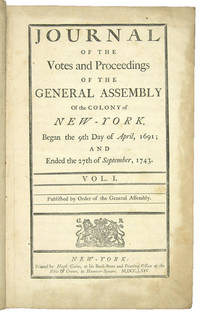
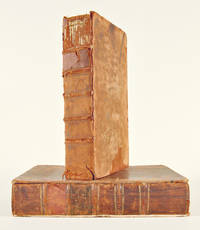
1764ref. WRCAM28821New York: Hugh Gaine 1764. Two volumes. 48402; 28118pp. Thick folio. Contemporary calf. Heavily scuffed spines worn. Internally clean. Good. In worn half blue morocco slipcases red gilt morocco labels. These two massive volumes record the complete proceedings of the New York Assembly from the establishment of William and Mary's rule through the end of 1765. An invaluable source for New York. According to Evans the act for reversing the attainder of Jacob Leisler and others the appendix leaf in the first volume is usually lacking. EVANS 9756 10418. Hugh Gaine unknown books
1904ref. D12720New York 1904-c.1950s. Hardcover. Very Good. Collection of 182 b/w or sepia photographs silver prints; ranging in size from about 7x9 to 11x14 inches; mounted in two albums or loose sometimes with heavy cardstock mount or paper backing from having been removed from an album see below; offers exteriors views of the hotel from construction to completion and interior views of private and public rooms in the hotel from its construction in 1904 to a later remodel in perhaps 1935 the hotel was remodeled again in 1949 but these images don't seem to extend that late -- there are just a few images showing the Sheraton-Astor when it was briefly bought and renamed in 1954. The collection breaks down as follows: Large album of 42 mounted photographs from around the newly-opened hotel circa 1904 almost all credited in mount and negative to Joseph Byron of New York a few to Drucker & Co. half morocco oblong folio; lacking front board several photographs removed /// Large album of 33 later Hotel Astor photographs c. 1933 linen-backed signed in the negative by "Byron Co." /// 12 large Byron photographs of the hotel about 11x14 inches most mounted most worn and/or faded /// Disbound album of 28 Drucker & Co. photographs of the hotel some showing second-phase construction 1908 and undated /// Group of 67 8 x 10 inch photographs of the hotel some of them after being renamed the Sheraton-Astor in 1954 by William F. Howland 20 Empire Photographers 10 and miscellaneous or unknown photographers 37 circa 1920s-1950s. Built at a cost of $7000000 on land leased from William Waldorf Astor great-grandson of John Jacob Astor the fur trader the 11-story 35000-square-feet Hotel Astor was designed in the French Renaissance "Beaux Arts" style by architects Charles W. Clinton and William H. Russell who imitated many features from the old Waldorf-Astoria on 34th Street. The Hotel Astor opened in September 1904 dazzling guests with its enormous public rooms most decorated with themes. A year later the elaborate roof garden was opened. The former site of the hotel the block bounded by Broadway Astor Plaza West 44th Street and West 45th Street is now occupied by the high-rise 54-story office tower One Astor Plaza. hardcover
1915ref. 308235New York 1915. 87 silver prints the images measuring 3 x 4-1/2 to 4-1/2 x 6-1/2 inches mounted recto and verso on black sheets most of the prints with a caption in the negative. Oblong 4to. In a black "Snapshots" album. Some wear photos fine. 87 silver prints the images measuring 3 x 4-1/2 to 4-1/2 x 6-1/2 inches mounted recto and verso on black sheets most of the prints with a caption in the negative. Oblong 4to. The NYC watershed consists of 19 upstate reservoirs and 3 controlled lakes that cover 1900 square miles in the Catskill Mountains. The Ashokan Reservoir was finished in 1915. 1. Ulster & Delaware Railroad Station 2. Steam shovels 3. Town with workers uncaptioned 4. 3 uncaptioned shots of equipment 5. The Ashokan National Bank Building with an advertisement for the Oneonta Central New York Fair Sept. 1912 on side of building. 6. Traction Engine; Negro Camp House & View from the Main Office towards the Opera House 7. The Hospital and Nurse Cottage 8. Italian Camp View; Syphon & Machine and Millwright Shop 9. The Commissary 10. Beaver Hill Club House; Waste Channel & "Dig" 11. Browns Farm House 12. View from the Beaverkill Clubhouse towards Maindam; well driller & View from McCleelan Tower 13. Office of Winston and Co Contractors 14. Workers; Cable Tower & Italian Camp View 15. McClellan Memorial Tower and Reservator 16. Steam Shovel; Fire House & Parade on horseback 17. View from the Main Dam of Reservoir Site 18. View from Maindam seen from Esopos Creek; Blacksmith Shop & American Camp Street View 19. Railway tracks 20. Railroad Engine; Italian Camp View & View of Maindam 21. East Deich 22. Street View around Boardinghouse; Cornwal and Dam & Camp Scene 23. Main dam Towers and Railroad 24. American Camp Street View Workers in wagon & Train 25. West Deich 26. Bucyrus shovel; Ditch & View of Maindam 27. Compressor 28. Steam Shovel; Boardinghouse & American Camp View 29. Special Aequduct 30. Crusher; Police Station & Railroad 31. Screen Chamber 32. City Engineers Office; Railroad & Deich work 33. Well driller blast and steam shovel 34. Italian Camp House; Machinery of Cable Tower & Steam shovel at work 35. Pressure aqueduct lower gate chamber 36. Italian schoolhouse; Stump puller & Italian Camp View 37. Steam shovel 38. Post Office; Portal of water channel & large valves 39. View of main dam seen from Esopos Creek 40. The Keeper; Men in tunnel & Board of Water Supply Office 41. Upper Gate Chamber 42. American Camp House; View of Maindam; View towards Dam showing Mill Compressor and Crusher & View towards Crusher and Dam 43. View of Spillway 44. American Camp Street View; Bull Pen & Round House 45. Panoramic postcard of Ashokan Dams Browning Station NY torn in half. unknown
1764ref. 28821New York: Hugh Gaine 1764/66. Journals of the New York Assembly These two massive volumes record the complete proceedings of the New York Assembly from the establishment of William and Mary's rule through the end of 1765. An invaluable source for New York. According to Evans the act for reversing the attainder of Jacob Leisler and others the appendix leaf in the first volume is usually lacking. Thick folio. Contemporary calf with raised spine bands. Bindings heavily scuffed and worn spine of first volume mostly perished. Some tanning and soiling. Good. In worn half blue morocco slipcases red gilt morocco labels. EVANS 9756 10418. unknown
1719ref. 676061719. London: Printed for John Baskett 1719. Folio. London: Printed for John Baskett 1719. Folio. 1719 Compilation of New York Laws Printed in London by John Baskett New York. Acts of Assembly Passed in the Province of New-York From 1691 To 1718. London: Printed for John Baskett Printer to the Kings Most Excellent Majesty 1719. xv 292 pp. Folio 13-1/2" x 8-1/2". Contemporary calf rebacked gilt rules to boards extra gilt spine with raised bands and lettering piece endleaves retained hinges mended. Shallow scuffing to boards some rubbing to extremities corners bumped hinges starting early armorial bookplate of the Oswalds of Dunnikier Fife to front pastedown. Light toning to text somewhat heavier in places light foxing to a few leaves light soiling and faint spotting to title page a tear near the gutter carefully repaired. A very handsome copy. $3000. Published the same year as William Bradford's compilation this was the fourth codification of New York laws preceded by three collections printed by William Bradford in 1694 1710 and 1713. It comprises all the acts of the New York Assembly from 1691 through 1718 including many concerning trade and slaves such as the 1709 "Act for Preventing the Conspiracy of Slaves." According to Rich Baskett's edition was likely copied from Bradford's and "according to Trott printed by order of the Lords Commissioners of Trade and Plantation." Titles of expired or repealed laws are included. The Oswalds of Dunnikier Fife were a politically connected family of Scottish merchants active in the Atlantic trade. Rich Bibliotheca Americana Nova 26. Tower The Charlemagne Tower Collection of Colonial Laws 609. Benedict Acts and Laws of the Thirteen Original Colonies and States 332. unknown
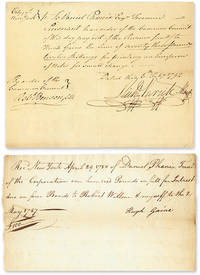
1789ref. 688571789. New York: Hugh Gaine 1789. 2 vols bound in one. New York: Hugh Gaine 1789. 2 vols bound in one. Handsome 1789 Folio Edition of New York Laws with Two Interesting Laid-In Manuscript Notes New York. Jones Samuel 1734-1819 Compiler. Varick Richard 1753-1819 Compilers. Laws of the State of New-York Comprising the Constitution And the Acts of the Legislature Since the Revolution From The First to the Twelfth Session Inclusive. Published According to an Act of the Legislature Passed the 15th April 1786. New York: Printed by Hugh Gaine 1789. Two volumes bound as one. iv 336 12 xii 2; ii 471 17 pp. Two laid-in manuscript notes 5-3/4" x 8" 6" x 8." Folio 10" x 15". Contemporary calf blind fillets to boards "Leonard Bronk" gilt-stamped to center of front board rebacked retaining existing spine with raised bands and lettering piece spine ends repaired hinges mended. Light rubbing to boards and extremities moderate rubbing to board edges corners bumped. Moderate toning light foxing in a few places offsetting to margins of preliminaries and rear endleaves. $3500. The first volume of collected New York laws printed after the ratification of the U.S. Constitution and the second issued after the American Revolution the 1789 compilation contains laws passed 1778 through 1789 regulating such topics as governance mortgages debtors land slaves New York City criminal and marital law rape liquor and exports. Also includes an interesting law in King's county Brooklyn and Queen's county Queens establishing a 40 shilling fine to those carriages traveling from the City of New York that fail to give right of way to carriages going toward the city. Also includes the Constitution of the State of New York passed April 20 1777. The laid-in notes are quite interesting. The first is a contract between New York City Mayor Richard Varick and Hugh Gaine dated February 7 1792. It directs the city treasurer to pay Gaine 73 pounds for "printing an emission of notes for small change." Issued two months before the establishment of the U.S. Mint this note is essentially an authorization by the State of New York to issue fractional currency. The U.S. Constitution prohibited states from issuing paper money but it appears that a few states and municipalities issued notes or at least authorized them in the early 1790s. Backed by the faith and credit of the issuer these notes f. unknown books
1815ref. 275647New York: New-York Courier 1815. First. pamphlet. 21 pages printed with text in double columns. Original pamphlet sewn dampstain at upper corner and rough at edges but well inside the ample margins; some pages still un-opened. New York: At the Office of the New-York Courier 1815. First edition. A very good copy of this exceedingly scarce pamphlet. OCLC lists only 13 copies including those at Columbia Cornell Yale Harvard and the New York Historical Society. Attributed to Isaac Bronson by F. Redlich in "The Molding of American Banking" 1868 volume 1 page 308. "Isaac Bronson was a highly successful financier of the Jacksonian era who was also one of the period's most original and influential banking theorists. Bronson accumulated his very considerable fortune in New York primarily by judicious personal money-lending operations on long-term bonds and mortgages at a cautious 7 per cent annual return supplemented by successful ventures in land speculation. In addition to wealth he had by the 1830's acquired a weighty reputation for sober financial conservatism and was regarded as an authoritative exponent of sound banking principles. Prominent in the financial community he had long thrown his weight as a sound banking theorist against the "wild-cat" practices of the then rampant state banks." --Venit A. 1945. The Journal of Economic History New-York Courier unknown
1900ref. LD14233New York c. 1900-1910. Hardcover. Very Good. Original green leather with engraved metal brass centerpiece ornate metal monogrammed initials and ornate metal cornerpieces on upper board moire endpapers a.e.g.; large thick folio 420x380x150mm; containing 22 leaves inset to thick mounts. Titled on the first leaf "To the Honorable John C. McGuire upon his Retirement from the Office of Surveyor of the Port of New York" and followed by remarkably accomplished manuscript leaves heightened with gold an original portrait of McGuire a few nautical themed watercolors several leaves of facsimile signatures and McGuire's original 1894 appointment to the post of Surveyor of Customs signed by President Grover Cleveland. Some light scuffing along joints and spine; gutter cracked in two places because this book weighs a ton. hardcover
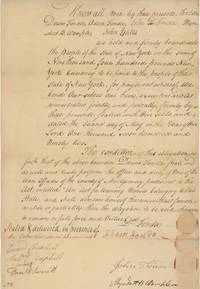
ref. 73244An archive of hundreds of letters bills receipts and other legal documents from the family of Academy Award-winning actress Jane Fonda dating from 1786 to 1880. This branch of the Fonda family traces its roots back to New York in 1651 when Jellis Fonda migrated from the Netherlands with his wife and four children. His grandson Douw Jellis Fonda 1700-1780 is considered the founder of the Dutch village now named Fonda about 30 miles west of Albany. He lived a long and prosperous life as a farmer and merchant but was killed at age 79 during a raid by the British Army aided by the Mohawk Indians. This collection includes two early hand-drawn property maps of some of the Fonda-owned lands. One of the undated maps completed for John Fonda shows part of Mayfield with lots drawn and numbered. The second map also undated shows acreage for the heirs of A. Fonda except 150 acres sold to John C. Smith and 100 acres sold to David and Samuel Loomis. The earliest material in this collection is connected to Douw Jellis Fonda's six children and grandchildren following the American Revolution. They were leaders in their community serving as judges state elected officials and military officers. There are five handwritten legal documents signed by various members of the family related to the payment of bonds associated with the appointment of loan officers and treasury officials for Montgomery County between 1786 and 1792. At the conclusion of the war the New York Legislature passed laws placing taxes on land and personal estates of all inhabitants in order to defray war expenses discharge its debts and support the state government. Supervisors of each county appointed individuals to "superintend" the raising of taxes within their respective counties. These documents include: April 19 1786 three-page document signed by Judge Jellis Fonda on pages two and three concerning a 12000-pound bond for the appointment of Peter Schuyler as one of the Montgomery County loan officers May 9 1786 document of three pages concerning Jellis Fonda's bond in the amount of 12000 pounds for the appointment of his son Douw Fonda as one of the Montgomery County loan officers January 8 1787 document of one and a half pages concerning Adam Fonda's bond in the amount of 5000 pounds providing surety for Douw Fonda as treasurer of Montgomery County June 29 1791 one-page document signed by Adam Fonda and Douw Fonda providing 4000 pounds as surety for John Yates to be the treasurer of Montgomery County May 2 1792 document of two and a quarter pages signed by Douw Fonda Adam Fonda and John Fonda providing a 9400 pounds surety bond for Douw Fonda as a Montgomery County loan officer This collection also includes a group of documents associated with Henry Fonda 1766-1828 who fought in the War of 1812 and was appointed Brigadier General of the 11th Infantry in 1820. During 1807 1816 and 1819 he was a member of the New York State Legislature representing the Fourth Senatorial District of Tryon County. This collection includes two printed broadsides headed "Brigade Orders" issued by him calling regiments to rendezvous and parade "for military exercise and improvement" in 1826 and 1828. There are also 20 handwritten bills and receipts dating from 1792 to 1824 for various items he purchased ranging from flannel to gin and three holographic legal documents for funds he was owed. An additional four letters in the collection were written to Henry addressed variously as major colonel and general dating from 1813 to 1828. Among them is a three-page letter from Daniel Cockstock dated March 6 1826 contemplating the impacts of various new stage routes in the region. Another group of more than 120 letters receipts and other documents is connected to Henry's brother Peter Fonda 1802-74 who was a merchant and hotel keeper ran a stagecoach for a period worked as a contractor and helped build roads in the community. There are several letters about his stagecoach work including seat reservations purchasing horses schedules and even lost luggage. On January 4 1832 he received a letter about Theophilius Williams' lost trunk. "I understand by a letter from him that he left a description of it at your house offering five dollars to the finder which I will send to you immediately if found together with all accompany expenses incurred in the search and pay your bill for the same whether found or not if you will give your assistance" Levi Williams wrote. Among the letters is one from Peter's wife Gertrude written to him in 1838 while he was in Rome building a bridge across the Mohawk River. "I want you to look out for yourself.don't depend on others you may lose keep your people sober." she wrote. A handwritten contract with officials from Rome dated January 1839 outlines the specifications for the bridge. He is also among a dozen men listed on a 1862 patent included in this collection for an improvement in pumps. A variety of other miscellaneous documents are provided in the archive including: An 1870 poll book for Fonda Montgomery County. The first eight pages are printed and provide a "plan of organization and action" to "effect change of administration at the President election of November 1872." Voters names are listed on six pages with P.H. Fonda's at the end. A printed receipt completed in manuscript issued by the state of New York treasurer's office on April 9 1816 to Simon Vedder for Douw Fonda An eighth page handwritten receipt dated December 20 1790 received from Adam Fonda A one-page handwritten poem by Lavina Fonda dated June 9 1816 written on the death of a schoolmate A small note signed by Adam Fonda dated September 17 1838 requesting Peter Fonda pay $15 to Robert Bahanan A printed document with holographic notes for the lease of property dated October 9 1855 and signed by Aminta K. Fonda Supreme Court calendar for the September 1863 term 16 pages in sewn wraps with P.H. Fonda's name written in pencil along the top of the cover A quarter-page handwritten document dated October 25 1854 listing the person living in Fonda who are exempted from payment of teachers wages in District 8 of Mohawk The materials are all generally toned stained and creased from former folds but otherwise in very good condition. unknown books
ref. 313242006. Hardcover. 8vo; Full leather in custom slipcase with accompanying clothbound commentary. 14 x 21 cm 160 pp commentary. 1 of 250 numbered copies. Unbelievably rich and extraordinarily refined in its artistic decoration the Prato Hagadah was produced in Spain around 1300 C.E. with incomplete period illuminations and then with additions from the following three centuries. Folios 1-53 are in square Sephardic script while folios 54-68 display a square Italo-Ashkenazic script. The haggadah includes 40 miniatures illuminated in gold and silver and 60 which are partially illuminated or only drawn. The Haggadah was featured in the Met's 2009 Exhibit "Pen and Parchment: Drawing in the Middle Ages." Scholars at JTSA note that “Nothing at all is known of either the patron or scribe of the Prato Haggadah and little is known of its whereabouts from the time it was produced in Spain around 1300 until the time it was acquired by the JTS Library in 1964. While the haggadah's text is written in accordance with the Spanish rite at some point additional text which included liturgical poems of the Ashkenazic rite was added most likely in Italy….A 1617 signature of an Italian church censor Giovanni Domenico Carretto is proof that the manuscript actually was in Italy at the beginning of the seventeenth century. Nothing further is known of the haggadah's history until 1928 when it was in the possession of Dr. Ludwig Pollak a native of Prague living in Rome." The art of the Prato Haggadah is witty and creative. It includes many initial word panels foliate ornamentation and hybrid figures. Several illustrations relate directly to the text. The Haggadah contains motifs common in medieval manuscripts and many folios reflect the artist's sense of humor. For unknown reasons the manuscript's illumination was never completed. It is this unfinished nature of the work that allows the viewer to see the stages of production of an illuminated manuscript: the scribal arrangement of the text; the artist's preparatory drawings; the application of gesso to cushion gold or silver leaf; the addition of the leaf; the painting of a wide variety of pigments; and the outlining of the illuminations with ink. The text of the Prato Haggadah is also distinctive. Although it includes the standard biblical talmudic and midrashic texts as well as the liturgical poetry common to other Spanish Haggadot the Prato Haggadah lacks all elements associated with the Passover meal. Kiddush blessings for matzah and maror instructions for the feast itself and grace after meals are absent. Scholars have suggested that Haggadot of this kind may have been written to be read publicly in the synagogue after which people would return to their homes for the meal. This phenomenon is found in other Spanish Haggadot and is explained by medieval sources as satisfying the requirement to recount the story of the Exodus for people unable to lead or attend a seder. Many Sephardic Jews immigrated to Italy following the expulsions from the Iberian Peninsula at the end of the fifteenth century often taking their manuscripts with them. The Prato Haggadah contains many textual changes and corrections inserted over several centuries. Though the Spanish or Ashkenazic sections of the manuscript cannot be definitively dated or localized scribal practices and liturgical variants provide a general overview of the history of the manuscript and its owners JTS 2010. Printed and bound as an exact replica of the highest quality of the 13th Century illuminated manuscript in appropriate leather boards and parchment-like leaves and housed in a custom slipcase. Included is a companion volume "The Prato Haggadah" 107 pages with color illustrations edited by Naomi M. Steinberger and with an introduction by David Kraemer with essays and bibliographical references. Limited edition of 250 numbered copies. A treasure to behold. hardcover
1956ref. 103581BBLondon, Photography Magazine, (1956). 4°. 192 p. with 188 Pictures on plates and Booklet (16 p., "Delay may be serious now free..."). Original cloth binding with color illustrated dust jacket. (Album Petite Planète, Vol. 1).
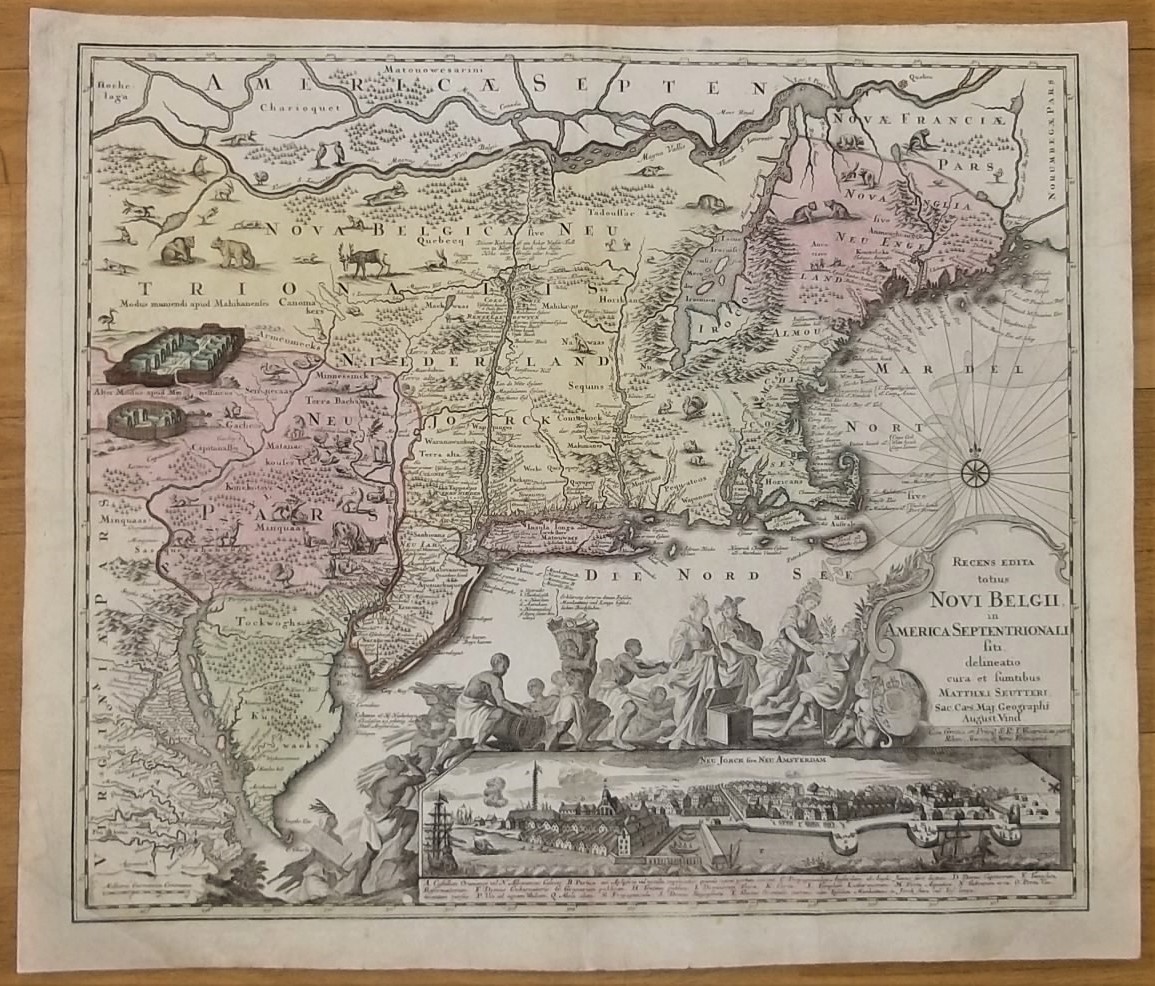
1740ref. 18628(Augsburg), Seutter, um 1740. Ca. 50 cm x 58 cm. [4 Warenabbildungen]
1877ref. 123981877. Oblong folio. 13 1/4 x 18 1/2 inches. 19 original watercolours 11 3/8 x 7 7/8 inches and smaller mounted recto and verso of 7 thin card leaves one page mounted with 4 drawings one with 3 and one with 2 the others with 1 drawing per page the final page blank all painted by a single hand and all with the location identified in ink in the lower margin of each drawing or on the mount just below. Modern blue half morocco gilt blue morocco title label centrally-placed on upper cover 'Voyage aux / Etats-Unis / 1876-77' A fine series of original watercolour views of Lake George N.Y. and elsewhere - including one watercolour of Central Park New York. From the heading 'Voyage aux Etats-Unis / 1876-1877' on the first page of this album as well as from the wording of the captions to the drawings it is clear that these highly accomplished watercolours are the work of a French-speaking visitor to North America in 1876-1877. They include 14 views of Lake George and its vicinity including one of Caldwell now Lake George Village and one of Tea Island. Also included is a single view of a rocky outcrop and trees in Central Park another of Glenn Falls on the Hudson and a third of the Montmorency Falls just outside Quebec as well as two fine but rather unexpected Swiss views of Amphion Lake Geneva both dated 1877. unknown
1685ref. 5706Amsterdam, Visscher, ca. 1685. Aus: Atlas Minor. Ca. 46 cm x 55 cm.
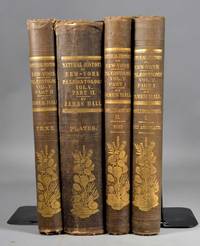
1842ref. 763301842. THE NATURAL HISTORY OF NEW-YORK. Albany Thurlow Weed 1842. NY Appleton & Co. and Wiley & Putnam 1843-1894. Folio. 30 volumes. Zoology in VI parts bound in 5 volumes; Botany in 2 volumes; Mineralogy one volume; Geology in 4 volumes; Paleontology in VIII parts bound in 13 volumes; Agriculture in 5 volumes. Maps and a wealth of lithographic plates of birds flowers fruit landscape panoramas geological sections etc. mostly hand-colored. Boards off volume I otherwise condition varies from good to fine. All but two volumes in original publisher's cloth with gilt vignettes. Complete descriptions and collations on request. Rare Complete. unknown books
1964ref. 38831¢ LIFE. Written by Walasse Ting. Edited by Sam Francis. Published by E.Kornfeld, Berne, E.W. Kornfeld, 1964. In-folio en feuilles, sous chemise cartonnée, jaquette et étui en toile verte de l’éditeur. Jaquette par Machteld Appel. Couverture par Roy Lichtenstein et Pierre Alechinsky. Édition originale. - 62 LITHOGRAPHIES, la plupart en couleur, dont 29 sur doubles pages : Alan Davies (2 à double page), Alfred Jensen (3 dont 1 à double page), SAM FRANCIS (6 dont 1 à double page), WALASSE TING (6 dont 2 à double page), James Rosenquist (1 à double page), Pierre ALECHINSKY (5 dont 2 à double page), Kimber Smith (6), Alfred Leslie (2), Antonio Saura (1 à double page), Kiki O.K. (1 à double page ), Asger JORN (2 à double page), ROBERT INDIANA (2 dont 1 à double page), Jean-Paul Riopelle (2 à double page), Karel APPEL (5 dont 2 à double page), Tom Wesselmann (2 à double page), Bram Van Velde (1 à double page), Joan MITCHELL (1 à double page), Allan Kaprow (1 à double page), ANDY WARHOL (1 à double page), ROBERT RAUCHENBERG (1 à double page), K.R.H. Sonderborg (1 à double page), ROY LICHTENSTEIN (1 à double page), Öyvind Fahlström (1 à double page), Reinhoud (1 à double page), CLAES OLDENBURG (2 à double page), JIM DINE (1 à double page), MEL RAMOS (2 dont 1 à double page) et Enrico Baj (2), poèmes de Walasse TING, imprimés en noir et en couleurs, certains en calligrammes, accompagnés de 22 reproductions d’œuvres de Roy Lichtenstein, Pierre Alechinsky, Gustave Mignot, Walasse Ting ou Paul Loyer. - UN DES 2000 EXEMPLAIRES NUMÉROTÉS AVEC LA SIGNATURE DE WALASSE TING IMPRIMÉE. Très bel exemplaire, en parfait état, tel que paru et complet. Couverture par Roy Lichtenstein et Pierre Alechinsky, jaquette, étui d'origine. Bibliographie : Riva Castleman, A Century of Artists Books, New York, The Museum of Modern Art, 1994, pp. 208-209. - A. Coron, 50 livres illustrés depuis 1947, 1988, nº 32. Notes bibliographiques et historiques: Cette anthologie graphique et poétique a été mise en œuvre par l'éditeur bernois E.W. Kornfeld qui devait en assurer la diffusion et Sam Francis, qui en était l'editeur avec l'auteur Walasse Ting ; ils en partagèrent les frais. Le livre lui-même fut réalisé à Paris; les lithographies furent tirées chez Maurice Beaudet et la typographie par Georges Girard. Antoine Coron souligne le caractère de global book de “1¢ Life”, ses deux pôles étant New York, centre du pop art américain - une douzaine d'artistes se rattachent à ce mouvement - et Paris, mais un Paris peuplé d'Américains installés ou de passage, de Belges, de Néerlandais, de Danois... Dix nationalités sont représentées dans le livre où les seuls Français sont ses artisans imprimeurs. “1¢ Life” apparut comme le livre d'une génération de peintres américains et européens, dont certains (Walasse Ting et Sam Francis parmi les Américains) avaient vécu et s'étaient connus à Paris durant les années 50. [...] Livre de peintres par excellence, étonnant par la profusion de ses contributions graphiques, l'invention colorée de sa typographie, “1¢ Life”, comme “Poésie de mots inconnus”, fait tomber toute réticence face aux livres collectifs. Pourtant, à la différence du livre d’Iliazd, ce n’est pas la fermeté de sa construction qui en assure l’unité, mais la surprise que ménage le renouvellement constant de sa mise en pages (Antoine Coron). -- SHORT ENGLISH DESCRIPTION: A superb copy of Ting's collaborative masterpiece. The complete portfolio, comprising 62 lithographs, 59 printed in colors, 1964, from the regular edition is 2000, on regular wove paper, published by E.W. Kornfeld, Bern, Switzerland, contained in the original illustrated hard-cover and blue cloth-covered slipcase. - “1¢ LIFE” includes 62 works by the following artists: Pierre Alechinsky, Karel Appel, Enrico Baj, Alan Davie, Jim Dine, Oyvind Fahlstrom, Sam Francis, Robert Indiana, Alfred Jensen, Asger Jorn, Allan Kaprow, Kiki O.K., Alfred Leslie, Roy Lichtenstein, Joan Mitchell, Claes Oldenburg, Mel Ramos, Robert Rauschenberg, Reinhoud, Jean-Paul Riopelle, James Rosenquist, Antonio Saura, Kimber Smith, K.R.H. Sonderborg, Walasse Ting, Bram van Velde, Andy Warhol, Tom Wesselmann. - 62 LITHOGRAPHS, most in colour, including 29 on double pages: Alan Davies (2 double pages), Alfred Jensen (3 including 1 double page), SAM FRANCIS (6 including 1 double page), WALASSE TING (6 including 2 double-page), James Rosenquist (1 double-page), Pierre Alechinsky (5 including 2 double-page), Kimber Smith (6), Alfred Leslie (2), Antonio Saura (1 double-page), Kiki O.K. ( 1 double-page), Asger Jorn (2 double-page), ROBERT INDIANA (2 including 1 double-page), Jean-Paul Riopelle (2 double-page), Karel Appel (5 including 2 double-page), Tom Wesselmann (2 double-page), Bram Van Velde (1 double-page), Joan Mitchell (1 double-page), Allan Kaprow (1 double-page), ANDY WARHOL (1 double-page), ROBERT RAUCHENBERG (1 double-page page), K.R.H. Sonderborg (1 double page), ROY LICHTENSTEIN (1 double page), Öyvind Fahlström (1 double page), Reinhoud (1 double page), CLAES OLDENBURG (2 double page), JIM DINE (1 double page ), MEL RAMOS (2 including 1 double-page) and Enrico Baj (2), poems by Walasse Ting, printed in black and in color, some in calligrams, accompanied by 22 reproductions of works by Roy Lichtenstein, Pierre Alechinsky, Gustave Mignot, Walasse Ting or Paul Loyer. - ONE OF THE 2000 COPIES WITH WALASSE TING SIGNATURE PRINTED ON THE COLOPHON. Very beautiful, perfect copy, as published and complete. Cover by Roy Lichtenstein and Pierre Alechinsky, dust jacket, original slipcase. Literature: Riva Castleman, A Century of Artists Books, New York, The Museum of Modern Art, 1994, pp. 208-209. - A. Coron, 50 livres illustrés depuis 1947, 1988, nº 32.
"The Big Apple in two stunning views"Measures each 56,5 x 85 cm, in custom-made mats and fine old frames.Two colored lithographs after the original painting by Charles R. Parsons (1844-1920) and Lyman W. Atwater (1835-1891) representing two different views of the Port of New York. They were published by Currier and Ives, who used to call themselves the "Printmakers to the People". Founded in 1834, they produced high-quality lithographs until the business closed in 1907: hundreds of images that chronicled the growth of the United States. These stunning bird's-eye views show typical boats and ships of the late 19th century veering in and around Staten Island, Governor's Island, part of Brooklyn, New Jersey and Manhattan, and include several points of interest. At the center of the first view is Castle Garden, originally an island and cultural hub with a world famous theater. The view of the Port is titled "Bird's eye from the Battery". Some light foxing.. .
1709ref. 28950New York: William Bradford 1709. Folio. 11 1/4 x 6 1/2 inches. 40pp. Expertly bound to style in half calf over period marbled paper covered boards spine with raised bands in six compartments ruled in gilt on either side of each band red morocco lettering piece in the second compartment The votes of the New York Assembly 1709. A very rare and interesting imprint containing New York colonial acts passed between April 7 to November 12. It was printed by William Bradford New York City's first public printer. Bradford 1663-1752 originally settled in Pennsylvania where he began operating a printing press in 1685 and a bookstore in 1688. Controversies within the Quaker community with Bradford supporting the dissident George Keith led to the temporary seizure of his types and paper in 1692 and in 1693 he moved to New York. The present documents are among the earliest of official New York imprints. The present Journal includes the address to Governor Lovelace as well as a note of his death after less than a year in office one day after the Assembly granted him £1600. Page 39 final paragraph contains instructions to Bradford to print the laws of the Colony "since the arrival of Coll. Slaughter" i.e. Henry Slaughter governor in 1691 who died that same year together with details on its distribution. This is a very rare work; ESTC records four copies one of which is defective though Evans and Rosenbach note a fifth copy at the New York Public Library. Rosenbach offered a copy for $385 in 1938 and a copy possibly the present sold at Anderson Galleries in 1913 for $485. ESTC W11517; Evans 1424. William Bradford unknown books
1726ref. 58548New-York: William Bradford 1726. Early New York Laws Including for the Suppression of Slave Revolts from an Important Printer with Distinguished Provenance The Henry F. DePuy copy of Bradford's important early printing of the New York Acts of Assembly collecting all legislation passed between 1691 and 1725. Included are acts "for quieting and settling the Disorders that have lately happened within this Province" 1691 "for restraining and punishing Privateers and Pyrates" 1693 and 1698 and "against Jesuites and Popish Priests" 1700 as well as numerous acts "for Regulating Slaves" and one for "Baptizing them" 1706. A law of 1712 is "An Act for Preventing Suppressing and Punishing the Conspiracy and Insurrection of Negroes and Other Slaves" and a law of 1716 prevents the "Selling and giving of Rum or other Strong Liquors to the Indians." Other acts relate to Queen Anne's War as well as the continuing conflicts with the French and Indians. The final twenty pages contain additional ordinances for "Regulating & Establishing Fees" for various public officials and for "Regulating the Recording of Deeds and other Writings." William Bradford 1663–1752 was the "pioneering printer of the English middle colonies" the first in both Pennsylvania and New York DAB. He originally settled in Pennsylvania where he began operating a printing press in 1685 and a bookstore in 1688. Controversies within the Quaker community with Bradford supporting the dissident George Keith led to the temporary seizure of his types and paper in 1692 and in 1693 he moved to New York as the colony's first public printer. Bradford's "accomplishments were not inconsiderable and his importance as a printer remains untarnished. His establishment was a veritable seed farm for future printers having had as apprentices John Peter Zenger Henry DeForeest James Parker and his own son Andrew; and he was himself the progenitor of four generations of printers and publishers. He printed New York's first lawbook 1694 the first published proceedings of an American legislature New York 1695 the first New York paper currency 1709 the first American Book of Common Prayer 1706 the first history of New York 1727 and the first copperplate plan of the city 1730 as well as New York's first newspaper" Wall. Henry F. DePuy 1859–1924 was an important collector of early Native American material particularly captivity narratives as well as American colonial material and Constitutional history. DePuy was also well respected as a scholar publishing a bibliography of colonial treaties with the Native Americans and another on Jesuit missions in America. At the time of his death he was working on a bibliography of Bradford. There is also a typed note laid in from George Parker Winship on John Carter Brown Library letterhead discussing typographical details of this volume. The bookplate of William Smith is accompanied by a note in DePuy's hand: "This bookplate I bought from a dealer and inserted in this book for the reason that when I bought the book in 1902 from A.S. Clark he told me that he had bought this book with others which he showed me from Mr. DeLancey who had told Mr. Clark that when Wm. Smith the Historian of New York left the country at the close of the Revolution he had left these books with Mr. DeLancey's family for safe keeping. At least one of the other volumes that Mr. Clark obtained at the same time had Wm. Smith's book plate—it was The Laws of N.J." A major early New York imprint from the press of its first printer with a distinguished provenance. Woodcut arms of King George I on the titlepage. Folio. Contemporary calf boards ruled and tooled in blind raised bands. Wear and soiling to boards a few spots of loss where leather was stamped corners bumped joints cracked but binding is still strong small wormhole to spine. Occasional foxing and tanning throughout. Bookplates of Henry F. DePuy and William Smith on front pastedowns see below typed note laid in pencil inscriptions on front free endpaper and titlepage occasional marginal annotations in a contemporary hand throughout. Very good. In a blue cloth chemise with blue half morocco and cloth slipcase spine gilt with red morocco gilt label. EVANS 2785. ESTC W11515. TOWER 613. Alexander J. Wall Jr. "William Bradford Colonial Printer: A Tercentenary Review" in Proceedings of the American Antiquarian Society Vol. 73 no. 2 October 1963 pp.361-84. hardcover
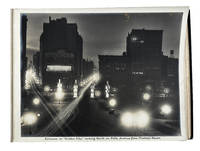
ref. 20272Oblong 4to. 9 original unsigned photographs 352 × 272 mm each with contemporary ink captions mounted on guards. Contemporary black shagreen title gilt on upper cover. Binding somewhat restored. Unrecorded photographic album documenting the spectacular illuminations and decorations of New York City in honor of the visiting British and French War Commissions in May 1917 shortly after the United States entered the First World War. These large-scale civic receptions formed part of a coordinated series of public demonstrations celebrating Allied solidarity and America's entry into the conflict. The photographs present rare night views of the city's wartime festivities including: City Hall Building; Washington Arch views looking south and north; Lafayette Statue Union Square; entrance to the "Golden Way" Fifth Avenue from Madison Square; Court of Honor with the New York Public Library; Pulitzer Monument at Fifth Avenue and 59th Street; Joan of Arc statue on Riverside Drive; and the Soldiers' and Sailors' Monument Riverside Drive. Such events were widely photographed most notably by the Wurts Brothers whose images are preserved in major institutional collections but night views of these illuminations appear to be unrecorded making this set particularly rare. In 1917 New York likewise staged elaborate decorations for other Allied missions including Italian Japanese and Russian delegations at sites such as Battery Park City Hall Park and the Metropolitan Museum of Art underscoring the city's role as a stage for wartime diplomacy and public spectacle. PROVENANCE: René Viviani 1863-1925 his name gilt on upper cover. In April–May 1917 the former French Prime Minister led a high-level French war mission to the United States accompanied by Marshal Joseph Joffre to coordinate war efforts and strengthen Franco-American cooperation following the U.S. entry into the war. [May 1917]. hardcover