2733 risultati
rif. B126502-4Coral Gables/Caracas 1996. 47pp. 12 plates. Lrg. 4to. Wraps. Texts by Sean Gibbons Monica Amor B.E. Myers Coco Fusco Ike Ude in parallel English and Spanish. Coral Gables/Caracas, [1996]. paperback books
rif. 21751Triades, revue anthroposophique française, 39e année, automne 1991. Un fascicule in-8°, broché.
rif. B269658-2Athens Kapon Editions 1996. 10 279 5pp. 361 illus. Lrg. 4to. Wraps. Athens (Kapon Editions), 1996. paperback
rif. B269658-2Athens Kapon Editions 1996. 10 279 5pp. 361 illus. Lrg. 4to. Wraps. Athens (Kapon Editions), 1996. paperback books
196188 pages. Features: Fantastic fold-out two-panel colour cover photo of the four Richardsons of Regina who are world curling champions; Brief article on how Nanaimo Realty paid its realtors to lose weight - and sales increased!; Nice one-page black and white Volkswagen photo ad entitled "Who backs up the Volkswagen?"; Nice one-page colour photo ad for Florida orange juice shows smiling girl wearing white ear muffs; What Winter Does to Canada - and vice versa; What to wear to a Fashion Opening - photo-illustrated article; Duel in the Kitchen (fiction); The Return of the Winter Carnivals; The Simple Joys of Camping in a Snowdrift; Hockey Isn't As Rough as it Used to Be - Part 1 of Jack Adams' "My 43 Years in Hockey" - photo-illustrated article (with large photo of Howie Meeker pounding a limp Canadien); The Second Splendid Discovery of Spices; How to Gain Entree to the Social Pages; Canada's world champions of Curling - Ernie Richardson and the Richardsons of Regina; Population Explosion on the Ski Slopes; Skier's Dream - two-page colour-photo-illustrated brief article with two maps describe how Franz Wilhelmsen and the Garibaldi Olympic Committee seek to have the massive potential of Whistler Mountain developed for the Winter Olympics of 1968; Best and Worst Movies of 1960; Escape to the Sun - Robert Thomas Allen's road trip from California to Florida; Seagrams ad features colour painting of winter carnival by Henry Simpkins; Large colour ad for Apollo Beach waterfront real estate development near Tampa; Canadian Club colour-photo one-page ad features Walter Gonnason falling into an ice crevasse on Mount Victoria Glacier in Alberta; Why color TV isn't here yet - and when it may be; Colour-photo Coke ad on back cover features skating couple; and more. Discrete six-inch clear archival tape repair to bottom left corner of front cover, otherwise unmmarked with average wear. A quality copy of this great vintage issue. Magazine
1962Features: "Peace" gets a friendlier hearing - a new force in US politics is making the word peace respectable again; Old Age at Eleven - a boy's last brave days may help science save other boys from dying of old age - Arthur Balidoy had the rare disease progeria; How to spot the marrying kind - some of Canada's champion bigamists explain their addiction to wife-hunting; Ordeal at Stratford - Chris Plummer and Kate Reid, off stage, show why they're Canada's best on stage; The Pictures most people buy - art's real best sellers - reproductions by 'famous unknown'; A Fond Farewell to Toronto - Blair Fraser; Why Canadians go south in summer - a livelier, cheaper Florida than they'll find in winter; This year in Jerusalem - Mordecai Richler explores his other homeland for the first time; B.C.'s high-flying bucket brigade - Mars water bombers. Light wear. Clean and unmarked. Nice copy. Book
1982Features: Why Inco must be nationalized, by Nick Lowe; Canada - inflation problems; Post office fights to maintain monopoly powers; Whycocomagh reserve natives protest against chemical spraying they say will pollute their water supply; Chaotic search for a solution in Lebanon; Mexico - land of sinking hopes; Ahmed Shah Masoud - the Che Guevara of Afghanistan - feared by the Soviets; Untangling the scandal fo God's Banker, Roberto Calvi; Breaking up Chirac's Paris; Bulent Ecevit on trial; War on firearms in the US; Sheikh Mohammed charged in Florida; Contrad Black and an 'honourable settlement' to a war - Norcen and Hanna Mining; Ratings of Canadian banks lowered by DBRS; People section contains news and colour photos of Susan Jacks, Princess Anne, Trevor Berbick and The Ducklings; Italy wins the World Cup of Soccer - Paolo Rossi; The fight against MS (Multiple Sclerosis); Canadian Jews oppose Lebanon invasion - Bob Kellermann; Home offices gain in popularity due to technology and desire to stay in touch with family - Kent Harding; Cover Story - movie special effects - Tron, Yoda, The Thing, Poltergeist, Wrath of Khan, etc.; Flashback to King Kong's special effects in 1933. Entertainment reviews. Somewhat above-average wear. Book
1960Features: How Toronto's 2,500-man police force really works - a rare behind-the-scenes look by Chief James Mackey; Gisele Mackenzie - My Perilous Plunge into the Big Time; I went to Florida - by Canoe! - Ward Seeley; A Rare Peak at Russian Art - many colour illustrations; A visit with Patricia Joudry and John Steele; How Sir Eric Vansittart Bowater conquered the New World. Middle page loose but present. Half of page nine, most likely an ad, has been removed. Unmarked. Average wear. Book
195372 pages. Features: The Caustic Genius of Sir Thomas Beecham; Christianity - Revival or Decline?; The Polish Art Treasures - colour Karsh photos of ancient and priceless heirlooms rushed from Poland at the outbreak of WWII; A Gift from the Princess - story by Mary E. Grannan - illustrated by Oscar Cahen; A Winter Vacation on a Summer-Cottage Budget - a cheap holiday for a family of four in hot Florida; Two-page colour-illustrated "Christmas Shopping Game" by Peter Whalley; An Excursion into Canada by Charles Dickens - a Maclean's flashback; The Alien - story by W.O. Mitchell - chapter 7. Average wear. External soiling. Coverfold partly open. Center page holding by one staple. Fore-edge opening to back cover which is missing 7"x2" chunk from bottom edge. Book
1917rif. 40711Washington D.C.: Published by the United States Coast and Geodetic Survey 1917. Large folding nautical chart printed on heavy paper stock. Colored. A rare original coastal survey of Charlotte Harbor including Boca Grande and the Charlotte Harbor estuary Florida's second largest estuary and fabled home of mythical pirate Jose Gaspar during Florida's second Spanish period. Established by President Thomas Jefferson in 1807 as the Survey of the Coast the U.S. Coast and Geodetic Survey was the United States' first civilian scientific agency. This agency has followed its mission to survey the U.S. coastline create nautical charts of the coast and help increase maritime safety since its founding and has often played fascinating roles in significant chapters of U.S. history. It served in all theaters of the Civil War in the service of the Union Army and Navy pioneered acoustic exploration in the wake of the sinking of the Titanic and during WWI it worked to detect enemy submarines. In addition this agency worked to survey and produce detailed maps and renderings of the U.S. coast. These nautical survey maps commonly referred to as "T-sheets" provide fascinating insights into the history of the United States coastline which has and will continue to shift. These maps are the most important data source for understanding the physical and ecological characteristics of the U.S. shoreline. The present map is a highly detailed and accurate sea chart of Charlotte Harbor and an important historical view of a developing Florida. Published by the United States Coast and Geodetic Survey unknown
1917rif. 40711Washington D.C.: Published by the United States Coast and Geodetic Survey 1917. Large folding nautical chart printed on heavy paper stock. Colored. A rare original coastal survey of Charlotte Harbor including Boca Grande and the Charlotte Harbor estuary Florida's second largest estuary and fabled home of mythical pirate Jose Gaspar during Florida's second Spanish period. Established by President Thomas Jefferson in 1807 as the Survey of the Coast the U.S. Coast and Geodetic Survey was the United States' first civilian scientific agency. This agency has followed its mission to survey the U.S. coastline create nautical charts of the coast and help increase maritime safety since its founding and has often played fascinating roles in significant chapters of U.S. history. It served in all theaters of the Civil War in the service of the Union Army and Navy pioneered acoustic exploration in the wake of the sinking of the Titanic and during WWI it worked to detect enemy submarines. In addition this agency worked to survey and produce detailed maps and renderings of the U.S. coast. These nautical survey maps commonly referred to as "T-sheets" provide fascinating insights into the history of the United States coastline which has and will continue to shift. These maps are the most important data source for understanding the physical and ecological characteristics of the U.S. shoreline. The present map is a highly detailed and accurate sea chart of Charlotte Harbor and an important historical view of a developing Florida. Published by the United States Coast and Geodetic Survey unknown books
1994rif. 8957Atlas 1994 128 pages 2x37x27cm. 1994. cartonnage editeur avec jaquette. 128 pages. Ce livre présente la Floride comme une destination paradisiaque dans l'imaginaire américain idéale aussi bien pour des courts séjours que pour la retraite. Il décrit ses attraits comme les plages ensoleillées les hébergements variés (hôtels luxueux ou motels) et son climat favorable toute l'année avec une température de l'eau à 25°C en hiver
rif. A9781345408522Hardback. New. hardcover
rif. 0666959382.Ghardcover. Good. Access codes and supplements are not guaranteed with used items. May be an ex-library book. hardcover
rif. 1333138571.Gpaperback. Good. Access codes and supplements are not guaranteed with used items. May be an ex-library book. paperback
Ricardo Fernandez de Gaceo, a Spaniard living in Weston, Florida, is one of the world's leading suppliers of fake lithographs, etchings, and woodcuts. This report explains how to identify them. (If you order through ABE, I will reduce shipping charge to zero.)
1974rif. x-0837170508Praeger Pub Text 1974. Hardcover. New. 145 pages. 8.70x5.80x0.60 inches. Praeger Pub Text hardcover
rif. ria9780813814186_inpHardback. New. New Book; Fast Shipping from UK; Not signed; Not First Edition; Lameness is one of the most costly diseases affecting cattle and cases are increasing as dairy cows spend more time confined to concrete instead of grassy pasture. The economic impact of lameness is significant. Preventive claw care is hardcover
rif. ria9781836994343_inpPaperback / softback. New. New Book; Fast Shipping from UK; Not signed; Not First Edition; This book deals with the equine dermatological problems that a clinician would see in practice. Illustrated in color throughout it covers history signalment identification of primary vs secondary lesions and distribution of lesions paperback
2026rif. x-1836994346Cabi Publishing 2026. Paperback. New. 152 pages. 7.44x2.00x9.69 inches. Cabi Publishing paperback
rif. ria9781786395085_inpHardback. New. New Book; Fast Shipping from UK; Not signed; Not First Edition; This book deals with the equine dermatological problems that a clinician would see in practice. Illustrated in color throughout it covers history signalment identification of primary vs secondary lesions and distribution of lesions hardcover
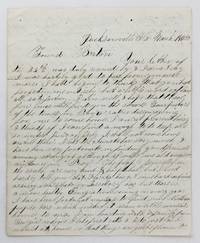
1858rif. 4106Jacksonville Fl: March 15 1858. Very good plus. 4pp. on a single folded sheet. Old mailing folds. An informative dispatch from antebellum Florida from A.C Scranton to "Friend Barton" in 1858. In his letter Scranton reports that despite some problems he is enjoying southern people and general life in Florida: "The people generally in the south are very kind & hospitibal but I need hardly to tell you that Florida has got some hard times as every new state or Territory has but thare is a more healthy Emigration coming in every year I have been fortunate anough to find some Northern people here which makes it seam a little more like home to me. I am boarding with a family from Georgia whome I like first rate & I do just as I would at home so that things are quite pleasant here considering I am amongst strangers." He then provides information on Jacksonville and then two disasters that hit his adopted hometown: "Jacksonville is the largest place in Florida & had at one time about 3000 inhabitants it is not as large as it was once some three years ago it was visited by a very destructive fire & burned nearly half of the town. Last summer there was some kind of Fever here that almost prostrated the place some called it the Yellow Fever & some the African but none could tell for certin.about a hundred & fifteen or twenty that died here in 3 months & a grate many left the town nearly all the stors wer closed not a sound of a hammer was to be heard. When cold weather came it stoped the sickness and it seams quite lively now. It has been for many years a grate resort in the winter season for invaleds but on account of the sickness last summer thare are but few this winter if it continus healthy this summer the place will revive but if not it will kill it entirely." Scranton also discusses the transportation system that served Jacksonville and the recent winding down of the Seminole Wars: "It is situated on the Johns River about 23 miles from the mouth and is connected with Charleston & Savana by a regular line of steamers that runs up the river a hundred miles to a place called Platka whare Emigrants land & then travel by land to the interior to settle the country thare is a railroad building from this place to Tallahasse the capital of the state a distance of a hundred & eighty miles which wen completed will be a little help to this place. There is also another in progress from Fernandina a new town that lays in the North East corner of the state to a place called cedar keys on the gulf side whare they intend to carry the US mail direct from New Orleans to New York insted of going round by Key west & will shorten the time considerable. Florida has cost Uncle Sam a large some of money.the government.will make a treaty with them & send them into the Indian Territory & then close the Indian war in Florida." Almost all of the Seminoles remaining in Florida relocated to Indian Territory in the year this letter was written. A wonderfully-detailed firsthand account of Jacksonville and its development and challenges during the late 1850s. A printed transcription accompanies the letter. March 15 unknown
1858rif. 4106Jacksonville Fl: March 15 1858. Very good plus. 4pp. on a single folded sheet. Old mailing folds. An informative dispatch from antebellum Florida from A.C Scranton to "Friend Barton" in 1858. In his letter Scranton reports that despite some problems he is enjoying southern people and general life in Florida: "The people generally in the south are very kind & hospitibal but I need hardly to tell you that Florida has got some hard times as every new state or Territory has but thare is a more healthy Emigration coming in every year I have been fortunate anough to find some Northern people here which makes it seam a little more like home to me. I am boarding with a family from Georgia whome I like first rate & I do just as I would at home so that things are quite pleasant here considering I am amongst strangers." He then provides information on Jacksonville and then two disasters that hit his adopted hometown: "Jacksonville is the largest place in Florida & had at one time about 3000 inhabitants it is not as large as it was once some three years ago it was visited by a very destructive fire & burned nearly half of the town. Last summer there was some kind of Fever here that almost prostrated the place some called it the Yellow Fever & some the African but none could tell for certin.about a hundred & fifteen or twenty that died here in 3 months & a grate many left the town nearly all the stors wer closed not a sound of a hammer was to be heard. When cold weather came it stoped the sickness and it seams quite lively now. It has been for many years a grate resort in the winter season for invaleds but on account of the sickness last summer thare are but few this winter if it continus healthy this summer the place will revive but if not it will kill it entirely." Scranton also discusses the transportation system that served Jacksonville and the recent winding down of the Seminole Wars: "It is situated on the Johns River about 23 miles from the mouth and is connected with Charleston & Savana by a regular line of steamers that runs up the river a hundred miles to a place called Platka whare Emigrants land & then travel by land to the interior to settle the country thare is a railroad building from this place to Tallahasse the capital of the state a distance of a hundred & eighty miles which wen completed will be a little help to this place. There is also another in progress from Fernandina a new town that lays in the North East corner of the state to a place called cedar keys on the gulf side whare they intend to carry the US mail direct from New Orleans to New York insted of going round by Key west & will shorten the time considerable. Florida has cost Uncle Sam a large some of money.the government.will make a treaty with them & send them into the Indian Territory & then close the Indian war in Florida." Almost all of the Seminoles remaining in Florida relocated to Indian Territory in the year this letter was written. A wonderfully-detailed firsthand account of Jacksonville and its development and challenges during the late 1850s. A printed transcription accompanies the letter. March 15 unknown books
rif. 50402bd2Wake-Brook House 1976. First Edition Stated. Signed and inscribed by Aileen B. Chapman Bicentennial ChairmanOctavo green leatherette hardcover silver letters 144 pp. Very Good in a Very Good mylar protected dust jacket with edgewear that includes light chipping. From dust jacket: This is an important book -- and a valuable one. Probably there has never been another book quite like it. It is the history of Florida schools told from a hundred different viewpoints by the people most intimately involved in educational development. Teachers who devoted their lives to the instruction of youth possess credentials which qualify them to serve as experts on any panel considering school problems or planning school policies. They richly deserve to be listened to and to have their advice taken seriously. In this book however they are not sitting in solemn judgment nor trying to dictate what should be done. They simply report what happened to the schools in which they taught and what happened to the students. But between the lines of these brief reports there lies a wealth of priceless material which should be thoughtfully considered by everyone interested in our schools. We hasten to add however lest we frighten off any readers who may just wish to be informed or entertained that these reports make delightful reading and are often amusing. Anyone who ever attended school and of course that is all of us can identify with the characters and situations described here. Perhaps those who attended only the most modern institutions will react with horror at the idea of walking miles to a rural schoolhouse with outside privies. Perhaps those who received their early education in rural schools will recall those days with nostalgia. But whatever the reaction everyone can read these reports with sympathy and understanding. hardcover books
rif. 50402bdWake-Brook House 1976. First Edition Stated. Octavo green leatherette hardcover silver letters 144 pp. Fine in a Very Good mylar protected dust jacket with edgewear that includes light chipping. From dust jacket: This is an important book -- and a valuable one. Probably there has never been another book quite like it. It is the history of Florida schools told from a hundred different viewpoints by the people most intimately involved in educational development. Teachers who devoted their lives to the instruction of youth possess credentials which qualify them to serve as experts on any panel considering school problems or planning school policies. They richly deserve to be listened to and to have their advice taken seriously. In this book however they are not sitting in solemn judgment nor trying to dictate what should be done. They simply report what happened to the schools in which they taught and what happened to the students. But between the lines of these brief reports there lies a wealth of priceless material which should be thoughtfully considered by everyone interested in our schools. We hasten to add however lest we frighten off any readers who may just wish to be informed or entertained that these reports make delightful reading and are often amusing. Anyone who ever attended school and of course that is all of us can identify with the characters and situations described here. Perhaps those who attended only the most modern institutions will react with horror at the idea of walking miles to a rural schoolhouse with outside privies. Perhaps those who received their early education in rural schools will recall those days with nostalgia. But whatever the reaction everyone can read these reports with sympathy and understanding. hardcover books