Frances Chaput Waksler Associate Professor of Sociology, Wheelock College, Boston, USA (Author)Biblio.com

10 131 résultats
1996réf. x-0750704535Falmer Pr 1996. Hardcover. New. 1st edition. 222 pages. 9.75x6.50x0.75 inches. Falmer Pr hardcover
1997réf. x-0415095905Routledge 1997. Hardcover. New. 1st edition. 332 pages. 9.75x6.75x1.25 inches. Routledge hardcover
1972réf. 5133LUTHER 1972. 1. softcover. LUTHER paperback
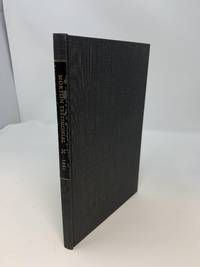
1861réf. 83848Boston: George C. Rand & Avery 1861. First Edition. Hardcover. Very Good. The original 1861 publication of the testimonial of "The Medical Profession of Philadelphia New York and Boston rebound in black cloth with gilt-lettered and slightly chipped spine label 56pp. Text clean pages evenly toned. The last pages are in effect forms requesting monies for Dr. Morton and his family. William T. G. Morton 1819-1868 was a surgeon dentist in Hartford Connecticut who claimed to be the first person to perform surgical anethesia on a patient's tumor in 1846. "Morton immediately patented ether hoping to retain its use exclusively for himself. Later he made repeated appeals to the American Congress for financial recompense for his 'invention'. Morton's instructor the chemist and geologist Charles Thomas Jackson said it was he who had made the discovery and had suggested that Morton should try it out. Horace Wells the dentist from Hartford Connecticut put forward his well-substantiated claim to have produced anaesthesia two years earlier with nitrous oxide. It is sad that such an epoch-making event should have been followed by 20 years of acrimony vituperation and litigation between three contestants each claiming to have originated anaesthesia." Journal of the Royal Society of Medicine May 2020 pp 226-227. George C. Rand & Avery hardcover
1923Abundant black and white illustrations and reproductions of photos. Features: Black Cat Luck - Story related by John McAgee, a Texas cowman; The Fete of "St. Muslin" - Annual festival in Tarare, France to honour M. Antoine Simonet, inventor of Muslin which is made in local mills - article with photos; Exploring in Central Barzil - Part III - A small English expedition explores the Amazon's forests and studies the native peoples; The Signalman Baboon - Photo-illustrated article about "Jack", a baboon who assists his crippled master, James Edwin Wide, in operating railway signals and other important tasks at Uitenhage, near Port Elizabeth, South Africa; Among the Bohemians - Photo-illustrated article on the peoples of the little-known young Republic of Czecho-Slovakia; The Three Angleteers - Part II - The continuing adventures of three bored Englishmen who travelled in Europe; Msimba Konguo's Curse - A curse is put on an Irish trader by a native headman in Nyassaland; Marooned! - A strange and romantic story of the South Seas, reminiscent of the old Island days when unscrupulous traders did much as they pleased; Treed By a Bison - Many sportsmen consider the Indian bison a more dangerous opponent than the tiger; Beating Our Way - Two young men surpass a hobo at his own game of getting free train rides; A Hundred Dollars a Day - Salmon Fishing Off Vancouver Island - long photo-illustrated article by Charles Greenwood; The Watching Eyes - A tale from the South African constabulary of Mangwere; My Volcano Trip - Climbing La Nevada, an active volcano near Toluca, Mexico; A Bunch of Keys - A traveller's story of an odd little adventure in Boston, MA in 1911; and more. Clean and unmarked with light wear. A quality copy of this excellent vintage issue. Book
1911Features: The House in the Woods - the author made a 1908 car journey along a large portion of the Trans-Siberian Railway; Through the Wilds of Persia - by Major P.M. Sykes; A Game of Chess - a remarkable story from South Dakota about how a young chess enthusiast was compelled to play a game, with his own life for the stakes; Among the Gaddis - Nomad shepherds of the Central Himalayans; Our Trek Beyond the Zambesi - Part II of a story by Mrs. Fred Maturin; A Holiday in Japan - by Mrs. Ellen Beadnell (lovely photos); Across Unknown Labrador, The Land Where Hubbard Died - H. Hesketh Prichard relates how he attempted to do what no white man had ever done before, to cross this desolate wilderness from the Atlantic to the George River - great photos (part I); The Bandits of the Argentine - the 'Nort Americanos'; The Mysterious Senoussiland - part II of a Saharan adventure; The King of the Sticks - how Connie Chambers of Boston, a solitary white prospector, constituted himself as monarch of a tribe of Alaskan Indians, cleverly turning the tables on a policeman who was sent to arrest him; Lost in an underground lake - the appalling adventure which befell three prominent citizens of Joplin, Missouri at the Hero zinc mine in the spring of 1908; "Baching"; A Mexican Elopement; and more. Fascinating two-page illustrated stock offering by the American Automobile Manufacturing Company of Louisville, Kentucky. Nice Vose Piano advertisement on back cover. Great vintage Budweiser advertisement inside back cover. Lower two inches of front cover open at spine. Average wear. Magazine
1783réf. 22278A Philadelphie (Paris), s.é., 1783. Un vol. au format in-12 (172 x 108 mm) de 192 pp. et 1 f. bl. Reliure de l'époque de plein veau glacé et moucheté fauve, double filet à froid porté sur les plats, dos lisse orné de doubles filets dorés, double caisson d'encadrement doré, pièces de titre de maroquin acajou, titre doré, jeu de petits filets obliques gras et maigres dorés sur les coupes, tranches mouchetées.
1970réf. 234661970. Urban transit photo archive depicting MBTA trolley PCC and commuter rail operations across Greater Boston during the agency's first decade of system consolidation and modernization 1970-1972 shortly after the Massachusetts Bay Transportation Authority absorbed many aging lines and inherited rolling stock from earlier private and municipal systems. Several captions identify ex Dallas Transit PCC cars operating at Mattapan Station documenting the nationwide postwar transfer of surplus streetcars into Boston service as American transit agencies abandoned street railway systems in cities such as Dallas Cleveland and Cincinnati during the 1950s and 1960s. Photo archive of 25 chromogenic color snapshot photographs each 3.5 x 3.5 inches Boston Brookline Cambridge Newton Watertown and surrounding Massachusetts locations 1970-1972. Highly legible captions preserve exact locations car numbers transfer origins and operational terminology valuable for transit history urban planning industrial design and postwar metropolitan infrastructure research. Handwritten verso captions identify specific equipment routes and locations including "Picture window PCC car Riverside terminal Newton Mass." "All electric 3197 ex Dallas at Mattapan Station Boston Mass 10/71" "Trackless trolleys at N. Cambridge carhouse" "MBTA work car at Lechmere yard" "Boston & Maine RDC cars at North Station" and "Trolley coach at Watertown Sq." Orange-and-cream PCC streetcars appear at yard tracks terminal loops maintenance areas and curbside boarding points beneath dense trolley wire networks while interior views show fluorescent-lit passenger compartments with transverse seating metal grab rails and wide picture windows characteristic of postwar PCC design. Additional scenes record Commonwealth Avenue service through Brookline Cleveland Circle operations work equipment at Watertown carhouse all-electric consists at Arborway and Mattapan and Boston & Maine RDC commuter rail equipment standing beside elevated platforms at North Station. Riverside Terminal in Newton appears repeatedly showing the Green Line's western extension over the former Boston and Albany Highland Branch a commuter rail corridor converted to rapid trolley service in 1959 to relieve growing automobile congestion along Route 9. North Station scenes place PCC and RDC equipment within the same transportation network recording the coexistence of street railway infrastructure and regional commuter rail service immediately before the MBTA's major 1970s reconstruction campaigns reshaped much of the system. The archive captures the MBTA immediately before major service reductions and infrastructure rebuilding altered many of the locations shown including the eventual closure of Arborway streetcar service and the disappearance of several surviving PCC fleets from daily operation. Light surface wear and occasional minor fading; captions fully readable throughout. Overall in very good condition. unknown
1970réf. 234661970. Urban transit photo archive depicting MBTA trolley PCC and commuter rail operations across Greater Boston during the agency's first decade of system consolidation and modernization 1970-1972 shortly after the Massachusetts Bay Transportation Authority absorbed many aging lines and inherited rolling stock from earlier private and municipal systems. Several captions identify ex Dallas Transit PCC cars operating at Mattapan Station documenting the nationwide postwar transfer of surplus streetcars into Boston service as American transit agencies abandoned street railway systems in cities such as Dallas Cleveland and Cincinnati during the 1950s and 1960s. Photo archive of 25 chromogenic color snapshot photographs each 3.5 x 3.5 inches Boston Brookline Cambridge Newton Watertown and surrounding Massachusetts locations 1970-1972. Highly legible captions preserve exact locations car numbers transfer origins and operational terminology valuable for transit history urban planning industrial design and postwar metropolitan infrastructure research. Handwritten verso captions identify specific equipment routes and locations including "Picture window PCC car Riverside terminal Newton Mass." "All electric 3197 ex Dallas at Mattapan Station Boston Mass 10/71" "Trackless trolleys at N. Cambridge carhouse" "MBTA work car at Lechmere yard" "Boston & Maine RDC cars at North Station" and "Trolley coach at Watertown Sq." Orange-and-cream PCC streetcars appear at yard tracks terminal loops maintenance areas and curbside boarding points beneath dense trolley wire networks while interior views show fluorescent-lit passenger compartments with transverse seating metal grab rails and wide picture windows characteristic of postwar PCC design. Additional scenes record Commonwealth Avenue service through Brookline Cleveland Circle operations work equipment at Watertown carhouse all-electric consists at Arborway and Mattapan and Boston & Maine RDC commuter rail equipment standing beside elevated platforms at North Station. Riverside Terminal in Newton appears repeatedly showing the Green Line's western extension over the former Boston and Albany Highland Branch a commuter rail corridor converted to rapid trolley service in 1959 to relieve growing automobile congestion along Route 9. North Station scenes place PCC and RDC equipment within the same transportation network recording the coexistence of street railway infrastructure and regional commuter rail service immediately before the MBTA's major 1970s reconstruction campaigns reshaped much of the system. The archive captures the MBTA immediately before major service reductions and infrastructure rebuilding altered many of the locations shown including the eventual closure of Arborway streetcar service and the disappearance of several surviving PCC fleets from daily operation. Light surface wear and occasional minor fading; captions fully readable throughout. Overall in very good condition. unknown books
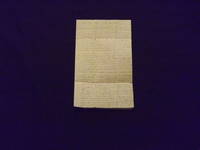
réf. B145214-6Boston 1994. 6pp. single folding sheet printed in blue on yellow card stock. Self-wraps. The catalogue of Ellen Gallaghers first solo exhibition with a densely written meditation by Mario Diacono Crypto-graphing the History-sized Body. Seven works on canvas were shown all dating from 1994. Boston, 1994. paperback
réf. B145214-6Boston 1994. 6pp. single folding sheet printed in blue on yellow card stock. Self-wraps. The catalogue of Ellen Gallaghers first solo exhibition with a densely written meditation by Mario Diacono Crypto-graphing the History-sized Body. Seven works on canvas were shown all dating from 1994. Boston, 1994. paperback books
1913réf. 225021913. Boston University School of Law class photograph 1913 documents women's participation in legal education at a time when most American law schools remained overwhelmingly male. The photograph supports research into women's higher education the legal profession Progressive Era professional training and Boston University's early coeducational law program. The six women pictured among the graduating class provide visual evidence of female legal study in Massachusetts three decades after Boston University graduate Lelia J. Robinson became the first woman admitted to the Massachusetts bar. Silver gelatin class photograph 1913 imperial format image and mount measuring approximately 17 x 19 inches titled in manuscript "Boston University School of Law 1913" with photographer's mark "J.A. Gammons" in the lower right. The image contains ninety-two individual oval student portraits arranged around a central group of five faculty members. The six women appear in the lower central portion of the composition wearing formal dress with pinned hair and composed expressions visually distinct within a large male-majority professional cohort. The photograph captures a specific graduating class while also documenting the gradual entrance of women into legal training before women's suffrage and before broad professional acceptance of women lawyers. Mounted on heavy brown cardstock with minor rubbing to extremities and a small chip to the lower right mount corner; image toned consistent with age still bright and sharp; overall very good condition. A substantial visual record of women's advancement in American legal education and early twentieth-century professional life. unknown
1913réf. 225021913. Boston University School of Law class photograph 1913 documents women's participation in legal education at a time when most American law schools remained overwhelmingly male. The photograph supports research into women's higher education the legal profession Progressive Era professional training and Boston University's early coeducational law program. The six women pictured among the graduating class provide visual evidence of female legal study in Massachusetts three decades after Boston University graduate Lelia J. Robinson became the first woman admitted to the Massachusetts bar. Silver gelatin class photograph 1913 imperial format image and mount measuring approximately 17 x 19 inches titled in manuscript "Boston University School of Law 1913" with photographer's mark "J.A. Gammons" in the lower right. The image contains ninety-two individual oval student portraits arranged around a central group of five faculty members. The six women appear in the lower central portion of the composition wearing formal dress with pinned hair and composed expressions visually distinct within a large male-majority professional cohort. The photograph captures a specific graduating class while also documenting the gradual entrance of women into legal training before women's suffrage and before broad professional acceptance of women lawyers. Mounted on heavy brown cardstock with minor rubbing to extremities and a small chip to the lower right mount corner; image toned consistent with age still bright and sharp; overall very good condition. A substantial visual record of women's advancement in American legal education and early twentieth-century professional life. unknown books
1821réf. 40754Boston 1821. Broadsheet oblong 8" x 10." Seal and blue ribbon intact in the left blank margin. A variety of type fonts and sizes completed in ink manuscript. Engraving of Screaming Eagle with shield "E Pluribus Unum" banner and arrows. Signed in ink by H. Dearborn as President and Thaddeus Page as Recording Secretary. The verso records that on 3 August 1826 Bradford transferred this Certificate to A Republican Institution. The verso prints the 16th Article of the By-Laws permitting transfers of certificates among members. Signed twice by Bradford. Very Good plus. William B. Bradford was a Boston wholesale and retail grocer. The Boston Public Library's Archives contain some of his papers. The "Republican Institution was founded in 1819 'as a body politic and corporate forever for the purpose of procuring a building and keeping it in repair with suitable apartments for a reading room library and the meeting of the said society in the town of Boston Massachusetts.' Its intent was to provide a forum for political education and discussion of best means of promoting national welfare. Measures approximately 10" x 8 1/4". Affixed at left is the large corporate seal which indicated that the corporation was incorporated in 1819. Attached to and extending below the paper seal is a blue ribbon" online 'Republicanism' web site description of a specimen Certificate and description of the Institution 'Historical Pillars of the Republican Party'. Henry Dearborn of Boston had been a veteran of the Revolutionary War a Federalist Congressman and Secretary of War. He founded the Institution which was chartered in February 1819. Its purpose was to promote political thought and discussion. Seeking to purchase a building the Institution's organizers resolved to sell four hundred shares in the Institution for $25 each. A person could purchase up to four shares. unknown
1821réf. 40754Boston 1821. Broadsheet oblong 8" x 10." Seal and blue ribbon intact in the left blank margin. A variety of type fonts and sizes completed in ink manuscript. Engraving of Screaming Eagle with shield "E Pluribus Unum" banner and arrows. Signed in ink by H. Dearborn as President and Thaddeus Page as Recording Secretary. The verso records that on 3 August 1826 Bradford transferred this Certificate to A Republican Institution. The verso prints the 16th Article of the By-Laws permitting transfers of certificates among members. Signed twice by Bradford. Very Good plus. William B. Bradford was a Boston wholesale and retail grocer. The Boston Public Library's Archives contain some of his papers. The "Republican Institution was founded in 1819 'as a body politic and corporate forever for the purpose of procuring a building and keeping it in repair with suitable apartments for a reading room library and the meeting of the said society in the town of Boston Massachusetts.' Its intent was to provide a forum for political education and discussion of best means of promoting national welfare. Measures approximately 10" x 8 1/4". Affixed at left is the large corporate seal which indicated that the corporation was incorporated in 1819. Attached to and extending below the paper seal is a blue ribbon" online 'Republicanism' web site description of a specimen Certificate and description of the Institution 'Historical Pillars of the Republican Party'. Henry Dearborn of Boston had been a veteran of the Revolutionary War a Federalist Congressman and Secretary of War. He founded the Institution which was chartered in February 1819. Its purpose was to promote political thought and discussion. Seeking to purchase a building the Institution's organizers resolved to sell four hundred shares in the Institution for $25 each. A person could purchase up to four shares. unknown books
1999réf. 1-0789302616Universe Pub 1999. Hardcover. New. 79 pages. 10.00x9.00x0.75 inches. Universe Pub hardcover
1885Very Good Turkish, Ottoman (1500-1928) Original cloth bdg. 4to. (26 x 19 cm). In Ottoman script (Old Turkish with Arabic letters). [4], 1422, [2] p. Text block separated in two columns. Fading title gilt lettering on spine, otherwise a very good copy. Scarce bible in Ottoman Turkish, printed by one of the most famous Armenian printers and published by the English & American Bible Societies in Turkey during the second half of the 19th century. Arshag Hagop Boyajian, (1837-1914), was an Ottoman Armenian printer and a leader of the Armenian Protestant community in the Ottoman Empire. He was born in Diyarbakir and educated at Robert College in Istanbul. During the Crimean War (1853-1856), he served as a translator at the headquarters of the British army in Üsküdar (Scutari), on Istanbul's Asian shore. After a short stay in the United States to perfect his knowledge of modern printing techniques, he established a... (Source: Brill).
1805réf. 822291805. THE BOSTON WEEKLY MAGAZINE; Devoted to Morality Literature Biography History the Fine Arts Agriculture &c. &c. Volume II -- 1803-4 & III -- 1804-5. Boston: Published by Gilbert and Dean at their Printing-Office No. 78 State-Street 1805. Two complete years of this weekly from 29 October 1803 through 19 October 1805 bound together: Volume II no. 1-52; Volume III no. 1-52. Folio. Pp. vi208;vi208. Text is printed in triple columns. Each volume is preceded by an index arranged according to the style of the piece essay history useful poetry etc. There are two title-pages for Volume III; one is bound at the beginning of Volume II and the other is in its proper place. The title-page for Volume II is lacking. Paper quality varies throughout. Text leaves are age-browned and occasionally lightly soiled and/or foxed mostly light to moderate but in a few instances it is heavy with a few dog-eared corners and occasional edgewear. Volume II no. 41 p. 163-4 has some loss at the bottom fore-corner resulting in a loss of text to the last few lines in one column. Bookblock is splitting with remnants of the backstrip; but the boards are missing. The June 16 1804 issue third page p.135 second column. "Domestick" mentions that Captain Lewis was in Pittsburg "accompanied by twenty Indian chiefs." There are a couple of tohter references to the L&C expedition. unknown
1805réf. 822291805. THE BOSTON WEEKLY MAGAZINE; Devoted to Morality Literature Biography History the Fine Arts Agriculture &c. &c. Volume II -- 1803-4 & III -- 1804-5. Boston: Published by Gilbert and Dean at their Printing-Office No. 78 State-Street 1805. Two complete years of this weekly from 29 October 1803 through 19 October 1805 bound together: Volume II no. 1-52; Volume III no. 1-52. Folio. Pp. vi208;vi208. Text is printed in triple columns. Each volume is preceded by an index arranged according to the style of the piece essay history useful poetry etc. There are two title-pages for Volume III; one is bound at the beginning of Volume II and the other is in its proper place. The title-page for Volume II is lacking. Paper quality varies throughout. Text leaves are age-browned and occasionally lightly soiled and/or foxed mostly light to moderate but in a few instances it is heavy with a few dog-eared corners and occasional edgewear. Volume II no. 41 p. 163-4 has some loss at the bottom fore-corner resulting in a loss of text to the last few lines in one column. Bookblock is splitting with remnants of the backstrip; but the boards are missing. The June 16 1804 issue third page p.135 second column. "Domestick" mentions that Captain Lewis was in Pittsburg "accompanied by twenty Indian chiefs." There are a couple of tohter references to the L&C expedition. unknown books
réf. Z1-C-077-01142General Books LLC. Used - Like New. Used - Like New. Ships from UK in 48 hours or less usually same day.Your purchase helps support Sri Lankan Children's Charity 'The Rainbow Centre'. 100% money back guarantee. We are a world class secondhand bookstore based in Hertfordshire United Kingdom and specialize in high quality textbooks across an enormous variety of subjects. We aim to provide a vast range of textbooks rare and collectible books at a great price. Our donations to The Rainbow Centre have helped provide an education and a safe haven to hundreds of children who live in appalling conditions. We provide a 100% money back guarantee and are dedicated to providing our customers with the highest standards of service in the bookselling industry. General Books LLC unknown
1940Very Good Turkish, Ottoman (1500-1928) Original brown half-leather bdg. with a clip. "Poesie" title on black cloth front cover. Cr. 8vo. (20 x 14 cm). In Ottoman script (Old Turkish with Arabic script). [2], 153, [3] p. Completely handwritten with numerous pages. All edges gilt. This unique manuscript is probably an early sketch written in Ottoman script to be used later for its first edition published by Maarif Vekâleti [i.e. Turkish Ministry of Education] in 1947 in modern Turkish with Latin letters. The Mysterious Universe is a popular science book by the British astrophysicist Sir James Jeans, first published in 1930 by the Cambridge University Press. In the United States, it was published by Macmillan. The book is an expanded version of the Red Lecture delivered at the University of Cambridge in 1930. It begins with a full-page citation of the famous passage in Plato's Republic, Book VII, laying out the allegory of the cave. The book made frequent reference to the quantum theory of radiation, initiated by Max Planck in 1900, to Albert Einstein's general relativity, and to the new theories of quantum mechanics by Heisenberg and Schrödinger, of whose philosophical perplexities the author seemed well aware. The book was denounced by the Cambridge philosopher Ludwig Wittgenstein, because "Jeans has written a book called The Mysterious Universe and I loathe it and call it misleading. Take the title... I might say that the title The Mysterious Universe includes a kind of idol worship, the idol being Science and the Scientist." A second edition appeared in 1931. The book was reprinted 15 times between 1930 and 1938 and again in September 2007. Salih Murat Uzdilek (1891-1967) was the first to translate this book into Turkish, printed in 1947 under the title "Esrarli kâinât". Although there's no sign in this manuscript, probably the author is Uzdilek. He was a Professor of Physics at Istanbul Technical University, graduated as a naval officer in 1908. It was his father Mehmed Sefik Bey, who as a mathematics teacher introduced him to the study of the subject. Salih Murat developed an interest in the history of mathematics through readings of books by F. Cajori and D. E. Smith. Uzdilek studied engineering in London prior to the First World War, where he was invited to present a communication on the "Introduction of logarithms into Turkey" at the Napier Tercentenary organized by The Royal Society of Edinburgh, 25-27 July 1914. The paper published in the Napier Tercentenary Memorial Volume (1915) was based on the research by Salih Zeki Bey, historian of science and Rector of Istanbul University between 1913 and 1917, published in his Kamus-i Riyaziyat (Encyclopaedia of Mathematics 1898). His findings indicate that Yirmisekiz Mehmet Çelebi, the Sultan's envoy to France, had been presented an astronomical text which included logarithms by the astronomer Jacques Cassini during his visit to the Paris Observatory in 1714. It was this collection that led to the introduction of logarithms into Turkey. Kalfazade Ismail Efendi, a timekeeper, and mathematician compiled an introduction to logarithms for his translation of the astronomical tables of J. Cassini in 1772, which is considered the first work on logarithms, into Turkish. Gelenbevi Ismail Efendi, renowned for his works in mathematics and logic, completed his Logaritma Serhi (Commentary on Logarithms) in 1787. After his return to Istanbul, Salih Murat Uzdilek was invited by the Austrian Dean of the School of Engineering, Prof. Philipp Forchheimer, to give physics lessons at the school. Prof. Uzdilek pursued his interest in the history of mathematics and physics throughout his long career. He was also an active researcher in the physics of sound and music and contributed to the contemporary tonal system of Turkish music. In his later years, Prof. Uzdilek was invited to lecture at the 400th anniversary of Galileo Galilei.
1796réf. 273701796 Human Nature 1st US ed Scottish Thomas Boston Presbyterian Calvinism Exeter Thomas Boston was a late-17th-century Scottish churchman who wrote several books on Presbyterianism Calvinism and Protestant theology. One of Boston's books was 'Human Nature in its Fourfold States'. In this work Boston describes the various states of humanity including innocence sinfulness and earthly desires misery forgiveness through Christ and death and afterlife. This 1796 edition was the first American edition published in Exeter New Hampshire. Item number: #27370 Price: $499 BOSTON Thomas Human nature in its fourfold state . In several practical discourses Exeter N.H.: by H. Ranlet for Thomas and Andrews 1796. First edition. Details: <!-- if !supportLists-->· <!--endif-->Collation: Complete with all pages <!-- if !supportLists-->o <!--endif-->xvi 1 18-386 i.e. 384 <!-- if !supportLists-->· <!--endif-->References: Sabin 4710; Evans 30104 <!-- if !supportLists-->· <!--endif-->Provenance: Handwritten – Polly Patridge Ward <!-- if !supportLists-->· <!--endif-->Language: English <!-- if !supportLists-->· <!--endif-->Binding: Leather; tight and secure <!-- if !supportLists-->· <!--endif-->Size: ~6.5in X 4in 16.5cm x 10.5cm <!-- if !supportLists-->· <!--endif-->Quite rare Our Guarantee: Very Fast. Very Safe. Free Shipping Worldwide. Customer satisfaction is our priority! Notify us with 7 days of receiving and we will offer a full refund without reservation! Photos available upon request. H. Ranlet, for Thomas and Andrews hardcover
1890réf. 9319Boston: Robinson Engraving Co 1890. Menu in painted wooden boards bound with cord 20 x 15.2 cm. 10 gold-printed leaves each a die-cut circle printed versos only. An elaborate program of events for the eleventh annual meeting of the Hotel Men's Mutual Benefit Association held in May 1890 at Boston's great hotels the Parker House Hotel Vendome and American House. The H.M.M.B.A. was founded in 1879 to offer hotel workers insurance plans; it was later to become the Bankers Life and Casualty Company. The program and menu for the three-day meeting includes the meeting itself music speakers presentations carriage excursions etc. The painted wooden boards hold die-cut 'booklets' dedicated to the Convention headquartered at the Parker House the Eleventh Annual Banquet held at the American House and the Reception held at the Hotel Vendome. The boards are scored and textured painted in silver with gold spots and hold a hand-lettered piece of 'vellum'. Some rubbing to edges of boards otherwise very good. Robinson Engraving Co hardcover
1890réf. 9319Boston: Robinson Engraving Co 1890. Menu in painted wooden boards bound with cord 20 x 15.2 cm. 10 gold-printed leaves each a die-cut circle printed versos only. An elaborate program of events for the eleventh annual meeting of the Hotel Men's Mutual Benefit Association held in May 1890 at Boston's great hotels the Parker House Hotel Vendome and American House. The H.M.M.B.A. was founded in 1879 to offer hotel workers insurance plans; it was later to become the Bankers Life and Casualty Company. The program and menu for the three-day meeting includes the meeting itself music speakers presentations carriage excursions etc. The painted wooden boards hold die-cut 'booklets' dedicated to the Convention headquartered at the Parker House the Eleventh Annual Banquet held at the American House and the Reception held at the Hotel Vendome. The boards are scored and textured painted in silver with gold spots and hold a hand-lettered piece of 'vellum'. Some rubbing to edges of boards otherwise very good. Robinson Engraving Co hardcover books
1825réf. 102273Letter sheets 8" x 12" 3 pages plus integral address leaf. Extensive tape repairs to folds mostly archival tape but some regular tape too which has caused a little browning in areas long tear obscures writers signature but partially visible creased normal aging and browning remnant of wax seal; otherwise good or better. The letter is to Boston Mayor Josiah Quincy 1772-1864 a future head of Harvard and served eight years in Congress. It appears after becoming Boston's mayor he sent delegates to New York and Philadelphia to study fire fighting techniques in those cities. The author of this letter read about this mission and sent Mayor Quincy a lengthy letter on the subject. The probable author is Solon Robinson 1803-1880 although his signature is partially obscured by a tear. However on the back page a smudged docketed note identifies him as Solon Robertson or Robinson. Robinson was a writer and would become a well known Indiana pioneer. In any case the author would suggest a far more modern system for fighting fires than the existing practice of engines carrying water to fires which would become useless when the water ran out. he proposed putting lead aqueduct pipes "laid deep underground and leading to every part of the city." While her does not use the term fire hydrants the water would be accessed from locked iron covers that would serve that function. ABN.