- Salabert Francis,Darewski H. -Livre Rare Book

10 218 résultats
1910réf. 26981Salabert Edouard 1910
1926réf. 27392Margueritat 1926 approx.
1919réf. 29103Salabert 1919
1926réf. 78375Margueritat 1926 approx.
1923réf. 27480Eschig Max 1923
1907réf. 42817Boston: Shaub Bros 1907. 1st edition. Original blank glossy wrappers small 8vo. 69 pages 20 cm. In Yiddish. Poetry. Early Boston Zionist imprint. Includes frontis photo and illustrated title page. Title translates to "Memories of Y. H. Adler." Yisrael Yehuda Adler 1870-1948 was a Hebrew teacher and philanthropist who was very active in the fledgling Hebrew society of the Jewish State dying the year that very state was founded. He taught at the famous Herzliyah Gymnasium in what was then Palestine Wikipedia. OCLC: 19302365. Blank front wrapper with old tape repairs high quality glossy paper has held up very well and remains bright. Good Condition. Rare. B YID-32-20-BLXCC. Boston: Shaub Bros unknown
réf. 1247673715.Gpaperback. Good. Access codes and supplements are not guaranteed with used items. May be an ex-library book. paperback
réf. 75-0585Boston MA: Harold Chandler Kimball Jr. Circa 1943. Image area: 120 x 96 mm. Very Good. Small tear on left corner. Letterpress bookplate with a young boy holding a candle and a book in each hand at the center. The top reads "Ex Libris" and the bottom is "Harold Chandler Kimball Jr."Written in pencil on the bottom is "Harvey Ellis p.42 7-27-43" [Boston, MA: Harold Chandler Kimball Jr., [Circa 1943.] unknown
réf. 1948644894.Gpaperback. Good. Access codes and supplements are not guaranteed with used items. May be an ex-library book. paperback
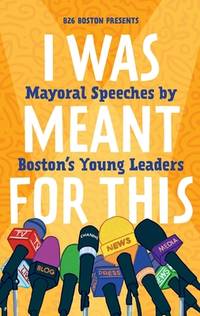
réf. ria9798886940565_inpPaperback. New. New Book; Fast Shipping from UK; Not signed; Not First Edition; Discover a world where wisdom and whimsy collide in this captivating anthology from 826 Boston. Each story offers a unique piece of advice from reimagined Greek myths to thought-provoking advice columns. Get ready to be challenged mov paperback
1875réf. 17816Boston: Prang & Company 1875 First edition. Rare in commerce. OCLC records 8 copies. . Tan paper wrappers. Bound with string. Printed on heavy drawing paper. Octavo. 21 x 15 cm. . Illustrated. Light rubbing. Clean throughout. About two thirds of the exercises are completed. Very good. Walter Smith 1836-1886 was an English art educator and author. He moved to Massachusetts in 1871 where he was first appointed to Professor of Art Education at the Massachusetts Normal School of Art. Smith later became the Massachusetts State Director of Art Education and Director of Drawing where he instructed and supervised art teachers. Smith was an important early figure in the field of industrial design. He also wrote books on art education instruction for teachers and drawing guides for students. This booklet is aimed at helping students learn to draw. It begins with definitions to help students' understanding defining words such as "quadrilateral" and "ellipse." The booklet features pages with drawing exercises printed lightly for students to trace next to blank pages which allow space for students to practice. The drawing exercises include a house a vase and abstract shapes. Prang & Company,
1879réf. 17817Boston: L. Prang & Company 1879 Second edition. . Bound in darker tan paper wrappers. Printed on thinner paper than the earlier edition. Tape lining both joints. All exercises but the last page are completed. Signed in pencil on the cover: James Malcolm Graham 1886. Very good copy. . Octavo. 22 cm. x 15 cm. . Illustrated. Very good. Walter Smith 1836-1886 was an English art educator and author. He moved to Massachusetts in 1871 where he was first appointed to Professor of Art Education at the Massachusetts Normal School of Art. Smith later became the Massachusetts State Director of Art Education and Director of Drawing where he instructed and supervised art teachers. Smith was an important early figure in the field of industrial design. He also wrote books on art education instruction for teachers and drawing guides for students. This is the second revised edition of a booklet aimed at helping students learn to draw. This edition begins with an explanation of the book particularly explaining that the printing is light so that students can fill in the lines and that students should use soft pencils to do so. The drawing exercises are mostly for shapes and vary in complexity L. Prang & Company,
1875réf. 17816Boston: Prang & Company 1875 First edition. Rare in commerce. OCLC records 8 copies. . Tan paper wrappers. Bound with string. Printed on heavy drawing paper. Octavo. 21 x 15 cm. . Illustrated. Light rubbing. Clean throughout. About two thirds of the exercises are completed. Very good. Walter Smith 1836-1886 was an English art educator and author. He moved to Massachusetts in 1871 where he was first appointed to Professor of Art Education at the Massachusetts Normal School of Art. Smith later became the Massachusetts State Director of Art Education and Director of Drawing where he instructed and supervised art teachers. Smith was an important early figure in the field of industrial design. He also wrote books on art education instruction for teachers and drawing guides for students. This booklet is aimed at helping students learn to draw. It begins with definitions to help students' understanding defining words such as "quadrilateral" and "ellipse." The booklet features pages with drawing exercises printed lightly for students to trace next to blank pages which allow space for students to practice. The drawing exercises include a house a vase and abstract shapes. Prang & Company, books
1879réf. 17817Boston: L. Prang & Company 1879 Second edition. . Bound in darker tan paper wrappers. Printed on thinner paper than the earlier edition. Tape lining both joints. All exercises but the last page are completed. Signed in pencil on the cover: James Malcolm Graham 1886. Very good copy. . Octavo. 22 cm. x 15 cm. . Illustrated. Very good. Walter Smith 1836-1886 was an English art educator and author. He moved to Massachusetts in 1871 where he was first appointed to Professor of Art Education at the Massachusetts Normal School of Art. Smith later became the Massachusetts State Director of Art Education and Director of Drawing where he instructed and supervised art teachers. Smith was an important early figure in the field of industrial design. He also wrote books on art education instruction for teachers and drawing guides for students. This is the second revised edition of a booklet aimed at helping students learn to draw. This edition begins with an explanation of the book particularly explaining that the printing is light so that students can fill in the lines and that students should use soft pencils to do so. The drawing exercises are mostly for shapes and vary in complexity L. Prang & Company, books
1849réf. List1801Boston: Anti-Slavery Bazaar 1849. Small broadside measuring 7 ¾ x 4 ½ inches printed on green wove paper. Some creases and a small tear at margin near fine. Near Fine. The American Anti-Slavery Society hosted annual bazaars which served as fundraisers with money going to supporting the National Anti-Slavery Standard newspaper. Many women were involved with the event and sold abolitionist items. Offered here is one such piece of ephemera from the 1849 fair a poem written by an unknown author with the pen name “M.” The poem was featured in the poetry section of The Liberator January 26 1849 Vol. XIX. No. 4. with the description “The two following poetical effusions were written for the Anti-Slavery Bazaar In Faneuil Hall by friends of freedom in the old world.” It reads: Ye friends of liberty all hail! May your endeavours never fail In freedom’s sacred cause! May blessings e’er attend your course In striving to uproot all force And stern oppression’s laws! Yours is a noble task my friends! And God his gracious favor lends To speed ye on your way Until you reach the blessed goal When ev’ry dark benighted soul Shall hail bright freedom’s ray. Oh! may he speed the time when all Their fellow-men shall brethren call And the deep wrong remove When the dark chains of slavery Give place to sacred liberty And bonds of holy love! Oh! it were happiness to bind In such bright chains all human kind And set each captive free; For when oppressions all shall cease And this fair world be fill’d with peace Like Heav’n on earth ‘twill be! A very nice example of the anti-slavery movement during this period. Uncommon with one copy appearing at auction and none listed in OCLC. Anti-Slavery Bazaar unknown
1861réf. List3000Boston Massachusetts: William Lloyd Garrison and Isaac Knapp 1861. Single sheet letterpress broadside measuring 18 x 24 ½ inches. Folded with small tears at folds and marginal damage; excellent to Near Fine. Offered here is a “phonographic report” i.e. it includes the audience’s reaction of a speech delivered by abolitionist Wendell Phillips 1811–1884 to the Twenty-Eighth Congregational Society in Boston on April 21 1861. The report was printed in an extra of William Lloyd Garrison’s Liberator newspaper. Shortly following the first Battle of Fort Sumter the speech finds Phillips throwing his full support behind the cause of war. He insists to his audience: “The anti-slavery enterprise to which I belong started with peace written on its banner. We imagined that the age of bullets was over; that the age of ideas had come; that thirty millions of people were able to stake a great question and decide it by the conflict of opinions; and without letting the ship of State founder lift four millions of men into Liberty and Justice. . Our mistake if any has been that we counted too much on the intelligence of the masses on the honesty and wisdom of statesmen as a class. . The North thinks—can appreciate argument—is in the nineteenth century—hardly any struggle left in it but that between the working class and the money kings. The South dreams—it is the thirteenth and fourteenth century—baron and serf—noble and slave. . Our struggle therefore is no struggle between different ideas but between barbarism and civilization. Such can only be settled by arms. Prolonged cheering.” We find three copies of this newspaper in OCLC. Of interest to scholars of Phillips’ work and of abolitionism especially Boston abolitionists. 1 “Wendell Phillips Dead: The Last Hours Of One Of The Apostles Of Abolition” The New York Times February 3 1884 1. William Lloyd Garrison and Isaac Knapp unknown
1849réf. List1801Boston: Anti-Slavery Bazaar 1849. Small broadside measuring 7 ¾ x 4 ½ inches printed on green wove paper. Some creases and a small tear at margin near fine. Near Fine. The American Anti-Slavery Society hosted annual bazaars which served as fundraisers with money going to supporting the National Anti-Slavery Standard newspaper. Many women were involved with the event and sold abolitionist items. Offered here is one such piece of ephemera from the 1849 fair a poem written by an unknown author with the pen name “M.” The poem was featured in the poetry section of The Liberator January 26 1849 Vol. XIX. No. 4. with the description “The two following poetical effusions were written for the Anti-Slavery Bazaar In Faneuil Hall by friends of freedom in the old world.” It reads: Ye friends of liberty all hail! May your endeavours never fail In freedom’s sacred cause! May blessings e’er attend your course In striving to uproot all force And stern oppression’s laws! Yours is a noble task my friends! And God his gracious favor lends To speed ye on your way Until you reach the blessed goal When ev’ry dark benighted soul Shall hail bright freedom’s ray. Oh! may he speed the time when all Their fellow-men shall brethren call And the deep wrong remove When the dark chains of slavery Give place to sacred liberty And bonds of holy love! Oh! it were happiness to bind In such bright chains all human kind And set each captive free; For when oppressions all shall cease And this fair world be fill’d with peace Like Heav’n on earth ‘twill be! A very nice example of the anti-slavery movement during this period. Uncommon with one copy appearing at auction and none listed in OCLC. Anti-Slavery Bazaar unknown books
1861réf. List3000Boston Massachusetts: William Lloyd Garrison and Isaac Knapp 1861. Single sheet letterpress broadside measuring 18 x 24 ½ inches. Folded with small tears at folds and marginal damage; excellent to Near Fine. Offered here is a “phonographic report” i.e. it includes the audience’s reaction of a speech delivered by abolitionist Wendell Phillips 1811–1884 to the Twenty-Eighth Congregational Society in Boston on April 21 1861. The report was printed in an extra of William Lloyd Garrison’s Liberator newspaper. Shortly following the first Battle of Fort Sumter the speech finds Phillips throwing his full support behind the cause of war. He insists to his audience: “The anti-slavery enterprise to which I belong started with peace written on its banner. We imagined that the age of bullets was over; that the age of ideas had come; that thirty millions of people were able to stake a great question and decide it by the conflict of opinions; and without letting the ship of State founder lift four millions of men into Liberty and Justice. . Our mistake if any has been that we counted too much on the intelligence of the masses on the honesty and wisdom of statesmen as a class. . The North thinks—can appreciate argument—is in the nineteenth century—hardly any struggle left in it but that between the working class and the money kings. The South dreams—it is the thirteenth and fourteenth century—baron and serf—noble and slave. . Our struggle therefore is no struggle between different ideas but between barbarism and civilization. Such can only be settled by arms. Prolonged cheering.” We find three copies of this newspaper in OCLC. Of interest to scholars of Phillips’ work and of abolitionism especially Boston abolitionists. 1 “Wendell Phillips Dead: The Last Hours Of One Of The Apostles Of Abolition” The New York Times February 3 1884 1. William Lloyd Garrison and Isaac Knapp unknown books
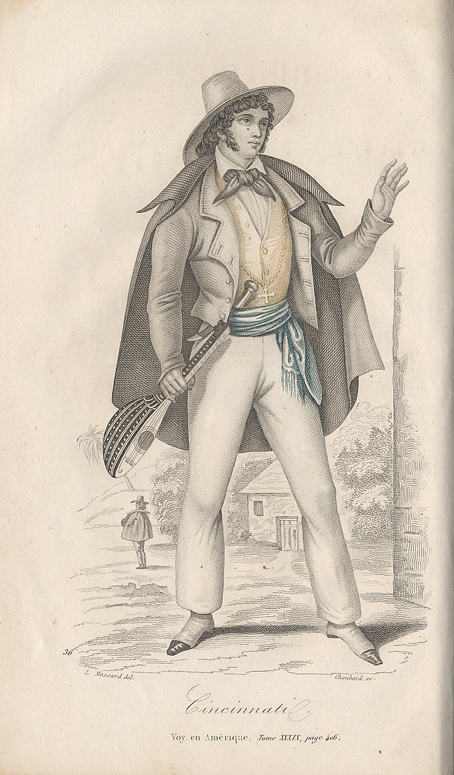
1870réf. 12108Paris, Armand-Aubrée, sans date (circa 1870) ; in-8, demi-veau glacé havane, dos lisse, faux nerfs dorés, fleurons décoratifs, titre doré ; (2), 451, (1) pp., 1 gravure aquarellée en frontispice.
1880réf. 9608Boston: Joseph Burnett & Co.; Press of Mills Knight & Co 1880. Small octavo stapled in wrappers 17.5 x 11 cm. ~80 pages. Illustrated; wrapper printed in chromolithograph. Advertising matter of local merchants interspersed throughout. Earliest issue of this New England housekeepers' almanac and promotional cookbook issued by Joseph Burnett & Co makers of flavor extracts and additionally used to promote local businesses through a drop-in box on the front wrapper panel. In this case the additional promotion goes to Butler & Laighton Fine Groceries of Rockingham County N.H. Internally clan and sound. Small closed tear to foot of chromolithograph wrappers otherwise near fine and bright. OCLC locates four copies of this 1880 issue and eleven copies of all other issues through 1884. Joseph Burnett & Co.; Press of Mills, Knight & Co unknown
1880réf. 9608Boston: Joseph Burnett & Co.; Press of Mills Knight & Co 1880. Small octavo stapled in wrappers 17.5 x 11 cm. ~80 pages. Illustrated; wrapper printed in chromolithograph. Advertising matter of local merchants interspersed throughout. Earliest issue of this New England housekeepers' almanac and promotional cookbook issued by Joseph Burnett & Co makers of flavor extracts and additionally used to promote local businesses through a drop-in box on the front wrapper panel. In this case the additional promotion goes to Butler & Laighton Fine Groceries of Rockingham County N.H. Internally clan and sound. Small closed tear to foot of chromolithograph wrappers otherwise near fine and bright. OCLC locates four copies of this 1880 issue and eleven copies of all other issues through 1884. Joseph Burnett & Co.; Press of Mills, Knight & Co unknown books
1779réf. List3711London 1779. Autograph letter signed Joseph Green to Boston merchant Samuel Eliot. Folded letter datelined "London Mar. 26th 1779" with "Rec'd 22nd Decr. 1779" docket on top flap. 7 x 9 ¼ inches 3pp. Some repairs with archival tape folded small tears at some folds. Excellent. A thoughtful Revolutionary-era letter written by Joseph Green the Boston clergyman poet satirist and wit whose verses made him one of the best-known literary figures in colonial New England. A graduate of Harvard College and member of Boston's mercantile elite Green maintained friendships with figures including Mather Byles and Benjamin Church. He is known for his satirical poetry and as a signer of the 1773 attestation supporting Phillis Wheatley's authorship of Poems on Various Subjects Religious and Moral. A Loyalist during the American Revolution and named in the 1778 Massachusetts Banishment Act Green departed Boston in 1775 and spent the remainder of his life in England. The present letter was written only a year before his death in London in 1780. Written during the period of British blockade and privateering that turned the Atlantic into a contested military space the letter survives as a rare example of communication successfully passing between a Loyalist exiled in London and a Boston merchant. Green repeatedly returns to the difficulty of maintaining contact noting that "all means of correspondence seem to be cut off" and explaining that he is able to write only because he has found "a particular friend in whom I can confide." The letter itself written in March and not received until December 1779 provides tangible evidence of the obstacles confronting transatlantic correspondence during the Revolution. Green writes: "Having now an opportunity of writing by a particular friend in whom I can confide I embrace it to let you and our niece know that your Aunt and I are both well and very solicitous to hear of your health and welfare. We think it no small unhappiness to be so far removed from so many of our friends especially at a time when all means of correspondence seem to be cut off; but when we consider what scenes of confusion and distress we have escaped and what repose and quiet we have enjoyed here we ought not to repine. "Notwithstanding we have been so long in Engl'd I have seen nothing of the country and your Aunt next to nothing of the town. I amuse myself in trolling thro' several parts of it where new objects are perpetually presenting themselves; and I am the fonder of this exercise as it contributes to health as well as amusement. "The climate here agrees well with my constitution. I enjoy better health than I did at home & my friends tell me I am younger. But I know better than to believe them in this because I think if I was to go about it I could prove I am near four years older than when I left Boston." Green's remarks describe the reality of transatlantic communication during the Revolutionary War when Loyalists abroad and their friends in America frequently depended upon trusted private carriers rather than regular postal channels. The letter's journey from London to Boston-requiring months to arrive and bearing Eliot's receipt docket of December 22 1779-illustrates precisely the obstacles Green describes. Green continues with observations on one of the great public controversies of wartime Britain the celebrated court martial of Admiral Augustus Keppel following his engagement with the French fleet off Brest. Green describes the intense public reaction and the partisan passions surrounding the affair: "We have had a forced and ostentatious display of joy on acct. of Admiral Keppel's acquittal. He has been try'd by a court martial on a charge brought against him by Admiral Palliser for misconduct in the engagement he had the last summer with the French fleet off Brest. This has been made a party affair and has been carry'd to a most extravagant height. The whole city has been illuminated three or four nights and there have been great rejoicings thro' the Kingdom. But the matter is now pretty well over and Palliser has ruin'd himself by it." Most affecting however is Green's reflection on the increasingly remote prospect of ever returning to Boston. He seems to realize that his exile may be permanent writing that "At the time I left Boston it was uncertain when I should return or whether I should return at all. But the improbability was not so great then as it is now. The door was then shut now it is bolted." Green's letter offers a moving account of Loyalist exile-separation from friends and family with hope for return fading. We find no other records of letters written by Green during this period in commerce or at auction.