McMillan, TerryAntiquariat.de
9 100 résultats
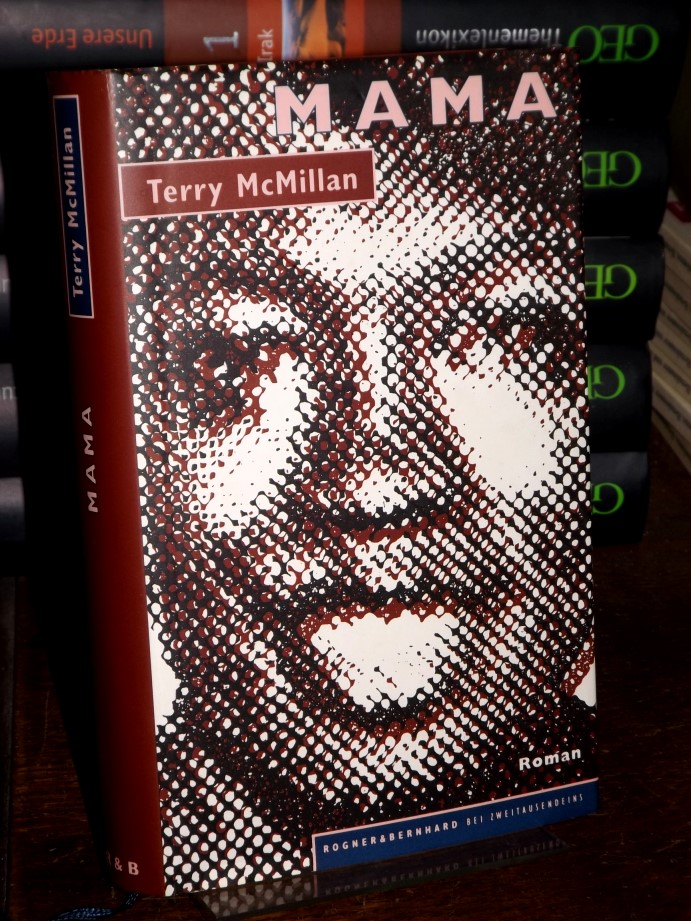
1993réf. 76893Hamburg : Rogner & Bernhard bei Zweitausendeins, 1993. 1. Aufl. 304 S. ; 21 cm; gebunden, Orig.-Pappband mit Original-Schutzumschlag, Lesebändchen;
4°quer. 24 S. Illustrierter Original-Karton-Eiinband mit Deckeltitel. Privater kleiner Besitzvermerk auf dem Titel. Gut erhalten. Mit zahlreichen Abbildunbgen (Produktionsstätten, Porträts und Tabellen).
1916Mm 210x280 Volume di pp. XVI-358, piena tela verde con titolo e fregi in oro al piatto anteriore e al dorso, 176 tavole in bianco e nero nel testo, VIII tavole a colori che raffigurano diversi giardini individuati per stato d'appartenenza, 26 in tutto. Cerniera leggermente allentata, ma in buono stato complessivo. SPEDIZIONE IN 24 ORE DALLA CONFERMA DELL'ORDINE. WORLDWIDE DELIVERY
2009Mm 255x255 Volume nella sua brossura originale, 429 pagine profusamente illustrate in nero e a colori. Testo in lingua inglese - english text. Copia in condizioni di eccellenza - as new. Spedizione in 24 ore dalla conferma dell'ordine.
2007Mm 310x310 Volume rilegato in tela con sovraccoperta, 272 pagine profusamente illustrate in nero e a colori. Testo in lingua inglese - english text. Libro in condizioni di nuovo - brand-new. Spedizione in 24 ore dalla conferma dell'ordine.
1965Large 4to, 30.5cm. Pp. 218,[14], very numerous photos throughout (few in colour) incl. numerous portrait photos of students and teachers, full indexes of names. Orig. dark green linen. Strong binding with very light trace of thumbing, contents fine. - The name indexes show almost exlusively names of people clearly of Dutch early or later immigrant origin. "In America the Christian Reformed Church traces its origin to a band of immigrants who sought freedom in the nineteenth century from the established church of the Netherlands. They settled in western Michigan and, after an early period of religious unrest among the thousands of Dutch settlers who soon joined the earlier immigrants, organized the Christian Reformed Church in 1857. The founding date of Calvin College and Seminary is 1876. Apparently a scarce volume.
1956Milano, 1956, stralcio con copertina posticcia muta, pp. 755/768 con una cartina e 11 fotografie. - !! ATTENZIONE !!: Con il termine estratto (o stralcio) intendiamo riferirci ad un fascicolo contenente un articolo di rivista, sia che esso sia stato stampato a parte utilizzando la stessa composizione sia che provenga direttamente da una rivista. Le pagine sono indicate come "da/a", ad esempio: 229/231 significa che il testo è composto da tre pagine. Quando la rivista di provenienza non viene indicata é perchè ci è sconosciuta. - !! ATTENTION !!: : NOT A BOOK : “estratto” or “stralcio” means simply a few pages, original nonetheless, printed in a magazine. Pages are indicated as in "from” “to", for example: 229/231 means the text comprises three pages (229, 230 and 231). If the magazine that contained the pages is not mentioned, it is because it is unknown to us.
1927Napoli, 1927, gennaio 24, copertina fotografica in fascicolo originale completo di pp. 16 de "Il Mattino Illustrato" .
1845Carta geografica dello stato del Michigan negli Stati Uniti con indicazione delle differenti contee. Coloritura confinale all'acquerello, coeva.
1947Paper Wrappers, 95 pages, 18 cm. Fiction. In Yiddish. Series: Kleyne bibliotek; Other Titles: Malkhus geto. Title on title page verso:; Krolewstwo ghetta SUBJECT(S): Holocaust, Jewish (1939-1945) -- Poland -- Lódz -- Fiction. Jews -- Poland -- Lódz -- Fiction. Originally bound in flimsy and fragile paper wrappers, this copy has been rebound in paper wrappers with original illustrated cover mounted on front. Paper browning as generally found, but solid. Good Condition. Scarce (H-40-17)
19318vo. 370 pages. In Yiddish. Photograph illustration plates. First edition. SUBJECT (S) : Women Palestine; Working class women Palestine; Jewish women Palestine. Covers a little worn, text clean, good condition. (HEB-3-1)
1946Moskve [Moscow]: Melukhe-farlag "Der Emes", 1946. Cloth, 8vo, 167 pages. Includes portraits. 20 cm. In Yiddish. SUBJECT (S) : Jews -- Persecutions -- Belarus -- Minsk. Holocaust, Jewish (1939-1945) -- Belarus -- Minsk -- Personal narratives. World War, 1939-1945 -- Jewish resistance -- Belarus -- Minsk. OCLC: 12284925. Backstrip replaced. Very Good Condition. (YID-17-15A-ALEX)
192112mo; 1st edition. Original paper wrappers, 12mo, 255 pages. 20 cm. Singerman 0118: This set is "The most well-known American contribution to the literature of anti-Semitism." Henry Ford, a noted anti-semite, had a close association with Dearborn, MI. Ford did not write the articles. He expressed his opinions verbally to his executive secretary, Ernest Liebold, and to William J. Cameron. Cameron had the main responsibility for expanding these opinions into article form. Liebold was responsible for collecting more material to support the articles. The Dearborn Independent, also known as The Ford International Weekly, was a weekly newspaper established in 1901, and published by Henry Ford from 1919 through 1927. The paper reached a circulation of 900,000 by 1925, second only to the New York Daily News, largely due to a quota system for promotion imposed on Ford dealers. Lawsuits regarding antisemitic material published in the paper caused Ford to close it, and the last issue was published in December 1927. The publication's title was derived from the Detroit suburb of Dearborn, Michigan. Derived largely from information found posted on line: Convinced that "bankers" and "the Jews" were responsible for a whole range of things he didn't like, from the world war to short skirts to jazz music, Henry Ford used his newspaper, the Dearborn Independent, to carry on an active anti-Semitic campaign. Between 1920 and 1922 a series of articles denounced all things Jewish. While officially apologizing for the articles in 1927, Ford's anti-Jewish sentiments ran deep. In January 1919, Henry Ford began publication of the Dearborn Independent, a small community weekly he had purchased the previous year. Carrying the subtitle, The Chronicler of the Neglected Truth, the paper primarily served as a forum for Henry Ford's views. Each issue of the Independent carried "Mr. Ford's Own Page," an editorial expressing his opinions, written by William J. Cameron. The Ford Motor Company pressured car dealers to buy multiple subscriptions and hand out copies to customers. The newspaper was popular, and circulation reached 900,000 in 1926. The Dearborn Independent would, most likely, have remained a sidebar in Ford's biography were it not for a controversial series that began on May 22, 1920 and lasted for several years. Appearing on the front page every week, "The International Jew: The World's Problem" examined a purported conspiracy launched by Jewish groups to achieve world domination. The basis for the articles was a notorious forgery, The Protocols of the Elders of Zion, an anti-Semitic hoax, first published in Russia in 1903. Many have accused Ford's personal secretary, Ernest Liebold, of being the source of the campaign, and Liebold's anti-Semitic views are well documented. William Cameron, editor of the Independent, was an enthusiastic supporter of the publication of the anti-Semitic diatribes. However, Ford's own attitudes towards Jews were the major reason for the publication of "The International Jew." His anti-Semitic beliefs formed along several strands from his upbringing, attitudes, and personal beliefs. A common stereotype at the time led some people to assume that Jews controlled the international banking system; that belief may have fed his anti-Jewish feelings. The publication of "The International Jew" caused an uproar. In some quarters, such as anti-immigrant and nativist groups, the series confirmed their own beliefs. Others were appalled by the series, published demands for a retraction, removed the paper from public libraries, and promoted a boycott of Ford automobiles. Some Ford dealers refused to carry the paper. Responding to this pressure, Ford halted publication of the anti-Jewish series in January 1922, only to start it up again less than a year later. Some wear at spine, about Very Good- condition. (HOLO2-63-21A)
19221st edition. Original green paper wrappers, 12mo 246 pages. Singerman 0132: Includes laid in a promotionaly flyer for this volume (vol IV) book as well as a subscription form for Ford's Dearborn Independent, articles from which form this book. This is the final separately issued volume of the International Jew set, which is "The most well-known American contribution to the literature of anti-Semitism." These articles were originally published in the Dearborn Independent. Excellent copy, Very Good+ good condition. (Holo2-63-21C)
19221st edition. Original green paper wrappers, 12mo 246 pages. Singerman 0132. This is the final separately issued volume of the International Jew set, which is "The most well-known American contribution to the literature of anti-Semitism." These articles were originally published in the Dearborn Independent. Light wear and stains to cover, closed tear to one page, Nice, Good+ Condition. (Holo2-63-21D)
192112mo; 1st edition. Original green cloth, 12mo, 255 pages. 20 cm. Singerman 0118: This set is "The most well-known American contribution to the literature of anti-Semitism." Henry Ford, a noted anti-semite, had a close association with Dearborn, MI. Ford did not write the articles. He expressed his opinions verbally to his executive secretary, Ernest Liebold, and to William J. Cameron. Cameron had the main responsibility for expanding these opinions into article form. Liebold was responsible for collecting more material to support the articles. The Dearborn Independent, also known as The Ford International Weekly, was a weekly newspaper established in 1901, and published by Henry Ford from 1919 through 1927. The paper reached a circulation of 900,000 by 1925, second only to the New York Daily News, largely due to a quota system for promotion imposed on Ford dealers. Lawsuits regarding antisemitic material published in the paper caused Ford to close it, and the last issue was published in December 1927. The publication's title was derived from the Detroit suburb of Dearborn, Michigan. Derived largely from information found posted on line: Convinced that "bankers" and "the Jews" were responsible for a whole range of things he didn't like, from the world war to short skirts to jazz music, Henry Ford used his newspaper, the Dearborn Independent, to carry on an active anti-Semitic campaign. Between 1920 and 1922 a series of articles denounced all things Jewish. While officially apologizing for the articles in 1927, Ford's anti-Jewish sentiments ran deep. In January 1919, Henry Ford began publication of the Dearborn Independent, a small community weekly he had purchased the previous year. Carrying the subtitle, The Chronicler of the Neglected Truth, the paper primarily served as a forum for Henry Ford's views. Each issue of the Independent carried "Mr. Ford's Own Page," an editorial expressing his opinions, written by William J. Cameron. The Ford Motor Company pressured car dealers to buy multiple subscriptions and hand out copies to customers. The newspaper was popular, and circulation reached 900,000 in 1926. The Dearborn Independent would, most likely, have remained a sidebar in Ford's biography were it not for a controversial series that began on May 22, 1920 and lasted for several years. Appearing on the front page every week, "The International Jew: The World's Problem" examined a purported conspiracy launched by Jewish groups to achieve world domination. The basis for the articles was a notorious forgery, The Protocols of the Elders of Zion, an anti-Semitic hoax, first published in Russia in 1903. Many have accused Ford's personal secretary, Ernest Liebold, of being the source of the campaign, and Liebold's anti-Semitic views are well documented. William Cameron, editor of the Independent, was an enthusiastic supporter of the publication of the anti-Semitic diatribes. However, Ford's own attitudes towards Jews were the major reason for the publication of "The International Jew." His anti-Semitic beliefs formed along several strands from his upbringing, attitudes, and personal beliefs. A common stereotype at the time led some people to assume that Jews controlled the international banking system; that belief may have fed his anti-Jewish feelings. The publication of "The International Jew" caused an uproar. In some quarters, such as anti-immigrant and nativist groups, the series confirmed their own beliefs. Others were appalled by the series, published demands for a retraction, removed the paper from public libraries, and promoted a boycott of Ford automobiles. Some Ford dealers refused to carry the paper. Responding to this pressure, Ford halted publication of the anti-Jewish series in January 1922, only to start it up again less than a year later. Small spine label, library bookplate, pocket on rear blank pastedown, light wear to cloth, Text pages all very clean, no other markings, Gery Good- Condition. (HOLO2-63-21G)
19271st edition. Original paper wrappers, 16mo (small), 7 pages ; 25 cm (folded to 14 cm in wrappers). "Correspondence between Henry Ford, Louis Marshall and Herman Bernstein. Settlement of Aaron Sapiro's and Herman Bernstein's libel suits" (From the front cover). During the 1920s, Henry Ford gained as much fame for his antisemitic views as for his cars. His newspaper, the Dearborn Independent, published dozens of articles between 1920 and 1925 naming prominent Jewish Americans as conspirators in a plot to overthrow governments all over the world. Though hardly the first of their kind, the accusations in the Dearborn Independent represented the broadest, most sustained published attack on individual Jews and Jews as a group in the nations history. The articles created clear grounds for defamation and libel actions against Ford and the newspaper, and several were filed. In 1927 one lawsuit, Sapiro v. Ford, made it into court, generating international headlines, only to end in mistrial. Ford then disposed of the distasteful affair by signing a statement in which he apologized for the wrongs he had 'unintentionally' done to Jews. Ford's campaign against the Jews, as historians have recognized, reflected the renewed racial tribalism that characterized post-World War I American society (Woeste, Insecure Equality: Louis Marshall, Henry Ford, and the Problem of Defamatory Antisemitism, 1920-1929 in Journal of American History, Dec. 2004). The importance of the end result, here spelled out in this rare period publication, was summarized by Robert Rifkind in his 2008 examination Confronting Antisemitism in America: Louis Marshall and Henry Ford: Putting aside historical revisionism, it becomes clear that the Ford apology achieved a number of things no libel suit could have achieved. First, in broad and unambiguous strokes, Ford repudiated the defamation of Jews in general and not merely the particular claims asserted in the lawsuits. Second, the apology did so with dispatch rather than after further protracted delay. Third, Ford undertook to withdraw The International Jew from circulation both in the United States and abroad, and at least while Marshall remained alive, he seems to have done so. A jury sitting in an action for monetary damages could not have compelled such a result. And finally, a confession, retraction, and apology appearing in Fords name and over Fords signature carried the impressive force of a world-famous mana force that twelve anonymous jurors, easily dismissed as misled by lawyers wiles, could never have had (American Jewish History, Vol. 94, No. 1/2, March/June 2008, pp. 71-90). SUBJECT(S): Antisemitism -- Michigan -- Dearborn. Jews -- Trials (Libel) -- Antise´mitisme -- Juifs -- Proce`s (Diffamation) -- Dearborn independent. OCLC: 264355930. OCLC lists only 3 copies worldwide (Harvard, YIVO, Yale Law), none outside the Northeast. Light wear to wrappers, number penned on cover, no other markings, folded text pages inside extremely clean, an exceptional copy of this rare and very important imprint. Very Good Condition (holo2-148-4).
1927LA DOMENICA DEL CORRIERE Rivista Originale del 12 Giugno 1927 Anno 29 nr. 24 pagine: 16 dimensioni: 38 x 28 cm IN PRIMA PAGINA: Una ricostruzione guerresca al Real Torneo che si è svolto all'Olympia di Londra. Attori sono stati i soldati dei reggimenti scozzesi, che hanno pittorescamente revocato un episodio della storia della Scozia: la morte del Visconte Dundee al Passo di Killiecrankie (Achille Beltrame) NELL'ULTIMA PAGINA: La tragica fine di una cerimonia nuziale al Messico. Il comando di Leon, appreso che il reverendo Sold stava per celebrare un matrimonio, inviava sul posto una truppa che si impadroniva del prete, di un altro sacerdote, degli sposi e di un notaio. Tutti furono trascinati sulla strada e fucilati senza pietà (Achille Beltrame) ALL'INTERNO: Lindbergh a Londra. Il Re a Como per l'inaugurazione delle Mostre Voltiane. Il consiglio nazionale dell'associazione combattenti ricevuto da Mussolini al Viminale La più antica città del mondo, Mitzkhet la misteriosa (Mtskheta) La cattedrale di Reims riaperta al pubblico. Bomba nella scuola di Bath, nel Michigan: 43 vittime. Inondazione in Louisiana. CONDIZIONI DELLA RIVISTA: BUONE, NORMALI SEGNI DEL TEMPO, SOVRACOPERTINE MANCANTI NOTE PARTICOLARI: BORDO INFERIORE INTERNO LEGGERMENTE FRASTAGLIATO (COPERTINE PARZIALMENTE STACCATE)
1937A clean, unmarked book with a tight binding. Edge wear to cover and discolored spine. Previous owner's inscription inside. Pictorial endpapers. Black and white and color illustrations, many full-page. 6 1/2"w x 9 1/4"h. 128 pages.
2017Book is in excellent condition with very light wear to covers only. Binding is solid and square, covers have sharp corners, exterior shows no other blemishes, text/interior is clean and free of marking of any kind. 416 pages full of full page color photos, floor plans, elevations, landscape drawings, etc. Features include:Wild Turkey distillery complex, Inout house, the Smile, Wrap house, Linear cabin, Michigan lake house, Newberg residence, North main, Point house, Immanuel church and paris centre, Cologne, Mont-Blanc base camp, Nanjing Wanjing garden chapel, Grandview Heights aquatic centre, T3, Samuel Beckett civic campus, et al.
1969Slight wear to top and bottom of spine. Book is 6 1/4"w x 9 1/4"h and features deckle-edged paper of various colors and textures with beautiful color prints and poetry on the theme of animals and nature. About 25 pages. " Gwen Frostic was an American artist, entrepreneur, author, and Michigan Women's Hall of Fame inductee. A lifelong resident of Michigan, Frostic is known for her naturalist, Linocut block print artwork, created using Original Heidelberg Platten presses." [Wikipedia]
1967Slight wear to cover and top and bottom of spine. Book is 6 1/4"w x 9 1/4"h and features deckle-edged paper of various colors and textures with beautiful color prints and poetry on the theme of animals and nature. About 25 pages. " Gwen Frostic was an American artist, entrepreneur, author, and Michigan Women's Hall of Fame inductee. A lifelong resident of Michigan, Frostic is known for her naturalist, Linocut block print artwork, created using Original Heidelberg Platten presses." [Wikipedia]
1853pp. vii, 215. 8vo. Original full cloth binding, embossed and decorated in an Arabic design. Gilt lettered spine. Hardbound. Very good. PA69/MID STACK
1966Facsimile of the rare Detroit 1876 first edition. 250 p. 12mo. Original leather grained cloth binding. Fine condition. Nowlin's family settled in Michigan in 1834, building a log cabin near the present sit e of Ypsilanti. A great account of a youth's experiences in early Michigan. These facsimiles are the most affordable way to study, own, and enjoy such rare Americana. **PRICE JUST REDUCED! NW29
1836pp. iv, 384. Well foxed. A few signatures loose. Early manuscript ownership of Jacob Bowman July 28, 1837, on first fly leaf. Mildly XLib. XLib blind stamp of Franklin and Marshall on title page also an ink call number. [Withdrawn]. 12mo. 175 mm. Original full leather binding, rubbed and worn. Original leather spine label. Loss at head of spine. Title continues: 'To Pennsylvania, Ohio, Indiana, Illinois, Michigan and Missouri; Containing A Geographical, And Early Historical Account Of These Several States, From Their First Settlement Up To The Present Time'. Hardbound. Good. Israel Daniel Rupp (1803-1878), of Cumberland County, PA, was the son of German Mennonites who immigrated to Pennsylvania in 1751. He was a self-taught scholar who learned to read eight or nine languages. He was a school teacher for over 20 years, and is best known for his histories and translations. This work was read closely and often carried by settlers moving West - which in those days meant travel beyond the Appalachians. He wrote this while living at "Refuge, Near Mechanicsburg, PA. Howes R-506; Sabin 74156; S&S/AI 40000. ** PRICE JUST REDUCED!! PAIMP 22


