WINTER (George-Simon) [Georg Simon]Livre Rare Book

56,672 results
ref. 38730Nuremberg, Wolfgang Moritz Endtern, 1703. In-4°, [24]-223-[5]pages Reliure plein veau d'époque, dos muet à nerfs, avec attaches en soie verte.
1924ref. 1674Éditions de la Galerie Simon (D.H. Kahnweiler), Paris 1924. Volume petit in-4 broché (25 x 20 cm), 22 pages, couverture ivoire illustré d'une eau-forte. ÉDITION ORIGINALE illustrée de 4 eaux-fortes d'André Masson, dont celle de la couverture et 3 en hors-texte. Premier livre de Georges Limbour et premier livre illustré par André Masson. Tirage à 112 exemplaires, celui-ci étant l'un des 90 numéroté sur vergé d'Arches (n° 53), SIGNÉ PAR L'AUTEUR ET L'ARTISTE au colophon. Les gravures de Masson les plus authentiquement surréalistes.
1758ref. 263129Paris: Chez de Bure 1758. First. hardcover. good. l'Histoire Naturelle; les Moeurs Coutumes & Religion des Naturels. folding map of the Gulf of Mexico 40 engraved plates including the folding plan of New Orleans lacks large folding map of Louisiana. 3 volumes. 16mo contemporary mottled calf gilt spines spines and some edges of covers worn on all volumes shellac applied to all spines ex-lib lacks errata leaf in volume I. Paris: Chez de Bure 1758. First Edition. "One fo the most useful contemporary authorities on French Louisiana. Le Page du Pratz lived there for 16 years and his detailed description is one of the main sources of his period." Streeter Sale 127. "Relation based on a residence from 1718 to 1734 valuable for showing French claims to the southern territory east of the Mississippi and for particulars concerning Indian nations there." Howes L-266. Ex libris from the library of the American Chamber of Commerce in Paris with their bookplate on the front and back endpapers of each volume. Clark I: 75. Graff 2462. Field 910. Sabin 40122. Raines p. 73. Chez de Bure unknown
1758ref. 263129Paris: Chez de Bure 1758. First. hardcover. good. l'Histoire Naturelle; les Moeurs Coutumes & Religion des Naturels. folding map of the Gulf of Mexico 40 engraved plates including the folding plan of New Orleans lacks large folding map of Louisiana. 3 volumes. 16mo contemporary mottled calf gilt spines spines and some edges of covers worn on all volumes shellac applied to all spines ex-lib lacks errata leaf in volume I. Paris: Chez de Bure 1758. First Edition. "One fo the most useful contemporary authorities on French Louisiana. Le Page du Pratz lived there for 16 years and his detailed description is one of the main sources of his period." Streeter Sale 127. "Relation based on a residence from 1718 to 1734 valuable for showing French claims to the southern territory east of the Mississippi and for particulars concerning Indian nations there." Howes L-266. Ex libris from the library of the American Chamber of Commerce in Paris with their bookplate on the front and back endpapers of each volume. Clark I: 75. Graff 2462. Field 910. Sabin 40122. Raines p. 73. Chez de Bure unknown books
ref. 51-5820Lutetiae Parisiorum Paris: Typis & formis Francisci Langlois aliàs dicti Chartres . 1646. Folio Contemporary vellum repaired with new endpapers. 25 x 37.5cm. 38 222 42 numbered plates.OCLC Number / Unique Identifier:889852935.Added engraved t.p. by Karl Audran after Simon Vouet. Engraved port. of NiceÌron by Michel Lasne. Plates by Jean Blanchin after NiceÌronHead and tail pieces. InitialsSignatures: ãⶠchi1 ẽⴠĩⴠA-2Dâ´ 2Eâ´ -2E4 Lutetiae Parisiorum, [Paris]: Typis & formis Francisci Langlois, aliàs dicti Chartres ..., 1646 hardcover
1930ref. 88520London: The Fleuron Printed at the Curwen Press / Cambridge University Press 1930. Hardcover. Near Fine/Very Good. 28 x 22 cm. Quarto. Complete set mixed edition. Some foxing in volume 1 &2. Cloth spine of volume 1 faded scuffed on front cover. Volumes 1 & 2 are quarter cloth with paper over boards. Volumes 3 & 4 are bound in black cloth. Volumes 3-7 are limited editions on hand-made paper while volumes 1 & 2 are of the standard edition 1/1000 copies on Antique Cream Laid paper. Vol III: 48/125 vol IV: 78/120 vol V: 90/110 vol VI: 11/160 vol VII: 128/210 Small closed tears to spine of volume 4. Volumes 5 6 & 7 are in dust jackets. The deluxe limited editions feature additional illustrations not present in the standard edition. Volume 6 with a pamphlet of Greek type specimen "The New Hellenic" which has an engraving signed by David Jones pamphlet mounted opposite page 231. The final volume is signed by one of the editors Stanley Morison on the colophon page as well as artist Eric Gill on his Perpetua type specimen preceding page 51. Jackets with a few small closed tears. Extensively illustrated throughout with type specimens engravings portraits head and tail pieces and high quality color facsimiles of pages from finely printed books. Tipped inclusions in volumes 56 & 7. One of the most important and influential typographical periodical. Many of the most important people in the book arts and typography for the time period are discussed and illustrated such as Karl Klingspor Rudolf Koch and J. E. Laboureur. Beatrice Warde’s writing as Paul Beaujon important scholarly article on Garamond typefaces appears in volume 5. Reference: Grant Shipcott. Typographical Periodicals Between the Wars: A Critique of The Fleuron Signature and Typography. The Fleuron, Printed at the Curwen Press / Cambridge University Press hardcover
2011ref. ANAIS-0253223083Indiana University Press 2011-05-23. Illustrated. paperback. Good. 20.9x10.9x1.9. Buy with confidence. Excellent Customer Service & Return policy. Indiana University Press paperback
1998ref. 93990Fairleigh Dickinson Univ Pr. New. 1998. Hardcover. 083863821X . FREE UPGRADE to Courier/Priority Shipping Upon Request - IN STOCK AND IMMEDIATELY AVAILABLE FOR SHIPMENT - Flawless copy brand new pristine never opened -- 190 pages; illustrated in black and white and in color. Catalogue Raisonne Catalog Raisonné Complete Works Life and Work Raisonnee Fairleigh Dickinson Univ Pr hardcover
ref. 207016Amsterdam, Arkstée et Merkus, 1758 6 vol. in-4, veau blond moucheté, dos à nerfs orné, roulette dorée sur les coupes et intérieure, tranches rouges mouchetées (reliure de l'époque).
1768ref. 87056Chez Arkstée & Merkus | à Amsterdam et Leipzig 1768 | 12.20 x 18 cm | 6 volumes reliés
ref. 87232A Paris, chez Lagrange, Libraire/Chez Maradan, 1788-1793, 5 volumes de 200x265 mm environ et 1 atlas de 245x340x40 mm environ, xxxij-763, 539, 491, 722-(1) f., 559 pages, demi reliure en veau rouge, titres et tomaisons dorés, dos très ornés de motifs dorés, tranches et coupes marbrées. Coupes et coins émoussés, coiffes de l'atlas ébréchées avec début de fente sur le bas du dos, frottements sur les plats et sur les coiffes, des rousseurs, sinon belle série rare et recherchée avec 122 planches (dont 4 cartes dépliantes, manque la carte générale de l'Empire de Russie.
1759ref. 137120Paris: J. Barbou 1759. Full period French binding in Calf five raised bands gilt ornamentation on spine author and title in gilt on red leather spine label in second compartment. 8vo. Full period French binding in Calf five raised bands gilt ornamentation on spine author and title in gilt on red leather spine label in second compartment. 263 pages. First edition Bigmore and Wyman p.228. Minor soiling to the text block else a fine copy. In this volume Fournier sets out to prove that Gutenberg was not the inventor of the printing press by examining the history of printing. He believes that the technology Gutenberg made popular existed long before the German printer's work. "Peter Simon Fournier a French engraver and letter-founder was born at Paris 1712 and died 1768. He studied under Colson painter of the Academy of Saint Luc and devoted himself first to the art of wood-engraving; he afterwards as an engraver on steel rendered himself famous in all countries. In some of his works he seeks to prove that Gutenberg is not the inventor of printing and maintains that long before Gutenberg engraving on wood had been employed for printing images and inscriptions; that during his residence in Strasburg Gutenberg attempted the application of this art to the printing of books and that on his return to Mayence he first printed the Donatus and the Catholicon of Johannes de Janua with engraved and solid blocks. Fournier's ingenious theories were ably refuted by Baron Heinecken in his "Idée Générale d'une Collection complette d'Estamples" Leipsic: 1771" Bigmore & Wyman p 229. J. Barbou unknown
1759ref. 137120Paris: J. Barbou 1759. Full period French binding in Calf five raised bands gilt ornamentation on spine author and title in gilt on red leather spine label in second compartment. 8vo. Full period French binding in Calf five raised bands gilt ornamentation on spine author and title in gilt on red leather spine label in second compartment. 263 pages. First edition Bigmore and Wyman p.228. Minor soiling to the text block else a fine copy. In this volume Fournier sets out to prove that Gutenberg was not the inventor of the printing press by examining the history of printing. He believes that the technology Gutenberg made popular existed long before the German printer's work. "Peter Simon Fournier a French engraver and letter-founder was born at Paris 1712 and died 1768. He studied under Colson painter of the Academy of Saint Luc and devoted himself first to the art of wood-engraving; he afterwards as an engraver on steel rendered himself famous in all countries. In some of his works he seeks to prove that Gutenberg is not the inventor of printing and maintains that long before Gutenberg engraving on wood had been employed for printing images and inscriptions; that during his residence in Strasburg Gutenberg attempted the application of this art to the printing of books and that on his return to Mayence he first printed the Donatus and the Catholicon of Johannes de Janua with engraved and solid blocks. Fournier's ingenious theories were ably refuted by Baron Heinecken in his "Idée Générale d'une Collection complette d'Estamples" Leipsic: 1771" Bigmore & Wyman p 229. J. Barbou unknown books
1885ref. 126946Amsterdam & Hellevoetsluis: 1885. First and only edition classified as "Geheim" secret copy no. 8 of an unknown number of copies. WorldCat lists only one copy in the Haagse Defensiebibliotheek. This report was written by two Dutch marine engineers after their inspection tour of cruisers at the Marine Department of the International Inventions Exhibitions in London and various British shipyards including the well-known Newcastle-based firm Armstrong Mitchell & Co. The report starts with a brief introduction to the purposes and itinerary of the trip followed by background information on cruisers in general detailed descriptions of various types and specific examples such as the Japanese vessels Naniwa-Kan and Takachiho-Kan and the torpedo-cruisers Scout and Fearless. Cop was appointed professor of naval architecture at the Polytechnic School in Delft in 1887 while Van Veen 1859-1935 published several technical works and wrote journal articles on naval policy. This copy was held by the "Bureau van den Inspecteur o.d. Stoomvaartdienst" Office of the Inspector for the Steamboat Service with an inked inscription on the front board. It is a nice copy of this timely and somewhat elusive work. Foolscap folio 335 x 215 mm. With 5 lithographed extensive folding plates of ship plans 2 of the Japanese cruiser Naniwa-Kan built by the firm Armstrong Mitchell & Co. the first of these measuring c. 320 x 1350 mm Original black cloth-backed pale grey paper-covered printed boards. A little rubbed boards browned at the margins pale toning and light foxing to the text remains very good. hardcover
2009ref. 86933Deutscher Kunstverlag. New. 2009. Hardcover. 3422068155 . FREE UPGRADE to Courier/Priority Shipping Upon Request - IN STOCK AND IMMEDIATELY AVAILABLE FOR SHIPMENT - Flawless copy brand new pristine never opened -- Text in German with portions in English. 792 pages; more than 800 illustrations including 296 in color. Catalogue Raisonne Catalog Raisonné Complete Works Leben Und Werk Oeuvre-Katalog Kritischem Oeuvrekatalog Raisonnee Deutscher Kunstverlag hardcover
1802ref. 2311210021A. Strahan Printers Street for T.N. Longman and O. Rees Paternoster-Row London MDCCCII--MDCCCIII 1802-1803 1802. First English Edition. Hardcover. Very Good. Southern Russia Ukraine Crimea During the Reign of Catherine the Great : Color Plates 2 volumes. Large Quartos 29 x 22.5 cm. Bound in 19th century brown calf. Rebacked. Gilt spines and gilt ruled covers. Some shelf wear to cover extremities. Speckled edges. xxiv 552 pp. 25 plates most folding includes one map 14 colored vignettes; xxxii 523 1 pp. 27 plates 14 colored vignettes three folding maps at end. Four text leaves in first volume provided in facsimile leaves 265-272. "An extremely charming colour plate book which deserves a place in every colour plate book collection for its numerous attractive coloured vignettes an unusual feature" - Abbey Travel 222. Wellcome IV:288. Lowndes 1766. Nissen ZBI 3065. Pallas was a German naturalist who served as a professor of natural history at the Imperial Academy of Sciences in St. Petersburg during the reign of Catherine II. He famously was part of an early scientific expedition through Russia and Siberia and made important discoveries of mammoth and rhinoceros fossils from Siberia. In 1793-4 he made a second expedition to southern Russia exploring Crimea the Black Sea and the Dnieper valley. In 1799 this work "Bemerkungen auf einer Reise in die Sudlichen Statthalterschaften des Russischen Reichs" was published contributing to early geologic ecologic and ethnographic knowledge of the region. A. Strahan, Printers Street, for T.N. Longman and O. Rees, Paternoster-Row, London, MDCCCII--MDCCCIII [1802-1803] hardcover
1794ref. S508Paris: Maradan 1794. Uniform contemporary mottled calf richly gold-tooled spines. 8vo text and large 4to atlas. With 8 title pages and 8 half-titles 108 engraved plates and maps of which 22 folding and 2 double-page. 8 text-volumes and 1 atlas-volume. Second French edition of Pallas's 1768-1774 journeys through Russia. Peter Simon Pallas Berlin 1741-1811 studied medicine and natural history in Germany Holland and England. In 1767 he went to St Petersburg and began to conduct research in Russia. He was an eminent botanist zoologist and geographer and "sought to advance from merely describing nature to finding the causal interrelationships and hidden regularities of natural phenomena." Darwin acknowledged his work to have been influential in the development of evolutionary ideas DSB .In the years 1768 to 1774 Pallas joined so-called "academic expeditions" which traversed the Russian Empire from west to east. He studied flora and fauna landscape geological condition local population and culture. His findings were published in Reise durch verschiedenen Provinzen des russischen Reichs 3 volumes St Petersburg 1771-1776. The French translation of the work appeared in five volumes and one atlas-volume 1788-1793. The present nouvelle édition revised by Lamarck and Langlès comprises eight text-volumes and one atlas volume with maps and plates. The large map of Russia 55 x 117 cm is accompanied by ten others of parts of Russia three folding and two double-page. The other illustrations show plants ca. 58 costumes animals buildings inscriptions etc. A fine set; large bookplates of "Charles Baron de Selby" with smaller bookplates with the text "Caroli de Hoffmann Bruxellis" pasted onto them. Fine setof a great work on Russian natural history.l Cat. Russica 36; DSB X pp. 283-285; Stafleu & Cowan 7224; Wood p. 511. Maradan, unknown
1940Inscribed and initialed by Polanyi to "Sir Ernest and Lady Simon", Sir Ernest Simon, The Lord Simon of Wythenshawe, and his wife, upon front free endpaper. Simon, a British industrialist, politician and public servant, had a long association with the University of Manchester where Polanyi was a professor at the time of publication. Ink stamp reading "University of Manchester Broomcroft Hall" atop front free endpaper and inside back board solidifies this provenance as it was then the residence of the Simons. ix, [1], 116 pages. Includes these essays: The Rights and Duties of Science (1939), Collectivist Planning (1940), Soviet Economics - Fact and Theory (1935), and Truth and Propaganda (1936). "In those years the ideas of liberty... were left almost uncultivated." - from Preface. Minimal faint pencil markings to contents. Average wear and some fading to publisher's pale green cloth which is sunned at spine. Binding intact. Heavy wear to dust jacket which is now preserved in archival-grade Brodart. Today, the thoughts of the author, a scientist and philosopher who lived from 1891 to 1976, are faithfully upheld by a society named in his honour. Book
1979ref. 86828Leigh-on-Sea. As New. 1979. Hardcover. 0853170622 . FREE UPGRADE to Courier/Priority Shipping Upon Request - IN STOCK AND IMMEDIATELY AVAILABLE FOR SHIPMENT - AS NEW THE TEXT BLOCK IS PRISTINE CLEAN UNMARKED AND IN EXCELLENT CONDITION - - 47 pages; 30 illustrations. Catalogue Raisonné Catalogue Raisonne Catalog Raisonnee Complete Works Leigh-on-Sea hardcover
1923ref. 014522Paris Galerie Simon 1923 In-8 Broché
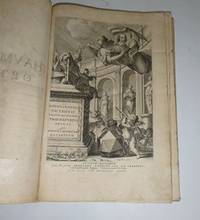
ref. #[60728]Two different states of 'Liberum Belgium' allegorical representation of the prosperity of the Dutch Provinces. The plate was modified in three areas: the portrait above in the middle below in the coat of arms in the plynth below on which hangs a lion skin with inscription and in the signature and address below with dates. The first is dated 1624. Prince Maurice of Orange is seated at the top of a throne. Above two angels playing shofars and holding a wreath with the coat of arms of the seven United Provinces. Libertas and Religio are standing at the sides in front ot the prince personifications of Negotiatio Negotiation Politia Politic Prudentia Prudence and Victoria Victory. On the plynth at the bottom: 'LE MAINTIENDRAY / MAURITIUS PRINCEPS AURIACUS. Et nobilissimi Ordinis Garterij Eques.' Further 14 lines in Latin by Daniel Heyns: 'Hispaniae domitor gentis. omnibus aequa datur / Daniel Heynsius' and further the Privilege and the address: 'Adrianus a Nieuwlandt Inventor et Pictor Symon de Pas sculptor Anno MDCXXIIII' The second is dated 1628. On the throne an orange tree its branches encicling a bust portrait of Prince Frederick Henry of Orange. On the plynth the inscription reads: 'PATRIAEQ PATRIQ / FREDERICO HENRICO D.G. PRINCIPI / Arausionensium Comiti Nassaviae. et Equiti Regii Odinis Garterii.' Further 14 lines in Latin by Daniel Heyns: 'Hispaniae domitor gentis. omnibus aequa datur / Daniel Heynsius' and further the Privilege and the address: 'Adrianus a Nieuwlandt Inventor et Pictor Symon de Pas sculptor Anno MDCXXVIII Amstelodami C. Dankaertz. Excudit'. The two states are sold as a set. l Engravings on paper trimmed within plate mark; total 1: 728 x 435 mm total 2: 730 x 445 mm; states I/4 and II/4; both prints pasted on thicker paper; second state creases on the top left corner; Hollstein 7 Franken/Passe 342 Frederik Muller 1545 a unknown
1723ref. 25150à La Haye The Hague: Aux dépens de la Compagnie 1723. Fine. Aux dépens de la Compagnie à La Haye The Hague 1723 15.50 x 20.50 cm 4 tomes reliés en 1 volume New edition in four languages after that cited on p. 59 at Mortier in 1659. This is the third edition the original having been published in Paris in 1694 in 8vo in French only. The remarkable illustration includes an allegorical frontispiece by Jan van Vianen a large folding plan of the city and castle of Versailles and 218 numbered plates five of which are folding all engraved by P. le Gros Garnier I. la Clerion N. Coustous Cornu after drawings by Thomassin. The work is divided into four parts with 3 title pages in red and black for the whole one in Dutch one in French and one dated 1695 at Pierre Mortier and 4 title pages in red and black for each of the volumes detailed as follows: vol. 1. The ancient & modern statues of Versailles fig. 1-53 -- vol. 2. The groups of Versailles fig. 54-85 -- vol. 3. The fountains and other ornaments of Versailles fig 86-172 -- vol. 4. The thermal baths and vases of Versailles fig. 173-218. Contemporary full vellum binding. Jansenist spine with raised bands. Red morocco title label. Marbled edges. Some leaves browned at the end of the index. Fine copy in good condition. The work in question is considered to form the finest achievement of Simon Thomassin 1653-1732 engraver to the king who created numerous works. The work was commissioned by Louis XIV himself in 1689. Aux dépens de la Compagnie hardcover
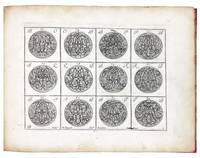
1704ref. 41629London: Printed for the Author in the Old Palace Westminster; and Sold by W. Rogers and H. Rhodes in Fleet Street; E. Harris and B. Barker in Westminster-Hall 1704. Oblong 4to. 8 x 10 inches. First edition. I-IV A4 B-M4 I-IV. 56 ff. 1-112. 112 pp. 56 copper engraved plates 50 each with 12 cyphers; 6 other engraved plates with text in French and English. Coronets Frontispiece Title English Advertisement French Advertisement 50 Leaves of Cyphers. Frontispiece reads: "A book of cyphers composed by Col. Parsons. Imprimatur Carlisle. E. M. 1703." Priced bound at 12 shillings. 18 leaves with extensive contemporary ink manuscript penmanship editions on versos. Bound to style in quarter 18th-century morocco over 18th-century marble paper boards Extensively annotated first edition Parsons's enigmatic cypher book draws on heraldy cryptography and typography and led a craze for monogrammatic systems of which many imitators followed. "Such cyphers were extremely popular on both sides of the Atlantic during the late seventeenth and early eighteenth centuries. For inspiration in preparing clients' personal designs engravers typically relied on guides by designers such as William Parsons's New Book of Cyphers." - DDW Parsons's New Book of Cyphers was at the forefront of a publishing craze for cyphers in the 1700s; it was the fourth such book to be printed and dozens of nearly identical ones followed. Samuel Sympson released books with the exact same title as the present in 1739 and 1750. Phillip Barraud meanwhile had the good taste in 1782 to change Parsons's title by one word to "A New Book of Single Cyphers." Cyphers were used to create heraldic devices and monogrammatic signatures to embroider on clothing use as trademarks or store signs or to incorporate into bookplates as many book collectors have and continue to do. Cyphers differ from monograms in that the individual aspects of a cypher system can be exchanged without affecting the overall system; the letterforms in monograms must be redesigned each time. The cypher system with its internal algorithmic rules and capacity for change can easily encrypt secret messages and has done so from mysterious medieval codices like the Voynich Manuscript to the communiques of British generals during the American Revolution to the blockchain and "crypto" today. Cyphers were so faddish in the 1700s that people kept albums full of printed cyphers they had collected from their family friends and celebrities of the period. Cyphers in other words were treated something like autographs something like business cards something like keepsakes and they were devices people and their families identified with strongly. The 600 engraved cyphers across 56 plates in this first edition of Parson's book each show how to interlink two separate letters within Parsons's larger system of encipherment. Parsons gives instructions in both French and English on how to use them to compose longer texts. Parsons comments severely in his preliminary "Advertisement" preface that the earlier works on the subject contained only half the required number of cyphers necessary to complete their alphabets. By extrapolating from Parsons's text and his supplied two-letter cypher building-blocks one could create cyphers of any length that would maintain a consistent coherent design and be able to be deciphered if one knew the system. This book of cyphers seems oriented toward a striving merchant class not an aristocracy born into their family's symbols from the beginning of their lives. Anyone with access to pen and paper could make a cypher of their initials using this book. This interpretation is bolstered by the early-19th century ink manuscript editions found in the book. Numerous pages of repetitive handwriting exercises express upright moral sentiments: "By a commendable deportment we gain reputation." "Compassionate men never prove extortioners." "A flattering companion is a dangerous enemy." "Brave spirits promote the public good." These didactic lines were copied out of Fisher's The American Instructor: or Young Man's Best Companion . . . How to Qualify Any Person for Business without the Help of a Master. More manuscript editions present includes numerous pages of budgetary ledgers for a construction worker or carpenter an architectural sketch calligraphic practice lyrics from a song called "Mr. Clark and His Bacon" by G. Colman and two poems: "The Essex Spark" and "The Model." Parsons was the younger son of a baronet and attended Christ Church Oxford. He entered the army in 1682 and took part in the Glorious Revolution in 1688. Afterward he turned to publishing especially popular works of learning. His translation of Guillaume Marcel's Tablettes chronologiques chronological tables listing the dates of Kings Popes and Emperors ran through many editions. Parsons helped produce a new set of globes but none survive. For the present work Parsons commissioned Michel Tauvel an engraver in the Strand to work on his cypher designs in 1698. Permission to print the complete work was finally given in 1703. The finished book engraved throughout includes a fine frontispiece engraved by Simon Gribelin to Parsons's design and a title-page and text leaves by Joseph Nutting. Parsons's own cipher is visible in the bottom left-hand corner of each leaf. Berlin Katalog 5315. Collins "The Modern Monogram" Print Magazine 08.06.19. DDW "No. 14 Waiter" in American Silver in the Art Institute of Chicago p.59. ESTC T116152. Francis Edwards Catalog No.800. Hale Treasures from Lord Fairhaven's Library at Anglesey Abbey cat.8 pp.58-9. O'Donoghue "Nutting Joseph" in DNB 18885-1900 Vol.41. Printed for the Author, in the Old Palace Westminster; and Sold by W. Rogers and H. Rhodes in Fleet Street; E. Harris and B. Bar unknown
1704ref. 41629London: Printed for the Author in the Old Palace Westminster; and Sold by W. Rogers and H. Rhodes in Fleet Street; E. Harris and B. Barker in Westminster-Hall 1704. Oblong 4to. 8 x 10 inches. First edition. I-IV A4 B-M4 I-IV. 56 ff. 1-112. 112 pp. 56 copper engraved plates 50 each with 12 cyphers; 6 other engraved plates with text in French and English. Coronets Frontispiece Title English Advertisement French Advertisement 50 Leaves of Cyphers. Frontispiece reads: "A book of cyphers composed by Col. Parsons. Imprimatur Carlisle. E. M. 1703." Priced bound at 12 shillings. 18 leaves with extensive contemporary ink manuscript penmanship editions on versos. Bound to style in quarter 18th-century morocco over 18th-century marble paper boards Extensively annotated first edition Parsons's enigmatic cypher book draws on heraldy cryptography and typography and led a craze for monogrammatic systems of which many imitators followed. "Such cyphers were extremely popular on both sides of the Atlantic during the late seventeenth and early eighteenth centuries. For inspiration in preparing clients' personal designs engravers typically relied on guides by designers such as William Parsons's New Book of Cyphers." - DDW Parsons's New Book of Cyphers was at the forefront of a publishing craze for cyphers in the 1700s; it was the fourth such book to be printed and dozens of nearly identical ones followed. Samuel Sympson released books with the exact same title as the present in 1739 and 1750. Phillip Barraud meanwhile had the good taste in 1782 to change Parsons's title by one word to "A New Book of Single Cyphers." Cyphers were used to create heraldic devices and monogrammatic signatures to embroider on clothing use as trademarks or store signs or to incorporate into bookplates as many book collectors have and continue to do. Cyphers differ from monograms in that the individual aspects of a cypher system can be exchanged without affecting the overall system; the letterforms in monograms must be redesigned each time. The cypher system with its internal algorithmic rules and capacity for change can easily encrypt secret messages and has done so from mysterious medieval codices like the Voynich Manuscript to the communiques of British generals during the American Revolution to the blockchain and "crypto" today. Cyphers were so faddish in the 1700s that people kept albums full of printed cyphers they had collected from their family friends and celebrities of the period. Cyphers in other words were treated something like autographs something like business cards something like keepsakes and they were devices people and their families identified with strongly. The 600 engraved cyphers across 56 plates in this first edition of Parson's book each show how to interlink two separate letters within Parsons's larger system of encipherment. Parsons gives instructions in both French and English on how to use them to compose longer texts. Parsons comments severely in his preliminary "Advertisement" preface that the earlier works on the subject contained only half the required number of cyphers necessary to complete their alphabets. By extrapolating from Parsons's text and his supplied two-letter cypher building-blocks one could create cyphers of any length that would maintain a consistent coherent design and be able to be deciphered if one knew the system. This book of cyphers seems oriented toward a striving merchant class not an aristocracy born into their family's symbols from the beginning of their lives. Anyone with access to pen and paper could make a cypher of their initials using this book. This interpretation is bolstered by the early-19th century ink manuscript editions found in the book. Numerous pages of repetitive handwriting exercises express upright moral sentiments: "By a commendable deportment we gain reputation." "Compassionate men never prove extortioners." "A flattering companion is a dangerous enemy." "Brave spirits promote the public good." These didactic lines were copied out of Fisher's The American Instructor: or Young Man's Best Companion . . . How to Qualify Any Person for Business without the Help of a Master. More manuscript editions present includes numerous pages of budgetary ledgers for a construction worker or carpenter an architectural sketch calligraphic practice lyrics from a song called "Mr. Clark and His Bacon" by G. Colman and two poems: "The Essex Spark" and "The Model." Parsons was the younger son of a baronet and attended Christ Church Oxford. He entered the army in 1682 and took part in the Glorious Revolution in 1688. Afterward he turned to publishing especially popular works of learning. His translation of Guillaume Marcel's Tablettes chronologiques chronological tables listing the dates of Kings Popes and Emperors ran through many editions. Parsons helped produce a new set of globes but none survive. For the present work Parsons commissioned Michel Tauvel an engraver in the Strand to work on his cypher designs in 1698. Permission to print the complete work was finally given in 1703. The finished book engraved throughout includes a fine frontispiece engraved by Simon Gribelin to Parsons's design and a title-page and text leaves by Joseph Nutting. Parsons's own cipher is visible in the bottom left-hand corner of each leaf. Berlin Katalog 5315. Collins "The Modern Monogram" Print Magazine 08.06.19. DDW "No. 14 Waiter" in American Silver in the Art Institute of Chicago p.59. ESTC T116152. Francis Edwards Catalog No.800. Hale Treasures from Lord Fairhaven's Library at Anglesey Abbey cat.8 pp.58-9. O'Donoghue "Nutting Joseph" in DNB 18885-1900 Vol.41. Printed for the Author, in the Old Palace Westminster; and Sold by W. Rogers and H. Rhodes in Fleet Street; E. Harris and B. Bar unknown books
ref. 420881New York: Saturday Morning 1978. Softcover. Near Fine. First edition. Edited by Simon Pettet. Tall octavo. Unpaginated. Stapled wrappers with illustrated covers by David Morris. Some modest age-toning on the wrappers else near fine. This copy with a printed limitation at the bottom of the front cover: "This is number 4 in a set of 10 signed editions." Signed by virtually all of the contributors including Pettet John Cage Ted Berrigan Allen Ginsberg Anne Waldman Peter Orlovsky Gerard Malanga Alice Notley John Giorno Dick Higgins Ron Padgett Carl Solomon Eileen Myles Maggie Dubris John Godfrey Jim Brodkey Bob Rosenthal Michael Scholnick Gary Lenhart Harris Schiff Annabel Levitt Michael Lally Maureen Owen Greg Masters Bob Holman Rose Lesniak Paul Violi Tom Savage Steve Carey and artist David Morris. Perhaps most amusing is an angry contribution by Kathy Acker purporting to be a public service announcement by the Chase Manhattan Bank of North America Signed by Acker as "The Chase Manhattan Bank of North America." Berrigan's signature notes himself as "Ted Berrigan on Ibogaine." The only signature that appears to be lacking is that of contributor Ray Bremser. Seemingly the last issue of this short-lived poetry zine. OCLC locates just two runs four issues of Vol. I and this double issue of Vol. II and only one in the U.S. with no mention of the limitation. Undoubtedly rare and a considerable achievement in corralling so many of the contributors to sign the issue in what might be considered an exercise in "herding cats. Saturday Morning unknown