67,808 results
1988ref. 102093La manufacture 1988 In-8 relié toile verte, sans jaquette illustrée. 556 pages. Très bon état d’occasion.
1756ref. CLL-352Amsterdam, Arkstée & Merkus, 1756 2 volumes in-12 de XXXIII, (3), 240 pp.- V (mal chiffrées VII), 268 pp., veau marbré, triple filet doré en encadrement sur les plats, armes dorées au centre, dos lisses orné de caissons de fleurons dorés, pièces de titre de maroquin rouge, filets dorés sur les coupes, tranches rouges (reliures de l'époque).
ref. 38958Paris, P. Didot l'aîné, 1820. In-8, plein veau fauve glacé, dos à 5 nerfs plats garnis de triples filets dorés, orné de caissons garnis d’un médaillon (1 et 6), et d’un fer spécial romantique (3 à 5), filets, résilles et roulettes en tête et pied, triple filets d’encadrement dorés sur les plats, roulette sur les coupes, large dentelle intérieure, tranches dorées (reliure signée de Thouvenin), 208 p.
1880ref. 8798Paris, Librairie des Bibliophiles (Jouaust), 1880-1888. 12 titres reliés en 13 volumes in-12, 11 volumes tirés à 300 exemplaires numérotés sur papier vergé de Hollande (après 20 Chine et 20 Whatman), et 2 volumes (X et XI) à 500 ex. sur papier vergé de Hollande (après 20 et 15 Chine et Whatman), ex-libris Henri Vieillard sur le contre plat. Reliures uniformes d'époque demi maroquin vert, dos ornés de fleurettes dorées et mosaïquées, tranches supérieures dorées, couvertures conservées, reliures signées Levasseur, dos insolés, rares rousseurs, principalement sur les tranches. Collection complète, ensemble rare.I - DU BEC. Discours de l'antagonie du chien et du lièvre. 1880 ; II - CLAMORGAN. La chasse du loup nécessaire à la Maison Rustique. 1881 ; III - Le bon Varlet de chiens. 1881 ; IV* et IV** - TARDIF, Guillaune. Le Livre de l'Art de Faulconnerie et des chiens de chasse. 1882, 2 volumes ; V - CRETIN, Guillaume. Débat entre deux dames sur le passetemps des chiens et des oiseaux, suivi de la Chasse royale, poème de H. Sahel. 1882 ; VI - Le Livre du Roi Dancus, texte français du XIIIe siècle, suivi d'un Traité de faulconnerie également inédit. 1883 ; VII - H. ARCUSSIA, Charles. La Conférence des Fauconniers. 1883 ; VIII - DU SABLÉ, Guillaume. La Muse chasseresse. 1884 ; IX - BULLANDRE, Simon de. Le Lièvre, poème. 1885 ; X - LA FERRIÈRE, Comte H. de. Les Grandes chasses au XVIe siècle. 1884 ; XI - GOURDON DE GENOUILHAC. L'Église et la Chasse. 1886 ; XII - GRUAU, Louys. Nouvelle invention de chasse pour prendre et oster les loups de France. 1888.
ref. 26039Paris, Claude Fremy, 1558. 1 vol. petit in-8°, veau fauve, dos à nerfs orné de fleurons dorés, pièces de titre en maroquin rouge, encadrement d'un filet à froid sur les plats, filet doré sur les coupes, tranches rouges. Reliure du XVIIIe s., coiffe sup. habilement restaurée. Bel exemplaire. Ex-libris ms. sur le titre. (4) ff., 316 f.. 87 ff., (1) f. blanc. Signatures : +4 [a-z]8 [A-Q]8 R4; [A-L]8. Quelques mouillures angulaires, galerie de vers dans la marge de tête des premiers ff. du second ouvrage, un trou de ver traverse les 80 premiers ff. en marge de queue.
ref. 196124Paris, André Chouqueux, 1655 in-folio, [3] ff. n. ch. [sur 5] (titre, dédicace, aux lecteurs), [1273] pp. mal chiffrées 1251 (il y a deux ff. différents chiffrés 69-70 - signature Iiii -, puis neuf ff. différents chiffrés 599-600 - signatures FFff - , enfin trois ff. différents chiffrés 833-34 - signatures NNNnn) ; XXVII pp. (table des pièces), manque la table des matières après l'avis aux lecteurs ([2] ff. n. ch.), basane fauve marbrée, dos à nerfs cloisonné et fleuronné, double encadrement de triple filet doré avec fleurons d'angle sur les plats, tranches marbrées (reliure de l'époque). Coiffes rognées, coins abîmés mors supérieur fendu.
1687ref. ABC_48477Leeuwarden: Hendrik Rintjes 1687. 18th-century gold-tooled half calf with a red morocco title label lettered in gold on the spine brown sprinkled paper sides red sprinkled edges. 4to. With an engraved allegorical frontispiece a woodcut vignette on the title page 10 decorated woodcut initials and 3 woodcut tailpieces. Scarce large paper copy of a botanical description of Frisian and Northwest European plants trees flowers and herbs by the Frisian historian Simon Abbes Gabbema 1628-1688. Although Gabbema was appointed history writer of Frisia in 1659 by the States of Frisia because of his learning and knowledge concerning Frisian history he also knew a lot about botany. The present work can be considered a compilation of Gabbema's own botanical knowledge enriched with ancient knowledge forming an extensive Frisian and Northwestern European flora.The work starts with laudatory verses on the Friesche lust-gaarde including one devoted to the publisher. Gabbema structured his work around several botanical categories trees flowers herbs vegetables etc. but is still often reproached for his unstructured way of listing the several Frisian and other European plants. He describes their appearance flourish characteristics and sometimes also their uses for example healing wounds or preventing disease and complements his own findings with quotes from several ancient Greek and Latin writers. At the end of the work Gabbema also lists and describes several kinds of vegetables and fruits. The frontispiece is often ascribed to Jan Luyken Klaversma & Hannema 545. The present work is the second edition which is more scarce than the first 1686 and has only been recorded in three libraries on WorldCat.With a red ownership stamp Ex libris J. Visser Rotterdam on the frontispiece and the title page and a Dutch newspaper clipping mentioning the work mounted on the front pastedown. The edges and cornes of the boards are scuffed the boards are rubbed the front and back board are nearly detached the spine is creased and rubbed with some loss of material at the head. Internally clean but the lower corner of the second free endleaf is been torn off the lower corner of the leaves is creased throughout page 347-350 are detached but still present with browned tape in the gutter from a past repair without the additional folia 45 and 55 which are present in some copies. Otherwise in good condition.l Bibliotheca Hulthemiana 5970; Journal of the New York Botanical Garden 1902 p. 184; STCN 207333017 3 copies; WorldCat 68857531 1137589170 3 copies; cf. for the author: Van der Aa Biographisch woordenboek VII pp. 3-4; NNBW VI 1924; Posthuma Plantkunde uit de oude doos in: De levende natuur 21 1916 pp. 78-79; not in Hunt; Nissen; Pritzel; Stafleu & Cowan. Hendrik Rintjes, unknown
ref. 6663La Haye, Adrian Moetjens, suivant la copie à Paris, 1682. 2 tomes en 1 volume petit in-12 (128 x 65 mm), 23 ff. n. ch., 188 pp., 2 ff. n. ch.; 166 pp., 12 pp. Maroquin rouge, filet à froid en encadrement sur les plats, dos à nerfs avec titre, lieu et date en doré, coiffes et coupes décorées, dentelle intérieure dorée, tranches dorées, une tache sur le premier plat de reliure, deux coins légèrement abimés (Ottmann-Duplanil).
1906ref. 17961906 Correspondance d’Armand Simon (1906-1981) adressée à Henri Mercier (1917-2005) de la librairie bruxelloise La Proue. Artiste en marge du surréalisme belge, ermite de l’imaginaire, connu pour nourrir son art par ses lectures, Armand Simon vécut entouré d’une collection de plusieurs dizaines de milliers d’ouvrages. Cet ensemble donne à voir sur pièces son insatiable appétit de livres, et permet d’esquisser certaines constellations de sa carte du ciel littéraire. Les commandes donnent souvent l’occasion à des commentaires plus ou moins brefs. Parfois le propos est plus personnel. Le lien de fusion entre sa vie, son œuvre et ses livres apparaît avec force, parfois en quelques mots : « J’ai fait dans ma vie ce que je voulais intensément. Contre vents et marées, c’est peut-être ce qui a permis que je connaisse à présent un peu de succès. J’aurai [sic] acquis les livres que j’aimais Moi. ». Lorsqu’il évoque le Bruxelles de sa jeunesse, les plus vibrants passages concernent les librairies et les livres, dont il se souvient avec moult détails, par exemple, de « reliures affolantes ». Il convoque aussi des amis d’entre ses souvenirs : « René Magritte quand il vint chez moi avec Scut et Rigot en Août 45, trouvait que j’habitais une sorte de finis-terrae. Il est vrai qu’il était véhiculé par une auto du ministère à essence rationnée ». En 1965, Simon confirme à Henri Mercier sa participation à l’exposition collective Le Cabinet Maldoror, hommage à Geert van Bruaene (La Proue, 9-21 janvier 1965). Six ans plus tard, il lui écrit posséder, au fil d’une amitié de 49 ans, l’ensemble des publications d’Achille Chavée, dédicacées, qu’il se refuse à vendre à la pièce.C’est encore au sujet de sa collection qu’il manifeste un très rare signe de mécontentement. Après avoir manqué d’acquérir trois ouvrages de Hanns Heinz Ewers, il râle de ne pas avoir été prévenu plus tôt : « Ce sont des livres qui passent une fois dans l’existence. Ce sont des ouvrages qui se situent exactement dans l’esprit de ceux que je collectionne depuis plus d’1/2 siècle ». La lettre la plus ancienne (1963) évoque la projection du film Le Ballet paraphrénique (réal. Éric Duvivière) chez un de ses collectionneurs. Après avoir donné une définition de la pathologie « un dément qui vit une vie seconde […] et ses visions d’un monde second peuvent être dépourvues de toute angoisse. Le paraphrène vit seulement une autre vie de caractère obsessionnel et « fantastiquement » luxuriante », il s’excuse du long développement pour conclure « des dessins exécutés il y a 15 ou 20 ans préfiguraient étrangement nombre de séquences du Ballet ». Cette idée revient dans une autre lettre : « Depuis trente ans je n’ai dû dessiner que des images à caractère obsessionnel ». Ces correspondances où Simon s’exprime sans détour constituent surtout une masse bibliographique précisément datée durant les quinze dernières années de sa vie. Parmi les dizaines d’auteurs cités : Jarry, Tzara, Birot, Apollinaire, Follain, Guillevic, Genêt, Segalen, Saint-Pol Roux, Butor, Jaccottet, Bonnefoy, Paz, Agrippa d’Aubigné, Casanova, Hugo, Banville, Gautier, Rebeel, Claudel, Hermant, Audiberti, Tardieu, Vitrec, Arrabal, Artaud, Beckett, Tanning, Vian, Stas, Baillon, Douassot (Fred Deux), Carco, Tournier, Troyat, Martin du Gard, Lou s, Bataille, Fini, Sabatier, Schwob, Noël, Durrell, Moravia, Tellier, Faulkner, Lowry, Yourcenar, Camus, Mac Orlan, Borgès… "L’artiste est un funambule - il ne faut pas lui demander de choir dans la cage aux lions. Il faut savoir renouveler ses contorsions - j’en parle par expérience". Joints trois talons de chèques postaux.
1723ref. 61696Aux dépens de la Compagnie | à La Haye 1723 | 16.50 x 20.50 cm | 4 tomes reliés en 1 volume
1724ref. 23500The Hague: Rutgert Alberts 1724. Contemporary marbled calf spine gilt with red morocco title-label lettered in gold. 4to 23.5 x 20 cm. With the title printed in red and black fine engraved allegorical frontispiece by Jan van Vianen large folding engraved plan of the town and the castle of Versailles and 218 finely engraved numbered plates 5 of which are folding by several artists such as P. le Gros Garnier I. la Clerion N. Coustous Cornu and more all after the designs by Simon Thomassin illustrating the garden sculpture at Versailles. Second issue of the third edition on large paper of the beautifully illustrated guide to the Palace of Versailles by Simon Thomassin 1653-1732 depicting the statues ornaments gardens and fountains of Louis XIV's 1638-1715 celebrated royal residence.A renowned Parisian engraver and member of the Académie Royale Thomassin held the prestigious title of Graveur du Roy. The work was commissioned in 1689 by King Louis XIV to whom it is dedicated with the aim of presenting the magnificence of Versailles and demonstrating the King's "admiration of the universe". Through its detailed engravings the present work records the elaborate sculptural decoration and ornamental programme of the palace gardens fountains and grounds.The work was first published in Paris in 1694 in octavo format and subsequently published in Amsterdam by Pierre Mortier 1661-1711 in 1695. A third edition appeared in The Hague published at the expense of the Company and in Amsterdam by Pierre Mortier in 1723. The present edition dated 1724 is a new issue of the 1723 edition issued with a different title-page.The descriptive text is presented in four languages making the work both a sumptuous artistic record and an important contemporary guide to the architectural and decorative splendour of Versailles during the reign of Louis XIV.The spine is somewhat cracked some browning and foxing throughout. Otherwise in good condition.l Berlin Kat. 4212; Brunet V 834; Graesse VII 144; STCN 189062967 3 copies; not in USTC. Rutgert Alberts, unknown
1919ref. 015166Paris François Bernouard et Galerie Simon 1919 plaquette in-4 Broché
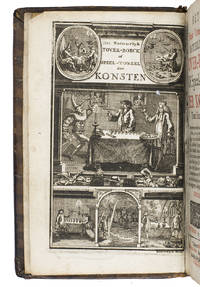
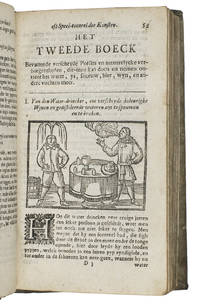
1715ref. 23270Amsterdam: Jan ten Hoorn title-page: sold in Brussels by Emanuel de Grieck 1715. Contemporary calf with ornamental flowers on spine. 8vo. With an engraved frontispiece by the artist-engraver Jacob Harrewijn title-page in red and black many full-page woodcut plates and numerous woodcut illustrations in text. Easily the most popular Dutch conjuring and recreation book of the 18th century. On long winter evenings families and parties amused themselves with the help of the book trying the various tricks and games. It contains about 2000 conjuring tricks card games exciting experiments with all sorts of materials word and number games riddles etc. It also includes advice on drawing and colouring on cosmetics means of curing a pain of making perfumed soaps removing stains etc. Reprinted for over a century the book continued amusing generations of children as well as adults in the home and at parties. Landwehr ascribes the book to Willem Goeree who first published it at Middelburg in 1679. Goeree probably choose the pseudonym Witgeest White spirit as a guarantee that the book contained only white magic not black magic. Its advice on drawing and colouring was taken from Goeree's Inleydinge tot de algemeene teyken-konst.Lacks title label on spine otherwise a good copy.l Muller 555; De Vries 528-529; see also: J. Landwehr De Nederlander uit en thuis p. 148 ff. Jan ten Hoorn (title-page: sold in Brussels by Emanuel de Grieck), unknown
1781ref. 87OFJJ3LS7HEAntwerpen 1781. 8vo. Petrus Josephus Rymers Contemporary half calf title in gold on spine. With an engraved frontispiece by the artist-engraver Jacob Harrewijn and many full-page woodcut illustrations in text of which 8 are full-page. 10 558 2 pp. Easily the most popular Dutch conjuring and recreation book of the 18th century. On long winter evenings families and parties amused themselves with the help of the book trying the various tricks and games. It contains about 2000 conjuring tricks card games exciting experiments with all sorts of materials word and number games riddles etc. It also includes advice on drawing and colouring on cosmetics means of curing a pain of making perfumed soaps removing stains etc. Reprinted for over a century the book continued amusing generations of children as well as adults in the home and at parties. Landwehr ascribes the book to Willem Goeree who first published it at Middelburg in 1679. Goeree probably choose the pseudonym Witgeest White spirit as a guarantee that the book contained only white magic not black magic. Its advice on drawing and colouring was taken from Goeree's Inleydinge tot de algemeene teyken-konst.Binding slightly worn with a small tear in the frontispiece and the lower margin of the title-page a little short-trimmed but otherwise in good condition.l Landwehr De Nederlander uit en thuis p. 148-50; Volkskunde 68 1967 p. 67f.; Waller 1870-7 esp. 1874 with the same text and "Den X. druk" on the title se above; Muller Pop. prozaschr. 555 "Men kan er menigen winter-avond de jeugd meê bezig houden"; De Vries Pop. prozaschr. 528-29 all other editions. unknown
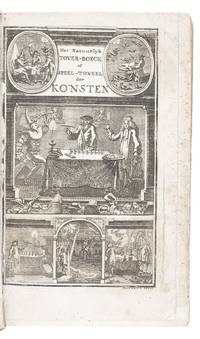
1715ref. ABC_45273Amsterdam 1715. 8vo. Jan ten Hoorn sold by Emanuel de Grieck Brussels Contemporary vellum blind-tooled with a centrepiece on both sides. Title-page in red and black with an engraved frontispiece containing 5 compartments showing tricks by Harrewijn after the frontispieces in the original editions by Jan van Hoorn in Amsterdam 57 charming woodcuts illustrating the various tricks in the text 7 full-page in the last section on fireworks. 10 518 40 pp. The 1715 edition nominally the 10th but possibly the 11th of a very popular Dutch conjuring book that had been published for the first time by Jan ten Hoorn in Amsterdam in 1679 and frequently augmented in many editions far into the 18th century. The present edition mentions 2000 tricks tover-konsten instead of the 500 in the 3rd edition. The book was also translated into German.The Tover-boek contains sections on magic tricks card-games dice word and number games riddles and recipes and instructions for painting and etching as well as home remedies and recipes for preserving fruits and vegetables toiletries fireworks etc. collected from various sources. The section on drawing and colouring for instance is taken from Willem Goerees Inleydinge tot de algemeene teyken-kons published in 1678.With the owner's inscription of J. Ravelli on the last endpaper. Binding slightly soiled as are the first leaves otherwise in very good condition.l John Landwehr Simon Witgeests Natuurlyk tover-boek et alia in: Volkskunde 68 1967 pp. 67-82; Hoogendoorn Witg. 11 p. 993. hardcover
ref. H162Leipzig in Commission der J. G. Müllerischen Buchhandlung 1792. 8vo. 284 S. Kleisterpapierumschlag der Zeit. Umschlag etwas angeschmutzt und bestoßen erste Seiten etwas eselsohrig. Besitzvermerk auf der Titelrückseite. Seltene Erwiderung von Witte 1738 Röbel - 1802 Rostock auf Humboldts und Niebuhrs Entgegnungen auf seine Schrift. unknown
1570ref. 66372Lugduni Leiden: Apud Benedictum rigaudum Rigaud 1570. Fine. Apud Benedictum rigaudum Rigaud Lugduni Leiden 1570 10.50 x 17 cm relié New edition. The earliest edition is found at the British Library 1498; this is likely the first edition as Charles VIII died that same year. The work was reprinted several times during the 16th century. Bound in rigid half vellum late 19th century. Smooth Jansenist spine. Red shagreen title-label. Some light rubbing. Handsome copy with wide margins. Some pale marginal dampstains. The De Lubrico is a poem on human misery and deception composed in the manner of numerous works of the period with first the poem itself followed by its explanation and the circumstances that produced it scholia. Modern bookplate of the library of F. Renard pasted on front pastedown. Apud Benedictum rigaudum (Rigaud) hardcover
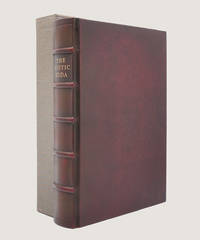
ref. 15442London; Folio Society 2016. 2016. Limited edition of 980 copies only of which this is number 178. Folio pp. i-xxxi 7 4-419 1. Printed in double-columns. 20 colour plates by Simon Noyes including frontispiece each tipped-in to mount leaf. Full deep maroon morocco with 5 raised bands and gilt titles to spine housed in substantial cloth-covered slipcase. No noticeable flaws or imperfections. A fine copy. Handsome edition of the classic and influential Old Norse poetry collection in alliterative verse an important source of mythology and legends. Heavyweight so a contribution towards increased postage costs will be requested for overseas delivery. London; Folio Society, 2016. hardcover
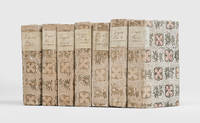
1773ref. 184211Amsterdam: Chez Simon Jolly 1773. The leading lawyer of the last decades of the ancien régime First edition of this collection of Linguet's legal briefs well-preserved in contemporary wrappers. Simon Nicolas Henri Linguet 1736-1794 was a French journalist and lawyer "whose delight in taking views opposing everyone else's earned him exiles imprisonment and finally the guillotine" Ency. Brit. In the 1760s and 1770s he was perhaps the most renowned lawyer in France admired for his eloquence and legal acumen until his attacks on his colleagues led to his expulsion from the bar in 1775. The French revolutionaries deemed him reactionary and executed him in 1794. Nonetheless Linguet's arguments that wage labour was more oppressive than servitude later influenced socialist thinkers including Karl Marx. 7 vols octavo. Uncut in contemporary floral-patterned wrappers manuscript labels to spines. Worming throughout affecting text but without loss of legibility in other respects an excellent set with contents mostly unopened. unknown
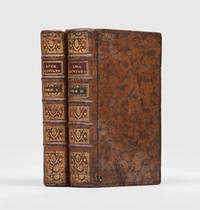
1767ref. 179098London: no publisher 1767. Defending despotism in the final years of the ancien régime First edition of this controversial work opposing political reform in the run-up to the French Revolution. In arguably his major political work Simon Nicolas Henri Linguet 1736-1794 argues that free workers are worse off than enslaved people in a market economy and that despotism is a more effective protector of the poor than liberalism - arguments which led to his execution under the Reign of Terror in 1794. The Théorie outlines a stinging attack on Montesquieu's theories on law and challenges physiocratic arguments including their objection to grain regulation. This critique of Enlightenment liberalism influenced both the radical factions of the revolution and the thought of Karl Marx who judged the Theorie "a very brilliant book" "On Proudhon" p. 30. Linguet a habitual controversialist was among the most renowned lawyers in France during the 1760s and 1770s until his attacks on other lawyers led to his expulsion from the bar in 1775. Initially a friend of the philosophes he gradually came to reject much of their philosophy including the argument that English liberties provide a model for France. Linguet sent a copy to Voltaire who observed of his streak of nonconformity that "Paris too has its Jean-Jacques Rousseau" quoted in Vyverberg p. 476. Two distinct editions of Théorie have been identified with a London 1767 imprint. This edition runs to 507 and 532 pages and includes three pages of errata following the "Discours Préliminaire". Many of these errata have been corrected in the other edition which runs to 496 and 528 pages. 2 vols duodecimo 165 x 96 mm pp. iv 507 1; iv 532. Woodcut ornament to title pages head- and tailpieces. Contemporary mottled calf spines with panelling and floral decoration in gilt red and brown morocco labels covers ruled in blind marbled endpapers and edges green silk bookmarkers. Nineteenth-century ownership stamp of one B. D. Lachaise to title page of both vols. Extremities neatly restored. Light wear to extremities and spine ends several small wormholes to head of spine vol. I and front cover vol. II loss to lower outer corner of rear free endpaper vol. I infrequent minor foxing and spotting to contents: a very good copy. Einaudi 3420; ESTC T117807; Goldsmiths' 10377; INED 2919; Kress 6459. Karl Marx "On Proudhon" in Karl Marx & Friedrich Engels Selected Works Volume Two 1969; Henry Vyverberg "Limits of Nonconformity in the Enlightenment: The Case of Simon-Nicolas Henri Linguet" French Historical Studies vol. 6 no. 4 Sept. 1970. unknown
1714ref. 39159A Bourdeaux ie. The Hague: James L'Aveugle 1714. First Edition. 12mo pp. viii 508. Bound in contemporary calf neatly rebacked in antique style little rubbed some minor foxing soiling a very good tight copy. Rosenberg "A" Gove 217-219; Cioranescu 62587; Barbier IV 1103; Atkinson 'The Extraordinary Voyage in French Literature' p. 70; Rosenberg pp. 84-5. The genuine first edition falsely dated. An important imaginary journey to Australia called a "landmark" by Atkinson. Based on a variety of real voyages the descriptions are believable and realistic. The author offers a detailed account of making a camp building a raft. While the book did not range much beyond the confines of the traditional Utopias of the times it did however include "living fossils" giant birds and strange flora that survived from prehistoric eras arguably making it one of the first modern Lost World novels. After being shipwrecked on the continent the narrator and a friend pressed on and developed a farm in "a plentiful fruitful country" until forced to flee by a treacherous woman. Tyssot de Patot 1655-1727 was a Huguenot who lived most of his life in Holland where he pursued a career as professor of Mathematics at the Athenaeum Illustre in Deventer the capital of the province of Overijssel. James L'Aveugle unknown
1714ref. 39159A Bourdeaux ie. The Hague: James L'Aveugle 1714. First Edition. 12mo pp. viii 508. Bound in contemporary calf neatly rebacked in antique style little rubbed some minor foxing soiling a very good tight copy. Rosenberg "A" Gove 217-219; Cioranescu 62587; Barbier IV 1103; Atkinson 'The Extraordinary Voyage in French Literature' p. 70; Rosenberg pp. 84-5. The genuine first edition falsely dated. An important imaginary journey to Australia called a "landmark" by Atkinson. Based on a variety of real voyages the descriptions are believable and realistic. The author offers a detailed account of making a camp building a raft. While the book did not range much beyond the confines of the traditional Utopias of the times it did however include "living fossils" giant birds and strange flora that survived from prehistoric eras arguably making it one of the first modern Lost World novels. After being shipwrecked on the continent the narrator and a friend pressed on and developed a farm in "a plentiful fruitful country" until forced to flee by a treacherous woman. Tyssot de Patot 1655-1727 was a Huguenot who lived most of his life in Holland where he pursued a career as professor of Mathematics at the Athenaeum Illustre in Deventer the capital of the province of Overijssel. James L'Aveugle unknown books
1644ref. 59351Hagae-Comitis: I. Burchornius 1644. New edition. 12mo 191. Bound in contemporary full brown calf with marble end papers rubbed along the hinges slight losses to ther spine lacks the leather label little toning to the title page but genrally a very clean tight copy. Erdman page 183; Graesse vol. 2 p. 409.; Brunet IV 81.; Alle The Concept of Women Vol. 3 pp 164-66. . The "Disputatio" was first issued under the title: "Disputatio nova contra mulieres. It was a satire on the Socinian method of argument. Acidalius 1567-1595 German scholar and critic born in Brandenburg who embraced Catholicism and was much esteemed for his Roman commentaries comments on the religious group of Sociniens who asserted that women are not men ie. thinking and reasonable beings. Gedik responded that if women were as noted by Acidalius then they would not be humans! All of these books were first issued in the 16th century. Erdmann mentions just the one of them. I. Burchornius unknown
1644ref. 59351Hagae-Comitis: I. Burchornius 1644. New edition. 12mo 191. Bound in contemporary full brown calf with marble end papers rubbed along the hinges slight losses to ther spine lacks the leather label little toning to the title page but genrally a very clean tight copy. Erdman page 183; Graesse vol. 2 p. 409.; Brunet IV 81.; Alle The Concept of Women Vol. 3 pp 164-66. . The "Disputatio" was first issued under the title: "Disputatio nova contra mulieres. It was a satire on the Socinian method of argument. Acidalius 1567-1595 German scholar and critic born in Brandenburg who embraced Catholicism and was much esteemed for his Roman commentaries comments on the religious group of Sociniens who asserted that women are not men ie. thinking and reasonable beings. Gedik responded that if women were as noted by Acidalius then they would not be humans! All of these books were first issued in the 16th century. Erdmann mentions just the one of them. I. Burchornius unknown books
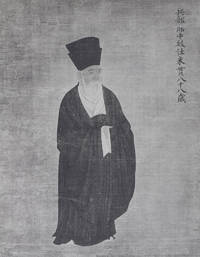
1941ref. 41150London; New York; Toronto: Oxford University Press 1941. First edition. Hardcover. g to vg. Folio 15 1/4 x 12". XVI 279 1pp Text 56 leaves Plates; 10pp Supplement. Original gilt-stamped olive cloth with gold lettering to spine. Title page with printed Chinese seal in red. A printed 10-page supplement published in 1941 laid in at rear. "The volume begins with an Introduction and a general description of the collection. These are followed by a description of each painting and the translation of its seals and inscriptions. At the end of the book is a chapter on seals their carving and use together with the photographic reproduction of 115 seals and a key with their translation and the identification of their owners and Biographical Notes on the painters commentators poets and seal-owners connected with the paintings. There are also an Index of Chinese names words terms and seals with their Chinese characters and English Indexes of proper names seals in translation and miscellanea covering such subjects as calligraphy its styles and use as an art form; discussion of paper and silk and of signatures; duties of officials legends and stories connected with the paintings; paintings ancestral animals birds flowers and plants religious subjects and their use on special occasions and for special purposes symbols and symbolism; technique brush strokes materials used and preparation of and methods used for Buddhist paintings buildings flowers etc and by individual painters" from the publishers. Of the 56 collotype plates featured in this work 48 deal with paintings and are composed of 36 full-page monochrome plates 3 full-page color plates 7 manifold monochrome plates and 2 manifold color plates. The remaining plates are composed of 5 full-page plates of calligraphy and 3 full-page plates of seals. The paintings in the collection date from pre-T'ang times to the Ch'ing Dynasty some of them among the greatest Chinese paintings known. Among them are the great landscape by Hsia Küei and such recorded paintings as "An Assembly of Birds on a Willow Bank" attributed to Huang Ch'üan; "Snow River and Returning Boat" by Emperor Hui Tsung; "An Orchid in Autumn" by Chêng Ssu-hsiao; "Mountains and Water" by Mi Fei; "A White Prunus in Blossom" by Wang Mien etc. Minor to moderate shelf wear. Binding in overall good interior in very good condition. Oxford University Press hardcover