[TYSSOT DE PATOT, Simon]Biblio.com
68,758 results
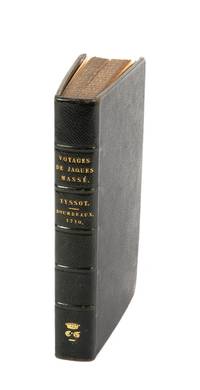
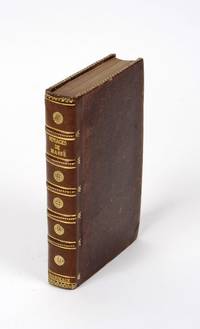
1717ref. 3201143Bordeaux" actually Rouen: chez Jacques l'Aveugle 1717. Extremities slightly rubbed rebacked corners reinforced a very good copy. Duodecimo with woodcut device on title; original sprinkled calf binding. First edition Rosenberg edition 'A' of this important imaginary voyage to Australia: a "landmark" in the development of the French voyage novel Atkinson. Friederich comments that the importance of mining and irrigation to the Australians makes it the only work "to foreshadow what has actually come to pass in modern Australia". This is an attractive copy of this precursor to Defoe set on the Australian continent among people obsessed with mining and the problems of irrigation: "the detailed account of the adventurer's camp in the Austral continent the building of a raft and the descriptions of plants and trees may be compared favourably to similar passages in Robinson Crusoe." Atkinson. The author Tyssot de Patot was a remarkable figure an English-born Huguenot and self-taught philosopher with a background in mathematics who at the impressive age of 72 suddenly scandalized his Dutch community and was run out of town as a dangerous heretic. He wrote two wonderfully inventive imaginary voyages both well ahead of their time: one was an account of a journey deep underground into a hollow earth while the present work tells the story of a veteran sailor called Jacques Massé who shipwrecks in the far southern reaches of the Indian Ocean not far from what is now Kerguelen Island. Delighted with the new world he discovers Massé denounces his European heritage only to be betrayed and have to flee to the coast where he is besieged for 12 years before being finally rescued by a Portuguese ship. The work was a modest bestseller of the era and the question of editions has been thoroughly investigated by Aubrey Rosenberg no small task given that all four major editions are dated 1710 on the title-page. Rosenberg argues that this edition 'A' in his list with an armillary sphere device on the title with its base pointing to the left was probably published between 1714 and 1717 and is the true first edition of the work. As Rosenberg points out this series of editions dispels the notion that interest in Tyssot quickly died out: in fact the staggered publications argue a sustained interest in the work throughout the eighteenth century. Tyssot de Patot's writings were a continual source of scandal: Voltaire thought that he had "carried the torch of discord into their homeland". Certainly the antagonistically anti-religious stance of this novel created much ill-feeling. Atkinson comments that because "open criticism of the Bible is so frequent" he will have to content himself with listing just a few of the more extreme examples. Nonetheless Atkinson's positive summary gives a good sense of the importance of the work: "a close following of accounts of real travellers such as Dellon Tavernier Mocquet and Lahontan. There is nothing fantastic unbelievable or overdrawn in the descriptions of the Austral continent.". The story has Massé shipwrecking on the Southern continent at "44 South latitude almost at the point where Kerguelen Island will be found to be on modern maps" Atkinson. Whilst most of the survivors of the wreck are content to maintain a large presence on the coast Massé and his friend Moret travel inland where they settle in an enormous and well-organised utopia "a plentiful fruitful country a land of blessing and peace . where human blood is sacred and safe from the rage and tyranny of great men". They become so enamoured of their Australian hosts that they abjure their faith and their European heritage and it is only when Moret is betrayed by his liaison with a treacherous queen that they reluctantly flee escaping rather fortuitously by a subterranean river which deposits them close by the original settlement. They remain besieged in the camp for another twelve years before they are finally picked up by a Portuguese ship. . Provenance: James Hustler "of Acklam in Cleveland in the North Riding of the Country of York Esq." engraved armorial bookplate dated 1730; Bernard Gore Brett Melbourne book collector. chez Jacques l'Aveugle unknown
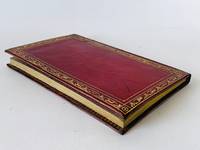
1717ref. 3211648Bordeaux" actually Rouen: chez Jacques l'Aveugle 1717. A fine copy. Duodecimo woodcut device on title; 19th-century grained morocco gilt gauffred edges. First edition Rosenberg edition 'A' of this important imaginary voyage to Australia: a "landmark" in the development of the French voyage novel Atkinson. Friederich comments that the importance of mining and irrigation to the Australians makes it the only work "to foreshadow what has actually come to pass in modern Australia". This is an attractive copy of this precursor to Defoe set on the Australian continent among people obsessed with mining and the problems of irrigation: "the detailed account of the adventurer's camp in the Austral continent the building of a raft and the descriptions of plants and trees may be compared favourably to similar passages in Robinson Crusoe." Atkinson. The author Tyssot de Patot was a remarkable figure an English-born Huguenot and self-taught philosopher with a background in mathematics who at the impressive age of 72 suddenly scandalized his Dutch community and was run out of town as a dangerous heretic. He wrote two wonderfully inventive imaginary voyages both well ahead of their time: one was an account of a journey deep underground into a hollow earth while the present work tells the story of a veteran sailor called Jacques Massé who shipwrecks in the far southern reaches of the Indian Ocean not far from what is now Kerguelen Island. Delighted with the new world he discovers Massé denounces his European heritage only to be betrayed and have to flee to the coast where he is besieged for 12 years before being finally rescued by a Portuguese ship. The work was a modest bestseller of the era and the question of editions has been thoroughly investigated by Aubrey Rosenberg no small task given that all four major editions are dated 1710 on the title-page. Rosenberg argues that this edition 'A' in his list with an armillary sphere device on the title with its base pointing to the left was probably published between 1714 and 1717 and is the true first edition of the work. As Rosenberg points out this series of editions dispels the notion that interest in Tyssot quickly died out: in fact the staggered publications argue a sustained interest in the work throughout the eighteenth century. Tyssot de Patot's writings were a continual source of scandal: Voltaire thought that he had "carried the torch of discord into their homeland". Certainly the antagonistically anti-religious stance of this novel created much ill-feeling. Atkinson comments that because "open criticism of the Bible is so frequent" he will have to content himself with listing just a few of the more extreme examples. Nonetheless Atkinson's positive summary gives a good sense of the importance of the work: "a close following of accounts of real travellers such as Dellon Tavernier Mocquet and Lahontan. There is nothing fantastic unbelievable or overdrawn in the descriptions of the Austral continent.". The story has Massé shipwrecking on the Southern continent at "44 South latitude almost at the point where Kerguelen Island will be found to be on modern maps" Atkinson. Whilst most of the survivors of the wreck are content to maintain a large presence on the coast Massé and his friend Moret travel inland where they settle in an enormous and well-organised utopia "a plentiful fruitful country a land of blessing and peace . where human blood is sacred and safe from the rage and tyranny of great men". They become so enamoured of their Australian hosts that they abjure their faith and their European heritage and it is only when Moret is betrayed by his liaison with a treacherous queen that they reluctantly flee escaping rather fortuitously by a subterranean river which deposits them close by the original settlement. They remain besieged in the camp for another twelve years before they are finally picked up by a Portuguese ship. . Provenance: This copy from the British Museum with the stamp on verso of title and the 1831 duplicate release stamp; also the crowned cipher "C.G." on spine. chez Jacques l'Aveugle unknown
ref. 107139Luzern Faksimile-Vlg. 1991. Kl.8° 170 x 13 cm. Faks.: 219 S. 70 wunderbare Miniaturen. Kommentarbd.: 430 S. 45 Taf. Faks: Roter Samt; Kommetarbd. Samt m Rückenschild. in Plexischuber. Tadell. Nr. 335 von 980 Exemplaren.- Das Blumenstundenbuch entstanden zwischen 1520 u. 1525 ist ein Höhepunkt der flämischen Buchmalerei. Bei diesem prächtigen Stundenbuch des berühmten Buchmalers Simon Bening 1483-1561 handelt es sich um den Höhepunkt flämischer Buchmalerei. Zwei Besonderheiten heben dieses Meisterwerk unter allen Stundenbüchern hervor. Zum einen das lockere Streumuster von Blumen oder Vögeln das jede Textseite ziert zum anderen die vielen unterschiedlichen Formen der Seitengestaltung innerhalb einer Handschrift. Deshalb gilt dieses Werk in seiner Gestaltungsvielfalt als unübertroffener Höhepunkt seiner Zeit. 010 Luzern, Faksimile-Vlg., 1991 unknown
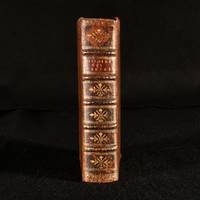
1740ref. 811F4A La Hague The Hague: Isaac Beauregard 1740. First edition. Leather. Good. 7" by 4.5". None. The very scarce first edition of this two volume mid eighteenth century French language study of the history of the Celts from 'the fabulous times' to the capture of Rome. In the original French.The very scarce first edition of French historian Simon Pelloutier's principal work a study of the history of the Celts with a particular focus on the Gauls and Germans.With detailed discussions of the agricultural practices religion 'virtues and vices' and military conquests of the Celtic people.Two volumes in one with continuous pagination across both parts. With volume II title page - leaf H12 - lacking. While this first edition was viewed as factually flawed the historical study was viewed as valuable enough to warrant further revised editions following Pelloutier's death including Chiniac de la Bastide's 1771 edition.With the former owner's inscription 'HTA' to head of front pastedown and with the armorial bookplate of Charles Bruce Earl of Ailesbury to the verso of the title page. Bruce was a British landowner and Tory politician who sat in the House of Commons from 1705 until 1711 when he was raised to the peerage as one of Harley's Dozen and sat in the House of Lords.A detailed eighteenth century study of the Celts and Gauls concluding with a thrilling account of the capture of Rome. In a full calf binding with gilt detailing to back strip. Rubbing to back strip and board perimeters with minor loss of leather to back strip tail. Front and rear joints starting. Boards holding firm. Inscription to head of front pastedown. Internally firmly bound. Armorial bookplate to verso of title page. Pages age toned with significant spotting throughout most prominent to title page and first few leaves. Good Isaac Beauregard hardcover
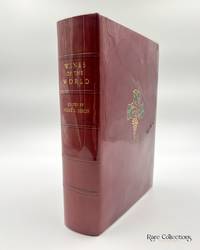
1969ref. 33184Arcadia Press 1969. The deluxe edition this being #110 of 265 copies signed by Simon. Bound by Zaehnsdorf in full burgundy morocco with colour inlays with grape design. Five raised bands and gilt lettering to spine marbled endpapers. Slight sunning to spine but otherwise in fine condition. A beautiful production. Arcadia Press unknown
1928ref. 229431928 Aquarelle signée en bas à droite, (1928), 27 x 36 cm., encadrée.
ref. DADAX0471842907John Wiley Sons Inc 0000-00-00. First Edition. hardcover. New. 0.00x0.00x0.00. Buy with confidence. Excellent Customer Service & Return policy. John Wiley Sons Inc hardcover
1936ref. 84921s. l. 1936. Fine. s. l. 1936 24 x 30 cm 38 photographies Set of 38 original photographs silver gelatin prints of the period in 24x30cm format depicting scenes from the filming of the movie. Le mort en fuite is a film by André Berthomieu assisted by André Zwobada with Carlo Rim as dialogue writer and adapter; the main roles were played by Michel Simon Jules Berry and Marie Glory. Here is the synopsis: Two mediocre actors from the ""Folies printanières"" Hector Trignol Jules Berry and Achille Baluchet Michel Simon invent an imaginary crime to gain publicity: Achille will pretend that he murdered Hector out of romantic rivalry and when the press seizes upon this news item the ""victim"" will reappear to exonerate Achille and make him a hero. For authenticity the two friends threaten each other in public and make noise in their room before Hector secretly leaves the building without being seen by the concierge. But contrary to what the two accomplices had imagined no one pays attention to Hector's disappearance and he grows impatient in his hideout in Brussels. He finally sends an anonymous letter to the Public Prosecutor to report the ""crime"" but despite Baluchet's efforts to make himself appear suspicious the investigators only believe in Trignol's ""disappearance"". It is then that the revue leader Myra supposedly the cause of the romantic rivalry between Baluchet and Trignol decides to profit from the latter's disappearance for her own publicity. Achille is finally arrested and in vain he proclaims his innocence first before the examining magistrate then before the criminal court. The verdict falls: he will be sentenced to capital punishment and his request for presidential pardon will be rejected. Meanwhile feeling watched Trignol has taken refuge in Berlin then in Warsaw where he was kidnapped because he is the double of Russian General Mikhaïl Popov. He will appear before a court martial and be sentenced to be shot. The set is presented in a cardboard box whose lid is missing. unknown
1808ref. 70406à Paris: Chez Bossange 1808. Fine. Chez Bossange à Paris 1808 13 x 20.50 cm relié First edition rare translated by Baron Jean de Reuilly. Contemporary full red Russia leather binding. Smooth spine decorated with 5 fleurons and fillets. Gilt title. Wide decorative border on boards with eagles serpents rabbits and stars in the corners. Interior garland. Spine darkened having become dark red. Dark stains on lower board. One scratch on upper board. Endpapers having suffered humidity with discoloration. In lower margin faint trace of dampstaining throughout the volume more extensive at end of volume with traces in outer and lower margins. Handsome copy in contemporary Russia leather. Manuscript ownership inscription Sorlin d'origny Constantinoples 1882. Below a biographical note on Baron de Reuilly. Sole separate edition of Pallas's journey to Tibet which had not been printed in the French editions. It was translated from the first and third volumes of the German edition of Pallas's voyage published in St. Petersburg from 1771 to 1776. This edition was prefaced and annotated by Reuilly based on the missions of several travelers Bogle Stewart Georgi and Andrade and from his own observations. Chez Bossange hardcover
1704ref. 053760Amsterdam Amstelaedami i.e. Amsterdam: Franciscus Halma 1704. Third & Enlarged Edition . Hardcover. Very Good Plus. Folio - 14 x 10 Inches Tall. Portrait. JULY SALE 40% OFF! AMSTERDAM : 1704. First published in 1660. Protestant theology and ecclesiology in the Reformation Netherlands. Nice contemporary binding. Latin text. Large folio volume; wide margins. Hardback. Title-page printed in red & black with engraving to centre. Full vellum-leather; blind-tooled raised bands and panels to covers. Large blind-decorative cartouche to covers. Original hand-lettered title onto spine. Original sewn-in head & tail bands and end-papers. All edges sprinkled red. Contemporary portrait of Arminius tipped-in to second blank. Neat owner name; no internal markings. Bright tight and clean. Feint old stain upper margin of a few pages. Very clean and fresh paper. Minor wear only. VERY GOOD INDEED. xiv 978 ix i pages. Index. 1 page errata to rear plus 9pp index. There is also a 2pp index/contents prior to page 1. Folio; over 14 inches tall. SCARCE. TITLE CONTINUES: Praestantium ac eruditorum virorum epistolae ecclesiasticiae et theologicae / quarum longe major pars scripta est a Jac. Arminio Joan. Uytenbogardo Conr. Vorstio Ger. Joan. Vossio Hug. Grotio Sim. Episcopio Casp. Barlaeo. Editio tertia novo augmento locupletata. Editio tertia nova augmento locupletata. Heavy volume; extra postage needed. Will be well-packed for posting/shipping Rosley Books for Antiquarian books Cumberland Literature Rarities Theology and History. Franciscus Halma hardcover
2007ref. mon0000456024Reynolds & Hearn Ltd 07/06/2007 00:00:01. paperback. Good. 2.1983 in x 22.9825 in x 15.5882 in. Ex-library book usual marking. Clean copy in good condition. Reynolds & Hearn Ltd paperback
1861ref. 222517Paris: Delarue 1861. First edition variant issue. vi 7-288 pp. 1 vols. 16mo. Contemporary quarter brown morocco over marbled boards green vellum french tips spine gilt signed L. Pouillet. Near fine. First edition variant issue. vi 7-288 pp. 1 vols. 16mo. Rare first edition of Simon Blocquel's 1760-1863 history of tobacco and advice for its use. Sections include a discussion of its cultivation its introduction to Europe government control the advantages and disadvantages of its use and "Le Code du Cigare ou la politesse du fumeur." The Arents catalog identifies two issues of the first edition this being the issue without the folding plate but printed in the same year. Blocquel had no less than seven pseudonyms; he wrote on domestic economy for women gastronomy travel history white magic and literature. Arents 1696 Delarue unknown
1861ref. 222517Paris: Delarue 1861. First edition variant issue. vi 7-288 pp. 1 vols. 16mo. Contemporary quarter brown morocco over marbled boards green vellum french tips spine gilt signed L. Pouillet. Near fine. First edition variant issue. vi 7-288 pp. 1 vols. 16mo. Rare first edition of Simon Blocquel's 1760-1863 history of tobacco and advice for its use. Sections include a discussion of its cultivation its introduction to Europe government control the advantages and disadvantages of its use and "Le Code du Cigare ou la politesse du fumeur." The Arents catalog identifies two issues of the first edition this being the issue without the folding plate but printed in the same year. Blocquel had no less than seven pseudonyms; he wrote on domestic economy for women gastronomy travel history white magic and literature. Arents 1696 Delarue unknown books
1819ref. 20079Paris 1819. FIRST EDITION. Modern boards uncut. First edition “excessively rare”- Dorbon. A refutation of Collin de Plancy’s Dictionnaire Infernal which the author believes trivializes and negates the true existence of the paranormal. Here Simonnet provides anecdotal evidence for ghost sightings miracles witchcraft werewolves demons and prophecies. In his conclusion he asserts that denying the existence of these things is heresy. The text concludes with an alphabetic table of the authors cited. This work was so incendiary to the Catholic Church that the Vatican invested huge sums of money to remove copies from private libraries. Caillet 10217; Yve-Plessis 76; Dorbon 977; Barbier Anon IV: 16. unknown
1819ref. 20079Paris 1819. FIRST EDITION. Modern boards uncut. First edition “excessively rare”- Dorbon. A refutation of Collin de Plancy’s Dictionnaire Infernal which the author believes trivializes and negates the true existence of the paranormal. Here Simonnet provides anecdotal evidence for ghost sightings miracles witchcraft werewolves demons and prophecies. In his conclusion he asserts that denying the existence of these things is heresy. The text concludes with an alphabetic table of the authors cited. This work was so incendiary to the Catholic Church that the Vatican invested huge sums of money to remove copies from private libraries. Caillet 10217; Yve-Plessis 76; Dorbon 977; Barbier Anon IV: 16. unknown books
ref. B200650-1London Victoria Miro Gallery & Coracle Press 1987. Multiple. Edition limited to 50 copies signed and numbered by the artist and author in the colophon. A collaborative edition of text and image in which a poem by Cutts is set within a complex multiple by Tuttle in "wood aluminum canvas paper wire ink paint" as noted in the colophon and the ensemble encased in a lidded wooden box. Contents comprise the Cutts text "the green/ calyx of/ the petals/ of wallpaper/ &" printed in red on a large folding sheet or irregular dimensions the verso of which features a spray painting by Tuttle in blue; a unique large handcut gold-painted canvas construction by Tuttle with wire elements initialled by the artist on the verso; and a section of colored wallpaper. A colophon printed on brown kraft paper matching that of the Cutts poem wrapped around a floating panel is attached to the interior of the lid of the box. The box imprinted with the title features two decorative aluminum clasps at the sides designed by Tuttle cast from twisted cigarette foil papers. Box dimensions: 495 x 353 x 74 mm. ca. 19 1/2 x 13 7/8 x 3 inches. In this copy the two staples which originally attached one edge of the text to the canvas construction have been removed making accessible all elements of the ensemble. The Cutts text is reinforced with tape at the central fold. London (Victoria Miro Gallery & Coracle Press), 1987.
ref. B200650-1London Victoria Miro Gallery & Coracle Press 1987. Multiple. Edition limited to 50 copies signed and numbered by the artist and author in the colophon. A collaborative edition of text and image in which a poem by Cutts is set within a complex multiple by Tuttle in "wood aluminum canvas paper wire ink paint" as noted in the colophon and the ensemble encased in a lidded wooden box. Contents comprise the Cutts text "the green/ calyx of/ the petals/ of wallpaper/ &" printed in red on a large folding sheet or irregular dimensions the verso of which features a spray painting by Tuttle in blue; a unique large handcut gold-painted canvas construction by Tuttle with wire elements initialled by the artist on the verso; and a section of colored wallpaper. A colophon printed on brown kraft paper matching that of the Cutts poem wrapped around a floating panel is attached to the interior of the lid of the box. The box imprinted with the title features two decorative aluminum clasps at the sides designed by Tuttle cast from twisted cigarette foil papers. Box dimensions: 495 x 353 x 74 mm. ca. 19 1/2 x 13 7/8 x 3 inches. In this copy the two staples which originally attached one edge of the text to the canvas construction have been removed making accessible all elements of the ensemble. The Cutts text is reinforced with tape at the central fold. London (Victoria Miro Gallery & Coracle Press), 1987. books
1811ref. 95242Paris Saint Petersbourg: Klostermann 1811. Scarce first edition of early work on the distillation of wine and eau-de-vie. Octavo bound in full period tree calf gilt titles and tooling to the spine red morocco spine label five folding maps of distillation apparatus rebacked retaining the original spine. Stamps and previous owner inscriptions. In very good condition. Scarce and desirable. Works on the distillation of eau de vie are rare. Klostermann unknown
1931ref. 345H4370New York: The Macmillan Company of Canada Limited. Good. 1931. First American Edition. Hardcover. 8 9-94 pages. Select Bibliography. First published in London in 1930. "Professor Einstein is better known as a physicist than as a Zionist. Yet for many years he has given abundant proof both of a keen interest in Zionism and of a penetrating insight into its underlying ideas. He is impelled to Zionism by his acute consciousness of the excessive price at which the blessings of assimilation are bought by the Jewish communities of the Western world which for him are mainly represented by that of Germany. The price is a loss of solidarity of moral independence and self-respect. These in his view can be regained only if assimilated Jews find some common task of absolute human value to which they can bend their corporate energies as Jews. Such a task is to be found in the restoration of Jewish national life in Palestine." - Introduction. Unmarked with average wear. Backstrip lettering faded. Binding tight. A sound copy of this important compilation. Emanuel p.51. Boni Russ & Laurence 306.; 8vo - over 7¾" - 9¾" tall; Zionism Albert Einstein Politics Israel Palestine Theodor Herzl Zionist Organisation Jewish Colonial Trust Balfour Declaration Keren Hayesod Palestine Foundation Fund . The Macmillan Company of Canada Limited hardcover
1930ref. 59487New York: Horace Liveright 1930. Second Printing same year as the first. Octavo 21cm; black cloth with titles stamped in gilt on spine and front cover; illustrated endpapers; 1213-3093pp; illus. Inscribed by the author in year of publication the half-title page: "To Erskine and Sara / with never-ceasing affection / Sincerely & fraternally / Michael Gold." Further inscribed by Wood: "From Erskine & Sara to their dear friend Max Rosenberg - echoing the above - The Cats / July 1930." A tight clean copy in the original cloth binding; board corners lightly bumped and a few mild taps to board edges the endpapers illustrated after woodcuts by Howard Simon. Solidly Very Good lacking the scarce dustwrapper. A great association copy inscribed by Gold to one of the leading leftist intellectuals and authors of his time. Wood 1852-1944 was a self-styled anarchist aesthete and painter. As an attorney in the 1920s he defended a number of prominent figures on the left including the anarchist lecturer Emma Goldman and contributed prolifically to the radical periodicals of the period. With his second wife Sara Bard Field he was a long-time resident of Los Gatos California and was known for entertaining visitors at the estate "The Cats" mentioned in the present inscription. Interestingly Wood did not have a reputation for sympathy with doctrinaire Marxist thought; it seems unlikely that Gold would have written Wood such an effusive inscription even a few years later as during the Great Depression he would rise to become one of the leading apparatchiks in the CPUSA. Horace Liveright unknown
1930ref. 59487New York: Horace Liveright 1930. Second Printing same year as the first. Octavo 21cm; black cloth with titles stamped in gilt on spine and front cover; illustrated endpapers; 1213-3093pp; illus. Inscribed by the author in year of publication the half-title page: "To Erskine and Sara / with never-ceasing affection / Sincerely & fraternally / Michael Gold." Further inscribed by Wood: "From Erskine & Sara to their dear friend Max Rosenberg - echoing the above - The Cats / July 1930." A tight clean copy in the original cloth binding; board corners lightly bumped and a few mild taps to board edges the endpapers illustrated after woodcuts by Howard Simon. Solidly Very Good lacking the scarce dustwrapper. A great association copy inscribed by Gold to one of the leading leftist intellectuals and authors of his time. Wood 1852-1944 was a self-styled anarchist aesthete and painter. As an attorney in the 1920s he defended a number of prominent figures on the left including the anarchist lecturer Emma Goldman and contributed prolifically to the radical periodicals of the period. With his second wife Sara Bard Field he was a long-time resident of Los Gatos California and was known for entertaining visitors at the estate "The Cats" mentioned in the present inscription. Interestingly Wood did not have a reputation for sympathy with doctrinaire Marxist thought; it seems unlikely that Gold would have written Wood such an effusive inscription even a few years later as during the Great Depression he would rise to become one of the leading apparatchiks in the CPUSA. Horace Liveright unknown books
1884ref. 55054Wien Vienna and Berlin: IM K.K. Schulbocher-Verlag / Gedruckt Von AD. Schulze 1884. Very good. First edition of this Austrian lesson books for blind children part of the famed series from the noted publisher containing both Braille and an embossed Latin alphabet showing the field's move toward the Braille system. Though Braille is now the dominant alphabet for the blind "the system was not given an immediate welcome" note Carter and Morison in PRINTING AND THE MIND OF MAN; indeed Braille was one of several competing writing and printing systems for the blind until 1878 when an international congress for blind education in Paris selected it as the standard. Even so the output of pedagogical materials did not immediately pivot to Braille. This volume captures that transition with a title page in raised letter and - more importantly - a raised latter key to the Braille system which follows mounted to a stub at the beginning of the book a snapshot of the slow but deliberate shift to the new standard. Austria has been called the "cradle of education for the blind" owing to its early establishment of K.K. Blinden-Erziehungs-Institut a school for the blind in Vienna in 1804 Monroe and its associated press. The editor of this volume from the press Simon Heller was director of the Israelitischen Blindeninstituts which specialized in the education of blind Jewish children. Austrian books for the education of the blind are now difficult to find. One of the largest collection of such books Alexander Mell's was "almost completely destroyed by the Nazis" in Word War II a fate that was common for many such collections Stuckey. 13'' x 10''. Quarter brown cloth with marbled boards. 144 pages with Braille embossment to rectos and versos. Spine cloth sunned label perished. Some staining internally unobtrusive. Front hinge started at top. Else sound. IM K.K. Schulbocher-Verlag / Gedruckt Von AD. Schulze unknown
1884ref. 55054Wien Vienna and Berlin: IM K.K. Schulbocher-Verlag / Gedruckt Von AD. Schulze 1884. Very good. First edition of this Austrian lesson books for blind children part of the famed series from the noted publisher containing both Braille and an embossed Latin alphabet showing the field's move toward the Braille system. Though Braille is now the dominant alphabet for the blind "the system was not given an immediate welcome" note Carter and Morison in PRINTING AND THE MIND OF MAN; indeed Braille was one of several competing writing and printing systems for the blind until 1878 when an international congress for blind education in Paris selected it as the standard. Even so the output of pedagogical materials did not immediately pivot to Braille. This volume captures that transition with a title page in raised letter and - more importantly - a raised latter key to the Braille system which follows mounted to a stub at the beginning of the book a snapshot of the slow but deliberate shift to the new standard. Austria has been called the "cradle of education for the blind" owing to its early establishment of K.K. Blinden-Erziehungs-Institut a school for the blind in Vienna in 1804 Monroe and its associated press. The editor of this volume from the press Simon Heller was director of the Israelitischen Blindeninstituts which specialized in the education of blind Jewish children. Austrian books for the education of the blind are now difficult to find. One of the largest collection of such books Alexander Mell's was "almost completely destroyed by the Nazis" in Word War II a fate that was common for many such collections Stuckey. 13'' x 10''. Quarter brown cloth with marbled boards. 144 pages with Braille embossment to rectos and versos. Spine cloth sunned label perished. Some staining internally unobtrusive. Front hinge started at top. Else sound. IM K.K. Schulbocher-Verlag / Gedruckt Von AD. Schulze unknown books
1724ref. P1624Paris 1724. Excellent. Image Size : 440x590 mm 17.25x23.25 Inches Platemark Size : 475x600 mm 18.75x23.625 Inches Paper Size : 525x642 mm 20.625x25.25 Inches Coloring: Black & White Medium: Copper Engraving Categories: ; Views Europe England Others unknown
ref. 158138Universal City: Universal City Studios 1979. Archive of three draft scripts for the 1981 film including a First Draft script a Final Draft script and a "Second Revised Final Draft Screenplay / Added Scenes and Retakes" partial script for the 1981 film dated between June 29 1979 and February 13 1981. The first two drafts are under the working title "Family Dream." Two of the three scripts show an annotation in manuscript ink amending the film's title on title page. A cynical ex-convict is hired to drive a group of orphaned special needs children and their schoolteacher across the country from Philadelphia to Seattle growing closer to the group in the process and gaining a new outlook on life. Set in Philadelphia and Washington shot on location in Carnation Ellensburg and Snohomish Washington. First Draft: Under the title "Family Dream." Green titled wrappers noted as First Draft on the front wrapper rubber-stamped copy No. 00545 dated June 29 1979. Title page present noted as First Draft with credits for screenwriter Roger L. Simon. 129 leaves with last page of text numbered 128. Mimeograph duplication rectos only. Pages Very Good plus wrapper Near Fine bound with three gold brads. Final Draft: Under the title "Family Dream." Red titled wrappers noted as Final Draft on the front wrapper rubber-stamped copy No. 00545 dated September 21 1979. Title page present noted as Final Draft with credits for screenwriters Roger L. Simon and Lonne Elder III. 121 leaves with last page of text numbered 120. Mimeograph duplication rectos only. Pages Near Fine wrapper Near Fine bound with three gold brads. "Second Revised Final Draft Screenplay / Added Scenes and Retakes" partial script: Under the working title "Richard Pryor's New Movie Formerly: Family Dream." Salmon titled wrappers noted as Second Revised Final Draft Screenplay / Added Scenes and Retakes on the front wrapper dated February 13 1981. Title page present dated February 13 1981 noted as Second Revised Final Draft with credits for screenwriter Roger L. Simon and story by Richard Pryor. With pink and blue revision leaves throughout. 59 leaves with last page of text numbered 57. Xerographic duplication rectos only with pink and blue revision pages throughout dated 2/13/81 and 2/18/81. Pages Very Good plus wrapper Very Good plus bound with three gold brads. Universal City Studios unknown