[Tschopp] Simon:Livre Rare Book
69,061 results
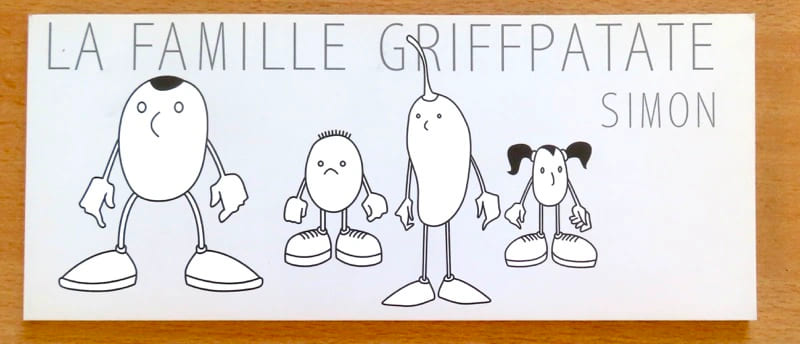
ref. 27115Etagères éditions, 2017. Grand in-8 broché à l'italienne, en belle condition.
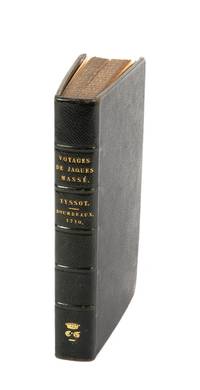
1710ref. 42748Bourdeaux (La Haye), Jaques l'Aveugle, 1710. In-12 de (8)-508 pp., veau havane, dos orné nerfs, tranches rouges (reliure de l'époque).
1928ref. 46687London u. New York, Peter Davies u. Harper and Brothers, 1928. 4°. Mit 122 meist ganzs., tlw. farb. Abbildungen. 92 nn. Bll., OPpbd.
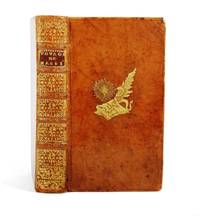
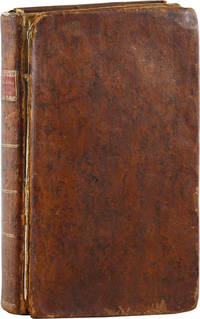
1717ref. 3201143Bordeaux" actually Rouen: chez Jacques l'Aveugle 1717. Extremities slightly rubbed rebacked corners reinforced a very good copy. Duodecimo with woodcut device on title; original sprinkled calf binding. First edition Rosenberg edition 'A' of this important imaginary voyage to Australia: a "landmark" in the development of the French voyage novel Atkinson. Friederich comments that the importance of mining and irrigation to the Australians makes it the only work "to foreshadow what has actually come to pass in modern Australia". This is an attractive copy of this precursor to Defoe set on the Australian continent among people obsessed with mining and the problems of irrigation: "the detailed account of the adventurer's camp in the Austral continent the building of a raft and the descriptions of plants and trees may be compared favourably to similar passages in Robinson Crusoe." Atkinson. The author Tyssot de Patot was a remarkable figure an English-born Huguenot and self-taught philosopher with a background in mathematics who at the impressive age of 72 suddenly scandalized his Dutch community and was run out of town as a dangerous heretic. He wrote two wonderfully inventive imaginary voyages both well ahead of their time: one was an account of a journey deep underground into a hollow earth while the present work tells the story of a veteran sailor called Jacques Massé who shipwrecks in the far southern reaches of the Indian Ocean not far from what is now Kerguelen Island. Delighted with the new world he discovers Massé denounces his European heritage only to be betrayed and have to flee to the coast where he is besieged for 12 years before being finally rescued by a Portuguese ship. The work was a modest bestseller of the era and the question of editions has been thoroughly investigated by Aubrey Rosenberg no small task given that all four major editions are dated 1710 on the title-page. Rosenberg argues that this edition 'A' in his list with an armillary sphere device on the title with its base pointing to the left was probably published between 1714 and 1717 and is the true first edition of the work. As Rosenberg points out this series of editions dispels the notion that interest in Tyssot quickly died out: in fact the staggered publications argue a sustained interest in the work throughout the eighteenth century. Tyssot de Patot's writings were a continual source of scandal: Voltaire thought that he had "carried the torch of discord into their homeland". Certainly the antagonistically anti-religious stance of this novel created much ill-feeling. Atkinson comments that because "open criticism of the Bible is so frequent" he will have to content himself with listing just a few of the more extreme examples. Nonetheless Atkinson's positive summary gives a good sense of the importance of the work: "a close following of accounts of real travellers such as Dellon Tavernier Mocquet and Lahontan. There is nothing fantastic unbelievable or overdrawn in the descriptions of the Austral continent.". The story has Massé shipwrecking on the Southern continent at "44 South latitude almost at the point where Kerguelen Island will be found to be on modern maps" Atkinson. Whilst most of the survivors of the wreck are content to maintain a large presence on the coast Massé and his friend Moret travel inland where they settle in an enormous and well-organised utopia "a plentiful fruitful country a land of blessing and peace . where human blood is sacred and safe from the rage and tyranny of great men". They become so enamoured of their Australian hosts that they abjure their faith and their European heritage and it is only when Moret is betrayed by his liaison with a treacherous queen that they reluctantly flee escaping rather fortuitously by a subterranean river which deposits them close by the original settlement. They remain besieged in the camp for another twelve years before they are finally picked up by a Portuguese ship. . Provenance: James Hustler "of Acklam in Cleveland in the North Riding of the Country of York Esq." engraved armorial bookplate dated 1730; Bernard Gore Brett Melbourne book collector. chez Jacques l'Aveugle unknown
1734ref. 3006519Cologne: Jaques Kainkus 1734. Slight wear to top and tail of spine otherwise fine. Duodecimo frontispiece title-page printed in black and red; contemporary sprinkled calf spine gilt in compartments. A handsome copy of the third edition Rosenberg edition 'C' with frontispiece portrait of Massé and title-page vignette of Mercury. Friederich comments that the importance of mining and irrigation to the Australians makes it the only work 'to foreshadow what has actually come to pass in modern Australia'. Tyssot de Patot was a well-known Huguenot free-thinker whose writings were a continual source of scandal: Voltaire thought that he had 'carried the torch of discord into their homeland'. Certainly the antagonistically anti-religious stance of this novel created much ill-feeling. Atkinson comments that because 'open criticism of the Bible is so frequent' he will have to content himself with listing just a few of the more extreme examples. Massé shipwrecks on the Southern continent at '44 South latitude almost at the point where Kerguelen Island will be found to be on modern maps' Atkinson. Whilst most of the survivors of the wreck are content to maintain a large presence on the coast Massé and his friend Moret travel inland where they settle in an enormous and well-organised utopia 'a plentiful fruitful country a land of blessing and peace . where human blood is sacred and safe from the rage and tyranny of great men'. They become so enamoured of their Australian hosts that they abjure their faith and their European heritage and it is only when Moret is betrayed by his liaison with a treacherous queen that they reluctantly flee escaping rather fortuitously by a subterranean river which deposits them close by the original settlement. They remain besieged in the camp for another twelve years before they are finally picked up by a Portuguese ship. Rosenberg argues for a date of around 1734 for this edition to coincide with the renewed interest in Tyssot's work at the time he cites 1733 English and 1737 German editions. His theory is that this renewal of interest 'arose because it was confused with Mandeville's Fable of the Bees which by 1730 had achieved considerable notoriety'. . Provenance: Frédéric Lachèvre 1855-1943 writer and bibliographer with his romantic bookplate and armorial gilt stamp on front board. Oddly enough the National Library of Australia has Lachèvre's copy of a later edition of this work Special Colelctions SR 913. Jaques Kainkus unknown
1717ref. 3211648Bordeaux" actually Rouen: chez Jacques l'Aveugle 1717. A fine copy. Duodecimo woodcut device on title; 19th-century grained morocco gilt gauffred edges. First edition Rosenberg edition 'A' of this important imaginary voyage to Australia: a "landmark" in the development of the French voyage novel Atkinson. Friederich comments that the importance of mining and irrigation to the Australians makes it the only work "to foreshadow what has actually come to pass in modern Australia". This is an attractive copy of this precursor to Defoe set on the Australian continent among people obsessed with mining and the problems of irrigation: "the detailed account of the adventurer's camp in the Austral continent the building of a raft and the descriptions of plants and trees may be compared favourably to similar passages in Robinson Crusoe." Atkinson. The author Tyssot de Patot was a remarkable figure an English-born Huguenot and self-taught philosopher with a background in mathematics who at the impressive age of 72 suddenly scandalized his Dutch community and was run out of town as a dangerous heretic. He wrote two wonderfully inventive imaginary voyages both well ahead of their time: one was an account of a journey deep underground into a hollow earth while the present work tells the story of a veteran sailor called Jacques Massé who shipwrecks in the far southern reaches of the Indian Ocean not far from what is now Kerguelen Island. Delighted with the new world he discovers Massé denounces his European heritage only to be betrayed and have to flee to the coast where he is besieged for 12 years before being finally rescued by a Portuguese ship. The work was a modest bestseller of the era and the question of editions has been thoroughly investigated by Aubrey Rosenberg no small task given that all four major editions are dated 1710 on the title-page. Rosenberg argues that this edition 'A' in his list with an armillary sphere device on the title with its base pointing to the left was probably published between 1714 and 1717 and is the true first edition of the work. As Rosenberg points out this series of editions dispels the notion that interest in Tyssot quickly died out: in fact the staggered publications argue a sustained interest in the work throughout the eighteenth century. Tyssot de Patot's writings were a continual source of scandal: Voltaire thought that he had "carried the torch of discord into their homeland". Certainly the antagonistically anti-religious stance of this novel created much ill-feeling. Atkinson comments that because "open criticism of the Bible is so frequent" he will have to content himself with listing just a few of the more extreme examples. Nonetheless Atkinson's positive summary gives a good sense of the importance of the work: "a close following of accounts of real travellers such as Dellon Tavernier Mocquet and Lahontan. There is nothing fantastic unbelievable or overdrawn in the descriptions of the Austral continent.". The story has Massé shipwrecking on the Southern continent at "44 South latitude almost at the point where Kerguelen Island will be found to be on modern maps" Atkinson. Whilst most of the survivors of the wreck are content to maintain a large presence on the coast Massé and his friend Moret travel inland where they settle in an enormous and well-organised utopia "a plentiful fruitful country a land of blessing and peace . where human blood is sacred and safe from the rage and tyranny of great men". They become so enamoured of their Australian hosts that they abjure their faith and their European heritage and it is only when Moret is betrayed by his liaison with a treacherous queen that they reluctantly flee escaping rather fortuitously by a subterranean river which deposits them close by the original settlement. They remain besieged in the camp for another twelve years before they are finally picked up by a Portuguese ship. . Provenance: This copy from the British Museum with the stamp on verso of title and the 1831 duplicate release stamp; also the crowned cipher "C.G." on spine. chez Jacques l'Aveugle unknown
1714ref. 39159A Bourdeaux ie. The Hague: James L'Aveugle 1714. First Edition. 12mo pp. viii 508. Bound in contemporary calf neatly rebacked in antique style little rubbed some minor foxing soiling a very good tight copy. Rosenberg "A" Gove 217-219; Cioranescu 62587; Barbier IV 1103; Atkinson 'The Extraordinary Voyage in French Literature' p. 70; Rosenberg pp. 84-5. The genuine first edition falsely dated. An important imaginary journey to Australia called a "landmark" by Atkinson. Based on a variety of real voyages the descriptions are believable and realistic. The author offers a detailed account of making a camp building a raft. While the book did not range much beyond the confines of the traditional Utopias of the times it did however include "living fossils" giant birds and strange flora that survived from prehistoric eras arguably making it one of the first modern Lost World novels. After being shipwrecked on the continent the narrator and a friend pressed on and developed a farm in "a plentiful fruitful country" until forced to flee by a treacherous woman. Tyssot de Patot 1655-1727 was a Huguenot who lived most of his life in Holland where he pursued a career as professor of Mathematics at the Athenaeum Illustre in Deventer the capital of the province of Overijssel. James L'Aveugle unknown
1714ref. 39159A Bourdeaux ie. The Hague: James L'Aveugle 1714. First Edition. 12mo pp. viii 508. Bound in contemporary calf neatly rebacked in antique style little rubbed some minor foxing soiling a very good tight copy. Rosenberg "A" Gove 217-219; Cioranescu 62587; Barbier IV 1103; Atkinson 'The Extraordinary Voyage in French Literature' p. 70; Rosenberg pp. 84-5. The genuine first edition falsely dated. An important imaginary journey to Australia called a "landmark" by Atkinson. Based on a variety of real voyages the descriptions are believable and realistic. The author offers a detailed account of making a camp building a raft. While the book did not range much beyond the confines of the traditional Utopias of the times it did however include "living fossils" giant birds and strange flora that survived from prehistoric eras arguably making it one of the first modern Lost World novels. After being shipwrecked on the continent the narrator and a friend pressed on and developed a farm in "a plentiful fruitful country" until forced to flee by a treacherous woman. Tyssot de Patot 1655-1727 was a Huguenot who lived most of his life in Holland where he pursued a career as professor of Mathematics at the Athenaeum Illustre in Deventer the capital of the province of Overijssel. James L'Aveugle unknown books
2015ref. 103100Pallant House Gallery. 2015. Pallant House Gallery. Chichester. 2015. First edition. 4to paperback. Illustrated in colour. Ownership inscription to half-title page in pencil. Laminate very slightly peeling to bottom margin of rear cover as well as an old price sticker. A lovely copy. paperback
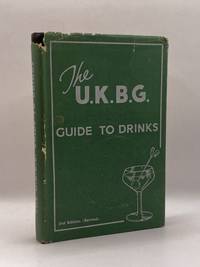
1955ref. 229623London: United Kingdom Bartenders' Guild/A.J. Vance & Sons 1955. Second edition. Full black cloth stamped in silver in dust jacket. One-inch stain to pp 126-27 bleeding through several subsequent pages light rubbing extremities very good in very good lightly soiled and edge worn dust jacket with half-inch chips to head and tail of spine in mylar cover. Numerous black and white illustrations photographs and period advertisements. Only 5000 copies of the second edition were printed. Errata slip tipped in rear. United Kingdom Bartenders' Guild/A.J. Vance & Sons unknown
ref. 7763Dijon, Imprimerie Jobard, 1930, réédition du tirage de 1906 épuisé, broché, 10,5x15 cm, 20 pages, illustration en frontispice. Très rare.
1799ref. 55420Philadelphia: Re-Printed by William Conover 1799. Second American Edition. 12mo 18.5cm. Contemporary tree calf; 320pp. Small perforation at leaf E6 costing a few characters but no loss of sense. Leaf L4 is bound out of order before L3 with marginal loss but no loss of text. Else a complete sound and Good copy in a contemporary binding worn with front joint cracked through held by threads. Ownership signature of a Henry Rogers dated 1801 to front pastedown. A popular 18th-century utopia described in the Encyclopedia of Science Fiction on-line as "one of the first Lost World novels in the literature" and "probably the first to suggest that the lost race in question may be Ancient Egyptians." Often attributed to Bishop Berkeley but in fact the work of another Catholic divine Simon Berington; in any case not a translation of any Italian work and "Gaudentio di Lucca" a synonym. Gaudentio which describes an imaginary African kingdom of Mezzorania where "Nature is the source of all that is good for mankind" originally appeared in London in 1737 and proved immediately popular going through a succession of French and German translations prior to the death of the author in 1755. The first American edition appeared in Norwich Connecticut in 1796; ours is the second American edition printed in Philadelphia three years later. Both editions are institutionally plentiful but rather uncommon in commerce. SARGENT p.11 the 1st ed. LEWIS p.18. NEGLEY 93. LCP AFRO-AMERICANA 1125 citing only this edition. EVANS 35183. Re-Printed by William Conover unknown
1799ref. 55420Philadelphia: Re-Printed by William Conover 1799. Second American Edition. 12mo 18.5cm. Contemporary tree calf; 320pp. Small perforation at leaf E6 costing a few characters but no loss of sense. Leaf L4 is bound out of order before L3 with marginal loss but no loss of text. Else a complete sound and Good copy in a contemporary binding worn with front joint cracked through held by threads. Ownership signature of a Henry Rogers dated 1801 to front pastedown. A popular 18th-century utopia described in the Encyclopedia of Science Fiction on-line as "one of the first Lost World novels in the literature" and "probably the first to suggest that the lost race in question may be Ancient Egyptians." Often attributed to Bishop Berkeley but in fact the work of another Catholic divine Simon Berington; in any case not a translation of any Italian work and "Gaudentio di Lucca" a synonym. Gaudentio which describes an imaginary African kingdom of Mezzorania where "Nature is the source of all that is good for mankind" originally appeared in London in 1737 and proved immediately popular going through a succession of French and German translations prior to the death of the author in 1755. The first American edition appeared in Norwich Connecticut in 1796; ours is the second American edition printed in Philadelphia three years later. Both editions are institutionally plentiful but rather uncommon in commerce. SARGENT p.11 the 1st ed. LEWIS p.18. NEGLEY 93. LCP AFRO-AMERICANA 1125 citing only this edition. EVANS 35183. Re-Printed by William Conover unknown books
ref. 200702702, Les presses d'ile de france, 1978 ; in-12, 222 pp., broché.
1987ref. 105Exposition Fitzwilliam Museum, Cambridge (Grande-Bretagne), du 12 juillet au 9 août 1987. Format : 29,5 x 21 cm - 48 pages - Illustrations principalement couleurs - En anglais - Broché.
1973ref. 51586N.p. 8th November 1973. 8vo. 44 pp. Full parchment orange lettered to the spine inscribed on the recto of the first leaf "for Ken & Ann for lending us milla & honey & dress lengths love from Judie & Simon". Black and white illustrations in the text either wood or lino cuts. Very good. A curious privately printed collection of recipes - e.g. "Virginia's Sauté of Kidneys Turbigo" "Uncle Henry's Basic Curry" "S.V.'s Remedy for a Black Eye" etc. etc. presumably to be distributed amongst friends. No other copies traced institutionally but another copy traced in commerce suggest that the authors were the artist Simon Verity 1945-2024 and his first wife Judith. [N.p.] unknown
ref. 538536Paris, "Le Livre", Emile Chamontin, 1926. In-12 br., couv. marron muette, 145 pp.-[12] ff., frontispice, 25 bois gravés en noir dans le texte ou à pleine page. Bel ex., non coupé.
1991ref. 833381991 Besançon, La Manufacture, 1991, in 8° broché, 275 pages ; illustrations hors-texte ; couverture illustrée.
ref. 201226342Paris, Selection du Reader's digest, 1995 ; in-4, 157 pp., cartonnage de l'éditeur. Bon état.
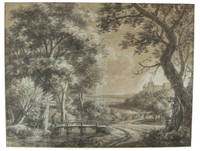
1620ref. 23479The Netherlands 1620. 43 x 56 cm. Under glass in a black and gold wooden frame. Landscape drawing in black chalk and white chalk on paper. Stunningly beautiful wooded landscape with a castle on top of a hill at the right. Although the drawing is unsigned it has been authenticated by a leading expert on 17th-century Dutch art: Egbert Haverkamp Begemann John Langeloth Loeb professor emeritus at New York University's Institute of Fine Arts formerly of the department of prints and drawings at the Morgan Library and Museum in New York and professor of art history at Yale University. On the back is a sketch of a similar landscape apparently by the same artist.In very good condition with the paper slightly thin in places and reinforced along the edges. ABE CAT Art History unknown
ref. 200914706Munchen, Veroffentlichung des sudetendeutschen archivs, 1990 ; in-8, 188 pp., cartonnage d'éditeur avec jaquette. Eine filmexpeditionauf alexander von humbolts spuren.
1990ref. 5266Paris Réunion des Musées Nationaux 1990 In-4 (h. 30,5 cm.) 550 pp. couverture souple.
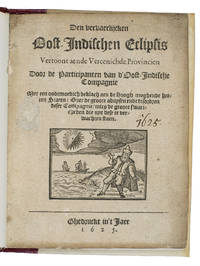
1625ref. ABC_459231625. Modern half red faux snake-skin white paper sides manuscript title on front board new endpapers and paste-downs. Small 4to. With a small woodcut on the title-page. Set in textura types with incidental roman. Shortly abbreviated edition of an important and renowned pamphlet in the history in the VOC written by the lawyer Simon van Middelgeest about whom less is known. It is a complaint against the management the so-called "Heren XVII" of the Dutch East India Company VOC by the sharesholders who felt their concerns were being ignored. It is one of the many anonymous polemic pamphlets published by the so-called "doleanten" participants shareholders in which they express their grievances on the self-enrichment and abuses of the "Heren XVII" of the VOC. It is a shortened edition of a 1622 pamphlet titled Nootwendich discours oft vertooch aan de hooch-mogende heeren Staten Generaal van de participanten der Oost-Indische Compagnie tegens bewintshebbers Knuttel 3348; Landwehr VOC 884 which was reprinted several times under different titles including the present. The publishers frequently changed the title because the States of Holland published a proclaimation prohibited Van Middelgeest's Nootwendich discours in 1622 Knuttel 3349. With the bookplate of professor Dr. Willy L. Braekman on the front paste-down. Leaves very slightly browned otherwise in very good condition.l Knuttel 3585a; Landwehr VOC 911; Sabin 99316; STCN 4 copies; USTC 1034730 5 copies including the same 4. unknown
1859ref. ABC_45580Wiesbaden: C.W. Kreidel 1859. Contemporary decorated red cloth gold-tooled spine new endpapers. Small oblong folio 23 x 30 cm. Suite of 10 steel-engraved views all finely hand-coloured and highlighted with gum arabic tipped onto thick brown leaves with printed decorative borders and captions. Beautifully produced suite of views engraved after the Dutch artist Jan Simon Voddiggel 1820-1862 showing Wiesbaden in Hesse one of the oldest spa towns in Europe celebrated as the "Nice of the North". It includes several views of the old Kurhaus "spa house" built by Christian Zais in 1810 in the neoclassical style the nearby cold-water balneological institution of Nerothal the summer palace of the Dukes of Nassau the "Kochbrunnen" hot spring fountain in downtown Wiesbaden the sepulchral chapel of Duchess Elizabeth of Nassau the Ducal hunting palace and the ruins of Sonnenberg castle. Issued with various titles and as here without a title-page.With an inscription in ink on the first free endpaper to Christine Emma Sanford née Percival 1828-1900 "from her affectionate mother" dated 1 May 1859. Christine Percival had married Edward Ayshford Sanford of Combe Florey Somerset in 1853. Cloth rubbed spine rebacked new endpapers. One plate with an unobtrusive mark another with faint stains at corners from adhesive on the back. Otherwise in good condition. C.W. Kreidel, hardcover
ref. #[53892]12° geheel perkament 8277 pag. met gegraveerd frontispice en 4 paginagrote gravures. Titelpagina beschadigd doch een facsimilé van deze pagina toegevoegd. Verder goed exemplaar. C0796 l Leemans Het woord is aan de onderkant pag. 97-99; Van de Pol Het Amsterdams hoerdom. Uiterst zeldzaam boekje slechs 4 ex. in STCN waarvan 2 in buitenland. De drukker was volgens Van Eeghen J. Bouman. Franse vertaling van ''t Amsterdamsch hoerdom' ui unknown