[Japanese Navy]:ABAA
57 413 résultats
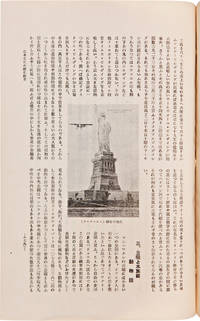
1932réf. 57824Yokohama: Yokohama Boueki Kyoukai 1932. Imperial Japanese Navy Training Fleet Visits North America A very rare collection of reports made by Imperial Japanese Navy medical officers in training during a training cruise to North America on board the armored cruiser Iwate in 1929. In accordance with Japan's 1896 Naval Expansion Plan the Iwate was constructed in Britain between 1898 and 1901 as the second of two Izumo-class armored cruisers. The Iwate saw considerable action almost immediately after its completion participating heavily in naval engagements during the Russo-Japanese War. After the war Iwate was reassigned to training duty and the ship ran nearly twenty international training cruises for Imperial Japanese Navy recruits and officers between 1916 and 1939. She returned to combat service in World War II where she was sunk by American and British forces during the aerial attack on the Japanese naval base at Kure in 1945. This book details the observations made on of one of Iwate's many global cruises undertaken in 1929. The tour took the young officers and cadets first to Hawaii before continuing to Victoria Seattle Tacoma Vancouver San Francisco Los Angeles Panama Cuba Baltimore New York D.C. and Mexico. Returning from North America the crew visited Hawaii again and a number of Micronesian islands. The articles that make up this account originally published in monthly installments during and after the tour were written by the medical officers on board the ship. They describe the impressions of each port and city visited by the crew and in keeping with their medical background provide a great deal of information on health and sanitation issues. Detailed reports about hospitals drinking water waste management epidemiology and even conditions surrounding sex work are supplied for different locations with particular attention paid to the Japanese expatriate community when present. A rare and unique account of North America from the point of view of interwar Japan. We locate only three copies on OCLC recorded at the Huntington Library University of Pennsylvania and Japanese National Diet Library and one additional copy at Kanazawa University. 6451153pp. including in-text photographic illustrations. Printed entirely in Japanese. Original textured paper boards front board and spine lettered in gilt. Boards slightly bowed minor loss along upper and lower portion of spine light shelf wear. Tiny wormholes to blank lower margin of first few pages. Very good. In somewhat worn original paper slipcase. OCLC 959296968 672430020. hardcover books
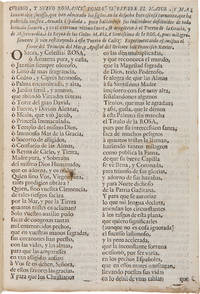
1719réf. 35378Seville: Francisco Garay 1719. A Massive Storm at Sea Versified A four-page ballad describing the enormous storm experienced by the Spanish fleet in 1719 and of the miraculous preservation of the ships which eventually arrived safely in Cadiz. It was this same great fleet which Spain had gathered at Cadiz and Corunna for the invasion of the west of England directed by James Butler the attainted Duke of Ormonde. A rare possibly unique piece of early 18th-century Spanish verse. Not recorded in Palau NUC or on OCLC. 4pp. Small quarto. Modern three-quarter morocco over linen boards spine gilt. Occasional stains holes at bottom of both leaves not effecting text last page of text closely trimmed. A good copy. hardcover books
réf. 6312UNITED STATES MARINE CORPS. PS. N.d. N.p. A black-and-white photograph of a group of U.S. Marine Corps officers signed by ten of them. The signatories are: Maj. Margaret C. Hannigan Maj. Robert M. White II Col. John R. Knowles Col. Robert H. Williams Brig. Gen. Randolph McCall Pate Col. James L. Mueller Lt. Col. Robert L. Bayer Lt. Col. Allan H. Ringblom Maj. Robert C. Hayes and Maj. Lester C. Pertle. According to the caption on the verso which includes a complete list of the people depicted this group was the 1952 Marine Corps Reserve Policy Board which was meeting to advise on Marine reserve policy. This unusual photograph is in fine condition. unknown books
réf. 4272July 1863-March 1864. A set of six financial documents relating to two ships. The barque Texas and the barque Alamo were owned by Oliver H. Perry a shipping merchant from Southport Connecticut. The Texas was lost at sea in late 1862 while serving the Union cause during the American Civil War. Five of the six documents report Perrys earnings on the ships. These are from Connecticut shipping company Wakeman Dimon & Co. who operated Perrys ships. The sixth letter is from the Atlantic Insurance Company. It concerns Perrys insurance policies on the ships. The documents are in very good condition overall with folds. unknown books
réf. 3182Two letters concerning a Marine Corps band concert written on behalf of Presidents and addressed to Caprain John H. Craige of the Navy Department:TLS. 1pg. 7 x 9 . January 31 1924. Washington DC. A typed letter signed John Randolph Bolling on behalf of former President Woodrow Wilson. The letter is written on Wilsons personal Washington DC letterhead and signed by Wilsons brother-in-law states: Mr. and Mrs. Wilson ask me to say that they will be very happy to act as patrons of the Invitation Concert to be given on March fourth by the Band of the United States Marine Corps. As the sickly Wilson died four days later this must be one of his last missives. The letter has a red crayon mark through it and two punch holes at the top.TL. 1pg. 5 x 9 . February first 1924. Washington. A typed letter on Hoovers personal letterhead: Mr and Mrs Herbert Hoover accept with pleasure the invitation of The Committee in Charge of the Invitation Concert to be given on March fourth by the Band of the United States Marine Corps and feel honored to have their names used among its patrons. The letter has a red crayon mark through it and two punch holes at the top. unknown books
1966réf. M8888Bologna:: Aulo Gaggi Editore 1966. 1966. 250 x 175 mm. 8vo. 217 pp. Color frontis. 40 plates some in color index. Orange cloth dust jacket; jacket extremities a bit worn. Very good. Scarce. Aulo Gaggi Editore, (1966). hardcover books
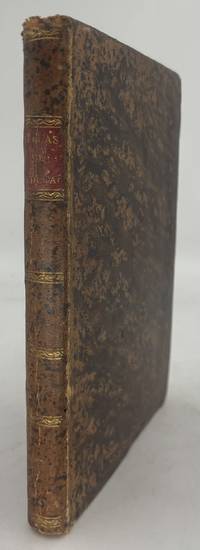
1792réf. 43080London: J. March and Son 1792. London: J. March and Son 1792. ". Incorporated in MDCCLXXI. With the several instructions forms of indentures and other instruments used by it. The FOURTH EDITION containing an historical account of this institution." With an elaborate interpretation of the symbolism of the frontispiece which shows Britannia sheltering a young seaman-to-be a statement of the purpose of the society which was Jonas Hanway's plan for educating indigent boys while preparing them for careers as British seamen and an address from Hanway himself making the case for the importance of his plan. The remainder of the text covers history rules forms and functioning of the society. A very nice copy bound in full tree calf with gilt spine decoration and label. 12mo 17.5 cm. xxi 149 pp. b/w engraved frontispiece. J. March and Son unknown books
1885réf. 40972Newburyport: William H. Huse & Co 1885. With lists of officers and members as well as by-laws. The venerable Newburyport Marine Society was instituted in 1772 incorpor . Newburyport: William H. Huse & Co. 1885. With lists of officers and members as well as by-laws. The venerable Newburyport Marine Society was instituted in 1772 incorporated in 1777 and revised in 1830. This copy belonged to Capt. Charles W. Brown with his inscription and bookplate. Brown was admitted as a member in 1880 and has made some manuscript annotations such as "lost at sea Nov. 29 1884" in the list of members. Spine reinforced with tape otherwise in very good condition in original brown cloth with gold cover lettering. 12mo 42 pp. William H. Huse & Co hardcover books
2016réf. 41022Salem: Marine Society 2016. Salem: Marine Society. 2016. 235 pp. b/w plates. "Together with the Laws of the Society the Acts of Incorporation and a List of Members 1766-1966". Reprint with history and portraits of members. As new. Marine Society unknown books
1852réf. 40064Washington DC: C. Alexander 1852. may18. Washington DC: C. Alexander 1852. may18. ix 72 pp. This is a fascinating report as the Navy tries to figure out if dehydrated peas beans carrots turnips potatoes etc. would be useful. The experiments were based on processes developed in Europe. They found "Edwards' 'Preserved Potato' as positively bad. Of Masson's vegetables we found the cabbage carrots and green peas of good quality. Gannal's vegetables. proved good in our hands. Lewis' 'Preserved Potato' we found good though not so beautiful a preparation as that of Gannal." Contrary to the reports trials at sea of Edwards' potatoes were successful. However I don't believe dehydrated foods were widely used in the military until WW II. Worn half calf over marbled boards. Text clean and fresh with some contemporary manuscript notes. C. Alexander hardcover books
1874réf. 5091Washington: Government Printing Office 1874. First Edition. Hard Cover. Very Good. Quarto. 268pp. 14 sepia toned lithos after photographs by famed photographer Timothy H. O'Sullivan and 17 folding maps at rear 16 are listed in the map index Short tear to map #1 near gutter; bound in original brown cloth slight fading to spine; minor fraying at spine ends and ghost of label removal; bookplate Rhode Island State Library on front pastedown and small stamp on title page; neat contemporary owner's name on title page. The present title laid the ground work for the building of the Panama Canal. Internally plates and text are clean and bright. Overall a very good copy. Government Printing Office unknown books
2005réf. 2842First Edition/First Printing with a "1" to the copyright page; A Fine book in a Fine dust jacket with only a hint of age-toning to the page edges. SIGNED by the author to the half title page. Also includes a Signed First Printing of "Two Caravans" in F/F condition. A beautiful set of books from this critically acclaimed and award winning author. Neither book remaindered not price clipped not ex-library; in a fresh Mylar sleeve and will ship carefully wrapped in a sturdy box. Viking hardcover books
réf. 38684SONG SHEET THE ARMY AND NAVY FOR EVER. New York: Charles Magnus circa 1860s. Colored illustrated letter-sheet 8 x 5 inches. Wolf American Song Sheets 64a. Three ten-line stanzas of patriotic verse. The top half of the page is a colored illustration showing victorious Union army and navy men raising the stars and stripes over a Confederate fort with cheering soldiers and sailors all round and Union ships firing cannon. Evidence of removal at the corners of the blank leaf. Fine. 38684. unknown books
réf. 35768PAGE SCHINZ Marina and Gabrielle van Zuylen. THE GARDENS OF RUSSELL PAGE. New York: Stewart Tabori & Chang 1991. Small folio. Cloth dust jacket. 255 1 pages. First edition. Richly illustrated examination of the landscape designs and gardens of Russell Page. Text by Gabrielle van Zuylan and color photographs by Marina Schinz. Very good. unknown books
1815réf. 39889Lisbon: Simao Thaddeo 1815. hardcover. very good. 144pp. 8vo. Lisbon 1813. Second Edition. BOUND WITH: Taboa da Declinacao do Sol ao Meio Dia no Meridiano da Cidade de Lisboa . IV 64pp. 8vo full leather. Lisbon 1815. Scarce. Very good. Tables of latitude and longitude for marine navigation. Simao Thaddeo unknown books
2000réf. 216455Paris: Gallimard 2000. Hardcover. VG/G. Some wear around the edges of the jacket including bumping scuffing and a few 1/2-1 inch closed tears. Book is clean and unmarked besides previous owners bookplate. Quarto. Hardcover. Black cloth boards in illustrated jacket. 430 pages : illustrations some color ; 30 cm. French text. Gallimard hardcover books
2017réf. 109397NY:: Columbia University Press. 2017. Hardcover. First edition. Bookstore stamp on front free endpaper else near fine in a fine dust jacket. . 0231178522 . Columbia University Press, hardcover books
1883réf. 14445Washington DC: Government Printing Office 1883. First Edition. Very Good. 9x6in; 363 pp. 14 foldout maps and diagrams of plans and sections views of the Steamer Jeanette; Bound in dark half-leather with marbled paper boards gilt lettering and rule designs on ribbed spine marbled end papers light speckled stain to all trimmed edges; Minor shelf wear to covers edges and corners with rubbing of covers joints and bottom edge corners bumped minor age-toning to text and maps typical closed tears with some repaired and nicks to map edges lacking title page with facsimile laid in front free end paper detached several loose leaves. Howgego III D4 CS. The Jeannette expedition 1879-81 was led by Lieutenant-Commander George Washington De Long 1844-81. The purpose was to find a route through the Bering Strait that was warmed by the Pacific Kiro Shio current to an open polar sea. The 'Jeannette' became icebound northwest 350 Km and sunk in May 1881 some 400 Km from the Siberian coast. The 33 men provisioned three life boats to drag over the ice to open water for the nearest settlements in Lena Delta. On the water they became separated in a gale and one boat vanished. George Melville's boat with 11 men landed in an eastern bay of the Delta and were able to reach a village to find help. De Long's boat with 14 men landed 100 km away on the northern part of the Delta and with winter coming they were not able to find shelter or game and all perished by the end of October 1881. They were found by Melville's rescue party in March 1882 and the bodies journals and artifacts returned to the United States. This book is the formal Navy inquiry requested by a joint resolution of Congress for a formal Naval Court of Inquiry on the Loss of the Jeannette which was conducted by the Navy in 1882-3. The 85 day inquiry generated the first compilation of documents and witness statements on the expedition. The Navy Court found no fault in the conduct of the officers or men and commended the actions of De Long and Melville. In Part 2 the Navy transmitted the report of Lieut. G. B. Harber on the search for the remains and artifacts of the De Long party and return the remains to the United States. A separate Navy inquiry and report was submitted to the House of Representative in May 1884 48th Congress 1st Session House Ex Doc No. 163. This was a follow up of Lieut G. B. Harber U.S.N.on the search made by Liuetenandt Schetze for the remains of De Long's party and the return of the remains to the United States. This is consider and accompaning report to this 1883 report. Also in 1884 a separate House inquiry was called due to objections to the Navy Court findings by survivors and survivor's families to members of Congress. The family of Jerome J. Collins reporter for the New York Herald assigned to participate in the expedition and died with De Long's party specifically objected to De Long treatment of Collins Melville's failure to rescue the lost party and the "cover-up" of failures by the Naval Court of Inquiry. The Inquiry detailed with the testimony of 20 witnesses 74 documents filed excerpts of the journals of De Long Ambler and Collins and much questioning by representatives of the Collins family and for Emma De Long and George Melville. There were no conclusions findings or recommendations to the Navy from this inquiry. Government Printing Office unknown books
1884réf. 13626Washington DC: Government Printing Office 1884. First Edition. Very Good. 9x6in; Part 1 - 363 pp. 14 foldout maps and diagrams of plans and sections views of the Steamer Jeanette; Part 2 - 75 pp. 4 plates sepia-toned images with tissue guard one map; Bound in dark half-leather with marbled paper boards gilt lettering and rule designs on ribbed spine marbled end papers light speckled stain to all trimmed edges; Minor shelf wear to covers edges and corners with rubbing of covers joints and bottom edge minor age-toning to text and maps typical closed tears with some repaired and nicks to map edges rear free end paper detached prior owner small library blind stamp on top part of six pages including title pages of both Parts. Howgego III D4 Poore. AB . The Jeannette expedition 1879-81 was led by Lieutenant-Commander George Washington De Long 1844-81. The purpose was to find a route through the Bering Strait that was warmed by the Pacific Kiro Shio current to an open polar sea. The 'Jeannette' became icebound northwest 350 Km and sunk in May 1881 some 400 Km from the Siberian coast. The 33 men provisioned three life boats to drag over the ice to open water for the nearest settlements in Lena Delta. On the water they became separated in a gale and one boat vanished. George Melville's boat with 11 men landed in an eastern bay of the Delta and were able to reach a village to find help. De Long's boat with 14 men landed 100 km away on the northern part of the Delta and with winter coming they were not able to find shelter or game and all perished by the end of October 1881. They were found by Melville's rescue party in March 1882 and the bodies journals and artifacts returned to the United States. Part 1 of this book is the formal Navy inquiry requested by a joint resolution of Congress for a formal Naval Court of Inquiry on the Loss of the Jeannette which was conducted by the Navy in 1882-3. The 85 day inquiry generated the first compilation of documents and witness statements on the expedition. The Navy Court found no fault in the conduct of the officers or men and commended the actions of De Long and Melville. In Part 2 the Navy transmitted the report of Lieut. G. B. Harber on the search for the remains and artifacts of the De Long party and return the remains to the United States. In 1884 a separate House inquiry was called due to objections to the Court findings by survivors and survivor's families to members of Congress. The family of Jerome J. Collins reporter for the New York Herald assigned to participate in the expedition and died with De Long's party specifically objected to De Long treatment of Collins Melville's failure to rescue the lost party and the "cover-up" of failures by the Naval Court of Inquiry. The Inquiry detailed with the testimony of 20 witnesses 74 documents filed excerpts of the journals of De Long Ambler and Collins and much questioning by representatives of the Collins family and for Emma De Long and George Melville. There were no conclusions findings or recommendations to the Navy from this inquiry. Government Printing Office unknown books
1996réf. 524115New York: Farrar Straus and Giroux 1996. Softcover. Fine. Uncorrected proof. 16mo. Illustrated wrappers. Illustrations by Sophie Herxheimer. Fine with publisher's material laid in. French fairy tales newly translated by John Ashbery A. S. Byatt and Terence Cave among others. Farrar, Straus and Giroux unknown books
1850réf. Cat326United States 1850. Bound lined notebook measuring 8 x 10 ¼ inches. Inscribed "Stephen Decatur / U.S. Navy / 13 W. Cedar St. Boston." on flyleaf. Eighty-nine pages filled out totaling appx. 17000 words. Spine missing covers coming detached with wear especially to corners; contents excellent to Near Fine. Overall very good plus. An unpublished manuscript poem mourning the death of Stephen Decatur 1779-1820 written by a friend who "had known Commodore Decatur upwards of twenty years:- a great portion of that time intimately-under the auspices of a sincere reciprocal friendship." A hero of the Quasi-War War of 1812 and both Barbary Wars Decatur was killed in March of 1820 in a duel with Commodore James Barron over comments Decatur had made about Barron's conduct during the Chesapeake-Leopard affair. The poem which appears to have been re-written by a copyist around the 1840s or 50s was purportedly written in April of 1820 "at the spot where repose the remains of the great and gallant Decatur". The inscription on the flyleaf indicates that this copy belonged to Decatur's nephew also named Stephen Decatur and also a Commodore of the US Navy. Interestingly the author has made several pleas for secrecy about the text; he states that he "sought concealment" so that he could come to Decatur's grave "in as secret a manner as possible" and states of the poem that it: "is intended to be placed in an impervious case by the side of the 'Hero's Tomb' a tribute of affection- an offering of the Muse- and a memorial of the grief occasioned by his untimely death. Should it at any future day be discovered it will be remembered that it never was intended to go beyond the eye of the author and the sacred sanctuary where it is deposited - It is hoped there it will remain sacred in the concealment the author wishes which best suits the melancholly motive by which he has been actuated." It is not clear why secrecy about the text was so paramount to its author. Intimate and ardent platonic friendships between men described in terms of passion and love were neither uncommon nor shameful at the time. It seems possible though that the author's feelings may have gone a step beyond this; in particular in the preamble to the poem he spends a fair amount of words contemplating Decatur's looks: "With these intrinsic gifts he added a form full of beauty and grace an appearance that announced instantaneously the just pretensions of their professor exciting in the beholder an interest and prepossession sometimes felt although difficult to be accounted for. His look was impressive in the highest degree commanding the confidence of all who came within the influence of his eye and voice. "The person of Commodore Decatur was of a manly height most symmetrically proportioned erect & imposing - his bust of the finest order - the chest full and expanded the neck long and muscular the head gracefully affixed - the face oval; - the forehead ample; - the hair of raven hue and curling; the nose aquiline; - the mouth large and highly expressive - the chin full; - the eye the index and mirror of the soul of a deep dark brown quick and annimated in conversation grave and solemn in meditation; - and its force concentrated by inquiry or research awfully scrutinizing; seeming to penetrate the recesses of the hidden heart; - these constituents combined formed a beautiful and interesting countenance such as identified a Hero fitted for the glorious occupation and circumstance of man; - to command inspire and electrify." And early in the poem he laments: "Oh God! is here my friend so late I viewed / In all the health and strength of manhood's prime / His mind with bright intelligence endued sic / His manly beauty still untouched by time -". He also remarks of their early relationship that "As manhood ripened I the nearer drew". At several points while writing of the loss to Decatur's wife Susan Wheeler the poem verges on taking on her point of view: "No more behold the sparkle of his eye / His lip once warm with love's ambrosial sigh." Of course twenty-first century norms of interpersonal relationships cannot be imposed here and the author himself seems to have been married "Here the unyielding tie - / That made me cling to earth and fear to die: / O! it was bitterness from her to part - / Who by the force of love enchained my heart". Nonetheless the relationship was close enough for the author to have contemplated suicide following his loss finding "naught worth living for below": "The privilege of friendship still I crave / To bend in fond devotion o'er thy grave. / Dreaming of wild unutterable things / Such as a dark imagination brings / From this thy home- thy long and last abode - / Not by thy country but by friends bestowed!" He writes "No dread of a terrific judge had I: / And yet I could not bring myself to die." In a description of this poem from M&S Rare Books Daniel Siegel notes that Decatur's close relationship with fellow officer and childhood friend Richard Somers was discussed in Randy Shilts' book Conduct Unbecoming: Gays and Lesbians in the Military 2005. Shilts wrote that Decatur wore a gold ring belonging to Somers and after Somers' death was similarly inconsolable and continued to wear the ring for the remainder of his life. Much of the poem discusses Decatur's exploits with the Navy especially in the Barbary Wars "Turk upon Turk in dreadful slaughter piled" proclaiming that: "Known is thy name within that chieftain's hall - / Is seen inscribed on every mouldering wall - / Thy deeds are sung within his gloomy towers / Thus slaves beguile away his heavy hours - / . There stands thy name in deep indented mark / On sombre turrets now grown gray and dark". Following the poem are a number of annotations giving historical context for specific lines. These include a narrative of an amputation performed by Decatur during one of the Barbary Wars which the author claims to have witnessed: "Immediately after one of the desperate assaults on the Fortresses and Castles of Tripoli which were so often conducted by Decatur the Gunboats being withdrawn beyond point blank range he attended in person to the amputation of several limbs which it was found necessary from their mutilated condition to take off. While the knife was applied to the leg of a gallant fellow who had been wounded by a Cannon Shot he continued to asseverate till he expired 'God bless Decatur and damn the Turks.' This the author himself heard; being present he has the incident strongly imprinted on his recollection". The fact that the author was present for this may give some clues as to his identity. The manuscript was found among the papers that were auctioned in 2010 in a group with items belonging to George Washington Storer 1789-1864 along with Tobias Lear and Stephen Decatur papers. Storer did not begin his Naval career until his appointment as a Midshipman in 1809 ruling him out if the previous anecdote is about the First Barbary War. However in 1815 he commanded the USS Lynx which was part of Commodore William Bainbridge's squadron in the Second Barbary War.1 Another candidate is Rear Admiral Charles Stewart 1778-1869 who like Decatur served in the Quasi-War War of 1812 and both Barbary Wars. Moreover Stewart was a childhood friend of Decatur's; the two met as boys while attending the Episcopal Academy in Philadelphia. Stewart's first wife Delia Tudor was a Bostonian and the notebook bears the stamp of a Boston stationer despite Decatur's grave's location in Philadelphia. Finally the notebook's annotations quote a poem about Decatur in Tripoli written by Lieutenant James R. Caldwell. Caldwell was killed in 1804 in the First Barbary War but the poem appears in a book The Minstrelsy of Edmund the Wanderer 1810 assembled by Captain Robert Traill Spence 1785-1826/7. Spence served in this war and the War of 1812 and named one of his sons Stephen Decatur Spence.2 Whoever the author is the manuscript will be of interest to scholars of the US Navy during the Early Republic era and more broadly to those interested in close male friendships during that time. Provenance: The manuscript was sold in a group of papers from the Washington Storer estate by James D. Julia auctions to the bookseller Daniel Siegel of M&S Rare Books. Siegel offered it in his catalogue no. 89 at a price of $25000 where it went unsold and passed through Siegel's estate following his death to another dealer through Bonhams and was the purchased by us in 2026. A second copy of the manuscript is known auctioned in 1920 by Henckels from the library of Henry A. Smith. That copy was finely bound and originally came from the library of President James Monroe. 1 Gardner Weld Allen Our Navy and the Barbary Corsairs Houghton Mifflin 1905 293. 2 "Capt. Spence" Destroyer History Foundation accessed April 3 2026 https://destroyerhistory.org/fletcherclass/ns_spence/. books
1900réf. 012145Tokio: Tokio Printing Company Ltd. 1900. Cloth shows moderate wear. Rear cover spotted and damp-stained. Free-edge of about the last half of the book shows damp-stain and red color bled from rear cover. Internally text is crisp and clean throughout with no evidence of water-staining. This rare history was translated from the original Japanese report under the direction of Baron Y. Saneyoshi by S. Suzuki. Frontispiece photographic portrait of Baron Saneyoshi in full military uniform. Twenty-one full-page illustrations most of which are chromolithographs. Damp-stain around periphery of several color plates near the end but never close to the illustration. A number of black and white text illustrations and graphs. Chapters on battles and injuries brief history of the killed and wounded injury statistics causes of wounds and their classificationcomplications of wounds and management of the wounded. The first book documenting the treatment of the wounded on ships since the modern revolution in naval warfare. This treatise was inspired by the "Medical and Surgical History of the War of the Rebellion" following the American Civil War with typography and illustrations in a similar style. OCLC lists only two copies worldwide in libraries. A second edition was published in 1901. NUC 0108123. 406pp. First Edition in English. Purple Cloth. General Moderate Wear./No Jacket. Quarto. Tokio Printing Company, Ltd. Hardcover books
1994réf. 216092Washington DC: Smithsonian Institution 1994. Softcover. VG-: Exlibrary book with a sticker on the front cover two plates on the inside front cover and perforation stamp on the first page. Some corners are bent at the corners. Majority clean body pages and solid binding. Quarto. Softcover. Green wraps with metallic titles x 144pp 7 BW illustrations. 28 cm. Detailed listing of archived microfilms in major institutions across Pennsylvania; this list centers on art-related papers. A very useful tool for where to find research and resource material. Smithsonian Institution paperback books
1994réf. 126808Washington DC: Smithsonian Institution 1994. Softcover. VG. Quarto. Softcover. Green wraps with metallic titles x 144pp 7 BW illustrations. 28 cm. Detailed listing of archived microfilms in major institutions across Pennsylvania; this list centers on art-related papers. A very useful tool for where to find research and resource material. Smithsonian Institution paperback books
1917réf. 1373213Washington: Government Printing Office 1917. First Edition. Hardcover. Octavo 432 670 pages. In Good plus condition. Spine is black with gilt lettering. Boards have some staining rubbing bumping to corners and minor shelf wear. First front end paper is shaken from binding 1917 title page has a green stamp several pages are partially shaken and there is light foxing throughout text block. 1373213. Special Collections - Downstairs. Government Printing Office hardcover books