Multiple ContributorsMareMagnum

433 results
1918Full page illustration of the new chief of the Imperial General Staff, Lieut.-General Sir Henry Hughes Wilson. Some Lighter Aspects of a Fleet Action - by 'Bartimeus'. Preaching and Practising Prudent Economy - 5 photos. An Aeroplane Shoot on the Western Front, by 'O.Pip'. Artillery Preparation Against the Great Attack - 3 photos of a massive British rail-mounted gun and a French shell dump. Amazing photo of French observers serving as part of an anti-aircraft battery. Five photos of kite balloons. Women at work. Tanks and Trimphs from the French Front - 4 photos. From the Forge of Vulcan to the Field of Mars - two illustrations of massive guns. The U Boats and the U.S. - a confident view of the Transatlantic Transport (article). At Army Headquarters, article by Hamilton Fyfe. Arresting Attila's Advance to the Adriatic - 5 photos. New Laws for New Conditions - how the Australian Commonwealth Set the Example. Photos of decorated soldiers. Adventures of an ensign, article by 'Vedette'. Average wear. Unmarked. Staples disintegrated. Sound copy. Book
1959This is a very good substantial run of the Transatlantic Review with just light wear. Very clean inside and out. All issues softcovers in their original wrappers. The run contains issues 2, 3, 4, 5, 6, 9, 12, 13, 14, 18, 19, 20, 22, 23, 24, 26, 27, 32, 35, 36, 42 & 43, 44, 45, 49 and the Index volume. 25 issues in all from 1959 to 1974. Size varies a bit, typically 8" or 9" X 6". Heavy set, foreign shipping will be extra. This set will be securely wrapped and packed in a sturdy box and shipped with tracking.
19868vo., Second Edition, with plates and pictorial endpapers; blue cloth, gilt back, a very good, bright, clean copy in price-clipped dustwrapper.
ref. SONG041539418XRoutledge 2008-03-10. 1. hardcover. Used: Good. 6.30x0.90x9.20. Buy with confidence. Excellent Customer Service & Return policy. Routledge hardcover
ref. 68-6355Paris France: CGT 1970. Folded Page. 18 cm. x 21.5 cm. 4 pp. Very Good. Paris, France: CGT, 1970. unknown
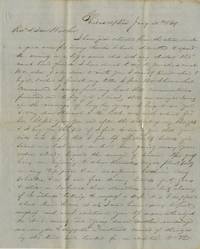
1849ref. List3737Philadelphia Pennsylvania 1849. Eight page letter measuring 8 x 10 pages appx. 1800 words. Fine condition. A lengthy and literary 1849 family letter from Robert Lind Philadelphia to his brother discussing enslavement and the growing sectional crisis California Gold Rush migration and Presbyterian intellectual life and including a remarkable inherited family narrative concerning a clandestine aristocratic marriage in pre-Revolutionary Ireland that ultimately forced the writer's grandfather into exile. Lind provides a rich cross-section of American intellectual and family life on the eve of the 1850s. He discusses the state of the church the movement of ministers westward the instability of clerical life and the increasingly volatile national debate over enslavement and sectionalism. The letter meditates extensively on the survival of the Union just months after the conclusion of the Mexican-American War and amid the gathering crisis that would soon erupt into the Compromise of 1850. Lind responds to his brother's pessimism about the future of the republic with an expression of moderate antebellum Unionism: "I am sorry to find you had such discouraging hopes of the Republic for my own part I don't think that even the subject of Slavery with all the violence of the fanatical Abolitionists of the North & the disunionists of the South will be able to divide us - the people of the U.S. in each and every direction love the Union too much to permit such a catastrophe". Lind captures an aspect of political belief widespread among educated Northerners in the late 1840s that controversy over enslavement was dangerous but ultimately containable because emotional attachment to the Union would remain stronger than sectional extremism. He condemns both radical abolitionism and Southern disunionism in nearly symmetrical language reflecting the outlook of conservative or moderate Northerners who viewed themselves as defenders of national stability rather than partisans of either section. Equally revealing is his discussion of John C. Calhoun who "has regarded the subject in a partial light so long that I give him the credit of honestly believing it a blessed Institution"-Lind attempts to understand Calhoun's ideology as a sincere product of his environment. Yet he immediately contrasts that worldview with what he sees as the inevitable moral direction of modern civilization: "we live in an age of progress & enlightenment - the sympathies of Christendom is being fast enlisted in favour of the black republic sentiment is decidedly opposed to its enslavement's enlargement or extension." Lind is not a radical abolitionist yet neither is he proslavery; he represents the uneasy center of antebellum Northern opinion still convinced in 1849 that compromise and national affection would ultimately prevent disunion. The letter is equally valuable for its vivid contemporary references. California dominates conversation in Philadelphia: "For the last few months this has been the engrossing topic of conversation a great many have shipped from this city for the El Dorado." One relative is preparing to leave for San Francisco "not to dig but to plant himself" there professionally as a physician. Lind also discusses assembling material for a biography of his father to be included in a major Presbyterian biographical work by the noted minister and historian William Buell Sprague. However the heart of the letter is the extraordinary anecdote occupying nearly a third of the manuscript. Lind recounts a family story newly uncovered during a visit to Ireland involving his grandfather a clandestine aristocratic marriage mistaken identity scandal and eventual exile from the country. According to the narrative a young Irish nobleman had fallen in love with a peasant girl but could not openly marry her without jeopardizing his inheritance. A secret marriage was arranged and Lind's grandfather became mistakenly implicated: "They employed this person who resembled him very much in appearance procured him a suit of clothes & horse just like his learned him the marriage service & they were married in a woods close by where Grandfather lodged." The consequences were devastating. Rumors spread that Reverend Lind had in fact secretly performed the illicit marriage ceremony and "The proofs were so strong against him . that his congregation ceased to visit his church & he was eventually compelled to leave the country." Only much later-nearly half a century after the Reverend's death-the truth finally emerged. Lind describes how an aged participant confessed the deception on his deathbed before assembled witnesses: "He wished to relieve his conscience that Mr. Lind had nothing to do in the matter but that it was him who had performed the service & consequently that he was the guilty man." The episode is an interesting example of transatlantic memory: an eighteenth-century Irish scandal survived orally within a Presbyterian emigrant family before being partially verified decades later through renewed contact with the old country. An exceptional and highly literary mid-nineteenth century family letter combining antebellum political commentary Presbyterian intellectual networks California Gold Rush migration and an unforgettably dramatic Irish emigration narrative. books
1849ref. List3737Philadelphia Pennsylvania 1849. Eight page letter measuring 8 x 10 pages appx. 1800 words. Fine condition. A lengthy and literary 1849 family letter from Robert Lind Philadelphia to his brother discussing enslavement and the growing sectional crisis California Gold Rush migration and Presbyterian intellectual life and including a remarkable inherited family narrative concerning a clandestine aristocratic marriage in pre-Revolutionary Ireland that ultimately forced the writer's grandfather into exile. Lind provides a rich cross-section of American intellectual and family life on the eve of the 1850s. He discusses the state of the church the movement of ministers westward the instability of clerical life and the increasingly volatile national debate over enslavement and sectionalism. The letter meditates extensively on the survival of the Union just months after the conclusion of the Mexican-American War and amid the gathering crisis that would soon erupt into the Compromise of 1850. Lind responds to his brother's pessimism about the future of the republic with an expression of moderate antebellum Unionism: "I am sorry to find you had such discouraging hopes of the Republic for my own part I don't think that even the subject of Slavery with all the violence of the fanatical Abolitionists of the North & the disunionists of the South will be able to divide us - the people of the U.S. in each and every direction love the Union too much to permit such a catastrophe". Lind captures an aspect of political belief widespread among educated Northerners in the late 1840s that controversy over enslavement was dangerous but ultimately containable because emotional attachment to the Union would remain stronger than sectional extremism. He condemns both radical abolitionism and Southern disunionism in nearly symmetrical language reflecting the outlook of conservative or moderate Northerners who viewed themselves as defenders of national stability rather than partisans of either section. Equally revealing is his discussion of John C. Calhoun who "has regarded the subject in a partial light so long that I give him the credit of honestly believing it a blessed Institution"-Lind attempts to understand Calhoun's ideology as a sincere product of his environment. Yet he immediately contrasts that worldview with what he sees as the inevitable moral direction of modern civilization: "we live in an age of progress & enlightenment - the sympathies of Christendom is being fast enlisted in favour of the black republic sentiment is decidedly opposed to its enslavement's enlargement or extension." Lind is not a radical abolitionist yet neither is he proslavery; he represents the uneasy center of antebellum Northern opinion still convinced in 1849 that compromise and national affection would ultimately prevent disunion. The letter is equally valuable for its vivid contemporary references. California dominates conversation in Philadelphia: "For the last few months this has been the engrossing topic of conversation a great many have shipped from this city for the El Dorado." One relative is preparing to leave for San Francisco "not to dig but to plant himself" there professionally as a physician. Lind also discusses assembling material for a biography of his father to be included in a major Presbyterian biographical work by the noted minister and historian William Buell Sprague. However the heart of the letter is the extraordinary anecdote occupying nearly a third of the manuscript. Lind recounts a family story newly uncovered during a visit to Ireland involving his grandfather a clandestine aristocratic marriage mistaken identity scandal and eventual exile from the country. According to the narrative a young Irish nobleman had fallen in love with a peasant girl but could not openly marry her without jeopardizing his inheritance. A secret marriage was arranged and Lind's grandfather became mistakenly implicated: "They employed this person who resembled him very much in appearance procured him a suit of clothes & horse just like his learned him the marriage service & they were married in a woods close by where Grandfather lodged." The consequences were devastating. Rumors spread that Reverend Lind had in fact secretly performed the illicit marriage ceremony and "The proofs were so strong against him . that his congregation ceased to visit his church & he was eventually compelled to leave the country." Only much later-nearly half a century after the Reverend's death-the truth finally emerged. Lind describes how an aged participant confessed the deception on his deathbed before assembled witnesses: "He wished to relieve his conscience that Mr. Lind had nothing to do in the matter but that it was him who had performed the service & consequently that he was the guilty man." The episode is an interesting example of transatlantic memory: an eighteenth-century Irish scandal survived orally within a Presbyterian emigrant family before being partially verified decades later through renewed contact with the old country. An exceptional and highly literary mid-nineteenth century family letter combining antebellum political commentary Presbyterian intellectual networks California Gold Rush migration and an unforgettably dramatic Irish emigration narrative.
ref. B9781167227196New. unknown
ref. 112090918X.Gpaperback. Good. Access codes and supplements are not guaranteed with used items. May be an ex-library book. paperback
ref. 1167227190.Gpaperback. Good. Access codes and supplements are not guaranteed with used items. May be an ex-library book. paperback
Penguin Books - 1977 - In-8 - Cartonnage souple illustré - Nombreuses Illustrations - 232 pages - très propre
ref. 6254Penguin Books - 1977 - In-8 - Cartonnage souple illustré - Nombreuses Illustrations - 232 pages - très propre
1958Features: The first transatlantic jet airliner service; Princess Margaret's informal visit to Belgium; Regimental Fire; H.M.S. Leopard Commissioned at Portsmouth; Rugby School; Labour Party Conference at Scarborough; and more. Moderate wear. Unmarked. Sound copy. Book
19658vo., First Edition, with 40 plates on 20 and a full-page chart in the text, some light offsetting to free endpapers; cloth, gilt back, a very good, clean copy. The standard early history of the great liner
1991ref. 004210Paris, ESG, 1991. Broschiert 8° 0
1974Avec envoi de l'auteur.
ref. 3867930392.Gpaperback. Good. Access codes and supplements are not guaranteed with used items. May be an ex-library book. paperback
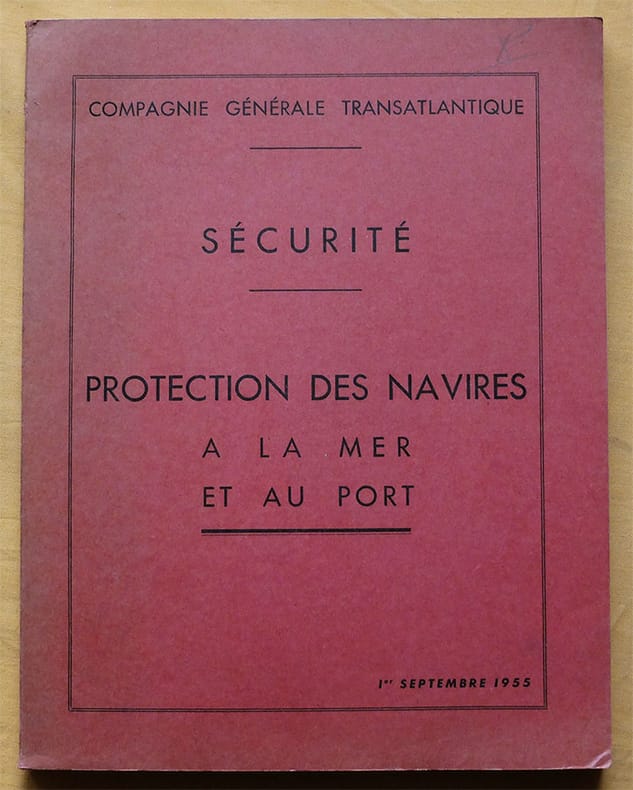
ref. 1048S.l., s.n., 1er septembre 1955. 1 vol in-4, (27 x 21 cm) ; [1] f., 153 pp. Couverture rouge imprimée.
ref. 68-6331NY NY: French Line 1971. Folded Printed Page. 21 cm. x 28 cm. 4 pp. Very Good. B&W photos. NY, NY: French Line, 1971. unknown
ref. 68-6330NY NY: French Line 1971. Folded Printed Page. 21 cm. x 28 cm. 4 pp. Very Good. B&W photos. NY, NY: French Line, 1971. unknown
ref. 68-6329NY NY: French Line 1974. Three Typed Letter Sized Pages Stapled. Very Good. Color Illustration. NY, NY: French Line, 1974. unknown
ref. 68-6336Paris: CGT 1974. B&W Photograph. 15.5 x 22 cm. Very Good. Paris: CGT, [1974.] unknown
ref. 68-6328Paris France: CGT 1974. Folded Brochure. 10 cm. x 21.5 cm. ca. 30 pp. Good with tears. En Francais. Color Illustrations. Paris, France: CGT, 1974. unknown
ref. 68-6332Paris France: CGT ca. 1971. Folded Brochure. 20 cm. x 21.5 cm. ca. 30 pp. Very Good. En Francais. Color Illustrations. Paris, France: CGT, [ca. 1971]. unknown
1961ref. 82135- Plan dépliable du France. Défraîchi. Taché, réparé.