19.585 risultati
rif. DADAX0367178036New unknown
rif. DADAX1580072577New unknown
rif. DADAX1619548364New unknown
2007rif. 201126037Aviation Supplies & Academics 2007-10-01. Paperback. New. New inside and Out! Clean & Crisp Pages w/No markings. Excellent book.Fast Shipping! Aviation Supplies & Academics paperback
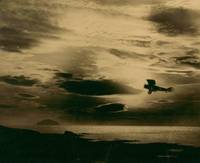
rif. 118812Very Good. A gelatin silver print 216 × 166 mm lightly creased at the corner-tips; in excellent condition. The aircraft appear to be a Sopwith Camel and two Avro 504s specific models not determined. Offered with two other photographs of a biplane possibly a Sopwith Camel in the air: one is silhouetted above billowing sunlit clouds 147 × 199 mm printed without margins; the other is shown flying between clouds above hedgerows and fields 216 × 166 mm. We purchased these photographs with a small group of aerial photographs of Leighterton Aerodrome. 'By 1917 the Australian Flying Corps AFC consisted of four operational squadrons which outstripped the ability of the Army's Central Flying School at Point Cook to supply sufficient trained airmen. It was decided therefore to establish training squadrons within the AFC. Four such squadrons were subsequently established in the United Kingdom during 1917. 8 Squadron AFC was formed at Wendover on 24 October 1917. It was originally identified as 33 Australian Training Squadron Royal Flying Corps but was renamed along with all of the Australian squadrons in January 1918. The squadron relocated to Cirencester on 9 January 1918 and thence to Leighterton where it remained until disbanded in April 1919. The squadron's principal role was to prepare personnel for service with what was at first 71 Australian Squadron RFC and subsequently 4 Squadron AFC which was operating with British forces over the Western Front' Australian War Memorial website. 3 items. unknown
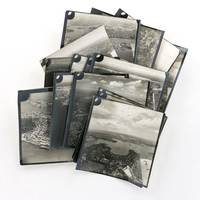
rif. 118695Fifteen gelatin silver prints one 127 × 129 mm all others 134 × 139 mm slightly curled around the vertical axis; in uniformly fine condition Numbers pencilled on the verso of all but the small print include '/43' so we will suggest 1943 as the date. The only caption is a later one in ballpoint pen identifying Darling Harbour; there are another two featuring the same general area. Eight feature Garden Island prominently in all but one instance and four focus on Cockatoo Island; the former was a major naval base and the latter the main ship repair facility during the Second World War. Although the photographs are not credited given the nature of the images and the fact they were taken during wartime they were presumably taken with authorisation. Offered with the photographs is 'Sydney an Aerial Close-up' by Walter Brooks with photography by Neil Sutherland 1986; those familiar with Sydney in the mid-2020s may derive some pleasure in drawing two comparisons . 16 items. unknown
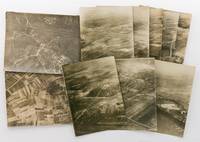
rif. 118696Very Good. All are gelatin silver prints on thick stock; eight are oblique photographs 207 × 154 mm; two are vertical views approximately 165 × 220 mm; the larger ones are slightly creased at the corners one of them a little more so; the others are in excellent condition. All images are captioned in the negative. All eight oblique views carry the same date 25 June 1918 preceded by 'A3 AEO 62°' ranges from 110 to 121. Place names on them are Hamel Hamel Wood Somme Accroche Wood Tailloux Wood and Vaire Wood. The vertical images are dated 3 May and 27 June 1918 and carry a larger set of alpha-numeric references commencing 'A3 AE A 715' and '35 AE B 929' respectively. All ten prints have the signature 'Capt Sexton' in indelible pencil on the verso. Digitised service records indicate the signature is that of Eric James Sexton of the Adelaide suburb of Hindmarsh; he enlisted on 14 August 1914 shortly before his 21st birthday and was appointed to the 10th Battalion with the rank of lieutenant. He was wounded at the landing at Gallipoli promoted to captain the following day and later invalided back to Australia disembarking on 6 August 1915. By January 1916 he was declared fit again for active service and re-embarked in April for England where he performed various training roles. On 14 February 1917 he transferred to the Australian Machine Gun Training Depot with the rank of major. He embarked for Australia on 12 March 1918 arriving in Melbourne on 22 May 1918. Accordingly Sexton did not serve in France and was a major not a captain by the time these photographs were produced. We cannot explain the anomalies but will let the photographs speak for themselves. Significantly they show the area where the important Battle of Hamel was fought on 4 July 1918. 'Hamel was a big battle in miniature involving the experimentation of tanks and small ammunition drops as part of a broader all-arms offensive. While a coordinated offensive was not a new approach to warfare Hamel represented the culmination of three years of learning and innovation on the Western Front testing an all-inclusive approach to mobile warfare. The flawless execution of the operation resulted in Hamel becoming a model for future operations on the Western Front. In his account of the event Monash famously wrote that "the perfected modern battle plan is like nothing so much as a score for an orchestral composition where the various arms and units are the instruments and the tasks they perform are their respective musical phrases' Ellen Cresswell: 'The Experiment - Innovations at the Battle of Hamel' Australian War Memorial website. 10 items. unknown
rif. 118803An unmounted sepia-toned gelatin silver print 149 × 199 mm; in fine condition We suggest the eighteen members of the squad come from the Aeroplane Repair Section of the Australian Flying Corps based at Leighterton. We purchased this photograph with a small group of aerial photographs of Leighterton Aerodrome about which the Australian War Memorial has this to say: 'By 1917 the Australian Flying Corps AFC consisted of four operational squadrons which outstripped the ability of the Army's Central Flying School at Point Cook to supply sufficient trained airmen. It was decided therefore to establish training squadrons within the AFC. Four such squadrons were subsequently established in the United Kingdom during 1917. 8 Squadron AFC was formed at Wendover on 24 October 1917. It was originally identified as 33 Australian Training Squadron Royal Flying Corps but was renamed along with all of the Australian squadrons in January 1918. The squadron relocated to Cirencester on 9 January 1918 and thence to Leighterton where it remained until disbanded in April 1919. The squadron's principal role was to prepare personnel for service with what was at first 71 Australian Squadron RFC and subsequently 4 Squadron AFC which was operating with British forces over the Western Front' AWM website. unknown
rif. 116420Many of the photographs appear to have been taken at Vickers' Brooklands factory near Weybridge Surrey the famous banked race track is visible in many images and possibly also at the nearby Royal Aircraft Establishment Farnborough Hampshire. Nearly all are dated ranging from 1937 to 1946. The gelatin silver prints have been cropped to highlight the stationary aircraft; the resulting photographs are in a visually appealing panoramic format with most of them between 55 and 75 mm high some smaller some larger and approximately 190 mm wide. They are loosely mounted from three to five per page under clear celluloid sheets in a later commercial photograph album. The album is neither here nor there; apart from a crease near a short edge of one print the photographs are in excellent condition. Approximately 35 different aircraft are shown each represented by between two and five photographs taken from different angles. The verso of each print carries the inkstamp of the RTP Research and Technical Publications Photographic Section of variously the Air Ministry Ministry of Aircraft Production or Ministry of Supply. These stamps restricting reproduction are completed in manuscript with a reference number and date; at least one image is also stamped 'Secret'. The aircraft shown are: Vickers Wellesley Production; Armstrong Whitworth Whitley; Vickers B1/35 1939 1940 and 1941 models - these are prototypes for the Warwick; Vickers Wellington Mk II with and without experimental turret Mk III Mk IV Mk V Mk VIII an unidentified model with an experimental turret Mk X Mk XI Mk XII Gr Mk IV Mk XVI Mk XVII Mk XVIII and T Mk X; Vickers Warwick Mk I Mk I freighter Mk II ASR Mk I ASR Mk I Tropical C Mk I C Mk III Gr Mk II and Gr Mk V; De Havilland Vampire Mk I Mk II Prototype; Westland Welkin Prototype F Mk I F Mk 2; and Vultee Vengeance Mk I. unknown
rif. 115168The vintage gelatin silver photographs are in excellent condition; two are 130 × 180 mm taken on 22 July; one is 180 × 240 mm taken on 14 August. The large one is a slightly raking view of the village taken from a height of 400 metres; the substantial shell damage to virtually every building is clearly evident. The two smaller photographs are taken from a higher altitude and the extensive networks of trenches and numerous shell craters are the stand-out features. From late June 1916 to early October 1916 Champneuville and other villages in the surrounding area were the scene of attacks and counter-attacks between the German and French forces. In late August 1916 the French recaptured Champneuville during the Second Offensive Battle of Verdun. We have several other aerial views of the Western Front for sale; enquiries welcome. 3 items. unknown
rif. DADAX1138022381New unknown
1928rif. 107548Washington: National Geographic Society 1928. First Edition. Paperback. Washington National Geographic Society 1928. Quarto two volumes 742 and 766 pages with hundreds of illustrations almost all from photographs some in colour; and more than a few from the air plus 3 folding colour plates after artwork by N.C. Wyeth in an end-band. Original publisher's post-binders heavily blind-embossed and gilt-decorated brown cloth a little rubbed at the extremities; each volume contains six issues bound in without the original wrappers; the contents of Volume 54 are inserted upside down a mistake easily rectified; edges lightly foxed; mild signs of handling; an excellent pair. These twelve issues contain a number of important lengthy articles by or about famous early aviators: Lindbergh two Cobham de Pinedo and Kingsford-Smith and Ulm. The main article in the December issue 'Renascent Germany' pages 639-717 makes very interesting reading. National Geographic Society paperback
1997rif. SKU1019301Aviation Supplies & Academics 1997-01-01. Paperback. Like New. Like New Inside and Outside. Clean and crisp pages w/no markings! You will be pleased. Excellent book! z1s136C Some very minor shelf wear on cover. Fast Shipping! Aviation Supplies & Academics paperback
1936rif. ZB1078863NY: Aviation Publications Inc. 1936. Volumes 35 through 48 lacks volumes 35#7; 36#4 6-7 10-11; 37#2 else all complete volumes all issues in original pictorial paper wrappers ex library else texts clean. - If you are reading this this item is actually physically in our stock and ready for shipment once ordered. We are not bookjackers. Buyer is responsible for any additional duties taxes or fees required by recipient's country. Photos available upon request. NY: Aviation Publications, Inc. unknown
rif. 107816Fine. The sepia-toned print image size 232 × 289 mm is behind glass in its original timber frame 425 × 475 mm; the window mat is wood-grained possibly cut from a veneer sheet. Remnants of the contemporary Adelaide framer's label 'Dimond Bros' are on the verso along with the pencilled details of the job. Small scratch to the bottom portion of the image; one tiny spot; otherwise in fine condition. The framer's pencilled notes indicate that the original client's name was Butler almost certainly Harry Butler himself during his brief years in Adelaide between the war and his early death in 1924. An article from the Adelaide 'Advertiser' for Tuesday 21 May 1946 records Butler's own description of this scene in a pencilled note dated 2 February 1918 uncovered on the verso of another example of this photograph. 'It was taken by our school photographer as I was on a Bristol Fighter about sunset to do a submarine patrol. You notice the Christmas card-looking island in the distance. That is known as Ailsa Craige in fact Ailsa Craig and is about halfway between here and Belfast'. 'Harry Butler 1889-1924 showed his enthusiasm and aptitude for mechanics by building models of primitive aircraft while still at school in Koolywurtie; he later accorded farm-work a lower priority than collaboration with a neighbour and lifelong mentor S.C. Crawford in building and flying one of Australia's early aeroplanes. Among the February 1915 candidates Butler alone gained entrance as an aeromechanic to the Australian Flying School at Point Cook Victoria. Commissioned three weeks after joining the Royal Flying Corps in 1916 he became fighting-instructor at Turnberry Scotland in 1917 and chief fighting-instructor at No. 2 Yorkshire School of Aerial Fighting in 1918. He alternated teaching with studying German aerial combat tactics over France and he received the Air Force Cross in 1918' 'Australian Dictionary of Biography'. Our thanks to Mr Les Parsons for providing us with many important details regarding this image. unknown
1997rif. SKU1012763Aviation Supplies & Academics 1997-01-01. Paperback. Like New. Like New Inside & Out. Clean & Crisp! No Markings. You will be pleased. Excellent book! z1s95A Some very minor shelf wear on cover. Fast Shipping! Aviation Supplies & Academics paperback
rif. DADAX0415818214New unknown
rif. DADAX0291398308New unknown
rif. DADAX0719086825New unknown
1964rif. ZB947740United States Agency for International Development 1964. folio ii 47 text pp. 42 page appendix printed rectos only large color folding map of Iran in sleeve at the back; original spiral-bound softcovers library markings else very good. - If you are reading this this item is actually physically in our stock and ready for shipment once ordered. We are not bookjackers. Buyer is responsible for any additional duties taxes or fees required by recipient's country. Photos available upon request. United States Agency for International Development paperback
rif. DADAX1409411990New unknown
rif. DADAX1405115815New unknown
rif. DADAX1409412547New unknown
rif. DADAX1409402320New unknown
rif. DADAX1420070290New unknown