482 results
1962ref. 88341March Air Force Base CA: United States Air Force Headquarters Fifteenth Air Force 1962. Presumed to be one of only a few multiple copies produced for distribution. Four sheets with printing on one side only. Good. Format is approximately 8 inches by 10.5 inches with three holes punched in the left side and stapled together at the left side. This document contains 4 sheets/eight pages with text or illustrations printed on the first seven sides only. This typed/mimeographed document ON PINK PAPER shows slight wear and soiling. This supplement supersedes SACR 51-1/15AF Sup 8 12 January 1960. The purpose of this supplement was to provide a source of information for the description and location s of Scenic Badlands Bombing Range R-6102 and to establish policies for its use. The 11th Radar Bomb Scoring squadron was responsible for controlling aircraft using the range. The commander 28th Combat Support Group Ellsworth Air Force Base South Dakota was response for the maintenance of bombing targets and reflector city range facilities. There is discussion of targets patterns to be flown range control and special safety procedures. During the Cold War 15 AF was one of three Numbered Air Forces of the United States Air Force Strategic Air Command SAC commanding USAF strategic bombers and missiles on a global scale. Elements of 15th Air Force engaged in combat operations during the Korean War the Vietnam War and Operation Desert Storm. The Badlands Bombing Range BBR refers to Rapid City Army Air Base target ranges for World War II which included the current Air Force Retained Area an inactive 2486-acre United States Air Force site "20 miles southeast" of Scenic South Dakota. The retained area is the remainder of 341726 acres federally acquired in 1942 under eminent domain at the Pine Ridge Indian Reservation Oglala Sioux. In addition to use by World War II aircraft BBR was used for a post-war Army National Guard gunnery range and a Cold War Radar Bomb Scoring site. The Interior Radar Bomb Scoring Site callsign Badlands Bomb Plot opened in August 1960 on Hurley Butte 43.719846°N 102.14294°W adjacent to the Pine Ridge Reservation and a few miles from Interior South Dakota to replace the Los Angeles Bomb Plot at Cheli AFS. Operated and maintained by Detachment 2 of the 11th Radar Bomb Scoring Squadron the RBS site was 1 of ~14 that remained after the 1965-6 deployment of RBS site personnel for Vietnam Combat Skyspot. At the end of the Cold War numerous nearby radar sites for RBS and electronic warfare simulation included those at the Alzada 2 sites Ekalaka & Hulett Mini-Mutes Radar Sites the Clark & Colony Radar Bomb Scoring Sites and the "Ellsworth Air Force Base" sites Belle Fourche Colmer & Horman Radar Bomb Scoring Sites and the Antelope Butte Mini Mute Radar Bomb Scoring Site. United States Air Force Headquarters Fifteenth Air Force unknown
1964ref. 88338Beale Air Force Base CA: United States Air Force 456th Strategic Aerospace Wing SAC Headquarters c1964. Presumed to be one of only a few multiple copies produced for distribution. Single sheet printed on one side only. Fair. Format is approximately 8 inches by 10.5 inches with nine holes punched in the left side. This document contains 2 pages one sheet printed on one side. This typed/mimeographed document shows some wear and soiling. This was included in a group of materials associated with the 456th Strategic Aerospace Wing SAC This type of operational communication within the SAC organization rarely survives. NAV/RN is written at the top of the front side. It is assumed that the author was Lt. Colonel USAF was Chief of the Bomb/Nav Branch located at Beale Air Force Base in California. The 456th Bombardment Wing is an inactive United States Air Force unit. It was last assigned to the 14th Air Division of Strategic Air Command at Beale Air Force Base California where it was inactivated on 30 September 1975. The wing was redesignated the 456th Strategic Aerospace Wing and was activated at Beale Air Force Base California in February 1963. It flew Boeing B-52 Stratofortress bombers and Boeing KC-135 Stratotanker air refueling aircraft and also commanded a HGM-25A Titan I squadron until 1965. Although it operated no intercontinental ballistic missiles after then it was not until July 1972 that the wing was redesignated the 456th Bombardment Wing. The wing was inactivated in September 1975 and its personnel equipment and mission transferred to the 17th Bombardment Wing and moved to Beale on paper from Wright-Patterson Air Force Base Ohio. This item addressees Simulated Launch Post Simulated Launch Simulated Impact and Post Simulated Impact presumably of a AGM-28. The presumed author Frank S. Vrablick served in the US Air Force for 24 years as a Radar Navigator Bombardier retiring in 1966 as a Lt. Col. Chief of Bomb Nav. After retirement he earned a BA at the University of Omaha. The North American Aviation AGM-28 Hound Dog was a supersonic turbojet-propelled nuclear armed air-launched cruise missile developed in 1959 for the United States Air Force. It was primarily designed to be capable of attacking Soviet ground-based air defense sites prior to a potential air attack by B-52 Stratofortress long range bombers during the Cold War. The Hound Dog was first given the designation B-77 then redesignated GAM-77 and finally AGM-28. The Hound Dog continued to be deployed for a total of 15 years until its replacement by newer missiles including the AGM-69 SRAM and then the AGM-86 ALCM. United States Air Force, 456th Strategic Aerospace Wing (SAC), Headquarters unknown
1964ref. 88339Beale Air Force Base CA: United States Air Force 456th Strategic Aerospace Wing SAC Headquarters c1964. Presumed to be one of only a few multiple copies produced for distribution. Two sheets with printing on three sides only. Good. Format is approximately 8 inches by 10.5 inches with THREE holes punched in the left side. This document contains 2 sheets/four pages with text printed on the first three sides. This typed/mimeographed document shows some wear and soiling. This was included in a group of materials associated with the 456th Strategic Aerospace Wing SAC This type of operational communication within the SAC organization rarely survives. NAV/RN is written at the top of the front side. It is assumed that the author was Lt. Colonel USAF was Chief of the Bomb/Nav Branch located at Beale Air Force Base in California. The 456th Bombardment Wing is an inactive United States Air Force unit. It was last assigned to the 14th Air Division of Strategic Air Command at Beale Air Force Base California where it was inactivated on 30 September 1975. The wing was redesignated the 456th Strategic Aerospace Wing and was activated at Beale Air Force Base California in February 1963. It flew Boeing B-52 Stratofortress bombers and Boeing KC-135 Stratotanker air refueling aircraft and also commanded a HGM-25A Titan I squadron until 1965. Although it operated no intercontinental ballistic missiles after then it was not until July 1972 that the wing was redesignated the 456th Bombardment Wing. The wing was inactivated in September 1975 and its personnel equipment and mission transferred to the 17th Bombardment Wing and moved to Beale on paper from Wright-Patterson Air Force Base Ohio. This document has sections on A. CONSIDERATIONS FOR PLANNING; B. FLIGHT TECHNIQUES; C. EMERGENCY PROCEDURES; and D. OPERATIONAL ERRORS NOTED BY SAC GAM TEAM. This document addresses situations that allow the missile to 'break the Tone' and an error induced by the Flight Control Power Switch being "OFF" during programming. Also discussed was Star lock-on Astro-Tracker difficulties including simultaneously use of the SLEW and STEP switches. The Emergency procedures were largely concerned with engine failures. The SAC GAM team noted concerns with guidance system alignment in flight data recording especially by missile operators in the use of SAC Form 650 and Radar Navigators should place greater emphasis on accurate completing of SAC Form 284. The North American Aviation AGM-28 Hound Dog was a supersonic turbojet-propelled nuclear armed air-launched cruise missile developed in 1959 for the United States Air Force. It was primarily designed to be capable of attacking Soviet ground-based air defense sites prior to a potential air attack by B-52 Stratofortress long range bombers during the Cold War. The Hound Dog was first given the designation B-77 then redesignated GAM-77 and finally AGM-28. The Hound Dog continued to be deployed for a total of 15 years until its replacement by newer missiles including the AGM-69 SRAM and then the AGM-86 ALCM. United States Air Force, 456th Strategic Aerospace Wing (SAC), Headquarters unknown
1964ref. 88337Beale Air Force Base CA: United States Air Force 456th Strategic Aerospace Wing SAC Headquarters 1964. Presumed to be one of only a few multiple copies produced for distribution. Single sheet typed on both sides. Fair. Format is approximately 8 inches by 10.5 inches with three holes punched in the left side. This document contains 2 pages one sheet printed on both sides. This memorandum issued prior to 20 April 1964 shows heavy wear and soiling. This type of operational communication within the SAC organization rarely survives. The author Lt. Colonel USAF was Chief of the Bomb/Nav Branch of the 456th Strategic Aerospace Wing SAC Headquarters located at Beale Air Force Base in California. It was address to all B-52G Navigators and Radar Navigators. The 456th Bombardment Wing is an inactive United States Air Force unit. It was last assigned to the 14th Air Division of Strategic Air Command at Beale Air Force Base California where it was inactivated on 30 September 1975. The wing was redesignated the 456th Strategic Aerospace Wing and was activated at Beale Air Force Base California in February 1963. It flew Boeing B-52 Stratofortress bombers and Boeing KC-135 Stratotanker air refueling aircraft and also commanded a HGM-25A Titan I squadron until 1965. Although it operated no intercontinental ballistic missiles after then it was not until July 1972 that the wing was redesignated the 456th Bombardment Wing. The wing was inactivated in September 1975 and its personnel equipment and mission transferred to the 17th Bombardment Wing which moved to Beale on paper from Wright-Patterson Air Force Base Ohio. This document noted that Bombing at TA altitudes will be an integral part of SACM 50-8 SACM 51-4 and future evaluations effective 1 July 1964. This documents addresses sections entitled General Place and Date of Test Bombing Navigation Communications 429 Completion and Special Instruction for RN Radio Navigator. The document stated that "It is imperative that all units practice this procedure prior to the effective date to assure each unit has a chance to evaluate any possible shortcomings or problems that my be uncovered in this area." "Bombing/CSA Procedures" and "Timing Procedures" had been accomplished and reproduced for crew use. United States Air Force, 456th Strategic Aerospace Wing (SAC), Headquarters unknown
1964ref. 88340Beale Air Force Base CA: United States Air Force 456th Strategic Aerospace Wing SAC Headquarters c1964. Presumed to be one of only a few multiple copies produced for distribution. Three sheets with printing on one side only. Good. Format is approximately 8 inches by 10.5 inches with twelve holes punched in the left side. This document contains 3 sheets/six pages with text printed on the one side only. This typed/mimeographed document shows some wear and soiling. Following two pages of instructions the third page is a filled out "sample' form DD 365F Training Mission w/Expendables retained with the name Kaylor in ink at the top left corner. Reference is made to the B-47 aircraft. This was included in a group of materials associated with the 456th Strategic Aerospace Wing SAC This type of operational communication within the SAC organization rarely survives. NAV/RN is written at the top of the front side. The 456th Bombardment Wing is an inactive United States Air Force unit. It was last assigned to the 14th Air Division of Strategic Air Command at Beale Air Force Base California where it was inactivated on 30 September 1975. The wing was redesignated the 456th Strategic Aerospace Wing and was activated at Beale Air Force Base California in February 1963. It flew Boeing B-52 Stratofortress bombers and Boeing KC-135 Stratotanker air refueling aircraft and also commanded a HGM-25A Titan I squadron until 1965. Although it operated no intercontinental ballistic missiles after then it was not until July 1972 that the wing was redesignated the 456th Bombardment Wing. The wing was inactivated in September 1975 and its personnel equipment and mission transferred to the 17th Bombardment Wing and moved to Beale on paper from Wright-Patterson Air Force Base Ohio. This Form F is the summary of the actual disposition of the load in the aircraft for any particular flight. It serves as a work sheet on which to record the calculations and any corrections that must be made to insure that the aircraft will be within weight and c.g. limitations during ground operations at unstick and at landing. It is necessary to accomplish a FORM F prior to flight whenever an aircraft is loaded in a manner for which no previous Form F. is available. It is note that at REF. 6. Bombs Rockets Etc. that "Special Weapons will be loaded with the Special Internal Stores Scale of the Load Adjuster. Their weights will be furnished by local Special Weapons Officers." The North American Aviation AGM-28 Hound Dog was a supersonic turbojet-propelled nuclear armed air-launched cruise missile developed in 1959 for the United States Air Force. It was primarily designed to be capable of attacking Soviet ground-based air defense sites prior to a potential air attack by B-52 Stratofortress long range bombers during the Cold War. The Hound Dog was first given the designation B-77 then redesignated GAM-77 and finally AGM-28. The Hound Dog continued to be deployed for a total of 15 years until its replacement by newer missiles including the AGM-69 SRAM and then the AGM-86 ALCM. United States Air Force, 456th Strategic Aerospace Wing (SAC), Headquarters unknown
1985ref. Alibris.0021667Institute of Electrical & Electronic Engineer. 1985. Unabridged. Hard cover. Fine in very good dust jacket. Signed by author. 320 p. . SIGNED BY AUTHOR! tear on back left top of the dj . Institute of Electrical & Electronic Engineer hardcover
1965ref. 223311965. Douglas Missile and Space Systems Division and McDonnell Douglas internal technical reports issued between 1965 and 1974 document the engineering infrastructure required for missile testing data acquisition and systems reliability during the Cold War. Produced for internal training and operational use these materials establish the technical foundations of missile deployment including environmental protection telemetry standardization and automated validation processes as missile systems increased in complexity during and after the Apollo era. The archive supports research into aerospace engineering defense industry practices and the integration of computing and instrumentation within missile systems development. Douglas Missile and Space Systems Division; McDonnell Douglas Astronautics Company. Electrical Grounding and Lightning Protection Systems Design Recommendations. Santa Monica CA: Douglas Missile and Space Systems Division October 1965; Telemetry Instrumentation Fundamentals. Santa Monica or Huntington Beach CA: Douglas Missile and Space Systems Division n.d. late 1960s to early 1970s; Patzold F.W. Automated Missile Testing. Huntington Beach CA: McDonnell Douglas Astronautics Company February 1974. Three technical reports totaling approximately 105 pages illustrated with photographs and technical schematics in original paper wraps. The grounding report by W.F. White outlines protection systems for missile facilities addressing "earth resistivity" lightning protection and grounding requirements for launch pads blockhouses and associated infrastructure. Telemetry Instrumentation Fundamentals provides a structured introduction to data acquisition systems stating that "telemetry must expand with the increased complexity of R & D" and detailing standards such as IRIG for coordinating data across missile platforms including Atlas Thor and Delta. Patzold's Automated Missile Testing paper presented at the American Society for Quality Control's 28th Annual Technical Conference describes a "production test system. for an advanced missile guidance system" incorporating software controlled testing environments vibration and hydraulic test stations and computer based evaluation systems to improve reliability and defect detection. These materials were produced during a period when missile systems required increasingly sophisticated support infrastructure including standardized telemetry for real time data transmission and automated testing systems to ensure performance reliability prior to deployment. The emphasis on lightning protection and grounding reflects the vulnerability of launch installations and sensitive electronic systems while the shift toward automation in the 1970s demonstrates the growing role of computer control in aerospace manufacturing and testing. Together the reports document the evolution from manually intensive engineering practices to integrated systematized approaches to missile validation within the defense industry. Light edge wear and curling to covers with minor interior smudging; text remains clear and fully legible; overall very good condition. unknown
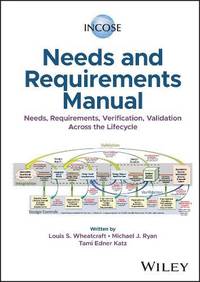
ref. ria9781394152742_inpHardback. New. New Book; Fast Shipping from UK; Not signed; Not First Edition; N/A hardcover
2013ref. BN193760Elsevier Science Publishing Co Inc 2013. 2013. Hardcover. Product Manufacturing and Cost Estimating using CAD/CAE Product Manufacturing and Cost Estimating using CAD/CAE Kuang-Hua Williams Presidential Professor School of Aerospace and Mechanical Engineering AME University of Oklahoma Norman OK USA Chang Elsevier Science Publishing Co Inc hardcover
1978ref. BN233152Amer Inst of Aeronautics & 1978. 1978. Hardcover. Turbulent Combustion Paas58: Technical Papers Progress in Astronautics and Aeronautics V. 58 Turbulent Combustion Paas58: Technical Papers Progress in Astronautics and Aeronautics V. 58 Aiaa Aerospace Sciences Meeting Los Angeles Calif. 1977 15th; Kennedy Lawrence A.; American Institute of Aeronautics and Astronautics Amer Inst of Aeronautics & hardcover
1998ref. BN7156061998. 1998. World Air Power Journal World Air Power Journal Aerospace Publishing Ltd unknown
2000ref. BN729524IEEE Computer Soc. Los Alamitos Calif. 2000. 2000. Proceedings. May 1 2000 Cancún Mexico. Proceedings. May 1 2000 Cancún Mexico. Raghavendra The Aerospace Corporation Editor. IEEE Computer Soc. Los Alamitos, Calif. unknown
ref. ria9781394187454_inpHardback. New. New Book; Fast Shipping from UK; Not signed; Not First Edition; N/A hardcover
ref. 44658374-nnew. unknown
2017ref. Gyan-9789361418167Facsimile Publisher 2017. Hardcover. New. 22.59 x 14.34 x 4.01 cm. English Facsimile Publisher hardcover
ref. 6394588597Pentagon Press . Hardback. New. pp. 432 Pentagon Press hardcover
ref. 1874023859.Gpaperback. Good. Access codes and supplements are not guaranteed with used items. May be an ex-library book. paperback
ref. X05OS-00106Aerospace Corporation. Used - Acceptable. Acceptable condition. Aeronautical Engineers US Air Force A readable intact copy that may have noticeable tears and wear to the spine. All pages of text are present but they may include extensive notes and highlighting or be heavily stained. Includes reading copy only books. Aerospace Corporation unknown
ref. ria9780323984065_inpHardback. New. New Book; Fast Shipping from UK; Not signed; Not First Edition; N/A hardcover
ref. ria9788419125194_inpHardcover. New. New Book; Fast Shipping from UK; Not signed; Not First Edition; SX000i International specification for Integrated Product Support IPS is the overarching specification for the suite commonly known as the S-Series of IPS specifications.By defining common support processes to be used across all S-Se hardcover
ref. 53768030like new. unknown
ref. ria9781119071204_inpHardback. New. New Book; Fast Shipping from UK; Not signed; Not First Edition; Applied Engineering Analysis Tai-Ran Hsu San Jose State University USA A resource book applying mathematics to solve engineering problems Applied Engineering Analysis is a concise textbookwhich demonstrates how toapply mathematics to hardcover
ref. ria9780309101882_inpPaperback / softback. New. New Book; Fast Shipping from UK; Not signed; Not First Edition; NASA is a global leader in aeronautics research and development—fostering advances in aviation safety and emissions propulsion technology and many other areas. And the agency's Aeronautics Research Mission Directorate ARMD has pla paperback
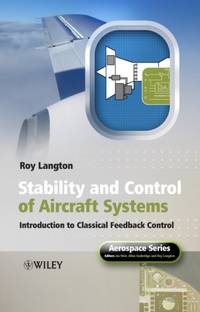
ref. ria9780470018910_inpHardback. New. New Book; Fast Shipping from UK; Not signed; Not First Edition; Introduction to Feedback Control provides an easy to read and to understand monograph that describes control theory using minimal mathematics and focusing on simple rules tools and methods for the analysis and testing of feedback contr hardcover