482 Ergebnisse
1994Best.-Nr. 438507PN. New. 1994. Soft Cover. Date is original print. This is a reprint edition. . PN paperback
2000Best.-Nr. 1326067PN. New. 2000. Soft Cover. Date is original print. This is a reprint edition . PN paperback
2000Best.-Nr. 1321586PN. New. 2000. Soft Cover. Date is original print. This is a reprint edition . PN paperback
1999Best.-Nr. 1320333PN. New. 1999. Soft Cover. Date is original print. This is a reprint edition . PN paperback
1994Best.-Nr. 441676PN. New. 1994. Soft Cover. Date is original print. This is a reprint edition. . PN paperback
2000Best.-Nr. 1329344PN. New. 2000. Soft Cover. Date is original print. This is a reprint edition . PN paperback
1996Best.-Nr. 291428PN. New. 1996. Soft Cover. Date is original print. This is a reprint edition . PN paperback
2000Best.-Nr. 1322413PN. New. 2000. Soft Cover. Date is original print. This is a reprint edition . PN paperback
1993Best.-Nr. 268325PN. New. 1993. Soft Cover. Date is original print. This is a reprint edition . PN paperback
Best.-Nr. ria9780470167748_inpHardback. New. New Book; Fast Shipping from UK; Not signed; Not First Edition; Software architecture is foundational to the development of large practical software-intensive applications. This brand-new text covers all facets of software architecture and how it serves as the intellectual centerpiece of software d hardcover

1967Best.-Nr. 731329PN. New. 1967. Soft Cover. Date is original print. This is a reprint edition. . PN paperback
1963Best.-Nr. 718634PN. New. 1963. Soft Cover. Date is original print. This is a reprint edition. . PN paperback
1952Best.-Nr. 709914PN. New. 1952. Soft Cover. Date is original print. This is a reprint edition. . PN paperback
1973Best.-Nr. 747487PN. New. 1973. Soft Cover. Date is original print. This is a reprint edition. . PN paperback
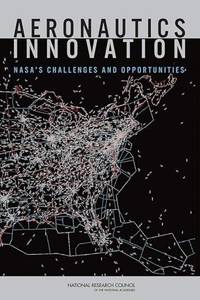
Best.-Nr. ria9780309101882_inpPaperback / softback. New. New Book; Fast Shipping from UK; Not signed; Not First Edition; NASA is a global leader in aeronautics research and development—fostering advances in aviation safety and emissions propulsion technology and many other areas. And the agency's Aeronautics Research Mission Directorate ARMD has pla paperback
2002Best.-Nr. 71435Arlington VA: Commission on Future of the United States Aerospace Industry 2002. Presumed first edition/first printing. Wraps. Very good. No dust jacket. Cover has slight wear and soiling. Includes: illustrations maps. Various paginations approximately 300 pages. Illustrations in color. Notes The Commission on the Future of the United States Aerospace Industry was established as an independent public advisory commission by the Floyd D. Spence National Defense Authorization Act for Fiscal Year 2001 Pub. L. 106-398. The Commission was created to conduct a study of issues pertaining to the future of the U.S. aerospace industry in the global economy particularly as it pertained to national security; and to assess the future importance of the domestic aerospace industry for the economic and national security of the national security of the United States. The Commission on the Future of the Aerospace Industry's purpose is to call attention to the underpinnings of this nation's aerospace industry and to focus on the areas that need support. During the year that the Commission did individual and collective research it visited and spoke with aerospace leaders in the United States Europe and Asia. It noted how other countries are directing attention and resources to foster an indigenous aerospace industry. This is in contrast to the attitude in the United States which stands dangerously close to squandering the advantage bequeathed by prior generations of aerospace leaders. Congress gave the Commission a broad mandate to study the health of the aerospace industry and to identify actions that the United States needs to take to ensure its health in the future. The Commission's report contains recommendations intended to catalyze action from leaders in government industry labor and academia and assure this industry's continued prominence. Commission on Future of the United States Aerospace Industry paperback
Best.-Nr. ESP035C431973 / 16 pages + 12 diapositives. Editions Centre National d'Etudes Spatiales.
Best.-Nr. ESP033C431973 / 15 pages + 12 diapositives. Editions Centre national d'études spatiales.
Best.-Nr. ESP034C431973 / 15 pages + 12 diapositives. Editions Centre National d'Etudes Spatiales.
Best.-Nr. ESP029C431968 / 280 pages. Broché Editions Information Propagande Françaises.
Best.-Nr. ESP023C431975 / 142 pages. Relié Edtitions Laffont
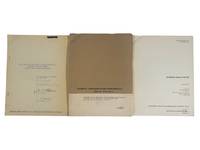
1965Best.-Nr. 223311965. Douglas Missile and Space Systems Division and McDonnell Douglas internal technical reports issued between 1965 and 1974 document the engineering infrastructure required for missile testing data acquisition and systems reliability during the Cold War. Produced for internal training and operational use these materials establish the technical foundations of missile deployment including environmental protection telemetry standardization and automated validation processes as missile systems increased in complexity during and after the Apollo era. The archive supports research into aerospace engineering defense industry practices and the integration of computing and instrumentation within missile systems development. Douglas Missile and Space Systems Division; McDonnell Douglas Astronautics Company. Electrical Grounding and Lightning Protection Systems Design Recommendations. Santa Monica CA: Douglas Missile and Space Systems Division October 1965; Telemetry Instrumentation Fundamentals. Santa Monica or Huntington Beach CA: Douglas Missile and Space Systems Division n.d. late 1960s to early 1970s; Patzold F.W. Automated Missile Testing. Huntington Beach CA: McDonnell Douglas Astronautics Company February 1974. Three technical reports totaling approximately 105 pages illustrated with photographs and technical schematics in original paper wraps. The grounding report by W.F. White outlines protection systems for missile facilities addressing "earth resistivity" lightning protection and grounding requirements for launch pads blockhouses and associated infrastructure. Telemetry Instrumentation Fundamentals provides a structured introduction to data acquisition systems stating that "telemetry must expand with the increased complexity of R & D" and detailing standards such as IRIG for coordinating data across missile platforms including Atlas Thor and Delta. Patzold's Automated Missile Testing paper presented at the American Society for Quality Control's 28th Annual Technical Conference describes a "production test system. for an advanced missile guidance system" incorporating software controlled testing environments vibration and hydraulic test stations and computer based evaluation systems to improve reliability and defect detection. These materials were produced during a period when missile systems required increasingly sophisticated support infrastructure including standardized telemetry for real time data transmission and automated testing systems to ensure performance reliability prior to deployment. The emphasis on lightning protection and grounding reflects the vulnerability of launch installations and sensitive electronic systems while the shift toward automation in the 1970s demonstrates the growing role of computer control in aerospace manufacturing and testing. Together the reports document the evolution from manually intensive engineering practices to integrated systematized approaches to missile validation within the defense industry. Light edge wear and curling to covers with minor interior smudging; text remains clear and fully legible; overall very good condition. unknown books
1965Best.-Nr. 223311965. Douglas Missile and Space Systems Division and McDonnell Douglas internal technical reports issued between 1965 and 1974 document the engineering infrastructure required for missile testing data acquisition and systems reliability during the Cold War. Produced for internal training and operational use these materials establish the technical foundations of missile deployment including environmental protection telemetry standardization and automated validation processes as missile systems increased in complexity during and after the Apollo era. The archive supports research into aerospace engineering defense industry practices and the integration of computing and instrumentation within missile systems development. Douglas Missile and Space Systems Division; McDonnell Douglas Astronautics Company. Electrical Grounding and Lightning Protection Systems Design Recommendations. Santa Monica CA: Douglas Missile and Space Systems Division October 1965; Telemetry Instrumentation Fundamentals. Santa Monica or Huntington Beach CA: Douglas Missile and Space Systems Division n.d. late 1960s to early 1970s; Patzold F.W. Automated Missile Testing. Huntington Beach CA: McDonnell Douglas Astronautics Company February 1974. Three technical reports totaling approximately 105 pages illustrated with photographs and technical schematics in original paper wraps. The grounding report by W.F. White outlines protection systems for missile facilities addressing "earth resistivity" lightning protection and grounding requirements for launch pads blockhouses and associated infrastructure. Telemetry Instrumentation Fundamentals provides a structured introduction to data acquisition systems stating that "telemetry must expand with the increased complexity of R & D" and detailing standards such as IRIG for coordinating data across missile platforms including Atlas Thor and Delta. Patzold's Automated Missile Testing paper presented at the American Society for Quality Control's 28th Annual Technical Conference describes a "production test system. for an advanced missile guidance system" incorporating software controlled testing environments vibration and hydraulic test stations and computer based evaluation systems to improve reliability and defect detection. These materials were produced during a period when missile systems required increasingly sophisticated support infrastructure including standardized telemetry for real time data transmission and automated testing systems to ensure performance reliability prior to deployment. The emphasis on lightning protection and grounding reflects the vulnerability of launch installations and sensitive electronic systems while the shift toward automation in the 1970s demonstrates the growing role of computer control in aerospace manufacturing and testing. Together the reports document the evolution from manually intensive engineering practices to integrated systematized approaches to missile validation within the defense industry. Light edge wear and curling to covers with minor interior smudging; text remains clear and fully legible; overall very good condition. unknown
Best.-Nr. avia104m1997 / 188 pages. Broché Editions Economica. Dos trés légérement abimé au bas. Sinon très bon état.
Best.-Nr. 49844Du Chêne Expédition très soignée, tous les mardis et vendredis. . In-4. Cartonné. Livre en Français. . Occasion comme neuf. Poids sans emballage : 1840 grammes.