3027 risultati
rif. 6433340Taylor & Francis Group . Papeback. New. pp. 152 Taylor & Francis Group unknown
rif. 371532-nnew. unknown
rif. 371532like new. unknown
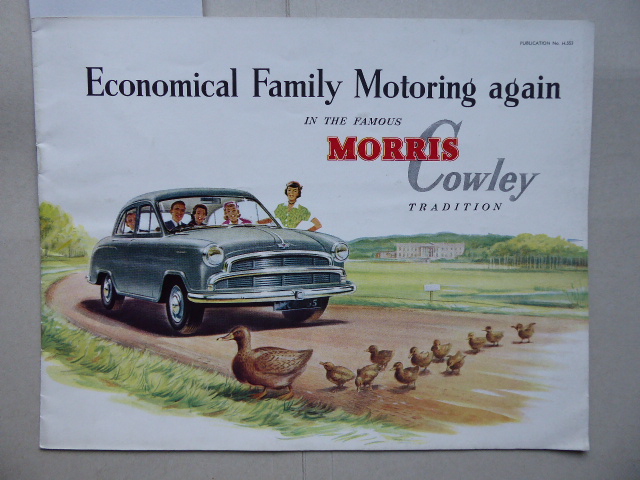
1955rif. 73291Cowley Oxford (July 1955). 14 Seiten. Mit zahlr. dekorativen u. farbigen Illustrationen. Farbig ill. Originalbroschur. 22x28 cm
1962rif. 139049Cowley Oxford - England. (Ca. 1962). Leporello. 8 pages. With a lot of illustrations. Print in two colours.
rif. 13845Lancaster PA: The Economic Geology Publishing Company 1968. paper bound in blue wraps volume 63 8 issues complete small quartos illustrated with diagrams photos and maps 1006Pp index and contents to Volume 63 in last issue. A clean unmarked set in very good condition. Heavy set - extra shipping charges will apply. Lancaster (PA): The Economic Geology Publishing Company, 1968 paperback
rif. 13846Lancaster PA: The Economic Geology Publishing Company 1969. paper bound in blue wraps volume 64 8 issues complete small quartos illustrated with diagrams photos and maps 965Pp in total index and contents to Volume 64 in last issue. A clean unmarked set in very good condition. Heavy set - extra shipping charges will apply. Lancaster (PA): The Economic Geology Publishing Company, 1969 paperback
rif. 13848Lancaster PA: The Economic Geology Publishing Company 1971. paper bound in blue wraps volume 66 8 issues complete small quartos illustrated with diagrams photos and maps 1289Pp in total index and contents to Volume 66 in last issue. A clean unmarked set in very good condition. Heavy set - extra shipping charges will apply. Lancaster (PA): The Economic Geology Publishing Company, 1971 paperback
rif. 13847Lancaster PA: The Economic Geology Publishing Company 1970. paper bound in blue wraps volume 65 8 issues complete small quartos illustrated with diagrams photos and maps 1029Pp in total index and contents to Volume 65 in last issue. A clean unmarked set in very good condition. Heavy set - extra shipping charges will apply. Lancaster (PA): The Economic Geology Publishing Company, 1970 paperback
rif. 1802594434.Ghardcover. Good. Access codes and supplements are not guaranteed with used items. May be an ex-library book. hardcover
2001rif. 22978Easton Press Norwalk Connecticut 2001. HB NODJ ISSUED Maroon Red LEATHER with Tooled Raised Bands on Spine Titled on Spine FINE CONDTION NODJ 2001 1st Edition THUS Outer Edges of pages Gold Gilt 307 PAGES with Silk Bookmark SewnIn Easton Press Books are also printed on archival-quality acid-neutral paper that is Smyth-sewn for strength and durability. . Most famous of JaCk Kerouac's works Fictionalized Autobiography with a cast made of Kerouac's real life friends lovers and travelErs along the Road. Sal Paradise is Narrator oNE OF Kerouac's Alter-egos On the Road is a Bohemian CROss-country Story that not only influenced writing in the years since its 1957 PUblication but permanently started Revolution in the Way Young American Think. First Thus. Full-Leather. Fine/No Jacket. Easton Press, Norwalk, Connecticut hardcover
2001rif. 22995Easton Press Norwalk Connecticut 2001. HB NODJ ISSUED Maroon Red LEATHER with Tooled Raised Bands on Spine Titled on Spine FINE CONDTION NODJ 2001 1st Edition THUS Outer Edges of pages Gold Gilt 307 PAGES with Silk Bookmark SewnIn Easton Press Books are also printed on archival-quality acid-neutral paper that is Smyth-sewn for strength and durability. . A scarce edition. Most famous of Jack Kerouac's works Fictionalized Autobiography with a cast made of Kerouac's real life friends lovers and travelers along the Road. Sal Paradise is Narrator one of Kerouac's alter-egos On the Road is a Bohemian cross-country Story that not only influenced writing in the years since its 1957 publication but permanently started Revolution in the Way Young American Think. First Thus. Hard Cover. Fine/No Jacket. Easton Press, Norwalk, Connecticut hardcover
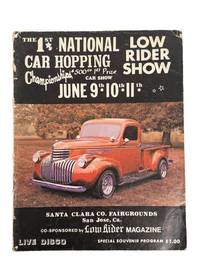
1978rif. 237231978. Lowriding exhibition program from June 9 to 11 1978 documenting the emergence of the first national gathering devoted entirely to lowrider culture at the moment when customized automobiles had become one of the most recognizable forms of Chicano public expression in the American West. Organized at the Santa Clara County Fairgrounds in San Jose only months after the debut of Low Rider magazine the event brought together car clubs custom builders hydraulic specialists painters upholsterers musicians and spectators from across California Arizona and neighboring states. More than an automotive exhibition the program records a community built around craftsmanship neighborhood identity cruising traditions family participation and small businesses that developed alongside the Chicano movement during the 1970s. The 1st National Low Rider Car Hopping Championships and Low Rider Show. San Jose California: Moreno Concessions & Moreno Productions in association with Low Rider Magazine June 9 to 11 1978. First edition. Quarto. 36 pages. Photographically illustrated stapled wrappers. Extensively illustrated throughout with black and white photographs and a two page color spread of customized vehicles. The official program opens with a history of lowriding and its expansion from neighborhood cruising into organized exhibitions noting participation by clubs from Los Angeles San Jose Phoenix Bakersfield Sacramento and throughout the Southwest. A detailed schedule of events includes hydraulic hopping championships custom car judging awards presentations mariachi performances disco dancing live DJs Jimmy the Memory Maker and José Chavez disco dance demonstrations by the L.A. Hustle Disco Dance Company hairstyling exhibitions and evening social events. Other features document custom automobiles bicycles clubs and participants including an illustrated essay titled "Bike On" asking "What do you do if you're 12 years old can't drive but dig low and custom rides" The advertising section preserves a cross section of the commercial infrastructure surrounding the movement including custom shops hydraulic specialists upholstery businesses automotive services and local enterprises serving Northern California's lowrider community. Appearing only six months after the founding of Low Rider Magazine this program captures the publication's first effort to transform a rapidly expanding readership into a national public gathering. The essays reject contemporary stereotypes that reduced lowriding to delinquency or spectacle instead presenting it as skilled craftsmanship requiring bodywork paint upholstery hydraulics engineering and sustained club participation. The combination of bilingual language neighborhood organizations family oriented programming bicycle customization and hundreds of privately built automobiles demonstrates how lowriding functioned as both artistic practice and cultural identity within Chicano communities during the late 1970s. The program also preserves the commercial ecosystem that sustained the movement recording businesses clubs and builders whose work rarely survives in institutional archives outside ephemeral publications such as this one. Some edge wear rubbing creasing and small chips to the wrappers; light toning and handling wear internally large loss to advertisement on second to last page corner; staples sound and contents clean and near complete. Overall very good condition. As of the time of this writing there are no copies in institutional holdings according to OCLC. An early documentary record of the moment lowriding emerged from regional cruising culture into a nationally organized expression of Chicano craftsmanship community and public identity. unknown books
1978rif. 237231978. Lowriding exhibition program from June 9 to 11 1978 documenting the emergence of the first national gathering devoted entirely to lowrider culture at the moment when customized automobiles had become one of the most recognizable forms of Chicano public expression in the American West. Organized at the Santa Clara County Fairgrounds in San Jose only months after the debut of Low Rider magazine the event brought together car clubs custom builders hydraulic specialists painters upholsterers musicians and spectators from across California Arizona and neighboring states. More than an automotive exhibition the program records a community built around craftsmanship neighborhood identity cruising traditions family participation and small businesses that developed alongside the Chicano movement during the 1970s. The 1st National Low Rider Car Hopping Championships and Low Rider Show. San Jose California: Moreno Concessions & Moreno Productions in association with Low Rider Magazine June 9 to 11 1978. First edition. Quarto. 36 pages. Photographically illustrated stapled wrappers. Extensively illustrated throughout with black and white photographs and a two page color spread of customized vehicles. The official program opens with a history of lowriding and its expansion from neighborhood cruising into organized exhibitions noting participation by clubs from Los Angeles San Jose Phoenix Bakersfield Sacramento and throughout the Southwest. A detailed schedule of events includes hydraulic hopping championships custom car judging awards presentations mariachi performances disco dancing live DJs Jimmy the Memory Maker and José Chavez disco dance demonstrations by the L.A. Hustle Disco Dance Company hairstyling exhibitions and evening social events. Other features document custom automobiles bicycles clubs and participants including an illustrated essay titled "Bike On" asking "What do you do if you're 12 years old can't drive but dig low and custom rides" The advertising section preserves a cross section of the commercial infrastructure surrounding the movement including custom shops hydraulic specialists upholstery businesses automotive services and local enterprises serving Northern California's lowrider community. Appearing only six months after the founding of Low Rider Magazine this program captures the publication's first effort to transform a rapidly expanding readership into a national public gathering. The essays reject contemporary stereotypes that reduced lowriding to delinquency or spectacle instead presenting it as skilled craftsmanship requiring bodywork paint upholstery hydraulics engineering and sustained club participation. The combination of bilingual language neighborhood organizations family oriented programming bicycle customization and hundreds of privately built automobiles demonstrates how lowriding functioned as both artistic practice and cultural identity within Chicano communities during the late 1970s. The program also preserves the commercial ecosystem that sustained the movement recording businesses clubs and builders whose work rarely survives in institutional archives outside ephemeral publications such as this one. Some edge wear rubbing creasing and small chips to the wrappers; light toning and handling wear internally large loss to advertisement on second to last page corner; staples sound and contents clean and near complete. Overall very good condition. As of the time of this writing there are no copies in institutional holdings according to OCLC. An early documentary record of the moment lowriding emerged from regional cruising culture into a nationally organized expression of Chicano craftsmanship community and public identity. unknown
1928Bound together in one volume: Bulletins 1 to 10; Bulletins 15, 17, 20, 23, 24, 25, 26, 30. Typed price list for 1928. Numerous illustrations. Printed in blue. 4to. Original full gold lettered wraps, slightly worn. An unusual group of catalogs. Rarely found in such good condition as here. AUTO/1
1931rif. 6338Paris: Félix Alcan 1931. Fine. Félix Alcan Paris 1931 16.50 x 25 cm broché First edition. Volume 1 only. Handsome copy despite some minor dampstaining affecting the spine and very marginally the front cover. Félix Alcan unknown
1931rif. 6338Félix Alcan | Paris 1931 | 16.50 x 25 cm | broché
1941rif. 86282Pontiac Michigan: Yellow Truck and Coach Manufacturing Company c1941. Presumed First Edition First printing. Wraps. Good. 16 pages. Illustrations. RARE Surviving copy. Cover has some wear and soiling. Name and address of previous owner stamped on cover page. Name and rank of previous owner stamped on first page. The previous owner was a 2nd Lt. TC CE which is understood to refer to the U.S. Army Transportation Corps. Marked RESTRICTED. Published for The National Defense Research Committee. This addresses what the DUKW is Equipment Oil Gas and Water Vehicle Inspection DUKW Driving including sand operation tire deflation laying the Track and turning etc. Getting into the Water including the Load and Driving Wheels In the Water include steering and Reversing Mooring Alongside Ship and Coming Out of the Water. Admonishes the Driver to Don't Try the Impossible and When in Doubt Deflate. The National Defense Research Committee NDRC was an organization created "to coordinate supervise and conduct scientific research on the problems underlying the development production and use of mechanisms and devices of warfare" in the United States from June 27 1940 until June 28 1941. Most of its work was done with the strictest secrecy and it began research of what would become some of the most important technology during World War II including radar and the atomic bomb. It was superseded by the Office of Scientific Research and Development in 1941 and reduced to merely an advisory organization until it was eventually terminated during 1947. The Yellow Coach Manufacturing Company informally Yellow Coach was an early manufacturer of passenger buses in the United States. Between 1923 and 1943 Yellow Coach built transit buses electric-powered trolley buses and parlor coaches. Founded in Chicago in 1923 by John D. Hertz as a subsidiary of his Yellow Cab Company the company was renamed "Yellow Truck and Coach Manufacturing Company" in 1925 when General Motors GM purchased a majority stake. After GM completely acquired the company in 1943 it was merged with GM's truck division to form the GM Truck & Coach Division. The car rental subsidiary known both as Hertz Drivurself Corp. and Yellow Drive-It-Yourself was purchased back by John Hertz in 1953 through The Omnibus Corporation and floated the following year as The Hertz Corporation. Yellow Truck & Coach division was selected to produce the 2-1/2-ton CCKW 6-cylinder 6x6 truck without a doubt one of the two most important vehicles of the war and numerically the most important. In addition to its use by US Forces the CCKW was supplied under Lend-Lease to Canada Britain and Free France. Available in two wheelbases the standard CCKW cargo truck was the most popular other variants included a water tanker gasoline tanker machine shop bomb transporter radio truck dump truck tippable cargo body and fire truck. Most memorable was the amphibious DUKW variant of which 2000 examples were built by Yellow Coach. Designed to make the transition from ship to shore more tolerable innumerable uses were discovered and they remain the only World-War II era vehicle in regular use today. Tour operators continue to operate the 60 year-old-vehicles on a daily basis. The hard work of Yellow Truck & Coaches' employees during the War was honored by an Army-Navy "E" award on June 2 1944. The Army-Navy Award for Excellence in War Production was typically normally awarded when a firm completed a large order for the US War effort or filled an order in a short period of time. At the ceremony the employees would be given an enameled pin mounted on a card certifying their contribution to the war effort with a message from the president. The employer would be presented with an “E’ flag and banner and outstanding employees would be presented with a special certificate. Yellow Truck and Coach Manufacturing Company paperback
1989In-8 (Cm 24 x 17), pp. 316, br. ed. ill., tavole b.n. e colori fuori testo, illustrazioni b.n. nel testo. OTTIMO
1962An early men's publication in the model of Playboy. 74 pages with color and black and white photos. Features: Photo feature of Lynne Vandmar, originally from Philadelphia; Snug as a Bug - humor by John Novotny; America's Brand of Sick Humor is Catching Europe With Its Quarantines Down - article by Bob Abel; The Female of the Species - fiction by Mike McGrady; Wasteland Watchwords - TV expressions applied to bawdy photos; Go Sell it on the Mountain - satirical article by Ralph Schoenstein; Note to the Shape Shapers - Robert G. Elliott's humorous response to couteriers attempting to flatten women fore and aft; Love in the Shrouds - fiction by Jerry Bumpus; Richard Brooks - the director of Elmer Gantry and Lord Jim has unusual thoughts about movie censors, movie sexpots and movie critics - photo-illustrated article by Dave Jampel; Men's sportcoat fashion photos; Peter, Paul and Mary - brief article and photo of this rising group; My Name is The Wind - fiction by Evan Hunter; Pictorial essay of a New York car rally; Gypsy - tasteful black and white photo feature of Rosa Sylvia Teiros, a U.N. translator of gypsy extraction. Unmarked with moderate wear. A sound vintage copy. Book
1991rif. 125419Martelle 1991 In-4 cartonnage éditeur avec un bandeau orange 30,5 cm sur 24,3. 223 pages. Bon état d’occasion.
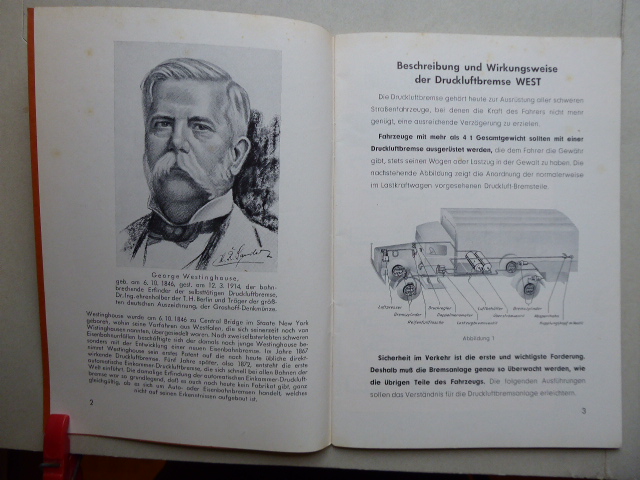
1940rif. 37436Hannover. (Um 1940). 40 Seiten. Mit 48 Abbiludngen. Originalbroschur. 20x15 cm
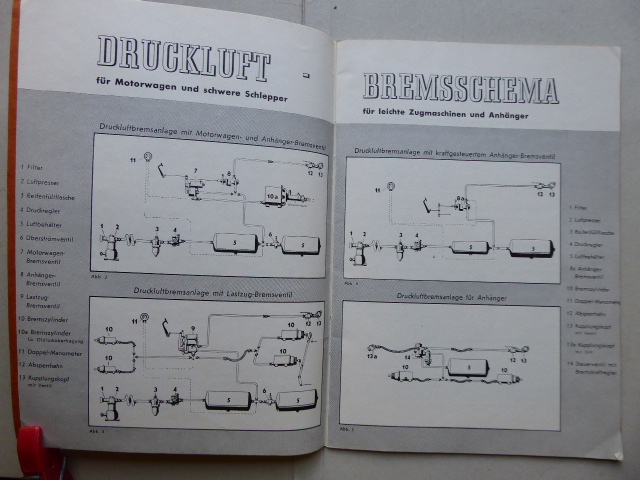
1953rif. 10957Hannover. Druckschrift B 525. (Um 1953). 48 Seiten. Mit 58 Abbildungen, technischen Skizzen u. einer Firmenansicht. Originalbroschur. 21x15 cm
1995402 pages including notes and index. Black and white illustrations. "Uses a colourful palette of biography, social history, and business lore to paint an unforgettable portrait of a tycoon, his family, his company, and the dramatic effects of his product - the motor car - on the landscape and social mores of Canada." - from dust jacket. Very light wear to clean and unmarked book. Attractive dust jacket is price clipped and bears light wear. Excellent copy. Book
1997rif. 893Pen inscription on one page not covering any words. Small mark on front cover page. Spiral style and in good condition. The United Side Car Association