Mahmut CeylanBiblio.com

942 résultats
réf. 78927Ankara: Yetkin Yayinlari. Paperback. New. In Turkish. Yetkin Yayinlari paperback
1919réf. VOEK0103's-Gravenhage, Martinus Nijhoff 1919. gr.-8°, VI, 637 S., XLIX S. Notulen van de bestuurs- en algemeene Vergaderingen van het Koniklijke Instituut . . . , 1918-1919, Priv. HLn., stärker berieben, Rü. fleckig u. etwas eingerissen, Vors. schwach angeschmutzt u. braunfl.
1911réf. 1186521Berlin, P. Cassirer, 1911. Gr.-8vo. 66 S., 65 Bildtaf. Pp. m. aufgez. OUmschl. (Einbandvign. von Max Slevogt) (Einbd teils stärker verblichen u. gering bestoßen).
réf. 78131Ankara: Oniki Levha Yayinlari. Paperback. New. In Turkish. Oniki Levha Yayinlari paperback
réf. 80618Ankara: Bilge Yayinevi. Paperback. New. In Turkish. Bilge Yayinevi paperback
réf. 78133Ankara: Oniki Levha Yayinlari. Paperback. New. In Turkish. Oniki Levha Yayinlari paperback
réf. 74384Ankara: Seckin Yayincilik. Paperback. New. In Turkish. Seckin Yayincilik paperback
2003Oblong 4to., First Edition, with a coloured frontispiece, numerous coloured and monochrome photographs (a number full-page) in the text and patterned endpapers; silver cloth, upper board and backstrip lettered in black, a near fine copy in unclipped dustwrapper. Profusely illustrated and detailed history of one of the most famous pewter companies in the world.
réf. 78640Ankara: Yetkin Yayinlari. Paperback. New. In Turkish. Yetkin Yayinlari paperback
réf. P94Oblong Folio album ca. 275x38 cm. 49 paper leaves. With 49 mounted albumen photographs including 47 larger ones from ca. 235x29 cm 9 ¼ x 11 ½ in to ca. 145x20 cm 5 ½ x 7 ¾ in; and two smaller photos ca. 9x135 cm 3 ½ x 5 ¼ in. Eighteen photos with captions and/or photographers’ stamps and signatures in negative. Period brown half sheep album with cloth boards gilt-tooled with the gilt-lettered initials “A.L.” on the front board; moire endpapers. Photos seemingly mounted at a later date. Mounts slightly waved and crinkled a couple of photos with minor losses on the corners or extremities but overall a very good collection of interesting strong photos. An attractive collection of large albumen studio photos of British India and Ceylon by famous local studios. The photos of India mostly attributed to Bourne and Shepherd show the architecture of Agra Taj Mahal the tomb of Itimad-ud-Daulah Akbar’s tomb Ahmedabad Rani Sipri’s Mosque the Temple of Hathi Singh Lucknow Dikulsha Kothi Kolkata Buddhist Pagoda in the Eden Gardens; there are also views of the Elephanta Caves a train turning on the Agony Point Loop of the Darjeeling-Himalayan Railway a statue of Nandi Bull etc. The other photos show Fort Ali Masjid in the Khyber Pass by John Burke sculptures decorating a Hindu temple by “Nicholas & Co.” a town in Darjeeling with the Himalayas towering in the background hill stations portraits of workers at burning ghats cart drivers girls etc. The photos of Sri Lanka show Colombo Queen Street with the old lighthouse Grand Oriental Hotel hills with tea plantations the Temple of the Tooth in Kandy and portraits of Tamil tea pluckers by “Scowen & Co.” Overall a nice collection of large studio photos of British India and Ceylon. A list of captioned photos: The Taj. Agra. 1080 unsigned but Bourne & Shepherd; 3133. A dunga shikari & kitchen boat; Lucknow the Dikulsha Palace signed “Borne 1149”; Huthi Singh’s Tomb. Ahmedabad. 2236 signed “Bourne & Shepherd 2236”; Ranee Seepika Musjid. Ahmedabad. 2233 signed “Bourne & Shepherd 2233”; Lucknow. View from the terrace of the Hooseinabad Emambara signed “Borne 1051”; The Mausoleum of Akbar. Sekundra. 1251 unsigned but Bourne & Shepherd; Agra. The Mausoleum of Prince Etmad-Dowlah from the Gate signed “Borne 1232”; The Taj from fountain. Agra. 1077 unsigned but Bourne & Shepherd; An Ekka. 1128 signed “B.S.”; Ali Musjid. signed “Burke 28”; Sculptures on a Hindu temple signed “Nicholas & Co. Madras”; Pagoda in Eden Gardens. Calcutta. 1710. signed “B.ourne”; Dalada Maligawa Temple of the Tooth. Kandy signed “Scowen & Co.”; Tamil cooly plucking tea leaf signed “Scowen & Co. Ceylon”; A Fijian landscape with colonial buildings signed “Dufty & Co. Levuka. Fiji”; A view of the Grand Oriental Hotel in Colombo signed “Photographers W.L.H. Skeen & Co. Colombo Ceylon”; The Angel of Cawnpore memorial signed “V. Pont. 69”. hardcover
2018New English Original bdg. HC. Large 8vo. (22 x 22 cm). In English and Turkish. 228 p., color photos. Bright faces from a dark continent.= Karanlik kitadan aydinlik yüzler. [Album of photographs].
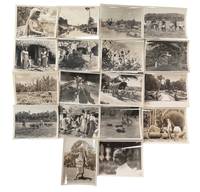
1934réf. 237251934. British Ceylon photographic archive circa 1934 documenting the labor systems that sustained one of the British Empire's most profitable plantation economies. Rather than emphasizing colonial administration or metropolitan life the photographs concentrate on the people whose agricultural work produced tea coconuts rice and other commodities that defined Ceylon's export economy during the final decades of British rule. The archive records both plantation labor and village agriculture placing field workers animal labor transportation and rural settlements within the same narrative of production that underpinned the island's economy before independence in 1948. Photo archive of 18 silver gelatin photographs each 4 x 5 inches British Ceylon circa 1934. The photographs depict women plucking tea leaves into large wicker baskets; groups of men women and children harvesting grain by hand; buffalo drawing plows through cultivated fields; coconut gathering and processing; elephants employed in heavy labor; cattle standing in flooded waterways; and villagers sorting agricultural products outside thatched dwellings. Other photographs show a village street lined with tiled roof buildings waterways with native boats landscaped gardens flowering branches tree-lined roads and portrait studies of rural residents including a Kandyan dancer in ceremonial costume and an elderly man identified only through the original negative caption. Several negatives retain contemporary handwritten captions identifying locations including Hambantota and describing subjects and related scenes indicating production for documentary or promotional use rather than private photography. The photographs were apparently produced during the S.S. Resolute World Cruise which departed on January 14 1934 for a 134 day itinerary through twenty nine countries and territories. Within that context the images record not only British Ceylon's plantation economy but also the way commercial world cruises presented the colony to Western travelers emphasizing tea estates agricultural labor village life wildlife and staged cultural performance as representative scenes of imperial Ceylon before independence in 1948. In reality production depended heavily upon Tamil labor recruited from southern India while Sinhalese villagers continued to dominate much of the island's rice cultivation and local agriculture distinctions reflected in the archive's movement between commercial plantations and village landscapes. Light surface wear with occasional curling at the corners; overall very good condition. A concentrated visual record of agricultural labor and rural production in British Ceylon during the final years of imperial rule. unknown
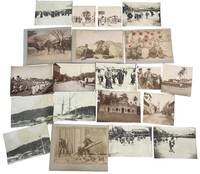
1890réf. 236871890. British Ceylon and Japan photo archive circa 1890 to 1910 documenting public ceremony craft production daily life during the expansion of imperial travel in Asia. The Japanese images record religious processions rickshaw travel workshops and leisure scenes associated with the late Meiji period while the Ceylon photographs depict Colombo streets architecture ceremonial dress and colonial urban space. Verso inscriptions identify Nagoya and Colombo without establishing a single photographer or original sequence. Photo archive of 24 photographs comprising eight hand colored photographs mounted to cardstock approximately 5 x 3½ inches and sixteen glossy and matte silver gelatin prints ranging from approximately 2½ x 2½ to 3 x 4½ inches Japan and British Ceylon circa 1890 to 1910. The hand colored Japanese views show women in rickshaws beneath flowering trees artisans making paper umbrellas workers shaping timber a cooper surrounded by tubs and hoops and a lantern shop filled with suspended paper lanterns. Other photographs depict monks attendants musicians and costumed participants moving through public squares with parasols banners and ceremonial objects. The Ceylon views include a Colombo street leading toward a clock tower palm lined compounds civic and religious buildings harbor craft and men in formal ceremonial dress. Inscriptions include "Nagoya" "Colombo" and "Vue de Colombo." The Japanese photographs belong to the commercial visual culture of the Meiji era when photographers produced hand colored views of occupations transport festivals costume and craft work for foreign travelers. These images often arranged workers and tools for clarity while the smaller prints record crowds streets and religious movement with less formal staging. The Colombo photographs reflect the parallel growth of photography under British colonial rule in Ceylon where ports municipal buildings and ethnographic subjects circulated through travel albums and commercial view markets. Light to moderate surface wear fading abrasions edge wear and occasional creasing; several mounts show staining or loss. Overall good condition. A compact visual record of Asian urban life religious practice artisanal labor and colonial travel at the turn of the twentieth century. unknown
1880réf. 237851880. Ceylon colonial photo archive depicting tea cultivation estate labor transportation and urban life circa 1880s to 1910s documenting the plantation economy that made the island one of Britain's principal sources of tea as British merchants shifted the enormous domestic tea market away from China and toward production within the Empire. Coffee leaf rust appeared in Ceylon in 1869 and spread rapidly through the island's coffee districts precipitating the collapse of the crop that had dominated the colonial export economy and accelerating planters' conversion of the central highlands to tea. James Taylor had established commercial tea cultivation at Loolecondera Estate near Kandy in 1867 and the new industry expanded rapidly as coffee failed; by 1900 some 380000 acres in Ceylon were planted in tea. By 1879 the results showed that in more than 70 percent of tea sold in London still came from China while by 1900 China supplied only about 10 percent and black teas from British controlled India and Ceylon constituted the bulk of the market. Photo archive of albumen and silver gelatin photographs and photographic postcards ranging from approximately 3½ x 5 to 4 x 6 inches Ceylon circa 1880s to 1910s. Tea production forms the strongest body of imagery. Women and men stand among densely planted tea bushes or work through rows of plants with women carrying the large woven baskets used to collect leaves; individual and group views are captioned "Tea plucker" "Tea picking Ceylon" "Pruning tea Kandy" and in French "Cueillette du thé à Ceylan." One Skeen & Co. Colombo card numbered 84 and captioned "Tea plucker" isolates a woman at work with a large basket strapped behind her while another shows a large group of workers seated with baskets and gathered tea in a plantation clearing. A card captioned "Estate coolies Ceylon" depicts an estate employee in European dress standing with women and a child outside a thatched dwelling preserving in its printed terminology the racial and labor classifications through which plantation workers were presented to contemporary consumers of colonial imagery. Other photographs move from plantation production into the roads vehicles and cities of colonial Ceylon: rickshaw pullers pose with European passengers and beside their vehicles; a street scene records "Native town Kandy Ceylon"; Colombo appears in views of the "Colpetty Road near Galle Face Colombo" a crowded procession captioned in French "Colombo départ des troupes Anglaises" and a civic monument among palms. Another postcard depicts "Royal visitors leaving Ceylon" while a country road scene shows pedestrians carts and roadside activity. Skeen & Co. one of the principal commercial photographic firms operating from Colombo in the late nineteenth and early twentieth centuries is identified on several cards but no single photographer can be assigned to the archive as a whole. The tea scenes record the labor at the center of one of the fastest agricultural conversions in the nineteenth century British Empire. Coffee rust Hemileia vastatrix was first observed in Ceylon in 1869 and within little more than a decade had destroyed the commercial basis of the coffee plantation system; tea already demonstrated commercially by Taylor replaced it across much of the highlands. Ceylon tea exports to Britain rose from only 282 pounds in 1875 to more than 4.3 million pounds in 1885 while the plantation landscape expanded until almost all former coffee districts had been replanted with tea during the 1890s. That expansion depended on a large year round plantation workforce much of it composed of Tamil laborers brought from southern India and on the colonial infrastructure that connected the highlands with Colombo and overseas markets. Roads and the railway between Kandy and Colombo had initially served the coffee economy and could be redirected toward tea after the blight while Colombo developed as the commercial and shipping center through which the crop entered imperial markets. The archive therefore records several stages and social spaces of the same colonial economy from plucking and pruning in the highlands to estate communities road transport Kandy and the metropolitan port city of Colombo while the postcards themselves show how plantation labor and colonial development were converted into commercial images for circulation beyond the island. Light to moderate surface wear toning occasional fading and creasing with some photographs showing age related discoloration and edge wear. Overall in good condition. A visual record of the plantation labor and colonial infrastructure behind Ceylon's transformation from a failed coffee economy into a major tea producer that helped Britain replace Chinese tea with supplies produced under imperial control. unknown
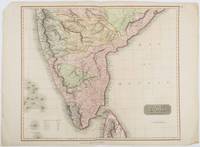
1816réf. 185242London.: Thomson. 1816. Engraved map with full handcolour 50.5 x 59.7 cms ; 53.9 x 73.8 cms sheet central fold a few minor edge tears one intruding into the top border the map unscathed marginal edgewear two corners with some loss but the map in very good crisp condition. An elegant map with great detail prepared for John Thomson's influential "New General Atlas" 1814-1821. Showing India from 20 degrees to 7 degrees north of the equator and includes the northern half of Ceylon with territorial interests attractively coloured. . Thomson. unknown
1988réf. 1359341988. 28 Plates. 30*25 cm. OLederband.
1936In 8. Dim. 23x16,5 cm. Pp. 184. Terza edizione del 1936 di questo volume sulla caccia di Wilhelm Munnecke. Si tratta di una serie di resoconti di avventurose battute di caccia grossa a Sumatra e Ceylon All'interno sono presenti otto planches fuori testo che mostrano scene di caccia. Alla fine una mappa. Bella copertina editoriale. In ottime condizioni. Copertina editoriale in tela in ottime condizioni generali con lievi usure ai margini e dorso. Legatura in buone condizioni. All'interno le pagine si presentano in ottime condizioni con rare fioriture. Third edition of 1936 of this volume about hunting by Wilhelm Munnecke. It is a series of resuming of adventurous big hunting in Sumatra and Ceylon. Inside there are eight planches representing scenes of hunting. A map at the end. Beautiful editorial cover. In very good conditions. Editorial cloth cover in very good general conditions slightly worn in the edges and spine. Binding in good conditions. Inside pages are in very good conditions with occasional foxings.
196039 Pages plus five pages of nice vintage ads. Features: Legend and History in the Oldest Geographical Names of the St. Lawrence; Tobacco - Another Canadian Achievement; British Columbia Lakes (Pictoria); How Canada is Helping the Fishermen of Ceylon; Physiography of the Queen Charlotte Islands; Pictures of the Provinces - XXIII; Nice Army recruiting ad inside front cover; and more. Unmarked with moderate wear. A sound copy. Magazine
1985Bilingual English/French. 28 pages in each language. Colour map of Hong Kong, 18-25 December 1941, indicates troop movements. Black and white reproductions of archival photos. Printed to mark the 40th anniversary of VJ-Day and recall and honour the contributions of the 10,000 Canadians who fought in Hong Kong and South East Asia, from Ceylon to Burma. Unmarked with moderate wear. A sound copy. Book
2024réf. B2412084Arter Yayincilik 2024. New. n/a n/a The publication which also draws on the display of the installation as part of the group exhibition Precaution 03/06/202120/02/2022 curated by Emre Baykal at Arter features a comprehensive interpretive text written by Erdem Ceylan. In her installation Loss Tolon gives another chance to her works that were damaged during the San Francisco Bay Area earthquake of 1989 suffered from shipping accidents due to improper packaging or were affected by inadequate storage conditions which render them worthless in terms of their market and exhibition value. Adopting an experimental approach Ceylan explores Tolons work in the form of an Ancient Greek tragedy by damaging and transforming the set of literary conventions peculiar to this form through a postmodern technique. Proceeding with the dialogues of two characters Hephaistos and Daidalos who were locked in Arter overnight because the closing time of the exhibitions had passed but turned this state into an occasion to start a discussion on art and life the book provides a context that can convey the love-hate relationship between the artistic ego seeking permanence and immortality and the alter ego which is at peace with life. Arter Yayincilik unknown
réf. 13975192Paris: Société d'éditions scientifiques, 1892 gr. in-8, iii-492 pages, 116 illustrations, carte se dépliant. Broché, couv. lég. défr., très bon état intérieur. "Bibliothèque générale de géographie".
1892réf. 253841892 Paris: Société d'éditions scientifiques, 1892. Edition originale, in-8;broché, [vi], iii, [i], 492p., [2p. Errata]; carte dépliante in fine, et 116 figures d'après les croquis et photographies de l'auteur, certaines à pleine page, bon exemplaire. Emile Deschamps arriva à Colombo le 18 Juin 1889 en provenance de Singapour, et quitta cette ville en mai 1890,après une année de "promenades", racontées ici jour après jour avec les impressions du moment. Charmant ouvrage abondamment illustré: pirogues, paysages et habitants Cinghalais, cultures et végétation, fourmis jaunes, etc.
1910réf. 6833Colombo: Cave & Co. Printers 1910. Oblong booklet 18 x 14 cm. 16 pages. Text illustrations from black-and-white photographs. FIRST & ONLY EDITION. A promotional pamphlet published by the cardamom growers of Ceylon with information on cardamom cultivation cardamom use in cooking medicine and perfume and trade statistics. The tentative date is derived from statistical data for 1909 contained in the text. Original pictorial self-wrappers. Some soil and discoloration to wrapper margins light additional wear else very good. Unrecorded. OCLC locates no copies. Cave & Co., Printers unknown
1910réf. 6833Colombo: Cave & Co. Printers 1910. Oblong booklet 18 x 14 cm. 16 pages. Text illustrations from black-and-white photographs. FIRST & ONLY EDITION. A promotional pamphlet published by the cardamom growers of Ceylon with information on cardamom cultivation cardamom use in cooking medicine and perfume and trade statistics. The tentative date is derived from statistical data for 1909 contained in the text. Original pictorial self-wrappers. Some soil and discoloration to wrapper margins light additional wear else very good. Unrecorded. OCLC locates no copies. Cave & Co., Printers unknown books
2017réf. 1-3330085428LAP LAMBERT Academic Publishing 2017. Paperback. New. 01 edition. 148 pages. Turkish language. 8.66x5.91x0.34 inches. LAP LAMBERT Academic Publishing paperback