817 Ergebnisse
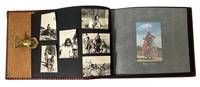
1960Best.-Nr. 232261960. South Asia photo album recording Darjeeling Nepal Calcutta and Agra in the 1960s in a post Independence view of how religious life urban crowding tourism and Himalayan community identity were being documented by a foreign traveler across India and Nepal. The album showcases the various landscapes of cultural and religious identity throughout South Asia with Muslim architecture in Agra Buddhist and Hindu temple spaces in the Himalayan region crowded Calcutta streets captioned in French as an overpopulated refugee city and repeated portraits of Nepali villagers Sherpas women and children. In the decades after 1947 Indian cities such as Calcutta were absorbing refugee movement housing pressure and widening informal street economies while Himalayan communities in Darjeeling and Nepal were increasingly pulled into road building porterage mountaineering border trade and tourism conditions that form the broader social world around the album's portraits and landscapes. Photo archive of 150 silver gelatin photographs and a small group of color snapshots most measuring 2.5" x 3.75" album measuring 10.5" x 14" Darjeeling Nepal Calcutta and Agra circa early 1960s. Black paper leaves with corner mounts and French captions opening with a map of India labeled in French and moving through place based sequences. Agra pages include captioned views of the "Le Mausolée d'Itimad ud Daula" façades pierced marble screens and views of the Taj Mahal. Buddhist material includes a page captioned "Temple Bouddhique" with rooflines bells carved doors and ornamental details. Nepal and Darjeeling sections show prayer flags strung across roads mountain slopes a ridge top cabin bundled men in traditional clothing and a captioned portrait of "Le sherpa Tensing Norgay." Other leaves caption "Nepalais" and "Mère Népalaise" pairing a woman carrying a child in a basket with village children hillside portraits and small groups gathered outdoors. Calcutta appears through elevated city views dense commercial streets market scenes bridge approaches pavement sleeping and sitting areas and close portraits captioned "mendiantes" and "fumeuse de pipe." A color image captioned "Danseuse du Kashmir" and several small color snapshots extend the album's attention to costume and regional customs. By the 1960s Independence had ended British rule but it had not eased the pressures of displacement poverty overcrowding and uneven development that shaped eastern Indian urban life and the Calcutta pages make those conditions visible through street congestion market trading informal rest spaces and the compiler's own language about refugees and overpopulation. In the Himalayan sections the album does not directly picture hunger land scarcity or labor migration in explicit terms yet those pressures formed the lived context of many Nepali and Sherpa communities during this period when cash income often depended on carrying service work seasonal movement and the new international economy of trekking and mountaineering that made figures such as Tenzing Norgay globally recognizable. Minor edge and corner wear from cornering; images clean and clear; binding and boards intact. A 1960s record of post Independence South Asia combining sacred architecture urban hardship and Himalayan portraiture. unknown books
1960Best.-Nr. 232261960. South Asia photo album recording Darjeeling Nepal Calcutta and Agra in the 1960s in a post Independence view of how religious life urban crowding tourism and Himalayan community identity were being documented by a foreign traveler across India and Nepal. The album showcases the various landscapes of cultural and religious identity throughout South Asia with Muslim architecture in Agra Buddhist and Hindu temple spaces in the Himalayan region crowded Calcutta streets captioned in French as an overpopulated refugee city and repeated portraits of Nepali villagers Sherpas women and children. In the decades after 1947 Indian cities such as Calcutta were absorbing refugee movement housing pressure and widening informal street economies while Himalayan communities in Darjeeling and Nepal were increasingly pulled into road building porterage mountaineering border trade and tourism conditions that form the broader social world around the album's portraits and landscapes. Photo archive of 150 silver gelatin photographs and a small group of color snapshots most measuring 2.5" x 3.75" album measuring 10.5" x 14" Darjeeling Nepal Calcutta and Agra circa early 1960s. Black paper leaves with corner mounts and French captions opening with a map of India labeled in French and moving through place based sequences. Agra pages include captioned views of the "Le Mausolée d'Itimad ud Daula" façades pierced marble screens and views of the Taj Mahal. Buddhist material includes a page captioned "Temple Bouddhique" with rooflines bells carved doors and ornamental details. Nepal and Darjeeling sections show prayer flags strung across roads mountain slopes a ridge top cabin bundled men in traditional clothing and a captioned portrait of "Le sherpa Tensing Norgay." Other leaves caption "Nepalais" and "Mère Népalaise" pairing a woman carrying a child in a basket with village children hillside portraits and small groups gathered outdoors. Calcutta appears through elevated city views dense commercial streets market scenes bridge approaches pavement sleeping and sitting areas and close portraits captioned "mendiantes" and "fumeuse de pipe." A color image captioned "Danseuse du Kashmir" and several small color snapshots extend the album's attention to costume and regional customs. By the 1960s Independence had ended British rule but it had not eased the pressures of displacement poverty overcrowding and uneven development that shaped eastern Indian urban life and the Calcutta pages make those conditions visible through street congestion market trading informal rest spaces and the compiler's own language about refugees and overpopulation. In the Himalayan sections the album does not directly picture hunger land scarcity or labor migration in explicit terms yet those pressures formed the lived context of many Nepali and Sherpa communities during this period when cash income often depended on carrying service work seasonal movement and the new international economy of trekking and mountaineering that made figures such as Tenzing Norgay globally recognizable. Minor edge and corner wear from cornering; images clean and clear; binding and boards intact. A 1960s record of post Independence South Asia combining sacred architecture urban hardship and Himalayan portraiture. unknown
1971Reliure toile de l'éditeur. 672 pages. Jaquette. Annotations au stylo.
1969Arthaud 1969, In-8 broché, 349 pages. 25 photographies, 2 cartes; Parfait état.
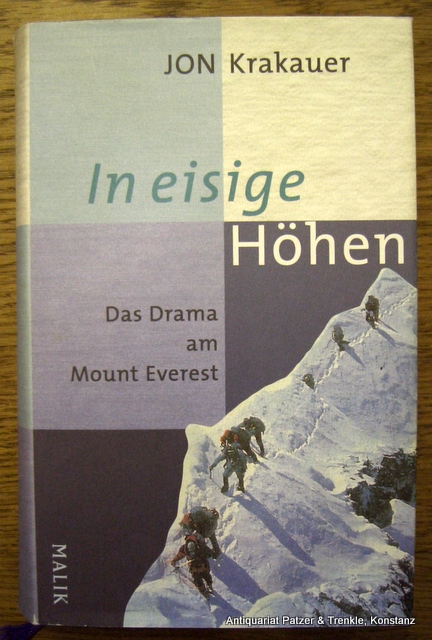
1998Best.-Nr. 136208Das Drama am Mount Everest. Aus dem Amerikanischen von Stephan Steeger. 10. Auflage. München, Piper, 1998. Mit Kartenskizzen, fotografischen Abbildungen u. kl. Illustrationen. 367 S., 1 Bl. Or.-Pp. mit Schutzumschlag; dieser mit leichten Gebrauchsspuren.
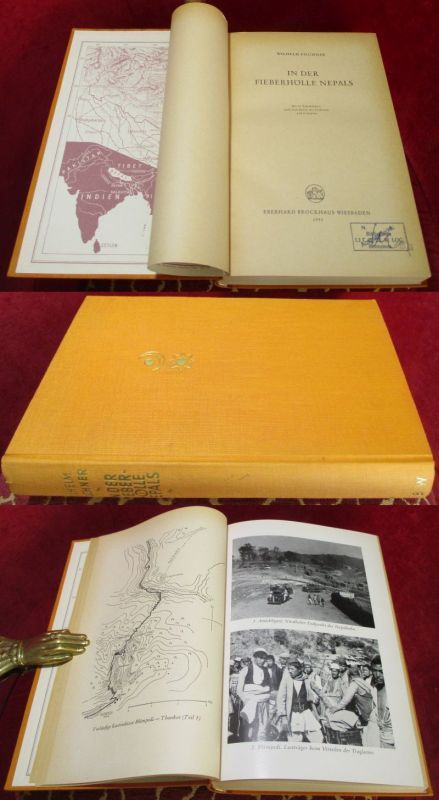
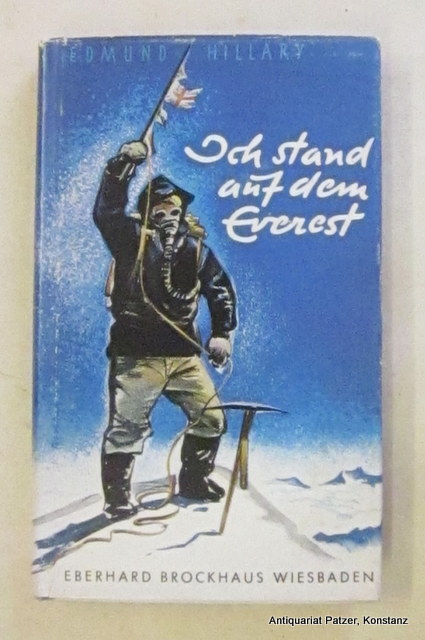
1951Best.-Nr. 029379Brockhaus, Wiesbaden 1951. Leinen Sehr gut
1951Best.-Nr. 16582Wiesbaden : Brockhaus 1951. 356 S. : 12 Bl. Abb. ; 8°, mit Schutzumschlag Lw., gebundene Ausgabe, Leinen, Exemplar in gutem Erhaltungszustand
1951Best.-Nr. 282508Wiesbaden: E.Brockhaus 1951. 356 S., 50 Abb. auf Taf., Ktn. Ln.
1951Best.-Nr. 32572Wiesbaden: E.Brockhaus 1951. 356 S., 50 Abb. auf Taf., Ktn. Ln. *Mit knapper Widmung des Verfassers*.
1953Best.-Nr. 640Wiesbaden, Brockhaus, 1953. Mit 50 Tafelbildern nach Aufnahmen des Verfassers und 11 Karten. Gr. 8°. 356,4 S. OLeinen. Rücken leicht ausgebleicht, Papier etwas vergilbt.
Best.-Nr. 6200212562.Gpaperback. Good. Access codes and supplements are not guaranteed with used items. May be an ex-library book. paperback
1984Best.-Nr. 1552Leipzig : VEB Brockhaus, 1984. dt. EA. 50 teilw. farb. Abb. auf Tafeln, 244 S., 8°, OLn. m. SchU
1953Best.-Nr. 165986Wiesbaden : Brockhaus, 1953. 185 S. : Mit 19 Abbildungen auf Kunstdrucktafeln u. 1 Karte ; 8 OLeinen, Kopffarbschnitt, SU
1960Best.-Nr. 15993Büchergilde Gutenberg, Frankfurt 1960. 164 S. mit 1 Farbtafel, 41 Abbildungen auf Tafeln u. 3 Karten. Leinen. Leichte Gebrsp. Einband etwas verblichen. Gutes Exemplar.
1923Best.-Nr. 1109226Leipzig, Haessel, 1923. Gr.-8vo. 105, (1) S. m. 1 Kartenskizze, 76 Abb. auf Taf. OHlwd (bestoßen, Gelenke gelockert, mehrfach gestempelt).
1923Best.-Nr. 33492Leipzig, Haessel, 1923. 105 S. Mit Kartenskizze (in Pagina) und 76 Abbildungen auf gefaltetem Frontispiz und 35 Tafeln. Gr.-8° (25 x 16,5 cm). Original-Halbleinwand.
2019Questo libro non è un diario, ma il breve ricordo di un viaggio in una delle parti meno conosciute del Nepal che, per i risultati conseguiti, è stato uno dei più fortunati tra i molti compiuti da Giuseppe Tucci, in quasi un trentennio, nella zona himalayana e sul Tetto del Mondo. Tucci non poteva immaginare che l’esplorazione sarebbe stata così fruttuosa e che un impero del tutto dimenticato sarebbe balzato fuori da un silenzio secolare. Si trattava dell’impero dei Malla. Templi, rovine, iscrizioni, cronache, gli vennero d’un tratto incontro come se avessero atteso a lungo il momento propizio per narrare le vicende di un impero che regnò su Nepal e Tibet occidentali per tre secoli. Autori: Giuseppe Tucci.
1966Mm 175x245 Volume cartonato rigido di pagine 238 con 163 illustrazioni in bianco e nero e a colori, sovraccoperta figurata. Opera in ottime condizioni. Spedizione in 24 ore dalla conferma dell'ordine.
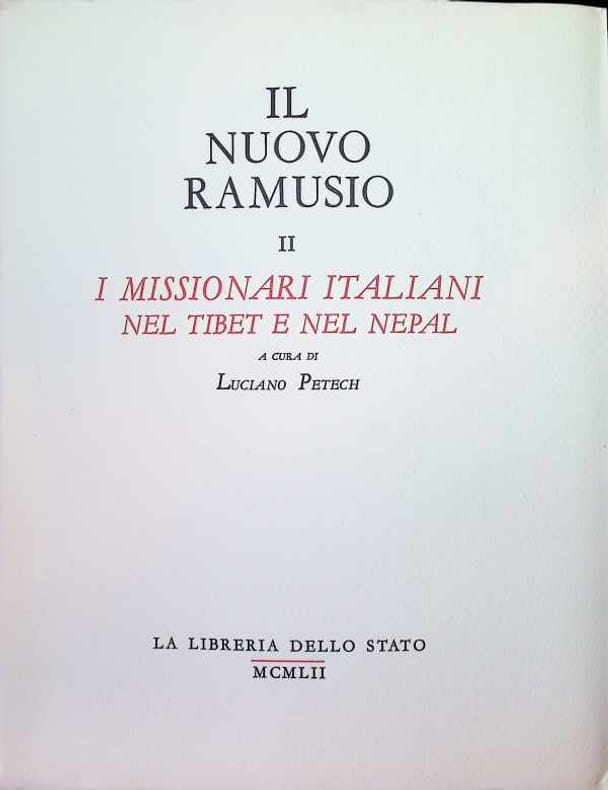
1952Best.-Nr. 0269011952 La Libreria Della Stato Soft cover Very Good
1980Best.-Nr. 69608Ancona, Edi.F.Lli Aniballi, 1980. Origi.Pappband mit Schutzumschlag, gr.8°, 244 Seiten.
1972Firenze, IGM, 1972, 8vo stralcio con copertina posticcia muta, pp. 53/70 con 3 grafici, 3 cartine e numerose illustrazioni fotografiche in nero e a colori. - !! ATTENZIONE !!: Con il termine estratto (o stralcio) intendiamo riferirci ad un fascicolo contenente un articolo, completo in se, sia che esso sia stato stampato a parte utilizzando la stessa composizione sia che provenga direttamente da una rivista. Le pagine sono indicate come "da/a", ad esempio: 229/231 significa che il testo è composto da tre pagine. Quando la rivista di provenienza non viene indicata é perché ci è sconosciuta. - !! ATTENTION !!: : NOT A BOOK : “extract” or “excerpt” means simply a few pages, original nonetheless, printed in a magazine. Pages are indicated as in "from” “to", for example: 229/231 means the text comprises three pages (229, 230 and 231). If the magazine that contained the pages is not mentioned, it is because it is unknown to us.
1934Roma, 1934, 8vo br. pp. 31 con ill. n.t.
1967Milano, 1967, stralcio con copertina posticcia muta, pp. 402/418 con fotografie e tavole fotografiche in nero e a colori. - !! ATTENZIONE !!: Con il termine estratto (o stralcio) intendiamo riferirci ad un fascicolo contenente un articolo di rivista, sia che esso sia stato stampato a parte utilizzando la stessa composizione sia che provenga direttamente da una rivista. Le pagine sono indicate come "da/a", ad esempio: 229/231 significa che il testo è composto da tre pagine. Quando la rivista di provenienza non viene indicata é perchè ci è sconosciuta. - !! ATTENTION !!: : NOT A BOOK : “estratto” or “stralcio” means simply a few pages, original nonetheless, printed in a magazine. Pages are indicated as in "from” “to", for example: 229/231 means the text comprises three pages (229, 230 and 231). If the magazine that contained the pages is not mentioned, it is because it is unknown to us.
2000in 8° oblungo, tela edit. con titoli impressi al piatto e al dorso, manca sovrac., timbri di appartenenza
1956Best.-Nr. 203022Meine Erstbesteigung mit Scherpa Tensing. Aus dem Englischen übersetzt von W(illi) Rickmer Rickmers. Wiesbaden, Eberhard Brockhaus, 1956. Mit 4 ganzseitigen Karten im Text u. 16 Tafelseiten. 157 S., 1 Bl. Or.-Halbleinenband mit farbig illustriertem Schutzumschlag; dieser gering berieben u. mit minimalen Läsuren an der Oberkante. (Reisen und Abenteuer).