26,246 results
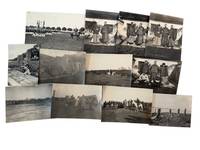
1900ref. 238861900. German colonial northern China photo archive circa 1900 to 1910 documenting foreign military presence Chinese commercial and social life and the unequal encounters produced by European imperial expansion in the years surrounding the Boxer Rebellion. German occupation of Kiautschou Bay began in 1897 followed by the 1898 lease that placed the territory around Tsingtao under German control for 99 years and established the port as an Imperial German naval and commercial base. The photographs move between colonial military spectacle and less formal encounters as cavalry formations and Chinese prisoners appear alongside merchants transport rural scenes and a European man repeatedly photographed wearing Chinese garments among Chinese men. German manuscript captions identifying Tsingtao and locations in Manchuria connect the group to a German speaking observer traveling through a northern China increasingly shaped by foreign military intervention. Photo archive of 12 silver gelatin photographs approximately 3 x 4 inches each northern China including Tsingtao and Manchuria circa 1900 to 1910. Several photographs depict a European man among Chinese men wearing a long Chinese robe and cap in posed portraits outside a masonry building; in one he stands between two Chinese men similarly dressed while another records a larger group in which Chinese and European subjects wear combinations of local and Western clothing. Other images show a mounted officer passing ranks of uniformed troops carrying standards; groups gathered around loaded wagons or carts; horsemen and spectators assembled across open ground; and broad views of people and animals distributed across a field. Two particularly stark photographs show Chinese men restrained individually against upright wooden stakes in an open landscape their bodies separated at regular intervals along what appears to be a shoreline or field. Some photos with Manuscript German captions on the versos reference to Tsingtao and Manchuria. Germany's presence at Tsingtao belonged to the larger division of Chinese territory into foreign concessions and spheres of influence at the end of the nineteenth century. The Imperial German Navy administered Kiautschou and developed Tsingtao as a planned colonial city and naval base including residential segregation between European and Chinese populations. That colonial project intersected directly with the violence of the Boxer Rebellion in 1900. After the killing of German minister Clemens von Ketteler in Beijing Germany dispatched approximately 20000 troops to China; although the foreign legations had already been relieved when much of the German force arrived German and other international troops subsequently conducted punitive expeditions in which suspected Boxers were executed and villages were looted and burned operations that continued until the Boxer Protocol of September 1901. The photographs of bound prisoners therefore belong to a period in which execution and punitive violence formed a documented component of foreign intervention although the absence of a securely deciphered caption prevents assigning these particular scenes to a specific campaign. The images of a European participant adopting Chinese clothing present another dimension of the colonial encounter recording personal appropriation and performance of local dress within the same photographic record that encompasses military formations prisoners commerce transportation and everyday contact. Light surface wear occasional creasing toning and fading; manuscript verso captions remain substantially legible. Overall in good condition. A German vernacular photographic record of northern China during the era of the Boxer intervention and Kiautschou colonial rule preserving military power coercion commerce and informal cross cultural encounters within the same small format archive. unknown books
1953ref. 72696Beijing: Central Committee of the New Democratic Youth League of China 1953. 2 volumes small 8vo pp. 4 78; 2 34; 14 plates; both near fine in original printed wrappers. Central Committee of the New Democratic Youth League of China unknown books
1908ref. 72951London & Oxford: A.R. Mowbray & Co. Ltd. New York: Thomas Whittaker 1908. First edition 12mo pp. xii 219 1; folding map frontispiece and 6 plates; spine a bit darkened else a near fine copy in original olive cloth stamped in gilt on upper cover and spine. Issued as no. 3 in the publisher's Handbooks of English Church Expansion series. Includes chapters on Heathen China; The English Church Enters China; The English Church Enters Peking; The Church in South China; and Fuhkien; Chehkiang; The Yangtse Valley; Western China; Shantung; Chihli and others. A.R. Mowbray & Co. Ltd. New York: Thomas Whittaker unknown books
2016ref. 71909Magadan: Oxotnik 2016. Square 8vo pp. 2 85 1; text in Russian; color text illustrations; pictorial stiff paper wrappers; fine. "A Russian-language collection of Evenki fairy stories retold with a contemporary slant and illustrated with Evenki folk motifs." OCLC Cambridge only in OCLC. Oxotnik unknown books
1939ref. 96005Shanghai 1939. Paperback. Generally Very Good. Group 1 Pagination varies but generally 100-100 variously numbered pages or perhaps more on the earlier reports. Softcovers in original wrapper. 29 cm. Backstrips chipped and partially gone. Reports internally sound and clean. Group 2. numbered pages range between 22 and 8 with most having 10-12. Final page of report is printed inside back cover and usually unnumbered. Softcovers in original wrapper. 33 cm. 1925-1926 and 36 cm. 1928 issues. Bound with two staples along left side. Corner creasing on some issues. April 1928 issue printed on higher acid paper than the other issues and its browned pages are chipped and stained around edges. Group 3. folded and unnumbered four-page reports. 28 cm. Issues beginning with April 1929 given Volume is issue numbers beginning with Vol. V No.4. Group 4. Reports before July 1937 generally 24p. Reports thereafter are much shorter mostly 4-8 pages. Softcovers. 27 cm. Staples rusty. Folded strip on outer pages foxed. September 1937 issue creased and soiled. Title in Chinese and English. Slip printed in red and tipped to front cover of thin July 1937 issue reports that since their printer's office was located in the war zone the issue had not come out on schedule and was "bridged" -- the July August and December issues are only four pages as war problems continued. The lengthier January 1938 issue with Shanghai under Japanese control contains Notes to the Table of Wholesale Prices July-December 1937 explaining the war effects during that period and whether numbers were hypothetical or based on real transactions etc. during the war period. Japan gained control of Shanghai in November 1937 although they did not take control of the foreign concessions until after declaring war on the USA in 1941. We don't know what effect that had on the accuracy of these reports. paperback books
1972ref. 221921972. China Notes Newsletter Archive of 3 issues: Vol. XI Nos. 1 2 and 4. New York: East Asia Office - Division of Overseas Ministries NCC/USA The National Council of the Churches of Christ in the USA 1972-1973. Archive of three issues of China Notes a critical educational publication distributed by the East Asia Office of the Division of Overseas Ministries in New York. Aimed at American educators religious scholars and mission-affiliated readers China Notes served as a bridge between U.S. audiences and the People's Republic of China during a period of thawing diplomatic relations and renewed American interest in Chinese society following Nixon's 1972 visit. Each measure 8.5" x 11" printed on unbound yellow paper 10-11 pages per issue. Each issue features articles lesson plans and firsthand interviews intended to reshape Western understanding of contemporary China. Issues included are: 1 China Notes Vol. XI No. 1 Winter 1972-73 Cover article: "Buddhism in China" offers a nuanced theological and sociopolitical study of Chinese Buddhism post-1949 explaining the intersection of Buddhist practice with Maoist ideology. Additional pieces include "Religion and the Churches" a look at the challenges faced by Christian communities under the People's Republic and a retrospective index of previous issues. 2 China Notes Vol. XI No. 2 Spring 1973 Cover article: "Down on the Commune" by Arthur W. Galston based on field observations in rural China investigates daily life and agricultural practices within people's communes with a focus on food production worker solidarity and health systems. The issue includes pedagogical content such as "Learning and Teaching About China" and interviews with U.S. high school students who had recently studied modern Chinese history. 3 China Notes Vol. XI No. 4 Autumn 1973 Cover article: "The Chinese Revolution and American Missions" by Mark Rankin critically revisits the American Protestant missionary presence in pre-Communist China arguing for a reassessment of the moral and cultural failures of mission strategy amid nationalist movements. Other features include reflections on U.S.-China relations an article on Chinese-American history titled "China and U.S. Chinese-American Identity" and recent data on Chinese urban reforms. Light edgewear and slight discoloration to paper; overall very good condition. An uncommon and historically valuable grouping from one of the few progressive Christian publications that critically addressed both the domestic and global politics of China during the Cold War with special attention to education religion and Chinese American identity. unknown books
1930ref. 222401930. China family photograph album. 1930s-1960s. This album documents family life across major political transitions in twentieth-century China including the Republican period the years of Japanese occupation and the early decades of the People's Republic. The photographs record everyday experience across multiple regions showing movement between northern southern and northeastern cities as well as Hong Kong and provide visual evidence of how individuals and families navigated changing political and social conditions. The material is particularly strong in its geographic breadth with identified locations including Beijing Guangzhou Wuhan Dalian Jilin Shenyang Anshan Fushun and Hong Kong linking domestic life to major urban and industrial centers. Album containing 107 original black-and-white silver gelatin photographs mounted in a string-bound volume with individual prints ranging approximately from 1.25 x 1.5 to 4 x 6 inches. The photographs include studio portraits with painted backdrops from the 1930s family groupings of multiple generations and school portraits of children posed in uniform before institutional buildings. Clothing varies between Western-style suits and traditional garments such as qipao indicating shifts in dress across time and place. Urban scenes show streets promenades docks and architectural landmarks with some images bearing printed or written location identifications in Chinese. Several photographs depict travel aboard a passenger vessel suggesting movement between mainland cities and Hong Kong. Industrial environments and city signage appear in images associated with Shenyang and Fushun reflecting the presence of major industrial centers in northeastern China. The album spans decades marked by war occupation and state formation when cities such as Shenyang and Anshan developed as industrial hubs under Japanese control and later under the People's Republic while Hong Kong functioned as a site of movement and exchange. The combination of studio portraiture school imagery and travel scenes provides a continuous record of family life through these changes linking private experience to broader historical conditions. Light edge wear and toning to photographs with occasional spotting and minor marks to mounts; overall very good. A substantial visual record of Chinese family life across shifting political and geographic landscapes in the mid-twentieth century. unknown books
1949ref. 205951949. Unidentified press photographers Mao Zedong photograph archive 1949-1972 documents Chinese Communist Party leadership and international diplomatic engagement during the consolidation and global positioning of the People's Republic of China supporting research into Cold War political culture state media practices and representations of authority. The group includes images spanning from the founding period of the People's Republic through the Cultural Revolution and into the early 1970s diplomatic realignments providing visual evidence of how Mao's image circulated through press networks. The material captures both staged political encounters and informal moments including early association with Soviet leadership and later interactions with foreign dignitaries establishing a longitudinal record of leadership imagery across shifting geopolitical contexts. Eight press photographs primarily silver gelatin prints ranging in size from approximately 3 x 3.75 inches to 8 x 11 inches originating from a press archive and bearing evidence of editorial handling. Seven photographs appear to be period press prints with two later reprints. The earliest image shows Mao Zedong seated beside Joseph Stalin during Stalin's seventieth birthday celebration in 1949 with areas of the image shaded by hand for publication emphasis. A 1966 photograph depicts Mao seated indoors reading a newspaper and smoking presenting a controlled but informal representation of leadership. Another image from the same year shows Mao standing at a railing beside Lin Biao suggesting a public appearance or review setting. Later photographs include Mao in the presence of two Black women during a diplomatic encounter likely connected to outreach toward African nations as well as two 1972 images showing meetings with Asian prime ministers at Zhongnanhai the central leadership compound in Beijing. The photographs consistently show formal staging grouped delegations and controlled environments typical of state-mediated press imagery. Produced and circulated during a period that includes the Sino-Soviet alliance the Cultural Revolution and early 1970s diplomatic outreach the archive provides insight into how Mao's image functioned within both domestic propaganda and international political communication. The inclusion of figures such as Stalin and Lin Biao situates the material within key moments of alliance and internal fracture while the presence of African and Asian representatives reflects China's engagement with postcolonial states. Minor handling wear consistent with press use including editorial markings and light surface wear; prints remain clear with strong tonal range. Overall in very good condition. unknown books
2000ref. 65735Beijing: Zhongguo Chuban Gongzuo Zhe Xiehui; Zhongguo Chuban Nianjian She 2000. Large 8vo pp. 2 xviii 808; 62 pages of full-color inserts; text in Chinese; full red cloth; edges lightly foxed text clean near fine. Zhongguo Chuban Gongzuo Zhe Xiehui; Zhongguo Chuban Nianjian She unknown books
2004ref. 64060Beijing: Sinomaps Press distributed by Xinhua Bookstore 2004. Contains Explnatory Notes in English 4to pp. 4 iv 3 1 244; original printed wrappers; Attached Tables in English an envelope containing 21 double-page tables; plus a very large geological map of China on 8 sheets each sheet approx. 24" x 38" or slightly smaller; depths shown by gradient tints and contours. The entite contents in a publisher's pictorial folding clamshell box. Fine copy. The Geological Map of the People's Republic of China with Chinese and English versions was published by the SinoMaps Press in 2004 at the scale of 1:2 500 000 including 8 sheets. The chief compiler is Huang Chongke and the associate chief com pilers are Ye Tianzhu Chen Keqiang Wu Kuanlian Ji Xiaoyan Gao Zhenjia Qian Dadu Tian Yuying He Yongxiang Zhang Qinghe Cao Banggong Li Long Shao Heming Wang Yongqin Yang Minggui Zhang Zhongwei Yao Dongsheng and Zheng Jiankang. More than 100 geologists cartographers and members of computer mapping took part in the compilation of the map. OCLC locates 7 copies in the US: South Florida Illinois Harvard Ohio State St. Louis University the US Geological Society 2. Sinomaps Press, distributed by Xinhua Bookstore unknown books
1924ref. 64072New York: China Trade Bureau August 1921 to June 1924. 2 volumes large 4to lacking vol. I no. 1 and volume VI no. 6 but otherwise complete from volume I no 2 to volume VI no. 5 - 34 issues in all and contained in a library binding of blue cloth gilt-lettered spine; ex-Purdue University lightly marked. Issues range from 24 to 56 pages. Illustrated throughout. Publication was suspended during June July and August 1924 and finally folded withg the publication of volume VI no. 6 in September 1924. The China Review "is the only magazine published in the United States and edited by Chinese that deals exclusively with all phases of China political social industrial etc." Regular features include: book reviews China's Business Barometer; Finance Industry and Commerce; Foreign Press Comments; The Month in the East; Trans-Pacific Sailings; and Home and General News; together with feature articles by Nathaniel Peffer Cornelius Vanderbilt Charles Hodges Charles W. Mason Nora Waln Loretta Shaw Chungshu Kwei Dr. P. W. Kuo Genevieve Wimsatt K. H. Li Ma Soo James D. Bush and Robert Harris among others writing on various topics relating to China including Chinese Pagodas The Modern Chinese Girl The Future of American Trade in China China's Mathematics - The Oldest Approach and Development of Chinese Markets The Mongolian Situation Selling to the Chinese Millions China's Silk Industry China and the Four Power Treaty Tibet - The Closed Country The Part Birds Play in Chinese Life and many others of interesting content. China Trade Bureau, August, 1921 to June unknown books
1960ref. 191851960. Chinese Communist propaganda poster of Mao Zedong with the slogan "Dare to Teach". Measures 30" x 21". Printed in China with text in Mandarin. An image of Mao in his characteristic military suit and cap with a red star. Mao has a lit cigar smiling approvingly upon a large crowd of workers soldiers and students who are marching ahead with large revolutionary banners. Posters such as this one were printed during the Cultural Revolution to give an artistic representation of the kind of society that the Maoist regime was trying to build. During the Cultural Revolution many teachers were considered elitists and accused of opposing equality and solidarity. Students physically attacked teachers some were beaten and many were humiliated. After these events Mao wanted the students to become active participants in helping to tear down the old ways and help institute new revolutionary ones and therefore encouraged them to become teachers. In very good condition overall. unknown books
1979ref. 64276Beijing: March 1979. First edition 8vo pp. 2 12 2 793 1; tables and diagrams throughout some in color 2 folding; stiff card wrappers with original red plastic dust jacket lettered in gilt on upper cover and spine; near fine. A selection of production guidelines and labor practices enacted from 1954-1979 covering an array of industries railroads aviation medical professions etc. including the treatment of women in the workplace and rules guiding maternity leaves. Also rules regarding disabilities sanitation safety food health etc. Not found in OCLC. March unknown books
1942ref. 184441942. World War II Pacific Theater Archive of 11 silver gelatin photos of U.S military in the China Burma India Theater during World War II including photos of local landscapes and civilians. Photos measure 5 x 7 inches. The China Burma India Theater was the designation given by U.S military during World War II to all Southeast Asian or Indian theaters. Japanese policy in China had long been a source of international tension and in 1941 the United States began its official support of China when President Roosevelt decreed a defense of China to be a defense of America. Multiple images show U.S soldiers posing in uniform on base in Burma. Multiple images show local women washing clothes in a river with a small village visible behind them. Between 1943 and 1944 allied forces operating in Burma destroyed or damaged more than 700 Japanese aircraft. Slight bumping to corners of several photos does not affect images. Overall very good condition. unknown books
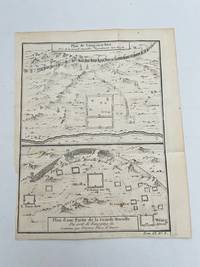
ref. 18294Copperplate engraving of the Great Wall of China. Engraved by Jakob Van Der Schley based on a map rendered by Jacques-Nicolas Bellin. 18th century. Measures 7.25 x 9.25 inches. Illustrations shows 2 separate segments of the great wall crossing Yongping Lulong county and Longguan Hebei respectively. Text in banner above top image reads "Plan de Long-men-hien" and above bottom image reads "Parlie de la Grande Muraille de la Chine." Rounded segment of the wall pictured with smaller square fortresses built behind it. Jakob van der Schley was a Dutch artist who engraved the frontispieces for Prevost's Histoire Generales Des Voyages published in the Hague in 1747. Bellin the chief hydrographer for France contributed several maps to the text based off of reports sent back by explorers whose accounts of Asia captured the European imagination. A strange blend of truth and mythology mistranslation and exaggeration these accounts and accompanying illustrations provide insight into the Age of Discovery's reach as well as its limitations. Slight toning to border does not affect image. Creased where folded. Light foxing does not affect image. Overall very good condition. unknown books
1949ref. 168851949. China Mao Tse-tung .Press Photo Chinese leader Mao Tse-tung in various occasions in China. 1949 Press Photo Chinese leader Mao Tse-tung in various occasions in China. This is an original press photo. Caption on lower margin reads: The French national radio speculated Tuesday that Mao Tse-tung may have died or is gravely ill. He is pictured above on various occasions in the past from left: greeting an Indian delegation in Peking in 1954; in Moscow in 1950; a radio speech in Peking in 1949 and again in 1949 during a tour of Peking.Photo measures 10 x 8.25inches. Photo is dated --1949. These original press photo taken by photojournalist within tight timeframe for the benefit of particular editorial board and with the aim of usage by the press to illustrate an article often affected public opinion in the nation. Very good condition. unknown books
1750ref. 168881750. China Bellin Original Engraving China Jo Si Wo near Beijing - 1750. Original engraving from: Bellin/Prevost: Histoire gernerale des Voyages.approx. 1750. Sheet Size: 20 x 16 cm. Engraving with title on top area and image of Chinaarea and houses near Beijing in the 1750's. This plate has been published in the First French edition of Abbè Presvost's "Histoire Générale des Voyages" published by Didot at Paris 1746-1758. Source: The Histoire Géneral des Voyages was a monumental eighteenth century general history divided according to geographic region. The original volumes were written by Antoine François Prévost d'Exiles Overall very good condition. unknown books
1873ref. 168911873. Original Map Asia: China Korea Thailand India Taiwan Malaisia Kuwait Arabia 1873 With The Title "Asia" in the left corner. Origin of the Map is from the "Stieler's Hand-Atlas." continent-based upon von Stulpnagel published in Gotha by Justus Perthes. Germany. Beautifully Hand Colored. Date of issue: 1873. Size: The sheet measures aprox 18 in x 15 in or 45 x 37 cm. Overall very good condition. unknown books
1936ref. 168891936. Dorn Frank. A Map and History of Peiping reprint of the 1936 pictorial map of Beijing created during Dorn's years in China. The map combines a plan of the city with labeled vignettes of monuments occupations animals street life religious sites and historical episodes recording how an American military officer and artist interpreted Peiping during the Republican era. Dorn lived and served extensively in China before later becoming a brigadier general and commanding the China Training and Combat Command during World War II. Dorn Frank. A Map and History of Peiping. Reprint after the 1936 edition lithographed and published by the Peiyang Press Tientsin Peiping. 17 x 19.5 inches. Printed in color with a white border surrounding the reproduced image. Dorn fills the city plan with numerous labeled illustrations of buildings people animals occupations and everyday activities while the surrounding historical imagery extends the subject beyond contemporary Peiping to episodes from Chinese history. The original 1936 map depicted prominent sites alongside such localized subjects as temples cemeteries markets occupations and other features of urban life. Dorn produced the original while serving in China years before his senior American military assignments during the Second World War making the map a product of his sustained familiarity with the country rather than of his later wartime command. The present example is a later reproduction and should be distinguished from the substantially larger 1936 Peiyang Press printing. Like new in very good condition. A visually detailed reproduction of Dorn's 1936 cartographic portrait of Peiping and its urban cultural and historical landscape. unknown books
1885ref. 141101885. Keystone View Company. The Great Wall of China undated records one of China's most recognizable historic landscapes through the stereographic medium and supports study of photography international tourism imagery geographic education and American visual encounters with China. Stereographs paired two nearly identical images to create the illusion of three dimensional depth when viewed through a stereoscope and they became an important means through which American audiences encountered distant places during the late nineteenth and early twentieth centuries. The Library of Congress notes that stereographs were widely collected for views of tourist sites and locations viewers might never visit themselves while also serving as classroom educational tools. Keystone View Company. The Great Wall of China. Meadville Pennsylvania: Keystone View Company undated. Stereoview presenting paired photographic views of the Great Wall of China for stereoscopic viewing; dimensions are not supplied in the present description. Keystone was among the major American publishers of stereographs operating from 1892 into the twentieth century and marketing views both for popular entertainment and education. The Library of Congress holds a Keystone View Company stereograph of the Great Wall dated between 1934 and 1946 demonstrating that the company continued to circulate imagery of the monument well into the twentieth century; without identifying information from the present card however that date range cannot safely be assigned to this example. The stereoview belongs to a photographic culture in which distant architecture landscapes and peoples were organized into commercially distributed visual tours allowing viewers to experience foreign sites through the immersive effect of the stereoscope. Keystone became especially important within this market as competing stereograph publishers declined and by the mid to late 1920s it was the principal remaining producer of conventional card mounted stereographs. As a view of the Great Wall the card provides material evidence for the circulation of images of China within American geographic and educational culture rather than documentation of a specific historical event at the site. In very good condition. A well preserved example of Keystone's international stereographic imagery connecting the history of photography with the visual interpretation of China for American audiences. unknown books
1970ref. 153821970. Two American radical pamphlets on women in post-revolutionary China issued during the 1970s by the International Socialists and the October League Marxist-Leninist document sharply different Marxist assessments of Chinese Communist claims for women's emancipation. The International Socialists pamphlet argues that gains in women's employment and public participation remained subordinate to industrial production state-building and the political priorities of the Chinese Communist Party. The October League pamphlet presents women's liberation from a Marxist-Leninist perspective sympathetic to revolutionary China illustrating women participating in labor and International Women's Day demonstrations. The pair records competing positions within the American revolutionary left over China women's labor socialism and the meaning of emancipation during the decade following the Cultural Revolution. Two illustrated and textual pamphlets published in Highland Park and Chicago during the 1970s comprising 65 pages. The Liberation of Women in China issued by the International Socialists contains 49 pages with tables and footnotes and develops a sustained critique of women's status under Chinese Communism. The October League publication comprises 16 pages and is illustrated with black-and-white photographs showing women at work and participants in Women's Day marches. Both organizations used developments in China to address American readers engaged with Marxism revolutionary politics and women's liberation but reached markedly different conclusions about the relationship between socialist revolution and gender equality. 1 International Socialists. The Liberation of Women in China. Highland Park: International Socialists n.d. circa 1970s. 49 pages. Original printed wrappers 5.5 × 8.5 inches; tables and footnotes. The pamphlet disputes Chinese Communist claims of achieved women's emancipation arguing that women's advancement remained conditioned by the state's requirements for industrialization and production. Its statistical tables and cited sources place questions of employment domestic labor and political equality within a broader socialist critique of the Chinese state. 2 October League Marxist-Leninist. Women's Liberation: A Communist View. Chicago: October League 1976. 16 pages 5.5 × 8.5 inches illustrated with black-and-white photographs. Images show women performing workplace tasks and participants in Women's Day marches linking the organization's discussion of women's liberation to labor anti-imperialism and revolutionary politics. Published in the year of Mao Zedong's death the pamphlet records the October League's engagement with China while American Marxist organizations were debating the political legacy of the Cultural Revolution and the direction of Chinese Communism. Mild wear to wrappers; overall good condition. The two publications preserve opposing arguments circulated by American Marxist organizations over whether revolutionary China had achieved women's emancipation or subordinated it to economic and state priorities. unknown books
1966ref. 166651966. Collection of three original press photographs documenting major developments in Chinese Communist leadership and U.S.-China relations between 1966 and 1977 spanning the Cultural Revolution President Richard Nixon's historic diplomatic visit and the political transition following Mao Zedong's death. The earliest photograph records Mao's appearance alongside Defense Minister Lin Biao at an August 18 1966 rally in Beijing during the initial mobilization of the Red Guards. A second captures Mao's February 21 1972 meeting with President Nixon a decisive event in the diplomatic rapprochement between the United States and the People's Republic of China after more than two decades without formal diplomatic relations. The third concerns the Eleventh National Congress of the Chinese Communist Party in August 1977 which consolidated the leadership of Hua Guofeng following Mao's death and formally declared the Cultural Revolution concluded. The photographs preserve contemporary press coverage of changes in Chinese political leadership and foreign relations during the Cold War. Three original black-and-white gelatin silver press photographs dated 1966-1977 measuring approximately 5 x 6.5 inches to 8 x 10 inches. The 1966 image depicts Mao Zedong in military uniform standing beside Lin Biao during the August 18 rally in Beijing. Its original press caption reads: "Communist Party Chairman Mao Tse-tung L appearing in a military uniform for the first time in years stands beside Red China's Defense Minister Lin Piao Biao during rally in Peking 8/18." The caption further reports speculation that Lin had become Mao's presumed successor recording contemporary perceptions of the Communist Party hierarchy before Lin's death in 1971. The 1972 photograph shows Mao and President Richard Nixon seated during their meeting in Beijing with National Security Adviser Henry Kissinger seated beside Nixon. Held on February 21 at Mao's residence the meeting preceded the Shanghai Communiqué of February 28 which established principles for improved U.S.-China relations and ultimately contributed to formal diplomatic normalization in 1979. The third photograph concerns the Eleventh National Congress of the Chinese Communist Party held August 12-18 1977 and retains an original Spanish-language press caption adhered to the verso documenting the circulation of Chinese political news to Spanish-speaking audiences. Its precise publication destination is unidentified. The photographs cover three distinct developments in modern Chinese history: Mao's public endorsement of the Red Guards and Lin Biao's rising political position in 1966; the opening of high-level U.S.-China diplomacy in 1972; and the reorganization of Communist Party leadership after Mao's death in September 1976. The 1966 caption is particularly revealing for its contemporary identification of Lin as Mao's possible heir a political position overturned by his death five years later. Nixon's meeting with Mao marked the first visit to the People's Republic of China by a sitting American president while the 1977 Congress confirmed a new party leadership and announced the conclusion of the Cultural Revolution. The surviving press captions also document how these events were reported for audiences outside China including Spanish-language news distribution. All three photographs in very good condition. An original press-photographic grouping covering the Cultural Revolution Sino-American diplomatic rapprochement and China's first major Communist Party Congress following Mao's death. unknown books
1976ref. 153831976. Two American Marxist pamphlets on women in post-revolutionary China published during the 1970s by the International Socialists and the October League Marxist-Leninist document competing interpretations of women's emancipation under Chinese Communism. The Liberation of Women in China argues that women's participation in employment and public life remained subordinate to state priorities of industrialization and production while the October League publication presents women's liberation through a Marxist-Leninist framework and illustrates women participating in labor and Women's Day demonstrations. Issued by organizations occupying different positions within the American revolutionary left the pamphlets record contemporary debates over Chinese socialism women's labor revolutionary politics and the extent to which political revolution had altered women's social and economic position. Two pamphlets published in Highland Park and Chicago during the 1970s totaling 65 pages. The International Socialists publication comprises 49 pages in original printed wrappers with tables and footnotes supporting its critique of Chinese Communist policies toward women. The October League pamphlet comprises 16 pages and is illustrated with black-and-white photographs showing Women's Day marches and women performing workplace tasks. Both measure 5.5 × 8.5 inches. 1 International Socialists. The Liberation of Women in China. Highland Park: International Socialists n.d. circa 1970s. 49 pages. Original printed wrappers 5.5 × 8.5 inches; tables and footnotes. The pamphlet argues that women's liberation in China had become subordinate to the requirements of the state and industrialization challenging claims that socialist revolution had produced full equality. Its discussion places women's employment domestic responsibilities and political status within a critique of the economic priorities of the Chinese Communist state. 2 October League Marxist-Leninist. Pamphlet on women's liberation in China. Chicago: October League 1976. 16 pages. 5.5 × 8.5 inches; illustrated with black-and-white photographs. Images show Women's Day marches and women engaged in workplace tasks pairing the organization's discussion of women's liberation with visual evidence of women's participation in labor and revolutionary public culture. Published in 1976 the pamphlet records the October League's engagement with China during the final year of Mao Zedong's life and a period of intense debate within the American left over Chinese Communism and revolutionary strategy. Mild wear to wrappers; overall Very Good Condition. The two pamphlets preserve contrasting American Marxist arguments about women's status in revolutionary China with one emphasizing the limitations of state-directed emancipation and the other presenting women's labor and political participation within a Marxist-Leninist revolutionary framework. unknown books
1927ref. 167831927. Republic of China 1927 Nationalist Government Lottery Loan Five Dollars. 1927 China 5 Dollar Lottery Loan. The History of the Republic of China begins after the Qing dynasty in 1912 This was a crucial year. In early 1927 the Kuomintang-CCP rivalry led to a split in the revolutionary ranks. The CCP and the left wing of the Kuomintang decided to move the seat of the Nationalist government from Guangzhou to Wuhan. There now were three capitals in China: the internationally recognized warlord regime in Beijing; the Communist in Wuhan; and the right-wing civilian-military regime at Nanjing The Comintern cause appeared bankrupt. A new policy was instituted calling on the CCP to foment armed insurrections in both urban and rural areas in preparation for an expected rising tide of revolution. That year an insurrection was led by Mao Zedong who would later become chairman of the CCP and head of state of the People's Republic of China. unknown books
1896ref. 168071896. China 1896 Chinese Imperial Gov. GBP 25 Gold loan with coupon / 14 x hole punched. Chinese Imperial Government. 5% Gold Loan of 1896 - Original bond with 25 coupons no. 35 10/1/1913 - 72. Coupons and bond hole punched bond with 14 holes . Ser No. 10817 / Certificate in two languages/ German tax stamp. Issued in Berlin on 04/01/1896 / Countersigned by Deutsch-Asiatische Bank. This was a Anglo-German Loan to the Chinese Imperial Government. After it became clear to the Qing government that their finances weren't going to remain self-sufficient in light of the two Opium Wars and the First Sino-Japanese Warthe imperial Chinese court decided that it would have to raise capital through the foreign banking corporations operating in China. The Chinese defeats during these wars threw it into a state of turmoil the Qing imperial government was plunged deeply into debt to pay for war indemnities making the need for foreign capital great. These foreign banking corporations had been established in the preceding decades then saw the opportunity to quickly expand their business in China to meet the Chinese government's demands. As a result Imperial China had to issue these Loans. unknown books