205 résultats
1979réf. 013766Baiwan Village Beijing: China Architecture & Building Press 1979. Presumed First Edition. Soft cover. Near Fine. Stiff glossy paper covers measures 10.25 inches 26 cm x 14.5 inches 37 cm with 22 architectural drawings almost all full page and mainly in full color. We could find no record of this publication outside of China. The text is entirely in Chinese. The Google translation of the text on the fifth photograph is as follows: "Architectural drawing is an important means for architectural designers to express their design intentions explore design plans and improve their artistic accomplishments. In their design practice many architectural designers have drawn a large number of architectural drawings and they also often do architectural sketches. This album is selected from the drawings sent to our agency by many architectural designers and art workers across the country. After our agency issued a notice to collect architectural drawings in March this year many architectural designers and teachers from the Department of Architecture of colleges and universities responded enthusiastically and sent more than 1700 works. Our agency invited relevant experts to form an architectural painting selection committee to evaluate these works. The selection committee was composed of the following comrades: Bai Zuomin Qi Kang Zhu Ying Hua Yiyu Du Rujian Wu Liangyong He Zhenqiang Zhang Kaiji Zhong Xunzheng Xi Xiaopeng Huang Yuanqiang Peng Yigang and Dai Nianci. After repeated evaluation more than 200 excellent works were selected. When selecting the proportion of the number of works of each type of painting was appropriately considered. This album will be published on the eve of the 30th anniversary of the founding of the People's Republic of China. We hope that this album can reflect the great achievements of my country's socialist construction from one aspect and at the same time we also hope that this album can play a role in exchanging architectural painting techniques and improving the artistic quality of architectural designers. Editorial Department of China Architecture & Building Press September 1978 China Architecture & Building Press unknown books
1949réf. 205951949. Unidentified press photographers Mao Zedong photograph archive 1949-1972 documents Chinese Communist Party leadership and international diplomatic engagement during the consolidation and global positioning of the People's Republic of China supporting research into Cold War political culture state media practices and representations of authority. The group includes images spanning from the founding period of the People's Republic through the Cultural Revolution and into the early 1970s diplomatic realignments providing visual evidence of how Mao's image circulated through press networks. The material captures both staged political encounters and informal moments including early association with Soviet leadership and later interactions with foreign dignitaries establishing a longitudinal record of leadership imagery across shifting geopolitical contexts. Eight press photographs primarily silver gelatin prints ranging in size from approximately 3 x 3.75 inches to 8 x 11 inches originating from a press archive and bearing evidence of editorial handling. Seven photographs appear to be period press prints with two later reprints. The earliest image shows Mao Zedong seated beside Joseph Stalin during Stalin's seventieth birthday celebration in 1949 with areas of the image shaded by hand for publication emphasis. A 1966 photograph depicts Mao seated indoors reading a newspaper and smoking presenting a controlled but informal representation of leadership. Another image from the same year shows Mao standing at a railing beside Lin Biao suggesting a public appearance or review setting. Later photographs include Mao in the presence of two Black women during a diplomatic encounter likely connected to outreach toward African nations as well as two 1972 images showing meetings with Asian prime ministers at Zhongnanhai the central leadership compound in Beijing. The photographs consistently show formal staging grouped delegations and controlled environments typical of state-mediated press imagery. Produced and circulated during a period that includes the Sino-Soviet alliance the Cultural Revolution and early 1970s diplomatic outreach the archive provides insight into how Mao's image functioned within both domestic propaganda and international political communication. The inclusion of figures such as Stalin and Lin Biao situates the material within key moments of alliance and internal fracture while the presence of African and Asian representatives reflects China's engagement with postcolonial states. Minor handling wear consistent with press use including editorial markings and light surface wear; prints remain clear with strong tonal range. Overall in very good condition. unknown books
1948réf. AG-10068Shanghai: Published by The English Monthly Publishing House printed by Kaiming Bookstore. This monthly was mainly for high school English teachers and English learners to improve their English abilities. Edited by professors at universities the first issue was published in 1945 this group comprises 10 issues: 1948: No. 31-38; 1949: No. 43 45. 12mo 71 pp; paper wrappers with a few small repairs slight tears but overall very good condition. This includes English texts selected from the writings of Pearl Buck Carl Sandberg A A Milne &c. 英语月刊 《英è¯æœˆåˆŠã€‹æ‚志由英è¯æœˆåˆŠç¤¾å‡ºç‰ˆï¼Œå¼€æ˜Žä¹¦åº—å°è¡Œå°åˆ·ã€‚æ‚志创刊于1945年上海,由大å¦æ•™æŽˆç¼–写,旨在æ高国内英è¯æ•™å¸ˆå’Œé«˜ä¸ä»¥ä¸Šå¦ç”Ÿçš„英è¯èƒ½åŠ›ã€‚本组共10期,13×17.5cm,有两本书皮ç¨å¾®ç ´æŸç¼ºå¤±ï¼Œå…¶ä»–å“相éžå¸¸å¥½ã€‚ The English Monthly Publishing House paperback books
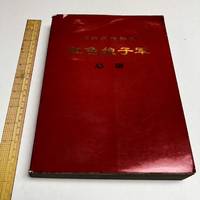
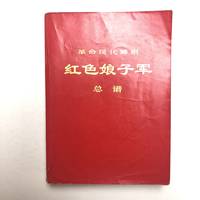
1970réf. AG-10062Red Detachment of Women full Score 红色娘å军总谱 Hong Se Niang Zi Jun Beijing: Published by People's Publishing House printed by Beijing Xinhua Printing Factory distributed by Xinhua Bookstore December 1970 FIRST EDITION. The July 1970 Script Revised and Performed Collectively by Shanghai Peking Opera Troupe. 25×18 cm. xiv 534 1 pp. Colophon. Quotations from Chinaman Mao on the second and third page printed red tilted wrappers minor tear to the cover slight tears to the foot of the binding else very fine condition. 北京:人民出版社,1970年12月第一版,新åŽä¹¦åº—å‘行。本总谱由上海京剧演出团于1970年演出本集体改编,å‰ä¸¤é¡µå¸¦æœ‰æ¯›ä¸»å¸è¯å½•ï¼Œä¹¦çš®æœ‰è½»å¾®ç£¨æŸï¼Œå…¶ä»–å“相éžå¸¸å¥½ã€‚ In China revolutionary operas or model operas Chinese: yangban xi æ ·æ¿æˆ were a series of shows planned and engineered during the Cultural Revolution 1966–1976 by Jiang Qing the wife of Chairman Mao Zedong. They were considered revolutionary and modern in terms of thematic and musical features when compared with traditional Chinese operas. Many of them were adapted to film. Originally eight revolutionary operas Chinese: Ba Ge Yangban Xi å…«ä¸ªæ ·æ¿æˆ were produced eighteen by the end of the period. Instead of the "emperors kings generals chancellors maidens and beauties" of the traditional Peking opera which was banned as "feudalistic and bourgeois" they told stories from China's recent revolutionary struggles against foreign and class enemies. They glorified the People's Liberation Army and the bravery of the common people and showed Mao Zedong and his thought as playing the central role in the victory of socialism in China. Although they originated as operas they soon appeared on LPs in comic books lianhuanhua on posters postcards and stamps; on plates teapots wash basins cigarette packages vases and calendars. They were performed or played from loudspeakers in schools factories and fields by special performing troupes. The Eight Model Operas dominated the stage in all parts of the country during these years leading to the joke "Eight hundred million people watched eight shows." 本组剧本属于文é©æ—¶æœŸçš„å…«å¤§æ ·æ¿æˆï¼Œç”±æ¯›ä¸»å¸å¤«äººæ±Ÿé’负责制作和演出。很多被æ‹æˆäº†ç”µå½±ã€‚ 最åˆæœ‰å…«ä¸ªæ ·æ¿æˆï¼ŒåŽæ¥åœ¨æ–‡é©æ—¶æœŸçš„åŽæœŸå‘展到了18个。ä¸åƒå› å°å»ºå’Œèµ„产阶级的被ç¦äº†çš„ä¼ ç»Ÿäº¬å‰§ï¼Œé‡Œé¢å‡ºçŽ°çš„ä¸çš„国王大臣少女和美人,é©å‘½çŽ°ä»£äº¬å‰§ä¸»è¦è®²è¿°ä¸å›½è¿‘å¹´æ¥çš„抗战故事,宣扬人民解放军的光辉è£è€€å’Œæ¯›ä¸»å¸çš„英勇。虽然是京剧,很快就å˜æˆäº†å„ç§å½¢å¼å‡ºçŽ°åœ¨è¿žçŽ¯ç”»ã€æµ·æŠ¥ã€æ˜Žä¿¡ç‰‡ã€é‚®ç¥¨ã€é¦™çƒŸã€èŠ±ç“¶ã€æ—¥åŽ†ç‰å„ç§åœ°æ–¹ï¼Œç”¨æ‰©éŸ³å–‡å在å¦æ ¡ã€å·¥åŽ‚ç‰åœ°æ–¹ï¼Œç”±æ¼”出团进行表演。8ä¸ªæ ·æ¿æˆä¸»å¯¼äº†å…¨å›½æ‰€æœ‰çš„舞å°ï¼Œå› æ¤æœ‰äº†8亿人看8个剧的笑è¯ã€‚ People’s Publishing House paperback books
1971réf. AG-10054Beijing: Published by People's Publishing House printed by Beijing Xinhua Printing Factory distributed by Xinhua Bookstore January 1971 FIRST EDITION. The July 1970 Script Revised and Performed Collectively by Shanghai Peking Opera Troupe. 8vo vi 397 pp. colophon consists of scripts stage photos selected theme score stage action instruction and the stage design started with quotations from Chairman Mao on the second and third page printed color stage photos and instructions inside printed pictorial wrappers slightly curled at the head and foot of the wrappers else very good condition. 北京:人民出版社出版,1971年第一版,由上海京剧团《智å–å¨è™Žå±±ã€‹å‰§ç»„集体改编åŠæ¼”出。本书包括了剧本ã€ä¸»æ—‹å¾‹ã€å‰§ç…§ã€åŠ¨ä½œæŒ‡å¯¼ã€èˆžå°ç¾Žæœ¯ç‰å†…容。包括éžå¸¸å¤šçš„照片。书皮上下ç¨å¾®å·èµ·ï¼Œæ— ç ´æŸï¼Œå“相éžå¸¸å¥½ã€‚ In China revolutionary operas or model operas Chinese: yangban xi æ ·æ¿æˆ were a series of shows planned and engineered during the Cultural Revolution 1966–1976 by Jiang Qing the wife of Chairman Mao Zedong.1 They were considered revolutionary and modern in terms of thematic and musical features when compared with traditional Chinese operas. Many of them were adapted to film. Originally eight revolutionary operas Chinese: Ba Ge Yangban Xi å…«ä¸ªæ ·æ¿æˆ were produced eighteen by the end of the period. Instead of the "emperors kings generals chancellors maidens and beauties" of the traditional Peking opera which was banned as "feudalistic and bourgeois" they told stories from China's recent revolutionary struggles against foreign and class enemies. They glorified the People's Liberation Army and the bravery of the common people and showed Mao Zedong and his thought as playing the central role in the victory of socialism in China. Although they originated as operas they soon appeared on LPs in comic books lianhuanhua on posters postcards and stamps; on plates teapots wash basins cigarette packages vases and calendars. They were performed or played from loudspeakers in schools factories and fields by special performing troupes. The Eight Model Operas dominated the stage in all parts of the country during these years leading to the joke "Eight hundred million people watched eight shows." 本剧是文é©æ—¶æœŸçš„å…«å¤§æ ·æ¿æˆä¹‹ä¸€ã€Šæ™ºå–å¨è™Žå±±ã€‹ï¼Œç”±æ¯›ä¸»å¸å¤«äººæ±Ÿé’负责制作和演出。很多被æ‹æˆäº†ç”µå½±ã€‚ 最åˆæœ‰å…«ä¸ªæ ·æ¿æˆï¼ŒåŽæ¥åœ¨æ–‡é©æ—¶æœŸçš„åŽæœŸå‘展到了18个。ä¸åƒå› å°å»ºå’Œèµ„产阶级的被ç¦äº†çš„ä¼ ç»Ÿäº¬å‰§ï¼Œé‡Œé¢å‡ºçŽ°çš„ä¸çš„国王大臣少女和美人,é©å‘½çŽ°ä»£äº¬å‰§ä¸»è¦è®²è¿°ä¸å›½è¿‘å¹´æ¥çš„抗战故事,宣扬人民解放军的光辉è£è€€å’Œæ¯›ä¸»å¸çš„英勇。虽然是京剧,很快就å˜æˆäº†å„ç§å½¢å¼å‡ºçŽ°åœ¨è¿žçŽ¯ç”»ã€æµ·æŠ¥ã€æ˜Žä¿¡ç‰‡ã€é‚®ç¥¨ã€é¦™çƒŸã€èŠ±ç“¶ã€æ—¥åŽ†ç‰å„ç§åœ°æ–¹ï¼Œç”¨æ‰©éŸ³å–‡å在å¦æ ¡ã€å·¥åŽ‚ç‰åœ°æ–¹ï¼Œç”±æ¼”出团进行表演。8ä¸ªæ ·æ¿æˆä¸»å¯¼äº†å…¨å›½æ‰€æœ‰çš„舞å°ï¼Œå› æ¤æœ‰äº†8亿人看8个剧的笑è¯ã€‚ People’s Publishing House paperback books
1972réf. AG-10053Beijing: Published by C printed by Beijing Xinhua Printing Factory distributed by Xinhua Bookstore Beijing Distributing Agency February 1972 FIRST EDITION 8vo. The May 1970 Script Revised Collectively by the China Peking Opera Troupe. iv 374 pp. colophon consists of scripts stage photos selected theme score stage action instruction and the stage design started with quotations from Chairman Mao on the second and third page printed pictorial wrappers slightly curled at the head and foot of the wrappers minor tears to the edge of the wrappers else fine condition. 北京:人民出版社出版。本书å‰ä¸¤é¡µå¸¦æœ‰æ¯›ä¸»å¸è¯å½•ï¼Œå†…容包括了剧本ã€å‰§ç…§ã€ä¸»æ—‹å¾‹ã€åŠ¨ä½œè¯´æ˜Žç‰è¯¦ç»†å†…容,由照片和文å—çš„å½¢å¼ç»„æˆï¼Œç…§ç‰‡å›¾ç‰‡å¾ˆå¤šï¼Œä¹Ÿæ˜¯æœ¬ä¹¦çš„一大特色。书皮上下两段ç¨å¾®å·èµ·ï¼Œå…¶ä»–部分å“相éžå¸¸å¥½ã€‚ In China revolutionary operas or model operas Chinese: yangban xi æ ·æ¿æˆ were a series of shows planned and engineered during the Cultural Revolution 1966–1976 by Jiang Qing the wife of Chairman Mao Zedong.1 They were considered revolutionary and modern in terms of thematic and musical features when compared with traditional Chinese operas. Many of them were adapted to film. Originally eight revolutionary operas Chinese: Ba Ge Yangban Xi å…«ä¸ªæ ·æ¿æˆ were produced eighteen by the end of the period. Instead of the "emperors kings generals chancellors maidens and beauties" of the traditional Peking opera which was banned as "feudalistic and bourgeois" they told stories from China's recent revolutionary struggles against foreign and class enemies. They glorified the People's Liberation Army and the bravery of the common people and showed Mao Zedong and his thought as playing the central role in the victory of socialism in China. Although they originated as operas they soon appeared on LPs in comic books lianhuanhua on posters postcards and stamps; on plates teapots wash basins cigarette packages vases and calendars. They were performed or played from loudspeakers in schools factories and fields by special performing troupes. The Eight Model Operas dominated the stage in all parts of the country during these years leading to the joke "Eight hundred million people watched eight shows." 本剧是文é©æ—¶æœŸçš„å…«å¤§æ ·æ¿æˆä¹‹ä¸€ï¼Œç”±æ¯›ä¸»å¸å¤«äººæ±Ÿé’负责制作和演出。很多被æ‹æˆäº†ç”µå½±ã€‚ 最åˆæœ‰å…«ä¸ªæ ·æ¿æˆï¼ŒåŽæ¥åœ¨æ–‡é©æ—¶æœŸçš„åŽæœŸå‘展到了18个。ä¸åƒå› å°å»ºå’Œèµ„产阶级的被ç¦äº†çš„ä¼ ç»Ÿäº¬å‰§ï¼Œé‡Œé¢å‡ºçŽ°çš„ä¸çš„国王大臣少女和美人,é©å‘½çŽ°ä»£äº¬å‰§ä¸»è¦è®²è¿°ä¸å›½è¿‘å¹´æ¥çš„抗战故事,宣扬人民解放军的光辉è£è€€å’Œæ¯›ä¸»å¸çš„英勇。虽然是京剧,很快就å˜æˆäº†å„ç§å½¢å¼å‡ºçŽ°åœ¨è¿žçŽ¯ç”»ã€æµ·æŠ¥ã€æ˜Žä¿¡ç‰‡ã€é‚®ç¥¨ã€é¦™çƒŸã€èŠ±ç“¶ã€æ—¥åŽ†ç‰å„ç§åœ°æ–¹ï¼Œç”¨æ‰©éŸ³å–‡å在å¦æ ¡ã€å·¥åŽ‚ç‰åœ°æ–¹ï¼Œç”±æ¼”出团进行表演。8ä¸ªæ ·æ¿æˆä¸»å¯¼äº†å…¨å›½æ‰€æœ‰çš„舞å°ï¼Œå› æ¤æœ‰äº†8亿人看8个剧的笑è¯ã€‚ People’s Publishing House paperback books
1957réf. 191474Peking: People's Art Publishing House 1957. Hardcover. Good shelfwear and handwritten name in marker on front of cardboard box light foxing spots to title page and some borders plates are all present and otherwise very clean. Silk over boards portfolio with red Chinese lettering and yellow illustrations with bone clasp closures; 5 pp text with bw illustrations 73 color plates some with two or three per page. Issued in cardboard box with black Chinese lettering. Edited by the Research Studio of the Northeast Drama Institute. Designs reproduced by Lu Hua and Ma Chiang. Eng & Chinese. 16x15x1.5" People's Art Publishing House hardcover books
1836réf. 257805Paris: B. Warée Ainé Libraire. Rignoux Imprimeur - Founder 1836. vi pp. premlims 20 ff. text surrounded by engraved decorative border. 12mo. Later hand-lettered wrappers lacking original pink wrappers light soiling to title page else fine. vi pp. premlims 20 ff. text surrounded by engraved decorative border. 12mo. A catalogue of 20 works mostly on China paper printed by Rignoux and offered for sale by Warée. 18 of the titles had been displayed at the Exposition des produits de l'industrie française in 1834. Most of the works are marked "unique." Rare; only a handful of copies located on OCLC. B. Warée Ainé, Libraire. Rignoux, Imprimeur - Founder unknown books
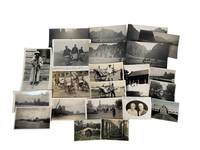
1930réf. 236931930. Western travel photo archive depicting Shanghai Chefoo Beijing and northern Chinese landscapes 1930 to 1938 recording the routes attractions and social encounters available to foreign travelers during the final decade before the Second Sino Japanese War transformed movement through coastal and northern China. The photographs move between the commercial modernity of Shanghai's waterfront the resort and treaty port environment of Chefoo imperial architecture near Beijing and river travel through mountainous terrain. Street portraits of rickshaw pullers itinerant vendors and an impoverished man also register the unequal relationship between foreign tourism and the Chinese labor on which it depended. Photo archive of 22 silver gelatin photographs China 1930 to 1938. ranging from 2 x 3 to 3.5 x 5 inches Shanghai views show the skyline and harbor from the water shipping along the waterfront traffic near the Bund rickshaw stands and the Western couple seated in rickshaws beside their pullers. Other photographs depict men carrying large suspended baskets two rickshaw pullers resting beside their vehicles and a full length portrait bearing the printed caption "Chinese special beggar." Northern views include the Summer Palace its lake bridges balustrades painted corridor and hillside architecture; boat travel through steep barren gorges; and broad river landscapes in which small craft are set against sharply eroded mountains. Handwritten versos identify "Summer Palace" "Chefoo No. China" and "On the Bund" with two photographs dated August 1938. A studio portrait is inscribed "Idabela Father Main Shanghai 1930" providing names for two members of the traveling party. Several prints carry additional captions en verso including references to Chefoo and a multi day boat journey. The archive belongs to the treaty port geography that structured much Western travel in Republican China. Shanghai's Bund served as the monumental commercial frontage of the International Settlement while Chefoo now Yantai had developed through foreign trade consular activity missionary residence and seasonal tourism. The Summer Palace offered travelers a carefully preserved landscape of Qing imperial architecture and garden design outside Beijing here photographed through its corridors bridges lake and elevated buildings. The photographs preserve both the travelers' itinerary and the visual categories through which foreigners encountered China: modern port imperial monument dramatic landscape hired transport street labor and poverty presented as a tourist subject. Light surface wear occasional creasing and edge wear mild toning and some fading; several versos inscribed in pencil or ink. Overall in good condition. A firsthand record of Western mobility through Republican China and of the Chinese workers urban spaces historic sites and transport networks encountered along the route. unknown books
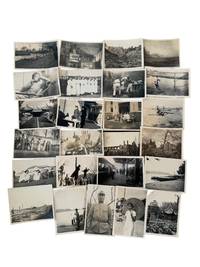
1939réf. 235931939. Japanese occupation of China photo archive depicting military administration and daily life in Hangzhou 1939 documenting how the Imperial Japanese Army imposed control over one of China's most important cultural capitals during the early years of the Second Sino Japanese War. Captured by Japanese forces in December 1937 after the collapse of Chinese defenses following the Battle of Shanghai and the fall of Nanjing Hangzhou remained under occupation until 1945 becoming part of Japan's expanding system of military rule across eastern China. These photographs record both the machinery of occupation and the altered rhythms of civilian life showing soldiers prisoners bomb damage public spaces transportation and ordinary residents living within a city under foreign military control. Photo archive of 25 silver gelatin photographs each measuring 1.75 x 2.25 inches Hangzhou China 1939. The photographs show Japanese soldiers drilling posing in uniform and participating in military ceremonies; guards standing beside railway rolling stock and station platforms; troops demonstrating rifle marksmanship; prisoners or detainees under military supervision; and Japanese personnel engaged in what appears to be ceremonial or recreational activities. Civilian life appears throughout the group in photographs of Chinese women children fishermen street scenes market districts temple architecture lakeside promenades pavilions around West Lake and interior commercial displays bearing Chinese signage. Several images record extensive wartime destruction including collapsed neighborhoods burned waterfront districts ruined masonry buildings smoking urban landscapes and cleared industrial sites. The archive juxtaposes military occupation with recognizable landmarks of Hangzhou producing a visual record of a city simultaneously functioning as an occupied administrative center and enduring the physical consequences of invasion. The Japanese Army occupied Hangzhou on 24 December 1937 as it advanced through Zhejiang following the capture of Shanghai and Nanjing incorporating the city into a broader occupation regime that relied upon military garrisons transportation networks local policing and collaborationist administration to secure eastern China. During 1939 the occupation entered a more settled phase in which combat receded inside the city while military infrastructure rail transport public order and civilian adaptation became defining features of everyday life. The combination of military personnel damaged urban landscapes traditional cultural sites transportation facilities and civilian activity distinguishes this archive from purely battlefield photography by documenting the coexistence of violence governance and ordinary existence within an occupied Chinese city. Light surface wear and occasional silvering at the edges; overall in very good condition. A concentrated visual record of Japanese military occupation and civilian life in Hangzhou during the formative years of the occupation of eastern China. unknown books
1930réf. 222401930. China family photograph album. 1930s-1960s. This album documents family life across major political transitions in twentieth-century China including the Republican period the years of Japanese occupation and the early decades of the People's Republic. The photographs record everyday experience across multiple regions showing movement between northern southern and northeastern cities as well as Hong Kong and provide visual evidence of how individuals and families navigated changing political and social conditions. The material is particularly strong in its geographic breadth with identified locations including Beijing Guangzhou Wuhan Dalian Jilin Shenyang Anshan Fushun and Hong Kong linking domestic life to major urban and industrial centers. Album containing 107 original black-and-white silver gelatin photographs mounted in a string-bound volume with individual prints ranging approximately from 1.25 x 1.5 to 4 x 6 inches. The photographs include studio portraits with painted backdrops from the 1930s family groupings of multiple generations and school portraits of children posed in uniform before institutional buildings. Clothing varies between Western-style suits and traditional garments such as qipao indicating shifts in dress across time and place. Urban scenes show streets promenades docks and architectural landmarks with some images bearing printed or written location identifications in Chinese. Several photographs depict travel aboard a passenger vessel suggesting movement between mainland cities and Hong Kong. Industrial environments and city signage appear in images associated with Shenyang and Fushun reflecting the presence of major industrial centers in northeastern China. The album spans decades marked by war occupation and state formation when cities such as Shenyang and Anshan developed as industrial hubs under Japanese control and later under the People's Republic while Hong Kong functioned as a site of movement and exchange. The combination of studio portraiture school imagery and travel scenes provides a continuous record of family life through these changes linking private experience to broader historical conditions. Light edge wear and toning to photographs with occasional spotting and minor marks to mounts; overall very good. A substantial visual record of Chinese family life across shifting political and geographic landscapes in the mid-twentieth century. unknown books
1924réf. 64072New York: China Trade Bureau August 1921 to June 1924. 2 volumes large 4to lacking vol. I no. 1 and volume VI no. 6 but otherwise complete from volume I no 2 to volume VI no. 5 - 34 issues in all and contained in a library binding of blue cloth gilt-lettered spine; ex-Purdue University lightly marked. Issues range from 24 to 56 pages. Illustrated throughout. Publication was suspended during June July and August 1924 and finally folded withg the publication of volume VI no. 6 in September 1924. The China Review "is the only magazine published in the United States and edited by Chinese that deals exclusively with all phases of China political social industrial etc." Regular features include: book reviews China's Business Barometer; Finance Industry and Commerce; Foreign Press Comments; The Month in the East; Trans-Pacific Sailings; and Home and General News; together with feature articles by Nathaniel Peffer Cornelius Vanderbilt Charles Hodges Charles W. Mason Nora Waln Loretta Shaw Chungshu Kwei Dr. P. W. Kuo Genevieve Wimsatt K. H. Li Ma Soo James D. Bush and Robert Harris among others writing on various topics relating to China including Chinese Pagodas The Modern Chinese Girl The Future of American Trade in China China's Mathematics - The Oldest Approach and Development of Chinese Markets The Mongolian Situation Selling to the Chinese Millions China's Silk Industry China and the Four Power Treaty Tibet - The Closed Country The Part Birds Play in Chinese Life and many others of interesting content. China Trade Bureau, August, 1921 to June unknown books
2004réf. 64060Beijing: Sinomaps Press distributed by Xinhua Bookstore 2004. Contains Explnatory Notes in English 4to pp. 4 iv 3 1 244; original printed wrappers; Attached Tables in English an envelope containing 21 double-page tables; plus a very large geological map of China on 8 sheets each sheet approx. 24" x 38" or slightly smaller; depths shown by gradient tints and contours. The entite contents in a publisher's pictorial folding clamshell box. Fine copy. The Geological Map of the People's Republic of China with Chinese and English versions was published by the SinoMaps Press in 2004 at the scale of 1:2 500 000 including 8 sheets. The chief compiler is Huang Chongke and the associate chief com pilers are Ye Tianzhu Chen Keqiang Wu Kuanlian Ji Xiaoyan Gao Zhenjia Qian Dadu Tian Yuying He Yongxiang Zhang Qinghe Cao Banggong Li Long Shao Heming Wang Yongqin Yang Minggui Zhang Zhongwei Yao Dongsheng and Zheng Jiankang. More than 100 geologists cartographers and members of computer mapping took part in the compilation of the map. OCLC locates 7 copies in the US: South Florida Illinois Harvard Ohio State St. Louis University the US Geological Society 2. Sinomaps Press, distributed by Xinhua Bookstore unknown books
1943réf. 63876New York: Alfred A. Knopf 1943. First Edition. First printing. Laid-in is a 2-pp ALS dated Dec. 26 1944 on Agnes Smedley's letterhead to Lt. Eugene S. Brewer Jr. see note below. Octavo 21cm. Original red cloth boards titles in gilt on spine; dustjacket; maroon top-stain; viii528xvi pp; illus. Folding map inserted before half-title. A Very Good copy with expected evidence of reading and use; there is a small closed tear in the margin of the folding map which is otherwise clean and complete. In the original dustwrapper unclipped priced $3.50 generally rubbed and soiled with old clear tape reinforcements at flap-folds; just VG. Ownership and bookplate of Eugene S. Brewer Jr.; a 4¢ "Sun Yat Sen" U.S. postage stamp affixed to front free endpaper. Additionally laid-in is a folded circular printing the "Statement of Policy" of the Committee for a Democratic Policy Toward China later the Committe for a Democratic Far East Policy. Jacket design by Jean Carlu. The revolutionary journalist's major work a memoir of her twelve years as a correspondent on the front lines of both the Chinese revolution and the Second Sino-Japanese War from 1929 to 1942. Smedley 1892-1950 was a prolific left journalist and probable spy known for her active support of Chinese and Indian revolutionary causes and for her many writings on Maoist China. The laid-in letter of about 250 words is dated Dec. 26 and addressed to a young Army lieutenant from Michigan Eugene S. Brewer. Smedley discusses the recent U.S. Presidential elections stating that she voted for Roosevelt despite disagreeing with "many things Roosevelt has done and still does.but I was afraid of Dewey and his rotten reactionaries. Now I grow more and more afraid of Churchill and it would be a godsend if he'd fall dead or if someone would kindly bump him off." She comments on British policy in India: "As long as Nehru remains in prison I have no hearing for any agent of the British" - and concludes with a description of her work for China relief "raffling off things for 2 weeks to aid cultural workers in Chung King.I'm tired tramping the streets selling chances for 10¢! So much work for so little." Eugene S. Brewer 1914-2001 was a 1935 graduate of the University of Michigan. He won a 1938 Avery Hopwood Prize for a proletarian novel apparently never published "Some Brass and No Groceries." After a brief and apparently unremarkable scriptwriting career in Hollywood Brewer returned to his home town of Owosso Michigan where he was for many years a county planner and surveyor. Brewer's connection to Smedley is uncertain but likely dated from his student days at Michigan. Alfred A. Knopf unknown books
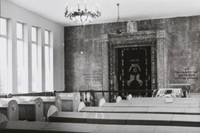
réf. 24786Israel: NP n/d. vg. Oblong quarto. Bolted blue faux-leather with inlaid b/w reproduction of a photograph of the exterior of the synagogue. Inside of front and back board lined in silk-moire. This unique album was presented to Mr. & Mrs. Harry Burston on occasion of their visit to Israel on October 1971. Printed presentation plates in English and Hebrew on title-page. Verso of title-page with 39 original signatures of guests who attended the reception at the synagogue on Nov. 1 1971. Album contains 14 original 4 1/4" x 6 1/2" glossy b/w photographs inserted on card stock. Each photo protected by tissue guard. One photo shows the exterior the rest is of the interior of the Synagogue and Cultural Center in Tel-Aviv. Photographs with captions in English and Hebrew. "In Eternal Memory: This building was built in Memory of the Jewish Communities in China by Igud Yotzei Sin in Israel. The construction of the building was possible thanks to the Administrator General and Official receiver of the State of Israel who handed over the proceeds received from the sale of the Synagogue in Shanghai and through the generous donations from the former residents of China in Israel and all over the world. The building was set thanks to the great devotion extended by the President of the Building Committee Mr. M. A. Zaigraeff. The inauguration of the skeleton of the building took place on the 20th August 1959. The inauguration of the opening of the building took place on 6th September 1961. Architects & Building plans: Mr. G. Rabinovitch Mr. A. Kahane Aron Kodesh." In 1951 a group of Jewish leaders from several communities of former China residents in Israel founded "Igud Olei Sin" which was later changed to "Igud Yotsei Sin." Small sticker of S. Sanzetti Photo Studio on inside of rear board. Minor age toning on title-page and on margin of card stock. Near fine condition. Unique copy. NP unknown books
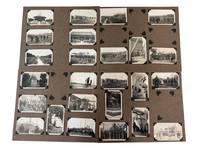
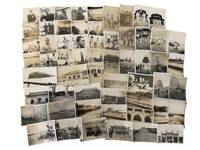
1910réf. 235901910. Late Qing China and Philippines photo archive depicting military authority public punishment foreign presence and imperial architecture circa 1910 in the years immediately before the Xinhai Revolution ended dynastic rule in China. The Chinese photographs show Beijing monuments urban crowds soldiers execution spectators and foreign personnel at a moment when Qing authority remained visible but unstable. The group places tourist views of imperial architecture beside scenes of coercion and military order linking travel photography to the political crisis of the late Qing state. Photo archive of 32 silver gelatin photographs each 2.5 x 4.25 inches cornered in on 11 x 13.5 inch brown album leaves mainly China with several Philippines views circa 1910. The images show Beijing landmarks including the Temple of Heaven palace buildings imperial gates stone lions carved walls ceremonial terraces walled compounds and garden architecture. Several views show Chinese crowds gathered near military or judicial scenes including a public execution aftermath with a severed head displayed from a pole before laughing onlookers and children with a placard stating the events transpired. Other photographs show Chinese soldiers and civilians in open grounds foreign military or naval personnel a group of men in white naval style uniforms seated in a circle Chinese junks harbor traffic street scenes rickshaws and colonial buildings. The Philippines photographs appear to include Manila street and harbor views a woman and girl a domed theater or civic building tropical shoreline and American colonial urban scenes. China in 1910 stood between the punitive settlement that followed the Boxer Rebellion and the republican revolution that began in Wuchang in October 1911. Foreign troops remained in North China under treaty rights imperial and provincial authorities tried to preserve order through policing army reform and public punishment and revolutionary societies used anti Manchu and anti foreign resentment to attack the legitimacy of Qing rule. The execution photographs show law as spectacle with the punished body displayed before civilians and soldiers rather than hidden within prison administration. The Beijing views record the ceremonial architecture of the dynasty at the same time that its political power was nearing collapse while the Philippines views place China within a wider American and European imperial geography of ports garrisons and colonial travel. Light surface wear toning and occasional fading; mounted with photo corners on album leaves. Overall very good condition. A concentrated visual record of military order public punishment foreign presence and imperial space in East Asia immediately before the fall of the Qing dynasty. unknown books
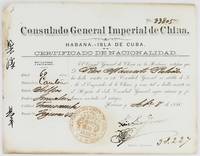
1880réf. 2592Havana: September 8 1880. Very good. Partially-printed broadside 6.5 x 8.25 inches completed in manuscript in Spanish and Chinese. Small marginal wormhole mild edge wear light toning. Ink stamp of the Consulado General at bottom-center. A scarce certificate issued in 1880 by the Chinese Consulate in Havana authenticating the registration and details of a Chinese laborer in Cuba. The printed form is completed in manuscript with the name of the recipient his age place of origin occupation and place of residence. The present examples were completed for a sixty-year-old laborer from Canton being called Pedro Pulido who was going to work and/or live at 48 Calle Figueroa in Havana. The printed text states that "El Cónsul General de China en la Habana certifica que blank ha hecho constar en este Consulado General ser súbdito de S.M. el Emperador de la China y como tal se halla inscrito en el Registro de dicho Consulado General segun número y filiacion anotados al márgen." The certificate is dated September 8 1880 and is stamped with the seal of the consulate in red and with the rubberstamped signature of the Consul General Lin Liang Yuan. The form are also bears two ink signatures in Chinese in the left margin a rare occurrence. An excellent document of the bureaucracy surrounding imported Chinese labor to Cuba in the last quarter of the 19th century. September 8 unknown books
1949réf. AG20030MAGAZINE: Knowledge-Special Issue for 3 Years Anniversary æ‚å¿—ã€ŠçŸ¥è¯†ã€‹çºªå¿µåˆ›åˆŠä¸‰å‘¨å¹´çºªå¿µå· Shenyang: Published by Northeast Bookstore May 1 1949 special issue for the 3-year anniversary of Knowledge magazine. Volume 11 Issue 2. 8vo 37pp. Printed pictorial wrappers Spine stapled with 4 restapling holes on right minor tears and stained to cover shelf worn overall good condition. Shenyang Northeast Bookstore is the press was led by China Communist Party Propaganda Department. Chairman Mao wrote an inscription of quotation from Confucius "To learn something and timely practice it" for the magazine on the title page. The cover has a picture: Move Forward Under Chairman Mao's Flag depicting a portrait of Mao and the Red Army with army's flag as background troops are moving forward below handwriting on the bottom: Present to Members of All-China Youth Federation music for 'Protect Peace of the World' on the back cover. 1949年5月1日,知识æ‚志社·东北书店å‘行,作为创刊三周年纪念å·ã€‚第å一å·ç¬¬äºŒæœŸï¼Œå…±37页。å°çš®æœ‰è½»å¾®æ’•è£‚和污æ¸ï¼Œå°ºå¯¸8vo,å“相较好。 沈阳东北书店出版社是ä¸å…±ä¸å¤®ä¸œåŒ—å±€å®£ä¼ éƒ¨é¢†å¯¼çš„å‘行机构,毛主å¸å¼•ç”¨äº†å”å的论è¯ä¸çš„"学而时习之"为本书题è¯ã€‚æ‚å¿—å°é¢ä¸ºå›¾ç‰‡"在毛泽东的旗帜下å‰è¿›",下é¢æœ‰æ‰‹å†™å—ä½“ï¼šèµ å…¨å›½é’代大会代表。 Northeast Bookstore paperback books
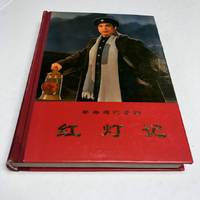
1972réf. AG-10057The Red Lantern Script红ç¯è®° Hong Deng Ji Beijing: Published by People's Publishing House printed by Beijing Xinhua Printing Factory distributed by Xinhua Bookstore Beijing Distributing Agency February 1972 FIRST EDITION 8vo. The May 1970 Script Revised Collectively by the China Peking Opera Troupe. iv374 pp. colophon consists of scripts stage photos selected theme score stage action instructions and designs beginning with quotations from Chairman Mao on the second and third pages printed pictorial stiff cover wrappers fine condition. 京剧《红ç¯è®°ã€‹å‰§æœ¬ 北京:人民出版社出版,中国京剧团集体制作,基于1970年五月演出本,1970年12月第一版,书的å‰ä¸¤é¡µæœ‰æ¯›ä¸»å¸è¯å½•ï¼Œå…±374页主体内容。精装,å“相éžå¸¸å¥½ã€‚ People’s Publishing House hardcover books
1934réf. AG20010SUPPRESSING COMMUNIST-BANDITRY IN CHINA 中国共产党的镇压-汤良礼 Shanghai: Published by China United Press June 1934 this book belongs to China To-Day series Volume 1 introduced the Communist movement in China and the effect to the Republic government during the past years illustrated with text and photos large 8vo x110pp. printed cloth covers missing front free endpaper light foxing to the bottom edge of some pages else fine condition. 上海è”åˆå‡ºç‰ˆç¤¾1934年出版,本书为今日ä¸å›½ç³»åˆ—丛书的第一部,用文å—和照片的形å¼ä»‹ç»äº†å…±äº§å…šåœ¨è¿‡åŽ»ä¸€äº›æ—¶é—´çš„活动以åŠå¯¹æ°‘国政府产生的一些影å“。18×25cm,110页,精装帆布硬质å°çš®ï¼Œå†…页下边缘少许磨æŸï¼Œå…¶ä»–å“相æžå¥½ã€‚ China United Press hardcover books
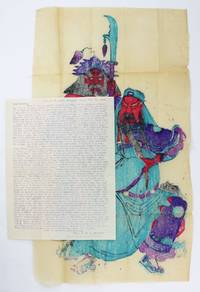
1928réf. 6054Shanghai China: February 24 1928. Very good. 1p. plus colored woodblock print 21.5 x 12.5 inches. With original envelope. Old folds minor wear. Mimeographed fundraising letter sent by Reverend H.G.C. Hallock to a supporter in Vermont. Henry Galloway Comingo Hallock 1870-1951 was a West Virginia native who studied at Princeton Theological Seminary. He moved to China as a Presbyterian missionary and teacher in 1905 where he taught Sunday School served as a pastor and also taught theology at St. John's University in Shanghai. He survived war disease famine and a Japanese prison during World War II; he died in China in 1951. One thing that set Hallock apart was his inclusion of local Chinese woodblock prints with his fundraising letters which today have become desirable collectibles. Such a print is present here showing the God of War Wu-ti. His letter opens discussing the print: "Wars in China suggest sending you 'Wu-ti' the Chinese god-of-war. . The general idea about Wu-ti is that he delights in war. That is not the Chinese idea of him. . Officials and scholars worship him as the ideal of loyalty soldiers do it to make them brave and protect them in battle and the people worship him to protect them from war's horrors. He's called 'Peace Bringer Protector Great God of Loyalty.' But he makes not peace nor protects nor makes loyal so is a failure. He's also called 'Warrior Prince.' As to that name he's a great success! There are lots of wars." He goes on to discuss the many conflicts which are like "a real Chinese puzzle" noting that it's not the people of China who are at issue or fault. "Recently I have received letters from America suggesting that since 'China has altogether gone to the bad and the Chinese are absolutely impossible' and since our 'work among them has gone for nothing' then I should 'quit and come home.' I hope you don't think thus. The masses of Chinese tho reminding me of 'dumb driven cattle' are still friendly as ever. The war-lords the Nationalists the Reds the bandits wars and evil propaganda are disturbing elements; but they are NOT China nor the Chinese. . The troubles in China have come from a fiercely aggressive and 'noisy minority' who make the great mass of Chinese suffer untold hardships." He goes on to defend the Christian work being done in China as of great benefit to the people. February 24 unknown books
1933réf. AG20055YOUNG CHINA Magazine年轻的中国 Toronto: the monthly magazine of the comradeship for China the young People's Department of the China inland mission. 1933-1934 volume vii and viii together 24 issues. Articles about the Chinese people written by journalists in China with photos illustrated for the rest of the world Index of 2 volumes including titles of paper making in china Burmese girls at play disbelieving does not change the truth large 8vo 143pp. 16 leaves index bound in hard titled boards near fine condition. $850 《年轻的中国》1933-1934年出版于多伦多,1-12å†Œï¼Œæ–‡ç« ä¸ºåœ¨ä¸å›½çš„记者写的关于ä¸å›½çš„故事,é…有照片和图片。18×25cm,硬皮包装为官方åˆè®¢ï¼Œå…±143页,åŽé¢æœ‰32页文章目录。 Toronto hardcover books
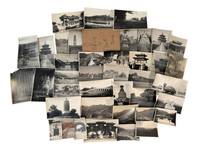
1910réf. 235921910. Peking and North China travel photo archive circa 1912 to 1918 documenting the former imperial capital during the turbulent opening years of the Republic of China when centuries of Qing imperial rule had only recently ended and Beijing remained the political and cultural heart of northern China. The photographs record a landscape where imperial monuments Buddhist temples ancient roads and rural villages continued to define daily life despite the collapse of the dynasty in 1912. Produced during the era that followed the Xinhai Revolution and preceded the consolidation of the warlord period the archive preserves a city and surrounding countryside poised between imperial tradition and an uncertain republican future. Photo archive of 40 original silver gelatin photographs ranging from approximately 2 × 3 inches to 4 × 6 inches Peking Beijing and North China circa 1912 to 1918. The photographs depict the Temple of Heaven the Summer Palace Pei Hai Beihai Park the Forbidden City and its surrounding walls the White Dagoba at Miaoying Temple monumental ceremonial gateways pagodas temple courtyards the Great Wall north of Peking the Western Hills stone bridges lakes canals and mountain landscapes. Other photographs show Buddhist monks walking through temple precincts camel caravans crossing rocky valleys mule carts on country roads grazing livestock village architecture and rural agricultural scenes beyond the capital. Contemporary manuscript captions identify numerous locations including "The Great Wall of China" "Temple of Heaven Peking" "Pei Hai Grounds Peking" "Bridge over stream between Jade Fountain & Summer Palace" "The 3rd Green Golf at Paomachang Peking" "Western Hills near Peking" "Camel Drive at the Great Wall Nankow Pass north of Peking" and "Temple in the Western Hills near Peking Golden Roof." One inscription notes that several views "were taken by the younger Miss Dunne last summer" preserving a small but meaningful record of the archive's contemporary provenance. This photo archive belong to one of the most consequential transitions in modern Chinese history. The Qing dynasty collapsed in 1912 after more than two and a half centuries of rule ending the imperial system that had governed China since 221 BCE. Although the Republic of China replaced the monarchy Beijing remained filled with imperial architecture ceremonial spaces and religious institutions whose daily rhythms changed only gradually. The Forbidden City was still occupied by the abdicated emperor Puyi until 1924 Buddhist monasteries continued to function throughout the Western Hills and camel caravans remained an essential means of transporting goods across northern China's mountain passes. Foreign travelers could still move through monuments that only a generation earlier had been closely associated with imperial authority while political power increasingly shifted among competing republican governments and regional military leaders during the emerging Warlord Era. Rather than emphasizing political upheaval directly the archive records the remarkable continuity of Beijing's monumental landscape and traditional patterns of travel religion and commerce immediately after the fall of the last Chinese dynasty. Light surface wear occasional corner creasing and scattered silvering consistent with age; manuscript identifications on many versos. Overall in very good condition. A concentrated visual record of Peking and North China at the moment imperial China gave way to the Republic preserving both the enduring ceremonial landscape of the Qing capital and the traditional life that continued beneath profound political change. unknown books
1933réf. 236941933. Colonial Italian Navy photo archive depicting sailors of the gunboat Lepanto in China circa 1933 to 1943 documenting Italy's Tianjin concession Italy's formal colonial territory in China granted in 1901 following the Boxer Rebellion. It covered approximately half a square kilometer and was strategically located on the east bank of the Hai River. Tianjin concession was governed by an Italian military official and maintained its own police force and legal framework. the Italian Navy maintained a strategic presence in China with personnel and several vessels including the gunboats Lepanto and Carlotto to protect Italian concessions in Tianjin and Shanghai. Originally built as an Azio class minelayer Lepanto reached Shanghai in 1933 and was reclassified as a gunboat in 1934 for coastal and Yangtze service protecting Italian citizens missions and treaty port interests. A United States Navy photograph places the vessel on the Whangpoo River at Shanghai during the mass evacuations of 1937 where foreign warships occupied the same congested waterway as refugee steamers and commercial traffic. The archive records this overseas station from the viewpoint of its sailors moving between shipboard hierarchy armed readiness collective leisure Chinese urban life and monumental sites visited under naval escort. Photo archive of 58 silver gelatin photographs ranging from 2" x 2" to 2" x 3.5" China circa 1933 to 1943. The photographs show Lepanto moored in Chinese harbors; Italian sailors posed on deck beside shipboard fittings and beneath the motto "In hoc signo vinces"; officers addressing assembled crews; uniformed men gathered around deck guns; rifle practice on open ground; sailors carrying packs and weapons; and formal and informal portraits of ratings petty officers and decorated officers. Group photographs place sailors at the Temple of Heaven and before other Chinese ceremonial buildings gates monuments and courtyards while wider views record Shanghai and Tientsin waterfronts docks municipal architecture Chinese junks sampans bridges rail lines and harbor shipping. Several images show Chinese residents at close range including children boatmen laborers and crowds encountered during shore leave; others depict shipboard entertainments meals athletic groups relaxed deck scenes and men photographed in work clothes apart from formal naval ceremony. The recurrence of the vessel uniformed crews weapons exercises official gatherings and organized excursions establishes the working structure of an Italian station ship rather than a general tourist itinerary. Italy's naval deployment in China descended from the foreign military privileges established after the Boxer Uprising including the Italian concession at Tientsin and the maintenance of armed detachments consular facilities and river patrol vessels. Lepanto replaced the aging gunboat Sebastiano Caboto and spent a decade operating from Shanghai and along the Yangtze using its shallow draft to reach places inaccessible to larger warships during years of civil conflict Japanese expansion and the Sino Japanese War. Following Italy's armistice with the Allies the crew scuttled Lepanto at Shanghai on September 9 1943 to prevent seizure; Japan raised and recommissioned the vessel as Okitsu in 1944 and the Republic of China received it after Japan's surrender operating it as Hsien Ning. Light surface wear toning occasional creasing and minor edge wear; photos remain legible and mostly clean. Overall in very good condition. A detailed visual record of how an Italian gunboat crew carried naval authority Fascist state ceremony armed preparedness and foreign privilege into the ports and public spaces of Republican China. unknown books
1933réf. 709351933. Macau: Imprensa Nacional 1933. Macau: Imprensa Nacional 1933. Rare 1933 Digest of Laws Regulating Macau's Sex Trade Macau. China. Prostitution. Regulamento das Meretrizes Aprovado pelo Portaria Provincial No. 1:093 De 7 de Abril de 1933. Macau: Imprensa Nacional 1933. 22 pp. Text in Portuguese and Chinese. Stitched pamphlet in printed paper wrappers. Some edgewear a few chips and minor tears to wrappers early annotations to front wrapper light toning to interior. $950. Only edition located. Laws governing prostitution in the Portuguese colony of Macau 1557-1999 were first enacted in the mid-nineteenth century. By the 1930s the government administered the trade directly through the Regulamento das Meretrizes. No copies located on OCLC. unknown books