GENIUS - EDITIONS. MANARA (Milo).Livre Rare Book

1969rif. 163011969 Dessin original à la mine de plomb et à l'encre de Chine sur papier, collage dans la bulle , signé et daté au verso 1969, 35 x 25 cm., encadré.
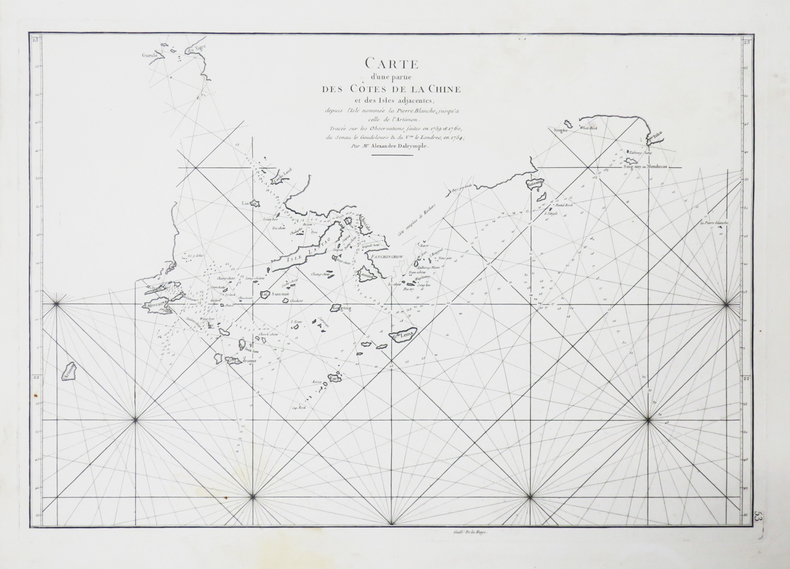
1798rif. PHO-1092Deuxième reliure de la première édition. Édition originale in-4 sur grand papier, remise en circulation en 1841 avec un nouveau titre avec la mention fictive "nouvelle édition" (quelques exemplaires imprimés en 1798 n'avaient toujours pas trouvé preneur). Une édition octavo en six volumes a également été publiée. in-4 ,y compris l'atlas. Avec 16 (10 dépliantes) dont 15 cartes gravées, 1 planche gravée et table dépliante. - Beau demi-cuir contemp , dos lisse avec titre et tomaison , petits manques au dos , quelques mouillures intermittentes et vieille trace d’humidité (T1), déchirure carte hydrographique sans manque. xii, cxliv, 628, [3] ; xvi, 676, [2] ;[xi], 431, [1];[2],viii, 158pp.
1596In-4°; pp. (10), 318, (2),; (8), 161, (3), con un bel ritratto di Francesco Saverio finemente inciso su rame da Theodor Galle; vari esemplari, tra cui quello alla Biblioteca Casanatense di Roma e quella dell’Università di Granada, come il nostro sono prive della carta *6; le Epistole hanno un proprio frontespizio, entrambi con monogramma della Società di Gesù inciso su legno. Nota di possesso manoscritta all’ultima sguardia. Legatura in piena pergamena coeva. Bellissimo esemplare. The third edition of De Vita Francisci Xaverii (the first in Rome 1594, another issues in Antwerp in the same 1596 containing only De vita) and the first of the Epistolae. This 1596 edition of the saint’s biography is better then the one of 1594 because revised by the author and complete. St Francis Xavier (1506-52), a companion of Ignatius of Loyola and co-founder od the Jesuit order, was a leader of the first Jesuit missions to India, southeast Asia and Japan. Orazio Torsellino was an italian Jesuit; he achieved great popularity with this work, which had numerous editions and translations, and with his first and principal early printed collection of Xavier’s letter, including many from Japan, available at the end of the 16th century. This first edition remained standard for many years and also for 17th cent. editions. This is the first collection of writings by St. Francisco Xavier. In 1540, he set off as a missionary to Asia. From there in the midst of ten years of incessant labor, 1542 - 1554, he produced 137 letters and instructions. The translator and editor of this volume, Orazio Torsellini in this place presented 52 letters. This collection of Xavier letters is very important in the story of China and Japan. Streit Iv, p. 290; Cordier col. 128; Sommervogel VIII, col. 140.
1942rif. 2091502135500862Not Available 1942. Soft Cover. Fine. Number of pages: 444p Size: B5 size 17x25 cm Not Available paperback
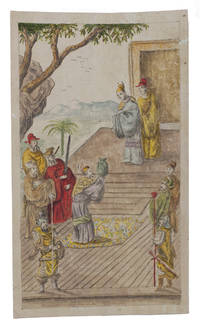
1670rif. E9PF9I9C81WOChina 1670. A series of 8 Chinese drawings ca. 24 x 14.5 cm: 5 coloured 1 also highlighted in gold showing scenes from a Chinese novel many military or diplomatic plus a Chinese watercolour drawing and a Japanese woodblock print. A series of 8 pen and ink drawings 5 coloured 1 also highlighted in gold drawn from Chinese books possibly the 14th-century Sanguo yanyi or Romance of the Three Kingdoms. All mounted on European paper 6 on 3 different patterns of decorated paper. The paper of the drawings ranges from 23.5 x 14 cm to 24 x 15 cm. They show the following outdoor and indoor scenes:1 2 warriors on horseback one of whom has just beheaded the other and carries his head away the beheaded warrior has not yet fallen from his horse while his superior watches on horseback with 2 attendants.2 a man standing with a spear in the prow of a boat while 2 men and a woman sit at a tea table in the boat which flies a flag and pennant.3 5 people on 2 boats one flying a flag and pennant.4 4 soldiers bringing a woman to a dignitary at his house.5 a delegation visiting a dignitary.6 2 men playing go with 4 attendants and a guard.7 a dignitary at a writing table with attendants and visitors.8 a seated dignitary with 6 standing figures 1 with a document at a table.In the backing paper of number 7 one can make out an Amsterdam coat of arms watermark. It is difficult to see clearly but seems to follow the general style of Laurentius 71-95 1662-1675. The 3 patterns of decorated backing paper show: a flower pattern printed in gold on green; 2 patterns with more abstract decorations in a diamond pattern printed in gold on white.With this series we include a watercolour drawing and a woodblock print:9 watercolour drawing of irises along a stream with hills in the background 17 x 22.5 cm.10 rectangular woodblock print of a Samurai at a tea ceremony 14 x 10 cm possibly derived from a Japanese book.Some edges of the drawings a little frayed but otherwise in very good condition. unknown
1926rif. 015082Paris Grasset 1926 In-12 Broché Edition originale
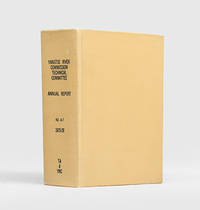
1925rif. 188317Beijing & Shanghai: Yangtse River Commission 1925-26-28. Measuring China's longest river First editions of these invaluable technical publications which record a wealth of data from gauging stations across hundreds of charts and diagrams. The Yangtse River Commission was formed by presidential order in December 1922 and the American engineer George Gottlieb Stroebe 1877-1965 served as the first head of its survey department. After several years of operation the commission switched its focus to the middle section of the river stretching from Hankou to Yichang. In 1925 it installed new gauges and discharge measurement stations while also collecting data with equipment maintained by the customs service. Until 1926 inclusive reports were released in the name of the commission's technical committee before responsibility transferred to the Ministry of Communications. The table of contents for the fifth annual report 1926 calls for 221 plates but numbers 150-221 were not issued. 3 works bound in 1 octavo 255 x 180 mm. Together 351 diagrammatic plates 2 folding tables; tables in text. Text in English and Chinese. 1966 tan buckram by the Heckman Bindery Indiana label on rear pastedown spine lettered in black original green card wrappers bound in. Ex-Library of Congress with its ink stamps and shelf-marks on the original wrappers index card holder on rear pastedown and "duplicate" deaccession stamp on front free endpaper. Contents toned one original wrapper creased at foot occasional marking and offsetting internally couple of short closed tears: very good. hardcover
rif. 138483aafParis : chez Ph.-D. Pierres & Clousier, imprimeur-libraire, rue Saint-Jacques, 1777-1785, in-4to, illustré de 16 planches et 3 cartes dépliantes contours en couleurs par Brion d après le P. de Mailla, + 5 dépliantes de divers dynasties, qqs feuillles brunies, qqs planches piquées, (tome 4 avec 8 p. un peu courte de marges). relié veau époque , dos à nerfs ornés avec titre et tomaison, dos lég. frottés.
rif. 8681P., Imprimerie royale, 1694 (LA HIRE), 1692 (observatons physiques et mathématiques envoyées des INDES et de la CHINE), 1694 (Observations faites à la CHINE), un volume in 4 (20cm x 26cm) relié en plein veau marbré, dos orné de fers dorés (fleurs de lys), ARMES DE LOUIS XIV sur les plats, tranches rouges (reliure de l'époque), 8pp., 202pp. (mal chiffrés 302), figures dans le texte (LA HIRE) ; (3), 113pp. (observations physiques et mathématiques envoyées des INDES et de la CHINE ; 20pp. (observations faites à la CHINE)
rif. 8701Paris, Lithographie du Ministère de la Marine, 1862. 1 volume in folio (30*46 cm), 125 pp., enrichi de 13+45 planches à pleine page légendées, décrites et commentées sur la page opposée. La page de titre est salie et tachée, ainsi que 2 feuillets internes (pp. 62-63). Déchirures restaurées sur les 2 derniers feuillets, sinon très bon état, reliure moderne plein cuir noir.
1890rif. 29094S.l. s.d. [vers 1890] in-8 oblong (15 x 23,5 cm) toile grise, dos lisse muet
1980rif. 2090202120414273Heibonsha 1980. Soft Cover. Fine. Number of books: 1 Heibonsha paperback
rif. 8698Paris, de l'Imprimerie Impériale, MDCCVIII (1808). 1 atlas in folio, reliure cartonnée moderne, comportant 91 gravures sur 60 planches et 6 cartes dont 4 dépliantes, mouillures claires et marginales n'affectant pas les planches, très bon exemplaire, très frais intérieurement. L'atlas est enrichi d'une lettre manuscrite de M. de Guignes présentant son ouvrage.
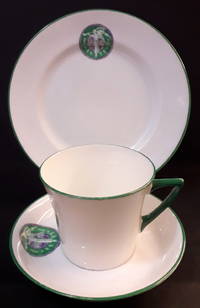
rif. 3210181Cup saucer and side plate; white china has strikingly clean straight lines and is rimmed in dark green with a green handle to the cup each piece carries the motif designed by Sylvia Pankhurst of the 'angel of freedom' blowing her trumpet and flying the banner of 'Freedom in the background are the initials 'WSPU' set against dark prison bars surrounded by the thistle shamrock and rose and dangling chains; the cup has one minor hairline crack otherwise all pieces are in fine condition. Rare survival of an original Suffragette cup saucer and side plate complete with the 'Angel of Freedom' designed by Sylvia Pankhurst. Initially for use in the refreshment room of the Prince's Skating Rink Exhibition and then sold in aid of funds. The Women's Exhibition of 1909 all but forgotten today was a tipping point in women's struggle for equal rights. The event was open to both sexes and cleverly calculated to show men that suffragettes were not the dangerous 'shrieking sisterhood' they were painted but were in fact the wives mothers and sisters they knew women safely interested in the same female pursuits they always had been women dedicated to creating beautiful things not destroying them. 'The winged angel logo was repeated on almost all promotional material. It was especially striking on the elegant white tea service specially commissioned from a pottery in Staffordshire used in the traditional tea and refreshment room during the exhibition and for sale after the event. Commemorative china was a relatively new idea and this early understanding of branding as a way of advertising was a key element of the exhibition's success making the WSPU one of the first campaign groups to understand the significance of logos' http://annesebba.com/journalism/the-womens-exhibition-of-1909/
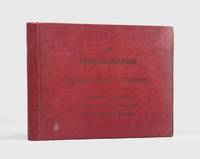
1900rif. 176895Shanghai: Brewer & Co. c. 1900. From the Chefoo Bluff to Lamtong Head Sole edition untraced institutionally the copy of Vice-Admiral Seymour's chief of staff in Tianjin during the Boxer Uprising. This photographic guide is designed for "the navigator of this changeable and frequently foggy locality" preface. We have traced only one other copy which appeared in commerce in 2017. Navigators in the late Qing period could rely on only a small network of lighthouses and fixed navigational aids when sailing the Chinese coast. "In thick weather even a person familiar with the coast is at a loss to identify a well-known Islands with its summit" preface. The thirty views include the Chefoo Bluff in the Pechili Gulf the waters near the Hieshans Light House Zhejiang and Hong Kong's Lamtong Head. A concerted period of lighthouse-building in the 1910s and 1920s obviated the need for further publications of this kind. Provenance: though unmarked as such this copy was owned by Captain Edward Henry Bayly C.B. 1849-1904 Commander of the International Forces at Tianjin in June 1900. Bayly had a lifelong career in the Royal Navy. He was promoted to the rank of lieutenant in September 1873 commander in June 1887 and captain in January 1894 having served overseas in numerous ships. Bayly captained HMS Pelorus during the fleet review for Queen Victoria's diamond jubilee in 1897 and in 1899 became captain of the armoured cruiser HMS Aurora on the China station. During the Boxer Uprising he replaced the wounded John Jellicoe as chief of staff to Seymour was mentioned by Seymour in dispatches and remained at Tianjin until the withdrawal of naval forces. He retired at his own request in February 1904. Landscape octavo. With 30 mounted collotypes within red frames. Original red cloth front cover lettered in gilt white coated endpapers leaves hinged with white linen as issued. A little shaken binding sunned and stained contents well preserved a little toning at fore edges: a very good copy. hardcover
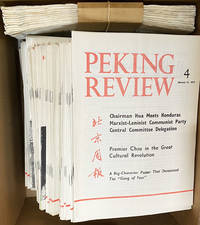
1963rif. 1008621 issues Beijing Review Chinese: 北京周報; pinyin: Běijīng ZhÅubào; Wade–Giles: Pei-ching Yu-pao previously Peking Review is China's only national news magazine in English published by the Chinese Communist Party-owned China International Publishing Group. In 2006 it claimed a per-issue circulation of 70000 and distribution "throughout China and 150 countries and regions worldwide." Founded in March 1958 as the weekly Peking Review it was an important tool for the Chinese government to communicate to the rest of world. The first issue included an editor's note explaining that the magazine was meant to "provide timely accurate first-hand information on economic political and cultural developments in China and her relations with the rest of the world." The U.S. Postal Service initially restricted distribution of the magazine but the U.S. Supreme Court overturned this policy in Lamont v. Postmaster General. In October 2020 the United States Department of State designated Beijing Review as a "foreign mission" of China. An important time period covering the entire Cultural Revolution through the death of Chairman Mao the policies of Deng Xiaoping and the establishment of modern China. Each issue in original printed wrappers: 1963: No. 10 11 13 15 25 30 32-36 38 41-45 52; 1964: No. 1-52; 1965: No. 1-19 21-22 24-52; 1966: No. 5-30; 1970: No. special issue 8 May 21 31; 1972: No. 1-33 35-52; 1973: No. 1-52; 1974: No. 1-35 37-49 51-52; 1975: No. 1-52; 1976: No. 1-52; 1977: No. 1-52; 1978: No. 1-52; 1979: No. 1-43; 1980 No. 10 12-15 21 33 38 40 47 48; 1981: No. 1 2 5 23 27 28 37 42 44 51; 1982: No. 31 33 35 37 38 48 50-52; 1984: No. 36 40 42 1985: No. 9 11 12; 1986: No. 1 3 13 14 30 36 43 46; 1987: No. 8 9 27 28 37 42 44-46; 1988: No. 10; 1989: No. 3 5 6 9 19 21-23 27-29 41; 1995: No. 4 8 The name change of this journal under President Deng presaged a new direction. From being a revolutionary magazine presenting the ideas and aspirations of a young and relatively weak Socialist state struggling along the road to the construction of Communism it was now displaying its open statement of aims of an outright capitalist and imperialist state – with global ambitions. From the very beginning the new Socialist state had to face many obstacles. There was opposition from within and without the country from within and without the Party. Those who might have played an important role in the past in the fight for liberation were not necessarily the ones who were needed to build a radically new society. All revolutions bring with it old baggage from the past but some leaders found it more difficult than others to throw it away and start fresh. 《北京周报》创刊于1958年3月1,最åˆè‹±æ–‡å为"Peking Review",在ä¸å›½å…¨é¢æ”¹ç”¨æ±‰è¯æ‹¼éŸ³ä½œä¸ºè¯‘åæ ‡å‡†åŽæ”¹ä¸ºçŽ°å。æ‚志主è¦æŠ¥é“ä¸å›½çš„政治ç»æµŽçŽ°çŠ¶ï¼Œä»‹ç»ä¸å›½æ”¿åºœå¯¹å†…对外的é‡å¤§æ–¹é’ˆæ”¿ç–ç‰2。《北京周报》也曾出版过法文ã€è¥¿ç牙文ã€æ—¥æ–‡åŠå¾·æ–‡ç‰ˆå®žä½“刊,ä¸è¿‡é™¤è‹±æ–‡ç‰ˆä»ä¿ç•™å®žä½“刊外,其他è¯è¨€ç‰ˆæœ¬å‡å·²äºŽ2000年12月åœåˆŠï¼Œä»…ä¿ç•™ç½‘络版。 Published by Guozi Shudian for the Foreign Language Press, paperback
1963rif. 1008621 issues Beijing Review Chinese: 北京周報; pinyin: Běijīng ZhÅubào; Wade–Giles: Pei-ching Yu-pao previously Peking Review is China's only national news magazine in English published by the Chinese Communist Party-owned China International Publishing Group. In 2006 it claimed a per-issue circulation of 70000 and distribution "throughout China and 150 countries and regions worldwide." Founded in March 1958 as the weekly Peking Review it was an important tool for the Chinese government to communicate to the rest of world. The first issue included an editor's note explaining that the magazine was meant to "provide timely accurate first-hand information on economic political and cultural developments in China and her relations with the rest of the world." The U.S. Postal Service initially restricted distribution of the magazine but the U.S. Supreme Court overturned this policy in Lamont v. Postmaster General. In October 2020 the United States Department of State designated Beijing Review as a "foreign mission" of China. An important time period covering the entire Cultural Revolution through the death of Chairman Mao the policies of Deng Xiaoping and the establishment of modern China. Each issue in original printed wrappers: 1963: No. 10 11 13 15 25 30 32-36 38 41-45 52; 1964: No. 1-52; 1965: No. 1-19 21-22 24-52; 1966: No. 5-30; 1970: No. special issue 8 May 21 31; 1972: No. 1-33 35-52; 1973: No. 1-52; 1974: No. 1-35 37-49 51-52; 1975: No. 1-52; 1976: No. 1-52; 1977: No. 1-52; 1978: No. 1-52; 1979: No. 1-43; 1980 No. 10 12-15 21 33 38 40 47 48; 1981: No. 1 2 5 23 27 28 37 42 44 51; 1982: No. 31 33 35 37 38 48 50-52; 1984: No. 36 40 42 1985: No. 9 11 12; 1986: No. 1 3 13 14 30 36 43 46; 1987: No. 8 9 27 28 37 42 44-46; 1988: No. 10; 1989: No. 3 5 6 9 19 21-23 27-29 41; 1995: No. 4 8 The name change of this journal under President Deng presaged a new direction. From being a revolutionary magazine presenting the ideas and aspirations of a young and relatively weak Socialist state struggling along the road to the construction of Communism it was now displaying its open statement of aims of an outright capitalist and imperialist state – with global ambitions. From the very beginning the new Socialist state had to face many obstacles. There was opposition from within and without the country from within and without the Party. Those who might have played an important role in the past in the fight for liberation were not necessarily the ones who were needed to build a radically new society. All revolutions bring with it old baggage from the past but some leaders found it more difficult than others to throw it away and start fresh. 《北京周报》创刊于1958年3月1,最åˆè‹±æ–‡å为"Peking Review",在ä¸å›½å…¨é¢æ”¹ç”¨æ±‰è¯æ‹¼éŸ³ä½œä¸ºè¯‘åæ ‡å‡†åŽæ”¹ä¸ºçŽ°å。æ‚志主è¦æŠ¥é“ä¸å›½çš„政治ç»æµŽçŽ°çŠ¶ï¼Œä»‹ç»ä¸å›½æ”¿åºœå¯¹å†…对外的é‡å¤§æ–¹é’ˆæ”¿ç–ç‰2。《北京周报》也曾出版过法文ã€è¥¿ç牙文ã€æ—¥æ–‡åŠå¾·æ–‡ç‰ˆå®žä½“刊,ä¸è¿‡é™¤è‹±æ–‡ç‰ˆä»ä¿ç•™å®žä½“刊外,其他è¯è¨€ç‰ˆæœ¬å‡å·²äºŽ2000年12月åœåˆŠï¼Œä»…ä¿ç•™ç½‘络版。 Published by Guozi Shudian for the Foreign Language Press, paperback books
1777Ensemble de 15 volumes de format in 4° carré; reliure uniforme de l'époque en demi veau fauve richement orné; illustré de 179 planches gravées et numérotées (sur 193). Le volume XII est entièrement consacré à la vie de Confucius avec de superbes planches. Célèbre et monumentale histoire de la Chine dans tous ses aspects, militaires, agricoles, religieux, géographiques, généalogiques... Une encyclopédie sur la Chine à l'usage des Européens. Notre exemplaire ne comprend pas les planches hors texte des T. I et II; sauf le portrait frontispice du Tome I et présente donc 152 planches hors texte sur 166; ou 179 planches numérotées sur 193. Les tomes III à XV sont bien complets . Quelques petits défauts de reliure et travaux de vers intérieurs principalement en marge. Deux volumes de suppléments parurent en 1814. Curieuse signature manuscrite "Montgolfier" sur chaque page de titre. Voir les photos.
1775rif. LBW-4998[1775-1781]. 333 x 484 mm.
1914rif. 276778Berlin: Reimer / Vohsen 1914. 6 Bll. (Titel u. Einleitung), 75 doppelbl. Taf. (von 81). Quer Folio. *Eine Mappe fehlt, die andere ist demoliert* vorhanden die Taf. 1-73,76* 1 Taf. mit Blattrand beschädigt, wenige auf der unbedruckten S. fleckig*.
1879rif. 030382China Guangxu Era Ji-Mao 1879 Zhang Xuegeng Soft cover
rif. 10608A Paris, Chez Ph.-D. Pierres, Imprimeur du Grand-Conseil du Roi, & du Collège Royal de France, rue Saint-Jacques , Clousier, Imprimeur-Libraire, Rue Saint-Jacques, M.DCC.LXVVVII. - M.DCC.LXXXV (1777-1785). 11 volumes in-quarto ( Les tomes 2 et 8 font défaut), plein veau 18e, belles reliures armoriées, dos à caissons ornés, ouvrages illustrés de 5 tableaux dépliants, 16 planches hors texte (dont une dépliante) et 2 cartes dépliantes dont une aux contours en couleurs (Carte de l'ancienne Chine par Brion (1778) et carte dépliante de la Tartarie chinoise et de ses pays limitrophes par Brion de la Tour (1779). Avec le tome XIII (volume de supplément) portant le titre : Description générale de la Chine ou Tableau de l'état actuel de cet Empire, rédigé par M. l'Abbé Grosier. (Paris, Moutard, 1785)
1907rif. 31534[Chine - Tianjin 1907] in-8 oblong (18 x 13 cm environ) demi-basane brune, carton fort entièrement monté sur onglets, tranches dorées, dos manquant
1900rif. 18057(Vers 1900) in-12 oblong plié en accordéon, percaline grise de l'éditeur avec le mot "Album" sur le plat supérieur
1983rif. 2080702109502880Nigensha 1983. Soft Cover. Fine. Number of pages: 1 volume 1 commentary Nigensha paperback