Mieville, ChinaABAA

25.612 risultati
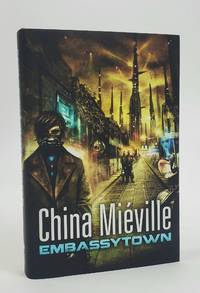
2017rif. 1403289London UK; Brooklyn New York: Verso 2017. First Edition First Printing. Hardcover. Octavo 369 pages. In Very Good condition with Near Fine condition dust jacket. Spine is black with white and cyan lettering. Dust jacket protected by mylar covering price uncut: "£18.99/$26.95/$35.99CAD" on front flap. Boards have mild shelving wear along spine head and tail mild bumping to front head fore corner. Textblock fore edge lightly wavy. Signed flat on title page by China Miéville. Shelved in Room Z. 1403289. Special Collections - Upstairs. Verso hardcover books
2016rif. 1403322Burton Michigan: Subterranean Press 2016. Limited Edition #323/750. Hardcover. Small octavo 181 pages. In Very Good condition with Near Fine condition dust jacket. Spine is black with white and mustard yellow lettering. Dust jacket protected by mylar covering price uncut: "$45" on front flap. Boards fully bound in publisher's dark green cloth. Signed flat by China Miéville on publisher's limitation page. Shelved in Room Z. 1403322. Special Collections - Upstairs. Subterranean Press hardcover books
2016rif. 1403356New York New York: Picador 2016. Limited Edition #36/250. Hardcover. Small octavo 205 pages. In Very Good condition with Near Fine condition dust jacket. Spine is beige with metallic copper lettering. Dust jacket protected by mylar covering. Boards have mild shelving wear along spine tail. Textblock edges sprayed black; mild age-toning throughout interior mild creasing along tipped-in half-title page. Signed flat on title page by China Miéville. Shelved in Room Z. 1403356. Special Collections - Upstairs. Picador hardcover books
2016rif. 1403358London UK: Picador 2016. Limited Edition #81/250. Hardcover. Small octavo 139 pages. In Very Good condition with Near Fine condition dust jacket. Spine is gray with bronze and white lettering. Dust jacket protected by mylar covering price uncut: "£12.99" on front flap. Boards have small dent to front head joint. Textblock edges have moderate age-toning; mild age-toning throughout interior. Signed flat by China Miéville on title page. Shelved in Room Z. 1403358. Special Collections - Upstairs. Picador hardcover books
rif. B18960-3New York 1969. 48pp. 66 illus. 4to. Wraps. New York, 1969. paperback books
2011rif. 1416212Burton Mi: Subterranean Press 2011. Limited edition #490/500. Hardcover. Octavo 352 1 pages. Very Good Plus condition in a Very Good Plus dust wrapper. Bound in tan cloth. Spine has metallic blue lettering. Corners and spine ends are sharp. Text block is clean Signed on the limitation page by China Miéville numbered 490 of 500 copies. Shelved in Case 4. 1416212. Shelved Dupont Bookstore. Subterranean Press hardcover books
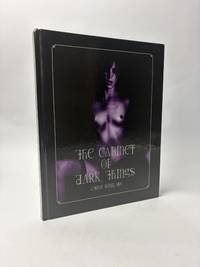
2005rif. 1417160Erotic Print Society 2005. Hardcover. Quarto 180 pages. In Very Good minus condition. Hardcover with black spine and boards and white lettering. Spine and boards have light shelfwear to edges and rubbing throughout; spine has two surface scratches. Text block has rubbing throughout and fingerprints to some of the glossy black areas. Shelved in Netdesk Office Case #1. 1417160. FP New Rockville Stock. Erotic Print Society hardcover books
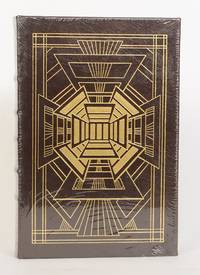
2002rif. 1415844Norwalk CT: The Easton Press 2002. First Edition 1/1000 copies. Hardcover. Octavo. In Very Good condition. Bound in publisher's decorated dark brown leather with paneling and gilt lettering to spine. Sealed in original plastic shrink wrap. Minor shelf wear. Edges of text block gilt. Signed flat by Miéville within. Shelved above Sci-Fi. 1415844. Shelved Dupont Bookstore. The Easton Press hardcover books
1971rif. 268057New York: The Mattachine Society 1971. Magazine. 20p. includes covers 7x11 inches photos reviews features ads society reports rusty staples light wear price marked-out in green marker else very good magazine/newsletter in stapled blue wraps. Cover story on the Sodomy Statutes. The Mattachine Society unknown books
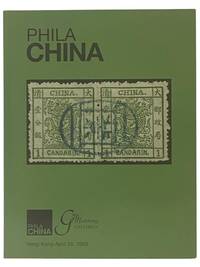
2003rif. 2353897Hong Kong: Phila China 2003. Large Softcover. Near Fine. An excellent copy. Binding tight and square pages clean bright and unmarked. 2003 Large Softcover. A catalog listing 1748 auction lots with images representing a large collection of stamps and other philatelic collectibles with estimated values in HK$ throughout. Phila China paperback books
rif. 92110001Edo 1750 Suharaya Mohei. Large folding map 170 x 200 cm. old mended worming rebackedpastel colors Japanese reprint of a map printed in Henan in 1679 folds down to be 21.5 x 25.5 cm. woodblock printed hand color. V E R Y R A R E ! . . AN EXCEPTIONALLY RARE WALL-SIZE MAP OF CHINA . . EXECTED BY A SHAOLIN ZEN MASTER The Shaolin Xi Monastery/Temple is a Chán Zen Buddhist temple at Song Shan near Zheng Zhou City Henan Province in Dengfeng China. It was led by Venerable abbot Shi Yongxìn. founded in the 5th century the monastery has been famous for centuries its association with Chinese martial arts and particularly with Shaolin Kung Fu. It is also a Mahayana Buddhist monastery perhaps best known to the Western world. . The Shaolin Monastery and its famed Pagoda Forest were inscribed as a UNESCO World Heritage Site in 2010 as part of the Historic Monuments of Dengfeng. Extracted from Wikipedia. . A RARE EDITION: Reprinted and published in Japan by Katsuragawa Hosan in 1750 reproduced from the Chinese original of Kangxi 27 1679. The original Chinese edition has been exceptionally obscure and impossible to come by for over the last two-hundred years and is believed now to be lost to posterity. . PRINTING TECHNIQUE AND THE PAPER: The work is woodblock printed by hand on hand-made Washi paper then hand-colored in delicate pastels. . CHINESE VIEW OF ANCIENT CHINA: This grand scale work covers a very large space and is quite handsome suitable for framing and display. The map shows a full view of all of China from the Great Wall in the North Shanghai the East coast down to the oceans in the South and Hainan Island and the coasts along he Eastern shores. This is a spectacular work showing each province in pastel colors with outlines large numbers of place names rivers & the major waterways mountains named and located. By and large inspired to show all of the known lands considered a part of China delineating the country and its exterior boundaries. . Japan and other islands are not shown but boxes with notes in Chinese as to their existence and location are well documented. The lower portion has text discussing the population of the various provinces and other notes. Areas beyond the traditional lines of China i.e.: North of the Great Wall and to . RARITY OF THE MAP AND ITS MAKERS: This grand-scale and truly spectacular work is virtually never found on the market. The Shaolin Monastery monks were the original founders of the celebrated and now famous Kung-fu martial art school located in Henan province. The priests were legendary and the most feared for their martial art prowess. They were also covert with their powerful political force in China. . SHAOLIN SI TEMPLE/MONASTERY LEGENDARY CUSTOMS: Priests who passed the highest level of Kung-fu martial art were invited to participate in a recognition ceremony. They were allowed to self-brand themselves by picking up a red-hot iron brazier that had long temple dragon decorations on the sides. The branding was accomplished by clamping the brazier between their forearms until the dragon image was branded on them. These brazier dragons are identical to the long dragon found at the top of this historic map. Another ancient practices used was the Jieba. It is an ancient ceremony where nine marks are burned onto the head with sticks of incense. In 2007 the Chinese government partially lifted the 300-year ban of the Jieba allowing the the mentally and physically prepared to participate in the ancient tradition. Incense or moxa was used on top of the shaved head and burned in a ceremony of dedication to the Shaolin Si temple/monastery by the most skilled of martial artists. WHY THE DRAGON SYMBOL WAS USED BY SHAOLIN MONKS: The top of the map show the dragon as a symbol of the Shaolin Si. In China the dragon is the first of twelve zodiac animals and is the most powerful of all and represents the ultimate and greatest of all powers known. It is also the one and only legendary animal in the zodiac the rest are actual animals. Because this map was conceived of carved and printed at the Shaolin Xi monastery or temple by these very priests they put the most powerful symbol at the top a dragon. The symbolic meaning indicated that China was superior to all other nations. It was also a private pun by the Shaolin priests indicating for all to see and know that the Shaolin temple and its priests were above all others. Additionally it reminded and indicated that the Shaolin priest were the most powerful martial artists and covert political force in all China. . RARITY: The original Chinese edition has been exceptionally obscure and impossible to come by for over the last two-hundred years and is believed now to be lost to posterity. Shaolin Si temple/monastery imprints are very R A R E ! Few references or examples exist of their woodblock printed works. This edition was a copy of the original re-carved by the Japanese and reissued. Not only is this map of great interest to Chan Zen Buddhists Shaolin Kung-fu collectors martial artists and historians but to students of Chinese cartography collectors and museums. . CONDITION: The map has been professionally re-backed in its distant past due to the large amount of old worming. It is now solid and stable. Because of the rarity of this work a complete map found in any condition would be now considered exceptionally R A R E ! Please review images posted to our website to observe the restored condition. . THE COVERS: The map has been rebound in non-original paper covers perhaps about 100 years ago. It is contained in a brown cloth Chuan Chitsu folding slipcase with ivory clasps cloth a bit faded one edge a bit worn else clean & solid. . THE SCANS: While we have made efforts to take good digital photographs and scans of our copy due to the exceptionally large size of the map these photos are not of the highest quality. We therefore are additionally using copies of this map from the Oda reference book illustrations as samples of what the map is like. Please note the following digital images are from Oda: cover.jpg illus08.jpg & illus12.jpg the balance are from our digital camera. . Any client who purchases this map may be interested in the Japanese text found in Oda. Upon request we are happy to provide a copy of his entry. . BIBLIOGRAPHY: G. Beans: A LIST OF JAPANESE MAPS OF THE TOKUGAWA ERA Supplement A on p.14 as #1750.1 with confirmation date of 1750. Beans gives this the title: "THE BEST COLLECTION OF ANCIENT AND MODERN WORKS CONCERNING THE HISTORICAL EVENTS THROUGHOUT THE DYNASTIES BY THE MONASTERY OF SHAO-LIN." T. Oda: THE WORLD IN JAPANESE MAPS UNTIL THE MID-19TH CENTURY p.52-53 item #24 for 2 excellent color examples. Oda shows the Japanese title: REKIDAI JISEKI ZU: HISTORICAL MAP OF CHINA reproduced from the Chinese original of 1679 by Katsuragawa Hosan 1750. Beautifully reproduced here in full color. Meir Shahar: The Xiaolin Monastery: History Religion and the Chinese Martial Arts. Wikipedia: cans of this and most items are posted to our web site. unknown books
rif. 25054401China n.d. ca. 1927-1928. Brown simulated alligator cloth covers 37 x 27.5 cm. black pages spine ribbon-tied ca. 400 b.w. photos corner mounted images very good sharp and clear images NOT fadedsolidnicely done. V E R Y R A R E ! . . SUPERB PHOTO ALBUM OF THE CHINESE CIVIL WAR: . . Beginning of The Communist Party led led by Mao Tse-tung . . V.S. the Kuomintang KMT or Chinese Nationalist Party . Led by Chiang Kai Shek. . The United States Supported the KMT. In this album we see how the KMT soldiers hosted the American Army in China using their trains and military bases throughout China. This unusual album contains 400 original b. w. photographs & and is an historic photographic record of American military deployment showing Dough-boys in China probably from the U.S. Army's 2nd. Battalion 15th. infantry per the flag and insignia found on a group formation photograph. A minority are with written captions by and large taken by the person who made the album also enhanced with a small percent of professional Chinese photos some of which have in-negative captions. There are ca. 3 or so photos missing else completely filling 32 pages or 64 sides one on the inside back cover. The inside of the front cover has five attractive period color luggage type adverts from various hotels: Hotel Lankershim & Coast Line Military & Naval Hotel San Francisco Cal; The Court Hotel Tientsin North China; Grand Hotel des Wagons Litz; Astor House Hotel Ltd. Tientsin. The album begins with photos of a Chinese playing a Pi-pa snake skin banjo then there are three other photos: first two show a Chinese military camouflage train engine from which a Yank soldier in his campaign hat descends and a long train of cars with a large howitzer mounted upon one last shows French troops at parade rest with their rifles and white gloves and crested helmets with anchors naval or marines with others in the background with some officers. The next two pages show Chinese coolies swing a basket from the creek top water a field a mother suckling her baby with her family at the farm a large water tower in the wet slums and a group of Doughboys at attention in formation they wear boots leggings chrome World War I type dress helmets a rifle back pack with bayonet cartridge pouch belts with green wool hip-length jackets. The opposite page shows another view of the Chinese military train a pair of large mounted guns on an armored train car. To the right is a Chinese officer pointing to a large pierced hole in the train with a foreign engineer peering out from the small window. The train sports the Republic of China flag with a Chinese military unit flag painted on the side. Another view shows a group of abandoned Chinese coffins that went to the dogs; a group of soldiers in garrison caps at attention with fixed bayonets as the officers salute someone near the person taking the photo some Chinese officers also present. Next 2 pages show Chinese on a wheel barrow some Japanese women by a pond in Kimono and a group of British troops from their colonial Empire: blacks Indians white trumpeter Chinese and others with musical instruments all wear white cork-type pith helmets. A group of Japanese officers mugging for the camera. Photos of the railhead and large number of Chinese troops with rifles and kit at the railway station some on march carrying their flags others in open box cars with touring cars that are on the move another of camouflaged armored train cars one shows a number of foreign soldiers looking out of a train car window some are with tiny embossed stamp at right corner: "Mei Lee Tien Tsin." The album continues with a mixture of images of civilian Chinese Chinese military their trains moving air planes weapons war refugees in tents military views of barbed wire fortifications trenches machine gunners Russian soldiers Chinese officers Chinese air force funerals rickshaw pullers camel trains captured & wounded prisoners foreign soldiers at their sand-bagged posts. Photos of the great wall magnificent Chinese architectural monuments buildings and pagodas religious icons coffins more coffins mortars & Chinese junks and a plethora of others. The American Consulate General's compound in Tientsin American military band welcoming the newly arrived replacement troops. A large photo group shot of the American officers seated for a memorial photograph with their Battalion flag proudly posted on the wall where they pose source of our citation at the top of the unit name; two buglers are at each outside position the commander is ram-rod straight and taller than all others seated in the front & center; he and only two others on his sides wear full leather knee boots probably indicating the highest ranking officers; others are in boots & leggings. Photos of Doughboys aboard a ship showing the Naval officers with one stunning photo of an American high officer with his Japanese & Chinese counter parts posing for the camera. And a photo of the "Mail Boat Gazun Panama" and a few others of Panama giving credence to the fact that some of these soldiers came from the American East coast via Panama to San Francisco then on to China. Nice photo of semi-nude Panamanian family men women children. Doughboys at target practice photos of Chinese poverty coolies pulling great loads and street vendors. More showing Chinese life style street life horse & bullock carts and yet more caskets left in the open unburied and abandoned train cars full of horses Chinese troops smoke rising from a burning city another with "Tian jin" written in Chinese catholic church more parading of American soldiers within the Tientsin American Consulate parade grounds trooping of the colors. And a nice photo of the "U.S. Army Transport Thomas" Chinese junk &c. A U.S. soldier in a necktie his rifle at fixed bayonet at parade-rest before the Consulate General compound with sand bags inside a photo of a U.S. soldier with his Colt-45 on his hip with canteen looking at some communications connections another photo of two mini U.S. tanks and a very long bridge over the water. Photo of the Tientsin downtown with a Sikh Indian policeman directing traffic. Next page shows a public Chinese street execution: the guilty on his knees with the executioner ready to swing a very large sword and another headless corpse is before him the Tientsin YMCA compound opposite which is likely the inside of the American Consulate offices showing very ancient typewriters and three women staff and one other female Navy person. They all mug for the camera with a good number of U.S. Army or Marine officers behind three desks. Chinese hauling "magnum gold" brand ammunition on hand- trucks a U.S. Army band performing before the Consulate's office. At this point we find a few photos with penned captions: "One of China's Department Stores it shows a bird vendor; Peanut Gambler a mountain of P-nuts; Chinese Shimboo photo of the office and maker of the album and his Chinese officer friend ; "A Chinese Taxi" shows him in a Rickshaw "Me and the boy friend 11/3/28" shows a tiny goat cart carrying a child's coffin with a Chinese man. This penned date gives substantial proof of the date range of the entire album which was placed about the center of the whole work. The next page shows two more penned captions: "Chinese cavalry" and "Note mud house and fence" shows two Chinese officers on horse-back and a very very poor house with very starved animals. The next shows six Chinese undercover men two each holding a Chinese being readied for execution; and a very grizzly photo of a Chinese officer actually executing a Chinese man with his pistol who is seated on a rock: the photo captures the action as the shot blows away the mans brains. Behind the execution scene is a crowd of American soldiers in campaign hats and Chinese military officers who are witness to the event. More views of Chinese street life vendors pullers haulers & horse carts religious icons and a stunning Chinese roofed gate more Chinese troops on the move via train with a very horrible view of a large number of dead Chinese in the muddy filthy waters by a bridge. Homeless Chinese at a "soup kitchen" war refugees hauling their belongings house boat street barbers a group of 7 photos by the ocean. They show American soldiers at leisure looking at Chinese fishermen nets naked fishermen hauling in a net of fish to the beach a burning waterfront village the jetty where several large American transport ships are at anchor and a great assembly of Yankee soldiers on the beach with duffel bags and their gear at the railhead. The last photo shows a great number of various whisky bottles lined up for display. More photos show a coffin maker large coffin basket seller and "chow" sellers on the street. A military formation of 100's of either Scottish or Irish soldiers with fixed bayonets marching down the main street before the "RNC Electricity Dept." below which is a very long line of British soldiers on one side of the street opposite from a good number of American soldiers who are on the side of the street a British Union Jack flies over a castle-like structure this is clearly some kind of grand military parade. More photos of the Great Wall the military parade and army chaplains with an Australia flag flying over another castle tower. Chinese river scene with large numbers of native boats in a canal a beggar's camp with straw -mat tents a canal crossing ferry for people a photo of a U.S. officer stand on top a wooden coffin for a closer look. More poverty-stricken Chinese haulers fortune tellers graves tethered horses log sawyers rice haulers electric trolley with English and Chinese language sign on the roof panorama post card of Shanghai's Bund. The album now shifts to photos of the Peking area. Shows the Ming tombs and the camel-lined road; military train the Americans were transported by that train a large bivouac and tent city where the U. S. military troops camped some Chinese "house boys" proudly holding the American troop's unit flag. More photos of two U.S. soldiers posing near Chinese coffins in a wet ditch. A group of very young Chinese boys posed near the railroad; one is so poor that he has no clothes at all and is in nude. A large group of Nationalist Chinese soldiers marching along a street one classic photo of a single American soldier on guard standing at attention as stands vigil on a barbed-wire barrier his rifle at fixed bayonet. A group of five Chinese young "ladies" who pose for the camera who seemed NOT to be bewildered by the photographer they look like "Sing-song girls" hookers who entertained the U.S. troops. Chinese Buddhist priests in white robes with shaved heads a great gate to Peking Shanghai harbor views shanty huts captured Chinese criminal or traitor guarded by Chinese soldiers train car full of rifles more Chinese soldiers on trains marching in formation on the road. And a good photo of several American officers: one with a whip posing for the camera in garrison hat. Chinese bivouac and American soldiers with bullet and pouches for ammo with rifles at parade rest. More barbed-wire barricades Chinese & British soldiers armored train-mounted gun. More Chinese prisoners traitors being executed heads hoisted on power poles in baskets as a form of public warning and display for other would-be traitors. An American tent bivouac camp at the train yard two more public exec executions by beheading at the moment of loosing one's head an executed dead man lying in the street. Photos of Peking's Forbidden City a Chinese hung to death from a tree a Yank soldier in overalls carries a Chinese bamboo "yoke" with two baskets and smokes a pipe while Chinese look on and laugh. Two photos of lines of Rickshaws waiting for passengers. One comic photo with negative caption: "Find the Chinaman;" it shows two American soldiers sitting among Chinese. Nice shot of the Summer Palace Peking and a U.S. soldier riding in a Rickshaw. The very last photo inside the back cover shows the whole battalion dressed up wearing their chrome helmets standing at attention in formation for a classic and most historic memorial photograph. Their commanding officer is front and center; all have their rifles ammo belts and very polished boots with back packs. They could be standing in the Tientsin American Consulate compound grounds. Followed by a few other photos of Chinese a Chinese soldier et al. This work shows the typical things seen in China during this period of political and military chaos. The feuding war lords and political parties at war; the landing of American military to protect American diplomatic interests. Support & assistance given to the Americans and other foreign military groups by the Nationalist Chinese army. The desperate situation of the tragic Chinese people caught in the grips of upheaval and the summary punishment of traitors in a public display of the swift and ruthless law of China. A riveting and most compelling true record of a U.S. military officer's sojourn to and deployment in China. THE PHOTOGRAPHER AND THE SIZE OF PHOTOGRAPHS: This is not a professional group of photographs but there a very small amount which were obviously purchased by the maker of the album and inserted. The vast majority are his personal photographs these again are obvious to anyone who looks at the album. This is an excellent example of private work of an unknown American Army officer stationed in China during a very chaotic period. He was interested in recording for posterity his experiences and the sights that he saw while on duty. We thank him for giving us privy to this slice of American and Chinese military history. SIZE OF THE PHOTOGRAPHS: The size varies considerably sizes in cm.: the smallest are 8 x 5 most are 14 x 9 3 larger photos 24.5 x 18 and the last 30 x 10. CONDITION OF THE PHOTOGRAPHS: These are original period photos they are all very clear sharp images no fading and in excellent condition. They have been corner mounted. RARITY: Photographic albums of this period in China are NOT commonly found; one made by an American Army officer stationed in China at this time is exceptionally unusual and RARE ! This is a charming primary source with a large number of clean & sharp images taken by an actual participant in this historic period of China. The officer and photographer of these photographs shared for posterity his keen insight and view of these events. We thank him for giving us privy to this slice of American & Chinese military history. . unknown books
1939rif. 96005Shanghai 1939. Paperback. Generally Very Good. Group 1 Pagination varies but generally 100-100 variously numbered pages or perhaps more on the earlier reports. Softcovers in original wrapper. 29 cm. Backstrips chipped and partially gone. Reports internally sound and clean. Group 2. numbered pages range between 22 and 8 with most having 10-12. Final page of report is printed inside back cover and usually unnumbered. Softcovers in original wrapper. 33 cm. 1925-1926 and 36 cm. 1928 issues. Bound with two staples along left side. Corner creasing on some issues. April 1928 issue printed on higher acid paper than the other issues and its browned pages are chipped and stained around edges. Group 3. folded and unnumbered four-page reports. 28 cm. Issues beginning with April 1929 given Volume is issue numbers beginning with Vol. V No.4. Group 4. Reports before July 1937 generally 24p. Reports thereafter are much shorter mostly 4-8 pages. Softcovers. 27 cm. Staples rusty. Folded strip on outer pages foxed. September 1937 issue creased and soiled. Title in Chinese and English. Slip printed in red and tipped to front cover of thin July 1937 issue reports that since their printer's office was located in the war zone the issue had not come out on schedule and was "bridged" -- the July August and December issues are only four pages as war problems continued. The lengthier January 1938 issue with Shanghai under Japanese control contains Notes to the Table of Wholesale Prices July-December 1937 explaining the war effects during that period and whether numbers were hypothetical or based on real transactions etc. during the war period. Japan gained control of Shanghai in November 1937 although they did not take control of the foreign concessions until after declaring war on the USA in 1941. We don't know what effect that had on the accuracy of these reports. paperback books
1966rif. 88849New York: China Institute in America 1966. Paperback. Very Good. Illustrated in black & white. 42p. Softcover in original wrapper. 25cm. Minor cover soil. Contents sound and clean. China Institute in America paperback books
1988rif. 86708Zao Ying lu Chaoyang District Beijing: Agricultural Publishing House 1988. 1st ed. Hardcover. Very Good/Very Good. color photos 328p. Original cloth. dj. 26cm. These annual English editions began publication with the year 1985. Agricultural Publishing House hardcover books
1987rif. 86707Zao Ying lu Chaoyang District Beijing: Agricultural Publishing House 1987. 1st ed. Hardcover. Very Good/Very Good. color photos 328p. Original cloth. dj. 26cm. These annual English editions began publication with the year 1985. Agricultural Publishing House hardcover books
1986rif. 70253Oxford: Oxford University Press 1986. Hardcover. Very Good/Very Good. 761p. dj. 26cm. Oxford University Press hardcover books
1953rif. 626812Peking: Foreign Language Press 1953. Hardcover. Very Good. Second edition. Small quarto. Illustrated from photographs. Ex-library with a couple stamps in Polish on pages and sticker on rear board very good lacking the slipcase. Foreign Language Press hardcover books
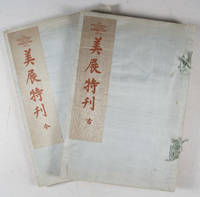
1929rif. 41261上海市 Shanghai: æ£è—社 Zheng yi she 1929. Second edition. Softcover. poor to vg-. Folios. Approx. 15x10". Unpaginated. "Modern" volume with 3 preliminary pages of index and 8 pages of prologue. "Ancient" volume with 2 pages of prologue and 1 page of index at the front. Grey patterned cloth portfolio with black lettering over a white label on the front cover. Light blue-grey silk wrappers with light blue string-tied bindings. Red lettering in English and Chinese over a tan silk label on the front covers. This is the "November 1929" printing. The work is an exhibition catalog from The National Fine Arts Exhibition held in Shanghai in April of 1929 which was organized by the Ministry of Education of the Republic of China headed at the time by Cai Yuanpei. It is considered the first Chinese fine arts exhibition in modern history. The exhibition was a monumental retrospective with more than 2000 pieces of art from throughout Chinese history starting from the Five Dynasties period the 10th century up through the contemporary period. The event brought together the work of countless Chinese artists photographers and architects and also included the work of six Japanese artists. The catalog includes some 400 pieces of the artwork featured in the exhibition divided into a "modern" volume and an "ancient" volume. The artwork is printed in b/w offset photographic reproductions and collotypes. Also included in the "ancient" volume are seven works in color with both Chinese and English language titles on protective tissue guards a few of which are beautifully printed color lithographs. The "modern" volume contains a printed calligraphic prologue written in by Cai Yuanpei. The "ancient" volume includes works from some artists as The Four Wangs Wu and Yun from Qing Dynasty Four Monks of the Early Qing Dynasty Bada Shanren Shitao Hong Ren and Kun Can Lan Ying and Gong Xian. The "modern" volume contains works from Zhang Daqian Qi Baishi Wu Hufan Liu Haisu and Lin Fengmian among many others. Both volumes contains extensive indexes of the artwork. Text in Chinese. Portfolio with boards broken but present. Wrappers with some light smudges and scratches and a few minor creases. Some sunning along the top and bottom edges of the covers. Interiors with sunning to the edges and a few sporadic minor smudges. Images mostly unaffected. Portfolio in poor wrappers in good interiors in very good- condition overall. æ£è—社 (Zheng yi she) unknown books
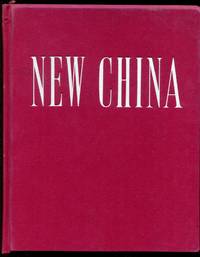
1943rif. 40073New York: Henry Holt and Company 1943. First edition. Hardcover. g to vg. Folio. 192pp. Original burgundy cloth with gold lettering to spine. Frontispiece. This handsome volume of photographs with accompanying text is designed to catch the spirit of "a transitional period of civilization affecting one quarter of the human race." The 84 striking duo-tone photographs edited and arranged by Fritz Henle are examples of beautiful photography. They are divided into five categories: the landscapes of China; the architecture and sculpture; the religion; education; life and livelihood; and "into tomorrow." The last part displays photographs showing China fighting two wars. One against the Japanese invader and the other against future insecurity. Upper front corner slightly bumped not affecting pages throughout. Gold lettering to spine partly faded. Binding in overall good interior in very good condition. Henry Holt and Company hardcover books
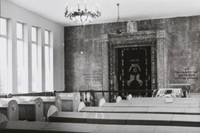
rif. 24786Israel: NP n/d. vg. Oblong quarto. Bolted blue faux-leather with inlaid b/w reproduction of a photograph of the exterior of the synagogue. Inside of front and back board lined in silk-moire. This unique album was presented to Mr. & Mrs. Harry Burston on occasion of their visit to Israel on October 1971. Printed presentation plates in English and Hebrew on title-page. Verso of title-page with 39 original signatures of guests who attended the reception at the synagogue on Nov. 1 1971. Album contains 14 original 4 1/4" x 6 1/2" glossy b/w photographs inserted on card stock. Each photo protected by tissue guard. One photo shows the exterior the rest is of the interior of the Synagogue and Cultural Center in Tel-Aviv. Photographs with captions in English and Hebrew. "In Eternal Memory: This building was built in Memory of the Jewish Communities in China by Igud Yotzei Sin in Israel. The construction of the building was possible thanks to the Administrator General and Official receiver of the State of Israel who handed over the proceeds received from the sale of the Synagogue in Shanghai and through the generous donations from the former residents of China in Israel and all over the world. The building was set thanks to the great devotion extended by the President of the Building Committee Mr. M. A. Zaigraeff. The inauguration of the skeleton of the building took place on the 20th August 1959. The inauguration of the opening of the building took place on 6th September 1961. Architects & Building plans: Mr. G. Rabinovitch Mr. A. Kahane Aron Kodesh." In 1951 a group of Jewish leaders from several communities of former China residents in Israel founded "Igud Olei Sin" which was later changed to "Igud Yotsei Sin." Small sticker of S. Sanzetti Photo Studio on inside of rear board. Minor age toning on title-page and on margin of card stock. Near fine condition. Unique copy. NP unknown books
rif. 16923St. Austell Cornwall: NP n/d. Limited edition. Hardcover. fair. Folio. 70pp. Decorated stiff boards. Raised lettering on cover faded. Business card of "M. A. Gesner of Hammill & Gillespie Inc." pasted-in on front endpaper small stamp "2nd issue" on same page "No. 1029." Fascinating and thoroughly comprehensive company history of the "English China Clays Ltd." Profusely illustrated with reproductions of photographs in gravure one color map as well as decorated initials at the beginning of each chapter. A complete and exhaustively illustrated history of the company documenting: managing directors; head office and branches; 22 clay pits and workers settling pits and refining mica drags drying kilns and linhays; stone quarries; ground china stone mills; Lee Moor brick works; power plants; water wheels; employees' houses and cottages; horse motor lorry and tramline transport; workshops and stores; export and shipping; and descriptions of clay uses in paper making and pottery. Staining rubbing and scuffing to boards. Parts of decorated top-layer on boards chipped particularly on back. 1" x 2" piece near gutter on bottom of free front endpaper missing. Some age yellowing to pages. Pulling to top edge of last two pages. Binding in fair interior in good condition. Rare. NP hardcover books
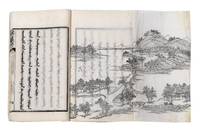
rif. 1136136 folding black & white woodcut plates. 88 folding leaves. Two debtelin in one vol. 8vo 265 x 166 mm. pink wrappers orig. block-printed title-slip on yellow silk on upper cover early stitching. Beijing: Wuying dian 武英殿 Postscript dated 1712. First edition of the Kangxi Emperor's r. 1661-1722 poetic cycle for the 36 scenic sights within the Rehe summer estate each accompanied by a stunning double-page woodcut illustration. Printed under the emperor's direct supervision on superior paper and using woodblocks carved by two of the finest artisans in the palace workshop this celebrated album had an initial print run of only 400 copies 200 in Manchu our copy and 200 in Chinese. As Stephen H. Whiteman writes in Where Dragon Veins Meet: The Kangxi Emperor and His Estate at Rehe 2020 these exclusive royal albums were most likely gifts from the Kangxi Emperor to "a relatively small circle of imperial clansmen steppe elites senior officials and others close to the throne" on the occasion of his 60th birthday in 1713 and their presentation was meant to "generate a particular bond of loyalty between the emperor and those he favored with this rare gift" pp. 183 224. First constructed in 1703 and enlarged over the next century the Rehe summer estate located beyond the Great Wall in present-day Chengde about 175 kilometers northeast of Beijing played an important role throughout the Qing empire's political history. It is today a UNESCO World Heritage Site. When the Kangxi Emperor ordered its initial construction in 1702 after half a century of expansionary war the summer estate was to become "the most substantial in a network of traveling palaces Ch. xinggong 行宮 that supported his annual tours north among the court's Inner Mongolian allies." But its significance quickly expanded. The Mountain Estate to Escape the Heat as the site would eventually be named effectively served as a secondary capital the emperor residing there from late spring through early autumn each year over the last decade of his life. "Yet it was also decidedly not the capital. Freed from the architectonic constraints of the Forbidden City Kangxi employed imperial parks and gardens as alternative spaces of rulership. Like his almost exact contemporaries in Europe and South Asia Aurangzeb r. 1658-1707 Louis XIV r. 1643-1715 and Peter the Great r. 1682-1725 Kangxi made designed landscapes central to his performance of authority.Kangxi's Mountain Estate was substantially a site of rituals of intimacy and exchange that performed a temporary elision of social difference between emperor and subject: roaming in the gardens banqueting entertainments and gift giving"-ibid. pp. 4-5. "In 1711 the Kangxi emperor formally initiated a project that sought to interweave the physical and sensory experiences of the Mountain Estate with his ideology of rulership and personal biography. Imperial Poems on the Mountain Estate to Escape the Heat presented the thirty-six scenes of the park-palace through a combination of imperially composed texts and images created by artists of the court. Produced almost simultaneously in three different mediums the work was part of a coordinated multifaceted effort to articulate a vision of Qing imperial rule through the links between landscape technology and the emperor himself"-ibid. 151. Our edition is the first to contain woodcuts; it was the second of many installments of the album - including a later one with copperplate engravings made by the Italian missionary Matteo Ripa 1682-1746 - and the earliest that survives. It opens with the emperor's "Record of the Mountain Estate" Ma. Han-i araha alin-i tokso de halhūn be jailaha gi bithe dated Kangxi 50 1711 followed by the impressions in red of his personal seals: Ti yuan zhu ren 體元主人 and Wan ji yu xia è¬å¹¾é¤˜æš‡; the latter which means "a brief leisure" was reserved for the emperor's own calligraphic and literary works. The emperor briefly introduces each of the 36 scenic poems in prose as if guiding the reader through a personal tour of the summer estate. The fold-out woodcut illustrations drawn by the court artist Shen Yu 沈崳 b. 1649 and carved by the artisans Zhu Gui 朱圭 ca. 1644-1717 and Mei Yufeng 梅裕鳳 fl. ca. 1696-1713 follow each poem. The album concludes with the Postscript signed by four palace officials who supervised its production dated Kangxi 51 1712. "Whether derived from or simply correlated to the unique album now lost the woodblock-printed book functions as a surrogate for the paintings. It imitates the album's arrangement and mode of engagement with the landscape pairing image and text in an intimately scaled format. The style of the images evokes Wang Yuanqi but also and more significant the emperor's most important artist thereby marking the book as a work of the court's highest echelon of cultural production and an object clearly commissioned and owned by the emperor. "Kangxi was intimately involved in the minutiae of the book's production from the selection of a specific type of high-quality paper to reviewing and editing the printing proofs to inspecting samples of the finished work. He was kept closely informed about the progress of the project including difficulties in curing the datewood blocks Zhu Gui and Mei Yufeng used as well as the need for more artisans given the scale and intricacy of the work. The order for four hundred copies two hundred in Chinese and another two hundred in Manchu came directly from the throne. In comparison to other contemporary projects with print runs of one thousand or more this number suggests that the emperor had a clear sense of the exclusive audience he intended to reach."-ibid. pp. 182-83. A monument of artistic production under imperial patronage the album of 36 sites has been the topic of extensive scholarly research. Comparing the woodcut edition to earlier traditions of royal literature and garden illustration in China the art historian Ma Yazhen 馬雅貞 of National Tsinghua University points out that many aspects of this album were unprecedented. For example she observes that the album is likely the first use of a fold-out illustration in a Chinese book - a detail that has long been overlooked. The wide fields of vision printed without frames the absence of persons within the buildings and corridors and the visual presentation of imperial poetry alongside official commentaries are only some of the album's many fascinating features that being unusual and sometimes unprecedented continue to generate new scholarly interpretation and debate. Interest in the album has only grown in recent decades following the publication of court archives that shed light on the process of its production. We know now for example that the Kangxi Emperor personally specified the layout choice of paper number of copies and even the thickness of brushstrokes of the Manchu issue and that its printing was carried out in batches in the year 1713 rather than 1712 date of Postscript. Some of the idiosyncrasies of the Manchu issue which survives less well than its Chinese counterpart nevertheless remain under-explored by researchers who have generally focused on the Chinese-language editions of the album. We find little scholarly discussion for example on the emperor's choice to exclude from the Manchu issue the extensive commentaries for his poetry compiled by palace officials a decision that surely gave the album a different - perhaps more personal than belletristic - tone of voice a voice reserved exclusively for its Manchu-speaking recipients. As mentioned above the Manchu issue has survived less well than the Chinese issue. Of the Manchu issue we locate copies at BnF Columbia LC SBBerlin Cambridge Harvard and SOAS in WorldCat. In fine and fresh condition preserved in yellow silk-covered folder and slipcase. The plates are fine and clean. The fold in each plate has been very carefully strengthened on the verso. A few minor marginal tears and paper flaws. Several other minor and skillful repairs. ⧠Philippe Forêt Mapping Chengde: the Qing Landscape Enterprise University of Hawai'i Press 2000; 馬雅貞 "皇苑圖繪的新典範:康熙《御製é¿æš‘山莊詩》的製作åŠå…¶æ„義" 故宮學術季刊 32 No. 2 2014 pp. 39-80. James A. Millward et al. eds. New Qing Imperial History: the Making of Inner Asian Empire at Qing Chengde Routledge 2004. Stephen H. Whiteman "Creating the Kangxi Landscape: Bishu shanzhuang and the Mediation of Qing Imperial Identity" PhD dissertation Stanford 2011; idem. Where Dragon Veins Meet: The Kangxi Emperor and His Estate at Rehe University of Washington Press 2020. unknown books
1940rif. List3839Rutherford New Jersey: Garrway Co 1940. Real photo postcard measuring approximately 3 ½ x 5 ½ inches. Photograph shows a priest celebrating Mass at an outdoor altar attached to a streamlined trailer chapel with several women kneeling or seated before it. Captioned in the negative: "Chapel Car 'The Crusader of the Divine Child' destined for China" and "Go ye into the whole world and preach the Gospel to every creature. St. Luke 16.15." Divided postcard back unused printed for the Franciscan Mission Crusade 812 N. Salina Street Syracuse New York with "Help the Missions" appeal and Proverbs 19:17 quotation. Some wear and toning; very good. A real photo postcard showing the Franciscan Mission Crusade's chapel car "The Crusader of the Divine Child" described here as destined for China. The image shows a mobile Catholic altar built into a trailer with a priest vested for Mass and a small outdoor congregation gathered before him. The verso identifies the card as a mission fundraising or promotional piece issued by the Franciscan Mission Crusade of Syracuse New York. Another cataloged example of this image identifies the scene as a Catholic mobile chapel at Hingan Fu Shensi China suggesting that the trailer may have reached the mission field rather than remaining only a fundraising image produced in the United States. The combination of American fundraising address named chapel car China destination and another cataloged example located at Hingan Fu gives the card a fuller paper trail than most missionary postcards of mobile chapels. American Catholic missionaries were active in China through the first half of the twentieth century but their work was largely disrupted after the Communist victory in 1949 when foreign missionaries were expelled and Catholic institutions were reorganized under state pressure. Garrway Co unknown books
2002rif. 3057First UK Edition/First Printing with the complete number line; A Near Fine book in a Near Fine dust jacket with only light staining to the top exterior text block and one tiny closed tear to the jacket at the spine foot. SIGNED by the author to the title page. An outstanding copy of this multiple award winning novel by the author of "Perdido Street Station" "King Rat" etc. Not remaindered not price clipped not ex-library; in a fresh Mylar sleeve and will ship carefully wrapped in a sturdy box. Macmillan hardcover books