25.612 Ergebnisse
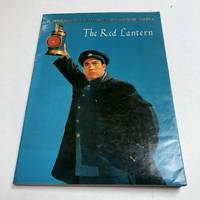
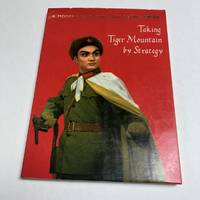
1971Best.-Nr. AG-10059Beijing: Published by Foreign Language Press 1971 FIRST EDITION. The July 1970 Script Revised by "The Taking Tiger Mountain by Strategy" Group of Peking Opera Troupe of Shanghai. Large 8vo. XXX 113 6 pp. colophon with 3 pages Quotations from Chairman Mao. Printed pictorial wrappers minor tear to the foot edge of the front cover minor curled at the head edge of the front cover else very good condition. 北京:外文出版社出版,1971年第一版,由ä¸å›½äº¬å‰§å›¢æ ¹æ®1970年剧本è”åˆæ”¹ç¼–。å‰é¡µå¸¦æœ‰æ¯›ä¸»å¸è¯å½•ã€‚å°çš®é¡¶éƒ¨ç¨æœ‰ç£¨æŸï¼Œå…¶ä»–部分å“相éžå¸¸å¥½ã€‚ In China revolutionary operas or model operas Chinese: yangban xi æ ·æ¿æˆ were a series of shows planned and engineered during the Cultural Revolution 1966–1976 by Jiang Qing the wife of Chairman Mao Zedong.1 They were considered revolutionary and modern in terms of thematic and musical features when compared with traditional Chinese operas. Many of them were adapted to film. Originally eight revolutionary operas Chinese: Ba Ge Yangban Xi å…«ä¸ªæ ·æ¿æˆ were produced eighteen by the end of the period. Instead of the "emperors kings generals chancellors maidens and beauties" of the traditional Peking opera which was banned as "feudalistic and bourgeois" they told stories from China's recent revolutionary struggles against foreign and class enemies. They glorified the People's Liberation Army and the bravery of the common people and showed Mao Zedong and his thought as playing the central role in the victory of socialism in China. Although they originated as operas they soon appeared on LPs in comic books lianhuanhua on posters postcards and stamps; on plates teapots wash basins cigarette packages vases and calendars. They were performed or played from loudspeakers in schools factories and fields by special performing troupes. The Eight Model Operas dominated the stage in all parts of the country during these years leading to the joke "Eight hundred million people watched eight shows." 本组剧本属于文é©æ—¶æœŸçš„å…«å¤§æ ·æ¿æˆï¼Œç”±æ¯›ä¸»å¸å¤«äººæ±Ÿé’负责制作和演出。很多被æ‹æˆäº†ç”µå½±ã€‚ 最åˆæœ‰å…«ä¸ªæ ·æ¿æˆï¼ŒåŽæ¥åœ¨æ–‡é©æ—¶æœŸçš„åŽæœŸå‘展到了18个。ä¸åƒå› å°å»ºå’Œèµ„产阶级的被ç¦äº†çš„ä¼ ç»Ÿäº¬å‰§ï¼Œé‡Œé¢å‡ºçŽ°çš„ä¸çš„国王大臣少女和美人,é©å‘½çŽ°ä»£äº¬å‰§ä¸»è¦è®²è¿°ä¸å›½è¿‘å¹´æ¥çš„抗战故事,宣扬人民解放军的光辉è£è€€å’Œæ¯›ä¸»å¸çš„英勇。虽然是京剧,很快就å˜æˆäº†å„ç§å½¢å¼å‡ºçŽ°åœ¨è¿žçŽ¯ç”»ã€æµ·æŠ¥ã€æ˜Žä¿¡ç‰‡ã€é‚®ç¥¨ã€é¦™çƒŸã€èŠ±ç“¶ã€æ—¥åŽ†ç‰å„ç§åœ°æ–¹ï¼Œç”¨æ‰©éŸ³å–‡å在å¦æ ¡ã€å·¥åŽ‚ç‰åœ°æ–¹ï¼Œç”±æ¼”出团进行表演。8ä¸ªæ ·æ¿æˆä¸»å¯¼äº†å…¨å›½æ‰€æœ‰çš„舞å°ï¼Œå› æ¤æœ‰äº†8亿人看8个剧的笑è¯ã€‚ Foreign Language Press paperback books
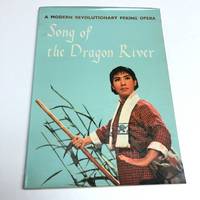
1972Best.-Nr. AG-10060Beijing: Published by Foreign Language Press 1972 FIRST EDITION the January 1972 Script Revised by the Song of the Dragon River Group of Shanghai. Started with Quotation from Chairman Mao on the first page large 8vo xii 44 pp. 12 colophon fine condition fine condition 北京:外语出版社出版,1972年第一版,由上海《龙江颂》改编,开头带有毛主席语录。本册共44页12页彩色舞å°ç…§ç‰‡ï¼Œå“相éžå¸¸å¥½ã€‚ In China revolutionary operas or model operas Chinese: yangban xi æ ·æ¿æˆ were a series of shows planned and engineered during the Cultural Revolution 1966–1976 by Jiang Qing the wife of Chairman Mao Zedong.1 They were considered revolutionary and modern in terms of thematic and musical features when compared with traditional Chinese operas. Many of them were adapted to film. Originally eight revolutionary operas Chinese: Ba Ge Yangban Xi å…«ä¸ªæ ·æ¿æˆ were produced eighteen by the end of the period. Instead of the "emperors kings generals chancellors maidens and beauties" of the traditional Peking opera which was banned as "feudalistic and bourgeois" they told stories from China's recent revolutionary struggles against foreign and class enemies. They glorified the People's Liberation Army and the bravery of the common people and showed Mao Zedong and his thought as playing the central role in the victory of socialism in China. Although they originated as operas they soon appeared on LPs in comic books lianhuanhua on posters postcards and stamps; on plates teapots wash basins cigarette packages vases and calendars. They were performed or played from loudspeakers in schools factories and fields by special performing troupes. The Eight Model Operas dominated the stage in all parts of the country during these years leading to the joke "Eight hundred million people watched eight shows." 本剧本属于文é©æ—¶æœŸçš„å…«å¤§æ ·æ¿æˆï¼Œç”±æ¯›ä¸»å¸å¤«äººæ±Ÿé’负责制作和演出。很多被æ‹æˆäº†ç”µå½±ã€‚ 最åˆæœ‰å…«ä¸ªæ ·æ¿æˆï¼ŒåŽæ¥åœ¨æ–‡é©æ—¶æœŸçš„åŽæœŸå‘展到了18个。ä¸åƒå› å°å»ºå’Œèµ„产阶级的被ç¦äº†çš„ä¼ ç»Ÿäº¬å‰§ï¼Œé‡Œé¢å‡ºçŽ°çš„ä¸çš„国王大臣少女和美人,é©å‘½çŽ°ä»£äº¬å‰§ä¸»è¦è®²è¿°ä¸å›½è¿‘å¹´æ¥çš„抗战故事,宣扬人民解放军的光辉è£è€€å’Œæ¯›ä¸»å¸çš„英勇。虽然是京剧,很快就å˜æˆäº†å„ç§å½¢å¼å‡ºçŽ°åœ¨è¿žçŽ¯ç”»ã€æµ·æŠ¥ã€æ˜Žä¿¡ç‰‡ã€é‚®ç¥¨ã€é¦™çƒŸã€èŠ±ç“¶ã€æ—¥åŽ†ç‰å„ç§åœ°æ–¹ï¼Œç”¨æ‰©éŸ³å–‡å在å¦æ ¡ã€å·¥åŽ‚ç‰åœ°æ–¹ï¼Œç”±æ¼”出团进行表演。8ä¸ªæ ·æ¿æˆä¸»å¯¼äº†å…¨å›½æ‰€æœ‰çš„舞å°ï¼Œå› æ¤æœ‰äº†8亿人看8个剧的笑è¯ã€‚ Foreign Language Press books
1972Best.-Nr. AG-10058Beijing: Published by Foreign Language Press 1972 FIRST EDITION. The May 1970 Script Revised Collectively by China Peking Opera Troupe. Started with Quotation from Chairman Mao on the first page. Large 8vo. vii 98 1 pp. colophon printed pictorial wrappers very good condition. 北京:外文出版社出版,1972年第一版,由ä¸å›½äº¬å‰§å›¢æ ¹æ®1970年剧本è”åˆæ”¹ç¼–。å‰é¡µå¸¦æœ‰æ¯›ä¸»å¸è¯å½•ã€‚å“相éžå¸¸å¥½ã€‚ In China revolutionary operas or model operas Chinese: yangban xi æ ·æ¿æˆ were a series of shows planned and engineered during the Cultural Revolution 1966–1976 by Jiang Qing the wife of Chairman Mao Zedong.1 They were considered revolutionary and modern in terms of thematic and musical features when compared with traditional Chinese operas. Many of them were adapted to film. Originally eight revolutionary operas Chinese: Ba Ge Yangban Xi å…«ä¸ªæ ·æ¿æˆ were produced eighteen by the end of the period. Instead of the "emperors kings generals chancellors maidens and beauties" of the traditional Peking opera which was banned as "feudalistic and bourgeois" they told stories from China's recent revolutionary struggles against foreign and class enemies. They glorified the People's Liberation Army and the bravery of the common people and showed Mao Zedong and his thought as playing the central role in the victory of socialism in China. Although they originated as operas they soon appeared on LPs in comic books lianhuanhua on posters postcards and stamps; on plates teapots wash basins cigarette packages vases and calendars. They were performed or played from loudspeakers in schools factories and fields by special performing troupes. The Eight Model Operas dominated the stage in all parts of the country during these years leading to the joke "Eight hundred million people watched eight shows." 本剧本属于文é©æ—¶æœŸçš„å…«å¤§æ ·æ¿æˆï¼Œç”±æ¯›ä¸»å¸å¤«äººæ±Ÿé’负责制作和演出。很多被æ‹æˆäº†ç”µå½±ã€‚ 最åˆæœ‰å…«ä¸ªæ ·æ¿æˆï¼ŒåŽæ¥åœ¨æ–‡é©æ—¶æœŸçš„åŽæœŸå‘展到了18个。ä¸åƒå› å°å»ºå’Œèµ„产阶级的被ç¦äº†çš„ä¼ ç»Ÿäº¬å‰§ï¼Œé‡Œé¢å‡ºçŽ°çš„ä¸çš„国王大臣少女和美人,é©å‘½çŽ°ä»£äº¬å‰§ä¸»è¦è®²è¿°ä¸å›½è¿‘å¹´æ¥çš„抗战故事,宣扬人民解放军的光辉è£è€€å’Œæ¯›ä¸»å¸çš„英勇。虽然是京剧,很快就å˜æˆäº†å„ç§å½¢å¼å‡ºçŽ°åœ¨è¿žçŽ¯ç”»ã€æµ·æŠ¥ã€æ˜Žä¿¡ç‰‡ã€é‚®ç¥¨ã€é¦™çƒŸã€èŠ±ç“¶ã€æ—¥åŽ†ç‰å„ç§åœ°æ–¹ï¼Œç”¨æ‰©éŸ³å–‡å在å¦æ ¡ã€å·¥åŽ‚ç‰åœ°æ–¹ï¼Œç”±æ¼”出团进行表演。8ä¸ªæ ·æ¿æˆä¸»å¯¼äº†å…¨å›½æ‰€æœ‰çš„舞å°ï¼Œå› æ¤æœ‰äº†8亿人看8个剧的笑è¯ã€‚ Foreign Language Press paperback books
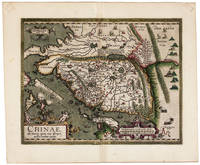
1606Best.-Nr. 602014 3/8 x 18 3/8 inches. Fine original hand color; slight split at centerfold fine condition. A brilliant example in rich original hand color of the rare and only English language edition of the earliest printed folio-size western map specifically of China and "the first to show the Great Wall"Nebenzahl. "This map remained the standard type for the interior of China for over sixty years" Tooley. Although 2 pocket-sized English language editions of an abbreviated version of Ortelius' Theatrum entitled Epitome were published previously in 1601 and 1603 with brief texts in English the English text in the present edition runs to 2 large folio pages printed on the back of the map giving an extensive description of China drawn from recent publications of observations by European travelers to the area particularly Jesuits. With its three lushly designed cartouches and many illustrations of indigenous shelters modes of transportation i.e. the famous wind wagons and animals this is one of Ortelius's richest engravings and among his rarest. Nebenzahl Mapping the Silk Road and Beyond 4.6; van der Krogt 8410:31:051; Tooley Maps and Mapmakers p. 106 pl. 78 p. 108; Walter Japan: A Cartographic Vision 11F p. 186. books
2016Best.-Nr. 31663London: Picador. 2016. First Edition; First Printing. Hardcover. Fine in fine dust jacket signed by the author. ; 8vo 8" - 9" tall; 139 pp . Picador hardcover books
2016Best.-Nr. 31913London: Picador. 2016. First Edition; First Printing. Hardcover. Fine in fine dust jacket and signed by the author.; 8vo 8" - 9" tall; 139 pp . Picador hardcover books
Best.-Nr. B18960-6New York 1969. 48pp. 66 illus. 4to. Wraps. New York, 1969. paperback books
Best.-Nr. B18960-8New York 1969. 48pp. 66 illus. 4to. Wraps. New York, 1969. paperback books
Best.-Nr. B18957-6New York 1967. 39 1pp. 61 illus. 4to. Wraps. New York, 1967. paperback books
Best.-Nr. B18957-8New York 1967. 39 1pp. 61 illus. 4to. Wraps. New York, 1967. paperback books
Best.-Nr. B18960-7New York 1969. 48pp. 66 illus. 4to. Wraps. New York, 1969. paperback books
Best.-Nr. B18957-7New York 1967. 39 1pp. 61 illus. 4to. Wraps. New York, 1967. paperback books
Best.-Nr. B18957-3New York 1967. 39 1pp. 61 illus. 4to. Wraps. New York, 1967. paperback books
Best.-Nr. B18957-5New York 1967. 39 1pp. 61 illus. 4to. Wraps. New York, 1967. paperback books
Best.-Nr. B18957-4New York 1967. 39 1pp. 61 illus. 4to. Wraps. New York, 1967. paperback books
Best.-Nr. B139209-3Beijing 2007. 351 1pp. Prof. illus. numerous color. Lrg. 4to. Cloth. D.j. Beijing, 2007. hardcover books
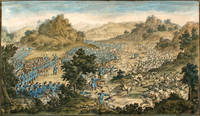
1775Best.-Nr. 1691811775. QIANLONG EMPEROR OF CHINA 1736-1796. Suite of four engravings depicting the conquests of the Qianlong Emperor. From the suite of sixteen engraved plates. Printed in Paris under the direction of Charles-Nicholas Cochin. Broadsheets image size: 515 x 890 mm. Preserved in the contemporary French green paper mounts with black ink outline borders. Professionally framed. With the original French printed labels describing the individual engravings affixed to back of frames. Paris 1769-1774. These four contemporary hand-coloured engravings represent individual scenes from the exceedingly rare series of sixteen engravings commissioned by the Qianlong Emperor to commemorate the victory of his 1755-1760 military campaigns against the Western Mongols. The four plates are: I. "General Fou Te Accepts the Surrender of the Ili" showing the triumphal march of the Emperor and his general to Beijing. Drawn by Sichelbart and engraved by B.L. Prévost in 1769 Pirazzoli-t'Serstevens 1; II. "The victory of Khorgos." in the Spring of 1758 against the forces of Amoursana. Drawn by J. D Attiret cut by C. N. Cochin and engraved by J. Ph. Le Bas in 1774. Pirazzoli-t'Serstevens 4; III. "The great victory of the Qurman." on February 3 1759 when the Chinese general Fou-te with only 600 soldiers defeated an army of 5000 Muslims. Drawn by Damasceno and engraved by A. de St. Aubin in 1770. Pirazzoli-t'Serstevens 8. IV. "The Emperor Gives a Victory Banquet to the Officers and Soldiers who have distinguished themselves in battle" at Tseu-kuang-ko the Imperial Palace Gardens Beijing on July 5 1754. Drawn by Castiglione and engraved by J. Ph. le Bas 1770 Pirazzoli-t'Serstevens 16. These large Chinese-French prints are among the most impressive works ever produced by the method of copper engraving. This is the first series of engraved plates to document the conquests of the Qianlong Emperor. They represented an amalgam of Chinese imagery Italian interpretation and Parisian copperplate engraving at its apogee. The drawings were supplied by Jesuit artists attached to the Emperor's court in Beijing. Upon completion they were shipped to France for engraving as the craft was unknown in China. After the Emperor was shown battle prints by the Augsburg artist Georg Philipp Rugendas 1666-1743 he wished to see his military conquests recorded in intaglio prints as well. He therefore ordered his Jesuit court painters Giuseppe Castiglione 1688-1766 called "Lang Shining" Jean Denis Attiret 1702-1768 "Wang Zhicheng" Ignaz Sichelbart 1708-1780 "Ai Qimeng" and Giovanni Damasceno Sallusti i.e. Joannes Damascenus a SS. Concepcione d. 1781 later bishop of Beijing called "An Deyi" to prepare sketches for the prints which they did in 1764 and 1765. Four of the drawings had been completed by the time of Castiglione's death when the decision was made to send the work to France via the ships of the Compagnie des Indes. According to the Emperor's decree no expense was to be spared. The first four drawings reached Paris in the autumn of 1766 and the remaining twelve in July 1767. The Marquis de Marigny director of the Academie Royale de Peinture et Sculpture decreed that the work should be carried out under the supervision of Charles-Nicholas Cochin 'fils' 1715-1790. As the French paper manufacturers did not have paper of the desired proportions the paper-merchant Prudhomme was ordered to make it to custom; the new size was called Grand Louvois. The copperplates were imported from England. Cochin chose Beauvais for the actual printing of the sheets on the grounds that he was "the only one who can be completely trusted both regarding his talents as well as his honesty which is well-known." The work proceeded slowly; standards of the highest quality were called for and some of the pictures especially the one by Sallusti needed careful editing. The original order was for 100 copies of each print but by 1768 this figure was increased to 200 copies so that at least 100 would survive the journey back to China ! -- however several authorities claim that many copies were lost at sea. In any event the final delivery was not shipped until 1775 occasioned in part by the difficulty the printers had producing a uniform series of prints from drawings by different artists. Three of the initial drawings were made by Attiret six by Damasceno one by Sichelbart and at least two by Castiglione; the remaining are unsigned but have been attributed to Castiglione by C. & M. Beurdeley and others. The engravers were L.J. Masquelier 1 J. Aliamet 2 J. Ph. Le Bas 5 A. St.-Aubin 2 F.D. Née 1 B.L. Prevost 2 P.P. Choffard 2 and N. de Launay 1. The Emperor's instructions stated that all the impressions were to be sent to him along with the original copper plates. However there is plentiful evidence that prints were pulled for the King of France and influential persons in Paris as well. Most of the surviving sets and individual prints appear to belong to this surreptitious group. The above series is not only a landmark in the history of Chinese and European art but also testifies to the direct artistic cooperation between China and Europe in the eighteenth century. It has been a common misconception that China was only interested in itself and detested the foreigners -- here the Emperor himself proved the contrary. VERY RARE IMPRESSIONS WITH CONTEMPORARY FRENCH HAND-COLOURING. The complete set of sixteen black and white engravings or a few individual prints from this set have come onto the market for sale only rarely. We can locate no other examples of any of the prints with contemporary colouring having been for sale or in public or private collections. PROVENANCE: Robert Barnwell Roosevelt 1829-1906 the uncle of Theodore Roosevelt and great-uncle of Eleanor Roosevelt. He was an early conservationist and worked for the protection of waterways. Roosevelt served in Congress and was later appointed to a diplomatic post in the Netherlands. He is credited with influencing his nephew Theodore Roosevelt to become a conservationist. With the ownership label "R.B. Roosevelt/ 26 East 20th Street/ New York" attached to the verso on one print. Cohen-De Ricci 1012-1013. Cordier Bibliotheca Sinica 641-642. Fünf Jahrhunderte Buchillustration 141. Brunet V 1178. P. Pelliot "Les conquêtes de l'empereur de la Chine" T'oung Pao ed. H. Cordier & P. Pelliot vol 20 1921 pp. 183-274. Michèle Pirazzoli t'Serstevens Gravures de conquêtes de l'Empereur de la Chine Kien-Long au Musée Guimet 1969. Hartmut Walravens "The Introduction of Copper-Engraving into China" 62nd IFLA General Conference August 25-31 1996. unknown books
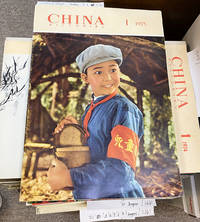
1959Best.-Nr. 1007China Pictorial 219 issues Beijing: China Pictorial distributed by Guozi Shudian; printed in the People's Republic of China comprising 219 issues covering the years 1959–1984 each measuring approx. 10-3/16 x 14-1/2 inches 26 × 37 cm overall condition is very good plus to near-fine. Because of the weight shipping will be by FedEx Ground China Pictorial is a monthly magazine bi-weekly thru 1960 illustrated with photographs and essays about current events highlighting the development and progress in modern PRC the People's Republic of China. It doubled as a propaganda tool of the Chinese government and was issued in 19 languages including Korean Russian German French Spanish and Italian. Several issues include various supplements calendars and flyers laid inside. Except for the one duplicate issue covering the funeral of Chairman Mao 1976.11 which is in Chinese all remaining 218 issues are the English-Language version. Quite rare thus. 1959: No. 2-22; 1960: No. 2-14 16-24; 1961: No. 1-12; 1962: No. 1 3 4 5 6 7 8 10 11; 1963: No. 1-12; 1964 No. 1-5 7-12; 1965: No. 1-4; 1966: No. 1-10; 1968: No. 1-9 11-12; 1969: No. 1-8 10-12; 1971: No. 1-9 11-12 1972: No. 1-12; 1973: No. 1-12; 1974: No. 1-6 8-11; 1975: No. 1-6 8 10; 1976: No. 1-9 11; 1978: No. 1 7; 1979: No. 1-9 12 1980: No.1 3 4 5 7 11 12; 1981: No.1 3 4 7 8 9 10; 1982: No. 2 4 9 11; 1983: No. 12; 1984: No. 12; Important events detailed: Modern woodcuts in China; Hard-Stone Carving-A Special Craft of Peking; Stamp collection; the Propaganda Poster—A Fighting Art; Works of Art by PLA Men; Peking Peasants Hold Sports Meeting; Wrought Iron Pictures; The Museum of the Chinese Revolution; In Commemoration of the 50th Anniversary of the 1911 Revolution; Tea Drink in China; Mei Lan-fang and His School of Art; The people of Tibet for the first time in history in the midst of electing their local representatives; A Great People's Fighter—Lei Feng & Lei Feng's Dairy; The First GANEFO; Guo Lan-ying A Well-Known Singer; Box-Wood Carving; Painting Illustrating Chairman Mao's Poem; New Stamps;China Successfully Explodes Her First Atom Bomb; A Splendid Revolutionary Oil Painting "Chairman Mao Goes To Anyuan"; Piano Music "The Red Lantern" with Peking Opera Singing; Ping Pang Ball Spreads Friendship: Chuang Tse-tung of China with Glenn Cowan of the US.; Ancient Chinese Silk and the Silk Road; President Nixon Visits China: Chairman Mao Meets President Nixon in Peking; Photographs Taken by Edgar Snow in China in 1936; Choukoutien-Home of Peking Ape-Man; Peking Duck; Jade in China; Yellow River Valley-Cradle of Ancient Chinese Civilization; Evergreen Friendship Between the Chinese and Japanese People; Criticize the Fallacies of Lin Piao and Confucius in Peiking and Tsinghua University; A Madman's Diary by Lu Hsun; Chin Shih Huang's Progressive Role in History; the Shang Yang Reform; Lu Shun a Pictorial Series in Gouache; the Chen Sheng-Wu Kuang Uprising; More Ancient Treasures Excavated at Mawangtui: Books Copied on Silk; Wang Chung Against Confucius; Tsao Tsao; Vice Premier Deng Visits The United States; The Silk Road; Painting of Wu Guanzhong; The Chinese Muslim; How an Ancient Chinese Painting Was Reproduced; Fan Zeng's Figure Painting; The Museum of Qin Dynasty Terracotta Warriors and Horses; The Ma Haide I Know; Colored Paintings on Ancient Architecture; Lu Xun: His Life and Works; Confucius Temple; Traditional Chinese Painting Watercolor; Oil Painting—Li Huaji Style; Wushu; Modern PorcelainSpecial Issue About Cultural Revolution: Decision of the Central Committee of The Chinese Communist Party Concerning the Great Proletarian Cultural Revolution; Revolutionary Ballet: White-Haired Girl; Chairman Mao Joins a Million People in Celebrating the Great Cultural Revolution; Comrade Lin Piao and Chou En-lai's Speech; Supplement: In Memory of Lu Hsun—Comments from Chairman Mao; Comrade Chu Teh's Life Was One of Fighting for Cause of Communism; Bamboo Slips from the Chin Dynasty Unearthed; Chairman Mao Meets Former U.S. President Nixon in February; People Throughout China March to Against Teng Hsiao-ping's Crimes of Reverting Capitalism; Children's Paintings; Death of Comrade Chou En-lai; Chairman Mao's Funeral: Eternal Glory to the Great Leader and Great Teacher Chairman Mao Tsetung; Message to the Whole Party the Whole Army and the People of All Nationalities Throughout the Country; Memorial Speech by Comrade Hua Kuo-feng with original photo of Hua Kuo-feng's delivering memorial speech &c. 《人民画报》æ‚志,本组涵盖1959年到1984年(具体期刊è§åˆ—表),ä¸åŽäººæ°‘共和国出版,国å书店å‘行。本组包括219期,å“相éžå¸¸å¥½ã€‚ 《人民画报》是月刊,通过照片ã€æ–‡å—ç‰æ–¹å¼æ¥å±•ç¤ºä¸å›½çš„å‘展和进æ¥ï¼Œå®ƒåŒæ—¶è¿˜å‘行了包括韩è¯ï¼Œä¿„è¯ï¼Œå¾·è¯ï¼Œæ³•è¯ï¼Œè¥¿ç牙è¯ï¼Œæ„大利è¯ç‰å¤šç§è¯è¨€æ¥ä½œä¸ºä¸å›½æ”¿åºœå‘ä¸–ç•Œå®£ä¼ ä¸å›½çš„é‡è¦å·¥å…·ã€‚内部还包括多个增刊ã€æ—¥åŽ†å’Œå®£ä¼ å•ã€‚ 出版社:外国语言出版社 中国·北京 distributed by Guozi Shudian; printed in the People's Republic of China, paperback books
Best.-Nr. B04795-1Peking Foreign Language Press 1972. 54pp. Prof. illus. partly in color. Sm. 8vo. Wraps. Peking (Foreign Language Press), 1972. paperback books
Best.-Nr. B04796-1Peking Foreign Language Press 1974. 72pp. 25 color plates. 8vo. Wraps. Peking (Foreign Language Press), 1974. paperback books
1879Best.-Nr. VBF09CHINA PANORAMA OF PEKING during the Celebrations of the Sixtieth Anniversary of the Emperor Kang-He's birthday. Shanghai: Tien-Shin-Chai 1879. Profusely illustrated throughout with 292 pages lithographed with images mostly captioned below in English script and on the side Small 8vo measures: 6 1/8 x 3 3/4 inches 155 x 96 mm original gilt pictorial purple silk wrappers front cover dulled. First edition thus. With 6 page Introduction in English explaining that the festivities being described date back to the western calendar year 1721. Six pages of text as introduction in English at the front and in Chinese at the back. Tien-Shin-Chai, paperback books
1932Best.-Nr. AG20008THE AGE OF CONFLICT 现代之纷争 Shanghai: Published by The Signs of the Times Publishing House April 1932 this book illustrates the past wars the present situation of the world and expressed willingness of peace for the world with text and many pictures agreements signed between countries for peace many different military data of some countries also included. 12mo 103 pp. Guizhou University library stamp and label printed pictorial wrappers minor crease and loss to the cover light browning repair and small text loss to the colophon page else good condition. 上海:1932年4月时兆出版社出版。本书æ写了世界过去的战争,作者表述了对世界和平的期待。书ä¸ä»‹ç»äº†å„个国家的军事力é‡ã€ä¸€äº›æ¡çº¦ç‰æƒ…况。13×28cm, å°çš®ç¨æœ‰ç ´æŸå’ŒæŠ˜ç—•ï¼Œä¹¦ç‰ˆæƒé¡µä¿®è¡¥ï¼Œä½†æœ‰å°éƒ¨åˆ†æ–‡å—缺失,其他完好。 The Signs of the Times Publishing House paperback books
1934Best.-Nr. AG20010SUPPRESSING COMMUNIST-BANDITRY IN CHINA 中国共产党的镇压-汤良礼 Shanghai: Published by China United Press June 1934 this book belongs to China To-Day series Volume 1 introduced the Communist movement in China and the effect to the Republic government during the past years illustrated with text and photos large 8vo x110pp. printed cloth covers missing front free endpaper light foxing to the bottom edge of some pages else fine condition. 上海è”åˆå‡ºç‰ˆç¤¾1934年出版,本书为今日ä¸å›½ç³»åˆ—丛书的第一部,用文å—和照片的形å¼ä»‹ç»äº†å…±äº§å…šåœ¨è¿‡åŽ»ä¸€äº›æ—¶é—´çš„活动以åŠå¯¹æ°‘国政府产生的一些影å“。18×25cm,110页,精装帆布硬质å°çš®ï¼Œå†…页下边缘少许磨æŸï¼Œå…¶ä»–å“相æžå¥½ã€‚ China United Press hardcover books
1949Best.-Nr. AG20030MAGAZINE: Knowledge-Special Issue for 3 Years Anniversary æ‚å¿—ã€ŠçŸ¥è¯†ã€‹çºªå¿µåˆ›åˆŠä¸‰å‘¨å¹´çºªå¿µå· Shenyang: Published by Northeast Bookstore May 1 1949 special issue for the 3-year anniversary of Knowledge magazine. Volume 11 Issue 2. 8vo 37pp. Printed pictorial wrappers Spine stapled with 4 restapling holes on right minor tears and stained to cover shelf worn overall good condition. Shenyang Northeast Bookstore is the press was led by China Communist Party Propaganda Department. Chairman Mao wrote an inscription of quotation from Confucius "To learn something and timely practice it" for the magazine on the title page. The cover has a picture: Move Forward Under Chairman Mao's Flag depicting a portrait of Mao and the Red Army with army's flag as background troops are moving forward below handwriting on the bottom: Present to Members of All-China Youth Federation music for 'Protect Peace of the World' on the back cover. 1949年5月1日,知识æ‚志社·东北书店å‘行,作为创刊三周年纪念å·ã€‚第å一å·ç¬¬äºŒæœŸï¼Œå…±37页。å°çš®æœ‰è½»å¾®æ’•è£‚和污æ¸ï¼Œå°ºå¯¸8vo,å“相较好。 沈阳东北书店出版社是ä¸å…±ä¸å¤®ä¸œåŒ—å±€å®£ä¼ éƒ¨é¢†å¯¼çš„å‘行机构,毛主å¸å¼•ç”¨äº†å”å的论è¯ä¸çš„"学而时习之"为本书题è¯ã€‚æ‚å¿—å°é¢ä¸ºå›¾ç‰‡"在毛泽东的旗帜下å‰è¿›",下é¢æœ‰æ‰‹å†™å—ä½“ï¼šèµ å…¨å›½é’代大会代表。 Northeast Bookstore paperback books
1933Best.-Nr. AG20055YOUNG CHINA Magazine年轻的中国 Toronto: the monthly magazine of the comradeship for China the young People's Department of the China inland mission. 1933-1934 volume vii and viii together 24 issues. Articles about the Chinese people written by journalists in China with photos illustrated for the rest of the world Index of 2 volumes including titles of paper making in china Burmese girls at play disbelieving does not change the truth large 8vo 143pp. 16 leaves index bound in hard titled boards near fine condition. $850 《年轻的中国》1933-1934年出版于多伦多,1-12å†Œï¼Œæ–‡ç« ä¸ºåœ¨ä¸å›½çš„记者写的关于ä¸å›½çš„故事,é…有照片和图片。18×25cm,硬皮包装为官方åˆè®¢ï¼Œå…±143页,åŽé¢æœ‰32页文章目录。 Toronto hardcover books