WESTERN TOURISM IN CHINABiblio.com

26.154 risultati
1913rif. 178292London: Thos. Cook & Son 1913. Second edition revised and updated from the first edition following the 1911 revolution. "It is seldom such momentous changes take place in a country within three years as have shaken the political industrial and civil life of China since this book was first compiled" introduction. The construction of railway lines from the late 19th century onwards afforded new opportunities for Westerners to travel in Asia. Thomas Cook established its first China office in 1911 in Shanghai to capitalize on this. Its guides were well known for their itineraries maps and ease of use. Octavo. Folding frontispiece map of railway and steam connections across East Asia folding plan of Beijing and Seoul maps and illustrations in text. Original yellow cloth covers lettered in black within black frame yellow advertising endpapers. Recent bookseller's ticket on rear free endpaper verso; ownership signatures and stamps of one Gerald A. Gill on endpapers and title page as well as his marginalia on table of contents. Cloth bright light marking and bumping maps and endpapers browned as usual: a very good copy. hardcover
1923rif. 168267Shanghai: Commercial Press Limited 1923. The city of poets the city of dreams First edition first printing of this large and rare map identifying major landmarks and features in both Chinese and English. The picturesque city is most closely associated with the poet Su Shi whose careful stewardship of Hangzhou restored the West Lake to its former glory and preserved its beauty for generations to come. We have traced a single institutional copy only University of Manchester. The scenery and calm of Hangzhou has inspired numerous poets and artists from the Tang dynasty down to the present day including the Tang master Bai Juyi and the Yuan dynasty's Zhao Mengfu. An inset map shows the Gushan region of outstanding natural beauty. Colour lithographed map 1090 x 780 mm folding away to 275 x 200 mm as issued housed in original printed paper sleeve. Light toning couple of splits along folds; sleeve with losses at edge as expected: a very good copy. unknown
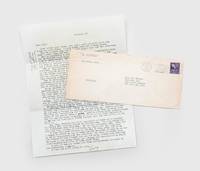
1948rif. 178144Higganum Connecticut: 30 November 1948. I hope you won't reply to this" - a sinological circle rent asunder A window onto the collapse of the marriage of Edgar and Helen Snow the 20th century's most important bridges between China and the Western world. As shown in this terse exchange between two of their friends the split sowed distrust and trapped some of the leading lights of American sinology in a quagmire of pettiness. Enjoying privileged access to top Chinese political and social figures Edgar 1905-1972 and Helen Foster Snow 1907-1997 also known as Nym Wales and "Peg" shaped Western views of China and its people to an extent unmatched by any other journalist or academic. Edgar Snow's career was bookended by Red Star Over China 1927 the work that introduced Mao Zedong to the English-speaking world and the historic 1972 Nixon visit to Beijing for which he laid important groundwork in the 1960s. Helen Snow reporting and writing from China in the 1930s and 1940s opened American eyes to the country's deteriorating political and refugee situations earning two nominations for the Nobel Peace Prize. With Rewi Alley the Snows co-founded the Indusco "Gung Ho" co-operative movement to promote economic recovery and they are lionized in China today. Their 1932 marriage ended acrimoniously in the late 1940s following their permanent return to the US and divided their sinological circle. This letter written by the State Department China expert Lawrence Salisbury 1891-1976 was sent in reply to Helen Snow's close friend the medical missionary Ida Pruitt 1888-1985 at the New York headquarters of Indusco. There are no opening niceties. "Your letter just came. You and I must not talk about the Snows to each other. I have known them for fifteen years. Peg is a liar". There follows several paragraphs listing Helen Foster Snow's character faults "unreasonable" "unprincipled" and "willing to blacken people" and her attempts to take advantage of Edgar Snow. "On Ed's side I find no lies. I find that he has been hitched to a selfish self-seeking pathological woman who is set to destroy him financially and/or in reputation. When I told him that Peg was responsible for the arrival at my farm in early this month of two men to serve a writ to attach most unreasonably his car and his river property he would not at first believe me". A pencilled note in the margin states that "I can give many underlined other instances". Salisbury also accuses Helen of greed and money-grabbing and sneers at her "feminist theories" and her inability to produce commercially viable books. In the final third of the letter he flatly rejects Pruitt's suggestion that he intervene to soften Edgar Snow's mind ending with a word of advice: "I hate to see you waste your time and emotional strength in so undeserving a cause. I hope you won't reply to this." Provenance: by descent through the Pruitt family; recently in a private collection in Hong Kong. Single sheet 275 x 215 mm text one side only. With mailing envelope typed address "Miss Ida Pruitt Indusco Inc. 425 Fourth Avenue New York 16 N.Y.". Envelope split along 3 edges otherwise fine. unknown
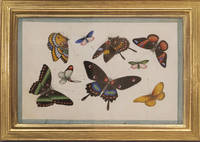
rif. 109513Canton ca. 1860. . Watercolour and gouache studies on pith paper overall dimensions 33 x 23.5cm. framed and glazed. Pith seems not to have been adopted for painting until about 1820. Some European museums claim that their paintings on pith often erroneously called "rice paper" or "mulberry pith" come from the end of the eighteenth century but there do not seem to be any dateable examples that are so early. There is a record of the Kaiser Franz of Austria buying some albums from an English Consul-General Watts in 1826. We know of an Italian Count who visited Canton in 1828 and had over 350 paintings on pith in his baggage when he died in Ambon two years later. In the British Library there is a scrap-book containing six pith paintings and a journal entry by a serving British officer who sent them home from India in 1829. These examples and contemporary accounts by visitors to Canton suggest that there was a flourishing trade in pith paintings by the early 1830s. Pith presumably came into use for painting to satisfy the increasing demand for small inexpensive and easily transported souvenirs following the massive growth in the China Trade in the first quarter of the nineteenth century. Paintings in oils on board and canvas were costly and difficult to carry home. Earlier and more prestigious export water-colours had often been on a larger scale and painted on fine Chinese paper or on paper imported from Europe. The albums of pith paintings and later the little glass-fronted boxes were inexpensive light easy to pack and gave the pictures some protection on the long voyage home. Because many were sold in albums and hence protected from the light they retain their bright colours to this day. Pith comes from the central column of spongy cellular tissue in the stem of a small tree called Tetrapanax Papyrifera native to south-west China. It has had a variety of uses some going back many centuries. At the imperial court both men and women wore coloured flowers made from pith in their hair. For use in painting it is cut by hand with a knife into thin sheets from short lengths of the spongy tissue. Cutting is highly skilled and the constraints of the process mean that the finished sheets for painting seldom if ever measure more than about 30cms by 20cms. The sheets are dried trimmed and used for painting without any further processing. Because of the nature of pith and its cellular structure the gouache used by the Chinese sat on the surface and produced a bright and even sparkling effect. Very fine detail could be achieved but pith did not lend itself to the flat wash of colour favoured for European watercolours. Carl Crossman in his book The Decorative Arts of the China Trade originally published under the title The China Trade gives an excellent list of export painters with a note of those known to have painted on pith. These include Tingqua Sunqua and Youqua. From 1757 until 1842 Canton was the only Chinese port open to trade with the west and it is no surprise that of the eight studios identified by Crossman as producing works on pith six were in Canton. It seems that the 1830s and 1840s may have been the heyday of pith painting. The international trading bases the waterfront 'factories' on the 'Hongs' in Canton where they were produced were partially burnt during the First Opium War 1839-41 and totally destroyed in a fire of 1856. The foreign trading companies then moved to Honan and subsequently put up splendid new offices on reclaimed land at Shamian Island a little up river. As the result of the Treaty of Nanking in 1842 additional Chinese ports were opened up for foreign trade and Hong Kong was established as a major trading centre. By 1860 references to China in the Illustrated London News plentiful three years earlier were few and far between. That is not to say that painting on pith ceased. Nicholas the second was given paintings on pith when he visited Canton in 1891 and the last Emperor is said to have sent him a gift which included pith paintings in 1907 though these could have been examples of much earlier work. Painters on pith did not in general sign their work the sole exception is Sunqua whose name can be found on the face of three paintings on pith. There are collections of paintings on pith in the Ashmolean the British Museum the Fitzwilliam the Hermitage the Peabody/Essex Museum in Massachusetts and the Hong Kong Museum of Art. However because paintings on pith are not in general regarded as fine art they are usually to be found in ethnographic or specialised collections. Canton, ca. 1860. unknown
1930rif. 179497Shanghai: California Directory Association 1930. Today she stands supreme as the greatest city of all the Orient First edition first printing of this charming and hard-to-find travel guide. Tourists are invited to listen to the "snappy dance orchestra" at the Old Carlton on Shanghai's Ningpo Road or explore Beijing's famous Camel Bell curio shop based at the Grand Hotel. For trips that went awry readers could turn to page 49 and its advertisement for "the best equipped Funeral Establishment in the Orient". Small octavo. Folding map of Shanghai at rear; illustrations and advertisements in text. Original illustrated card wrappers wire-stitched as issued front cover lettered in white with illustration of Shanghai's Willow Pattern Tea House. Occasional pencil marking in text. Extremities lightly rubbed contents clean: near-fine. unknown
rif. 1m6180Buch- und Kunst-Verlag v. Julius Abelsdorff Bln. um 1860. Gesamtgröße 28 cm x 18 cm. Größe der Darstellung 156 cm x 101 cm etwas fleckig. - Humboldt`s Universum Nr. 5 - unknown
rif. 1i6902Verlag China im Bild Beijing 1985. Je Heft 45 bebilderte S. broschiert folio. - kompletter gut erhaltener Jahrgang / Die staatliche Propaganda-Zeitschrift ist in zahlreichen Sprachen erschienen - unknown
rif. 1i6906Verlag China im Bild Beijing 1982. Je Heft 45 bebilderte S. broschiert folio Heft 2 fehlt. - gute Exemplare / Die staatliche Propaganda-Zeitschrift ist in zahlreichen Sprachen erschienen - unknown
rif. 1i6905Verlag China im Bild Beijing 1980. Je Heft 45 bebilderte S. broschiert folio Heft 1 fehlt. - gute Exemplare / Die staatliche Propaganda-Zeitschrift ist in zahlreichen Sprachen erschienen - unknown
rif. 1i6900Verlag China im Bild Beijing 1981. Je Heft 45 bebilderte S. broschiert folio. - kompletter gut erhaltener Jahrgang / Die staatliche Propaganda-Zeitschrift ist in zahlreichen Sprachen erschienen - unknown
rif. 1i6903Verlag China im Bild Beijing 1986. Je Heft 45 bebilderte S. broschiert folio. - kompletter sehr gut erhaltener Jahrgang / Die staatliche Propaganda-Zeitschrift ist in zahlreichen Sprachen erschienen - unknown
rif. 2n152Selbstverlag Peking 1980. Je Heft ca. 50 S. mit zahlreichen Abb. folio. - gute Exemplare - unknown
rif. 761gEA. Scheitlin Stgt. 1859. 293 S. mit 35 Stahlstichen u. 1 gest. Titelbild original Ln. erste Seiten u. Titel randfl./etwas fl./alter Besitzername aus Titel geschnitten - hinterlegt. unknown
rif. 2g11184-um 1880. Motivmaße jeweils: ca. 189 x 128 cm je unten mittig betitelt im Passepartout hinter Glas im schwarzen Holzrahmen ca. 533 x 425 cm Rahmen teils gering berieben. - Enthalten: Entrée du Han Kiang - Vue Générale de Kang-Hoa. Dessin de Langlois d'après M. Zuber / Yangtze Kiang - Gorge de Mi-Tan. Dessin de Taylor d'après une photographie de M. J. Thomson / Province de Fo'Kien - Choui Koou sur le Min Supérieur. Dessin de Vuillier d'après une photographie de M. Thomson / Province de Kansou - Villages Fortifiés près de Lantcheou. Dessin de Th. Weber d'après Piasetskiy - unknown
rif. 5d2822Prestel-Verlag Frankfurt am Main 1940. 16. Faksimilewiedergaben in der Größe der Originale Blockbuch original Pappband mit aufgezogenem Deckeltitel sowie Schutzumschlag quart-quer Umschlag fleckig und mit Randeinrissen geringen Knickspuren und einem kleinem Eckausriß/Seiten vom Block gelöst. - martialisch gestaltetes Exlibris auf Vorsatz - unknown
rif. 2J11752China Record Company Peking 1978. Im illustrierten Original-Cover Cover gering randgebräunt. - Platte in sehr guter Qualität / M-2404 - unknown
rif. 6a1458um 1840. Motivmaß: ca. 143 x 92 cm unten mittig typografisch betitelt im Passepartout hinter Glas im goldfarbenen Holzrahmen ca. 28 x 235 cm mit Perlleiste Blatt gering randgebräunt/Rahmen teils gering berieben. unknown
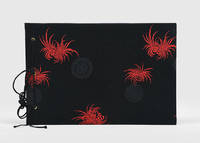
1920rif. 180565China: c. 1920s. An attractive handmade gift for the tourist market the delightful papercuts depicting rural scenes and figures. The large example on the first page incorporates the motif "double happiness" within a setting of birds flowers and foliage. Landscape octavo. With 20 handmade papercuts some embellished with colour pieces of textile on 10 leaves glassine guards. Original black brocade boards with black and red embroidered decoration tied with black cord through three holes. Binding smart small mark on read board occasional spotting internally: near-fine. hardcover
1920rif. 180564China: c. 1920s. An attractive handmade gift for the tourist market the delightful papercuts depicting rural scenes and reproducing the Chinese characters for "luck" and "joy". This example contains 18 pages for inscriptions each with a papercut in the bottom corner. Landscape octavo. With 20 handmade papercuts on 10 leaves glassine guards. Original dark blue brocade with embroidered patterns blue silk xianzhuang stitching Rear cover with couple of marks toning and offsetting internally first glassine with loss at foot: near-fine. unknown
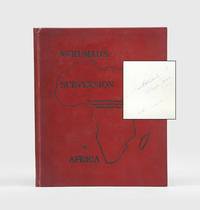
1966rif. 179873Accra: Ministry of Information 1966. First edition presentation copy inscribed by the chairman of the Ghanaian National Liberation Council on the front pastedown "Joseph Arthur Ankrah Chairman N.L.C. Ghana. With compliments." Above the inscription is the book label of Malcolm MacDonald a former British high commissioner in Ghana and Whitehall's Special Representative to East and Central Africa 1965-70. During the second half of the 1960s MacDonald worked closely with Ankrah to try and bring conflicting parties in the Nigerian Civil War to the negotiating table. He also made a favourable impression on senior leaders of communist China whose deep-rooted political and practical support for Nkrumah is documented in this accusatory publication. According to Premier Zhou Enlai MacDonald was "the only capitalist we can trust" New York Times. Quarto. Tables and illustrations in text. Original red cloth front cover blocked in black. Cloth darkened in place light rubbing to extremities offsetting on title page: very good. "Malcolm MacDonald British Envoy and Son of Ex-Prime Minister" New York Times 12 January 1981. hardcover
1948rif. 180738Nanjing: Government Information Office c. 1948. First edition of this pamphlet outlining the damage sustained by the railway network during the Second World War and the government's ambitious post-war reconstruction agenda. We have traced copies at the National Library of Australia and the Leibniz Information Centre for Economics only. Octavo pp. 20. Map in text. Original wrappers wire-stitched as issued front cover lettered in black. Light scuffing to covers contents evenly browned: very good. unknown
rif. PE54Oblong Folio album ca. 25x33 cm or 10 x 13 ¼ in. 30 card stock leaves. With ca. 330 mounted original gelatin silver photos including five large images from ca. 195x26 cm 7 ¾ x 10 in to ca. 175x24 cm 7 x 9 ½ in; the rest of the photos are from ca. 125x205 cm 4 ¾ x 8 in to ca. 45x65 cm 1 ¾ x 2 ½ in. Nine photos are captioned in negative; at least eighteen with ink manuscript captions on recto or verso. With seven mounted period newspaper clippings or ephemera. Period brown faux leather album fastened with a string; gilt-lettered title “Photographs” on the front cover. Binding rubbed with chipping and losses on extremities over a dozen photos with creases losses of corners or scratches two or three photos possibly previously removed A few photos mildly faded or with mild silvering but overall a very good album of interesting photos. Interesting extensive collection of original gelatin silver snapshot and studio photos taken and collected by an American sailor during his service on U.S.S. “Huron” and “U.S.S. “Black Hawk” in the Southwest Pacific in the 1920s. Former U.S.S. South Dakota 1908-1920 U.S.S. “Huron” served as flagship of the U.S. Asiatic Fleet in 1919-1926 “operating in Philippine waters during the winter and out of Shanghai and Yantai during the summer” Wikipedia. In 1923 the ship participated in the relief operation in Yokohama and Tokyo after the Great Kanto earthquake. U.S.S. “Black Hawk” served in the Asiatic Fleet for twenty years 1922-1942 cruising between various locations in the Philippines Manila Olongapo and China Hong Kong Shanghai Amoy/Xiamen Tsingtao/Qingdao and Chefoo/Yantai. During WW2 it served in Hawaii and Kodiak Alaska. Most images in the album show the U.S. naval ships where the compiler served and their crew members including a large group portrait of sailors wearing the U.S.S. “Huron’s” sports uniform and a large view of U.S.S. “Huron” in Hong Kong harbour. The smaller photos include numerous scenes taken on board mostly of U.S.S. “Black Hawk” with the sailors working or resting some are captioned i.e. “scrubbing gangway in Yellow Sea en Chefoo to Shanghai me with pipe in mouth B.H.” “just like convicts” “B.H. looking forward; x - is our movie screen and o - is the movie house” “main mast” &c. images of an official ceremony on board naval exercises at sea “firing a torpedo” “standing by to fire 4 inch” portraits of the crew members several identified by the compiler i.e. “… Seaner he is at the hospital in Peking now” “F.J. Tancey from Fort Wayne apt gun deck Chefoo” “Lewis R. Hand he died the night we left Chefoo from desentery sic!” “Wirth and Mardis” &c. There are also views of the interior of U.S.S. “Huron’s” launch boat the ship’s radio tower “comforts of a man-of-war” a view “taken from inside of Hawk looking thru an air port tin cans ships and the beach” a launch boat “waiting for the Captain Chefoo” &c. A series of photos show the U.S. naval ships in Chefoo Yantai: “a small part of the Asiatic Fleet anchored in Chefoo;” “x – is were the cans go for shelter when it gets bad also the subs. They might slip there sic! anchor and get washed up on the shore. O. Chinese fort Chefoo;” “tin cans coming in from fireing sic! Chefoo;” “cans and sampans taken at apt gun deck B.H. Chefoo;” “English gun boat in river” “repairing cans Chefoo B.H.” “more of the navy Chefoo” &. Several views of Chefoo show “God in Heaven temple” “Door & lions at Yu Hwan Ding Chefoo” “Chefoo Wall’ taken from above “Arch at American Mission School Temple Hill – Chefoo” “Y.M.C.A. Court Chefoo” “Row of old guns Chefoo Fort” “Chinese memorial Tablets – Chefoo” local boys swimming in the sea &c. There are also several views of Hong Kong port and wharves waterfront residences on Victoria Peak Statue Square with the monument to Queen Victoria Shanghai “entering Shanghai we are in the Yangtze river” “view from B.H. outskirts of Shanghai” a view of the General Post Office building with the Suzhou Creek Qingdao “Tsingtau” &c. Several photos portray American sailors in rickshaw carts “Jew Wirth and me Oriental Hotel Chefoo” posing with Chinese girls “Sing Tat and Job” “6 Chinaman sic! Chefoo” on board the ship &c. The large photos include two reproductions of drawings depicting the service of American sailors in China and the Philippines a map with “Distances from Guam to principal points in the Pacific. Over a dozen photos taken in the Philippines show “Hotel Abella Pagsanjan P.I.” local villages native workers dancers women boys playing a ball game and a group portrait of American sailors “in the Philippine jungles Olongpo sic! while we were in dry dock Feb. 25…” The newspaper clippings and ephemera include articles about the USS S-4 submarine disaster 1927 the appointment of U.S.S. “Pittsburg” the flagship of the Asiatic Fleet in the end of 1926 the movement of San Diego warships a receipt from “Hanson photo studio” in Tsingtau/Qingdao and a ticket to the Peak tramway in Hong Kong. Overall an interesting content-rich visual source on the history of the U.S. Asiatic Fleet and its service near the coast of China and the Philippines in the 1920s. hardcover
rif. PE29Oblong Quarto album ca. 268x364 cm. 30 card stock leaves. With ca. 215 mounted original gelatin silver photographs from ca. 87x144 cm 3 ½ x 5 ¾ in to ca. 69x67 cm 2 ¾ x 2 ½ in five real photo postcards ca. 108x139 cm 4 ¼ x 5 ½ in and six printed postcards ca. 137x87 cm 5 ½ x 3 ½ in. Most photos with period white pencil captions in French on the mounts at least seven photos including one real photo postcard with captions in negatives. Full ornamented cloth album fastened with a string. Several photos with mild silvering but otherwise a very good album with strong interesting photographs. Historically interesting album of lively vernacular photographs apparently taken by a French resident of Canada during his trans-Pacific voyage from Vancouver to the Orient in the late 1934 and early 1935. The compiler and his travel companions left Vancouver aboard the “RMS Empress of Canada” and sailed to Hong Kong with a stopover in Saigon Vietnam. From there they traveled overland to Beijing and Seoul and then continued to Japan visiting Kyoto and Nikko. On the return journey they stopped in Honolulu and New York. The album contains 215 well executed photographs from the voyage and opens with over sixty images of Saigon showing rare views of the first tea factory in the East-South Asia the Bank of Vietnam and candid street scenes of native huts boutiques and restaurants. Especially interesting is a striking image of half-naked ethnic locals sitting on the ground beside a bicycle and posing for the camera. The other photos from the region capture topographical views riverside fishing gear on the Huong River and snapshots of the compiler and his companions throughout their journey by cars in canoes along the Mekong River etc. Among twenty-five photographs of Hong Kong a standout image illustrates a bustling street scene filled with residents in traditional attire shopfronts with Chinese signs and flags of the Wang Jingwei regime flying alongside the British Union Jack. The rest of the images show the city’s port waterfront glowing night views and moments of the travel group golfing. In Beijing the focus shifts to historical landmarks documenting the Summer Palace Nine Dragon Screen Ming Tombs Temple and Altar of Heaven and the iconic Chinese guardian lions. A dozen photographs of the Great Wall offer a rare glimpse of life along its slopes with locals carrying goods in baskets and leading donkeys through the rugged terrain. The Japanese portion of the journey includes evocative views of Kyoto’s Chion-in Temple the historic Yaami Hotel and a Buddhist temple with a monk standing solemnly at the gate. The group also visited Nikko capturing sites such as the Toshogu Shrine the ornate Yomeimon Gate a stone basin and tranquil views of Lake Chuzenji. The album closes with about forty photos of Seoul Temple of Heaven Honolulu views of the waterfront photos on deck and Arizona Grand Canyon. Overall historically interesting album of lively vernacular photographs apparently taken by a French resident of Canada during his trans-Pacific voyage from Vancouver to the Orient in the late 1934 and early 1935. hardcover
1912rif. 179999London: Roberts & Leete 1912. Certificate number 11028 of this early Chinese government bond known as the "Gold Loan of 1912". These bonds were released to raise funds for the Republic of China a year just after the fall of the Qing Dynasty. The gold loan of 1912 for £10 million sterling was authorized by the Minister of Finance of the government of the Republic of China. The certificate states that "the Bearer of this Bond is entitled to receive from the Government of China the sum of Twenty pounds sterling with Interest thereon from the 30th day of September 1912 at the rate of five per cent. gold per annum". A total of 80 coupons were originally attached to the verso with 52 coupons having been used. The remaining 28 coupons attached and folded to the verso are "for ten shillings sterling being one half-year's interest." and numbered 53 to 80. Paper certificate 450 x 305 mm with 28 coupons attached on verso. Engraved with geometric and floral borders in blue yellow patterned engraved background Chinese government seals printed in red. A little creased mild spots to extremities one coupon attached by tape repair colours bright: a very good piece. unknown
2012rif. 1-1741797144Lonely Planet 2012. Paperback. New. 14 edition. 814 pages. 8.25x5.25x1.25 inches. Lonely Planet paperback