26 172 résultats
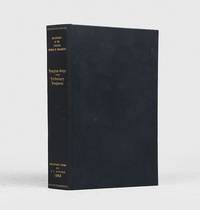
1944réf. 172481United States: Department of the Interior Bureau of Reclamation 1944. The genesis of the Three Gorges Dam Number 4 of a small number of copies of this report by the engineering mind behind the Hoover Dam on harnessing the mighty Yangtze River for hydroelectric power generation - a vision finally realized over half a century later. We have traced only four other surviving examples all found in institutions. The author John Lucian Savage 1879-1967 was an American civil engineer who became the Chief Designing Engineer at the Bureau of Reclamation in 1924. "In this capacity he designed dams canals and other irrigation-related structures throughout eleven western states the most impressive projects being Hoover - the supreme engineering feat of its day - Grand Coulee Parker and Shasta dams. Because the first three were respectively the highest widest and deepest dams in the world at the time of their construction Savage and his design team developed trial-load analysis for determining actual versus theoretical stresses in arched dams as well as models for determining concrete deterioration land subsidence and increased seismicity caused by the weight of a mammoth dam" ANB. Since the 1930s Savage had been fascinated with both the idea of damming the Yangtze and the prospect of co-operation between the Bureau of Reclamation and the Chinese government. Chiang Kai-Shek's administration was equally keen. Amidst Chinese efforts to repel a Japanese invasion in 1943 the National Resources Commission of Chiang's government invited Savage to China to devise concrete plans - an opportunity Savage described to the State Department as a "signal honor" and "an opportunity to be of service to the valiant people of China" quoted in Rowley & Gahan p. 584. Even as Chinese-Japanese armed engagements raged nearby Savage spent the period from May to November 1944 researching feasibility and necessary administrative and financial arrangements. This resulting report outlines several different plans for constructing a dam reservoir and power plant to generate up to 11 million kilowatts of power 74 million acre feet of water for irrigation and 22 million acre feet of flood storage. Savage projects a final cost of around 1 billion US dollars and annual revenues exceeding 50 million US dollars. The main 98-page technical report is accompanied by his 238-page discussion of four hydro-projects located on important tributaries discussing costings and technical details. The two reports are supported by dozens of technical maps plans and diagrams. Savage's time in China only reinforced his belief in the possibilities of a project unprecedented in its scope and ambition: "The Yangtze Gorge Project is a 'CLASSIC'. It will be of utmost importance to China. It will bring great industrial developments in Central and Western China. It will bring widespread employment. It will bring high standards of living. It will change China from a weak to a strong nation. The Yangtze Gorge Project should be constructed for the benefit of China and the World at large" p. 6. An accompanying typescript letter dated 2 April 1946 from Walker R. Young Chief Engineer in the Bureau of Reclamation confirms that as many as 50 Chinese engineers will soon be available to orchestrate the Yangtze project but also hints at the impact of the Chinese Civil War on the National Resources Commission - the war proved the ultimate undoing of efforts to act on Savage's vision. The letter states that numbered copies of the report are being distributed in preparation for a formal planning conference involving American and Chinese engineers. The number of recipients - nine western engineers - gives a good indication of the report's small circulation. Savage's copy is housed with some of his papers at the National Museum of American History. Copies are also found at the US National Archives the Colorado School of Mines and Purdue University where Savage served as a faculty member. The National Library of China has a version with a Chinese title page - the precise nature of this copy awaits further research. Folio. With 73 large folding maps plans and diagrams. Original black cloth spine lettered in gilt hinges reinforced with brown linen as issued buff endpapers text printed in photostat typescript. Cloth lightly soiled and rubbed internally clean. A fine copy. William D. Rowley & Andrew H. Gahan The Bureau of Reclamation: From Developing to Managing Water 1945-2000 2006. hardcover
réf. PD39Twelve loose gelatin silver photos all ca. 10x15 cm 4 x 5 ¾ in. Several photos with minor creases in the corners one photo with minor chipping of the image. Overall a very good collection of interesting photos. Interesting collection of early 20th-century gelatin silver photographs of China mostly Shanghai. The views of Shanghai show Longhua Temple Pagoda Huxinting or Willow Patern Tea House and Nine Curve Bridge the Bund with the original building of the Shanghai Club built in 1864 demolished in 1909 and replaced with the current building; the Bandstand in the Bund Public Garden; Bund waterfront decorated with garlands and signs the clock tower of the Custom House is seen in the far left; river view with apparently the second Garden Bridge over the Suzhou Creek; riverfront with Chinese junks and a bridge in the foreground and Bund waterfront lawn with several telegraph poles. The other photos show a Chinese peasant ploughing a rice field traditional sculptures a reproduction of a painting depicting an audience by the Chinese Emperor and a group portrait of Indian sepoys. Overall an attractive collection of early 20th-century views of Shanghai. unknown
1934réf. 176034Shanghai: Printed and Published by the North-China Daily News and Herald Ltd 1934. First edition first printing of this guide to China's 24 provinces Japanese-controlled Manchuria and the city of Shanghai including a short essay by Arthur de Carle Sowerby on "the regional distribution of China's Fauna and Flora". Information on physical geography is accompanied by summaries of communications and industrial infrastructure. The maps were first published in the North-China Daily News but extensively revised for this publication. "The far away interior northern and southern provinces which life of all beaten tracks and through which no railways have penetrated remain shrouded in mystery except where the veil has been slightly lifted by exploration expeditions" introduction. Folio. Maps and illustrations in text. Original blue cloth front cover lettered in gilt within blind panel and frames. With dust jacket. Cloth clean spine ends bumped contents lightly and evenly toned; jacket unclipped losses at foot of panels and spine a few closed splits: a near-fine copy in very good jacket. hardcover
2024réf. x-981975089XSpringer Nature 2024. Hardcover. New. 200 pages. 9.25x6.10x8.70 inches. Springer Nature hardcover
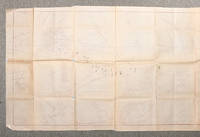
1937réf. 176095China: Hai Ho Conservancy Commission 1937. An imposing cartographic document A rare plan untraced institutionally produced on the cusp of the Japanese invasion of Tianjin showing the fruits of a multi-decade effort to turn the city into a major international port. "Connected with the sea by an artificial river Tianjin's status as a seaport was heavily dependent on the continuous conservancy efforts of the Haihe and its tributaries" "River Conservancy". Formed in 1897 the Hai Ho Conservancy Commission focused on opening the channel to shipping for example by straightening the channel and thereby cutting the route to the sea by 17 miles. This plan shows the river's winding course marked with hundreds of survey stones and the build-up of warehouses and wharves by the foreign concessions Tanggu and Xidagu. Also shown are the results of the most recent survey of the seabed at the river's mouth. Although Japan declared war on China in July 1937 it respected the integrity of Tianjin's foreign concessions and river management remained in the hands of the British French and American authorities until Pearl Harbor. At the same time Japan started development of Tanggu Xingang - the foundations of which blossomed into the present-day megaport at Tianjin. Diazoprint plan 67 x 274 cm printed in reddish brown text primarily in Chinese. Contemporary black ink and red crayon marking and annotations in Chinese and Japanese on both sides. Toned old folds a few small splits and losses neatly conserved with tissue: a very good example of a fragile document. "River conservancy and the undetermined future of the port of Tianjin" Open Rivers available online. unknown
2018réf. x-1138595829Routledge 2018. Paperback. New. 240 pages. 9.21x6.14x1.02 inches. Routledge paperback
1913réf. 168261London: War Office 1913. Modernity's steel rails The 1913 version of a map that was issued periodically throughout the 1910s. Drawn and printed at the Ordnance Survey Office in Southampton it highlights railways built in progress and proposed and two inset maps show links to Beijing and in Manchuria. A column of notes gives gauges mileages and notes on construction. The map shows that at the onset of Republican rule China had around a dozen lines in progress or planned - including a stretch linking Hankou to Canton - to complement the main lines connecting Beijing to Hankou Shanghai and Mukden. The side notes address the complexity of the railway network's governance and administration - lines were variously built managed and worked by combinations of foreign and Chinese organizations. Colour lithographed map 740 x 990 mm. Sometime folded occasional scuffing and edge toning two panels on verso browned: a very good example. unknown
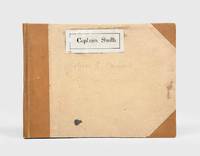
1928réf. 174745Likely Shanghai: 1928-34. Mariners are warned to exercise due caution when approaching and when in the waterways A collection of otherwise untraced notices to mariners compiled by a civilian captain who plied the lower Yangtse during the late 1920s and early 1930s. Yangtse shipping was regulated by the Maritime Customs Service which issued around 100 navigational advisories per year. During the late 1920s shipping traffic on the Yangtse rebounded after several years of decline during the Warlord Era. Low water however continued to pose problems for navigators and increased the need for effective river management. The 39 notices are technical directions concerning specific parts of the channel. They specify when vessels may and may not enter stretches of water warning of the persistent presence of Chinese craft not subject to the same notices offer guidance for navigating buoyed channels provide optimum bearings and relay a change to the position of the Bend and Gravener Island beacons due to the erosion of the channel. The majority date from 1929. The identify of the "Captain Smith" referenced on the front cover has proved elusive but he may be the individual pictured in photograph Sw13-045 G. Warren Swire collection SOAS. Landscape octavo. Contemporary brown half cloth binder with metal clasp spine lettered in gilt buff paper sides front board with manuscript label "Captain Smith" boards lined with pink paper typescript list of charts on inner front cover 39 sheets each typed one side only in black or blue most duplicate typescript a few top copy. Boards lightly soiled clasp rusted sheets generally well preserved a few creased or with holes near clasp legibility unaffected typescript list with a few losses to text: a very good example. hardcover
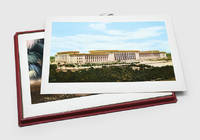
1959réf. 168629Beijing: Renmin meishu chubanshe c. 1959. Monumentality and the weight of state power First edition first printing of this grand portfolio. Occupying 170000 square metres on the western flank of Tiananmen Square the Great Hall of the People was one of ten architectural projects completed in 1959 to celebrate the tenth anniversary of the founding of the People's Republic of China. The design combines classical and neoclassical styles with Chinese aesthetics. For example the total number of columns in the main gate colonnade equals the number found inside the most important hall in the Forbidden City and these columns are spaced at receding widths away from the central point - a long-held Chinese architectural practice. The decision to build the hall was enacted by the Politburo in 1958 and a force of 30000 builders and technicians finished the project in just ten months. For the last six decades the Great Hall's main ceremonial space capable of holding 10000 people has served as the venue for Chinese Communist Party meetings and lavish state events. Its corridors and many smaller rooms have also played host to political intrigues contentious meetings and important diplomatic dialogues. In 2003 Riverdance became the first Western show to perform on the hall's main stage selling out 11 performances. Copies were also issued in a dark red vinyl box with no priority established. Landscape folio. Title leaf printed in red and black. 20 colour photographic plates c. 292 x 465 mm printed on glossy paper each tipped onto loose 372 x 525 stiff card sheet together with loose single title leaf printed both sides all housed in original red cloth box lid with calligraphic title in gilt and blind-stamped decoration. Plates bright a little soiling and foxing to card sheets; bright box lightly rubbed and soiled abrasions to base sides of tray a little tender: a fine set in well-preserved box. Parr & WassinkLundgren The Chinese Photobook: From the 1900s to the Present pp. 183-5. Chang-tai Hung Mao's New World: Political Culture in the Early People's Republic 2011. hardcover
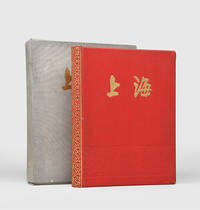
1959réf. 168621Shanghai: Shanghai renmin meishu chubanshe c. 1959. The preferred deluxe issue First edition first printing of this photobook issued by the Shanghai Municipal Government to celebrate ten years of Communist rule as well as Chinese culture history and art. Shanghai's status as the country's economic powerhouse is stressed through numerous pictures of heavy and light industries smiling workers and modern housing developments as well as of consumer goods such as fountain pens sewing machines and bicycles. Space is given to healthcare culture and the arts the historic architecture of the Bund parades and tourism. Unlike other propaganda from the period the message is uniformly forward-looking centring on developments achieved under socialism rather than recycling shop-worn condemnations of the Republican and imperial eras. Copies of this extravagant production were also issued housed in a paper box. Folio. With 21 tipped-in plates 16 colour 2 folding colour and black and white illustrations throughout. Title page printed in brown and grey. Binding designed by Ren Yi Chen Zhichu Zhang Suyu Cai Zhenhua and Qian Zhenzhi. Original red cloth spine elaborately decorated in gilt gilt calligraphic title on front cover foot of front board blocked in blind floral-patterned endpapers. Housed in publisher's folding grey cloth case title to front panel in gilt bone ties. Spine bright boards lightly soiled extremities worn spine ends and tips a little finger soiling internally else bright. A very good copy indeed in very good case with some soiling lining foxed. Parr & WassinkLundgren The Chinese Photobook: From the 1900s to the Present pp. 189-92. hardcover
2024réf. 7773Del Rey 2024. 1st Edition 1st Printing. Hardcover. New/New. New in new dust jacket. SIGNED by China Mieville on the title page signature only. 1st UK edition 1st printing complete number line. New unread copy with dust jacket in a protective mylar sleeve. "Signed Copy" sticker. Reeves is an MTV Movie Award- Saturn Award- and Inkpot Award-winning actor "My Own Private Idaho"; "The Matrix". Mieville is the Arthur C. Clarke Award- British Fantasy Award- BSFA Award- Hugo Award- Locus Award- Grand Prix de l'Imaginaire- Ignotus Award- Italia Award- Kurd Lasswitz Preis- SF Site Readers Poll- Kitschie Award- and World Fantasy Award-winning author of the Bas-Lag series and "Railsea". Rare signed. Where possible all books come with dust jacket in a clear protective plastic sleeve sealed in a ziplock bag wrapped in bubble wrap shipped in a box. Del Rey hardcover
1935réf. 170702New York: Joseph Tuck c. 1935. A scarce complete set pleasingly retaining the original box of this charming introduction to Chinese cultural values aimed at American audiences. The maxims include "institute no litigation for it never ends well" "do not employ handsome servants" and "refrain from talking too much as it may bring mishap". 60 pictorial cards each 65 x 53 mm lettered in black on verso housed in printed cardboard sleeve as issued. Cards slightly bowed otherwise fresh; sleeve skilfully repaired the majority of one side no longer present: a very good example. unknown
2000réf. 2789tChina: Great Wall Publishing House. Good. Hardcover. 2000. 204 pages. 204 pages. ex library colour plates stitching slightly loose d/j had been plastic protected heavy book extra postage required . Great Wall Publishing House hardcover
2024réf. x-9819972884Springer Nature 2024. Hardcover. New. 399 pages. 9.25x6.10x0.32 inches. Springer Nature hardcover
1938réf. 171717Wuchang: American Church Mission 1938. First and only edition first printing untraced institutionally reporting on a pivotal year for the hospital. The Japanese invasion of China the first major engagement of the Second World War created intense demand for in-patient care and statistical tables and reports by leading medical personnel chronicle the military and civilian costs of Tokyo's expansionism. Several institutions in the United States hold copies of the hospital's annual reports for other years but we have not located any copies of this pivotal instalment on WorldCat. Octavo. With 3 halftone photographic plates tables in text. Original paper wrappers front cover lettered in black. Lightly toned overall front cover sometime re-attached with adhesive wrappers chipped. A very good copy of this fragile work. unknown
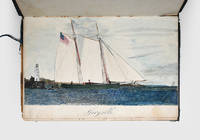
1842réf. 170558At sea & China: 1842-48. This ground is under English control though their authority is might makes right An American second mate's illustrated eyewitness account of China in the immediate aftermath of the First Opium War. Sailing east on a Jardine Matheson specie and opium runner he becomes an old China hand and a sharp observer of early colonial Hong Kong and Shanghai coastal trade and maritime life. The opening section consists of diary entries kept during the outward voyage from the United States describing a life of adventure entered almost by accident. "On the 1st of Sept. 1842 being in Boston and out of employ I shipped in the Schr Gazell" p. 1. The Gazelle - an Aberdeen-built schooner illustrated in watercolour at the front of the manuscript - sailed on 19 September 1842 with guns muskets and nine boxes of specie. Some 30 pages trace the passage with detailed daily entries including latitudes and longitudes weather hazards marine life shipboard routines and the rituals of crossing the Equator. After rounding the Cape the vessel encounters American traders off China and reaches Macao on 22 February 1843. The remainder of the manuscript comprises reflective recollections written later in the 1840s. Macao is judged healthy and pleasant but eclipsed after the war by Hong Kong now the hub of British trade. The Gazelle is reassigned to opium running along the coast bringing higher pay and extended travel. The author recalls Hong Kong in 1844: the nightly curfew gunshot the opium fleet at Whampoa and the crowded Pearl River illustrated with pencil sketches of local craft. His view of the Chinese population is unsympathetic though he offers a vivid portrait of "Boston Jack" a wealthy comprador and indispensable intermediary to American ships. Further chapters describe Canton the forts of the Bogue Amoy and its junks and Chusan praised for its industry and abundance. Shanghai emerges as a newly important centre of opium exchange its foreign settlement firmly under British control. The author sketches the harbour notes the thousands of junks and contrasts the city's "civil and obliging" inhabitants with those of Canton. The manuscript breaks off mid-sentence on page 50 leaving the writer's later life unknown but preserving a detailed first-hand record of a China on the threshold of colonial modernity. Octavo notebook 252 x 165 mm. Opening full-page watercolour 12 illustrations and plan in pencil. Original blue linen pink patterned endpapers edges sprinkled blue 49 pages neatly written in black ink 38 unused blanks. Notebook worn and shaken with sewing loose a few closed tears internally touching a few letters only. A very good example. unknown
1955réf. 172442Shanghai: Shanghai shi huaxue yuanliao gongye tongye gonghui c. 1955. An uncommon early Mao-period sampler issued by the Shanghai Chemical Materials Industrial Guild presenting the tone and chemical composition of the 19 core pigments used in industries such as publishing and printing. In 1954 as part of a programme of nationwide consolidation Beijing promulgated production guidelines for the 19 colours and placed the industry under the control of a national-level regulator. This sampler was likely distributed gratis at a trade event. Blank sections at the end provide space for the owner to list commercial contacts and write diary entries. Small octavo. With 19 plates. Text in Chinese. Original illustrated boards red cloth backstrip front cover lettered in red rounded board and page edges decorative endpapers. Binding worn contents clean plates bright. A very good copy. hardcover
2013réf. x-1848721609Routledge 2013. Paperback. New. 1st edition. 192 pages. 8.43x5.43x0.51 inches. Routledge paperback
2021réf. x-1032236345Routledge 2021. Paperback. New. 26 pages. 9.18x6.12x0.63 inches. Routledge paperback
2019réf. x-0367887320Taylor & Francis Ltd 2019. Paperback. New. reprint edition. 360 pages. 9.00x6.00x1.00 inches. Taylor & Francis Ltd paperback
1998réf. x-0749427973Kogan Page Ltd 1998. Paperback. New. 256 pages. 9.50x6.25x1.00 inches. Kogan Page Ltd paperback
2020réf. x-0367582457Taylor & Francis 2020. Paperback. New. 214 pages. 9.21x6.14x0.55 inches. Taylor & Francis paperback
2022réf. x-0367509687Routledge 2022. Paperback. New. 470 pages. 9.69x6.88x1.10 inches. Routledge paperback
2018réf. x-1138481963Routledge 2018. Paperback. New. 218 pages. 9.00x6.25x0.50 inches. Routledge paperback
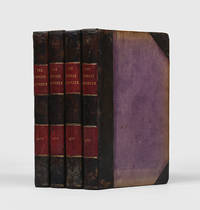
1875réf. 160133Shanghai: American Presbyterian Mission Press 1875-78. The most important interdenominational missionary journal of the time A collection of four scarce early volumes of this Shanghai-based periodical which served as the expatriate missionary community's premier forum for sinological exchange including contributions on philosophy social history linguistics literature and religion. Early volumes are now seldom encountered in commerce. The Chinese Recorder and Missionary Journal was first published in 1868 in Fuzhou under the editorship of Stephen Livingstone Baldwin and then Justus Doolittle. In 1874 editorial responsibilities were passed to Alexander Wylie 1815-1887 the agent of the British and Foreign Bible Society in Shanghai with the city's American Presbyterian Mission Press taking over printing and distribution. Issued every two months the journal featured articles by leading missionary-sinologists including Emil Bretschneider Henry Yule Timothy Richard and Samuel Wells Williams. 24 parts in 4 vols octavo 235 x 153. With 4 folding plans and maps 3 woodblock and printed on delicate rice paper illustrations in text. Vol. VIII bound without the index. Contemporary black half sheep A. H. Chen Shantou recently rebacked with original spines laid down red spine labels purple wavy-grain cloth sides. Bindings somewhat worn and faded small piece of leather reglued at head contents generally fresh folding plans with occasional creasing and stub tears. A very good set. Francesca Torocco The Cultural Practices of Modern Chinese Buddhism 2007. hardcover