27.353 Ergebnisse
Best.-Nr. 50698895like new. unknown
Best.-Nr. 50698895-nnew. unknown
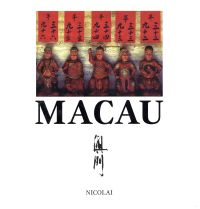
1992Best.-Nr. 27030ABBerlin:, Nicolai, 1992. quer- Gr.-8°. 127 S., durchgehend Farbabbildungen, Pappband (gut erhalten)
1973ix + 282pp. + plates out-of-text, 22cm., 1st ed., cloth, dustwrapper, G, X71268
ISBN : 207075734X. Le Promeneur. 1999. In-16 Carré. Broché. Etat d'usage. Couv. convenable. Dos satisfaisant. Intérieur frais. 194 pages. Photo en noir et blanc en frontispice. Avec bandeau d'éditeur. 1er plat légèrement taché. Décembre 1999, Macao retourne à la Chine.
Best.-Nr. 11497Printed by the Government Printing Press, Macau, 1968 (revised edition). 1 volume octavo, soft cover, 74 pp., numerous illustrations on buildings, temples, cathedral, hospitals, factories, junks and sampans, hotels
Best.-Nr. 13444Printed by the Government Printing Press, Macau, 1968 (revised edition). 1 volume octavo, soft printed covers, 74 pp., numerous illustrations on buildings, temples, cathedral, hospitals, factories, junks and sampans, hotels
1999Best.-Nr. RO40126199Le Promeneur. 1999. In-16. Broché. Etat d'usage, Couv. convenable, Dos satisfaisant, Intérieur frais. 194 pages. Photo en noir et blanc en frontispice. Avec bandeau d'éditeur. 1er plat légèrement taché.. . . . Classification Dewey : 951-Chine
2000Best.-Nr. LFA-126729655Un ouvrage de 64 pages, format 220 x 285 mm, illustré, broché couverture couleurs, publié en 2000, Impr. A. Barthélémy, bon état
1973Best.-Nr. X71268London, Methuen 1973 ix + 282pp. + plates out-of-text, 22cm., 1st ed., cloth, dustwrapper, G, X71268
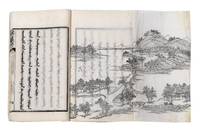
Best.-Nr. 1136136 folding black & white woodcut plates. 88 folding leaves. Two debtelin in one vol. 8vo 265 x 166 mm. pink wrappers orig. block-printed title-slip on yellow silk on upper cover early stitching. Beijing: Wuying dian 武英殿 Postscript dated 1712. First edition of the Kangxi Emperor's r. 1661-1722 poetic cycle for the 36 scenic sights within the Rehe summer estate each accompanied by a stunning double-page woodcut illustration. Printed under the emperor's direct supervision on superior paper and using woodblocks carved by two of the finest artisans in the palace workshop this celebrated album had an initial print run of only 400 copies 200 in Manchu our copy and 200 in Chinese. As Stephen H. Whiteman writes in Where Dragon Veins Meet: The Kangxi Emperor and His Estate at Rehe 2020 these exclusive royal albums were most likely gifts from the Kangxi Emperor to "a relatively small circle of imperial clansmen steppe elites senior officials and others close to the throne" on the occasion of his 60th birthday in 1713 and their presentation was meant to "generate a particular bond of loyalty between the emperor and those he favored with this rare gift" pp. 183 224. First constructed in 1703 and enlarged over the next century the Rehe summer estate located beyond the Great Wall in present-day Chengde about 175 kilometers northeast of Beijing played an important role throughout the Qing empire's political history. It is today a UNESCO World Heritage Site. When the Kangxi Emperor ordered its initial construction in 1702 after half a century of expansionary war the summer estate was to become "the most substantial in a network of traveling palaces Ch. xinggong 行宮 that supported his annual tours north among the court's Inner Mongolian allies." But its significance quickly expanded. The Mountain Estate to Escape the Heat as the site would eventually be named effectively served as a secondary capital the emperor residing there from late spring through early autumn each year over the last decade of his life. "Yet it was also decidedly not the capital. Freed from the architectonic constraints of the Forbidden City Kangxi employed imperial parks and gardens as alternative spaces of rulership. Like his almost exact contemporaries in Europe and South Asia Aurangzeb r. 1658-1707 Louis XIV r. 1643-1715 and Peter the Great r. 1682-1725 Kangxi made designed landscapes central to his performance of authority.Kangxi's Mountain Estate was substantially a site of rituals of intimacy and exchange that performed a temporary elision of social difference between emperor and subject: roaming in the gardens banqueting entertainments and gift giving"-ibid. pp. 4-5. "In 1711 the Kangxi emperor formally initiated a project that sought to interweave the physical and sensory experiences of the Mountain Estate with his ideology of rulership and personal biography. Imperial Poems on the Mountain Estate to Escape the Heat presented the thirty-six scenes of the park-palace through a combination of imperially composed texts and images created by artists of the court. Produced almost simultaneously in three different mediums the work was part of a coordinated multifaceted effort to articulate a vision of Qing imperial rule through the links between landscape technology and the emperor himself"-ibid. 151. Our edition is the first to contain woodcuts; it was the second of many installments of the album - including a later one with copperplate engravings made by the Italian missionary Matteo Ripa 1682-1746 - and the earliest that survives. It opens with the emperor's "Record of the Mountain Estate" Ma. Han-i araha alin-i tokso de halhūn be jailaha gi bithe dated Kangxi 50 1711 followed by the impressions in red of his personal seals: Ti yuan zhu ren 體元主人 and Wan ji yu xia è¬å¹¾é¤˜æš‡; the latter which means "a brief leisure" was reserved for the emperor's own calligraphic and literary works. The emperor briefly introduces each of the 36 scenic poems in prose as if guiding the reader through a personal tour of the summer estate. The fold-out woodcut illustrations drawn by the court artist Shen Yu 沈崳 b. 1649 and carved by the artisans Zhu Gui 朱圭 ca. 1644-1717 and Mei Yufeng 梅裕鳳 fl. ca. 1696-1713 follow each poem. The album concludes with the Postscript signed by four palace officials who supervised its production dated Kangxi 51 1712. "Whether derived from or simply correlated to the unique album now lost the woodblock-printed book functions as a surrogate for the paintings. It imitates the album's arrangement and mode of engagement with the landscape pairing image and text in an intimately scaled format. The style of the images evokes Wang Yuanqi but also and more significant the emperor's most important artist thereby marking the book as a work of the court's highest echelon of cultural production and an object clearly commissioned and owned by the emperor. "Kangxi was intimately involved in the minutiae of the book's production from the selection of a specific type of high-quality paper to reviewing and editing the printing proofs to inspecting samples of the finished work. He was kept closely informed about the progress of the project including difficulties in curing the datewood blocks Zhu Gui and Mei Yufeng used as well as the need for more artisans given the scale and intricacy of the work. The order for four hundred copies two hundred in Chinese and another two hundred in Manchu came directly from the throne. In comparison to other contemporary projects with print runs of one thousand or more this number suggests that the emperor had a clear sense of the exclusive audience he intended to reach."-ibid. pp. 182-83. A monument of artistic production under imperial patronage the album of 36 sites has been the topic of extensive scholarly research. Comparing the woodcut edition to earlier traditions of royal literature and garden illustration in China the art historian Ma Yazhen 馬雅貞 of National Tsinghua University points out that many aspects of this album were unprecedented. For example she observes that the album is likely the first use of a fold-out illustration in a Chinese book - a detail that has long been overlooked. The wide fields of vision printed without frames the absence of persons within the buildings and corridors and the visual presentation of imperial poetry alongside official commentaries are only some of the album's many fascinating features that being unusual and sometimes unprecedented continue to generate new scholarly interpretation and debate. Interest in the album has only grown in recent decades following the publication of court archives that shed light on the process of its production. We know now for example that the Kangxi Emperor personally specified the layout choice of paper number of copies and even the thickness of brushstrokes of the Manchu issue and that its printing was carried out in batches in the year 1713 rather than 1712 date of Postscript. Some of the idiosyncrasies of the Manchu issue which survives less well than its Chinese counterpart nevertheless remain under-explored by researchers who have generally focused on the Chinese-language editions of the album. We find little scholarly discussion for example on the emperor's choice to exclude from the Manchu issue the extensive commentaries for his poetry compiled by palace officials a decision that surely gave the album a different - perhaps more personal than belletristic - tone of voice a voice reserved exclusively for its Manchu-speaking recipients. As mentioned above the Manchu issue has survived less well than the Chinese issue. Of the Manchu issue we locate copies at BnF Columbia LC SBBerlin Cambridge Harvard and SOAS in WorldCat. In fine and fresh condition preserved in yellow silk-covered folder and slipcase. The plates are fine and clean. The fold in each plate has been very carefully strengthened on the verso. A few minor marginal tears and paper flaws. Several other minor and skillful repairs. ⧠Philippe Forêt Mapping Chengde: the Qing Landscape Enterprise University of Hawai'i Press 2000; 馬雅貞 "皇苑圖繪的新典範:康熙《御製é¿æš‘山莊詩》的製作åŠå…¶æ„義" 故宮學術季刊 32 No. 2 2014 pp. 39-80. James A. Millward et al. eds. New Qing Imperial History: the Making of Inner Asian Empire at Qing Chengde Routledge 2004. Stephen H. Whiteman "Creating the Kangxi Landscape: Bishu shanzhuang and the Mediation of Qing Imperial Identity" PhD dissertation Stanford 2011; idem. Where Dragon Veins Meet: The Kangxi Emperor and His Estate at Rehe University of Washington Press 2020. unknown books
Best.-Nr. 1136136 folding black & white woodcut plates. 88 folding leaves. Two debtelin in one vol. 8vo 265 x 166 mm. pink wrappers orig. block-printed title-slip on yellow silk on upper cover early stitching. Beijing: Wuying dian 武英殿 Postscript dated 1712. First edition of the Kangxi Emperor's r. 1661-1722 poetic cycle for the 36 scenic sights within the Rehe summer estate each accompanied by a stunning double-page woodcut illustration. Printed under the emperor's direct supervision on superior paper and using woodblocks carved by two of the finest artisans in the palace workshop this celebrated album had an initial print run of only 400 copies 200 in Manchu our copy and 200 in Chinese. As Stephen H. Whiteman writes in Where Dragon Veins Meet: The Kangxi Emperor and His Estate at Rehe 2020 these exclusive royal albums were most likely gifts from the Kangxi Emperor to "a relatively small circle of imperial clansmen steppe elites senior officials and others close to the throne" on the occasion of his 60th birthday in 1713 and their presentation was meant to "generate a particular bond of loyalty between the emperor and those he favored with this rare gift" pp. 183 224. First constructed in 1703 and enlarged over the next century the Rehe summer estate located beyond the Great Wall in present-day Chengde about 175 kilometers northeast of Beijing played an important role throughout the Qing empire's political history. It is today a UNESCO World Heritage Site. When the Kangxi Emperor ordered its initial construction in 1702 after half a century of expansionary war the summer estate was to become "the most substantial in a network of traveling palaces Ch. xinggong 行宮 that supported his annual tours north among the court's Inner Mongolian allies." But its significance quickly expanded. The Mountain Estate to Escape the Heat as the site would eventually be named effectively served as a secondary capital the emperor residing there from late spring through early autumn each year over the last decade of his life. "Yet it was also decidedly not the capital. Freed from the architectonic constraints of the Forbidden City Kangxi employed imperial parks and gardens as alternative spaces of rulership. Like his almost exact contemporaries in Europe and South Asia Aurangzeb r. 1658-1707 Louis XIV r. 1643-1715 and Peter the Great r. 1682-1725 Kangxi made designed landscapes central to his performance of authority.Kangxi's Mountain Estate was substantially a site of rituals of intimacy and exchange that performed a temporary elision of social difference between emperor and subject: roaming in the gardens banqueting entertainments and gift giving"-ibid. pp. 4-5. "In 1711 the Kangxi emperor formally initiated a project that sought to interweave the physical and sensory experiences of the Mountain Estate with his ideology of rulership and personal biography. Imperial Poems on the Mountain Estate to Escape the Heat presented the thirty-six scenes of the park-palace through a combination of imperially composed texts and images created by artists of the court. Produced almost simultaneously in three different mediums the work was part of a coordinated multifaceted effort to articulate a vision of Qing imperial rule through the links between landscape technology and the emperor himself"-ibid. 151. Our edition is the first to contain woodcuts; it was the second of many installments of the album - including a later one with copperplate engravings made by the Italian missionary Matteo Ripa 1682-1746 - and the earliest that survives. It opens with the emperor's "Record of the Mountain Estate" Ma. Han-i araha alin-i tokso de halhūn be jailaha gi bithe dated Kangxi 50 1711 followed by the impressions in red of his personal seals: Ti yuan zhu ren 體元主人 and Wan ji yu xia è¬å¹¾é¤˜æš‡; the latter which means "a brief leisure" was reserved for the emperor's own calligraphic and literary works. The emperor briefly introduces each of the 36 scenic poems in prose as if guiding the reader through a personal tour of the summer estate. The fold-out woodcut illustrations drawn by the court artist Shen Yu 沈崳 b. 1649 and carved by the artisans Zhu Gui 朱圭 ca. 1644-1717 and Mei Yufeng 梅裕鳳 fl. ca. 1696-1713 follow each poem. The album concludes with the Postscript signed by four palace officials who supervised its production dated Kangxi 51 1712. "Whether derived from or simply correlated to the unique album now lost the woodblock-printed book functions as a surrogate for the paintings. It imitates the album's arrangement and mode of engagement with the landscape pairing image and text in an intimately scaled format. The style of the images evokes Wang Yuanqi but also and more significant the emperor's most important artist thereby marking the book as a work of the court's highest echelon of cultural production and an object clearly commissioned and owned by the emperor. "Kangxi was intimately involved in the minutiae of the book's production from the selection of a specific type of high-quality paper to reviewing and editing the printing proofs to inspecting samples of the finished work. He was kept closely informed about the progress of the project including difficulties in curing the datewood blocks Zhu Gui and Mei Yufeng used as well as the need for more artisans given the scale and intricacy of the work. The order for four hundred copies two hundred in Chinese and another two hundred in Manchu came directly from the throne. In comparison to other contemporary projects with print runs of one thousand or more this number suggests that the emperor had a clear sense of the exclusive audience he intended to reach."-ibid. pp. 182-83. A monument of artistic production under imperial patronage the album of 36 sites has been the topic of extensive scholarly research. Comparing the woodcut edition to earlier traditions of royal literature and garden illustration in China the art historian Ma Yazhen 馬雅貞 of National Tsinghua University points out that many aspects of this album were unprecedented. For example she observes that the album is likely the first use of a fold-out illustration in a Chinese book - a detail that has long been overlooked. The wide fields of vision printed without frames the absence of persons within the buildings and corridors and the visual presentation of imperial poetry alongside official commentaries are only some of the album's many fascinating features that being unusual and sometimes unprecedented continue to generate new scholarly interpretation and debate. Interest in the album has only grown in recent decades following the publication of court archives that shed light on the process of its production. We know now for example that the Kangxi Emperor personally specified the layout choice of paper number of copies and even the thickness of brushstrokes of the Manchu issue and that its printing was carried out in batches in the year 1713 rather than 1712 date of Postscript. Some of the idiosyncrasies of the Manchu issue which survives less well than its Chinese counterpart nevertheless remain under-explored by researchers who have generally focused on the Chinese-language editions of the album. We find little scholarly discussion for example on the emperor's choice to exclude from the Manchu issue the extensive commentaries for his poetry compiled by palace officials a decision that surely gave the album a different - perhaps more personal than belletristic - tone of voice a voice reserved exclusively for its Manchu-speaking recipients. As mentioned above the Manchu issue has survived less well than the Chinese issue. Of the Manchu issue we locate copies at BnF Columbia LC SBBerlin Cambridge Harvard and SOAS in WorldCat. In fine and fresh condition preserved in yellow silk-covered folder and slipcase. The plates are fine and clean. The fold in each plate has been very carefully strengthened on the verso. A few minor marginal tears and paper flaws. Several other minor and skillful repairs. ⧠Philippe Forêt Mapping Chengde: the Qing Landscape Enterprise University of Hawai'i Press 2000; 馬雅貞 "皇苑圖繪的新典範:康熙《御製é¿æš‘山莊詩》的製作åŠå…¶æ„義" 故宮學術季刊 32 No. 2 2014 pp. 39-80. James A. Millward et al. eds. New Qing Imperial History: the Making of Inner Asian Empire at Qing Chengde Routledge 2004. Stephen H. Whiteman "Creating the Kangxi Landscape: Bishu shanzhuang and the Mediation of Qing Imperial Identity" PhD dissertation Stanford 2011; idem. Where Dragon Veins Meet: The Kangxi Emperor and His Estate at Rehe University of Washington Press 2020. unknown
in-8°, 310 pages, illustrations hors texte N&B, broche, couverture illustree plastifiee. Bel exemplaire [CA32-6] Cet ouvrage est la traduction intégrale, publiée pour la première fois en France, du livre américain « The Last Manchu ».
1980Best.-Nr. Kibu1176Beijing, Verlag für fremdsprachige Literatur 1980. [37] S., zahlr. Farbige Ill., ill. OHLn., Kanten gering berieben.
2 volumes 4to, br. ed. 255,255. Ils ont connu le Grand Bond en avant, la Révolution culturelle, lenthousiasme et le désespoir. Ils se souviennent tous de ce quils faisaient le jour de la mort du président Mao. «Ils», cest la génération dUne vie chinoise. A lheure de la révolution Internet, que sont devenus les femmes et les hommes de la révolution maoïste Li Kunwu nous offre un témoignage sur cette génération qui a construit la Chine daujourdhui. bande dessiné, graphic novel, fumetti cinesi
in-8°, 477 pp, 2 cartes, broche, couv. illustree a rabats. Bon etat. [NV-28][NAN-2] L'Espionnage ne va pas sans cruaute. L'Espionnage est plus cruel en Asie que partout ailleurs
ISBN : 2020308649. Le Seuil. 1998. In-8 Carré. Broché. Etat d'usage. Couv. légèrement pliée. Dos satisfaisant. Intérieur acceptable. 268 pages. Etiquette de code sur le dos. Tampon et annotations de bibliothèque en page de titre. Quelques feuillets se détachant légèrement. 'L'Histoire immédiate', Collection dir. par Jean-Claude Guillebaud.
1968Best.-Nr. 804551968 Paris, Stock, 1968, in 8° broché, 311 pages ; illustrations hors-texte ; couvetrure illustrée.
Best.-Nr. 201803057Paris, Stock, 1979 ; in-8, 538 pp., broché, couverture illustr. La chine autobiographie histoire - traduit de l'anglais par Anne Rabinovitch - bel état papier brun.
1998Best.-Nr. RO40181348Le Seuil. 1998. In-8. Broché. Etat d'usage, Couv. légèrement pliée, Dos satisfaisant, Intérieur acceptable. 268 pages. Etiquette de code sur le dos. Tampon et annotations de bibliothèque en page de titre. Quelques feuillets se détachant légèrement.. . . . Classification Dewey : 951-Chine
Best.-Nr. M5158Paris éd. John Didier 1963, in8 br, 298pp,ill n/b/ ht. Langue: Français
1972Best.-Nr. 194251972 Pensee Moderne, collection "Le poing de la vie", 1972. Format 15x23 cm, broche, 470 pages.Bon etat, petites traces d'usage sur un livre d'occasion.
1918Best.-Nr. 5108Paris Plon 1918 in-8 broché, non coupé