Filipinas, Jae Lord Dexter CBiblio.com

878 risultati
rif. 1773612239.Ghardcover. Good. Access codes and supplements are not guaranteed with used items. May be an ex-library book. hardcover
rif. 1773610643.Ghardcover. Good. Access codes and supplements are not guaranteed with used items. May be an ex-library book. hardcover
rif. A9781344741507Hardback. New. hardcover
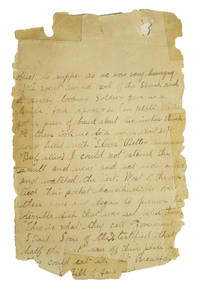
1902rif. 311327np 1902. 5-67 manuscript pages on the rectos of unbound sheets. 8 x 5 inches. Lacking the first 4 leaves and an indeterminate number at end several leaves quite worn each crudely taped or pasted to modern paper and then crudely cropped at the top edge without loss of text. 5-67 manuscript pages on the rectos of unbound sheets. 8 x 5 inches. This account consists of pages five to sixty-seven of what appears to be a diary or copied letters of an unnamed soldier in the 21st United States Infantry. The author who may have been a corporal remains unidentified by name. The account begins in August 1898 at Camp Hobson Lithia Springs GA; in September he is transferred to Plattsburgh NY rejoining the bulk of his regiment which had suffered heavy losses in Cuba. The Philippine-American war ran from February 1899 to July 1902 and was regarded as a continuation of a war for independence by the Philippines and as an insurrection by the United States of America. This account spans the duration of it providing rich detail on topics ranging from food to the war-ravaged environment and American-Philippino interactions both on and off the battlefield. An epic train ride across the country and then a boat from San Francisco brought the 21st US Infantry to Manila on 11 May 1899 in the fourth month of the conflict. The author mentions shipboard conditions an engine breaking down and comments "We caught 4 sharks in our trip. The largest was 12 feet long and took the whole crowd to land him aboard. the men used the bones for rings and pen holders and in fact every thing you could think." Their first combat was the capture of an insurgent outpost at Guadaloupa Ridge on 9 June 1899 where they "joined General Lauter's Flying Column . with eight chinamen to carry our rations." The description of this combat and its aftermath pages 33-41 is the most dramatic passage in the memoir. The writer was sent with another soldier to gather up some supplies that had been left behind but they were separated from the regiment with no food or water. They made a makeshift fort from some old haversacks and brush when they were unable to return to the trenches that night. The author describes scavenging after battle as follows: "About 10:00 oclock there was several chinamen came looking around and picking up what-ever they seen. They came to close to us to suit me and we shot 4 and the rest ran away." Going out in search of water at about four in the morning despite ongoing fire the author found several dead and mortally wounded soldiers from a black regiment including a graphic description of one man who had been shot at close range and had a hole the size of a fist in his belly and was covered in blood. Of the only survivor the author says: "Found one poor cuss shot through the hip. He could not move. I gave him some hard tack and he gave me water then I went back to our haversacks." Another disoriented soldier whom the author names as H. McBain was found wandering without most of his clothing brandishing a bottle of wine and an axe. After waiting until the 11th for a reclamation detail the author and his companion crawled through the brush for a mile to San Peter McCarty and eventually rejoined their regiment at Los Penes where their captain threatened to have them court-martialed for losing their haversacks. Later while hospitalized the author was befriended by Señora Edna Luna cousin of an insurgent general who took him out riding daily: "She was stuck on me and that is no lie. I think I ought to go back and hook up with her as she has all that is required. She is hansome & plenty of money" page 45. The author -- first too ill to be moved then put in a wheel chair and with trouble with his vision -- was transferred back to the States on 15 May 1900 page 48 by way of Nagasaki May 21 1900 and Yokohama arrived in San Francisco on June 9 1900 then was sent to recover at Hot Springs Arkansas concluding in Vancouver Barracks Washington circa July 1901. Some of the pages are torn and some text is lost at the bottom edges due to wear but the handwriting is clear and the voice of the author shines through. This narrative though it took place before World War One reads more akin to a Vietnam War narrative than a Civil War diary in tone and disregard for authority and the morality of war. unknown
rif. 45464528like new. unknown
1955rif. 21386Manila: American Association of the Philippines. Very Good. Sixth Edition. Softcover. The slightest of browning to the covers.; A detailed guide to all the topics that a new settler might be interested in: From American Embassy to Schools Shopping Housing Transportation or Travel Regulations. With a detailed rear fold-out map. This edition is called 6th printing December 1955 - but we think the publisher meant 6th Edition.; 12mo 7" - 7½" tall; vi 50 pages . 1955. American Association of the Philippines paperback
rif. 1018153314.Gpaperback. Good. Access codes and supplements are not guaranteed with used items. May be an ex-library book. paperback
1941rif. 52747Manila: Bureau of Printing 1941. First edition 8vo pp. 59 1; self wrappers; front wrapper unevenly toned; an Ayer Linguistics duplicate with a Newberry release stamp inside the front wrapper; no other markings. Text is in both Cebuano and English and was prepared for publication as the United States entered World War II. Bureau of Printing unknown
1931rif. 64637London UK: Herbert Jenkins Ltd. 1931. Thick 8vo. 320 pp. Photo frontisp. 15 photo plates. Green publisher’s cloth blue lettering & border ruling very slight shelfwear slight foxing to fore-edges w/ d.j. photo cover art minor chipping head of spine dustsoiling edgewear 1 minor closed tear still a NF/VG copy. First edition 1st printing stated of this follow-up travelogue recording his adventures in the Kimberley Gold Rush the pearl fisheries of the Indian Ocean coping with the Pirates of Panay hunting for sunken treasure and shocking discoveries in a supposed Indigenous “cannibal” cooking pot. Burdett b. 1864 was renowned for his pearling and natural history expeditions sailing through the Indian Ocean Indonesia and extended expeditions into the Philippines Indonesia and across the South Pacific. Exceedingly scarce in original dustjacket. Herbert Jenkins, Ltd., hardcover
1930rif. 64636London UK: Herbert Jenkins Ltd. 1930. Thick 8vo. 317 1 pp. Photo frontisp. 15 photo plates. Green publisher’s cloth blue lettering & border ruling maps on endpapers slightly cocked slight occasional foxing very minor shelfwear w/ d.j. photo cover art minor chipping head & foot of spine dustsoiling edgewear small chip on back cover still a VG/VG- copy from the library of Claude Bridgland. First edition 1st printing stated of this rousing travelogue of the author’s “thrilling record of forty years’ adventures among the Igorote Head-hunters the Negrito Pygmies Aeta of Luzon whose poisoned arrows are the terror of the forests of Luzon the Dusun Python-hunters of the Borneo jungles the Corsairs and Sultans of the Sulu Sea and the Moro warriors of Mindanao.” Burdett b. 1864 was renowned for his pearling and smuggling expeditions gold mining in the Kimberley mines and extended expeditions into the Philippines Indonesia and across the South Pacific. Exceedingly scarce in original dustjacket. Herbert Jenkins, Ltd., hardcover
1945rif. 64628Los Angeles CA: 40th Infantry Division ca. 1945. Oblong 4to. 120 pp unpaginated. with 200 silver gelatin photographs all mounted and numbered in lower corner w/in negative keyed to indices inserted after the title page occasional creasing to corners. Brick-red publisher’s cloth post-binder two hidden nickel-plated screwposts at gutter margin 40th Infantry Division sunburst emblem patch on front cover in gilt on blue field minor thumbing edgewear slightly shaken occasional fraying to a couple leaves at fore-edge still a VG copy. First edition thus of this 40th Infantry Division regimental souvenir album visually recording the Western National Guard “Sunshine Division’s” participation in the grueling and bloody island hopping campaign during World War II from Guadalcanal to The Philippines often involved in heavy fighting and credited with capturing or killing over 11000 Japanese troops while suffering 715 casualties. These photographs follow the 40th Division’s arrival and activities in Hawaii followed by their movement to Guadalcanal and arrival at Kukum Dock. Photos depict wrecked Japanese ships beached nearby the typical bare-breasted shots of New Britain Indigenous Peoples arrival of nurse units and training on New Britain. As depicted in these images the bloody Philippine Islands campaign opened with multiple regiments from the 40th Division landing at the Lingayen Gulf on Luzon in order to retake the main Philippine Island in January 1945 including views of Tarlac Bamban battle damage artillery pieces war dogs used by segregated African-American patrols on Luzon well-prepared Japanese positions built to repel the American forces machine gunners Japanese casualties and the results of Japanese troops using grenades to commit Hari Kari.The next phase of the campaign involved the 40th Division participating in the Panay & Guimaras Invasion landing at Tigbauan on Panay Island securing Iloilo City and nearby airfields coordinating with Philippine guerrilla forces with photos of the guerrillas views of the landing craft Philippine peoples and guerrillas wounded by Japanese snipers being treated by American forces and the Division artillery. The 40th Division later came together with other forces and moved onto Negros Island from the end of March through August 1945 pushing deep into Negros Island capturing Bacolod and its airfield before continuing on in the heavy surrounding jungle dislodging Japanese troops in the surrounding area. Their artillery and tank battalions proved particularly effective and many of these photographs depict not only the movements and equipment but the aftermath as well. This album does not include the National Guard Division’s participation in the enforcement of the orders to round up and illegally incarcerate Japanese-Americans throughout the West into War Relocation Centers and Internment Camps for the duration of the War. No copies in Worldcat -- this volume should not be confused with the regimental history published in Baton Rouge LA by the Army & Navy Publishing Company -- “40th Infantry Division: the years of World War II 7 December 1941-7 April 1946. 40th Infantry Division, hardcover
1936rif. 64638London UK: Herbert Jenkins Ltd. 1936. Thick 8vo. 316 pp. plus 4 pp. publisher’s ads. Photo frontisp. 15 photo plates. Red publisher’s cloth black lettering very slight shelfwear slight foxing to fore-edges w/ d.j. photo cover art minor chipping head of spine dustsoiling edgewear couple minor closed tears still a NF/VG copy. First edition 1st printing stated of this third travelogue recording Burdett’s adventures in the Kimberley Gold Rush working as a sheep drover and at the sheep station handling cattle and off to the Philippines. Burdett b. 1864 was renowned for his pearling and natural history expeditions sailing through the Indian Ocean Indonesia and extended expeditions into the Philippines Indonesia and across the South Pacific. Very uncommon in original dustjacket. Herbert Jenkins, Ltd., hardcover
1945rif. 61658Manila P.I.: 25th Infantry Division 1945. Folio. 9 x 13 in. 92 pp unpaginated. consisting of illustrated title introduction leaf and then 176 numbered illustrated panels 2 to a page tracking the campaign. Blue publisher’s cloth colour plate title mounted on front cover w/ 25th Division “Tropic Lightning” badge minor dustsoiling slight fraying a little thumbing still a VG bright copy. First edition of this fascinating and well-illustrated graphic novel regimental history executed by the artist while serving with the 3rd Brigade 25th Infantry Division and filled with drawings depicting the life of a doughboy fighting the Japanese across Luzon. The book covers the 35th “Cacti” 27th “Wolfhounds” and 161st Infantry Regiments the famous Battle of Balete Pass offering an essential first-hand visual record while they set the combat record of 165 consecutive days. The record would not be broken until later when the 3rd Brigade of the 25th Division went 235 consecutive days in combat operations during the Vietnam War in 1966. Rutherfoord 1919-2001 was a commercial artist from Roanoke VA who served from 1942-1946 in the 25th Infantry Division and later as commercial artist in New York who also illustrated a number of titles in the popular Little Golden Books series as well as later a successful painting career in and around Roanoke. 25th Infantry Division, hardcover
1946rif. 60810New York: Frederic H. Stevens Stratford House Inc. 1946. 8vo. xiv 569 1 pp. Frontisp. illust. of Santo Tomas Building numerous text illustrations. Beige cloth red & gilt lettering on front cover minor shelfwear & dustsoiling still VG copy from the library of former internee Charles Kurz 1891-1978 a business agent and later accountant for the Pascific Steamship Line World War I veteran and headed the labor safety battalion for American prisoners inside Santo Tomas w/ ownership markings on ffep. and 1950’s passport photo of Kurz laid-in. First edition of this scarce and graphic work chronicling the conditions of one of the largest of Prisoner-of-War Internee camps set up by the Japanese during World War II composed mostly of American civilians. The University of Santo Tomas in Manila was utilized for the camp and housed over 4000 civilians many of whom were near death at the end of the war due to starvation and poor conditions. The 1st Cavalry Division pushed forward in a 100 mile advance to Manila in 66 hours in order to prevent the Japanese from killing all of the internment camp prisoners and subsequently fought the Japanese forces across Manila. Frederic H. Stevens, Stratford House, Inc., hardcover
1963rif. 59482Philadelphia & New York: J.B. Lippincott Co. 1963. Thick 8vo. 12 425 1 pp. Double-page map. Quarter-black over red publisher’s cloth silver stars & lettering front cover & spine slight shelfwear rubbing w/ d.j. cover art by Robert Hallock minor dustsoiling toning to spine price-clipped still NF/VG copy inscribed by Colonel Wendell Welby Fertig 1900-1975 to Eric Offret 1949-1986 upon his graduation from high school in San Diego June 1967 “This is a part of the story of our effort in the Philippines. “Chief” can supply some details. It is a story of a fight against odds -- and we won!” First edition 2nd printing of this work detailing the efforts of self-promoted Brigadier General Fertig a reservist mining engineer who had assisted in the evacuations of Bataan and Corregidor who accepted the offer from Major General Sharp to oversee the resistance in Visayan-Mindanao to the Japanese invasion. Fertig linked up with Filipino-American Luis Morgan a local constabulary officer as Fertig attempted to manage the disparate groups of Filipino guerillas managing non-Americans including Australian soldiers a Syrian engineer and German soldier of fortune and negotiating between Filipino Christians and Lanao Moros. J.B. Lippincott Co., hardcover
1919rif. 58763Washington D.C. National Geographic Society 1919. Two parts in one. Oblong 4to. 11 x 9 in. 24; 24 leaves printed on thick glossy paper stock w/ photo & colour illustrations on recto of each leaf slight shelfwear rubbing still NF set preserved in original printed envelope with instructional information and stamp “China & Philippines” on recto minor creasing edgewear former ownership ink markings. First edition of these scarce sets of plates designed for geography classroom use following World War I filled with text by Burrall 1883-1960 to increase geographical literacy of children as well as promote the ideas of preparing American youths to assume the role of a “World Power.” This first set focused on China includes text and photos describing the “Avenue of Stone Animals;” increasing number of girls attending school; rice fields street restaurants Chinese temples along with several parts with photos by E.H. Wilson of the Arnold Arboretum. The photographs are unidentified in the Philippines section and includes descriptions and photos of tree houses greased pole contests weaving cloth making pottery and growth of school bands and schools. Worldcat ostensibly locates 5 surviving China & Philippines portfolios at least 1 is microfilm; See: Katie Good Bring the World to the Child: Technologies of Global Citizenship in American Education 2020 pp. 44-47 227-228. National Geographic Society, hardcover
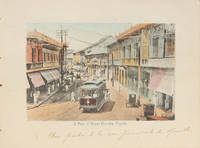
rif. 111950N.p. n.d. but early 20th century. . Lacquered album; landscape 8vo 19.5 x 15 cm; 22 coloured photograph illustrations printed captions in English below image French manuscript annotations in ink in an early hand below caption single horizontal splits to lacquer on both boards a very good copy. An evocative series of colour photographs of the Philippines ranging from views of Manilla harbour to domestic scenes such as a butcher's shop washer-women market scenes rice cleaning and a cock fight. N.p., n.d. [but early 20th century]. hardcover
rif. 47013000-nnew. unknown
rif. 44996763-nnew. unknown
rif. 46935285-nnew. unknown
rif. 46560408-nnew. unknown
2010rif. I224-S-083125-105Foreign Languages Press 2020-10-15. paperback. ITS NEW! Ships same or next bus. 0x0x0. Foreign Languages Press paperback
2023rif. Gyan-9789333363167Facsimile Publisher 2023. Vol. 3. Hardcover. New. 25.13 x 18.78 x 5.8 cm. English Facsimile Publisher hardcover
2023rif. Gyan-9789333363167Facsimile Publisher 2023. Vol. 3. Hardcover. New. 25.13 x 18.78 x 5.8 cm. English Facsimile Publisher hardcover
rif. B9781019761595Hardback. New. hardcover