(Japan)ABAA

25.985 risultati
1880rif. 2560561880. Albumen print mounted and captioned beneath image "Fusiyama highest mt. in Japan 14500 feet high-90 miles from Yokohama.". 1 vols. 8-3/4 x 11-3/4 inches Image. Foxing waterstain on mount extending into top of image. Albumen print mounted and captioned beneath image "Fusiyama highest mt. in Japan 14500 feet high-90 miles from Yokohama.". 1 vols. 8-3/4 x 11-3/4 inches Image. WH/9/Box D unknown books
1900rif. 235312Japan 1900. 50 hand colored-albumen prints mounted on card. Each print framed by two original watercolor vignettes. Tissue guards. 1 vols. Oblong folio 12-1/2 x 15-1/2 inches; image 8 x 10⁻¹/2/ inches. Lacquered wood covers with hand-painted title in gold; central vignette depicting rickshaw and passenger; floral motif background to front and rear covers. A.e.g. Spine neatly rebacked in leather. Fine. 50 hand colored-albumen prints mounted on card. Each print framed by two original watercolor vignettes. Tissue guards. 1 vols. Oblong folio 12-1/2 x 15-1/2 inches; image 8 x 10⁻¹/2/ inches. Fifty finely pastel hand-colored albumen prints some captioned in English in the negative some with pencil captions. Includes scenes of Koyoto Nara Osaka Kobe and Nagasaki; Japanese junk European steamer a tea house at Tokyo street vendors Kabuki actors including a member of the renowned Danjuro lineage sumo wrestlers dancers and geisha as well as some studio portraits. Each image is framed by two original watercolor vignettes a total of 100 unique images mostly depicting scenes of nature. unknown books
1883rif. 58137Boston: Lee and Shepard Publishers 1883. First edition. 169 illustrations. xiii 301 pp. 1 vols. Small 4to. Green cloth stamped in black and gilt designed by the author. Spine ends chipped extremities rubbed. Very Good. First edition. 169 illustrations. xiii 301 pp. 1 vols. Small 4to. Lee and Shepard Publishers unknown books
1935rif. 55196Tokyo: Tokyo City Government 1935. First edition. Photographic views of Tokyo. 1 vols. Small oblong 4to. Flexible silk-wrapped boards with silk ties. Minor rubbing else Fine. First edition. Photographic views of Tokyo. 1 vols. Small oblong 4to. Tokyo City Government unknown books
rif. vot9875Kodansha International Ltd. 1979 Quarto thick khaki cloth hardcover red label black lettering 308 pp. Very Good with small former-owner stamp; in a Very Good dust jacket with sunned spine. From dust jacket: If you want to be really outstanding at karate you are just the person for whom this book is intended. If you are determined to master the blindingly fast powerful and potentially devastating punches and kicks that make karate the most respected form of self defense and a tremendously exciting sport as well you can do it through the hundreds of excellent photographs and descriptions provided here. Those who have tried one of the older books on karate ususally have found to their disappointment that it simply did not give them the complete detailed instructions and illustrations -- the fundamentals plus the fine points -- that they were hoping for. This book fills the gaps left by others. It is written in a precise get-to-the-point style by Masatoship Nakaymama Chief Instructor of the 10000-member Japan Karate Association. Here he shares his great experience as a karate competitor and teacher describing and illustrating in detail all the correct movements involved in the particular block punch or kick you want to perfect as well as instructions on combining clocking techniques normal camera work often fails to record the action accurately. For this reason many of the photo sequences found in Dynamic Karate were taken using a stroboscope with a flash time of 1/10000 of a second enabling you to follow each movement as it is actually performed. The Japanese-language edition of this book is already a huge success in Japan where modern karate was developed. Already it has proved its value as the most authoritative complete book ever prepared for students and instructors alike. hardcover books
rif. 44211Japan and Western Medicine. Oranda jin Geka ryoji no zu Dutch Surgery in Nagasaki. Original pen ink and watercolor drawing on light brown-toned silk with 4 vertical lines of Japanese characters in the upper left corner. Japan: late 18th or early 19th century. 483 x 363 mm. mounted as a scroll at a modern date on light grey silk backed with paper with a half-round hanging rail with braided ribbon attached at the top and a suspension bar at the foot measuring 914 x 443 mm. overall; preserved in a custom-made wooden box. A few tiny pinholes in upper corners of image but fine with the coloring fresh and bright. This striking image showing an amputation carried out by a Dutch surgeon in Japan was most likely painted in the late eighteenth or early nineteenth century during Japan's self-imposed period of national isolation. The hand-painted image is related but by no means identical to a Nagasaki woodblock print titled "Surgery by a Dutch Physician" one of many popular souvenir prints depicting scenes unique to Nagasaki which at the time was the sole point of contact between Japan and the outside world. See our reproduction of the print. It may be that our scroll is the original of the image; however it is also possible that both hand-painted and woodcut versions of the image were produced simultaneously. Western surgery came to Japan in the sixteenth and seventeenth centuries via the Portuguese who in 1543 became the first Europeans to make direct contact with Japan and the Dutch who became the only European nation allowed to trade with Japan after Japan's expulsion of the Portuguese in 1639. Surgeons attached to the Dutch East India Company established practices at the island of Dejima in Nagasaki Bay which led to the formation of several Japanese schools of surgery based on European methods. "This aspect of Western medicine known as K m -ry geka or 'Surgery of the Red-Haired' has had a profound effect on the development of surgical practice in Japan" Van Gulik p. 37. Van Gulik "Dutch surgery in Japan" in Red-Hair Medicine: Dutch-Japanese Medical Relations ed. Beukers et al. pp. 37-50. . unknown books
1937rif. 57934Tokyo: Board of Tourist Industry/Japanese Government Railways 1937. First edition. 134 pp w/appendix. Fine in illustrated wrappers and original unprinted glassine dust jacket near fine. 14 1/4 x 15 3/4 inch map printed in four colors “Japan and its World Connections” folded and housed in an envelope at the back of the volume as issued. Illustrated with twenty b&w photographs and one color plate. [Tokyo]: Board of Tourist Industry/Japanese Government Railways, unknown books
1979rif. 40698NY & San Francisco: Kodansha International 1979. First US edition. 311 pp w/index. Fine in fine dust jacket. NY & San Francisco: Kodansha International unknown books
1950rif. 67809Hakone Ito and Kawasaki Japan: The clubs 1950. Golf scorecards each a bi-folium 4 7/8 x 3 inches the inner pages with the scorecard local rules in both Japanese and English on the verso of the integral leaf. The first has been completed 90 100 and 108 for three golfers the other two unused. Each decorated wrappers rubbed. Very good lot. For the three The clubs unknown books
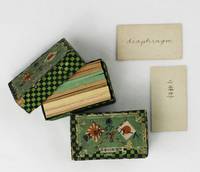
1935rif. 6332Japan 1935. Very good. Approximately one hundred cards in two boxes cards measuring approximately 1 x 2 inches. Boxes slightly worn a little splitting along folds but still holding firm. Cards clean and fresh on various colors of stock. An attractive and unusual set of hand-written vocabulary flash cards designed to assist Japanese students learning English. Each card features an English word on one side with the Japanese translation on the reverse. The cards sold under the name Victory Cards are presented in charming and petite period boxes. Each box bears the bold illustration of both the national flag and the Rising Sun flag flanking a helmeted soldier at the center -- an image that reflects the militarist atmosphere of the time. Words included here are from the letters C and D with selections such as "coroner" "conspectus" "contraception" "convolute" "diaphragm" "deteriorate" "depot" "dexterity" and "diagonal" among others. unknown books
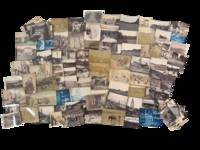
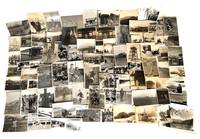
1900rif. 233951900. Turn-of-the-century Japan photo archive documenting foreign commercial travel oil and mining activity rural labor and domestic life during the late Meiji era when Japan was rapidly building railways mines refineries modern ports and industrial companies after the 1868 Meiji Restoration. The material appears connected to a Western man and his family moving through Japan in connection with oil extraction or related industrial work with repeated views of derricks refinery sites pipe trenches miners labor crews interpreters servants hotels villages and named regional destinations. Images show various scenes throughout northern Japan such as Hokkaido settlements Sapporo gatherings Naoetsu refinery work Nara and coastal travel household service and encounters between foreign visitors and Japanese workers at a time when foreign technical knowledge and Japanese state-backed industrial growth were reshaping the country. Photo archive of more than 150 photographs including approximately 6 cyanotypes and numerous silver gelatin and albumen photographs sizes range between 2" x 3.5" to 4" x 6" Japan circa late 1890s to early 1900s. Nearly every image bears a handwritten caption en verso identifying places people professions work scenes and social relationships. Captions include "Launching conveying pipe to and from steamship Corea Yokohama" "Refinery location Naoetsu Japan" "Celebrating the fall of Mukden Sapporo Mar. 21st 1905" "Crowd at Naoetsu Hotel" "Working on foundation for refinery Naoetsu" "Digging a great ditch for drain pipe from refinery to ocean" "Drillers and visitors" "Japanese servants at home in the bamboo grove" "Old American Naval Hospital" and "Mines & Smelters Sumitake Hotel Omori Japan." Workers dig trenches handle pipe gather beside derricks and refinery structures pose at mine entrances stand near kilns and industrial yards and move through villages and hotel courtyards. Other scenes record women in kimono children household staff rickshaw pullers street processions with rising-sun banners thatched structures coastal views mission or hospital buildings and Western family members partaking in local culture seated in gardens or standing among Japanese attendants and guides. The archive records Japan's industrial modernization from the perspective of foreign business presence rather than official state publicity. Oil had been produced in Japan since the nineteenth century especially in regions such as Niigata while Hokkaido mining railway building and settlement became central to Meiji development; this group places those broader changes inside fieldwork travel and household arrangements. The handwritten captions add another layer of specification by naming locations and functions that would otherwise be difficult to identify especially the refinery and drilling views. Condition varies across the group with curling fading toning creasing edge wear occasional surface loss and some with missing corners; images generally clean and clear captions remain present and visible on many versos. Overall in very good condition. By the turn of the century oil fields in Niigata and Akita were part of Japan's push to build an industrial economy but domestic crude was limited and often difficult to refine. The archive also reflects the unequal social and technical relationships that accompanied Meiji industrial expansion with foreign commercial specialists Japanese labor crews domestic servants and frontier extraction zones appearing together within the same industrial landscape. unknown books
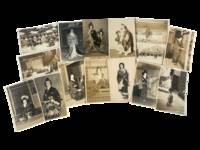
1910rif. 227351910. Cross dressing Japan Kabuki Cross-dressing scenes and portraits of Onnagata actors photo archive Japan ca. 1910s-1920s documents the visual culture of Japanese theater at a pivotal moment when modern photographic media intersected with longstanding traditions of gendered performance. Produced during the TaishÅ and early ShÅwa periods these images preserve Kabuki's stylized theatrics and the centrality of onnagata male actors specializing in female roles to social constructions of femininity in Japan. Following the 1629 prohibition on women performing on the Kabuki stage male actors developed the onnagata tradition involving stringent rules of gesture comportment and dress which in turn informed the performance of gender beyond the theater. Collection of 15 original silver gelatin and collotype photographs Japan ca. 1910s-1920s. The photographs each measuring approximately 4 x 6 inches include both full-stage production scenes and studio portraits of celebrated performers in costume. Several bear Japanese captions and publisher imprints in the margins and some identify specific plays and characters including an example labeled "花ã®å¹‡é–“" Hana no Taiko. Performance images depict painted scenic backdrops including maritime settings elaborately dressed actors captured mid-scene and musicians seated as part of the nagauta ensemble while studio portraits center onnagata figures in heavy white oshiroi makeup elaborate coiffures and richly embroidered kimono. Iconic theatrical gestures such as the mie the climactic stylized pose are represented underscoring the physical vocabulary that defined Kabuki theater. These photographs reflect the ways in which social concepts of femininity informed Kabuki performance and how Kabuki conversely informed societal gender presentation. Such material illuminates the role of onnagata in shaping and exporting images of Japanese femininity during a period of expanding international cultural exchange. Minor edge wear and light toning otherwise crisp and clean. Overall very good condition. An evocative photographic record of Kabuki performance and gendered theatricality in the early 1900s. unknown books
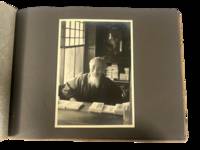
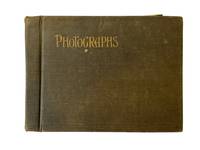
1930rif. 223021930. Japan travel photograph album. 1930s. This album documents Western travel through Japan during a period of expanding imperial influence and managed international tourism recording temple architecture theatrical performance and curated cultural sites alongside limited family portraiture. The photographs provide primary visual evidence of how foreign visitors encountered Japan through established travel circuits that emphasized religious monuments scenic landscapes and staged cultural forms while also including a labeled image from Korea that situates the journey within the geography of Japanese colonial rule. Photo Album containing 22 silver gelatin photographs each mounted one per page with white ink captions identifying locations including "Nikko" "Kyoto" "Shochiku-za" "Koya San" "Akashi" "Takao" and "Korea." Three photographs depict members of a Western family posed in studio and outdoor settings including portraits in front of temple gates and residential entrances. The remaining images focus on architectural and cultural sites including temple facades with detailed ornamentation mountain and waterfall landscapes and a staged theatrical performance at the Shochiku-za theatre in Osaka showing performers in elaborate costume and makeup. One photograph labeled "Korea" depicts seated women wearing hanbok indicating travel beyond the Japanese home islands. The photographs are consistently sized at approximately 5 x 7 inches and mounted in an album measuring approximately 8.5 x 12 inches bound in cloth boards with decorative striping and cord binding. The album was produced during a decade when Japan promoted domestic and imperial sites as destinations for foreign travelers integrating religious landmarks urban infrastructure and colonial territories into a coherent tourist experience. Sites such as Nikko and Koya San were presented as emblematic of national heritage while theatrical venues and scenic locations formed part of structured itineraries. The inclusion of Korea reflects the extension of these travel routes into occupied regions where colonial subjects and landscapes were incorporated into representations of the empire. Photographs remain clear with strong contrast; minor wear to album consistent with handling; overall very good. A focused visual record of Western travel in 1930s Japan documenting how cultural sites and imperial geography were presented to foreign visitors. unknown books
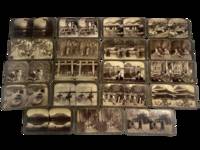
1900rif. 226421900. Underwood & Underwood stereoview archive documents Japanese religious practice labor systems and urban environments during the Meiji period when Japan underwent rapid industrialization and imperial expansion following the First Sino-Japanese War and the Russo-Japanese War. Produced in the early 1900s these images were designed for Western educational and commercial audiences forming part of a stereographic program that presented Japan as both modernizing and culturally distinct. The archive spans multiple regions including Osaka Harima Kyoto Tokyo Kawasaki Mount Fuji Nikko and Omori offering a geographically broad record of religious institutions agricultural labor and urban infrastructure. It supports research in early photography transnational visual culture and the representation of East Asia in Western media. Collection of 19 black-and-white stereoviews by Underwood & Underwood albumen prints mounted on original gray card stock with printed captions along the margins and extended descriptive text on the verso. Each stereoview measures approximately 3.5 x 7 inches. The series includes pilgrims ascending the slopes of Mount Fuji in ceremonial dress and an interior view of monks assembled at Ikegami Temple in Omori surrounded by ritual objects. Views of Nikko depict cedar-lined approaches shrine architecture and visitors gathered at temple precincts. Urban scenes include Osaka waterways with merchant boats and a view of Osaka Castle's stone fortifications and moat. Additional images show a weaver at work groups of women in kimono posed for the camera vendors and performers near Kyoto shrines and children assembled in public activity. Religious imagery includes Shinto elements such as shrine statuary torii gates and ritual spaces alongside landscapes featuring Mount Fuji and coastal environments. The selection reflects a deliberate balance of sacred rural and urban subjects. These stereoviews circulated during a period of expanding international engagement as Japan promoted itself to foreign audiences while consolidating its status as a modern imperial state. Visual materials of this kind contributed to a transpacific exchange in which Japan was framed through dual narratives of continuity and transformation aligning with Western expectations of cultural difference while documenting infrastructural and social change. Increasing contact between Japan and the United States during this period combined commercial exchange and tourism with emerging political tensions that would shape immigration and foreign policy debates. Light edge wear and occasional fading primarily to printed text; images remain clear; overall very good condition. A cohesive stereographic archive illustrating the construction and circulation of Japanese visual identity in the early 20th century. unknown books
1910rif. 226551910. Japan LGBTQ Gender-bending Theater Traditional Kabuki Cross Dressing onnagata performers photo archive. Collection of of 16 real photo postcards Japan 1910s-1920s. Each approximately 3.5" x 5.5". This set portrays Kabuki actors in the roles of onnagata male actors specializing in female roles. Onnagata actors are male actors who undergo extensive training to master feminine characteristics focusing on voice modulation stylized body language and conveying emotions through their performance. Specific feminine makeup styles and elaborate costumes enhance the portrayal of femininity. Kabuki a theatrical form dating to the early 17th century is one of Japan's most enduring cultural traditions. After women were banned from performing in 1629 male actors adopted female roles developing the onnagata style as a complex art form. The performers shown here embody this practice with heavy white oshiroi makeup and elaborate coiffures stylized feminine movements and richly embroidered kimono. Gender play in Kabuki was not only an aesthetic convention but also a cultural commentary as onnagata roles shaped ideals of femininity in Edo- and Meiji-era Japan blurring distinctions between performance gender and desire. Scholars note that these portrayals influenced broader conceptions of femininity in Japanese society and became part of Japan's cultural export to the West during the late 19th and early 20th centuries. Although women can now perform kabuki the onnagata tradition remains dominant in mainstream performances. Overall very good condition. These postcards are a rare and evocative photographic record of onnagata performance encapsulating the intersections of theater gender identity and cultural tradition in Japan. unknown books
1920rif. 216411920. Japan OccupationWWII Primary-source photo album of United States military governance during the occupation of Japan with particular emphasis on the enforcement of legal authority and the administration of war crimes proceedings under Allied control. Centered on the career of General Charles Sabin Ferrin in his capacity as Provost Marshal of Tokyo the album captures the institutional frameworks through which U.S. forces maintained order supervised political transition and participated in the International Military Tribunal for the Far East IMTFE. The collection includes images of high-ranking military and political figures official proceedings connected to the war crimes trials and formal and informal interactions with Japanese leadership situating Ferrin's role within broader systems of occupation-era administration legal oversight and diplomatic engagement. The album contains 85 black-and-white silver gelatin photographs varying in size from 2.5" x 2.5" to 6" x 4.25" mounted in a clothbound album measuring approximately 7" x 5". The images begin in the United States depicting early domestic life before shifting focus to Ferrin's stationing in China from 1919 into the 1920s and later to his critical role in postwar Japan where he engaged with Japanese political and military officials at the highest levels. The China-era photographs include striking scenes of the U.S. Army's presence in Tientsin Tianjin as indicated by labeled photographs of "U.S. Army Buildings Tientsin" designed by architect Albert Benz. Other images capture American cavalrymen of the 15th Infantry Regiment on horseback lined up in disciplined formation labeled "1921 Tientsin China 15th Infantry U.S.A." The album also contains personal family moments such as a uniformed soldier cradling a small child on horseback annotated "1918 Russell" and an image of two children dressed formally on a walkway inscribed "Aug 26 1919 leaving for China." Additionally candid moments in Tientsin show a young child riding in a rickshaw pulled by a Chinese laborer and another with a Chinese woman identified as an "Ama" caring for the family's child at a beach in Chinwangtao Qinhuangdao in July 1921. By the late 1940s the album shifts focus to Ferrin's tenure as Provost Marshal of Tokyo a role that placed him at the center of postwar military governance and legal oversight. Several photographs depict U.S. military officials dining and meeting with Japanese political figures. One particularly notable photograph shows Ferrin standing beside a dignitary identified as "Prince Takamatsu Hirohito's younger brother." Other images depict high-ranking officers including Admiral James O. Richardson testifying at the International Military Tribunal for the Far East IMTFE with a caption stating: "Admiral James O. Richardson Commander-in-Chief United States Fleet testifies on the witness stand at the International Military Tribunal for the Far East during the Pearl Harbor phase of the trials of the 27 accused Japanese war criminals." A separate image shows troops of the 720 MP Battalion executing a right-dress formation in front of the War Ministry Building in Tokyo on October 13 1947. The presence of these high-ranking officials alongside candid social and formal meetings with Japanese elites underscores Ferrin's prominent role in enforcing law and order during the American occupation and his involvement in overseeing war crimes proceedings. The album is in very good condition overall. A rare and historically significant visual chronicle of General Charles Sabin Ferrin's career across pivotal moments in 20th-century history with firsthand images of U.S. military presence in China the occupation of Japan and high-level engagements with political and military leadership. unknown books
rif. 172816JAPAN. Higashi Nihon Kaigan shosaizu. Coloured manscript map in the form of a scroll. ca. 29.5 x 488 cm with two foldouts extending ca. 17.5 x 29.5 cm housed in a wooden box. N.p.: n.d. A detailed map of the east coast of Japan depicting the coastline from the Mura Peninsula to the Boso Peninsula and from the Sanriku Coast to Hachinohe in Aomori. unknown books
rif. 171811JAPAN. Mondokoro Kirikata. "Stencils for crest-cutting". 8 Leaves. 8vo. in a new chitsu case. Tokyo: Onoya Kinzo N.D. An extremely fragile little pamphlet with instructions on how to cut family crests from folded paper. Following the instructions ensures the destruction of the pamphlet hence its rarity with no copies listed on OCLC. unknown books
1947rif. 196441947. 11th Airborne Division paratroopers photographed during the early American occupation of Japan document airborne training and daily military life within one of the most distinguished U.S. Army airborne units of the Second World War. More than two hundred photographs dating primarily from 1947 depict members of the 11th Airborne Division conducting parachute jump training weapons drills and daily base activities while stationed in Japan after the end of the Pacific War. The photographs appear to have been assembled by a soldier identified through accompanying material as Jeff C. Wall likely assigned to a military government team in Yamagata Prefecture. The images capture the division during the transitional period between wartime combat service in the Pacific and the emerging American military presence in East Asia that characterized the early Cold War. Archive contains 217 Silver Gelatin photographs ranging from approximately 2.25 x 2.5 inches to 4.75 x 6.5 inches depicting paratroopers of the 11th Airborne Division in Japan. The archive includes twelve photographs documenting parachute jump training sequences from aircraft exit through descent and landing as well as several images of fully equipped paratroopers lined up before boarding troop carrier aircraft. Numerous photographs show soldiers around transport planes and other aircraft on base airfields. Additional images depict artillery and machine gun training exercises paratroopers assembled outside a command building displaying the slogan "Shape Up or Ship Out" and informal scenes of soldiers gathered around barracks or posing in groups. The photographs also record elements of base life including an enlisted men's club ticket associated with the Yamagata Military Government Team women service personnel including a nurse playing cards with soldiers and views of the surrounding Japanese landscape. Approximately fifteen photographs show Mount Fuji and nearby terrain around the camp in northern Japan. The 11th Airborne Division earned distinction during World War II through its combat operations in the Pacific theater particularly during the campaign for Luzon in the Philippines in 1945 where the division conducted airborne assaults and participated in the liberation of Manila. Units of the division also carried out a well known raid that freed Allied prisoners from the Los Baños internment camp. Following Japan's surrender in 1945 the division became part of the U.S. occupation force tasked with maintaining security and administrative control across parts of Japan. The 1947 photographs document airborne training and routine service during this occupation period when American military forces remained stationed throughout the country while the geopolitical tensions of the emerging Cold War began reshaping U.S. global military deployments. In later years the division was reassigned to Alaska where its airborne operations in Arctic environments led to the nickname "Arctic Angels." Minor handling wear typical of vernacular military photographs. Overall condition very good. unknown books
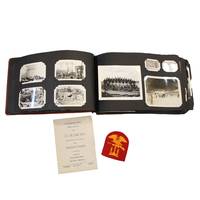
1943rif. 185431943. United States Marine Corps World War II photograph album documenting global American military operations across the Pacific and Atlantic theaters during the 1940s including combat scenes naval deployments and high level wartime leadership meetings. The album records the experience of U.S. Marine personnel during the global campaigns against Axis powers with photographs spanning the South Pacific Japan North Africa the Mediterranean Greenland and Alaska. Numerous images show Marines in active combat environments amphibious landings and wartime garrison life providing visual documentation of the operational geography of the war. The album also preserves photographic evidence of a significant wartime meeting in Hawaii on July 26 1944 when President Franklin Roosevelt met with General Douglas MacArthur and Admiral Chester Nimitz to determine the strategic direction of the Pacific campaign. Roosevelt ultimately endorsed MacArthur's plan to return to the Philippines a decision that shaped the final phase of the Pacific war. Photograph album compiled by a U.S. Marine during World War II containing 364 black and white silver gelatin photographs and 21 real photo postcards depicting American military operations across multiple theaters including Namur Island Peleliu New Guinea the Solomon Islands Tarawa Cape Gloucester Saipan North Africa and Alaska. Several photographs appear to be official Marine Corps press images with printed captions such as "Marines take cover in invasion of Tarawa" "Actual landing operations on South Sea Island" and "Two rear gunners in Guadalcanal bomb shelter." Other images show Marines moving through tropical marshes occupying foxholes standing watch in lookout towers assembling on invasion beaches and operating aboard naval vessels. The album also contains candid images of President Franklin Roosevelt General Douglas MacArthur and Admiral Chester Nimitz taken during the Pacific Strategy Conference in Hawaii with approximately twenty nine photographs documenting the leaders meeting and greeting during wartime consultations. Additional photographs depict local populations encountered by American forces in the South Pacific and North Africa scenes of war damaged buildings and the daily lives of servicemen both on duty and during periods of rest. Album containing 385 photographs in total including 364 silver gelatin prints and 21 real photo postcards with image sizes ranging approximately from 1.75 x 2.75 inches to 3.5 x 4.5 inches. Photographs mounted in an original tobacco leather album. The archive also includes several loose photographs handwritten greeting cards an invitation for officers and crew of the seaplane tender USS Pine Island dated April 26 1945 with program details and a shoulder sleeve insignia for an Engineer Special Brigade. Minor age wear present; photographs remain clear with strong contrast and legible captions. The album provides a wide ranging visual record of American Marine operations during the Second World War linking frontline combat imagery with documentation of the strategic leadership decisions that shaped the Pacific campaign. unknown books
1847rif. 183301847. Utagawa Yoshitora. Ichinoya Kassen 1847 presents a mid nineteenth century ukiyoe interpretation of samurai warfare rooted in the historical memory of the Genpei War a foundational conflict in Japanese military history. The print depicts three samurai engaged in combat two mounted with swords drawn and one on foot wielding a long spear emphasizing coordinated martial roles within battle. Produced during the late Edo period when samurai identity was increasingly codified through visual culture rather than active warfare the image contributes to the preservation and stylization of martial tradition. The detailed rendering of armor and weaponry reflects both historical reference and contemporary interest in the aesthetics of the warrior class situating the work within a broader cultural effort to memorialize feudal conflict in an era of relative peace. Utagawa Yoshitora. Ichinoya Kassen. Japan 1847. Ukiyoe woodblock print. Measures approximately 14 x 9.5 inches. The composition shows three armored samurai each equipped with components of traditional armor including dÅ chest armor sode shoulder guards kote armored sleeves kabuto helmets with shikoro neck guards kusazuri skirt armor haidate thigh guards and suneate shin protection. Two figures ride horses with swords drawn while the third advances on foot with a spear his katana at his side. The background features stylized mountains and ocean waves consistent with Edo period landscape conventions. The print is hand colored with gradations of red and blue tones with strong clarity in line and detail. Created during a period when ukiyoe artists frequently revisited historical battles to reinforce cultural identity the print reflects the enduring significance of samurai narratives within Japanese visual and literary traditions. Scenes such as the Battle of Ichinotani were widely reproduced and circulated contributing to popular historical consciousness and the romanticization of warrior ethos. The emphasis on armor detail and combat posture provides valuable material for the study of military representation in Edo period art. Minor chipping to borders not affecting the image; colors remain vivid and well preserved. Overall very good. unknown books
1950rif. 184651950. Photographic archive of ninety-one silver gelatin prints dating from the 1950s documents the daily military and civilian life of an African American soldier stationed in Japan during the early Cold War less than a decade after President Harry S. Truman's 1948 executive order mandating desegregation of the U.S. Armed Forces. The images capture integrated base life among Black and white servicemen recreational sports teams missile operations and family networks extending between the United States and overseas postings. Produced during a period when the U.S. military served as one of the first federally desegregated institutions the archive situates African American service within the broader context of Cold War geopolitics and the American presence in postwar Japan. Archive consists of ninety-one original vernacular silver gelatin photographs measuring approximately 4 x 5 inches to 3 x 2 inches. Images depict soldiers in baseball uniforms preparing for games vehicles transporting players and spectators group portraits on base with tanks trucks and jet aircraft visible in the background and individual uniformed portraits including one dated 1957 on the verso. One photograph dated "APR 1959" records a missile launch reflecting the technological environment of mid-century military installations. Additional images show African American children in a classroom family members and friends stateside and leisure scenes including three African American men dressed for golf beside a vehicle while the principal subject leans from the window. Several photographs include handwritten inscriptions on the verso addressed to the soldier's wife. Roughly one-third of the images prominently depict African American servicemen often the same two soldiers interacting with both Black and white peers; others show interactions with Japanese civilians and mixed-race groups on base. Created during the consolidation of U.S.-Japan security alliances and amid the evolving implementation of military desegregation the photographs provide visual evidence of integrated service life recreation and family continuity within overseas deployments. The juxtaposition of sports missile testing domestic scenes and cross-cultural encounters reflects the layered realities of African American military experience in the 1950s. Photographs slightly bowed; images crisp with strong detail and clear compositions. Overall very good condition. Cohesive vernacular record of Black military service and everyday life in early Cold War Japan. unknown books
1940rif. 1672121940. RIKUGUN. Nanshi Hakengun. ca. 200 pp. chiefly illustrated. 8vo 258 x 185 mm. publisher's cloth and cardboard slipcase. Tokyo: Kokusai Hodo Kogei Kabushiki Kaisha 1940. A typical example of a wartime Japanese photobook this one being a history of Japanese military activities in China. hardcover books
1885rif. 140621885. Two Japanese sumo wrestlers nineteenth century shown facing one another in a low starting position associated with the opening moments of a bout. The image records sumo as both an athletic practice and a highly recognizable element of Japanese popular culture during the period when commercial photography increasingly circulated images of Japanese occupations customs dress and public entertainments to domestic and foreign audiences. Albumen print measuring 10.5" x 8.5" mounted on split card. The composition isolates the two wrestlers against a largely plain setting directing attention to their crouched bodies stance and clothing rather than to an arena or surrounding spectators. Color has been applied by hand only to the wrestlers' garments a restrained use of hand coloring characteristic of many nineteenth century Japanese commercial photographs. The otherwise uncolored image retains the tonal range of the albumen print while emphasizing the patterned textiles worn by the two men. Sumo underwent substantial institutional change during the Meiji period as Japan reorganized its political and cultural institutions yet the sport remained closely associated with established ceremonial practices professional competition and public entertainment. Photographs such as this circulated recognizable Japanese subjects through the expanding nineteenth century photographic trade while also preserving specific details of wrestlers' dress and positioning. Minor loss of tone and contrast; overall good condition. A focused nineteenth century study of two sumo wrestlers distinguished by selective period hand coloring and an unusually spare composition. unknown books
1885rif. 139321885. Kusakabe Kimbei. Festival Lanterns at Bentendori Yokohama circa 1880s records one of Yokohama's principal commercial streets during the Meiji period when the treaty port served as a major point of exchange between Japanese merchants and foreign residents and travelers. Bentendori was lined with businesses selling silk porcelain ivory work curios photographs and other goods to an international clientele; Kusakabe himself maintained a photographic studio on the street beginning in 1881. Original nineteenth-century hand-colored albumen photograph 8 x 10 inches matted to 10½ x 13 inches. The street is decorated with rows of festival lanterns above the commercial district of Bentendori preserving the appearance of its shops and streetscape during the period of Yokohama's rapid growth as an international port. A label in the lower right corner reads "A 264 Festival Lanterns at Bentendori Yokohama." Kusakabe who had worked as a colorist and assistant to photographers including Felice Beato and Raimund von Stillfried opened his own Yokohama workshop in 1881 and became one of the leading producers of hand-colored photographs for the foreign market. Yokohama had opened to foreign trade in 1859 and developed rapidly during the Meiji era into a center for export commerce and photographic production. Bentendori became especially associated with shops serving foreign visitors including the photographic businesses that sold individual prints and souvenir albums depicting Japanese cities occupations customs and landscapes. Much of pre-earthquake Yokohama was destroyed in the Great KantÅ Earthquake of September 1 1923 making surviving nineteenth-century street views a record of commercial districts whose built environment was subsequently lost or extensively rebuilt. Very good condition. unknown books