Seidel, AAntiquariat.de
Antiquariat.de
Wäre unvergänglich doch die Welt.
réf. 81194Bad Wildungen, Siebenberg-Verlag, o. J. o. S. 8° Oktav, Leinen
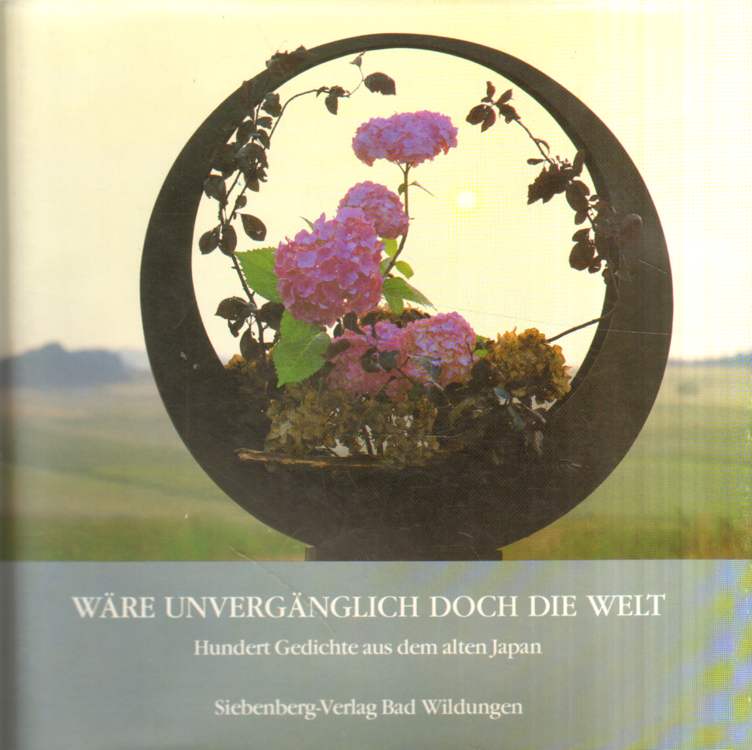
Antiquariat Boller · Allemagne14,10 €
24 794 résultats
1910réf. 11154Berlin, Märkische, 1910. Hln, 517S, gutes Exemplar
réf. 81194Bad Wildungen, Siebenberg-Verlag, o. J. o. S. 8° Oktav, Leinen
1871réf. 51324Stockholm Norstedt & Söner 1871. 4to. Uncut unopened. As extracted without wrappers. Very fine and clean. 64 pp. The rare first printing of the Swedish-Japanese Treaty of 1868; the very first treaty Meiji Government made with a foreign state.The Meiji government was the early government of the Empire of Japan and in April 1868 the Charter Oath was promulgated in which Emperor Meiji set out the broad general outlines for Japan's development and modernization. A central governmental structure or Daijkan was established which included a department of foreign affairs. The present Swedish-Japanese treaty was the very first of a long line of treatise. unknown
1871réf. 51324[Stockholm, Norstedt & Söner, 1871]. 4to. Uncut, unopened. As extracted without wrappers. Very fine and clean. 64 pp.
1945réf. 226061945. WWII Japan Linguistics Katakana: Japanese Syllabic Script. Chief Intelligence Officer Air Command South-East Asia November 1944. First edition. Illustrated throughout with syllabary charts and pronunciation tables. Original printed wrappers. 6 pages. 8vo. Issued for Allied intelligence personnel during World War II this scarce pamphlet provided military staff with an introduction to katakana one of the two Japanese phonetic syllabaries. Prepared under the authority of the Chief Intelligence Officer for Air Command in Southeast Asia the manual emphasizes the script's military utility noting that "on account of its clarity katakana has been adopted by the Armed Forces of Japan for use in the spelling of foreign names and words in signals in maps etc." Explanatory text outlines the history of Japanese writing systems the role of katakana in phonetic transcription and its function in military communications. Pages feature full katakana syllabary charts "additional katakana groups" for voiced and combined sounds a section on Japanese numerals and examples of transliterated foreign names such as "Singapore" "Java" and "Sumatra." The pamphlet also instructs readers that katakana can be written "in almost any direction; left to right or right to left or from top to bottom and even diagonally." Light toning bottom right cover corner clipped interior clean and well-preserved overall very good condition. A rare wartime intelligence manual bridging linguistics and military history this ephemeral publication documents Allied efforts to train personnel in Japanese language recognition and highlights the central role of katakana in wartime communication systems. Particularly significant for institutions collecting on Japanese linguistics World War II intelligence and the history of language pedagogy in military contexts. unknown books
1945réf. 226061945. WWII Japan Linguistics Katakana: Japanese Syllabic Script. Chief Intelligence Officer Air Command South-East Asia November 1944. First edition. Illustrated throughout with syllabary charts and pronunciation tables. Original printed wrappers. 6 pages. 8vo. Issued for Allied intelligence personnel during World War II this scarce pamphlet provided military staff with an introduction to katakana one of the two Japanese phonetic syllabaries. Prepared under the authority of the Chief Intelligence Officer for Air Command in Southeast Asia the manual emphasizes the script's military utility noting that "on account of its clarity katakana has been adopted by the Armed Forces of Japan for use in the spelling of foreign names and words in signals in maps etc." Explanatory text outlines the history of Japanese writing systems the role of katakana in phonetic transcription and its function in military communications. Pages feature full katakana syllabary charts "additional katakana groups" for voiced and combined sounds a section on Japanese numerals and examples of transliterated foreign names such as "Singapore" "Java" and "Sumatra." The pamphlet also instructs readers that katakana can be written "in almost any direction; left to right or right to left or from top to bottom and even diagonally." Light toning bottom right cover corner clipped interior clean and well-preserved overall very good condition. A rare wartime intelligence manual bridging linguistics and military history this ephemeral publication documents Allied efforts to train personnel in Japanese language recognition and highlights the central role of katakana in wartime communication systems. Particularly significant for institutions collecting on Japanese linguistics World War II intelligence and the history of language pedagogy in military contexts. unknown
1982réf. 14105ABTokio, Akane Shobo, 1982. 23 cm. (2) Bl., 54 S. mit zahlr. Farbfotos und Farbzeichnungen. Illustrierter Pappband (Hardcover), Fadenheftung. Im illustrierten Kartonschuber. Minimal bestoßen, sonst tadelloses Exemplar. Universitätsalbum ; 44.
réf. 2081002108300241Shirobei Kitamura Sosuke Kitamura N.A. Soft Cover. Fine. Number of pages: 26 Size: 17cm Shirobei Kitamura Sosuke Kitamura paperback
2005réf. ASI12385Frankfurt. S. Fischer 2005. 141 S. Hardcover mit Schutzumschlag. Lesebändchen. Neuwertig.
1960réf. 2092902140601173Japan Machine Paper Association Keiji Kyushu Hyogo Osaka 4 Branch Joint Editing Desk 1960. Soft Cover. Fine. Size: B6 Number of books: 4 Japan Machine Paper Association Keiji Kyushu Hyogo Osaka 4 Branch Joint Editing Desk paperback
1990réf. 2082402113508150Education Calligraphy Publishing Association 1990. Soft Cover. Fine. Volume: 1 Education Calligraphy Publishing Association paperback
1976réf. 2080502106502789University of Tokyo Press 1976. Soft Cover. Fine. Volume: 1 University of Tokyo Press paperback
2009réf. 2110502150906067Nigensha 2009. Soft Cover. Fine. Volume: 1 Nigensha paperback
réf. 2091502135600040Not Available N.A. Soft Cover. Fine. The book is in fine condition. Not Available paperback
1977réf. 2082402113510135Asunaro Shobo 1977. Soft Cover. Fine. Volume: 1 Asunaro Shobo paperback
1996réf. 2110502151100085Not Available 1996. Soft Cover. Fine. Number of books: 1 Not Available paperback
1996réf. 2092902139000264Naritasan Calligraphy Museum 1996. Soft Cover. Fine. Number of books: 1 Naritasan Calligraphy Museum paperback
2001réf. 2111902160306275Japan Calligraphy Promotion Association 2001. Soft Cover. Fine. Number of pages: 447 pages Size: B6 size Japan Calligraphy Promotion Association paperback
2001réf. 2090502128900094All Japan Seamen's Union 2001. Soft Cover. Fine. Number of pages: 100p Size: 30cm x 21cm Number of books: 1 All Japan Seamen's Union paperback
1984réf. 958491984. 187 S., zahlr. farb. Abb. Gr 4° Br. *gutes Expl.*.
1984réf. 14184Köln, Japanische Kulturinstitut, (1984). Moderne japanische Schreibkunst. Ausstellungskatalog, verzeichnet 68 genau beschriebene Werke. Mit sehr zahlreichen Abbildungen und Beiträgen von Aoyama San`u, Stephen Addis, Barbara Rose, Yanagida Taiun und Irmtraud Schaarschmidt-Richter. 29,5/29,5 cm. 187,5 S. Ill. OBroschur.
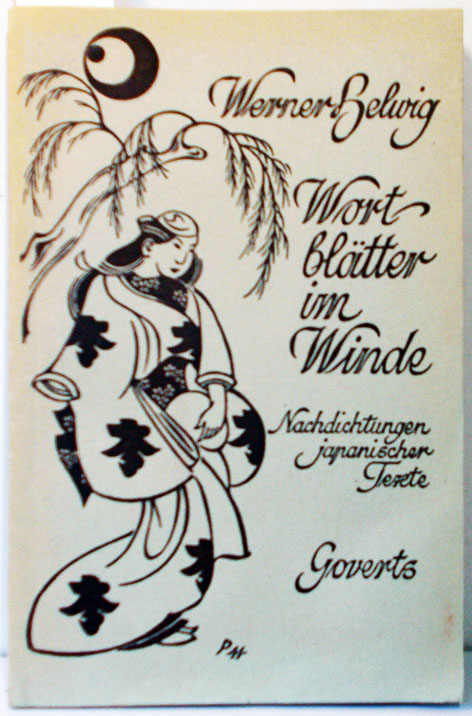
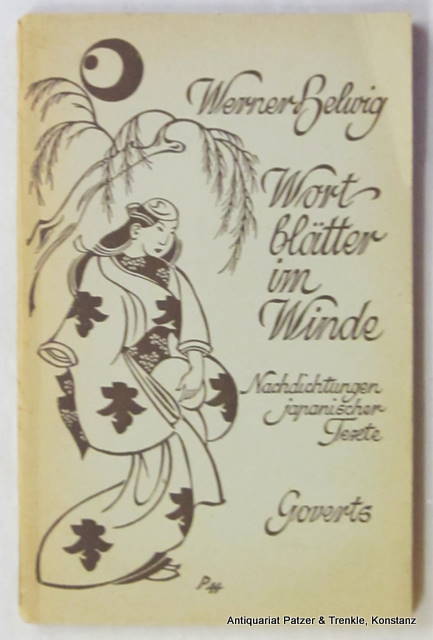
1945réf. B1033Hamburg, H. Goverts Verlag, 1945. Kartoniert, 8°, 71 S., Umschlagzeichnung on Emil Preetorius, Inhalt: Reise kleiner Traurigkeit - Gedichte eines Verbannten - Gedichtnotizen eines Regenschirmwanderers - Das herz des Drachen
1945réf. 75902Deutsche Nachdichtung japanischer Texte. Hamburg, Goverts, 1945. Kl.-8vo. 71 S. Illustr. Or.-Umschlag (Emil Preetorius); Rücken gebräunt. - Papier gebräunt.
1987réf. mon00033136571987T. hardcover. Good. 1.5748 11.8110 9.2126. ??? hardcover