CollectifLivre Rare Book

2.138 Ergebnisse
1982Best.-Nr. 575381 vol. in-8 cartonnage éditeur vert, Editions en Langues Etrangères, Pyongyang, Corée, 1982, 324 pp.
2010Mm 130x215 Europe: revue littéraire mensuelle, 88 année, n° 973, Mai 2010. Brossura editoriale di 380 pagine. Esemplare in ottime condizioni. Testo in lingua francese - french text. SPEDIZIONE IN 24 ORE DALLA CONFERMA DELL'ORDINE.
1982Best.-Nr. 1154831982 Editions en Langues étrangères Pyongyang, RPD de Corée - 1982 - In-4, cartonnage rouge, titre doré sur le premier plat et au dos - 368 p. - Très nombreuses reproductions photographiques en couleurs et en N&B hors-texte
Best.-Nr. wa587Broché TRES RARE. Deux volumes in-4 (21,5 x 27,2 cm), dont un volume broché contenant le texte (506 pp.) avec illustrations en noir et blanc, et une chemise contenant croquis et cartes renseignées, sans date (années 50) ; pliures aux dos, traces et marques d'usure sur les plats, quelques rousseurs, par ailleurs intérieur frais, assez bon état général. Livraison a domicile (La Poste) ou en Mondial Relay sur simple demande.
1987Best.-Nr. dq222Commission Nationale Coréenne pour L'unesco Revue de Corée Dos carré collé 1987 In-8 (15x23 cm), dos carré collé, 106 pages, n°73 de la 'Revue de Corée', volume 19, n°2, été 1987, articles : Opinion publique sous la dynastie Choson, Education nationale, Littérature de la classe moyenne, photographies dans le texte ; coiffe inférieure un peu frottée, légères pliures au premier plat, bon état. Livraison a domicile (La Poste) ou en Mondial Relay sur simple demande.
1989Best.-Nr. dq224Commission Nationale Coréenne pour L'unesco Revue de Corée Dos carré collé 1989 In-8 (15x23 cm), dos carré collé, 112 pages, n°82 de la 'Revue de Corée', volume 21, n°3, automne 1989, articles : Philosophie pour demain, Marchés en Corée, Tonghak et Révolution Française, photographies dans le texte ; coiffe supérieure un peu frottée, plats un peu jaunis, bon état. Livraison a domicile (La Poste) ou en Mondial Relay sur simple demande.
1975Best.-Nr. 88BgParis Ministere De La Defense 1975 In8 163 pages + 41 ff - broché - Au sommaire : Le recrutement des soldats pour l'armée française à livourne au 17e et 18e siècle par JP. Filippini - Les préliminaires de la bataille de verdun par le Colonel Rocolle - l'image de l'aviateur français en 1914-1918 par JP Dournel - strategie et tactique Corée 1950 par Le colonel Delmas - Les forces armées brésiliennes dans la seconde guerre mondiale par le Colonel Ruas Santos - bernar Naudin par F. Escoube -
1975Best.-Nr. 88BgParis Ministere De La Defense 1975 In8 163 pages + 41 ff - broché - Au sommaire : Le recrutement des soldats pour l'armée française à livourne au 17e et 18e siècle par JP. Filippini - Les préliminaires de la bataille de verdun par le Colonel Rocolle - l'image de l'aviateur français en 1914-1918 par JP Dournel - strategie et tactique Corée 1950 par Le colonel Delmas - Les forces armées brésiliennes dans la seconde guerre mondiale par le Colonel Ruas Santos - bernar Naudin par F. Escoube -
2013Best.-Nr. dz1306Kum Kang Sa Sélection Neiges d'Antan Album souple 2013 In-4 (21,5 x 29,5 cm.), album souple, reproduction des calligraphies en couleurs, texte en coréen, catalogue d'exposition au Nomura Art Museum à Kyoto au Japon, légende des calligraphies en chinois - coréen - japonais - anglais ; coiffes et coins un peu frottées, quelques taches à la couverture, intérieur frais, bon état. Livraison a domicile (La Poste) ou en Mondial Relay sur simple demande.
1920Best.-Nr. 008584Paris Aux Editions de la Sirène, Les Tracts 1920 In-12 Broché, couverture rempliée Ed. originale
2013Perché un paese affannato, isolato e quasi arcaico nella sua ortodossia arriva al punto di minacciare una guerra atomica? Cos'è che spinge il "paese eremita" per eccellenza, ormai allo stremo delle proprie forze a sfidare non solo le grandi potenze della regione e gli Stati Uniti, ma lo stesso processo di globalizzazione (e occidentalizzazione) rimanendo chiuso ad ogni contatto con il mondo esterno in un baldanzoso isolamento? Ed infine che cos'è oggi la Corea del Nord ed il suo eccentrico e spietato regime? In ultima istanza, queste sono le domande cui si vuole rispondere, analizzando l'intima natura del più isolato e misterioso del pianeta e il suo modo di approcciarsi al mondo esterno. Tentando, come in puzzle, di ricomporre le varie tessere: dai profondi retaggi storici, alle logiche della propaganda, dalle politiche di appeasement condotte dalla Corea del Sud, agli aspetti più tecnici relativi alla forze armate nordcoreane e alla caparbietà atomica, sino a giungere all'attualità più prossima con un focus particolare sulla leadership del terzo líder máximo: Kim Jong-un. Autori: Claudia Astarita, Stefano F. Beccari, Nunziante Mastrolia.
1988Best.-Nr. 2091502135408057Gaifusha 1988. Soft Cover. Fine. Number of books: 1 Gaifusha paperback
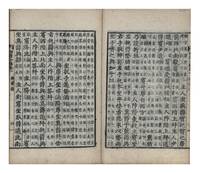
Best.-Nr. 7461Two parts in one vol. Small folio orig. wrappers somewhat tired & a little soiled some light staining & soiling here & there manuscript title on upper cover later stitching. Hansong Seoul: Kyujanggak the Royal Library Preface dated 1793 & 1796. First edition of this handsome and large-format 323 x 217 mm. royal publication. King Chongjo 1752-1800 was one of the most intellectual and enlightened of the Korean monarchs. Perhaps Korea’s greatest bibliophile as royal patron he supported all aspects of the book: typographers printers authors librarians and lexicographers. A number of “royal” editions were published under his auspices. He founded the Kyujanggak Library in 1776 now part of the library of the Seoul National University. “The official rhyming dictionary of Chinese characters compiled under the supervision of King Chongjo and engraved in 1796. The arrangement is different from the usual Korean system in that instead of three rows of characters in the same rhyme there are four rows with the ipsÅng characters distributed in the bottom row” Fang The Asami Library 12.3. The main compiler of this work was the reformer Tong-mu Yi 1741-93 who had travelled to China and was an important member of the Northern Learning School. This group of intellectuals recognized the practical benefits of commerce and technology and urged the modernization of Korean society. Yi was appointed by King ChÅngjo as one of the famed four editors of the Royal Library overseeing the publication of books. A very nice copy. References Fang Chaoying. The Asami Library: A Descriptive Catalog. Edited by Elizabeth Huff. Berkeley: University of California Press 1969. unknown books
Best.-Nr. 7461Two parts in one vol. Small folio orig. wrappers somewhat tired & a little soiled some light staining & soiling here & there manuscript title on upper cover later stitching. Hansong Seoul: Kyujanggak the Royal Library Preface dated 1793 & 1796. First edition of this handsome and large-format 323 x 217 mm. royal publication. King Chongjo 1752-1800 was one of the most intellectual and enlightened of the Korean monarchs. Perhaps Korea’s greatest bibliophile as royal patron he supported all aspects of the book: typographers printers authors librarians and lexicographers. A number of “royal” editions were published under his auspices. He founded the Kyujanggak Library in 1776 now part of the library of the Seoul National University. “The official rhyming dictionary of Chinese characters compiled under the supervision of King Chongjo and engraved in 1796. The arrangement is different from the usual Korean system in that instead of three rows of characters in the same rhyme there are four rows with the ipsÅng characters distributed in the bottom row” Fang The Asami Library 12.3. The main compiler of this work was the reformer Tong-mu Yi 1741-93 who had travelled to China and was an important member of the Northern Learning School. This group of intellectuals recognized the practical benefits of commerce and technology and urged the modernization of Korean society. Yi was appointed by King ChÅngjo as one of the famed four editors of the Royal Library overseeing the publication of books. A very nice copy. References Fang Chaoying. The Asami Library: A Descriptive Catalog. Edited by Elizabeth Huff. Berkeley: University of California Press 1969. unknown
1797Best.-Nr. 111991797. Woodblock-printed. 4 1 16 39; 40 33 2 folding leaves. Three kwÅn in two volumes. Small folio 341 x 216 mm. orig. semi-stiff patterned wrappers handwritten title on upper covers old stitching. HansÅng: Chujaso Preface dated 1797. Very rare Korean collection of community rituals K. hyangnye 鄉禮 compiled by and printed for the King of Korea. We find no copy in Korea and only three copies in WorldCat Berkeley Columbia and Harvard. The reign of King ChÅngjo of Korea r. 1776-1800 witnessed a shift in the sovereign’s role in relation to Confucian teachings. “ChÅngjo sought to formulate the sage-king as an active ruler who instructed his ministers rather than received instruction from them was directly involved in the administration of the state and exercised discretion when and how he in his sagely wisdom deemed fit.”–Christopher Lovins King ChÅngjo SUNY: 2019 p. 29. As the guardian and propagator of Confucian learning he oversaw various editorial and printing projects carried out by the royal publishing house the Chujaso 鑄字所. The compilation and publication of the Collected Community Rituals reflected King ChÅngjo’s belief that a king’s ritual transformation of his people must begin at the local level. The Collected Community Rituals opens with the royal edict dated 1797 followed by a list of community ritual records compiled throughout Chinese and Korean history. The bulk of the work is devoted to the rituals of the banquet and archery competitions followed by coming-of-age K. kwanrye 冠禮 and marriage rituals. Detailed interlinear commentaries were compiled by scholars of the Kyujanggak 奎章閣 the Royal Library of the Korean court under the leadership of Yi PyÅng-mo 1742-1806. Their names are listed at the end of volume two. The original printing used the chÅngyuja ä¸é…‰å— kabinja style of movable metal type of 1777 and copies were distributed to localities throughout Korea. They were also sent to regional governmental printing houses where they were cannibalized to produce woodblocks for further printing. Nice set preserved in a jil. Our copy also has prayers for ancestral mountain and land deities as well as instructions for offering rites all handwritten in black ink on the endpapers. Red leaf-shaped seals on the first leaf of both volumes read 逸民山水 . ⧠Asami Library 4.14. King ChÅngjo Hongjae chÅnsÅ 弘齋全書 in Han’guk munjip ch’onggan 韓國文集å¢åˆŠ digital access via krpia.co.kr. unknown books
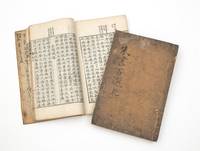
Best.-Nr. 889392.5; 95 folding leaves. Two vols. Small folio orig. yellow-brown patterned wrappers some soiling to wrappers old stitching. ChÅnju today’s Jeonju: 1795 or possibly later. A selection of 100 letters written by Zhu Xi 1130-1200 the great synthesizer of the philosophical school known as Neo-Confucianism. Zhu Xi who lived in southeastern coastal China far from the center of power became extremely influential in East Asia for centuries following his death. His interpretation of Neo-Confucianism a metaphysically argued philosophy of the self the family and the state became official orthodoxy in late imperial China and ChosÅn Korea promulgated largely through the civil service examination system. However there were challenges to its primacy from intellectuals especially from the 18th century onward. “In the opinion of many historians the Song’s preeminent philosopher Zhu Xi outshined Confucius himself. He was the only person in Chinese history apart from Confucius and Mencius whom the official hagiography addressed as Master” Kuhn The Age of Confucian Rule 103. Given Zhu Xi’s standing in Korea several collections of excerpts from his works were published beginning in the 16th century. On account of its authorship Royally Authorized Selection of One Hundred Letters by Zhu Xi became one of the most widely circulated such collections for the last century of the ChosÅn period. According to the court chronicle the culturally ambitious King ChÅngjo 1752-1800 himself made the selection on the basis of Zhu Xi’s collected works a voluminous oeuvre that numbered 2354 pieces of writing in one scholar’s recent count. Text-critical notes e.g. on place names personal names official titles and expressions that might be unfamiliar to Korean readers were then added by four high civil officials which were printed in the upper margin of the text. The book was finished on the 25th day of the 12th month of the 18th year of ChÅngjo’s reign Qianlong 59 which corresponds to 15 January 1795. While most of the 18th year corresponds to 1794 it is incorrect to date the book to that year. The book was first printed in Seoul with metal movable type — the so-called chÅng’yu cha ä¸é…‰å— set of type cast in 1777 the chÅng’yu year when ChÅngjo ascended the throne. Further editions were subsequently published at several provincial offices using woodblocks intended for wide dissemination among the educated elite. Our copy belongs to one of these provincial woodblock editions. The title-page says ŭlmyo wanyÅng kan’in ä¹™å¯å®Œç‡ŸåˆŠå° meaning that it was printed in 1795 the ŭlmyo year in the provincial government offices at ChÅnju Jeonju in what is now southern South Korea. However it is possible that the actual copy was struck later than that date as the blocks remained on the site. They were moved to the local official Confucian school in 1899 where they remain today. Fine set of a very rare book. Minor staining and soiling at beginning and end of each volume. ⧠WorldCat accession number 874756267. References Kuhn Dieter. The Age of Confucian Rule: The Song Transformation of China. Cambridge: Mass.: Harvard University Press 2011. unknown books
1797Best.-Nr. 111991797. Woodblock-printed. 4 1 16 39; 40 33 2 folding leaves. Three kwÅn in two volumes. Small folio 341 x 216 mm. orig. semi-stiff patterned wrappers handwritten title on upper covers old stitching. HansÅng: Chujaso Preface dated 1797. Very rare Korean collection of community rituals K. hyangnye 鄉禮 compiled by and printed for the King of Korea. We find no copy in Korea and only three copies in WorldCat Berkeley Columbia and Harvard. The reign of King ChÅngjo of Korea r. 1776-1800 witnessed a shift in the sovereign’s role in relation to Confucian teachings. “ChÅngjo sought to formulate the sage-king as an active ruler who instructed his ministers rather than received instruction from them was directly involved in the administration of the state and exercised discretion when and how he in his sagely wisdom deemed fit.”–Christopher Lovins King ChÅngjo SUNY: 2019 p. 29. As the guardian and propagator of Confucian learning he oversaw various editorial and printing projects carried out by the royal publishing house the Chujaso 鑄字所. The compilation and publication of the Collected Community Rituals reflected King ChÅngjo’s belief that a king’s ritual transformation of his people must begin at the local level. The Collected Community Rituals opens with the royal edict dated 1797 followed by a list of community ritual records compiled throughout Chinese and Korean history. The bulk of the work is devoted to the rituals of the banquet and archery competitions followed by coming-of-age K. kwanrye 冠禮 and marriage rituals. Detailed interlinear commentaries were compiled by scholars of the Kyujanggak 奎章閣 the Royal Library of the Korean court under the leadership of Yi PyÅng-mo 1742-1806. Their names are listed at the end of volume two. The original printing used the chÅngyuja ä¸é…‰å— kabinja style of movable metal type of 1777 and copies were distributed to localities throughout Korea. They were also sent to regional governmental printing houses where they were cannibalized to produce woodblocks for further printing. Nice set preserved in a jil. Our copy also has prayers for ancestral mountain and land deities as well as instructions for offering rites all handwritten in black ink on the endpapers. Red leaf-shaped seals on the first leaf of both volumes read 逸民山水 . ⧠Asami Library 4.14. King ChÅngjo Hongjae chÅnsÅ 弘齋全書 in Han’guk munjip ch’onggan 韓國文集å¢åˆŠ digital access via krpia.co.kr. unknown
Best.-Nr. 889392.5; 95 folding leaves. Two vols. Small folio orig. yellow-brown patterned wrappers some soiling to wrappers old stitching. ChÅnju today’s Jeonju: 1795 or possibly later. A selection of 100 letters written by Zhu Xi 1130-1200 the great synthesizer of the philosophical school known as Neo-Confucianism. Zhu Xi who lived in southeastern coastal China far from the center of power became extremely influential in East Asia for centuries following his death. His interpretation of Neo-Confucianism a metaphysically argued philosophy of the self the family and the state became official orthodoxy in late imperial China and ChosÅn Korea promulgated largely through the civil service examination system. However there were challenges to its primacy from intellectuals especially from the 18th century onward. “In the opinion of many historians the Song’s preeminent philosopher Zhu Xi outshined Confucius himself. He was the only person in Chinese history apart from Confucius and Mencius whom the official hagiography addressed as Master” Kuhn The Age of Confucian Rule 103. Given Zhu Xi’s standing in Korea several collections of excerpts from his works were published beginning in the 16th century. On account of its authorship Royally Authorized Selection of One Hundred Letters by Zhu Xi became one of the most widely circulated such collections for the last century of the ChosÅn period. According to the court chronicle the culturally ambitious King ChÅngjo 1752-1800 himself made the selection on the basis of Zhu Xi’s collected works a voluminous oeuvre that numbered 2354 pieces of writing in one scholar’s recent count. Text-critical notes e.g. on place names personal names official titles and expressions that might be unfamiliar to Korean readers were then added by four high civil officials which were printed in the upper margin of the text. The book was finished on the 25th day of the 12th month of the 18th year of ChÅngjo’s reign Qianlong 59 which corresponds to 15 January 1795. While most of the 18th year corresponds to 1794 it is incorrect to date the book to that year. The book was first printed in Seoul with metal movable type — the so-called chÅng’yu cha ä¸é…‰å— set of type cast in 1777 the chÅng’yu year when ChÅngjo ascended the throne. Further editions were subsequently published at several provincial offices using woodblocks intended for wide dissemination among the educated elite. Our copy belongs to one of these provincial woodblock editions. The title-page says ŭlmyo wanyÅng kan’in ä¹™å¯å®Œç‡ŸåˆŠå° meaning that it was printed in 1795 the ŭlmyo year in the provincial government offices at ChÅnju Jeonju in what is now southern South Korea. However it is possible that the actual copy was struck later than that date as the blocks remained on the site. They were moved to the local official Confucian school in 1899 where they remain today. Fine set of a very rare book. Minor staining and soiling at beginning and end of each volume. ⧠WorldCat accession number 874756267. References Kuhn Dieter. The Age of Confucian Rule: The Song Transformation of China. Cambridge: Mass.: Harvard University Press 2011. unknown
1985In-8 (cm. 21), brossura, titolo al dorso, pp. 140. In buono stato di conservazione (good copy).
2002Best.-Nr. 2091502133905412Not Available 2002. Soft Cover. Fine. Volume: 1 Not Available paperback
2002Best.-Nr. 2091502133905796Not Available 2002. Soft Cover. Fine. Volume: 1 Not Available paperback
1986Best.-Nr. 22891Heidelberg, Koreagruppe der ESG-Heidelberg, 1986. 4°. 171,(1) S., mit zahlreichen Abbildungen. Orig.-Kartonage. [5 Warenabbildungen]
Best.-Nr. 1016378254.Ghardcover. Good. Access codes and supplements are not guaranteed with used items. May be an ex-library book. hardcover
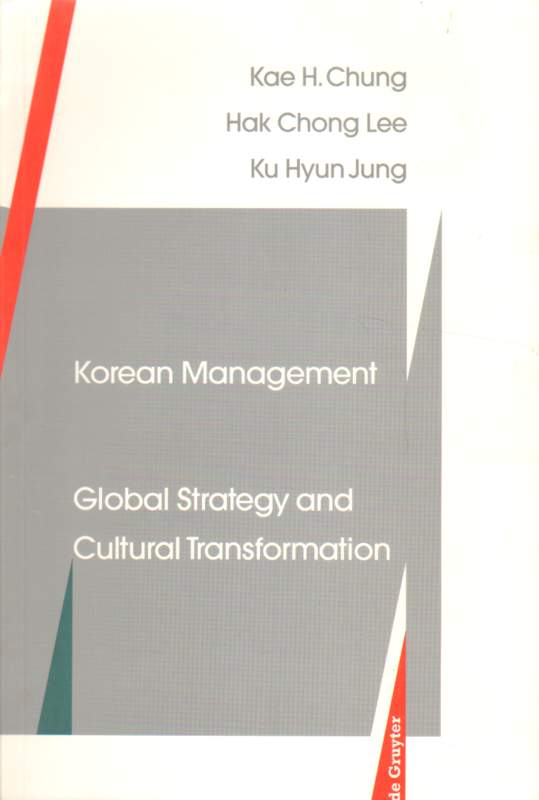
1997Best.-Nr. 17970Berlin de Gruyter, 1997. VII + 268 S. Gr. 8° Groß-Oktav Brosch.
1990Best.-Nr. 6044627Köln 1990. 8°. XXVIII, 451, (1) pp. Broschur. Signaturschild und Stempel auf Umschlag. Stempel verso Titel. Sonst sehr ordentlich. Sauberes Exemplar ohne Gebrauchsspuren.