Jinyong, JeongAntiquariat.de
2.290 resultados
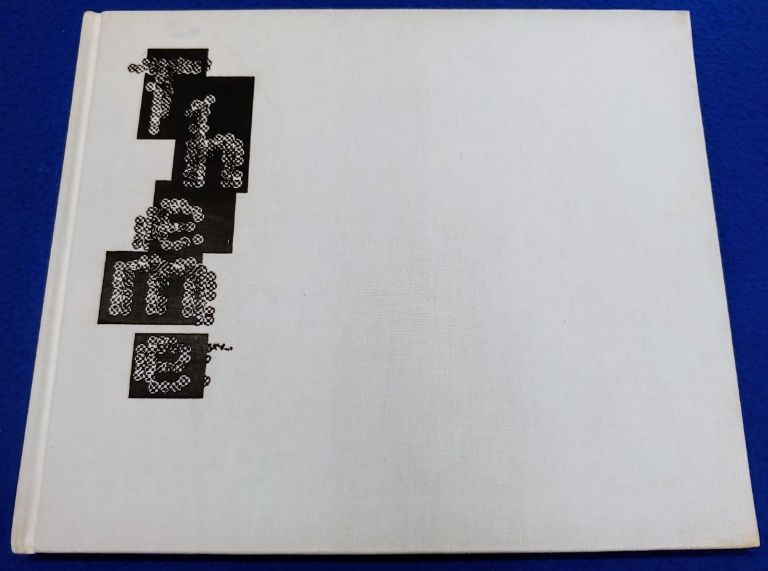
2006ref. 24596Taipei, Taiwan, Star85 Art Space, 2006. Text in chinesischer und englischer Sprache. - Text in Chinese and English. 17 Bl. Quer-4° (29 x 25 cm), OLwd. [4 Warenabbildungen]
2012ref. 28277BBDaejeon, Publishers: National Research Institute of Cultural Heritage, 2012. Publishers: National Research Institute of Cultural Heritage (2012). 411 Pages, one CD-ROM. Original Flexible Boards (titled). Very good Condition with only minimal Signs of Usage at the Cover. No Markings in the Text! No Underlinings! No Owner-Notation! ('Reports and Catalogues of Survey Results on Korean Artifacts housed on foreign Institutions', Volume 23).
1994ref. 281981Seoul: Ahn graphics 1994. 268 S., einige 100 s/w Abb. 4° Kart. *Text: kroean./engl.* neuwertig*.
1987ref. 52668Köln 1987. 136 S., sehr zahlr. z.T. farb. Abb. Glossar. Lit.verz. 4° Br.
1988ref. 281989Seoul: Museum of Korean Embroidery 1988. 151 S., durchgehend mit farb. Abb. 4° Br..iS. *sehr gutes Expl.* Korea, Stoffe.
1985ref. 1252246(Hrsg.:) Korea National Tourism Corporation, (ca. 1985). 119 S.; graph. Darst.; Tab.; 26 cm; kart.
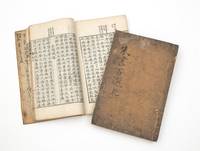
ref. 889392.5; 95 folding leaves. Two vols. Small folio orig. yellow-brown patterned wrappers some soiling to wrappers old stitching. ChÅnju today’s Jeonju: 1795 or possibly later. A selection of 100 letters written by Zhu Xi 1130-1200 the great synthesizer of the philosophical school known as Neo-Confucianism. Zhu Xi who lived in southeastern coastal China far from the center of power became extremely influential in East Asia for centuries following his death. His interpretation of Neo-Confucianism a metaphysically argued philosophy of the self the family and the state became official orthodoxy in late imperial China and ChosÅn Korea promulgated largely through the civil service examination system. However there were challenges to its primacy from intellectuals especially from the 18th century onward. “In the opinion of many historians the Song’s preeminent philosopher Zhu Xi outshined Confucius himself. He was the only person in Chinese history apart from Confucius and Mencius whom the official hagiography addressed as Master” Kuhn The Age of Confucian Rule 103. Given Zhu Xi’s standing in Korea several collections of excerpts from his works were published beginning in the 16th century. On account of its authorship Royally Authorized Selection of One Hundred Letters by Zhu Xi became one of the most widely circulated such collections for the last century of the ChosÅn period. According to the court chronicle the culturally ambitious King ChÅngjo 1752-1800 himself made the selection on the basis of Zhu Xi’s collected works a voluminous oeuvre that numbered 2354 pieces of writing in one scholar’s recent count. Text-critical notes e.g. on place names personal names official titles and expressions that might be unfamiliar to Korean readers were then added by four high civil officials which were printed in the upper margin of the text. The book was finished on the 25th day of the 12th month of the 18th year of ChÅngjo’s reign Qianlong 59 which corresponds to 15 January 1795. While most of the 18th year corresponds to 1794 it is incorrect to date the book to that year. The book was first printed in Seoul with metal movable type — the so-called chÅng’yu cha ä¸é…‰å— set of type cast in 1777 the chÅng’yu year when ChÅngjo ascended the throne. Further editions were subsequently published at several provincial offices using woodblocks intended for wide dissemination among the educated elite. Our copy belongs to one of these provincial woodblock editions. The title-page says ŭlmyo wanyÅng kan’in ä¹™å¯å®Œç‡ŸåˆŠå° meaning that it was printed in 1795 the ŭlmyo year in the provincial government offices at ChÅnju Jeonju in what is now southern South Korea. However it is possible that the actual copy was struck later than that date as the blocks remained on the site. They were moved to the local official Confucian school in 1899 where they remain today. Fine set of a very rare book. Minor staining and soiling at beginning and end of each volume. ⧠WorldCat accession number 874756267. References Kuhn Dieter. The Age of Confucian Rule: The Song Transformation of China. Cambridge: Mass.: Harvard University Press 2011. unknown
ref. 7461Two parts in one vol. Small folio orig. wrappers somewhat tired & a little soiled some light staining & soiling here & there manuscript title on upper cover later stitching. Hansong Seoul: Kyujanggak the Royal Library Preface dated 1793 & 1796. First edition of this handsome and large-format 323 x 217 mm. royal publication. King Chongjo 1752-1800 was one of the most intellectual and enlightened of the Korean monarchs. Perhaps Korea’s greatest bibliophile as royal patron he supported all aspects of the book: typographers printers authors librarians and lexicographers. A number of “royal” editions were published under his auspices. He founded the Kyujanggak Library in 1776 now part of the library of the Seoul National University. “The official rhyming dictionary of Chinese characters compiled under the supervision of King Chongjo and engraved in 1796. The arrangement is different from the usual Korean system in that instead of three rows of characters in the same rhyme there are four rows with the ipsÅng characters distributed in the bottom row” Fang The Asami Library 12.3. The main compiler of this work was the reformer Tong-mu Yi 1741-93 who had travelled to China and was an important member of the Northern Learning School. This group of intellectuals recognized the practical benefits of commerce and technology and urged the modernization of Korean society. Yi was appointed by King ChÅngjo as one of the famed four editors of the Royal Library overseeing the publication of books. A very nice copy. References Fang Chaoying. The Asami Library: A Descriptive Catalog. Edited by Elizabeth Huff. Berkeley: University of California Press 1969. unknown
1985ref. 3142457Seoul, Korea: Seoul International Publishing House 1985. 127 Seiten. Zweispaltiger Druck. Mit zahlreichen, farbigen Fotografien und Erläuterungen zu den Bildern im Anhang. Quer-4° (25,5 x 26,5 cm). Orig.-Pappband mit illustriertem Orig.-Schutzumschlag. [Hardcover / fest gebunden].
1994ref. 258136Motorbooks International, 1994.
1984ref. 24837Hamburg , Köln, 1984. 239 S.; zahlr. Abb. brosch.
2003ref. 53958Emarcy Records, 2003. 038 023-2 2 SACD, 46 S.; Abb. Digipak
1978ref. 64899Berlin : Deutscher Verlag d. Wiss., VEB 1978. 349, [18] S. : Ill., Kt. ; 21 cm Pp., gebundene Ausgabe, Hardcover/Pappeinband, leichte Gebrauchsspuren am Einband, sonst guter Zustand
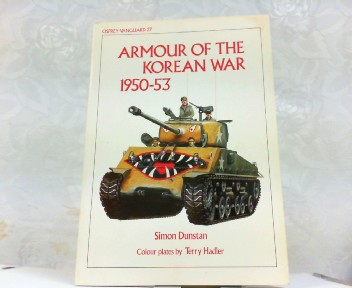
1990ref. 98220London, Osprey Publishing, 1990.
1986ref. 3114525Frankfurt am Main: Selbstverlag 1986. (3), III, 220, (1) Seiten. Als Typoskript gedruckt. 8° (17,5-22,5 cm). Orig.-Broschur. [Softcover / Paperback].
1984ref. 22867Bonn, 1984. Gr.-8°. 119,(1) S., mit zahlreichen Abbildungen. Orig.-Kartonage. [4 Warenabbildungen]
1965ref. 33280Huber, Frauenfeld (1965). Mit 56 Abbildungen und 8 Kartenskizzen. 91 S. OLwd. mit Schutzum. Gutes Exemplar.
1929ref. 129452Wildpark-Potsdam: Akademische Verlagsgesellschaft Athenaion, 1929. 198 S. ; 29 x 23,5 cm ; Leinen.
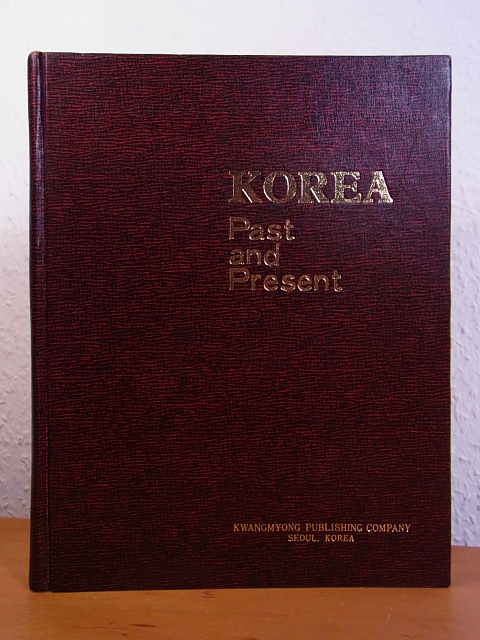
1972ref. 90645Kwangmyong Publishing Company, Seoul/Korea, 1972. 25 cm ; Pp.
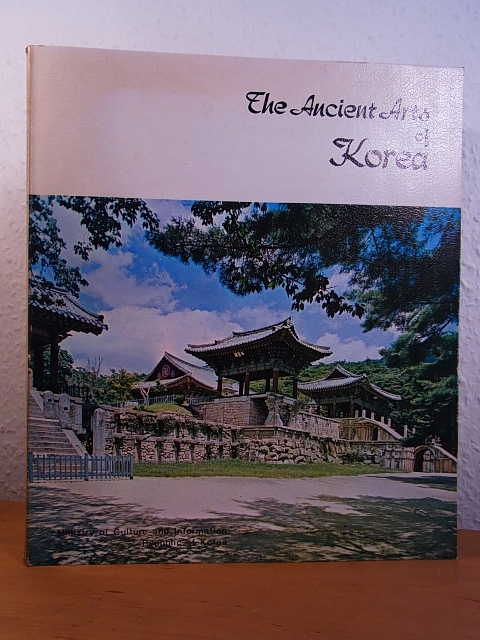
1972ref. 90642Ministry of Culture and Information Republic of Korea, 1972. 28 cm ; kart.
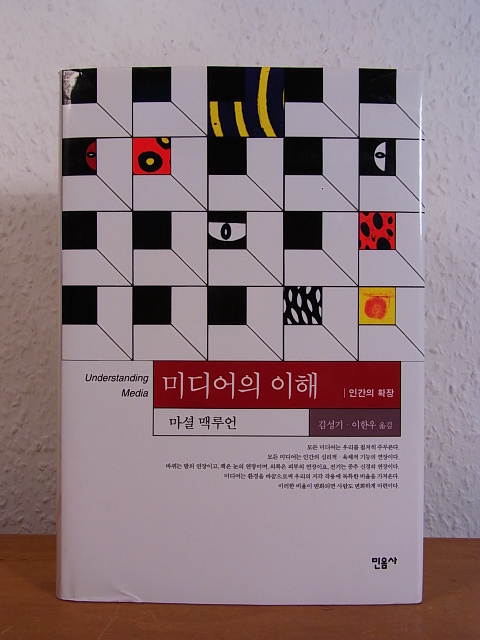
2007ref. 124404Minumsa, Seoul, Korea, 2007. 23 cm ; Pp.
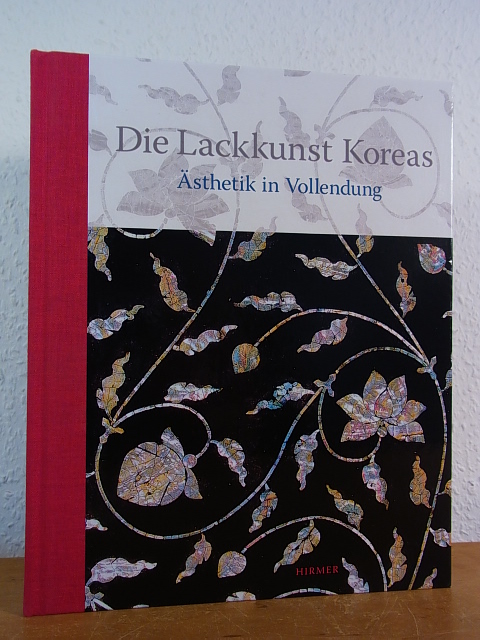
2012ref. 114211München: Hirmer Verlag, 2012. 30,5 cm ; Halbleinen
2007ref. 101426Minumsa, Seoul, Korea, 2007. 23 cm ; Pp.
1967ref. 90626The Korea Information Service, Seoul/Korea, 1967. 21 cm ; Pp.
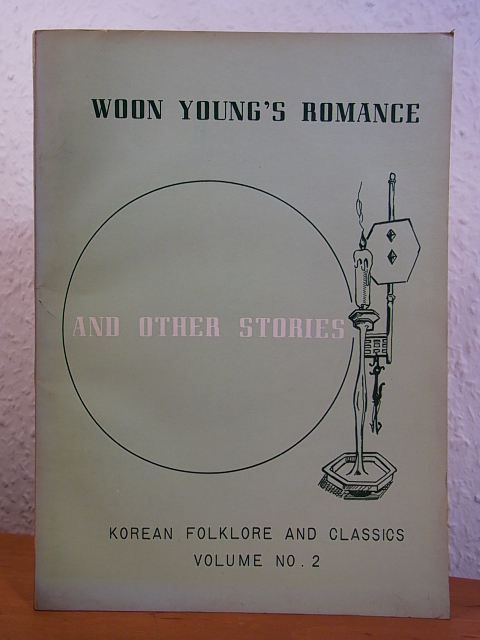
1970ref. 90648English Student Association, Department of English Language and Literature, Ewha Womans University, 1970. 22 cm ; broschiert