1.729 resultados
1972ref. 128666Seoul Korea: Samhwa 1972. Hardcover. VG/ VG/ VG. Light brown cloth boards dark green dj with bw illus. stiff paper slipcase; 64 pp of text 200 pp of illustrations 100 plates chiefly in color tipped-in errata sheet In Korean and English. From the foreword: likely the museum's first color publication. Plates of works in the museum with annotations in both languages. Samhwa hardcover books
1999ref. 237831999. Softcover. VG. White wraps. 15 pp. 12 color plates. Text in Korean and English. Includes an introductory essay by Ann Landi a biographical chronology and the intriguing illustrations. paperback books
1978ref. 204410San Bernadino: Los Padrinos of Southern California 1978. Magazine. 52p. includes covers. 8.5x11 inches photos ads stories very good magazine in stapled pictorial wraps. Cover story "Are Chicanos Getting Adequate Youth Services Los Padrinos of Southern California unknown books
1978ref. 202200San Bernadino: Los Padrinos of Southern California 1978. Magazine. 52p. includes covers. 8.5x11 inches photos ads stories very good magazine in stapled pictorial wraps rubberstamp on front cover. Cover story " Are Hispanic Seniors Getting Their Fair Share Los Padrinos of Southern California unknown books
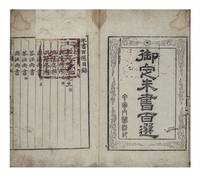
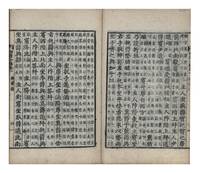
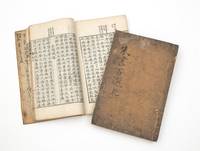
ref. 11191. 1 p.l. 4 25 34 29; 37 30 28 folding leaves. Six kwÅn in two volumes. Small folio 360 x 223 mm. orig. wrappers some wear & rubbing handwritten title on covers orig. stitching. HansÅng: Kyujanggak ca. 1799. A royal gift presented by the king of Korea. In 1794 King ChÅngjo 1752-1800 of the ChÅson dynasty compiled and had printed a collection of the letters of the great Neo-Confucian philosopher Zhu Xi 朱熹 1130-1200 to be disseminated throughout his kingdom. As King ChÅngjo wrote on this occasion “the learning of Master Zhu in its expansive and oceanic plentitude is best represented by his collected writings; the writings of Master Zhu in their utmost subtlety and precision are best represented by his personal correspondences” “ChusÅ paeksÅn yukkwÅn” 朱書百é¸å…å· in Hongjae chÅnsÅ 弘齋全書 Collected Writings of King ChÅngjo kwÅn 180. Drawing from a number of established collections he selected 100 letters and carefully arranged them “beginning with the letter to Yanping 延平 i.e. Li Tong æŽä¾— 1093-1163 Zhu Xi’s teacher to pronounce his lineage of instruction and ending with the letter to Zhiqing ç›´å¿ i.e. Huang Gan 黃干 1152-1221 Zhu Xi’s disciple to demonstrate the bestowment of teachings.” That 1794 edition with moderate marginal annotations on “personal and place names as well as philological glosses and references” was sent to be printed with the chÅngyuja ä¸é…‰å— metal type cast in the year 1777. Printed copies were sent to various official printing houses throughout the kingdom and used as models to carve woodblocks for a xylographic edition ibid. Sometime around 1799 realizing that in the capital only metal type copies of the book remained the king ordered woodblocks to be made locally as well for the work so that more copies could be printed and distributed ChÅngjo “Sinin ogyÅng…” æ–°å°äº”經… in Hongjae chÅnsÅ kwÅn 36. Most woodblock re-editions of this work retain the original title-page which contains not only the title Royal Edition of a Hundred Selected Letters of Zhu K. ŎjÅng chusÅ paeksÅn å¾¡å®šæœ±æ›¸ç™¾é¸ but also the inscription in seal script that reads ç”²å¯…å…§é–£æ´»å° — “palace edition printed with movable type in the kabin year 1794.” This title-page compounded with the absence of any additional paratextual information likely resulted in the description of these woodblock re-editions as the original metal type 1794 edition in spite of lacking the features of metal typography. We have carefully examined our copy and found that it was likely printed with the woodblocks carved around 1799 undoubtedly through the cannibalization of a typographic copy and kept within the royal library. Certain qualities of our copy make it distinctive: not only are the cursive characters rendered with impressive clarity the marginal annotations mentioned in King ChÅngjo’s edict are also preserved in faux-manuscript style — a feature absent in some other copies we have consulted erroneously described as the 1794 edition. The best evidence that our copy was printed by the royal library K. kyujanggak 奎章閣 of course is the fact that it was a royal gift K. naesabon 內賜本 presented by the king himself to notable officials or individuals in this case an examinee from SuwÅnbu 水原府. The “Record of Presentation” K. naesagi 內賜記 is handwritten on the front endpaper of the first volume as usual and is dated to the second month of Xianfeng 5 1855. However both the name of the recipient and the official responsible for the Record have been obscured. A name Im Hŭi-ji 林熙之 is written next to the name of the recipient but in a clearly different hand and ink. Records of the Royal Secretariat K. SŭngjÅngwÅn ilgi 承政院日記 states that on the 29th day of this month copies of the Hundred Selected Letters were indeed bestowed to six examinees but all their names are not given. On the first leaf of the table of contents and facing the title-page is the Seal of Presentation K. naesa’in å…§è³œå° which reads å¥Žç« ä¹‹å® Treasure of the Kyujanggak. This seal was used for presentation copies roughly between 1782 and 1894 as shown by Lee & Song in “A Study on Naesabon Preserved in Kyujanggak” in Journal of Korean Library and Information Science Society 43 no. 2. This book is rare outside of East Asia. We find three copies under WorldCat 35891835 with a misspelled title and described as the 1794 edition on account of the aforementioned title-page which our copy also possesses. None of them is described as a presentation copy. Very good set. Some occasional soiling and dampstaining. Unimportant worming mostly marginal. â§ King ChÅngjo Hongjae chÅnsÅ 弘齋全書 in Han’guk munjip ch’onggan 韓國文集å¢åˆŠ digital access via krpia.co.kr. unknown books
1797ref. 111991797. Woodblock-printed. 4 1 16 39; 40 33 2 folding leaves. Three kwÅn in two volumes. Small folio 341 x 216 mm. orig. semi-stiff patterned wrappers handwritten title on upper covers old stitching. HansÅng: Chujaso Preface dated 1797. Very rare Korean collection of community rituals K. hyangnye 鄉禮 compiled by and printed for the King of Korea. We find no copy in Korea and only three copies in WorldCat Berkeley Columbia and Harvard. The reign of King ChÅngjo of Korea r. 1776-1800 witnessed a shift in the sovereign’s role in relation to Confucian teachings. “ChÅngjo sought to formulate the sage-king as an active ruler who instructed his ministers rather than received instruction from them was directly involved in the administration of the state and exercised discretion when and how he in his sagely wisdom deemed fit.”–Christopher Lovins King ChÅngjo SUNY: 2019 p. 29. As the guardian and propagator of Confucian learning he oversaw various editorial and printing projects carried out by the royal publishing house the Chujaso 鑄字所. The compilation and publication of the Collected Community Rituals reflected King ChÅngjo’s belief that a king’s ritual transformation of his people must begin at the local level. The Collected Community Rituals opens with the royal edict dated 1797 followed by a list of community ritual records compiled throughout Chinese and Korean history. The bulk of the work is devoted to the rituals of the banquet and archery competitions followed by coming-of-age K. kwanrye 冠禮 and marriage rituals. Detailed interlinear commentaries were compiled by scholars of the Kyujanggak 奎章閣 the Royal Library of the Korean court under the leadership of Yi PyÅng-mo 1742-1806. Their names are listed at the end of volume two. The original printing used the chÅngyuja ä¸é…‰å— kabinja style of movable metal type of 1777 and copies were distributed to localities throughout Korea. They were also sent to regional governmental printing houses where they were cannibalized to produce woodblocks for further printing. Nice set preserved in a jil. Our copy also has prayers for ancestral mountain and land deities as well as instructions for offering rites all handwritten in black ink on the endpapers. Red leaf-shaped seals on the first leaf of both volumes read 逸民山水 . â§ Asami Library 4.14. King ChÅngjo Hongjae chÅnsÅ 弘齋全書 in Han’guk munjip ch’onggan 韓國文集å¢åˆŠ digital access via krpia.co.kr. unknown books
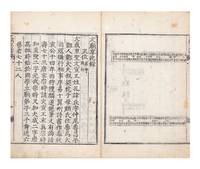
ref. 9430Four leaves of illus. 30 folding leaves. Large 8vo 305 x 208 mm. orig. yellow semi-stiff wrappers upper wrappers somewhat soiled both wrappers with some worming new stitching. Korea: 1765. First edition of this book published on royal command by King YÅngjo of ChosÅn. The book was compiled by Kim Kwi-ju 金龜柱 1740-86 the older brother of Queen Consort ChÅngsun 1745-1805. The royal Preface is furthermore written in Kim’s standard script calligraphy. Years after the compilation of this book factional intrigue under YÅngjo’s successor ChÅngjo led to Kim being exiled after which he soon died. Our book outlines sacrifices at the Confucian temple in Seoul including the KyesÅng å•“è–ç¥ and SongjÅl 崇節祠 shrines. The KyesÅng shrine built in 1669 was the site of sacrifices to the fathers of several Confucian sages including Confucius and Mencius. At the temple as a whole a number of Chinese and Korean Confucian sages and worthies were worshipped. The book contains illustrations outlining the layout of the shrines with the placement of the tablets for the various Confucian scholars marked with their names. The royal Preface is dated 1765. Ordering the compilation of a record of past exemplars apparently made the king reflect on his own character and actions. He wrote “when I with my shallow learning recite the writings of the sages and worthies but remain unable to learn the Way of the sages and worthies and when I admire the deeds of the sages and worthies but cannot act in their manner it is like knowing what something tastes like but not get to eat it or like knowing the road but being unable to follow it. Even though I might laugh at people of the past why would people of the future not laugh at me too” Minor worming mostly marginal towards end. See WorldCat 855527023 for a digital copy. unknown books
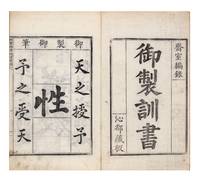
ref. 942941 folding leaves. Large 8vo 337 x 206 mm. orig. semi-stiff wrappers new stitching. Korea: Simdo æ²éƒ½ 1756. First edition and rare; WorldCat lists only one printed copy at Berkeley. This book of exhortations on good government with striking royal calligraphy was written by King YÅngjo or Yeongjo of ChosÅn 1694-1776 in 1756. At this time YÅngjo was commemorating the death of his father the previous king. According to Fang Chaoying 1908-85 YÅngjo then in his 65th year “could not foresee that he was to live twenty more years and so it appears that he was trying to justify himself in his own mind with regard to posterity as well as to the ancestors whom he expected to face any day” The Asami Library 115. YÅngjo offered three main principles for a king to follow: “to venerate Heaven to love the people and to treat the officials with respect” ibid. Large standard script characters written by the king himself are reproduced in the beginning of the book. The king’s brush records Confucian assertions such as “the following of human nature is called the Way / the cultivation of the Way is called instruction.” Accepting the Mencian dictum that human nature is inherently good the king continues: “I possess the good human nature / to realize the bright mandate of Heaven.” The main text of the book is reproduced in the handwriting of the important scholar-official SÅ MyÅng-ŭng or Seo Myeong-eung å¾å‘½è†º 1716-87. SÅ wrote in many genres and had a cosmopolitan outlook. For example he wrote a Preface to one of the major multilingual lexicographical works produced in ChosÅn in the 18th century see Söderblom Saarela “Mandarin over Manchu” 379-80. Very fine and fresh copy beautifully printed. References Fang Chaoying. The Asami Library: A Descriptive Catalog. Edited by Elizabeth Huff. Berkeley: University of California Press 1969. Söderblom Saarela Mårten. “Mandarin over Manchu: Court-Sponsored Qing Lexicography and Its Subversion in Korea and Japan.” Harvard Journal of Asiatic Studies 77.2 2017. unknown books
1979ref. 13144Seoul Korea: Kwang Myong Publishing Co 1979. Second edition. Hardcover. vg. Folio. 398pp. Gilt stamped beige cloth with gilt lettering to spine in original dj. Tail of spine slightly bumped. Minor creasing and chipping to dj. "This book contains the essence of Korea's glorious artistic tradition which has been handed down from generation to generation throughout an unbroken history of fifty centuries. This tradition may be classified into genres such as painting sculpture lacquered woodcraft personal ornament Buddhist art ancient tomb artifacts ceramics stone and wooden architecture". Illustrated with full page color and b/w photographs. Dj in good book in very good condition. Kwang Myong Publishing Co hardcover books
ref. 889392.5; 95 folding leaves. Two vols. Small folio orig. yellow-brown patterned wrappers some soiling to wrappers old stitching. ChÅnju today’s Jeonju: 1795 or possibly later. A selection of 100 letters written by Zhu Xi 1130-1200 the great synthesizer of the philosophical school known as Neo-Confucianism. Zhu Xi who lived in southeastern coastal China far from the center of power became extremely influential in East Asia for centuries following his death. His interpretation of Neo-Confucianism a metaphysically argued philosophy of the self the family and the state became official orthodoxy in late imperial China and ChosÅn Korea promulgated largely through the civil service examination system. However there were challenges to its primacy from intellectuals especially from the 18th century onward. “In the opinion of many historians the Song’s preeminent philosopher Zhu Xi outshined Confucius himself. He was the only person in Chinese history apart from Confucius and Mencius whom the official hagiography addressed as Master” Kuhn The Age of Confucian Rule 103. Given Zhu Xi’s standing in Korea several collections of excerpts from his works were published beginning in the 16th century. On account of its authorship Royally Authorized Selection of One Hundred Letters by Zhu Xi became one of the most widely circulated such collections for the last century of the ChosÅn period. According to the court chronicle the culturally ambitious King ChÅngjo 1752-1800 himself made the selection on the basis of Zhu Xi’s collected works a voluminous oeuvre that numbered 2354 pieces of writing in one scholar’s recent count. Text-critical notes e.g. on place names personal names official titles and expressions that might be unfamiliar to Korean readers were then added by four high civil officials which were printed in the upper margin of the text. The book was finished on the 25th day of the 12th month of the 18th year of ChÅngjo’s reign Qianlong 59 which corresponds to 15 January 1795. While most of the 18th year corresponds to 1794 it is incorrect to date the book to that year. The book was first printed in Seoul with metal movable type — the so-called chÅng’yu cha ä¸é…‰å— set of type cast in 1777 the chÅng’yu year when ChÅngjo ascended the throne. Further editions were subsequently published at several provincial offices using woodblocks intended for wide dissemination among the educated elite. Our copy belongs to one of these provincial woodblock editions. The title-page says ŭlmyo wanyÅng kan’in ä¹™å¯å®Œç‡ŸåˆŠå° meaning that it was printed in 1795 the ŭlmyo year in the provincial government offices at ChÅnju Jeonju in what is now southern South Korea. However it is possible that the actual copy was struck later than that date as the blocks remained on the site. They were moved to the local official Confucian school in 1899 where they remain today. Fine set of a very rare book. Minor staining and soiling at beginning and end of each volume. â§ WorldCat accession number 874756267. References Kuhn Dieter. The Age of Confucian Rule: The Song Transformation of China. Cambridge: Mass.: Harvard University Press 2011. unknown books
ref. 7461Two parts in one vol. Small folio orig. wrappers somewhat tired & a little soiled some light staining & soiling here & there manuscript title on upper cover later stitching. Hansong Seoul: Kyujanggak the Royal Library Preface dated 1793 & 1796. First edition of this handsome and large-format 323 x 217 mm. royal publication. King Chongjo 1752-1800 was one of the most intellectual and enlightened of the Korean monarchs. Perhaps Korea’s greatest bibliophile as royal patron he supported all aspects of the book: typographers printers authors librarians and lexicographers. A number of “royal” editions were published under his auspices. He founded the Kyujanggak Library in 1776 now part of the library of the Seoul National University. “The official rhyming dictionary of Chinese characters compiled under the supervision of King Chongjo and engraved in 1796. The arrangement is different from the usual Korean system in that instead of three rows of characters in the same rhyme there are four rows with the ipsÅng characters distributed in the bottom row” Fang The Asami Library 12.3. The main compiler of this work was the reformer Tong-mu Yi 1741-93 who had travelled to China and was an important member of the Northern Learning School. This group of intellectuals recognized the practical benefits of commerce and technology and urged the modernization of Korean society. Yi was appointed by King ChÅngjo as one of the famed four editors of the Royal Library overseeing the publication of books. A very nice copy. References Fang Chaoying. The Asami Library: A Descriptive Catalog. Edited by Elizabeth Huff. Berkeley: University of California Press 1969. unknown books
1910ref. 64663London UK: Chatto & Windus 1910. Tall 8vo. xvi 1 247 1 pp. Colour frontisp. 23 colour sepia tinted and colour-tinted plates 1 large folding colour map. Green publisher’s cloth illustration in blind black lettering front cover gilt lettering on spine some minor wear rubbing minor bumping head of spine still a VG bright partially uncut & unopened copy. First edition of this British woman adventurer and artist who published this as her follow-up to the 1909 “Face of China” and later expanded with “Wanderings in Chinese Turkestan” in 1914. These travel observations illustrations and account focus on her experiences as Japan has taken over Korea and begun expanding into Manchuria as well as Russian Empire areas in the aftermath of the 1905 Russo-Japanese War. Kemp 1860-1939 and her travel companion May Meiklejon MacDougal focused on local schools the welfare of women the roles of encroaching Western Christian missionaries and their impact on Asian societies. Chatto & Windus, hardcover
2001ref. x-9810247621World Scientific Pub Co Inc 2001. Hardcover. New. 520 pages. 8.50x6.25x1.00 inches. World Scientific Pub Co Inc hardcover
ref. 68856954-75Used - Very Good. Pages intact with possible writing/highlighting. Binding strong with minor wear. Dust jackets/supplements may not be included. Stock photo provided. Product includes identifying sticker. Better World Books: Buy Books. Do Good. unknown
1993ref. x-9810215290World Scientific Pub Co Inc 1993. Hardcover. New. 432 pages. 9.00x6.25x1.00 inches. World Scientific Pub Co Inc hardcover
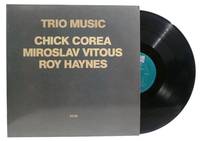
1982ref. 331017California: ECM Records 1982. Record. Very Good records and gatefold jacket. ECM Records unknown
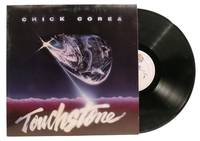
1982ref. 331021California: Warner Bros. Records 1982. Record. Very Good record and jacket. Warner Bros. Records unknown
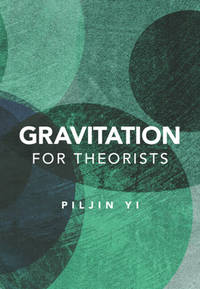
2026ref. x-1009575643Cambridge University Press 2026. Hardcover. New. 340 pages. 6.69x0.81x9.61 inches. Cambridge University Press hardcover
1992ref. 203996New York: Harpercollins 1992. First Edition; First Printing. Hardcover. Near Fine in a Near Fine dust jacket. Harpercollins hardcover
ref. 162576N.p.: N.p. 1974. Collection of eleven vintage borderless black-and-white photographs of rock pop and jazz musicians performing circa 1973 taken by noted French photographer Claude Gassian. With Gassian's stamp on the verso of every photograph. Collection includes two photographs of Alice Cooper one photograph of J.J. Cale one photograph of Chick Corea Stanley Clarke and Al Di Meola Return to Forever one photograph of Carla Bley at an electric keyboard two photographs of Bryan Ferry with Roxy Music one photograph of John McLaughlin and Jean-Luc Ponty Mahavishnu Orchestra one photograph of Alvin Lee with Ten Years After and one photograph of Tom Johnston Jeff "Skunk" Baxter and Patrick Simmons The Doobie Brothers. Born in Paris in 1949 Claude Gassian began his career in the 1970s capturing numerous iconic images of rock-and-roll musicians throughout that decade. His work has been the subject of several exhibitions and has been featured in several photography books including "Rock Images" 1990 and "Claude Gassian photographies 1970-2001" 2001. 9.5 x 7 inches. Very Good to Near Fine some with light edgewear and faint aging to the emulsion. N.p. unknown
1980ref. 160792Santa Monica: Hermes Productions 1980. Draft script for an unproduced film. Noted as "MASTER" in manuscript ink and copy No. 8 in manuscript pencil on the title page. A military drama about a coed group of US Marine recruits in San Diego. Screenwriter Nicholas Corea better known for his work on "The Incredible Hulk" television series enlisted as a Marine during the Vietnam War and was awarded a Purple Heart. Red titled wrappers with credit for screenwriter Nicholas Corea. Title page present undated with credit for screenwriter Nicholas Corea. 131 leaves with last page of text numbered 129. Xerographic duplication rectos only. Pages Near Fine wrapper Near Fine bound with two gold brads. Hermes Productions unknown
2013ref. 301825New York: Remember My Service Productions / Storyrock Inc 2013. First Edition; First Printing. Hardcover. Near Fine in a Near Fine dust jacket.; 11.0 X 8.8 X 0.8 inches. Remember My Service Productions / Storyrock, Inc hardcover
1985ref. 145179Los Angeles: CBS / Universal City Studios 1985. Draft script for the 1986 pilot episode for the television show "Outlaws." A sheriff and his deputies are transported from the year 1899 into the future by a lightning storm and they establish a new life as private detectives. Set in Houston in 1899 and 1999. Gray titled wrappers. Title page present noted as production No. 86084 dated November 26 1985 with credits for screenwriter/executive producer Nicholas Corea. 123 leaves with last page of text numbered 120. Xerographic duplication rectos only. Pages Fine wrapper Fine bound with three gold brads. CBS / Universal City Studios unknown
ref. 110834Maps of the four main islands of Japan and the Korean Peninsula are surrounded by borders of cherry blossom and bamboo with scenes of Mt Fuji a pagoda and birds on the wing. Major cities are shown on the maps; Korea has Pyongyang Seoul and Pusan with '38° LINE' in a much larger font across the centre. The album 275 × 390 mm contains three series of commercially produced small photographic views loosely inserted behind photo-corners 40 hand-coloured views of Japan; 56 black and white views of Tokyo; and 40 black and white views of the Kure-Hiro district as well as 11 larger personal photographs of Bangkok. The last three items in the album are more significant: they are professionally produced photographs of two destroyers of the RAN - HMAS 'Anzac' D59 and HMAS 'Warramunga' D123 - and a large group portrait of three officers and twelve sailors of the 'Warramunga'. Both these ships served in the Korean War. The album and its contents appear to have been purchased by one of the crew members of the 'Warramunga' after she became one of the first Australian warships assigned to the Far East Strategic Reserve in 1955. unknown
1999ref. 1-0815120990Mosby Inc 1999. Paperback. New. 6th sub edition. 371 pages. 9.00x6.25x0.50 inches. Mosby Inc paperback