50 resultados
1970ref. 31246Nicosia Cyprus: Republic of Cyprus 1970. 8vo pp. 16. Paper wraps. Illustrated with drawings plans and photographs. VG. Republic of Cyprus unknown books
1987ref. 69219Beijing: Science Press 1987. 8vo pp. 4 vi 510; printed from typescript; graphs maps tables illustrations throughout; previous owner's bookplate otherwise near fine in original blue cloth stamped in gilt on spine. "From May to September 1981 the Sino-W. German Joint Expedition to the Qinghai-Xizang Plateau made multi-disciplinary investigations of glaciology permafrost climatic geomorphology geology surveying and remote sensing in the Anyêmaqên Mountains Qilian Mountains and a part of the Kunlun Mountains. A symposium on the Qinghai-Xizang Plateau was held at Braunschweig in April 1982 . and scientists from West Germany China Switzerland and Austria took part in it. The following five topics relating to the Qinghai-Xizang Plateau were discussed: 1. Glaciers and glacier oscillations; 2. Ice and frost regions; 3. Geomorphological types; 4. Vegetations weather and climate; 5. Recent and ancient alpine climate in Asia" Preface. Science Press unknown books
1935ref. 9030684New York: Macmillan 1935. 1st. Hardcover. Very good. Translated by Alec Brown. Bound in publisher's original blue cloth with spine and cover stamped in white. Illustrated with forty photographs drawings maps and diagrams in black-and-white. Moderate wear and fading to the extremities of cover. 6 1/4 x 9 1/4 inches. 324 pages. Macmillan hardcover books
1836ref. 185920Leipzig: Hirschfeld 1836. Hardcover. G Cover has fading cracking edge/corner damage. Bookblock has age toning. Interior pages have age toning foxing some water staining. Title page has some text work away. Brown leather decorative boards with 2 metal clasps. Decorative carved and colored bookblock. VIII 920 257 pages. Hirschfeld hardcover books
1963ref. 71837Osaka: Hoikusha Publishing Co. Ltd 1963. First edition large 8vo pp. 4 169 3; text in Japanese and English; text illustrations throughout many in color; original full blue cloth; previous owner's bookplate once tipped on the title page but now loose; very good sound and clean. From the preface: "The Indo-Japanese Botanical Expedition was sent to West Sikkim and the Darjeeling and Kalimpong districts in spring of 1960. It has been known that the flora of this region is very rich and is similar to that of Japan. So the main object of our expedition is to make more clear the botanical relationship between the region and Japan. The photographs compiled in this book were taken during the Expedition by the Japanese members under various difficult conditions excepting a few ones taken by Hara in March of 1963. Hoikusha Publishing Co., Ltd unknown books
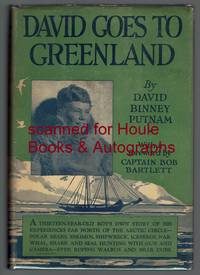
1926ref. 2222001First edition "October 1926". Octavo. Four page foreword by Bob Bartlett. Illustrated with 47 photographs and drawings by the Eskimo Kakutia; endpaper maps. Dust jacket unclipped; few nicks and creases. Very good. 167 pages. Signed and inscribed on verso of frontispiece by the publisher and father of the author: "From one who is merely. David's Dad! G. P. Putnam." G. P. Putnam's Sons hardcover books
1808ref. E0058ix366 pages. Small octavo 7 1/4" x 4 1/4" in the original leather binding with black label in gilt to spine. Howes:354 First printed in 1806 in London in three volumes. Second printing. Thomas Ashe 1770-1835 was born in Dublin Ireland and was a soldier and memoirist. Much of his life was checkered with intrigue and fraud. His Memoirs and Confessions 1815 is an autobiographical account of 'criminal and delinquent' escapades beginning with the seduction of a girl in France. In America he edited the National Intelligencer and was arrested when attempting to steal treasures from churches in Latin America. His Travels in America first appeared in 1806. The narrative chronicles Ashe's travels by flatboat down the Ohio and Mississippi Rivers in 1806 and is one of the first travelogues written by a foreigner to comment specifically on the American inhabitants of the region. A unrestrained hatred of Americans can be found throughout the work. While the account is interesting and highly readable it was to create quite a stir and added to the wave of anti-British sentiment that would ultimately lead to the War of 1812. Printed Newburyport [Mass.] Reprinted for W. Sawyer and Co. by E.M. Blunt hardcover books
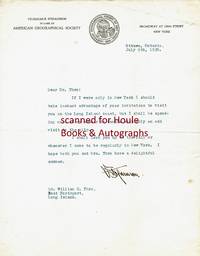
1920ref. 501237"V. Stefansson" in black fountain pen ink on pictorial American Geographical Society letterhead Ottawa Ontario Canada July 9 1920. 8 1/2" x 11"; 1 page; very good. Together with the original typed envelope stamped and postmarked Ottawa Ont. July 9 1920 with two stamps. To Dr. William C. Thro East Northport Long Island New York "Dear Dr. Thro: If I were only in New York I should take instant advantage of your invitation to visit you on the Long Island coast but I shall be spending most of my summer in Canada with only an odd visit to the city. I shall look you up in the fall or whenever I come to be regularly in New York. I hope both you and Mrs. Thro have a delightful summer. V. Stefansson." Stefansson 1879-1962 American ethnologist/explorer/author; lived amongst the Eskimo 1906-07; Canadian/Alaskan Arctic expedition commander 1913-18; consultant to Dartmouth College's Northern Studies program 1947-62. unknown books
1844ref. E0023xcii616 pages with bibliography. Octavo 8 1/2" x 5 1/2" bound in contemporary half calf with black spine label and gilt lettering. Publications de la Societe d'Etudes pour la colonisation de la Guyane francaise Number 4. The bibliographical catalogue occupies pages 579-616 and contains descriptions of 240 works on Guiana. Sabin 56097. First edition. French Guiana French: Guyane française officially Guyane is an overseas department French: département d'outre-mer or DOM of France located on the northern coast of South America. It has borders with two nations Brazil and Suriname. Like the other DOMs French Guiana is also an overseas region of France one of the 26 regions of France. Its currency is the euro. The prefecture is Cayenne. The addition of the adjective "French" comes from colonial times when three such colonies existed: British Guiana now Guyana Dutch Guiana now Suriname and French Guiana. The three are still often collectively referred to as the Guianas. French Guiana was originally inhabited by a number of indigenous American people. It was settled by the French during the 17th century. After the Treaty of Paris in 1763 Louis XV sent 12000 settlers to French Guiana to colonise the region. One and a half years later only a few hundred survived.2 Its infamous Île du Diable Devil's Island was the site of penal settlements from 1852 until 1951. More than 70000 French convicts were deported to French Guiana between 1852 and 1939.3 In 1809 a Portuguese-British naval squadron took French Guiana for the Portuguese Empire. With the signing of the Treaty of Paris in 1814 the region was handed back to the French though a Portuguese presence remained until 1817. A border dispute with Brazil arose in the late nineteenth century over a vast area of jungle leading to the short-lived pro-French independent state of Counani in the disputed territory and some fighting between settlers before the dispute was resolved largely in favor of Brazil by the arbitration of the Swiss government. Condition: Front inner hinge cracked rubbing to hinges and corners some internal foxing else a very good copy. Imprimerie de Bethune and Plon hardcover books
1925ref. 22147London: Hutchinson & Co. 1925. First Edition. Original publisher's blue cloth. Good; backstrip sunned & a portion of the cloth scraped by label removal but no accessioning to the volume. 8vo 287 1 - blank pp. folding map and 47 halftone photographic plates inserted. A presentation Dec. 1925 copy from Binney to G R Delaforce on the front free endpaper. A laid in newspaper account of Binney winning a DSO in 1944. Also laid in is an ALs Oct. 9 1955 from someone named Cecil. Three Oxford Univ. Arctic expeditions took place between 1921 and 1924 utilizing the experiences of the preceding trip. The purpose of the final visit in 1924 was to explore the icecap and interior by sledging of North-East Land. The interior comprising appx. 8000 square miles remained unexplored prior to the expedition. Binney was the leader of the excursion that had 14 members including scientists. This is Binney's own narrative of the trip. Arctic Bibliography 1572; not in Howgego. Hutchinson & Co. hardcover books
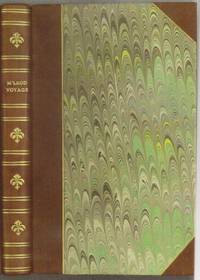
1818ref. E0061323 pages with a portrait frontispiece and five colored aquatints. Octavo 8 3/4" x 5 1/2" bound in attractive half leather with marbled boards and gilt lettering to spine. Hill 1168 Second and best edition The Alceste brought Lord Amherst to China to serve as ambassador and specifically to negotiate the China trade at the time a matter of dispute between China and Great Britain. M'Leod who was surgeon on the ship describes the voyage out the various calls in the East Indies including touching at Batavia surveying off Korea the visit to Okinawa another to Manila and the shipwreck off the coast of Sumatra and subsequent rescue from Malay pirates. A brief but interesting interview with Napoleon at St. Helena is also included in the narrative. This was one of the most popular travel books of its time portraying the Far East to a much wider audience than had been reached by earlier accounts. The idyllic descriptions of Lewchew undoubtedly appealed to the romantic sensibilities of the era. Indeed buoyed by its success M'Leod published another work recounting his time as a slaver A Voyage to Africa with some Account of the Manners and Customs of the Dahomian People. Condition: Attractive half rebind some foxing through out with no spotting to plates else a very good copy. John Murray hardcover books
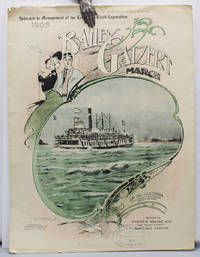
1905ref. 17219Portland Oregon: Published by Fisher Music Co. Lithographed by Anderson & Duniway Co. 1905 First edition of this sheet music as printed for the Lewis and Clark Exposition second edition overall. The sheet music was originally printed in 1902 but is here printed to promote the Lewis and Clark Exposition. The song honors the Bailey Gatzert the most famous Columbia River steamship. Benjamin A. Gifford 1859 – 1936 is considered perhaps Oregon's most famous photographer and his images include the cover photo of the steamship and Multnomah Falls. Original color-printed paper wrappers illustrated with an elaborate border around a color-tinted photo reproduction of the Bailey Gatzert steamship heading up the Columbia River by Benjamin A. Gifford. 10 x 14 in. . . With six text photo reproductions. Some chipping to edges. With the ink ownership stamp of the Portland area piano teacher Lillian R. Bickner 1884 – 1962. A very good copy. "Portland staged its first and only world's fair from June 1 through October 15 1905. During those four and a half months 1588000 paying visitors passed through the gates to the 400-acre fairgrounds on the northwest edge of town…The Lewis and Clark Exposition was conceived so Portland could demonstrate that it could mount a major civic enterprise. The city had had a solid record of economic growth since its founding in 1845 but at the turn of the twentieth century it was competing for investment and immigration with dozens of other cities throughout the American West" Carl Abbott on the Oregon Encyclopedia website. Published by Fisher Music Co., Lithographed by Anderson & Duniway Co., books
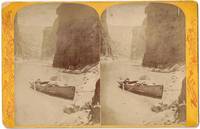
ref. 71876Washington DC: J. F. Jarvis. Photograph. Very Good. Albumen stereoview 11 cm x 15 cm on a yellow mount 11 cm x 17.5 cm with a printed paper label on the reverse No. 181. U. S. Topographical and Geological Survey of the Colorado River of the West. Corner wear and a bit of edge wear as well. J. F. Jarvis label on the reverse. Jack Hillers 1840-1882 was working as a teamster when he made the acquaintance of John Wesley Powell. The following year 1871 Powell hired him as a boatman for his second expedition down the Colorado River and through the Grand Canyon. Over time he replaced Clements Powell John's cousin as the assistant to the photographer first succeeding E. O. Beaman then James Fennemore. Hillers was a hard worker highly regarded by his peers and a fast learner when it came to the art of photography. After serving as the main photographer on Powell's trips Hillers would go on to work for the Bureau of American Ethnology for many years. J. F. Jarvis unknown books
1807ref. 83011807. MIRANDA EXPEDITION. The Trials of William S. Smith and Samuel G. Ogden for Misdemeanours had in the Circuit Court of the United States for the New-York District in July 1806 . By Thomas Lloyd Stenographer. New York: I. Riley and Co. 1807. xxxiii 3 287 p. Contemporary mottled sheep very skillfully rebacked in period style retaining original spine label. Occasional light browning else a fine copy. The trial of Smith and Ogden for organizing and underwriting the expedition of Francisco de Miranda from New York to South America to overthrow the Spanish government there and to separate the Spanish colonies from the mother country. unknown books
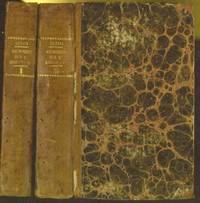
1787ref. E00402 volumes: 576xv pages; 499xv pages. Octavo 8 3/4" x 5 1/2" bound in 3/4 period leather. Translated from the first German edition 1781 which includes a chapter entitled: "Observations and additions to by Johann Gottlob Theaenus Schneider". Translated with additional notes and reviews by Jean Baptiste Lefebvre Villebrune. First Spanish edition published in 1772 Madrid. Sabin 36805 First French edition. Antonio de Ulloa 12 January 1716 – 3 July 1795 was a Spanish general explorer author astronomer colonial administrator and the first Spanish governor of Louisiana. He was born in Seville the son of an economist. Ulloa entered the navy in 1733. In 1735 he was appointed with fellow Spaniard Jorge Juan a member of the French Geodesic Mission a scientific expedition which the French Academy of Sciences was sending to Ecuador to measure a degree of meridian arc at the equator led by Pierre Bouguer. He remained there from 1736 to 1744 during which time the two Spaniards discovered the element platinum. In 1745 having finished their scientific labors Ulloa and Jorge Juan prepared to return to Spain agreeing to travel on different ships in order to minimize the danger of losing the important fruits of their labors. The ship upon which Ulloa was traveling was captured by the British and he was taken as a prisoner to England. In that country through his scientific attainments he gained the friendship of the men of science and was made a Fellow of the Royal Society of London. In a short time through the influence of the president of this society he was released and was able to return to Spain. He published an account of the people and the countries they have met 1748 which was translated into English as A Voyage to South America. He became prominent as a scientist and was appointed to serve on various important scientific commissions. He is to be credited with the establishment of the first museum of natural history the first metallurgical laboratory in Spain and the observatory of Cadiz. In 1758 he returned to South America as governor of Huancavelica in Peru and the general manager of the quicksilver mines there. He held this position until 1764. He arrived on 5 March 1766 in New Orleans to serve as the first Spanish governor of West Louisiana. The French colonists refused to recognize Spanish rule and de Ulloa was expelled from Louisiana by a Creole uprising during the Louisiana Rebellion of 1768. For the remainder of his life he served as a naval officer. In 1779 he became lieutenant-general of the naval forces. As a result of his scientific work in Peru he published Madrid 1784 Relación histórica del viaje á la América Meridional which contains a full accurate and clear description of the greater part of South America geographically and of its inhabitants and natural history. In collaboration with the Jorge Juan mentioned above he also wrote Noticias secretas de América giving valuable information regarding the early religious orders in Spanish America. Condition: Sever worming to spines exterior hinges cracked point chipped library stamps to title pages else a good copy of a scarce item. Chez Buisson hardcover books
1857ref. 324349New Haven 1857. Separately-issued offprint from the American Journal of Science and Arts 2nd series Vol. xxiv July 1857. 21-38 pp. plus folding map. 8vo. Period plain green wrappers stitched. Separately-issued offprint from the American Journal of Science and Arts 2nd series Vol. xxiv July 1857. 21-38 pp. plus folding map. 8vo. "Redfield's last contribution to meteorological science was a memoir upon the cyclones or typhoons of the north Pacific Ocean prepared at the request of Commodore Perry to accompany his Narrative of the United States Expedition to Japan; and was printed in the second volume of that work . He showed that the hurricanes of the Pacific followed the same general laws as those of the Atlantic and traced the paths of several remarkable storms among which was one of great force encountered by the steamer 'Mississippi' one of the vessels of Commodore Perry's squadron on route from Simoda to the Sandwich Islands in October 1854" Recollections of John Howard Redfield p. 302. Page 37 includes a description of the Kona or southerly winds of Hawaii as well as the effects of cyclones on the Hawaiian islands. Following its publication within Perry's Narrative in 1856 the work was issued in a slightly more condensed form within the July 1857 issue of the American Journal of Science and Arts. The present separately-issued offprint from the AJSA is the only separately-issued edition of the work. Scarce. Sabin 68512. Not in Forbes unknown books
1925ref. 24120Oxford: Oxford Univ. Exploration Club by the Oxford University Press 1925 & 1929. First Editions. Original publisher's blue cloth with period press-mark at the base of the spine. Very good. This is the OUP's own copy of record. It has a call number on the spine that was the house location number. Royal 8vo; I - xi 1 - blank 33 individual offprints from various journals includes the Appendix; II - xi 1 - blank 25 individual offprints from various journals includes the Appendix. The OUP printed the title preface and then bound up the offprints as the "text" - the OUP purchased a number of copies of each of the offprints that make up the text. It is doubtful if more than 100 copies were produced. The reports of all three expeditions. Originally planned as a trip to study the bird life of the island it was soon enlarged to include an exploration of the interior. The original number of participants was 18 under the leadership of F C R Jourdain and was funded by subscription. A return trip occurred in 1922 by three of the original participants. This led to the organization of a second expedition in 1923 under the leadership of F G Binney devoted to exploration and a final expedition under Binney in 1924. Though Spitsbergen was a relatively well known area of the Arctic the interior had scarcely been seen.The goal of the expedition was a study of the "ecology" of the environment - something that was new. The Oxford University Expedition Club made small number of such trips to remote parts of the world prior to WWII issuing similar scientific reports. Oxford Univ. Exploration Club by the Oxford University Press hardcover books
1785ref. BOOKS0033095 volumes: 520 pages with frontispiece tables and six plates; 492 pages with tables 479 pages 587 pages 504 pages with nine plates. Octavo 8" x 5" bound in leather with raised spine bands and black labels with gilt lettering to spine. Complied by John Kent principally from Campbell's Lives of the Admirals Hill page 358 First Dublin edition. A London man of letters Campbell was quite successful with his numerous works of an historical and biographical nature. He collect a large and valuable library. He first published his Lives of the Admirals in four volumes in the years 1742 to 1744. There were several later editions. From 1744 to 1748 he compiled and published what became known as Campbell's enlarged edition of John Harris's Complete collection of voyages and travels originally published in 1702-1705. Campbell also made numerous important contributions to the Biographia Britannica under the signatures E and X including his own noble Scottish ancestors the Campbells. A memoir of him was inserted by Andrew Kippis in this same work. Campbell was an expert on the histories of Spain Portugal France and the British and the Dutch. In 1765he was appointed the royal agent for the province of Georgia and held that office until his death. There are many interesting references to him in James Boswell's Life of Johnson. John Kent published only tow editions of his compilation; this one and one published in London in 1776-1777. Condition: New spines with original leather boards. Volume one closed page edge tears with occasional page edges chipped only affecting margins. volume two damp stain to title gutter some occasional foxing. Some pages stained else a good to very good set Printed for J Williams hardcover books
1779ref. BOOKS0003374282 pages lacking the map. Small quarto 10" x 7½" rebound in ¾ morocco & marbled boards spine lettered in gilt top edges gilt. Sabin 22572 First edition. Rare account of travels into the arctic most notably Nova Zemblya to the north of Europe. Twelve years earlier Engel wrote his notable work on explorations on the other side of the Arctic Circle Memoires et observations geographiques et critiques sur la situation des pays septentrionaux de l'Asie et de l'Amerique. Lausanne 1765. Condition: Rubbing to joints and extremities; some minor staining and soiling within hinge professionally repaired else a very good copy. Only five copies found on worldcat. F Sanuel Fetscherin hardcover books
1799ref. biblio153a1-42 binders direction8 subscribers4c-4204 additional subscribers pages with 7 maps 5 folding and 6 plates. Quarto 11 3/4" x 9 1/2" with new spine in six compartment with red label in gilt over original decorative blind stamped calf boards. Ferguson 329; Sabin 104.633 First edition first printing. Captain James Wilson brought the first British missionaries to Tahiti on ship Duff in 1797. Wilson was a deeply religious man. The missionaries he brought were from the London Missionary Society. There were thirty men six women and three children. Wilson on the Duff also explored and visited many islands in the Pacific some of which had never had any recorded visit by a European. Among these the most important are Mangareva in the Gambier Islands and Pukarua in the Tuamotus. Duff paid a visit as a missionary ship to Tahiti during 1796 as a result Missionary Society has first been established in Tahiti. Three years after the establishment the directors of the Society appointed a committee to consider a suitable memorial for presentation to Wilson for his services in helping to establish the first mission in the South Seas. Wilson fought with the British army during the American War of independence and then served nine years with the East India company. While in India he was captured by Hyder Ali and after a daring bid for escape was imprisoned in the black hole of Seringapatam. After his release he continued service as a captain and despite illness and further dangerous missions accumulated sufficient sources to retire. throughout it all Wilson remained fast in his irreligious opinions. While living in England with his niece however he was converted to an evangelical faith. he felt called to volunteer for missionary service after reading the Evangelical Magazine. Haweis did not know Wilson before receiving a letter volunteering his services in the Pacific. his skills and newfound devotion seemed perfectly suited to the situation and Haweis saw him as "God's man." the Duff arrived at Tahiti on march 5 1797. the settlement at Tahiti of twenty of the missionaries five of them with wives and two children gives further examples of the role of the missionary captain. A pattern of intercourse had already been established by other voyagers according to which the captain of a vessel would take the leading role in meetings. It is therefore not surprising that the focus of the chapter describing the arrival is on meetings between significant island figures and Captain Wilson. For example Manemane a "high priest" Frommo'orea sought Wilson as a tayo or friend not Jefferson the president of the missionaries. The official account of the first mission appeared in 1799 under the lengthy title A missionary voyage to the southern Pacific Ocean performed in the years 1796 1797 1798 in the ship Duff commanded by Captain James Wilson compiled from the journals of the officers and the missionaries; and illustrated with maps charts and views drawn by Mr William Wilson..it was placed firmly within the tradition of the voyages of discovery by an introduction compiled by Samuel Great heed that described previous European contacts with the islands and an appendix "including details never before published of the natural and civil state of Otaheite." the main narrative was taken from Wilson's journal with additions from his son and a journal kept by the missionaries during the period when the Duff was away from Tahiti at Tonga. Wilson dominated the events recorded in the narrative. Condition: Some offset toning from maps occasional foxing water mark to upper margin on some leaves two leaves miss-bound at back re-backed with contemporary blind stamped calf boards. S Gosnell for T Chapman hardcover books
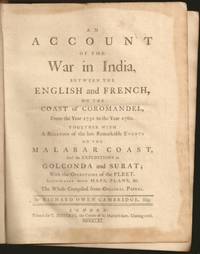
1761ref. E6754xxxiii270215148xix1 pages 14 of 18 engraved plates maps many folding and index. Quarto 10 1/4" x 8 1/4" in original leather binding. First edition. Richard Owen Cambridge was a British poet. He was educated at Eton and at St John's College Oxford. Leaving the university without taking a degree he took up residence at Lincolns Inn in 1737. Four years later he married and went to live at his country seat of Whitminster Gloucestershire. In 1751 he removed to Twickenham where he enjoyed the society of many notable persons. Horace Walpole in his letters makes many jesting allusions to Cambridge in the character of news-monger. His chief work is the Scribleriad 1751 a mock epic poem the hero of which is the Martinus Scriblerus of Alexander Pope John Arbuthnot and Jonathan Swift. The poem is preceded by a dissertation on the mock heroic in which he avows Cervantes as his master. The satire shows considerable learning and was eagerly read by literary people; but it never became popular and the allusions always obscure have little interest for the present-day reader. He made a valuable contribution to history in his Account of the War in India on the Coast of Coromandel from the year 1750 to 1760 1761. He had intended to write a history of the rise and progress of British power in India but this enterprise went no further than this one work as he found that Robert Orme who had promised him the use of his papers contemplated the execution of a similar plan. The Works of Richard Owen Cambridge includes several pieces never before published. It contains an Account of his Life and Characterby his Son George Owen Cambridge 1803 the Scribleriad some narrative and satirical poems and about twenty papers originally published in Edward Moore's paper The World. His poems are included in Alexander Chalmers' English Poets 1816. Condition: Previous owner's name in neatly written dated 1806 on front end paper with his book plate on front past down with his library stamp. Lacks rear free end paper. Front hinge separated back hinge cracked. Lacks the Mongol on horse back plate map of Maratta County view of the attack on Geriah and view of Surat. Front worn spine ends and corners reinforced and repaired new spine label else about very good. Printed for T Jefferys hardcover books
1790ref. E00534 of 6 volumes. Volume 1: i-ix-372 pages with 23 plates including frontispiece plate of Cook and 4 folding maps; Volume II lacking; Volume III: 793-1184 pages with 11 plates including frontispiece of Possession Bay and 5 fold out maps; Volume IV: 1185-1546 pages with 26 plates including frontispiece of Woman Child and Man of Van Diemen's Land and 6 folding maps; Volume V: 1547-1938 pages with 30 plates including frontispiece of A View of Huaheine and 8 folding maps; Volume VI lacking. Octavo 8 1/2" x 5 1/2" bound in original full leather with red labels to spine with gilt lettering. Abridged by George William Anderson. An earlier Large folio edition by Anderson was published earlier. This edition originally issued in 80 weekly parts and also called the Large octavo edition. M K Beddie: 39 First edition of the bound edition. Captain James Cook RN was a British explorer navigator and cartographer ultimately rising to the rank of Captain in the Royal Navy. Cook made detailed maps of Newfoundland prior to making three voyages to the Pacific Ocean during which he achieved the first European contact with the eastern coastline of Australia and the Hawaiian Islands as well as the first recorded circumnavigation of New Zealand. Cook joined the British merchant navy as a teenager and joined the Royal Navy in 1755. He saw action in the Seven Years' War and subsequently surveyed and mapped much of the entrance to the Saint Lawrence River during the siege of Quebec. This helped bring Cook to the attention of the Admiralty and Royal Society. This notice came at a crucial moment both in his personal career and in the direction of British overseas exploration and led to his commission in 1766 as commander of HM Bark Endeavour for the first of three Pacific voyages. Cook charted many areas and recorded several islands and coastlines on European maps for the first time. His achievements can be attributed to a combination of seamanship superior surveying and cartographic skills courage in exploring dangerous locations to confirm the facts for example dipping into the Antarctic Circle repeatedly and exploring around the Great Barrier Reef an ability to lead men in adverse conditions and boldness both with regard to the extent of his explorations and his willingness to exceed the instructions given to him by the Admiralty. Cook was killed in Hawaii in a fight with Hawaiians during his third exploratory voyage in the Pacific in 1779. Condition: Lacks volume II and VI. First signature of volume one loose inner hinges cracked some interior soiling spine ends and corners of leather rubbed some scuffing to leather else a good set. Printed for A Millar, W Law, and R Cater hardcover books
1749ref. E05292 volumes. 182 pages with fold out frontispiece map and three additional folding engravings; 319 pages with seven folding engravings. half-titles in each title pages improperly marked first volume as second and vice versa. Duodecimo 6 1/2" x 3 1/2" bound in original publisher's full uniform contemporary French sponged calf with gilt-tooled spines. First French edition after the 1748 English edition. Henry Ellis was a traveler hydrographer and colonial governor returned from Italy in 1746 just in time to find an expedition to search for a north-west passage on the point of sailing. He appears to have been in easy circumstances; his name stands in the list of subscribers to the north-west expedition and he had sufficient interest to get attached to it nominally as agent for the committee and really as hydrographer surveyor and mineralogist the expedition consisting of two vessels the Dobbs galley of 180 and California of 150 tons left Gravesend on 20 May 1746 joined the Hudson's Bay convoy in Hollesley Bay and finally sailed from Yarmouth on the 31st. They parted from the convoy on 18 June made Resolution Island on 8 July and after a tedious passage through Hudson's Straits rounded Cape Digges on 8 August and on the 11th 'made the land on the west side the Welcome in latitude 64° N.' Bad weather drove them to the southward and prevented their doing anything more that season. They wintered in Hayes River in a creek about three miles above Fort York where a quarrel with the agent of the Hudson's Bay Company gave an unwonted piquancy to the dark and weary days. They suffered much from scurvy the prevalence of which Ellis attributes to their having got two kegs of brandy from Fort York for their Christmas merrymaking and in a minor degree to the 'governor' not permitting the Indians to supply them with fresh provisions. On 29 May 1747 the ice broke up and they were able to warp to the mouth of their creek; on 9 June they got down to Fort York. There they were allowed to get some provisions and stores and on the 24th cleared the river and 'stood to the northward on the discovery'. On 1 July each of the two ships sent away her long-boat but owing apparently to some ill-feeling between the two captains without any prearranged plan for working in concert. The consequence was that they separately went over the same ground discovering naming and examining the several creeks and inlets on the west side of Hudson's Bay the double examination perhaps compensating for the confusion arising from the double naming. Before the season closed in they had satisfied themselves that the only possible exit from Hudson's Bay on the west must be through the Welcome and that very probably there was no way out except that on the east by which they had come in. The result may not seem much; but as it served to put an end to the idea that the passage must lie through Hudson's Bay it was at least so much gain to accurate knowledge. After 21 August the weather broke and they decided in council 'to bear away for England without further delay.' On the 29th they entered Hudson's Straits passed Resolution Island on 9 September and arrived at Yarmouth on 14 Octivwe. Ellis's share in the work of the expedition had really been very slender but the reputation of it has been commonly assigned to him by reason of the narrative which he published the following year under the title A Voyage to Hudson's Bay by the DobbsGalley and California in the years 1746 and 1747 for Discovering a North-West Passage 1748; a work which with many valuable observations on tides on the vagaries of the compass and on the customs of the Eskimos a people then practically unknown mingles a great deal of speculation on the certain existence of the passage on magnetism on fogs on rust and other matters all more or less ingenious but now known to be wildly erroneous. Such as it was the book commended its author to the scientific workers of the day and on 8 February 1748-9 he was elected a fellow of the Royal Society. Possibly in acknowledgment of his scientific labors but more probably by some family interest he was afterwards appointed successively governor of Georgia and of Nova Scotia from which employment he retired about 1770. He seems to have spent his later years as a wanderer on the continent was at Marseilles in 1775 and died at Naples on 21 January 1806. Condition: Some dark spots to spine else a very good copy. Ballard Fils hardcover books
1950ref. 34823London: John Murray. First Edition; Seventh Printing. Hardcover. Near fine but for foxing to prelims and former owner's name John RLMalholm Christchurch N.Z. 1961 inked on the ffep with other signatures on the verso of the ffep the half title page the copyright page and the dedication page. The dust jacket is good only with chips one removing the first word of the title on the spine creases and soiling to the rear wrap. The words "Seventh Printing" are printed on the spine. This later printing contains 34 ink signatures occuring on four leaves evidently gathered during the 1961-62 USARP U.S. Antarctic Research Program season. 3 distinct scientific parties are represented here: an Ellsworth Land geophysical traverse led by USGS Geophysicist John C. Behrendt; The Camp Sky-Hi ionospheric research station; and the McMurdo Station science hub. Of the 34 signatures on this book roughly two dozen tentatively can be matched to documented personnel of that era. A striking number of these names correspond to men for whom Antarctic mountains glaciers and other features have since been officially named. More information on these men is available on request. aided by Perplexity; 8vo 8" - 9" tall; 219 pages . 1950. John Murray hardcover books
1843ref. E01482 volumes. xxxvii23878 ad pages with frontispiece woodcuts in text and 7 steel-engraved plates; vi2474 pages with frontispiece woodcuts in texts and 10 steel-engraved plates. Royal octavo 9¼x5½" in publisher's original green cloth spine lettered in gilt covers decorative blind stamped. First Edition. In 1825 Edward Belcher accompanied Frederick William Beechey's expedition to the Pacific and Bering Strait as a surveyor. In 1836. he commanded a surveying ship on the north and west coasts of Africa and in the British seas. Belcher took up the work which Beechey had left unfinished on the Pacific coast of South America. He was on board the bomb vessel HMS Sulphur which was ordered to return to England in 1839 by the Trans-Pacific route. Belcher made various observations at a number of islands which he visited having been delayed by being dispatched to take part in the war in China in 1840. On 26 January 1841 the then Commander Belcher landed on Possession Point at the north shore Hong Kong Island and made the first British survey of Hong Kong harbor. After the war's end in 1842 he reached home and for his services was made a Knight Bachelor in the following year. He was then engaged in HMS Samarang in surveying work in the East Indies the Philippines Geomun-do Port Hamilton and other places until 1847. In 1852 Belcher led the last and largest Admiralty expedition to rescue Sir John Franklin. He was also to look for his former surveying officer in Hong Kong Richard Collinson and Robert McClure whose ships had not been seen after entering the Bering Strait. He did a great deal of sledge exploration rescued McClure and abandoned four of his five ships in the ice. He had five ships: Assistance Belcher Resolute Henry Kellett second mate George Nares the steam tenders PioneerSherard Osborn and Intrepid Leopold McClintock and the depot ship North Star William Pullen. Belcher and one tender were to enter Wellington Channel where Franklin was thought to be while Kellett was to go west to Melville Island and look for Collinson and McClure. North Star was to stay at Beechey Island as a supply base. He left the Nore in April 1850. By early winter Assistanceand Pioneer were frozen in at Northumberland Sound to the north of Wellington Channel while Resolute and Intrepid were frozen in off Melville Island Arctic—the first ships this far west since William Edward Parry in 1819. A great deal of exploration was done by man-hauled sledges. In April 1853 Leopold McClintock and others left the Resolute on sledges and returned 105 days later having covered 1400 miles and discovered Prince Patrick Island. Another party went west and discovered Robert McClure whose ship was frozen in at Mercy Bay. Belcher went north by sledge and found a channel at the northern tip of Devon Island hinting that Franklin might have used it to escape to Baffin Bay. When the ice broke up that summer he pushed his ships up Wellington Channel and became trapped again. By February 1854 Belcher was becoming increasingly worried about the safety of his ships and men. In April he ordered Kellett to abandon his ships and return by sledge to North Star. Belcher abandoned his two ships in late July. Aided by two ships that showed up at Beechey Island Phoenix and Breadalbane the whole party returned to England. Belcher went through a court martial which was automatic for any captain who had lost a ship. He was exonerated but his sword was returned to him 'without observation'. He never again received an active command. Curiously Resolute broke free of the ice and drifted all the way to Davis Strait where it was picked up by an American whaler. Condition: Some staining and wear to covers spines a bit faded ends chipped and worn rear joint of Vol. I with chipping and loss; hinges repaired at endpapers some light foxing and occasional mostly marginal damp staining within the three folding maps which should be loose in a pocket not present; overall good uncommon in the original cloth. Henry Colburn hardcover books