1 400 résultats
1967réf. 013782LondonAmsterdamNew York : Frank Cass/N. Israel/Da Capo Press 1967. Facsimile of 1803 Edition.Bibliotheca Australiana # 3 4 5 6 & 7.Original mottled fawn buckram with blue title labels to upper boards and spines. .This book will be POSTED AT OUR STANDARD RATES FULLY INSURED UK ONLY . Please email for further details NOT "Signed by the Author". Not Signed or Inscribed. Mottled Fawn Buckram . FINE AS BRAND NEW/Plastic Jacket AS NEW. Illus. by numerous Illustrations Maps Views & Charts Including Several Folding . 8vo - over 7¾" - 9¾". HARDBACK. Frank Cass/N. Israel/Da Capo Press hardcover
réf. 208746Paris-Nancy, Berger-Levrault, 1888 3 vol. in-12, XI-530 pp., 525 pp. et 521 pp., index, demi-chagrin rouge, dos à nerfs ornés d'aigles dorées, filet doré sur les plats, têtes dorées, couv. cons. (reliure moderne). Dos légèrement passés. Interversion dans les couv. cons.
1919réf. 16032Jena, Fischer, 1919. 4°. VI, S. 648-946 Seiten. Halbleinwand mit Deckeltitel (etwas fleckig u. berieben).
1844réf. 018458J. Winchester, New World Press, New York, ohne Erscheinungsjahr, ca. 1844. 1st American Edition Leinen Solide, Gut
réf. 173685Paris, A. Pinard, 1832 in-8, [4]-455 pp., cartonnage Bradel marine, dos lisse orné de filets dorés (reliure de l'époque). Infimes accrocs sur le plat supérieur, mais bon exemplaire.
réf. 234290A Paris, Chez Le Normant, 1814 in-8, XXIV-403 pp., demi-basane brune à coins, dos lisse orné de filets dorés (reliure de l'époque). Dos un peu frotté.
1850réf. P1-22-1Bagnères de Luchon, Dulon, Lafont, Bassy, Boicin, s.d.(1850). In-folio oblong, titre et 30 lithographies sur Chine appliquée sur papier fort légendé, cartonnage éditeur percaline, titre orné doré sur le plat supérieur (quelques rousseurs). Bel album de 26 vues, dont 3 doubles et 1 triple. Bagnères de Luchon et ses environs, par Victor Petit. Paris, 1850, oblong folio (390x270mm), original green cloth with gilting enclosing by ornate, gilt covers, attractive collection of lithographs of medicine baths in the Pyrenees. 29 unnumbered plates of which 3 double and 1 triple.
1901réf. 0009096New York: Dodd Mead 1901. First edition. Hardcover. Fine. 8vo 313 pages untrimmed blue cloth This is the American issue of the British sheets. "Though Burton wrote and published many bulky volumes of travel . none of them assumed a popular form . The essays that follow were all prepared by Burton himself . Burton here gives an epitome of his principal travels in three continents - Preface." The "three" continents are Africa South America. North America Asia. Dodd, Mead hardcover
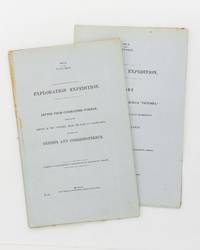
1862réf. 57939Melbourne: Government Printer 1862. First Edition. Paperback. Melbourne Government Printer 1862 and 1862. Foolscap folio two papers 51 and 31 pages. Title-wrappers stab-sewn as issued; a few uncut edges a little foxed; an excellent pair. Victorian Parliamentary Papers Number 108 and 109 of 1861-2. The expedition was 'for the purpose of rendering relief if possible to the missing explorers under the command of Mr Burke; and directing the movements of the two land parties organized and despatched on the same mission of humanity from Brisbane and Rockhampton' under Landsborough and Walker respectively. Paper 109 gives Norman's account of the activities of his own party; Paper 108 in spite of its prosaic title is almost exclusively devoted to detailed accounts by Landsborough 33 pages and Walker 16 pages. Landsborough's reports include an account of the voyage and wreck of the hired transport 'Firefly'; two on the Albert River and the surrounding country and the journal of his south-western expedition 20 pages. Walker's reports include the journal of his expedition from Rockhampton to the Albert River 12 pages; its first and only publication. Three maps are referred to in the list of contents of Paper 108; these maps are rarely seen and were apparently issued only in copies made available to Victorian Members of Parliament. 2 items. Government Printer paperback
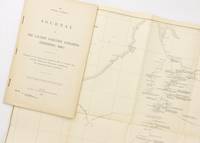
1902réf. 125441Perth: Wm. Alfred Watson Government Printer 1902. First Edition. Paperback. Very Good. Perth Wm. Alfred Watson Government Printer 1902. Foolscap folio 62 pages with 4 illustrations plus a very large folding map 625 × 865 mm. Stapled as issued without wrappers; minimal reinforcement to the map near the rusty staples; trifling signs of handling; an excellent copy. Western Australian Parliamentary Paper Number 46 of 1902; only 1200 copies were printed. The 'expedition was fitted out to explore the remaining unknown regions of Australia on similar lines to the Elder expedition'. Lawrence Allen Wells third in command on the ill-fated Elder expedition of 1891-92 was leader. The party set out from Mullewa east of Geraldton on 13 June 1896; lack of water and the gruelling conditions brought the official expedition to an end on 6 November at Noonkanbah Station on the Fitzroy River with two men unaccounted for. It was not until late May of the following year that Wells located the bodies of the missing men his cousin Charles Wells and George Lindsay Jones nephew of the explorer David Lindsay. The detailed accounts of the three search expeditions undertaken by Wells accompanied by Nat Buchanan George Keartland and Sub-Inspector Ord respectively are included. Not least strong on contemporary race relations. McLaren 16633. Wm. Alfred Watson, Government Printer paperback
1935réf. 145162Cambridge: At the University Press 1935. First Edition. Very Good. Cambridge At the University Press 1935 first edition. Quarto xvi 422 pages with 10 maps and 52 illustrations plus 11 pages of plates from photographs. Grey buckram lettered in gilt on the spine; buckram lightly spotted possibly a minor issue with the binding material itself; edges lightly foxed or marked; minimal signs of age and handling; an excellent copy. The reports of this important expedition 1898-1899 were published in six volumes between 1901 and 1935 this being the last to appear. It includes studies of the material culture social organisation religious beliefs languages and folk tales of the peoples of the Torres Strait Islands and southern New Guinea. At the University Press unknown
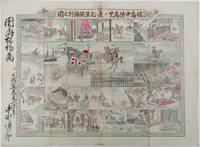
1893réf. 214562大阪. Osaka.: 福井榮之助. Fukui Einosuke. Meiji 26 1893. Handcoloured folding engraving 37.5 x 51cm. A prior owner's name is recorded in brush strokes down the left margin. Few small washi repaired tears two old repaired tears on the reverse some occasional browning particularly at centre fold light staining upper margin intruding a little into the printed image. Overall an attractive copy. Scarce. Lieutenant Colonel Fukushima Yasumasa 1852 – 1919 undertook a remarkable solo horseback expedition across Eurasia in 1892. Starting in Poland he traversed Russia and Siberia on his journey. Stationed in Berlin as a military attaché in 1887 he was tasked with researching the Trans-Siberian Railway under construction by Russia. His successful expedition was followed by further explorations in India and the Balkan Peninsula. This sheet divided into 24 illustrated panels narrates Fukushima's story from his youth to his triumphant return after the expedition. Filled with adventure the story depicts his encounters with both danger and excitement. The narrative unfolds in a clockwise direction starting from the bottom right corner similar to a sugoroku game which this may be but it is uncertain. The central panel featuring a newly erected statue represents the final goal of his journey. Each panel is accompanied by a caption that furthers the story. . 福井榮之助. [Fukui Einosuke]. unknown
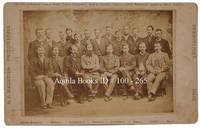
1881réf. 1002651881. Cabinet photo. fine. Horizontal albumen cabinet photo on white mount 4 7/8" X7 7/8" image:4 1/8" X6 1/8". Nice group portrait of members of the expedition - Standing from left to right: D. Schneider D. Cross D. Linn S. Long S. Frederick D. Henry S. Connell D. Bender D. Salor S. Bierdersack D. Gardner D. Ellis and D. Ralston - Seated from left to right: S. Brainard D. Keslingbury S. Greeley leader D. Lockwood D. Israil D. Jewell and D. Rice. fine Rare. Portrait of members of the U.S. International Polar Year Scientific Expedition to Lady Franklin Bay Ellesmere Island sponsored by the U.S. Signal Service and other government agencies. After two winters and the failure of relief expeditions in 1882 and 83 Greeley abandoned Fort Conger and moved to Cape Sabine as per his orders. Eighteen men would die that winter including one by suicide and one execution - Pvt. Charles B. Henry Seven survivors were rescued by Schley's relief expedition on the June 22 1883 but Elison would perish before they reached St. John's on July 17. 1881 unknown
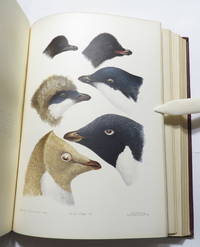
réf. 115688London British Museum 1930. . First edition; 4to; 24 figures in text 16 plates 9 in colour; publisher's original paper wrapper date inscribed in ink to front cover; a fine copy; pp. 103-193 xvi. A rare publication authored by esteemed ornithologists Percy Lowe and Norman Kinnear who compiled their own research with the observations and illustrations of the late Edward Wilson who died with Captain Scott on their ill-fated return from the South Pole. Together they produced a comprehensive account of bird species observed during the 'Terra Nova' expedition. Rosove 292-42. London, British Museum, 1930. unknown
réf. 8920à l’usage des collèges, des pensions, des maisons religieuses & de toutes les personnes qui étudient et enseignent la géographie. Nouvelle édition augmentées de trois nouvelles cartes astronomiques & d’une introduction à la connoissance de la géographie. In 8 cartonné, muet, titre, 16 pages d’introduction, suivent 1) la division astronomique du globe terrestre en cercle, etc. 2) la démonstration de quelques effets du soleil & de la lune etc. 3)la planisphère, ou représentation du globe terrestre.4) La sphère artificielle ou armillaire oblique. 5) Mappemonde ou description du globe terrestre.6) Carte de l’Europe.7) Carte de l’Espagne. 8) carte du Royaume de France (dépliante). 9) L’Italie et ses différents états Royaumes et Républiques. 10) Pays Bas comprenant le Brabant, Gueldre, Limbourg, Luxembourg, Hainaut, Namur, Flandre, Cambresis et Artois. 11) l’Allemagne divisée par cercles avec les états de Boheime & la Suisse. 12) Carte générale de la Pologne avec tous les états qui y sont annoncés. 13) Russie d’Europe divisée par gouvernemens. 14) Suède, Norvège et Danemarck. 15) Royaume d’Angleterre divisé en ses principales provinces. 16) Royaume d’Ecosse.17) Royaume d’Irlande. 18) Le royaume de Hongrie et la Turquie d’Europe. 19) Asie divisée en ses principaux états. 20 Turquie d’Asie. 21) Carte des régions et lieux dont il est parlé dans le nouveau testament. Plan de Jérusalem. Du tems de Jésus christ, carte de la Judée sous Hérode. 22) les Indes Orientales et leur archipel. 23 l’empire de la Chine avec les Isles du Japon et la Corée. 24) l’Afrique. 25) carte de l’Egypte ancienne et moderne 26)l’Amérique méridionale divisée en ses principaux états (carte montée à l’envers) 27) L’Amérique Septentrionale divisée en ses principaux états (montées à l’envers). 28) Golfe du Mexique. Exemplaire sans les cartes de la Nouvelle York, de la Jamaïque et de la Virginies & Mariland. L’ensemble monté sur onglets. A Paris chez Laporte libraire géographe et les principaux libraires et marchands d’estampes de France et des pays étrangers. 1779. Bon exemplaire.
1866réf. M2-Et2Paris, Arthus Bertrand, sd. In-4 (290x220mm), relié demi-veau, dos frotté, 200pp. Illustré de 4 cartes dépliantes.
1994réf. 146592Bundaberg: Corkwood Press 1994. Hardcover. Very Good. Bundaberg Corkwood Press 1994 facsimile edition/ 1896. The facsimile was 'produced in conjunction with the Horn Expedition Commemorative Symposium held at Alice Springs to celebrate the centenary of the Horn expedition'; it was produced with financial support from the Conservation Commission of the Northern Territory. Quarto four volumes ii xviii 220 pages with illustrations and a map plus 11 pages of plates and a large folding map 650 × 615 mm; ii iv 432 pages with illustrations plus 28 pages of plates 1 folding 11 in colour and a corrigenda slip at page 1; vi 204 pages with illustrations plus 9 pages of plates 2 folding; and vi 200 pages with illustrations plus 20 pages of plates 6 folding 4 of them in colour. Half calf and marbled papered boards; spines lightly sunned; a few corners bumped; an excellent set. Number 15 of only 50 sets of the deluxe issue; not stated but we know the entire print run was limited to 500 sets. This copy is complete with the full complement of plates in Volume 4 ten of which are sometimes found excised from this edition 'at the request of Central Australian Aboriginal custodians as they illustrate things persons or events which according to their traditional customs may only be seen by initiated males' from the publisher's note present in these sets; it is our understanding that only sets sold at or through the Horn Expedition Commemorative Symposium held at Alice Springs in 1994 underwent this operation. The purpose of the original scientific expedition sponsored by mining magnate and philanthropist William Austin Horn and with Charles Winnecke as commander and surveyor was to examine the MacDonnell Ranges on the not unreasonable premise that 'when the rest of the Continent was submerged the elevated portions of the McDonnell sic Range existed as an island and that consequently older forms of life might be found in the more inaccessible parts'. This in fact proved not to be the case but the expedition of some fourteen weeks and 2000 miles by camel was an outstanding success. 'It was not the intention . to explore a new region . But in the pursuit of natural history the expedition split into independent groups and explored undiscovered areas thus filling in more of the blank spaces in this vast region' Feeken Feeken and Spate. 'These volumes constitute one of the most substantial contributions in nineteenth-century Australian exploration but perhaps more importantly the expedition is a landmark in anthropological history because it resulted in Baldwin Spencer meeting Frank Gillen' Mulvaney. McLaren 15098 the original edition. 4 items. Corkwood Press hardcover
1790réf. P1-3J-0PARIS (LEROY) 1790. 2 volumes In 8° (200 x 130) relié plein veau époque. Faux titres, titre frontispice XXIV - 381 pp. Faux titres, titre 399 pp. illustré de 12 planches dont le Hottentote à tablier. Bon état, peu de rousseurs.
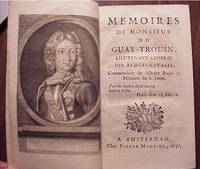
1756réf. BB0491Amsterdam: Chez Pierre Mortier 1756. Full Calf. Fine. Later edition of the memoirs of one of the most illustrious French corsairs including descriptions of his spectacular attacks on Rio de Janeiro. 12mo 166 x 92mm: xxxix312pp with engraved frontispiece and five of six folding plates absent plate opposite p. 120 apparently never bound in. Full mottled calf flat richly gilt spine divided into six compartments by triple rules red morocco gilt label all edges stained red marbled end papers book label of P. Gaingnot-P. au Mans. The highly accomplished engravings by J. P. Le Bas and A. Coquart include frontispiece portrait of the author view of a French man-of-war with parts labeled three of four folding views of naval engagements and the magnificent folding plan of Rio de Janeiro. Also included are lists of ships and crews under Du Guay-Trouin's command in various campaigns. Lower joint skillfully repaired else Fine with pages and plates pristine. STCN 305337807. Keynes Bibliotheca Bibliographici p. 117. Borba de Moraes 272. Gibson's Library p. 115. Sabin 29198 quoting Borba 272: "Pierre Mortier the well-known Amsterdam book dealer published several editions of the Memoires beginning 1740 continuing 1746 1748 1756 1769 and 1773 all of which contain the author's portrait five plates and the map.". First published in Amsterdam in 1730 in a pirated edition extracted from an unfinished manuscript. The first official and complete edition was published posthumously in Paris in 1740. Admiral Du Guay-Trouin noted for his exploits during the War of the Spanish Succession from 1699 to 1712 sailed American and Caribbean waters as a privateer. In 1711 he led a French expedition against Rio de Janeiro then considered impregnable and after an eleven day siege he occupied the city for some two months holding the governor for ransom and ransacking the churches and plundering their treasures. N. B. With few exceptions always identified we only stock books in exceptional condition carefully preserved in archival removable mylar sleeves. All orders are packaged with care and posted promptly. Satisfaction guaranteed. Fine Editions Ltd is a member of the Independent Online Booksellers Association and we subscribe to its codes of ethics. Chez Pierre Mortier unknown
1907réf. 27497London: Printed by Order of the Trustees of the British Museum. Very Good with no dust jacket. 1907. First Edition. Hardcover. Ex-library General Assembly Library New Zealand. Gilt library stamps on spine and front board. Fading to spine. Small 8mm tear to cloth at lower end of front joint. A little bruising with 18mm crease lines to lower outer corners of boards. Label on front endpaper "Presented by The Trustees of The British Museum". Overall a very good copy that although ex-library shows little sign of use and does not appear to have been a circulating copy. ; Volume Two only. xiv 362 each section individually paginated 1 1 blank pages 74 plate leaves 19 colour of which one of the Cephalodiscus plates only has small areas of red colouring 1 folding colour map in pocket at rear. In-text figures. Original red buckram cloth spine and burgundy cloth boards. Gilt lettering on spine. Page dimensions: 306 x 231mm. A volume of zoological reports from the Discovery Expedition 1901-1904 which was led by Captain Robert Falcon Scott 1868-1912. Various contributors. "The chief part of the present volume is Dr. Wilson's beautifully illustrated report on the Birds and Mammals giving his personal experiences during the Expedition as well as the results of subsequent study of the collections. This expedition was the first to discover a nesting colony of the Emperor Penguin. All the other collections of vertebrates made during the Expedition are here reported on with the exception of the embros of seals and the pelagic fishes which will be dealt with later. The investigation into the development of the feathers of the penguin raises several points of great morphological significance. The collection of fishes is small but interesting." - from the Preface to Volume II by F. Jeffrey Bell. The section on Mammals by Edward A. Wilson includes 3 colour and 2 black-and-white plates by Wilson. The section on Birds by Wilson and Pycraft includes 13 colour plates by Wilson. References: Rosove 288-2.A1 has "73 plate leaves" but the number of plate leaves given for each section add to 74 plate leaves which is correct; Renard 1129 - "The coloured plates by Wilson are particularly fine." . Printed by Order of the Trustees of the British Museum hardcover
1934réf. 100273New York March 29th and April 11th 1934. 1934. Fine. - Two letters the first dated "March 29th/34" is a 4 page letter "written from 1112 Park Avenue New York" with the return address of "22 Chester Street London SW. 1" It consists of over 240 words penned on 4 sides of 6-1/2 inch high by 5-1/8 inch wide creamy white paper. In this first letter Fellowes expresses his conviction that "I think I shall be able to get my colleagues to accept your offer of closing down the contract" for a series of lectures. As he will expect to make a profit he states that he "would not come over unless you could let me know when you had been able to secure a fairly full list of engagements." He mentions that his wife would have to arrange for the expenses of Lieutenant Colonel Stewart Blacker's wife. "We are both particularly anxious to visit the West Coast & if the majority of my engagements lay in that direction I should avoid circumscribing Blacker's i.e. Lieut.-Col. Stewart Blacker activities. I feel there is a great chance he may be coming over too." Signed "Peregrine Fellowes". The second letter dated "April 11th/34" is a 5-1/2 page letter consisting of over 320 words penned on 6 sides of two 7 inch high by 5-1/2 inch wide sheets of "Peover Hall Over Peover Cheshire" stationery. Following up with Pond Fellowes writes that "We are now negotiating with Gaumont British to obtain a definite agreement as to our lecture rights over the main film." He informs Pond that his colleagues are agreeable to the terms and says that "Colonel Etherton Colonel Percy T. Etherton who is a very good & amusing lecturer would be willing to bring over some really excellent Indian short films of Nepal & Sikkim & lecture under your aegis for the whole season." He closes with a postscript stating that "Blacker won't be coming over until 1935 & has not yet definitely settled anything." Signed "Peregrine Fellowes". Both letters are in near fine condition and are offered together with Pond's 50-page illustrated brochure "Announcement of Attractions 1933.1934" for lectures under the aegis of the Pond Bureau. The brochure includes a full-page announcement of a lecture titled "The Mount Everest Flight. The official story of Man's Conquest by Air of the last of the world's unexplored areas told by Air-Commodore P.F.M. Fellowes". Air Commodore Peregrine Forbes Morant Fellowes 1883-1955 led the expedition and planning for the first flight over Mount Everest in 1933. He co-authored with Stewart Blacker and Percy Thomas Etherton "First Over Everest! : The Houston-Mount Everest Expedition 1933" published by John Lane in that year. Although Fellowes led the expedition he did not actually fly in it except for his reconnaissance flights. The flights themselves were piloted by Douglas Douglas-Hamilton Lord Clydesdale and David McIntyre with Stewart Blacker and Sidney Bonnett in the observer seats. As an airman Peregrine Fellowes led a raid against the lock gates at Zeebrugge in the First World War during which he was wounded crash landed in the North Sea and rescued by the Germans. He spent the remainder of the war as a POW. He later served in the Middle East and opened the first regular air route between Cairo and Baghdad. He was selected to lead the first Everest Air Expedition in 1933. Making use of specially designed Westland Wallaces the expedition made the first successful flight over Mount Everest and though Fellowes didn't fly himself his organizational and diplomatic skills were crucial to the success of the challenging expedition. The main difficulties resided in keeping the crew alive in the low pressure and cold temperatures at this elevation. Fellowes and Stewart Blacker who flew in one of the observer seats obtained the necessary papers from the various governments including those of India and Nepal. Tibet refused permission. They convinced the Royal Geographical Society that they'd provide valuable information for the subsequent 1933 British Mount Everest Expedition to the summit and also seek evidence as to George Mallory and Andrew Irvine's disappearance during their 1924 climb. Requiring clear weather over the mountains Fellows reconnoitered on a daily basis by flying a Puss Moth plane every morning for 9 days before conditions were found to be reasonably suitable. The expedition set milestones for development in aviation technology and photography. Though the aerial photographs were too late to assist the 1933 British climbers they were later used by Edmund Hillary and Tenzing Norgay to plan their route to the top of Everest in 1953. New York, March 29th and April 11th, 1934.
1949réf. E003147 pages. Octavo 8" x 6 1/4" issued in wrappers. The rest of the title Noticias del Suelo Clima Producciones Costumbres Ritos Creencias Lenguas de las Tribus Indigenas que lo Ocupan y las Ruinas y Rastros de sus Antiguos Pobladores q' se Encuentran Diseminados en Aquellos Desiertos. Edited by Luis Vargas Rea. From the library of professor George M Foster. Biblioteca Aportaci Histica second series. First edition limited to 100 copies of which this is number 51. JosFernando Ramez May 5 1804 – March 4 1871 was a distinguished Mexican historian in the 19th century. Ramez was born in Parral Chihuahua but grew up in Durango where he became a prominent liberal politician. After graduating with a degree in law from San Luis Gonzaga he was elected several times to the Chamber of Deputies and the Senate. He chaired the Ministry of Foreign affairs under three different administrations and became a minister in the Supreme Court of Justice. Ramez specialized in Pre-Columbian and 16th century Mexican history and excelled as a biographer. He headed the Imperial Academy of Sciences and Literature during the Second Mexican Empire directed the National Museum 1852 and built an impressive collection of historical documents. Among his works are Fray Toribio de Motolin and several Amerindian codex translations such as The Quinantzin and The Aubin. The original of these Exploraciones are located the the Manuscript section of the Instituto Naciona de Arqueologia Antropologia e Historia Museum Library in volume 226 which are part of the collection of Jose F Ramirez. George McClelland Foster Jr born in Sioux Falls South Dakota on October 9 1913 died on May 18 2006 at his home in the hills above the campus of the University of California Berkeley where he served as a professor from 1953 to his retirement in 1979 when he became professor emeritus. His contributions to anthropological theory and practice still challenge us; in more than 300 publications his writings encompass a wide diversity of topics including acculturation long-term fieldwork peasant economies pottery making public health social structure symbolic systems technological change theories of illness and wellness humoral medicine in Latin America and worldview. The quantity quality and long-term value of his scholarly work led to his election to the National Academy of Sciences in 1976. Virtually all of his major publications have been reprinted and/or translated. Provenance from the executor of Foster's library laid in. Condition: Foster's stamp to front wrapper. Corners bumped edges tears with chips 2" tear near front heal hinge pages age toned else about a very good copy. Biblioteca Aportación Histórica paperback
1787réf. E00402 volumes: 576xv pages; 499xv pages. Octavo 8 3/4" x 5 1/2" bound in 3/4 period leather. Translated from the first German edition 1781 which includes a chapter entitled: "Observations and additions to by Johann Gottlob Theaenus Schneider". Translated with additional notes and reviews by Jean Baptiste Lefebvre Villebrune. First Spanish edition published in 1772 Madrid. Sabin 36805 First French edition. Antonio de Ulloa 12 January 1716 – 3 July 1795 was a Spanish general explorer author astronomer colonial administrator and the first Spanish governor of Louisiana. He was born in Seville the son of an economist. Ulloa entered the navy in 1733. In 1735 he was appointed with fellow Spaniard Jorge Juan a member of the French Geodesic Mission a scientific expedition which the French Academy of Sciences was sending to Ecuador to measure a degree of meridian arc at the equator led by Pierre Bouguer. He remained there from 1736 to 1744 during which time the two Spaniards discovered the element platinum. In 1745 having finished their scientific labors Ulloa and Jorge Juan prepared to return to Spain agreeing to travel on different ships in order to minimize the danger of losing the important fruits of their labors. The ship upon which Ulloa was traveling was captured by the British and he was taken as a prisoner to England. In that country through his scientific attainments he gained the friendship of the men of science and was made a Fellow of the Royal Society of London. In a short time through the influence of the president of this society he was released and was able to return to Spain. He published an account of the people and the countries they have met 1748 which was translated into English as A Voyage to South America. He became prominent as a scientist and was appointed to serve on various important scientific commissions. He is to be credited with the establishment of the first museum of natural history the first metallurgical laboratory in Spain and the observatory of Cadiz. In 1758 he returned to South America as governor of Huancavelica in Peru and the general manager of the quicksilver mines there. He held this position until 1764. He arrived on 5 March 1766 in New Orleans to serve as the first Spanish governor of West Louisiana. The French colonists refused to recognize Spanish rule and de Ulloa was expelled from Louisiana by a Creole uprising during the Louisiana Rebellion of 1768. For the remainder of his life he served as a naval officer. In 1779 he became lieutenant-general of the naval forces. As a result of his scientific work in Peru he published Madrid 1784 Relación histórica del viaje á la América Meridional which contains a full accurate and clear description of the greater part of South America geographically and of its inhabitants and natural history. In collaboration with the Jorge Juan mentioned above he also wrote Noticias secretas de América giving valuable information regarding the early religious orders in Spanish America. Condition: Sever worming to spines exterior hinges cracked point chipped library stamps to title pages else a good copy of a scarce item. Chez Buisson hardcover
1787réf. E00402 volumes: 576xv pages; 499xv pages. Octavo 8 3/4" x 5 1/2" bound in 3/4 period leather. Translated from the first German edition 1781 which includes a chapter entitled: "Observations and additions to by Johann Gottlob Theaenus Schneider". Translated with additional notes and reviews by Jean Baptiste Lefebvre Villebrune. First Spanish edition published in 1772 Madrid. Sabin 36805 First French edition. Antonio de Ulloa 12 January 1716 – 3 July 1795 was a Spanish general explorer author astronomer colonial administrator and the first Spanish governor of Louisiana. He was born in Seville the son of an economist. Ulloa entered the navy in 1733. In 1735 he was appointed with fellow Spaniard Jorge Juan a member of the French Geodesic Mission a scientific expedition which the French Academy of Sciences was sending to Ecuador to measure a degree of meridian arc at the equator led by Pierre Bouguer. He remained there from 1736 to 1744 during which time the two Spaniards discovered the element platinum. In 1745 having finished their scientific labors Ulloa and Jorge Juan prepared to return to Spain agreeing to travel on different ships in order to minimize the danger of losing the important fruits of their labors. The ship upon which Ulloa was traveling was captured by the British and he was taken as a prisoner to England. In that country through his scientific attainments he gained the friendship of the men of science and was made a Fellow of the Royal Society of London. In a short time through the influence of the president of this society he was released and was able to return to Spain. He published an account of the people and the countries they have met 1748 which was translated into English as A Voyage to South America. He became prominent as a scientist and was appointed to serve on various important scientific commissions. He is to be credited with the establishment of the first museum of natural history the first metallurgical laboratory in Spain and the observatory of Cadiz. In 1758 he returned to South America as governor of Huancavelica in Peru and the general manager of the quicksilver mines there. He held this position until 1764. He arrived on 5 March 1766 in New Orleans to serve as the first Spanish governor of West Louisiana. The French colonists refused to recognize Spanish rule and de Ulloa was expelled from Louisiana by a Creole uprising during the Louisiana Rebellion of 1768. For the remainder of his life he served as a naval officer. In 1779 he became lieutenant-general of the naval forces. As a result of his scientific work in Peru he published Madrid 1784 Relación histórica del viaje á la América Meridional which contains a full accurate and clear description of the greater part of South America geographically and of its inhabitants and natural history. In collaboration with the Jorge Juan mentioned above he also wrote Noticias secretas de América giving valuable information regarding the early religious orders in Spanish America. Condition: Sever worming to spines exterior hinges cracked point chipped library stamps to title pages else a good copy of a scarce item. Chez Buisson hardcover books
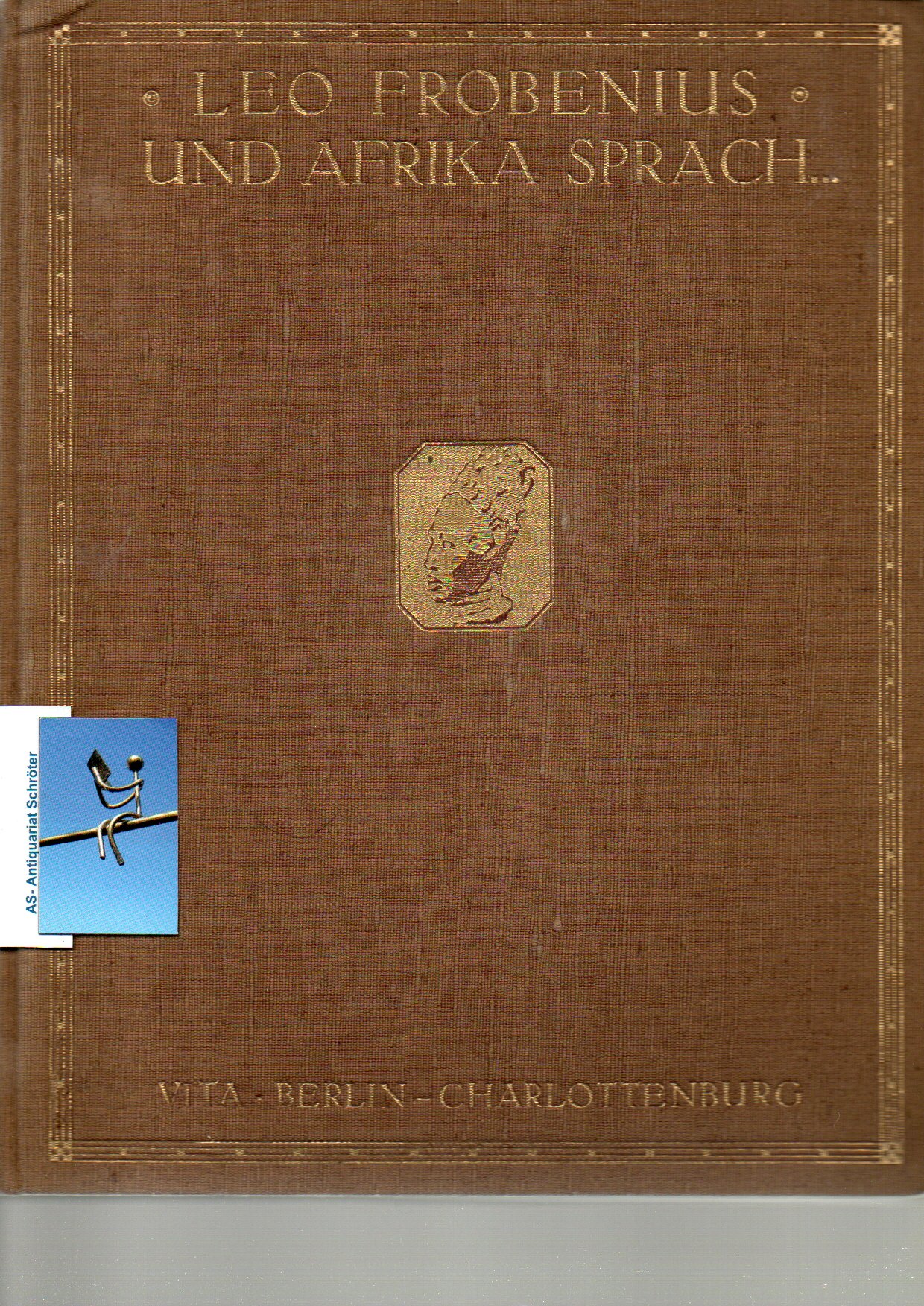
1912réf. 15497Vita Deutsches Verlagshaus, Berlin, 1912-1913. XXVI,402,(2); XXIV,508,(4); IX,(5),391,(1) Seiten, ca 27,5x22cm, goldgeprägter OLeinenband. Erster Band: Auf den Trümmern des klassischen Atlantis. Mit ca. 250 Illustrationen, 26 Tafelbildern, 2 mehrfarbigen Tafeln. 3 Kupferdrucken, 4 Heliogravüren und 4 Plänen. Zweiter Band: An der Schwelle des verehrungswürdigen Byzanz. Mit 51 Illustrationen und Tafelbildern, einer mehrfarbigen Tafel, 2 Kupferdrucken und 4 Plänen. Dritter Band: Unter den unsträflichen Aethiopen. Mit 56 Illustrationen und Tafelbildern, einer mehrfarbigen Tafel, einem farbigen Kupferdrucke und 2 Karten. Einbandkanten etwas bestossen. Gute Exemplare. Good copies. Der geplante vierte Band konnte wegen des Kriegsausbruches nicht erscheinen.