2 121 résultats
19168vo [20.5 x 14 cm]; ix, 320 pp, frontis with tissue guard, 36 plates from photos, color plates from paintings, 6 maps and cross-sections, including folding map of route, index. original blue pictorial gilt cloth, with gilt title lettering on front cover and spine, top edge gilted, fine and clean in the rare dust jacket (short tear, chipped at spine head with loss of few letters). A picture of this book is available upon request An important expedition by the staff of the US National Museum that describes the fish, birds, plants, geology, etc of Western Cuba, with much on the people and description of the countryside. Excellent illustrations, the colored plates being of birds and fish, the other plates are mainly scenery, portrait, etc. Wood 383.
1888réf. 308London: Hodder and Stoughton 1888. Hard Cover. -- 1st Edition seventh thousand. Bound in the publisher's red cloth with coated black endpapers bright gilt lettering to the spine and an insect gilt-stamped on the front board. Illustrated with six folding maps all in color and in excellent condition as well as with several engravings. The cloth is minimally soiled the corners are slightly bumped; hinges are still strong; text is clean throughout. Hodder and Stoughton hardcover
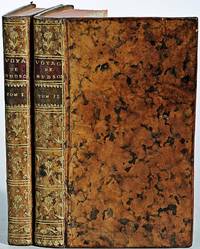
1749réf. E05292 volumes. 182 pages with fold out frontispiece map and three additional folding engravings; 319 pages with seven folding engravings. half-titles in each title pages improperly marked first volume as second and vice versa. Duodecimo 6 1/2" x 3 1/2" bound in original publisher's full uniform contemporary French sponged calf with gilt-tooled spines. First French edition after the 1748 English edition. Henry Ellis was a traveler hydrographer and colonial governor returned from Italy in 1746 just in time to find an expedition to search for a north-west passage on the point of sailing. He appears to have been in easy circumstances; his name stands in the list of subscribers to the north-west expedition and he had sufficient interest to get attached to it nominally as agent for the committee and really as hydrographer surveyor and mineralogist the expedition consisting of two vessels the Dobbs galley of 180 and California of 150 tons left Gravesend on 20 May 1746 joined the Hudson's Bay convoy in Hollesley Bay and finally sailed from Yarmouth on the 31st. They parted from the convoy on 18 June made Resolution Island on 8 July and after a tedious passage through Hudson's Straits rounded Cape Digges on 8 August and on the 11th 'made the land on the west side the Welcome in latitude 64° N.' Bad weather drove them to the southward and prevented their doing anything more that season. They wintered in Hayes River in a creek about three miles above Fort York where a quarrel with the agent of the Hudson's Bay Company gave an unwonted piquancy to the dark and weary days. They suffered much from scurvy the prevalence of which Ellis attributes to their having got two kegs of brandy from Fort York for their Christmas merrymaking and in a minor degree to the 'governor' not permitting the Indians to supply them with fresh provisions. On 29 May 1747 the ice broke up and they were able to warp to the mouth of their creek; on 9 June they got down to Fort York. There they were allowed to get some provisions and stores and on the 24th cleared the river and 'stood to the northward on the discovery'. On 1 July each of the two ships sent away her long-boat but owing apparently to some ill-feeling between the two captains without any prearranged plan for working in concert. The consequence was that they separately went over the same ground discovering naming and examining the several creeks and inlets on the west side of Hudson's Bay the double examination perhaps compensating for the confusion arising from the double naming. Before the season closed in they had satisfied themselves that the only possible exit from Hudson's Bay on the west must be through the Welcome and that very probably there was no way out except that on the east by which they had come in. The result may not seem much; but as it served to put an end to the idea that the passage must lie through Hudson's Bay it was at least so much gain to accurate knowledge. After 21 August the weather broke and they decided in council 'to bear away for England without further delay.' On the 29th they entered Hudson's Straits passed Resolution Island on 9 September and arrived at Yarmouth on 14 Octivwe. Ellis's share in the work of the expedition had really been very slender but the reputation of it has been commonly assigned to him by reason of the narrative which he published the following year under the title A Voyage to Hudson's Bay by the DobbsGalley and California in the years 1746 and 1747 for Discovering a North-West Passage 1748; a work which with many valuable observations on tides on the vagaries of the compass and on the customs of the Eskimos a people then practically unknown mingles a great deal of speculation on the certain existence of the passage on magnetism on fogs on rust and other matters all more or less ingenious but now known to be wildly erroneous. Such as it was the book commended its author to the scientific workers of the day and on 8 February 1748-9 he was elected a fellow of the Royal Society. Possibly in acknowledgment of his scientific labors but more probably by some family interest he was afterwards appointed successively governor of Georgia and of Nova Scotia from which employment he retired about 1770. He seems to have spent his later years as a wanderer on the continent was at Marseilles in 1775 and died at Naples on 21 January 1806. Condition: Some dark spots to spine else a very good copy. Ballard Fils hardcover
1749réf. E05292 volumes. 182 pages with fold out frontispiece map and three additional folding engravings; 319 pages with seven folding engravings. half-titles in each title pages improperly marked first volume as second and vice versa. Duodecimo 6 1/2" x 3 1/2" bound in original publisher's full uniform contemporary French sponged calf with gilt-tooled spines. First French edition after the 1748 English edition. Henry Ellis was a traveler hydrographer and colonial governor returned from Italy in 1746 just in time to find an expedition to search for a north-west passage on the point of sailing. He appears to have been in easy circumstances; his name stands in the list of subscribers to the north-west expedition and he had sufficient interest to get attached to it nominally as agent for the committee and really as hydrographer surveyor and mineralogist the expedition consisting of two vessels the Dobbs galley of 180 and California of 150 tons left Gravesend on 20 May 1746 joined the Hudson's Bay convoy in Hollesley Bay and finally sailed from Yarmouth on the 31st. They parted from the convoy on 18 June made Resolution Island on 8 July and after a tedious passage through Hudson's Straits rounded Cape Digges on 8 August and on the 11th 'made the land on the west side the Welcome in latitude 64° N.' Bad weather drove them to the southward and prevented their doing anything more that season. They wintered in Hayes River in a creek about three miles above Fort York where a quarrel with the agent of the Hudson's Bay Company gave an unwonted piquancy to the dark and weary days. They suffered much from scurvy the prevalence of which Ellis attributes to their having got two kegs of brandy from Fort York for their Christmas merrymaking and in a minor degree to the 'governor' not permitting the Indians to supply them with fresh provisions. On 29 May 1747 the ice broke up and they were able to warp to the mouth of their creek; on 9 June they got down to Fort York. There they were allowed to get some provisions and stores and on the 24th cleared the river and 'stood to the northward on the discovery'. On 1 July each of the two ships sent away her long-boat but owing apparently to some ill-feeling between the two captains without any prearranged plan for working in concert. The consequence was that they separately went over the same ground discovering naming and examining the several creeks and inlets on the west side of Hudson's Bay the double examination perhaps compensating for the confusion arising from the double naming. Before the season closed in they had satisfied themselves that the only possible exit from Hudson's Bay on the west must be through the Welcome and that very probably there was no way out except that on the east by which they had come in. The result may not seem much; but as it served to put an end to the idea that the passage must lie through Hudson's Bay it was at least so much gain to accurate knowledge. After 21 August the weather broke and they decided in council 'to bear away for England without further delay.' On the 29th they entered Hudson's Straits passed Resolution Island on 9 September and arrived at Yarmouth on 14 Octivwe. Ellis's share in the work of the expedition had really been very slender but the reputation of it has been commonly assigned to him by reason of the narrative which he published the following year under the title A Voyage to Hudson's Bay by the DobbsGalley and California in the years 1746 and 1747 for Discovering a North-West Passage 1748; a work which with many valuable observations on tides on the vagaries of the compass and on the customs of the Eskimos a people then practically unknown mingles a great deal of speculation on the certain existence of the passage on magnetism on fogs on rust and other matters all more or less ingenious but now known to be wildly erroneous. Such as it was the book commended its author to the scientific workers of the day and on 8 February 1748-9 he was elected a fellow of the Royal Society. Possibly in acknowledgment of his scientific labors but more probably by some family interest he was afterwards appointed successively governor of Georgia and of Nova Scotia from which employment he retired about 1770. He seems to have spent his later years as a wanderer on the continent was at Marseilles in 1775 and died at Naples on 21 January 1806. Condition: Some dark spots to spine else a very good copy. Ballard Fils hardcover books
réf. 204523S.l. [Paris], s.d. (1823) in-8, 16 pp., en feuilles, trace de brûlure dans l'angle supérieur des ff., sans manque de texte.
1924réf. 100123026Revue des auteurs et des livres 1924 in8. 1924. Broché.
1941réf. 16366Berlin und Leipzig : Nibelungen Verlag, 1941. 2. unveränderte Aufl., 11.-20. Tsd. 591 S. Mit 1 Titelbild und 231 Abbildungen nach eigenen Aufnahmen des Verfassers, 14 Zeichnungen im Text und 6 Karten. Leineneinband
18474to [32 x 25 cm]; xx, 452, [ii, errata and additions, often lacking] pp, engraved view Cape of Good Hope, 17 plates including four folding, other illus, tables. contemporary blind-stamped full calf, gilt spine title lettering, all edges gilted, rubbed, joints cracking with repair, few leaves lightly foxed including few plates, inscription & bookplate on endpaper, very good clean copy with nice wide margins. A pic Most plates include several figures including some of instruments and equipment. Norman 1056: 'With this monumental survey of the stars of the southern hemisphere, Herschel completed the task begun by his father William, who fifty years earlier had catalogued the northern celestial hemisphere. Using a twenty foot reflecting telescope, which he erected just south of Cape Town, Herschel swept the whole of the southern sky, cataloging nebulae, cluster and binary stars, carrying out the counts of over 68,000 stars.. . . he made detailed drawings and maps.' Honeyman 1663: 'The first great star-atlas of the southern hemisphere'. Includes a chapter on Halley's comet. Norman Catalogue 1056.
réf. 13663Histoire de Christophe COLOMB ou la découverte de l’Amérique d’après CAMPE. In 8, 220x140mm pleine toile de l’éditeur, à décor gaufré avec rehaut de rouge, de bleu et de blanc. Large filet à froid encadrant les plats. Frontispice gravé sur acier, sous serpente, titre, 269 pages, 1 page de table, tranches dorées, 4 illustrations hors-texte gravée sur acier, sous serpentes Rouen MEGARD & Cie 1858
1950réf. 29421950 Oslo, Dreyers Forlag, sd (vers 1950). In-4, 232 p., rel. éd. basane bleue ornée.
réf. 1896broché avec jacquette - 13x20- 310 pp - 1951 - éditions ALBIN MICHEL, Paris.Traduit du norvégien par Marguerite GAY et Gerd DE MAUTORT.avec une carte hors texte et 16 photos dans le texte.
réf. 3062relié - 14x19,5- 310 pp - 1951 - éditions ALBIN MICHEL, Paris.Traduit du norvégien par Marguerite GAY et Gerd DE MAUTORT.avec une carte hors texte et 16 photos dans le texte.
1961réf. 100087607G.P. / Super 1961 in8. 1961. Cartonné. iconographie en noir et blanc et en couleurs
1959réf. 45728im Bertelsmann Lesering, (1959). Lizenzausgabe 375 Seiten , 21 cm geb. Pappeinband
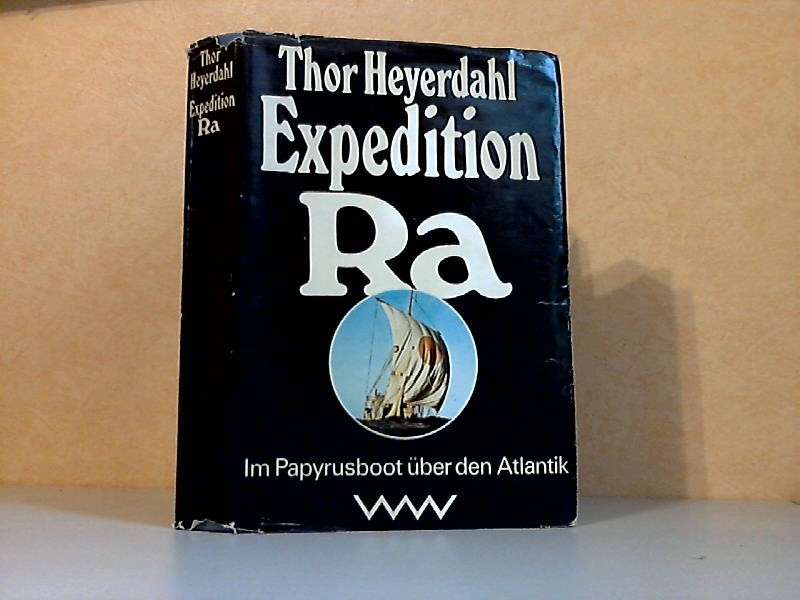
1975réf. 41731Berlin: Verlag Volk und Welt, 1975. 2. Auflage 438 Seiten , 24 cm Gewebeeinband mit Schutzumschlag
1989réf. 48811Berlin, Verlag Volk und Welt, 1989. 1. Auflage 375 Seiten , 24 cm, Leinen
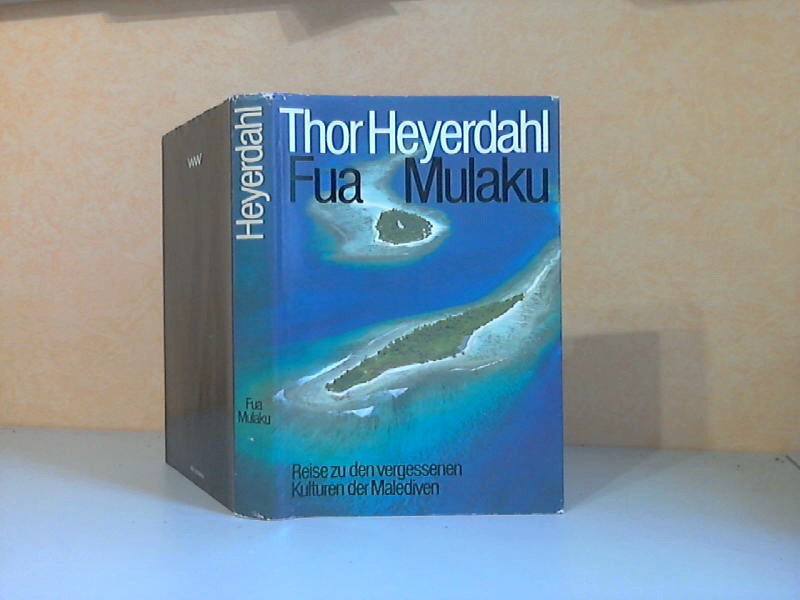
1978réf. 35797Berlin: Volk und Welt Verlag, 1978. 5. Auflage 314 Seiten , 23 cm, Gewebeeinband mit Schutzumschlag
1980réf. 5829Stuttgart [u.a.] : Europ. Bildungsgemeinschaft [u.a.], [1980]. 335 S. : zahlr. Ill. (z.T. farb.) Gr. 8°. OPpbd. mit SU.
1976réf. 100073753Arthaud 1976 in8. 1976. Broché.
1959réf. 100047192G.P 1959 in8. 1959. Cartonné.
réf. 054563Paris Librairie Arthème Fayard 1962 in 8 (19,5x14,5) 1 volume broché, couverture illustrée, 295 pages [3]. Traduit de l'anglais par Jacques Brécard. Bel exemplaire ( Photographies sur demande / We can send pictures of this book on simple request )
1963réf. 100099100Presses pocket 1963 in12. 1963. Broché.
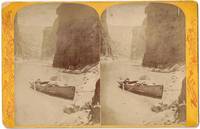
réf. 71876Washington DC: J. F. Jarvis. Photograph. Very Good. Albumen stereoview 11 cm x 15 cm on a yellow mount 11 cm x 17.5 cm with a printed paper label on the reverse No. 181. U. S. Topographical and Geological Survey of the Colorado River of the West. Corner wear and a bit of edge wear as well. J. F. Jarvis label on the reverse. Jack Hillers 1840-1882 was working as a teamster when he made the acquaintance of John Wesley Powell. The following year 1871 Powell hired him as a boatman for his second expedition down the Colorado River and through the Grand Canyon. Over time he replaced Clements Powell John's cousin as the assistant to the photographer first succeeding E. O. Beaman then James Fennemore. Hillers was a hard worker highly regarded by his peers and a fast learner when it came to the art of photography. After serving as the main photographer on Powell's trips Hillers would go on to work for the Bureau of American Ethnology for many years. J. F. Jarvis unknown
réf. 71876Washington DC: J. F. Jarvis. Photograph. Very Good. Albumen stereoview 11 cm x 15 cm on a yellow mount 11 cm x 17.5 cm with a printed paper label on the reverse No. 181. U. S. Topographical and Geological Survey of the Colorado River of the West. Corner wear and a bit of edge wear as well. J. F. Jarvis label on the reverse. Jack Hillers 1840-1882 was working as a teamster when he made the acquaintance of John Wesley Powell. The following year 1871 Powell hired him as a boatman for his second expedition down the Colorado River and through the Grand Canyon. Over time he replaced Clements Powell John's cousin as the assistant to the photographer first succeeding E. O. Beaman then James Fennemore. Hillers was a hard worker highly regarded by his peers and a fast learner when it came to the art of photography. After serving as the main photographer on Powell's trips Hillers would go on to work for the Bureau of American Ethnology for many years. J. F. Jarvis unknown books
1991réf. 7213München: C. Bertelsmann Verlag GmbH, 1991. 319 Seiten , 25 cm, Pappeinband mit Schutzumschlag