3 725 résultats
réf. 37771P., Fayard, 1939, in 12 broché, 359 pages, non coupé.
1866réf. PHO-2081Paris, Hachette., 1866. 2 vol. in-8° de XVI, 346 pp. ; 429, 1 bl., [1] pp. Front. 1 carte et 4 plans h.-t. Demi-chagrin rouge, dos à 4 faux-nerfs, titre et tom. dorés (Reliure de l'époque). Reliure usée, des rousseurs. La p. de titre du tome I est reliée après l'introduction. Bon exemplaire. Édition originale de la traduction. Complet du portrait de l’auteur et des plans.
1881Modena, Tip. Pontificia ed Arcivescovile, 1881, in-16, legatura di poco successiva in mezza tela con angoli, pp. XVI, 296. Asportato il margine superiore del frontespizio. Manca l'occhietto.
San Sebastian, Librería Internacional, s.a. (hacia 1942). 4to.; 4 hs., VII-293 pp., 1 h. Cubiertas originales.
1877In 16, pp.134. Br. ed. con macchie al p. ant. Dedica a Mons. Vincenzo Bracco, patriarca latino di Gerusalemme.
in-8°, 367 pp., 5 cartes, gloss., broche, couv. Tres bel exemplaire. [DV-19]
réf. 33731Aix, 1908. Format 12x18 cm, broche, 126 pages.Bon etat, petites traces d'usage sur un livre d'occasion.
réf. 32162Neuilly, Editions "La Cause", sans date (vers 1930), in 12 carré broché, 176pp. ; complet de l'erratum ; signature à l'encre sur le faux-titre.
réf. 16142Paris Librarie Fischbacher 1928 Grand IN4 broche,couv.ill.rempliée,58 p.,illustré,Soft Cover Fair 9" x 12" Tall. 58 pages. Lots of good quality, historic, black and white photographs, about two per page, of Palestine and its people. Explanatory text for individual photographs, plus narrative text, all in French.
1960Romanzo ambientato nel tormentato mondo palestinese - israeliano. Brossura in ottime condizioni. Strappo sulla copertina. Brossura
1939Napoli, 1939, luglio 31, copertina illustrata a colori in fascicolo originale completo di pp. 16 de “Il Mattino illustrato”
2007réf. LFA01200Un ouvrage de 110 pages, format 150 x 210 mm, broché couverture couleurs
1936Napoli, 1936, luglio 20, copertina illustrata a colori in fascicolo originale completo di pp. 12 de “Il Mattino illustrato”
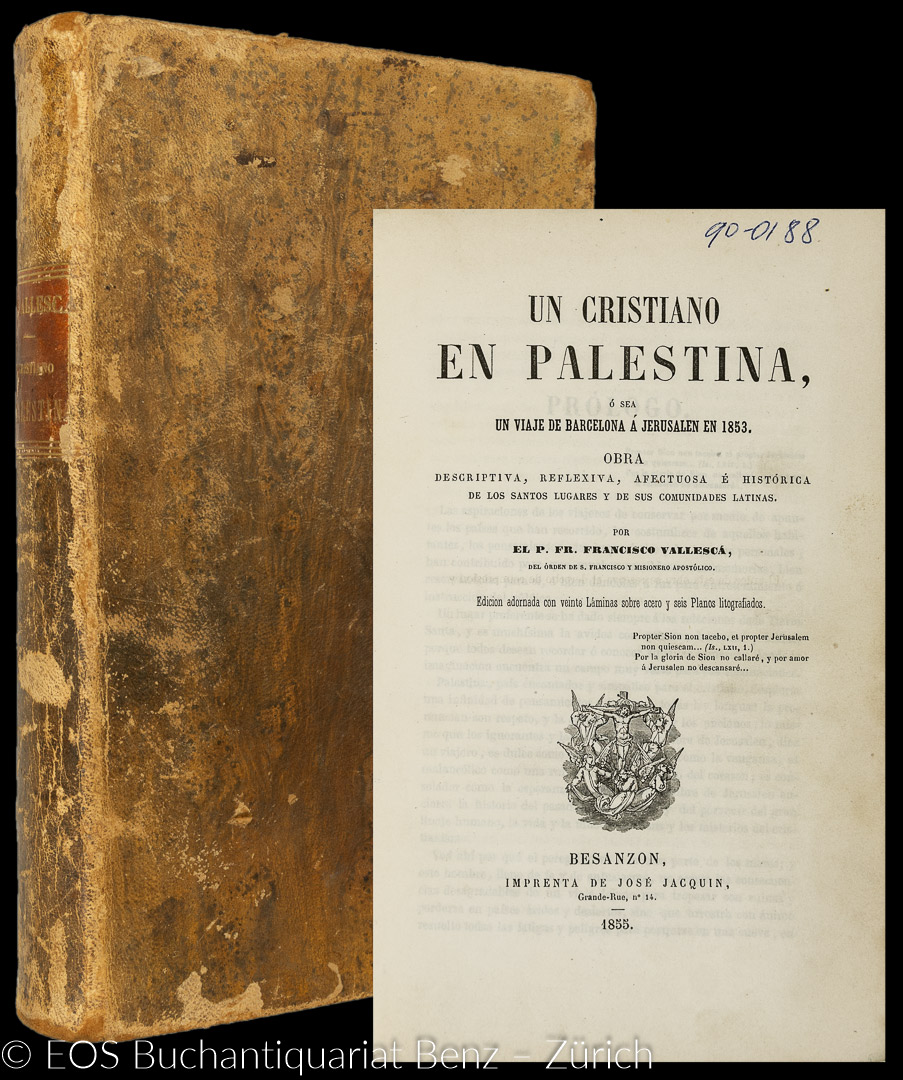
1855réf. 7706CBBesanzon, José Jacquin, 1855. 8°. VIII, 426 S. Mit 19 Stahlstichtafeln und 5 Pläne (davon 4 gef.). Lederband der Zeit mit rotem verg. Rückenschild. + Wichtig: Für unsere Kunden in der EU erfolgt der Versand alle 14 Tage verzollt ab Deutschland / Postbank-Konto in Deutschland vorhanden +, 7706CB|7706CB_2 [2 Warenabbildungen]
1986réf. 46686Paris Gallimard 1986 1 vol. Broché in-8, broché, couverture à rabats, non coupé, 503 pp. Édition originale. Un des 70 exemplaires numérotés sur vélin pur chiffon de Rives, seul grand papier. En bonne condition.
2006Autori: Naseer H. Aruri. Traduttori: R. Panizzoli, M. Franchini.
1898Dedica a Leone XIII, Vicario di Ges? Cristo...- Ai miei benevoli lettori - Prefazione 1 18x12 cm., legatura in piena tela, fregi e titoli in oro e argento in copertina e al dorso, ritratto A. in antiporta, pp. XXIII (1), 397, molte illustrazioni su tavole fuori testo, seconda edizione, in italiano, buone condizioni Dedica autografa A.
2008réf. LFA-126749472Un ouvrage de 242 pages, format 150 x 205 mm, broché, publié en 2008, Editions Bayard, bon état
réf. LFA-126739731Revue de 50 pages, format 205 x 285 mm, illustrée, brochée couverture couleurs, bon état
2000réf. LFA-126739757Revue de 82 pages, format 220 x 280 mm, illustrée, brochée couverture couleurs, bon état
réf. LFA-126739716Revue de 50 pages, format 205 x 285 mm, illustrée, brochée couverture couleurs, bon état
2006réf. LFA-126739793Revue de 122 pages, format 190 x 235 mm, illustrée, brochée couverture couleurs, bon état
1959pp. xvii, 300. 8vo. Original full blue printed wraps. Coldwar/Economics 3
1943Very Good Turkish Modern cloth bdg. 4to. (27 x 20 m). In Turkish. 201 p., 7 military plans in the end-pocket (no missing). Türklerle beraber Süveys Kanalina. Translated by Mazhar Besim Özalpsan. Scarce First Edition. Only one copy located in OCLC: 69392693 (Bogaziçi University Library). Kress von Kressenstein was a German general from Nuremberg. He was a member of the group of German officers who assisted in the direction of the Ottoman Army during World War I. Kress von Kressenstein was part of the military mission of Otto Liman von Sanders to the Ottoman Empire, which arrived shortly before World War I broke out. Kress came from a patrician family in Nuremberg. His father, Georg Kress von Kressenstein (1840-1911), was a high court judge. Kress von Kressenstein joined the Bavarian army as an ensign in the artillery in 1888. In Palestine during the WW 1, Kress joined Djemal Pasha's army in Palestine as a military engineer and was later chief of staff. Djemal Pasha was given the job by the Turkish leader Enver Pasha of capturing or disabling the Suez Canal. This effort is called the First Suez Offensive, and it occurred in January 1915. Kress von Kressenstein was responsible for creating special boats for crossing the canal (pontoons) as well as organizing the crossing of the Sinai desert. While the desert was crossed with little loss of life, the British were aware of their approach and their attack on the Suez came as no surprise to the defenders. The Ottoman forces were repulsed easily and after two days of fighting, they retreated. Kress von Kressenstein's special pontoons were never used. More than a year passed when the Ottomans tried a second attack on the Suez. With Djemal Pasha directing affairs from his base in Damascus, Kress von Kressenstein led a larger Ottoman army across the Sinai desert, again. This attack ran into a strong British defensive fortification at Romani, 40 kilometres (25 mi) east of the canal. The Ottoman army prepared a major set-piece assault on Romani, scheduled for 3 August 1916. The attack was beaten off and again the Ottomans retreated back to their bases in Palestine. The British responded with an attack of their own. They captured some small Ottoman forts in the Sinai, built a railroad and water pipe across the desert and then launched an assault on the Ottoman fort at Gaza. Kress von Kressenstein was in charge of the Ottoman defences along with General Tala Bey. In the First Battle of Gaza (March 1917), the British were defeated, largely due to their own errors. In the Second Battle of Gaza in April 1917, the British were defeated again, the credit for this victory largely going to Kress von Kressenstein. The British removed their unsuccessful generals and replaced them with General Allenby. The Ottomans also replaced their top leadership, bringing in the former Chief of the German General Staff, General von Falkenhayn. Kress von Kressenstein was kept on as commander of the Ottoman 8th Army defending Gaza and he was also awarded Prussia's highest order, the Pour le Mérite. In November 1917, the British under General Allenby breached the Ottoman defensive positions at the Battle of Beersheba and the Third Battle of Gaza. Kress von Kressenstein was able to withdraw his defeated troops in fairly good order to new defensive positions in the north. In the middle of 1918, with the Ottoman-German alliance breaking down, Kress von Kressenstein was sent with a small German force to Georgia (Caucasus), that was protected by Germany after its independence. He helped to frustrate the Red Army's invasion of Georgian region Abkhazia. (Source: Wikipedia). This is the first and only Turkish translation of his memoirs in Palestine during World War 1.