ARNDT, PeterLivre Rare Book

3 430 résultats
1979réf. 1223641979 Editions Motorbuch Verlag, Stuttgart - 1979 - in-8, cartonnage toilé bleu sous jaquette illsutrée - 398 pages - Illustrations en N&B in et hors-texte dans l'ouvrage - Texte en allemand
réf. a95921San Marcos Texas. no date c. 1943. San Marcos Army Air Field. 4to hardcover. Maroon textured leatherette cover. Fully illustrated with bw photos and portraits. About 50 pages. Some cartoons by Lt. Albandh and Cpl. John Lee. VG plus. no owner marks. Clean. . hardcover
2003182 pages. Index. "Author interviewed 17 old-time tugboat captains, engineers and deckhands to assemble this intimate and often hair-raising account of life aboard BC tugs. Generously illustrated with archival photos and images of the skippers who appear within... An engaging portrait of the coastal characters and vessels that shaped this region's maritime history." - from dust jacket. Glossary. Usual library markings. Average wear. A sound reference copy. Book
1875Very Good French Contemporary 1/4 leather bdg. with marbled boards. Small 4to. (27 x 19 cm). 23 p. (11 p. in Ottoman script (Old Turkish with Arabic letters; 12 p. in French), with rare 4 folded maps. A very good copy. First and only edition of this extremely rare bilingual book in French and Ottoman Turkish, including the first records on the formation and characteristics of storms to explain how storms and hurricanes occurred, which route they followed, and how they were conveyed to the regions that need to be warned by telegraph, for the vessels sailing in the seas, by French expert Coumbary who was founded the Rasathâne-i Âmîre [i.e. Ottoman Imperial Observatory]. Both the original French and Turkish translations of the work were published together in one volume. The work also included four maps which were drawn for this work only. The first map shows the movement of a storm that occurred on March 8, 1865, the second one shows the occurrence between the Tropic Cancer and Capricorn whirlwinds, storms in the Atlas and Indian oceans, the movements in the Bay of Bengal, the storms in different directions in the China Sea, the Gulfstream, Grönland, and Azores. The second observatory in the Ottoman era was established for meteorology. Before this center was established, beginning from the Reformation (1839), many meteorological observatories were built by foreigners in various cities such as Istanbul, Smyrna, Trebizond, Tekirdag, and Merzifon both as private and public establishments. The very first known temperature readings are the meteorological observations made by the Priest Dalmas at the St. Benôit monastery between 1839-1847. Later William Lane, an Englishman who came to Istanbul during the Crimean War, made observations at the British Cemetery at Haydarpasa. W. Noe, director of the Mekteb-i Fünûn-u Sahane made observations at the house in Kalyoncukulluk where he lived until the Beyoglu Fire in 1848; and finally, it is known that French engineer Ritter, who was invited by the government for waterworks in Kuruçesme (1856-1860) also conducted meteorological observations. Observations on precipitation and humidity conducted between 1875-1892 by an amateur observer on the Thomson Farm in Erenköy are invaluable on the subject of Istanbul's climate. These observations have been published in Budapest in 1928. Excellent observations on heat, pressure, and humidity, made in the summer residence of the Russian ambassador on Büyükada have also been published, in Annales St. Petersburg. In 1858, the French government established the first observatory communicating data over the telegraph, and in 1863, by compiling meteorological data in France, the French National Meteorological Network started operations. In 1868, upon the recommendation of the French government, the Rasathane-i Âmire was founded to convey meteorological forecasts to certain centers by telegraph. Instruments were purchased from leading European factories, and operations started on top of a hill 74 meters high on Pera. The first director was Mr. Aristide Coumbray, who came to Istanbul to renovate the telegraph network. (Instruments commissioned from France were set up at Mr. Coumbary's home, which stood at the garden of the Swedish Embassy. The observatory was later moved after its offices were prepared.) Coumbary represented Turkey in the first international meteorology congress, convened in Wien five years later in 1873. Rasathane-i Âmire worked by the same system as the National Meteorology Center in France. In the observation books of 1868 (August-November), names of affiliated stations are given to us Soulina, Köstence (Constantia), Varna, Burgaz, Valona, Elbasan, Durazzo, and Beirut. Later, stations in Izmir, Diyarbakir, Baghdad, and Fao were also added. The observatory founded by Aristide Coumbary in 1868 in Istanbul, operated until the end of the First World War. Özege 5735.; TBTK 7688, 10862.; Not in OCLC.
Sevilla, Diputación,1998. 4to. mayor; 468 pp., 1 h. Cubiertas originales.
Barcelona, Montaner y Simón, 1891. 4to. mayor; VIII-352 pp. Ilustraciones entre el texto y una lámina en color. La página 14/15 presenta rotura en el ángulo superior exterior, con pérdida de letras. Encuadernación original en tela estampada.
Madrid, Anjana Ediciones, 1985. 4to. mayor; 719 pp. Numerosos grabados entre el texto que pertenecen a la versión original francesa de "Promenade autour du monde", Paris 1822, que en castellano aparecería por primera vez en Barcelona, Gaspar y Roig, 1851. Encuadernación original.
Paris, Edit. Gide, 1860. Ilustraciones en b/n fuera texto. 665p. 8º mayor. Rústica editorial fatigada y restaurada. Puntos de óxido. Intonso. Livre en français. Machines à vapeurs. Chemins de fer. Télégrapes électriques et télégraphes de nuit. Navigation.
réf. 1529Limoges, Eugène Ardant & Cie, fin XIXe, 22 X 31 cm., relié, 334 pp. Nouvelle édition expurgée précédée d'une introduction de Jules JANIN. Ornée de 45 gravures. Portrait de l'auteur en frontispice. Cartonnage éditeur au plat supérieur richement illustré, toutes tranches dorées. Coiffes émoussées, discrètes déchirures en queue de la page de titre. Seules les pages de garde comportent des rousseurs.
réf. 231764Paris, Dezauche, 1775 in-4, [2] ff. n. ch., lviij pp., 574 pp., [7] ff. n. ch., xvj pp., basane fauve marbrée, dos à nerfs cloisonné et fleuronné, pièce de titre cerise, encadrement de double filet doré sur les plats, tranches rouges (reliure de l'époque). Restaurations aux coiffes, charnières et coins, infimes manques de papier au pp. 43-45, avec légère perte de lettre.
Madrid, Instituto de Estudios Fiscales, 1981. 4to.; XXXV pp., XV pp., 330 pp., CV+1 h. Apéndice. Encuadernación original.
1966réf. X116939Paris, S.E.V.P.E.N. 1966 223pp., illustré de 2 cartes et de 7 illustrations hors-texte, 25cm., brochure originale (avec cachet "service de presse"), texte et intérieur sont frais, bon état, X116939
in-12, 177 pages, broche, couverture illustree plastifiee. Plastification de la couverture defraîchie sinon bel exemplaire. [GE-2]
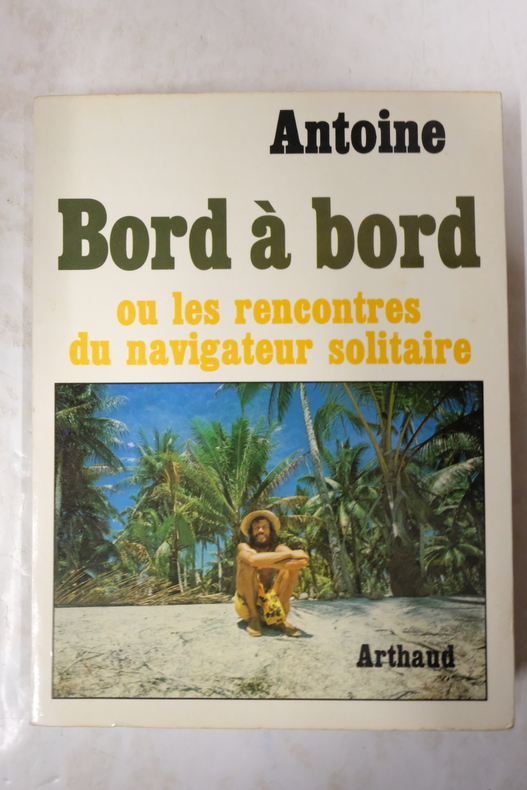
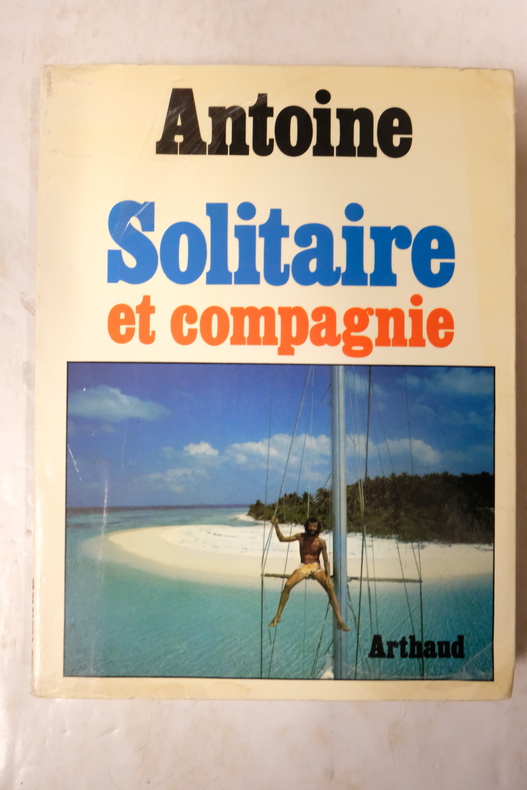
1992réf. MAR50M10Broché, 282 pages, paru le 8 janvier 1992 chez Arthaud, très bon état général. Collection Mer.
1980réf. MAR54M10Broché, 256 pages, paru en 1980 chez Arthaud, livre en très bon état général.
1993réf. 209008Couverture souple. Broché. 234 pages. 21 x 30 cm.
réf. 22338Paris, Editions Maritimes 1971, 210x140mm, 253pages, broché.
1994réf. 141685Couverture souple. Broché. 295 pages. Illustrations hors-texte.
réf. M17795Couverture souple Ancre de marine , 1995 , in8 broché , 317pp . Photos hors texte . Langue: Français
1971réf. 91781971 Paris, éditions maritimes et d'Outre-Mer, 1971. Un volume in-8 broché, couverture illustrée, 253 pages. Rousseurs éparses.
1920réf. GITe916Le Havre Imprimerie Micaux 1920. In-8 broché 2 feuillets non chiffrés 6-32pp. Avec un portrait en frontispice. Exemplaire en bon état et bien complet.
réf. 1582Milieu XXe siècle. 32 x 24 cm. Fond de scène. Architecture du pont inférieur ou de la cale d'un bateau, bois et métal, 7 hublots, bouées, cordages, tonneau. Aquarelle,encre et gouache sur papier. Pièce unique.
réf. 1583Milieu XXe siècle. 27,5 x 20,5 cm. Châssis avec découpes. Pont supérieur, mât, cordages, métal et bois. Aquarelle,encre et gouache sur papier. Pièce unique.
réf. 1587Milieu XXe siècle. 35 x 25,5 cm. Fond de scène. Vue des fourneaux dans la cuisine d'un navire, marmites et casseroles sur le feu, batterie de cuivres, 2 hublots, poutraison métallique. Aquarelle,encre et gouache sur papier. Pièce unique.
réf. 1588Milieu XXe siècle. 21,5 x 16 cm ; 12 x 30 cm ; 35 x 25 cm ; 25,5 x 25 cm ; 37 x 25 cm. Fonds de scène et châssis. Poste de direction et gouvernail ; Canot de sauvetage ; Pont avec sirènes et canots ; Canons et grand mât, Pont et canots. Aquarelle,encre et gouache sur papier, crayon graphite sur papier. Ensemble de pièces uniques.