4,138 results
1996ref. Adhya-9783540611172Springer 1996. Paperback. New. Springer paperback
1996ref. Adhya-9783540611172Springer 1996. Paperback. New. Springer paperback
1922Abundant black and white illustrations and reproductions of photos. Features: The Human Fly - Excellent photo-illustrated article on Jack Williams, a man who scales lofty buildings with no equipment other than his fingers and toes - article with great photos ; The Last Fight of the Five Hundred - Part II - Tragedy befalls French troops overwhelmed by the overwhelming force of Mustapha Kemal Pasha's rebel Kurds and Turks during the siege of Urfa; The Disappearance of Ivan Varlamoff - an epic fight in Uleaborg, Finland; Locked in a Freezing Chamber - a meat inspector's ordeal in South Africa; "UMRI" - the tragic story of a panther, once a police officer's pet, which becomes a terror of the district in India; The "White Man's Grave" - Filming The "Gold Coast" of Africa - article with great photos; The Friend of the Birds - photo-illustrated article on Jack Miner, Ontario's friend of the Canada Goose; My Jiu-Jitsu Combats - Captain S.L. McLaglen is a Jiu-Jitsu expert; A Treasure-Hunt in the Land of Thirst - Part III - an exciting trip to the "Mysterious Richtersveld" of Southern Africa - article with photos; Adrift in the Atlantic - Grenfell of Labrador sets down a remarkable experience related by a former engineer of his; A Man's Luck (conclusion) - the author met the girl of his dreams and tried to build a dream home for them in Alaska, but he keeps being jailed; A Film-Hunter in the Amazon - Part V - Probably the most adventurous expedition ever undertaken in the interests of the movies - article with excellent photos; The "King of the Brushwood" - the brigand chief of Corsica; Roping a Bear - foolish youngster ropes a cinnamon bear; A Barbed Wire Frontier - people not allowed to pass between Hungary and Czechoslovakia; and more. pp. 8 [ads], [3] 88, 9-16 [ads]. Clean and unmarked with light wear. A quality vintage copy of this wonderful issue. Book
193368 pages. A.J. Casson cover illustration of grass-cutting man mowing flowers while girl-watching. Contents: Great colour ad for Veedol motor oil inside front cover; Nice ad for International Trucks 2-ton trucks; Investors Syndicate ad features William H. Lotts, President of Overland Construction Company; Czar's Gold, by Robert Welles Ritchie; Roosevelt Acts - M. Grattan O'Leary reports on the "Prophet of Recovery" - including photo of President Roosevelt with Premier Bennett; A Sporting Gesture, by E. Phillips Oppenheim; Article on Sir Arthur Currie; Forgotten Money in Bank Accounts, by Grant Dexter; Ins and Outs of Sport - how different sports go in and out of favour; Arctic Air Trail - Flight Lieut. J.D.M. Gray and his plan to fly the "Sourdough", a Fairchild monoplane, across the Atlantic; False Colors, by Captain Dingle; Sleepy, by Beverley Owen; My Hat!, by Dora Sanders; The (Great) Depression, by Honorable E.C. Drury - Part 2 - Causes; Match Point, by John Holden; We Shouldn't Own Ships - O.F. MacKenzie argues that now that WWI is over the Canadian government need not own ships; A very lovely full-page colour ad for Campbell's Tomato Soup featuring a waving girl in a tomato-coloured dress and blue hat and jacket; Salesman of Music - Milton Blackstone and the Hart House Quartet which also includes Adaskin, de Kresz and Hambourg; Full-page Canada Dry ad shows boy and girl running; Europe Fears Treaty Revision; Nice Dominions Tire ad; New Guinea is Rich Gold Field; There are now 230 weekly comic strips; Great Wall is Useless Now; Modern Alarms Catch Burglars - electrical devices installed in banks make robbery practically impossible; Baseball has been changed by the Curve Ball and other Developments; Jerusalem now has Y.M.C.A.; Super-Markets Cause Concern - Large-scale grocery selling in cheap warehouses worries regular trade; Nice two-colour full-page ad for the new Chevrolet Standard Six and Master Six; The Future of Medicine; Vintage Dentyne chewing gum ad includes photo of Eskimo lady with healthy teeth; Lovely colour Shredded Wheat ad; Nice Champion Spark Plug ad features Eddie Miller in an Auburn 12 Speedster; Trans-Canada Long-Distance ad with contemporary prices per minute; Outdoor Weddings, by Helen G. Campbell; Lending Companies have Good Depression Record, by W.A. Higgins; Nice 2-colour ad for Northern Electric Electric range inside back cover; Nice ad for Kodak Verichrome Film on back cover. Address label upon front cover. Average wear. A sound copy. Book
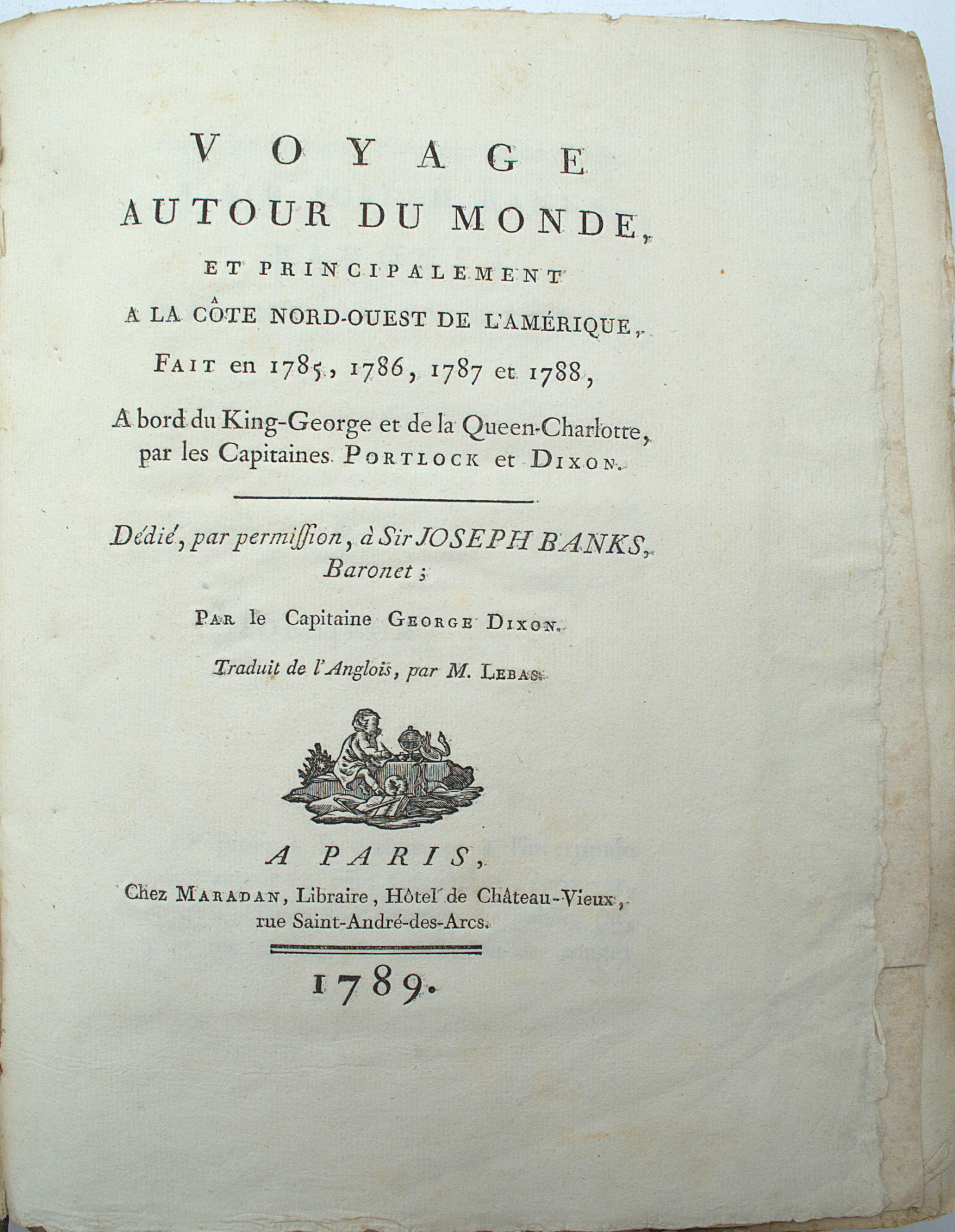
1789ref. PHO-2526Paris, Maradan, 1789, in-4 (28x21,5cm), 2ff.-499pp.-46pp.-1f., reliure d’attente, dos manquant, coins usés, quelques rousseurs.
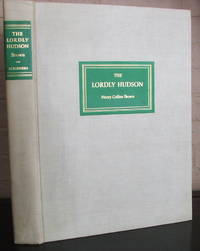
1937ref. 006950NY: Scribner. SIGNED first edition. Limited to 920 copies. Not numbered. Signed by author on limitation page. Brown was founder of the Museum of the City of New York. Published NY: Scribners 1937. Large folio 12 1/2" x 16 1/2" xiv319pp. profusely illustrated with b/w and tipped-in color plates - most full page the 15 color plates are all present. Cream cloth with gilt titles in green block deckle edges and top edge gilting. Mild soil to the cloth bookplate on pastedown else very good plus clean crisp attractive copy. . Very Good Plus. Hard. 1st. 1937. Scribner unknown
1937ref. 40282Berlin: Freiheitsverlag G.m.b.H. 1937. First edition. Softcover. g to vg. Quarto. 64pp. Original photo-illustrated dust-jacket over blind stiff wrappers. A collection of 45 photogravures documenting Mussolini's 5-day official visit to his friend and ally Adolf Hitler in Germany in late September 1937. Many of the photographs featured in this work were taken by Hitler's personal photographer Heinrich Hoffmann. Striding side by side the two dictators and partners of the Berlin-Rome Axis are seen touring Munich where they laid wreaths on various Nazi monuments. Among these was the Feldherrnhalle in Königsplatz which held the bodies of 16 Nazi heroes killed in the 1923 Munich Putsch. The next series of photographs were taken in the little village of Lalendorf where Hitler and Mussolini witnessed the most impressive military manoeuvres of post-WWI Germany. The following images show the two leaders visiting the mighty Krupp munitions works at Essen. Two photographs of Benito Mussolini attending a luncheon given by Göring and his wife at their famous hunting lodge Karinhall are placed between the largest series of pictures showing the two men during the grandiose Berlin celebrations in their honor. Indeed an estimated crowd of 650000 people attended the demonstration organized on the Maifeld the polo ground adjoining the Olympic Stadium. At the official tribune Mussolini delivered a speech where he spoke of the awakening of Germany through the Nazi revolution Bolshevism the common enemy and Germany's friendly stand during the Ethiopian War. The speech ended with a stress on the 115 million Germans and Italians and the need for them to unite "in one single unshakable determination." Closed tear and soiling at back cover of dust-jacket. Moderate abrasion along fore-edge of DJ. Clear and minor water-staining along fore-edge of the first 32 pages not affecting lettering. Text in German gothic script. DJ in overall good- wrappers and interior in good to very good photographs in very good condition. Freiheitsverlag G.m.b.H. unknown
1937ref. 40282Berlin: Freiheitsverlag G.m.b.H. 1937. First edition. Softcover. g to vg. Quarto. 64pp. Original photo-illustrated dust-jacket over blind stiff wrappers. A collection of 45 photogravures documenting Mussolini's 5-day official visit to his friend and ally Adolf Hitler in Germany in late September 1937. Many of the photographs featured in this work were taken by Hitler's personal photographer Heinrich Hoffmann. Striding side by side the two dictators and partners of the Berlin-Rome Axis are seen touring Munich where they laid wreaths on various Nazi monuments. Among these was the Feldherrnhalle in Königsplatz which held the bodies of 16 Nazi heroes killed in the 1923 Munich Putsch. The next series of photographs were taken in the little village of Lalendorf where Hitler and Mussolini witnessed the most impressive military manoeuvres of post-WWI Germany. The following images show the two leaders visiting the mighty Krupp munitions works at Essen. Two photographs of Benito Mussolini attending a luncheon given by Göring and his wife at their famous hunting lodge Karinhall are placed between the largest series of pictures showing the two men during the grandiose Berlin celebrations in their honor. Indeed an estimated crowd of 650000 people attended the demonstration organized on the Maifeld the polo ground adjoining the Olympic Stadium. At the official tribune Mussolini delivered a speech where he spoke of the awakening of Germany through the Nazi revolution Bolshevism the common enemy and Germany's friendly stand during the Ethiopian War. The speech ended with a stress on the 115 million Germans and Italians and the need for them to unite "in one single unshakable determination." Closed tear and soiling at back cover of dust-jacket. Moderate abrasion along fore-edge of DJ. Clear and minor water-staining along fore-edge of the first 32 pages not affecting lettering. Text in German gothic script. DJ in overall good- wrappers and interior in good to very good photographs in very good condition. Freiheitsverlag G.m.b.H. unknown books
1895ref. 29043Dover N. J: Dover Printing. Good with no dust jacket. 1895. First Edition. Hardcover. Genealogy; German Settlers; B&W Illustrations; 4to 11" - 13" tall; xiii 667 pages; The Early Germans of New Jersey. Their History Churches and Genealogies. By Theodore Frelinghuysen Chambers. With Maps and Illustrations. 3 maps 61 pls. Howes C274. Scarce Worldcat locates 3 copies. Publishers brown cloth boards worn and stained hinges frayed front end paper with marginal chipping contents fresh and clean vg. . Dover Printing hardcover
1996ref. Adhya-9780792338338SPRINGER 1996. Hardcover. New. SPRINGER hardcover
1996ref. Adhya-9780792338338SPRINGER 1996. Hardcover. New. SPRINGER hardcover
19578vo., First Edition thus, with 11 plates on 8 and an illustration in the text; handsomely bound in full navy crushed morocco, sides with gilt frame border, back with raised bands, second and fourth compartments lettered and ruled in gilt, all other compartments tooled in gilt, gilt top, hand-made endpapers, a most attractive copy ideal as a gift or for presentation. The truly remarkable story of a unique vessel - a largely Free French Q-ship enrolled wholesale into the Royal Navy and eventually sunk in the Atlantic in December 1942. This account is based largely on facts provided by Pat O'Leary who survived the sinking to organise the 'Pat' escape routes from France. First published in France in the preceding year. An elegant copy. Enser, p.381; Law, 0861.
19458vo., First Edition, with portrait frontispiece and 8 plates on 6; handsomely bound in full navy crushed morocco, sides with gilt frame border, back with raised bands, second and fourth compartments lettered in gilt, all other compartments tooled with gilt anchor, gilt top, hand-made endpapers, ribbon marker, a most attractive copy ideal as gift or for presentation. The first collected edition of Monsarrat's well-known trilogy. The three constituent volumes - 'HM Corvette' (1942), 'East Coast Corvette' (1943) and 'Corvette Command' (1944) - are here reproduced in their entirety (but with fewer plates). Taken in sequence they provide a near-continuous record of Monsarrat's early wartime service; furthermore they contain much of the inspiration and context, and in several cases actual incidents, which reappear in his masterpiece 'The Cruel Sea'. The first edition is now very scarce in any condition. Enser, p.120; Law 1010.
19538vo., Second Edition, with portrait frontispiece and 8 plates on 6; handsomely bound in full navy crushed morocco, sides with gilt frame border, back with raised bands, second and fourth compartments lettered and ruled in gilt, all other compartments tooled in gilt with anchor motif, gilt top, hand-made endpapers, ribbon marker, a most attractive copy ideal as a gift or for presentation. The collected edition of Monsarrat's well-known trilogy, first published in October 1945. The three constituent volumes - 'HM Corvette' (1942), 'East Coast Corvette' (1943) and 'Corvette Command' (1944) - are here reproduced in their entirety (but with fewer plates). Taken in sequence they provide a near-continuous record of Monsarrat's early wartime service; furthermore they contain much of the inspiration and context, and in several cases actual incidents, which reappear in his masterpiece 'The Cruel Sea'. This second edition carries a new Preface by the author giving an account of the works' genesis. Enser, p.120; Law 1010 (both recording the first edition).
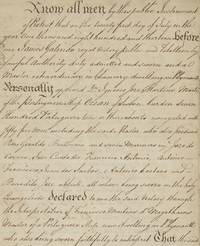
1813ref. List1947Plymouth 1813. Plymouth Devon England: 21st July 1813. Folio 7 pages 13 1/8 x 8 ¼ inches duty blindstamp small ink stamp to upper inner margin of the first page two seals to the last page signed twice by Galindo. Toned some small repaired tears using reversible archival ph-neutral paper-repair tape very good to near fine. Very Good. An interesting document of privateering in the Peninsular war this 'Public Instrument of Protest' documents a Portuguese captain and crew complaint in detail to an English notary. After sailing from Calcutta to Brazil and then from Rio to just outside of Lisbon their ship the 700-ton 'Oceano' was seized and comprehensively ransacked by a French privateer the 'Lion' out of Lorient. Most of the crew and passengers were offloaded onto a passing American vessel the 'Leda' bound for Lisbon. Meanwhile the 'Lyon' escorted her prize towards the nearest French port but before a friendly haven was reached they were both set upon by the brigantine HMS 'Achates'. The 'Lyon' escaped but the 'Ocean' was captured by Commander Morrison and the 'Achetes'. The 'Ocean' was taken to Plymouth and moored in the Hamoaze. The remaining Portuguese crew who had been forced to remain aboard the 'Ocean' by the French got a message to the 'Ocean's Master Dn. Ignacio Joze Martins and he and the boatswain made their way to Plymouth as quickly as possible. The sworn statement presented here is in English thanks to the translation given by Francisco Martins d' Magalhaens master of a Portuguese ship "now dwelling in Plymouth" The 'Oceano' sailed from Calcutta to Brazil arriving 10th February 1813. She left Rio on 4th April all was plain sailing until the afternoon of the 7th June off the Rock of Lisbon when the 'Lion' showed up first under false British colors then French. The fighting was fierce the privateer was driven off once but eventually the 'Oceano' was taken. The night of the 7th June was spent by the French 'conveying everything Moveable and Valuable from the Ocean to the Privateer'. The 'Leda' the US vessel landed the majority of the 'Ocean's crew including the Master in Lisbon on the evening of the 9th June.Monday 14th June the 'Lyon' engaged in a running battle with HMS 'Achates' and escaped but the 'Achates' did capture the 'Ocean'. Wednesday 16th June the 'Ocean' arrived in Plymouth under the watchful eye of the 'Achates'. Receiving the crew's message the Captain of the 'Ocean' left Lisbon for Falmouth and then Plymouth arriving on the 20th July. The document was dated 21st July 1813. Full transcription available. unknown
1813ref. List1947Plymouth 1813. Plymouth Devon England: 21st July 1813. Folio 7 pages 13 1/8 x 8 ¼ inches duty blindstamp small ink stamp to upper inner margin of the first page two seals to the last page signed twice by Galindo. Toned some small repaired tears using reversible archival ph-neutral paper-repair tape very good to near fine. Very Good. An interesting document of privateering in the Peninsular war this 'Public Instrument of Protest' documents a Portuguese captain and crew complaint in detail to an English notary. After sailing from Calcutta to Brazil and then from Rio to just outside of Lisbon their ship the 700-ton 'Oceano' was seized and comprehensively ransacked by a French privateer the 'Lion' out of Lorient. Most of the crew and passengers were offloaded onto a passing American vessel the 'Leda' bound for Lisbon. Meanwhile the 'Lyon' escorted her prize towards the nearest French port but before a friendly haven was reached they were both set upon by the brigantine HMS 'Achates'. The 'Lyon' escaped but the 'Ocean' was captured by Commander Morrison and the 'Achetes'. The 'Ocean' was taken to Plymouth and moored in the Hamoaze. The remaining Portuguese crew who had been forced to remain aboard the 'Ocean' by the French got a message to the 'Ocean's Master Dn. Ignacio Joze Martins and he and the boatswain made their way to Plymouth as quickly as possible. The sworn statement presented here is in English thanks to the translation given by Francisco Martins d' Magalhaens master of a Portuguese ship "now dwelling in Plymouth" The 'Oceano' sailed from Calcutta to Brazil arriving 10th February 1813. She left Rio on 4th April all was plain sailing until the afternoon of the 7th June off the Rock of Lisbon when the 'Lion' showed up first under false British colors then French. The fighting was fierce the privateer was driven off once but eventually the 'Oceano' was taken. The night of the 7th June was spent by the French 'conveying everything Moveable and Valuable from the Ocean to the Privateer'. The 'Leda' the US vessel landed the majority of the 'Ocean's crew including the Master in Lisbon on the evening of the 9th June.Monday 14th June the 'Lyon' engaged in a running battle with HMS 'Achates' and escaped but the 'Achates' did capture the 'Ocean'. Wednesday 16th June the 'Ocean' arrived in Plymouth under the watchful eye of the 'Achates'. Receiving the crew's message the Captain of the 'Ocean' left Lisbon for Falmouth and then Plymouth arriving on the 20th July. The document was dated 21st July 1813. Full transcription available. unknown books
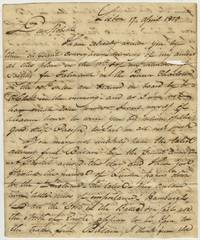
1813ref. BK0183Lisbon 1813. Autograph letter signed 3 pp. on a folded sheet with integral address panel to Messrs. Brown & Ives Providence Rhode Island and Newport "SHIP" and circular datestamps. 8 x 9 ¾ inches. Folded for mailing with considerable wear along the folds several tears and small losses including losses from opening the seal affecting scattered words. Good overall and substantially legible. A commercial letter written from Lisbon during the War of 1812 by "P. Falconer" probably the Baltimore merchant Peregrine Falconer. The identification remains somewhat tentative but the 1812 Baltimore directory lists Comegys Falconer & Co. merchants at 190 Baltimore Street while later Maryland Chancery records document the estate of Peregrine Falconer; Missouri archival records also document Falconer and Comegys and both "Perregrine" and "Perry" Falconer. Falconer was preparing to sail from Lisbon for Falmouth and writes Brown & Ives with the latest commercial and political intelligence reaching Portugal. He expected the widening European opposition to Napoleon to bring still more nations into the war then turned immediately to British policy toward American trade: "from the complexion of affairs that in the course of the Summer all the powers in Europe will be joined against France. If I am correctly informed a new duty of 6d. pr lb in addition is imposed in Britain upon American Cotton . Savannah Charleston & New York in a state of Blockade - this with the new duty has advanced the Price of Cotton .". The Russo-Prussian alliance had been concluded only weeks earlier Sweden joined the anti-Napoleonic alliance on March 24 and the coalition would continue to expand during the year. At the same time the English Parliament was debating additional duties on American cotton: on March 31 the government proposed sixpence per pound on American cotton imported in foreign vessels while Alexander Baring warned that American cotton carried by neutral ships would consequently bear a total duty of ninepence per pound. British naval pressure on the American coast was also rapidly increasing during the spring of 1813 trapping increasing amounts of American shipping in port. Falconer's letter thus records from Lisbon the immediate commercial relationship between the blockade British taxation and the price of American cotton. The war also forced Falconer to reconsider how Brown & Ives should communicate with him once he reached Britain. He gives explicit instructions intended to obscure their route: "I presume the only means of corresponding with Liverpool will be by the way of Lisbon. I have to request that you will write to me . frequently enclosing your letters under cover to Messrs. - & Brown without marking 'Via Lisbon' as letters coming from America are all opened in Britain." The remainder concerns the practical movement of merchants and shipping through the same wartime network including Falmouth and Liverpool passage arrangements vessels preparing to sail and convoying. Overall a useful merchant's-eye letter from the spring of 1813 with the blockade of American ports the British cotton duty the developing coalition against Napoleon and the routing of commercial correspondence all appearing as parts of the same Atlantic problem. . unknown
1813ref. BK0183Lisbon 1813. Autograph letter signed 3 pp. on a folded sheet with integral address panel to Messrs. Brown & Ives Providence Rhode Island and Newport "SHIP" and circular datestamps. 8 x 9 ¾ inches. Folded for mailing with considerable wear along the folds several tears and small losses including losses from opening the seal affecting scattered words. Good overall and substantially legible. A commercial letter written from Lisbon during the War of 1812 by "P. Falconer" probably the Baltimore merchant Peregrine Falconer. The identification remains somewhat tentative but the 1812 Baltimore directory lists Comegys Falconer & Co. merchants at 190 Baltimore Street while later Maryland Chancery records document the estate of Peregrine Falconer; Missouri archival records also document Falconer and Comegys and both "Perregrine" and "Perry" Falconer. Falconer was preparing to sail from Lisbon for Falmouth and writes Brown & Ives with the latest commercial and political intelligence reaching Portugal. He expected the widening European opposition to Napoleon to bring still more nations into the war then turned immediately to British policy toward American trade: "from the complexion of affairs that in the course of the Summer all the powers in Europe will be joined against France. If I am correctly informed a new duty of 6d. pr lb in addition is imposed in Britain upon American Cotton . Savannah Charleston & New York in a state of Blockade - this with the new duty has advanced the Price of Cotton .". The Russo-Prussian alliance had been concluded only weeks earlier Sweden joined the anti-Napoleonic alliance on March 24 and the coalition would continue to expand during the year. At the same time the English Parliament was debating additional duties on American cotton: on March 31 the government proposed sixpence per pound on American cotton imported in foreign vessels while Alexander Baring warned that American cotton carried by neutral ships would consequently bear a total duty of ninepence per pound. British naval pressure on the American coast was also rapidly increasing during the spring of 1813 trapping increasing amounts of American shipping in port. Falconer's letter thus records from Lisbon the immediate commercial relationship between the blockade British taxation and the price of American cotton. The war also forced Falconer to reconsider how Brown & Ives should communicate with him once he reached Britain. He gives explicit instructions intended to obscure their route: "I presume the only means of corresponding with Liverpool will be by the way of Lisbon. I have to request that you will write to me . frequently enclosing your letters under cover to Messrs. - & Brown without marking 'Via Lisbon' as letters coming from America are all opened in Britain." The remainder concerns the practical movement of merchants and shipping through the same wartime network including Falmouth and Liverpool passage arrangements vessels preparing to sail and convoying. Overall a useful merchant's-eye letter from the spring of 1813 with the blockade of American ports the British cotton duty the developing coalition against Napoleon and the routing of commercial correspondence all appearing as parts of the same Atlantic problem. . unknown books
1871ref. 66Boston; Nov. 1 1871. 1871 9 pp. folio. This indenture was made the first day of November 1871 between the Atlantic and Pacific Railroad Company and Oliver Ames and Charles F. Choate. The Atlantic and Pacific was to be built from Missouri and Arkansas to the Pacific Coast. From the very beginning the Atlantic and Pacific was plagued with problems even though they had the same rights as other transcontinental railroads regarding bonds land grants etc. Ames and Choate noted bankers of railroads and other various schemes were to loan to the railroad in gold coin. The amount is left blank in this document and the document is not signed by the parties. They were to be repaid in gold coin with an annual interest rate of 6%. In addition to the indenture listed above another indenture was made with George Bigeldow and James Dixwell. 2 pp. with manuscript corrections and additions. Including a provision to enable the Atlantic and Pacific to mortgage the road. This document was written earlier and does not have nearly as many provisions as in the Ames and Choate indenture. Four years later the Atlantic and Pacific would lapse into receivership. Oliver Ames then the largest stockholder purchased 96697 acres of the road's Missouri lands. After reorganization the A & P had some life until the panic of 1893 and the spoils were then divided between the Santa Fe and Frisco. These two documents are important in understanding the financial development of this railroad. Atlantic and Pacific material is quite scarce. Oliver Ames was the brother of Oakes. This railroad was to have been a very important development for Arkansas and Missouri. These documents are housed in a very attractive folding box 9 x 7 3/4 inches with green cloth-covered boards and a green morocco spine label with gilt lettering. 3214013 OG2080. 1st Edition. Hardcover. Very Good. Boston; Nov. 1, 1871. hardcover
1971ref. 14271New York: Collectors Editions Ltd. Near Fine. 1971. Hardcover. Text volume Catalogue Raisonne. Alexanddre De Vesme with introduction and additions by Phyllis Dearborn Massar. English & French text. 230pp. An unaltered reprint of the chapter on Della Bella appearing in Alexandre De Vesme 1906. Plate volume 241pp. With over 1050 B/W images. New York Collectors edition. Both volumed bound in clean grey cloth. Bright gilt title on spine. Texts tight clean & intact. Art Catalogue ; B/W Illustrations; 4to 11" - 13" tall; 471 pages . Collectors Editions Ltd. hardcover
1911ref. 44851H. P. Griffith. G/NONE. 1911. Hardcover. Hardback first edition of reminiscences signed by Civil War Captain Harrison Patillo Griffith 1837-1928 of Laurens County South Carolina. Furman-educated Griffith served with Company E 14th South Carolina Regiment and was badly wounded both at the Battle of the Wilderness and at Gettysburg. After the war he returned to Woodruff South Carolina ran a small store for a while and served as a school teacher. Later he was president of Limestone College. The author of "Life of Landrum" and "Life and Times of John Ezell" Griffith recounts in this surprisingly well-written volume his war experiences at Chancellorsville and his regard for Henry Timrod Charleston South Carolina poet among a number of other subjects. This copy is bound in textured red cloth with light soil and wear at extremities; gilt-lettering on spine is faded. Hinges sound uncracked; nonauthorial gift inscription in ink. SIGNED by Griffith in ink in a rather shaky hand on frontis photo page; tissue guard intact. Pages tight clean but bit "wavy" perhaps due to humidity or bindery error. Erasure of old price on first free endpaper. No DJ. ; . H. P. Griffith, hardcover
1990ref. Adhya-9780792308133Springer 1990. Paperback. New. Springer paperback
1990ref. Adhya-9780792308133Springer 1990. Paperback. New. Springer paperback
1851ref. 16424Albany N. Y.: State of New York. Very Good with no dust jacket. 1851-63. First Edition. Hardcover. 13 Annual Reports beautifully bound into 4 blue cloth volumes with gilt lettering on the spines. Text interior is clean & tight with a few small tears where fold-out attaches to text. Reports published in1851-1863 for the years 1850-1862. Illustrated with canal plans tables charts maps & descriptions. 1850 No. 26 : 118pp w /index 1851 No. 33 : 120 pp w/ index & fold-out map 1852No. 23 : 192pp w /index 1853 No. 65 : 199pp w /index 1854 No. 32 : 302pp w /index & 3 fold-outs 1map 1855 No. 100 : 320pp w /index & 2 fold-outs 1856 No. 145 : 301pp w /index 1857 No. 20 : 237pp w /index 1858 No.40 : 304pp w /index 1859 No 51 : 150pp w /index 1860 No 57 : 160pp w /index 1861 No. 9 162pp w /index & fold-out map 1862 No. 6 : 134pp & 24 fold-outs 1 Map. Originally from the Harry Rinker research library relating to the American canal era. New York Canals: Erie Champlain Black River Genesee Chenango Oswego Cayuga & Seneca Chemung Crooked Lake Oneida Baldwinsville; Charts maps; 8vo 8" - 9" tall; 2543 pages . State of New York hardcover
1850ref. 15401850 1 Première partie complète, 1 frontispice et 30 planches hors-texte. Seconde partie partielle, 27 planches hors-texte dont 5 de costumes. Nantes, Charpentier, 1850, in-plano relié demi-chagrin rouge, dos lisse orné (Alexandre Locard relieur à La Rochelle), fortes rousseurs aux planches.